
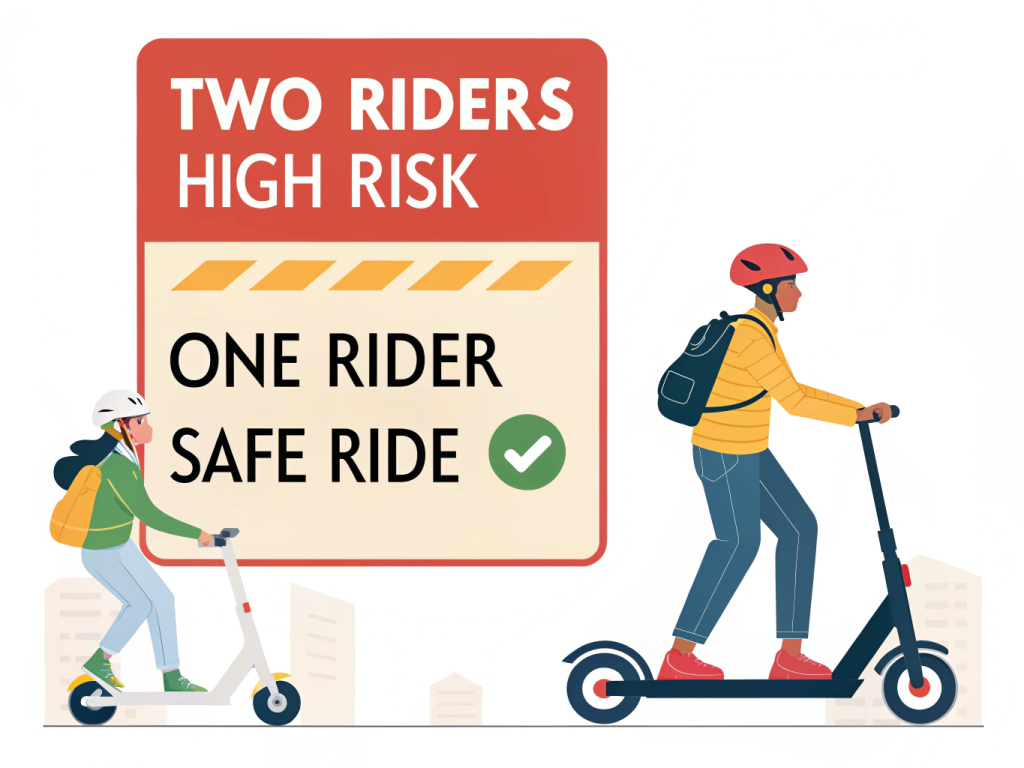
Can Electric Scooters Safely Carry Two Riders? What You Need to Consider
Sharing rides on electric scooters seems fun, but safety risks multiply fast. Two riders can cause crashes, damage, and legal trouble. The solution? Know weight limits, safety rules, and better alternatives before you ride. Most electric scooters are designed for single riders only. Two people riding one scooter creates safety hazards, exceeds weight limits, and may violate local laws. While some heavy-duty models can handle two riders, proper safety gear and riding techniques are needed. But here’s the thing… the real question isn’t just about weight capacity. 1. What Are the Weight Limits for Electric Scooters? Electric scooters have strict weight limits that affect performance and safety. Most standard models support 220-265 pounds maximum. This limit includes the rider’s weight plus any cargo or gear they carry. Here’s why it matters… exceeding weight limits reduces battery life, slows acceleration, and weakens braking power. The motor works harder, creating more heat and wear. Hills become harder to climb, and the scooter may struggle on flat ground. Weight distribution also plays a key role in scooter stability. Two riders create uneven weight distribution that affects balance and steering. The front rider controls the handlebars while the back rider shifts weight unpredictably. This creates dangerous situations during turns or sudden stops. Different scooter categories have varying weight capacities. Budget models typically support 220 pounds, while premium commuter scooters handle 265 pounds. Heavy-duty models designed for larger riders can support 300-400 pounds, but these aren’t meant for two people. Scooter Type Weight Limit Motor Power Typical Price Range Budget Models 220 lbs 250W $200-400 Standard Commuter 265 lbs 350W $400-800 Heavy-Duty Models 300-400 lbs 500W+ $800-1500 Professional Grade 400+ lbs 1000W+ $1500-3000 The deck size also affects weight capacity. Smaller decks concentrate weight in a small area, creating stress points. Larger decks distribute weight better but still aren’t designed for multiple riders. Most decks measure 5-6 inches wide, barely enough for one person’s feet. Battery performance drops significantly with excess weight. A 220-pound rider might get 20 miles of range, while two 150-pound riders get only 10-12 miles. The battery works harder to move extra weight, generating more heat and reducing lifespan. 2. How Does Dual Riding Affect Scooter Performance? Two riders dramatically change how electric scooters perform across all metrics. Speed drops by 30-50% with added weight, making it dangerous in traffic. Battery drains faster, cutting range in half or more. Acceleration becomes sluggish and unsafe when merging with vehicles. Braking distance increases significantly with two riders. The extra weight makes it harder to stop quickly, especially on hills or wet surfaces. This creates danger when cars, pedestrians, or obstacles appear suddenly. Emergency stops become nearly impossible with dual riders. The best part? Understanding these changes helps you make safer choices before problems occur. Motor strain increases with dual riding, leading to overheating and potential failure. The deck may flex or crack under excessive weight, creating sudden safety hazards. Hill climbing ability suffers greatly with two riders. A scooter that easily climbs 10-degree slopes with one rider may struggle with 5-degree inclines when carrying two people. This forces riders into traffic lanes or creates dangerous situations on bike paths. Performance Factor Single Rider (150 lbs) Two Riders (300 lbs) Performance Loss Top Speed 20 mph 12 mph 40% Range 20 miles 10 miles 50% Hill Climbing 15 degrees 8 degrees 47% Braking Distance 12 feet 20 feet 67% Tire wear accelerates with dual riding. The extra weight creates more friction and heat, wearing down tires faster. Tire pressure becomes more critical, as under-inflated tires can blow out under excessive weight. This creates sudden loss of control and crashes. Suspension systems, if present, become overwhelmed with two riders. Most scooters have minimal suspension designed for single riders. Dual riding compresses suspension fully, eliminating shock absorption. This makes rides uncomfortable and reduces control over bumps. Electronic systems also suffer under dual riding stress. Speed controllers work harder to manage power delivery. Regenerative braking systems become less effective with extra weight. These electronic failures can happen suddenly, creating dangerous situations. 3. What Safety Risks Come with Two Riders? Dual riding creates multiple safety hazards that single riders don’t face. Balance becomes unstable with two people shifting weight independently. Falls happen more often and cause worse injuries due to the combined weight and momentum of both riders. Visibility decreases when two riders block each other’s view. The back rider can’t see ahead clearly, missing traffic signals, pedestrians, or road hazards. The front rider may have their vision blocked by the passenger’s arms or body during turns. Now, you might be wondering… about legal liability when accidents occur. If an accident happens with two riders, insurance may not cover damages. Many policies exclude coverage for misuse of equipment or violation of manufacturer guidelines. Control problems multiply with dual riding scenarios. Steering becomes harder with uneven weight distribution. Quick turns or emergency maneuvers become nearly impossible. Both riders risk serious injury in crashes, with the back rider often suffering worse injuries. Communication between riders becomes critical but difficult. Wind noise, traffic sounds, and concentration on balance make verbal communication hard. Hand signals become impossible when both riders need to hold on for stability. Safety Risk Category Single Rider Risk Level Two Rider Risk Level Risk Increase Fall Risk Low (5%) High (25%) 400% Serious Injury Low (2%) High (15%) 650% Loss of Control Rare (1%) Common (20%) 1900% Traffic Accidents Low (3%) High (18%) 500% Emergency response becomes more complicated with two injured riders. Ambulances may need additional resources for multiple patients. Hospital costs double, and recovery times often extend due to more severe injuries from dual-rider crashes. Weather conditions create additional risks for dual riders. Rain makes surfaces slippery, and two riders have less individual control. Wind affects balance more severely with two people. Cold weather reduces battery performance faster with extra weight. Protective gear becomes more complex with two riders. Both need helmets, knee pads, and elbow protection. The back rider has fewer options for protective […]
Can Electric Scooters Safely Carry Two Riders? What You Need to Consider Read More »