...

May 2026

Why Foldable Electric Scooters Are Changing Urban Travel?

Stuck in traffic? Your commute feels like a battle, wasting time and causing stress. This daily grind costs you energy and money. A foldable electric scooter offers a simple escape from this routine. Foldable electric scooters are transforming city travel by providing a portable, cost-effective, and green solution to urban congestion. They seamlessly blend the gap in the last mile of your commute, helping you bypass traffic and reduce your carbon footprint. Their compact design means you can take them almost anywhere, offering unmatched freedom and flexibility for modern commuters. This makes getting around town faster, cheaper, and more enjoyable. This article breaks down everything you need to know about making your travel smarter. 1. What Makes Foldable Electric Scooters Different from Regular Scooters? The main advantage of foldable electric scooters is their portability. You can fold one in seconds, making it small enough to carry or store under a desk. This solves a major problem for people in apartments or offices with limited space. Unlike bulky bikes, a foldable model doesn’t need a dedicated parking spot. You can bring it inside, safe from theft and weather. The design uses lightweight materials like aircraft-grade aluminum. This keeps the weight low while the frame can handle daily use. This is a huge help when you need to carry the scooter up stairs or onto a bus. Regular scooters are often heavier and designed to be parked, not carried. The folding mechanism is the key to this convenience. Material Type Weight Impact Durability Aircraft-Grade Aluminum Very lightweight High strength Steel Frame Heavy Very high strength Carbon Fiber Ultra-lightweight Moderate strength This portability is perfect for public transportation. A foldable electric scooter closes the beginning and end gaps in your commute. You can ride from home to the train, fold the scooter, and carry it on. When you arrive, you unfold it and ride to your office. This integration with public transit is a game-changer. It eliminates long walks or expensive taxi rides. This matters because it makes your commute faster and less stressful. The table below shows the key differences between foldable electric scooters and regular scooters. Feature Foldable Electric Scooter Regular Scooter Portability Folds for easy carrying Bulky and difficult to carry Storage Fits under a desk or in a closet Requires dedicated parking space Weight Lightweight (10-15 kg) Heavier (15-25 kg) Public Transit Easy to take on buses/trains Often prohibited or impractical 2. How Do Foldable Electric Scooters Save Time During Daily Commutes? Foldable electric scooters help you reclaim your time. In busy cities, cars and buses get stuck in traffic. A scooter can navigate through traffic using bike lanes and small streets. This ability to bypass traffic can cut commute times. Instead of waiting in traffic, you can be on the move. This is about gaining back valuable minutes every day. The “last-mile” of travel is where these scooters really help. This is the distance from a bus stop or train station to your destination. This gap is often too long to walk. A foldable electric scooter fills this need. It provides a quick way to cover that last kilometer. This makes your trip smoother. You don’t have to worry about being late because of a short but inconvenient distance. Modern foldable scooters also have quick charging and good battery ranges. Many models can be fully charged in a few hours. Some, like the Dynamic Scooter Model B, have detachable batteries. This means you can charge one battery at your desk while you use another. With a range of up to 20 km (12 miles), you can handle most urban commutes without worry. The bottom line? You spend less time waiting and more time moving. Commute Method Average Time in Traffic (per day) Potential Time Saved with Scooter Car 30-60 minutes 25-50 minutes Bus 20-40 minutes 15-35 minutes Walking (Last Mile) 15-20 minutes 12-17 minutes 3. Are Foldable Electric Scooters Safe for Urban Riding? Safety is a top concern for city commuters, and scooter manufacturers have made it a priority. One of the most critical safety parts is the braking system. Good scooters have a dual-brake system. This usually includes a front electronic brake and a rear disc brake. This provides reliable stopping power. The electronic brake is smooth, while the disc brake offers strong stopping force in an emergency. This gives you the confidence to ride safely in busy areas. Another safety point is the scooter’s ability to handle different weather. Many foldable electric scooters have an IP54 waterproof rating. This means they are protected against water splashes. While you should not put the scooter in water, this rating means it can handle puddles and light rain. This gives you peace of mind that a sudden shower won’t be a problem. The tires are also designed for city streets, offering good grip. The scooter’s stability is also key for a safe ride. A well-designed scooter has a low center of gravity and a sturdy frame. Many models can handle hills, with some offering a climbing slope of up to 10 degrees. This is enough for most city hills. Here’s why it matters… A stable scooter lets you ride with confidence, knowing it can handle city streets safely. Advanced safety tech is also becoming standard. A Smart Battery Management System (BMS) protects against electrical issues like overcharging. This extends the battery’s life and prevents safety hazards. Features like zero-start and non-zero start modes add more control. Zero-start lets you accelerate from a stop. Non-zero start requires you to kick off beforehand, which prevents accidental acceleration. These features make riding safer for everyone. Safety Feature Description Benefit Dual-Brake System Electronic front brake and rear disc brake Reliable stopping power in all conditions IP54 Waterproof Rating Protection from water splashes Safe to ride in light rain and through puddles Smart BMS Protects against electrical faults Prevents battery damage and improves safety Zero-Start Mode Allows acceleration from a standstill Provides controlled and predictable starts 4. What Are the Cost Benefits of

Why Foldable Electric Scooters Are Changing Urban Travel? Read More »

Advantages and Disadvantages to Buying an Electric Scooter

Buying an electric scooter is highly worth it for modern urban residents, as the remarkable advantages of rapid, cost-effective, and eco-friendly mobility easily outweigh the minor disadvantages of weather sensitivity and charging routines. Imagine stepping out of your door, only to face a gridlocked highway, a packed commuter train, and the constant stress of being late for your daily commitments. You watch the minutes slip away while burning expensive fuel, knowing that parking fees and public transit delays are draining your hard-earned savings every single month. Fortunately, personal micro-mobility offers a liberating escape from this daily frustration. If you are ready to revolutionize your commute, buying an electric scooter is the ultimate way to unlock seamless travel. Is buying an electric scooter worth it? Yes, buying an electric scooter is definitely worth it for anyone seeking a fast, efficient, and highly enjoyable way to navigate crowded city streets. This personal transit method bypasses traffic jams and eliminates parking struggles instantly. Many commuters find that they reclaim hours of lost time every single week. In addition, the long-term operational savings make this transition highly practical for budget-conscious riders. Balancing the upfront cost against daily transit fees reveals a highly favorable return on investment. It represents a modern lifestyle upgrade that supports both your schedule and your wallet. What are the primary advantages? The primary advantages center on unparalleled urban convenience and cost savings. Think about it: you can skip the gas station entirely while cruising past lines of idling cars. By choosing this mode of transportation, you actively reduce your carbon footprint with zero tailpipe emissions. Furthermore, discovering the ideal ride is incredibly simple when browsing diverse options. If you are interested in exploring the complete range of specifications, checking out all products can help you find a device that perfectly matches your speed and travel requirements. What are the biggest drawbacks? But here is the catch: you must consider range limitations and weather dependency. Heavy rain and extreme cold can reduce battery performance and limit your safe riding days. Additionally, rough pavements can cause a bumpy ride if your route lacks smooth bike lanes. Despite these factors, proper planning easily mitigates most of the daily inconveniences. Selecting high-quality tires and keeping a reliable charger at your workplace ensures you are always prepared. The benefits of rapid transit still far exceed these minor challenges. Operational Advantage Travel Limitation Instant Traffic Avoidance Restricted range per single charge Zero Fuel Expense Reduced traction in heavy rainfall Effortless Parking Rough pavement vibrations Following this operational analysis, we can clearly see that the daily advantages of urban speed and financial freedom far outweigh the minor physical limitations of the device. Key Takeaway: While weather and range require minor planning, the daily speed and financial freedom of personal electric travel make it a superior choice for city dwellers. What is the cost of buying an electric scooter? The cost of buying an electric scooter ranges from budget-friendly introductory options to high-end performance models designed for maximum durability. Your initial investment directly reflects the quality of build materials, motor power, and battery cell reliability. Understanding these pricing tiers helps you make a smarter choice. While a lower price tag is tempting, investing in a robust mid-range or premium unit saves money over time. High-quality components last longer and require far fewer replacements. This upfront choice directly determines your overall satisfaction and safety. Are budget models reliable? Budget models are decent for casual, short-distance trips but may lack durability under heavy daily use. Let’s face it: cheap components often lead to faster wear and tear on brakes and folding mechanisms. You might find yourself replacing parts sooner than expected. However, they serve as a fantastic entry point for those wanting to try micro-mobility without a major financial commitment. They provide basic functionality for flat, smooth pavements. Just be mindful of their steeper performance limits on hilly terrain. What makes premium models expensive? But wait, there’s more: premium models feature advanced battery management systems and superior materials. These engineering upgrades ensure a much longer lifespan and reliable power output. They handle steep inclines and rough city streets with absolute ease. Additionally, premium suspension systems protect the internal electronics from heavy road vibrations. This advanced protection dramatically reduces the chance of electrical faults. It is a classic case of getting exactly what you pay for. Pricing Category Typical Price Range Best Suited For Budget Entry $300 – $500 Casual, flat weekend riding Mid-Range Utility $600 – $1,000 Daily urban commuting routes Premium Performance $1,100+ Long-range, hilly terrains This breakdown indicates that investing in the mid-to-high tier offers the most reliable daily utility for commuters. Key Takeaway: Prioritizing build quality over the absolute lowest price guarantees a safer, more durable vehicle that pays for itself within months of active commuting. Are you buying an electric scooter for commutes? Yes, buying an electric scooter for your daily commute is an incredibly practical decision that streamlines your morning schedule. It allows you to travel directly from your doorstep to your office without waiting on transit schedules. This level of autonomy completely transforms your daily routine. However, evaluating your specific route is essential before selecting a model. You must balance the need for long battery range with the physical weight of the machine. Finding this sweet spot ensures your journey remains effortless from start to finish. How long does the battery last? Most commuter models deliver a realistic range of 15 to 30 miles on a single charge. Think about it: this is more than enough for the vast majority of urban round trips. To maximize your distance, you should maintain a steady speed and avoid sudden accelerations. If you want to dive deeper into maximizing your battery performance and lifespan, exploring our scooter blog offers expert advice and technical guides. Keeping your battery healthy ensures you never get stranded during your commute. Are heavy models hard to carry? But here is the catch: high-performance models with massive batteries are heavy and difficult

Advantages and Disadvantages to Buying an Electric Scooter Read More »

Electric Scooter vs Petrol Scooter: A Complete Guide to Costs, Range, and Performance

Choosing an electric scooter is the best option for your daily travel if you want to slash commuting expenses, eliminate messy maintenance, and glide smoothly through heavy city traffic. Every single morning, millions of urban commuters step out of their homes only to face the exact same frustrating routine: starting a noisy machine, fighting gridlocked traffic, and watching their hard-earned money drain away at the gas pump. Over time, these rising fuel costs and constant engine vibrations turn what should be a simple journey into an exhausting, expensive chore that ruins your productivity before your workday even begins. Fortunately, transitioning to a clean, highly efficient personal vehicle offers the ultimate solution to reclaim your time and budget. Which option saves you the most money overall? An electric model consistently saves you the most money overall when evaluating an Electric scooter vs petrol scooter over a multi-year ownership cycle. While the initial purchase price of a high-tech model can be slightly higher, the long-term running costs are a tiny fraction of a gas-powered alternative. You will quickly realize that the daily cost of electricity is practically negligible compared to fluctuating fuel pump prices. Furthermore, the simplified mechanics of electric motors mean you can say goodbye to expensive regular tune-ups. Commuters who switch to electric find themselves keeping hundreds of dollars in their pockets every single year. Analyzing the breakdown of daily operational costs Charging your vehicle at home overnight during off-peak hours is incredibly economical and highly predictable. You do not have to worry about volatile global oil markets or fuel taxes affecting your daily commute. Here is the deal: Over a standard commute, these tiny electricity costs translate into massive annual savings. It becomes clear that the financial benefits start accumulating from your very first mile. Key Takeaway: Choosing an electric model offers unparalleled operational efficiency, drastically lowering your daily transport budget and providing immediate financial relief. Cost Category Electric Option Petrol Option Cost Per Mile ~$0.01 – $0.02 ~$0.12 – $0.15 Routine Fluids None Engine Oil / Coolant Fuel Volatility Low High The raw data clearly demonstrates that electric power provides a highly stable, low-cost alternative to expensive fossil fuels. How does the daily travel range compare A petrol vehicle offers a longer total range per tank, but comparing an Electric scooter vs petrol scooter reveals that modern battery capacities are more than sufficient for standard daily commutes. Most city riders travel fewer than fifteen miles per day, which is a distance that modern batteries can handle several times over. This means you do not need hundreds of miles of range for a simple daily commute. Standard commuter routes fit comfortably within the single-charge limits of modern personal electric vehicles. You will enjoy a highly reliable ride without any range-related stress. Examining urban travel patterns and charging habits Charging your vehicle at home or the office completely eliminates the need to visit crowded gas stations during your rush hour. You simply plug in when you park and walk away. Think about it: This domestic charging cycle integrates seamlessly into your daily routine. If you want to customize your ride with specialized gear, you can browse high-quality accessories and parts to enhance your carrying capacity. Key Takeaway: While petrol models excel at long-distance highway travel, modern electric batteries provide more than enough range to handle standard urban commuting patterns. Range Metric Electric Option Petrol Option Average Daily Range 40 – 80 Miles 150 – 250 Miles Refueling Time 4 – 6 Hours 3 Minutes Refueling Location Anywhere with an Outlet Dedicated Gas Stations Evaluating your actual daily mileage shows that the convenience of domestic charging far outweighs the raw range of a fuel tank. Which scooter delivers better performance? An electric vehicle delivers far superior acceleration and low-speed performance when comparing an Electric scooter vs petrol scooter. This instant responsiveness is due to the physical characteristics of electric motors, which provide peak torque the moment you twist the throttle. Traditional combustion engines must build up engine speed before transferring power to the wheels. This immediate throttle response makes navigating tight traffic corridors incredibly safe and highly engaging. You can easily accelerate away from congested vehicle clusters at traffic lights. Understanding throttle response and torque curves The absence of gears and clutches means your acceleration is completely smooth, linear, and predictable. There is no lag or hesitation when you need to make a quick maneuver. Look: This seamless delivery of power makes city riding feel effortless and intuitive. You will feel a level of control that traditional engines simply cannot match. Key Takeaway: Electric drivetrains deliver immediate, responsive torque that makes city riding safer and much more agile than combustion alternatives. Performance Area Electric Drive Petrol ICE Drive 0-30 mph Time Extremely Fast Moderate (CVT Lag) Power Delivery Continuous & Smooth Pulsing & Segmented Rider Effort Extremely Low Moderate The instantaneous nature of electric torque provides a decisive handling advantage when maneuvering through heavy city traffic. How do the mechanical motors differ? The primary difference lies in the extreme mechanical simplicity of electric hub motors compared to highly complex internal combustion engines. An Electric scooter vs petrol scooter comparison highlights a battle between a sealed magnetic unit with almost no moving parts and a complex thermal engine. A traditional engine relies on a network of pistons, valves, spark plugs, and fuel lines to function. This lack of mechanical complexity means there are far fewer components that can wear out or break over time. You will spend less time worrying about mechanical failures during your daily commute. Comparing moving parts and long-term reliability Because electric hub motors use magnetic fields to generate rotation, they experience virtually zero internal physical friction. This elegant design keeps the motor running cool and protects it from physical wear. But wait, there is more: This streamlined engineering guarantees exceptional reliability over years of daily operation. You can count on your ride starting perfectly every single morning. Key Takeaway: The simplified, magnetic design of electric motors eliminates

Electric Scooter vs Petrol Scooter: A Complete Guide to Costs, Range, and Performance Read More »

The Future of Cordless Charging for Electric Scooters

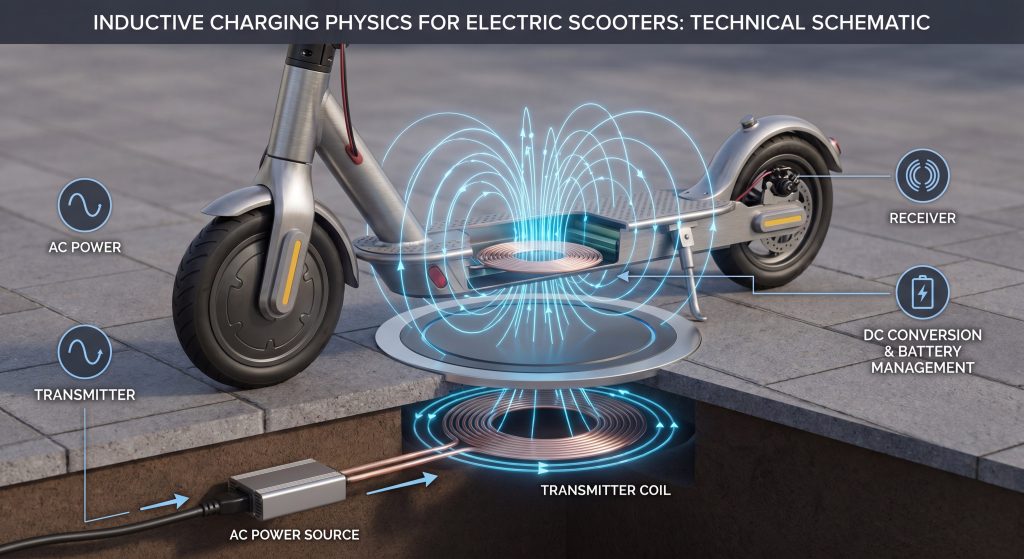
The Future of Cordless Charging for Electric Scooters lies in a highly integrated network of inductive ground pads, resonant parking docks, and weatherproof receiver plates that completely eliminate the manual hassle of plug-in cords. For years, both private riders and large-scale fleet operators have struggled with standard wired chargers, dealing with cables that fray, snap, and fail when exposed to the elements. Imagine standing in a heavy downpour, trying to jam a wet charging cable into a dirt-clogged, rain-soaked port while worrying about short circuits and lost operational hours. Fortunately, implementing wireless charging for electric scooters offers a seamless, weatherproof alternative that charges vehicles automatically the moment they are parked. Is wireless charging for electric scooters the future? Yes, wireless charging for electric scooters is absolutely the future of urban micro-mobility because it solves the ultimate friction point of physical cable wear. By replacing fragile ports with durable induction plates, cities and operators can run continuous transport loops with zero manual plug-in effort. This technological leap allows vehicles to charge automatically whenever they park, maximizing fleet utility and convenience. What is driving the need for cordless power? As micro-mobility usage continues to surge globally, cities require highly reliable infrastructure to support millions of daily trips. The constant manual labor of collecting, plugging, and redeploying vehicles creates a massive bottleneck that threatens operational efficiency. Think about it: This systemic friction forces the industry to seek automated, cord-free power alternatives. Private commuters also crave a more intuitive charging experience that mirrors modern smartphone convenience. Rolling home and simply parking your vehicle over a pad is far superior to untangling heavy cords. Transitioning to a touchless system represents the natural evolution of personal electric transport. How do physical plugs fail your modern fleet? Standard plug-in connectors are notoriously fragile and highly susceptible to mechanical failure under heavy daily use. When exposed to harsh weather conditions, these open metal ports quickly corrode, gather dirt, or bend out of shape. Let’s face it: These frequent physical failures cause significant downtime and ballooning maintenance costs. Every hour a scooter spends in the repair shop is an hour of lost revenue and rider frustration. Shifting to solid-state, contact-free plates completely removes these physical points of failure. This simple upgrade dramatically improves the lifetime durability of your transportation assets. Key Takeaway:Eliminating physical charging ports prevents the most common mechanical failures in micro-mobility fleets today. Sealed induction systems guarantee continuous operation regardless of dirt, debris, or heavy rain. Feature Traditional Wired Charging Wireless Inductive Charging Physical Wear High (frequent port/cable damage) Zero (no physical contact) Weather Hazard High (risk of shorting in rain) None (hermetically sealed) User Effort Manual plug-in required Automated upon parking Fleet Downtime High (due to port repairs) Minimal (continuous top-offs) Analyzing these systemic vulnerabilities reveals why moving toward a sealed, plug-free standard is critical for long-term fleet survival. How does wireless charging for electric scooters work? To understand how wireless charging for electric scooters works, we must look at the principles of electromagnetic induction. The system uses a transmitter coil in the ground pad and a receiver coil beneath the scooter deck to transfer power across an air gap. This setup converts mains alternating current into a safe, localized magnetic field that directly charges the vehicle’s battery. Is magnetic resonance key to constant power? Magnetic resonance is a highly advanced form of induction that allows energy to transfer efficiently over larger physical distances. Traditional inductive pads require strict, millimeter-perfect physical contact to initiate a charge. Here is the thing: This flexibility makes resonance incredibly practical for real-world public parking setups. By utilizing matching resonant frequencies, energy can flow smoothly even if a scooter deck sits several inches above the ground pad. This advancement eliminates the need for expensive mechanical lowering systems or complex physical docks. It delivers a reliable charge every single time. How do transmitter coils send power safely? The transmitter coil embedded in the charging pad remains completely dormant until it detects a matching receiver coil. Once aligned, it initiates a high-frequency alternating current to generate a safe, localized magnetic field. Make no mistake: These automated safeguards prevent accidental shocks or unintended energy discharge. As the magnetic field reaches the scooter’s receiver coil, it induces a secondary current. An internal bridge rectifier then converts this alternating current back into direct current to feed the battery. This closed loop ensures that high-voltage power is never exposed to the outside world. Key Takeaway:By utilizing highly coordinated magnetic coils and safety handshakes, wireless energy transfer remains completely isolated, safe, and efficient. Parameter Standard Inductive Charging Advanced Resonant Charging Operating Frequency 80 kHz – 300 kHz 6.78 MHz Max Air Gap Distance 0.5 inches – 1.5 inches 2.0 inches – 6.0 inches Alignment Tolerance Low (requires precise alignment) High (supports loose parking) Power Output Range 100W – 350W 250W – 1000W+ Understanding these electrical mechanics helps fleet operators evaluate the optimal power output and spacing required for safe municipal deployment. Why choose wireless charging for electric scooters? Selecting wireless charging for electric scooters is the smartest way to dramatically reduce ongoing operational overhead while enhancing rider safety. Removing the physical cord eliminates the primary point of wear, protecting the internal electronics from environmental damage. This shift results in a highly reliable transit network that functions perfectly in any weather condition. Can you reduce maintenance costs immediately? Wired chargers are a constant drain on company resources due to regular cable failures, physical wear, and vandalized charging stations. Eliminating physical cables from the equation removes these persistent liabilities from your balance sheet. Let’s face it: These immediate savings allow operators to achieve profitability much faster than traditional networks. A sealed chassis also means that delicate battery management systems are never exposed to moisture during charging. This protection extends the overall chemical lifespan of your expensive battery cells. The long-term savings on battery replacement are truly substantial. Does it improve daily charging convenience? For everyday commuters, the physical hassle of plugging in a heavy scooter after a long ride

The Future of Cordless Charging for Electric Scooters Read More »

Is Your Garage Safe for Electric Scooter Storage? A Complete Safety Guide

Storing your electric scooter in the garage seems convenient, but is it truly safe? Many owners assume it’s the perfect spot, only to find that extreme temperatures, humidity, or poor security have caused irreversible damage. A dead battery, rusted parts, or a stolen scooter are common outcomes of improper storage, turning your convenient ride into a source of frustration. Yes, you can store an electric scooter in a garage, but only if the environment is controlled. The ideal garage must be dry, secure, and maintain a stable temperature between 50°F and 77°F (10°C and 25°C). Storing a scooter in a garage with extreme heat, freezing temperatures, or high humidity can damage the battery, electronics, and frame, potentially voiding your warranty. So, how can you make your garage a safe haven for your scooter? Here’s the secret… This guide will walk you through everything you need to know, from managing temperature and humidity to implementing the best security practices. 1. Why Is Proper Electric Scooter Storage So Important? Proper storage is a critical aspect of electric scooter ownership that directly impacts its long-term health and safety. The most important component to consider is the lithium-ion battery. These batteries are sensitive to their environment, and improper storage can drastically shorten their lifespan. Leaving a scooter in a place that is too hot or too cold can lead to a permanent loss of capacity, meaning your rides will get shorter over time. Beyond the battery, the scooter’s other electronic components are also at risk. The controller, display, and wiring are all vulnerable to damage from moisture and extreme temperatures. This is crucial because… corrosion on these parts can lead to intermittent power, faulty readings, or a complete electrical failure. The scooter’s structural integrity is also at stake. High humidity can cause the frame to rust, while prolonged sun exposure can degrade plastic parts and tires. Finally, there are the concerns of safety and security. A scooter that is not stored securely is an easy target for theft. Furthermore, improper charging practices during storage can create a fire hazard. Taking the time to store your scooter correctly not only protects your investment but also ensures it is safe and ready to ride whenever you need it. Storage Factor Risk of Improper Storage Best Practice Battery Health Permanent loss of capacity Store at a moderate temperature and 40-60% charge Electronics Corrosion and failure Keep the scooter in a dry, low-humidity environment Structural Integrity Rust and degradation Use a protective cover and avoid direct sunlight 2. What Are the Ideal Temperature Conditions for Garage Storage? Temperature is the most critical factor when storing your electric scooter, especially for its battery. Batteries operate best within a specific temperature range, and storing them outside this range can cause irreversible damage. The ideal storage temperature for most scooter batteries is between 50°F and 77°F (10°C and 25°C). Storing your scooter within this cool, stable range will do more to preserve its battery life than anything else. Extreme cold is a major enemy of battery performance. If you store your scooter in a garage where temperatures drop below freezing (32°F or 0°C), you will notice a temporary drop in range and power. But here’s the thing… repeatedly storing or charging the battery in freezing conditions can lead to lithium plating, a permanent degradation of the battery’s internal structure that reduces its capacity. Extreme heat is even more dangerous. Storing your scooter in a hot garage, where temperatures can exceed 100°F (38°C), accelerates the chemical degradation of the battery cells. This leads to a faster loss of capacity and can cause the battery to swell. In extreme cases, heat can lead to thermal runaway, a significant fire hazard. Monitoring your garage’s temperature and taking steps to insulate it can make a world of difference. Temperature Range Impact on Battery Recommended Action Below 32°F (0°C) Risk of permanent damage if charged Never charge below freezing; bring battery inside 50°F to 77°F (10°C to 25°C) Optimal Storage Range Maintain this temperature for longevity Above 77°F (25°C) Accelerated degradation Improve ventilation or move to a cooler location 3. How Does Humidity in a Garage Affect Your Scooter? While temperature gets the most attention, humidity is a silent killer for electric scooters. Many garages are surprisingly damp, and this moisture can wreak havoc on your scooter over time. The most obvious issue is corrosion. Metal components, including the frame, screws, and brake parts, can begin to rust, weakening the scooter’s structure and compromising its safety. Even more concerning is the effect of humidity on the scooter’s electronics. The controller, wiring, and connectors are all susceptible to damage from moisture. Here’s why that’s a problem… when moisture gets into these electrical components, it can cause short circuits, leading to erratic behavior or a complete failure. Corrosion on the electrical contacts can create poor connections, resulting in power loss and an unreliable ride. Furthermore, a damp environment is the perfect breeding ground for mold and mildew. You can monitor the humidity level in your garage with a hygrometer. If you find the humidity is consistently above 60%, you should take steps to control it. Using a dehumidifier or improving the garage’s ventilation can create a much safer storage environment and protect your scooter from the slow damage of excess moisture. Humidity Level Risk to Scooter How to Control It High (>60%) High risk of rust, corrosion, and mold Use a dehumidifier and improve ventilation Moderate (40-60%) Low risk, generally safe Monitor periodically Low (<40%) Ideal for preventing corrosion No action needed 4. What Are the Risks of Charging Your Scooter in the Garage? Charging your scooter in the garage is convenient, but it introduces risks that you must manage. The primary concern is fire safety. While rare, fires can happen, and lithium-ion batteries contain a huge amount of energy. The most common cause of charging fires is using a damaged or incorrect charger. You should only ever use the charger that came with your scooter or

Is Your Garage Safe for Electric Scooter Storage? A Complete Safety Guide Read More »

Are Electric Scooters Truly Green? The Real Truth

Yes, electric scooters are highly environmentally friendly when you own your ride rather than relying on shared rental programs. If you are tired of spending your morning trapped in gridlocked traffic, watching fuel prices climb, and feeling the stress of a long, pollution-heavy commute, you are not alone. Gridlock wastes your valuable time and harms our planet’s air quality. Fortunately, switching to a personal Electric Scooter offers a clean, fast, and incredibly fun solution to modern urban travel. Why Is the Electric Scooter So Popular Today? The Electric Scooter has skyrocketed in popularity because it offers an incredibly fast, affordable, and flexible way to navigate congested urban areas. Think about it. Why spend hours trapped in traffic when you can glide smoothly past gridlock? Rising Worldwide Sales Trends Are you curious about how fast this micro-mobility revolution is expanding across the globe? Look at the facts: millions of commuters are ditching traditional transportation in favor of light electric alternatives. Here is why. The demand for flexible urban mobility has triggered massive sales growth in both North American and European cities. Why Are Commuters Making the Switch? How much money could you save by changing your daily transit habits? When you choose a personal ride, you instantly eliminate expensive parking fees, fuel costs, and transit passes. Let that sink in. Your daily commute becomes a customized journey that fits perfectly around your schedule. Key Takeaway: The surging popularity of modern micro-mobility solutions is driven by a global shift toward cost-effective, time-saving, and accessible urban transit alternatives. Driver of Popularity Direct Benefit to You Long-Term Impact Traffic Avoidance Bypasses gridlocked lanes Shorter, predictable commute times Financial Savings Eliminates fuel and parking fees Hundreds of dollars saved annually Understanding why these vehicles are gaining massive popularity is essential, but we must also examine whether negative public misconceptions are holding riders back. Do Electric Scooter Myths Affect Public Perception? Yes, common myths surrounding the electric scooter often skew public perception by exaggerating safety issues and focusing heavily on rider error. Many media reports fail to distinguish between public rentals and personal vehicles. Let that sink in. Debunking the Safety Scares Are you worried that lightweight electric vehicles are inherently dangerous to ride? Think about it. Statistically, modern engineering makes these vehicles remarkably stable when operated responsibly. Here is why. Most reported incidents are not caused by manufacturing defects, but by external road hazards and lack of rider awareness. Is Rider Error to Blame for Accidents? Did you know that the vast majority of micro-mobility accidents are entirely preventable? When you analyze the data, sidewalk riding and riding under the influence emerge as the primary causes of injury. But that is not all. Learning local traffic rules is your best defense against accidents. Key Takeaway: Education and infrastructure—not vehicle design—are the critical factors in reducing accidents and improving the safety reputation of modern light electric vehicles. Public Perception / Myth Statistical Reality Root Cause of Concern High Vehicle Danger Infrastructure and rider behavior dictate safety levels Lack of dedicated lanes and rider education Sidewalk Riding Safety Sidewalk riding increases pedestrian conflict rates Insufficient municipal riding regulations While public misconceptions often stem from user behavior rather than the vehicle itself, a larger question remains: how do these micro-mobility alternatives perform when evaluated strictly on environmental sustainability? Does an Electric Scooter Harm the Environment? No, a personal Electric Scooter is remarkably eco-friendly when compared to fossil-fuel vehicles, especially when lifecycle emissions are properly managed. Let that sink in. By choosing electricity over gasoline, you immediately eliminate direct tailpipe emissions. Evaluating the Carbon Footprint How much can you reduce your carbon footprint by switching to electric power? While battery manufacturing does require an initial energy investment, the operational phase is incredibly clean. Here is why. Recharging your vehicle uses a fraction of the power needed by an electric car, minimizing grid demand. What Do Lifecycle Studies Reveal? Are you confused by scientific reports that paint a negative picture of micro-mobility? If you read closely, you will see that these negative studies focus almost entirely on short-lived shared rental fleets. Think about it. A high-quality personal ride amortizes its manufacturing footprint over thousands of miles, making it incredibly green. Key Takeaway: While manufacturing requires an upfront carbon cost, the operational phase of light electric vehicles offers a massive net reduction in greenhouse gas emissions compared to fossil-fuel vehicles. Lifecycle Phase Environmental Impact Mitigation Strategy Manufacturing Moderate emissions Utilize highly recyclable materials and green energy Operational Use Low emissions Source electricity from renewable grids for recharging Understanding the raw lifecycle emissions of a personal vehicle is only half the battle; to see the full environmental picture, we must examine the operational realities of commercial rental networks. Are Rental Electric Scooter Fleets Vandalized? Yes, commercial rental electric scooter fleets frequently face severe vandalism and high depreciation, which heavily reduces their environmental benefits. When rental units are mistreated by the public, their useful life is cut short. The Real Cost of Ride-Sharing Services Have you ever thought about the hidden emissions of shared transit models? While riding a rental is fun, the logistics behind them are surprisingly carbon-heavy. Here is why. Fuel-guzzling collection vans must drive around cities daily to retrieve, charge, and redeploy these shared fleets. Why Do Shared Models Suffer Vandalism? Have you ever wondered why public users treat shared vehicles with such little care? Because they do not own them, riders often leave them exposed to theft, physical damage, and the elements. Let that sink in. This lack of ownership leads to thousands of units being destroyed or thrown into waterways every year. Key Takeaway: The short operational lifespan and carbon-heavy logistics of shared rental fleets significantly reduce their overall environmental benefits. Shared Fleet Challenge Environmental Impact Operational Consequence Logistical Recharging High vehicle emission overhead Fossil-fuel vans driving daily to collect and redeploy fleets Public Vandalism Premature landfill waste Heavy depreciation and short average vehicle lifespans Because the structural vulnerabilities and logistical overhead of shared fleets compromise their

Are Electric Scooters Truly Green? The Real Truth Read More »

Electric Scooter Laws In Nebraska: The Complete Guide for Commuters

Are electric scooters legal in Nebraska? Yes, electric scooters are legal in Nebraska, but navigating the confusing patchwork of local rules can make any rider feel like they are one wrong turn away from an expensive ticket. Staring at conflicting guidelines between different towns makes commuting stressful and leaves you second-guessing your route. Fortunately, our comprehensive guide to municipal electric scooter laws strips away the complex legal jargon to keep your daily ride smooth, safe, and fully compliant. Are E-Scooters Legal Across the State of Nebraska? Understanding Nebraska’s Electric Scooter Laws is essential because there is no single state-wide framework governing personal micromobility devices. Instead, the state delegates regulatory authority to individual cities and towns, creating different rules depending on your zip code. To explore wider micromobility trends and tips, you can browse through our comprehensive blog where we dissect safety guides, maintenance, and vehicle comparisons. What Is the Current Legal Status of E-Scooters? You might be wondering about the state’s official stance on personal electric rides. Here is the honest truth: This classification gives riders baseline rights on public roads across the state. However, local towns still hold the ultimate power to restrict your daily route. Why Are Local Ordinances So Important Here? Navigating different towns can become a legal headache if you do not know the local ordinances. Think about it: A minor oversight can lead to unexpected municipal fines that ruin your ride. Therefore, knowing the exact rules of your destination is crucial. Key Takeaway: Always check municipal ordinances before riding outside Nebraska’s two largest cities, as local rules dictate your legal boundaries. Region Primary Regulatory Authority State Framework Exist? Key Risk Factor Omaha City Municipal Code No Local speed zones Lincoln City Municipal Code No Strict campus rules Rural Areas County / Town Clerks No Outdated bike laws This breakdown highlights how municipal jurisdiction supersedes state silence, making localized research mandatory. Do You Have to Register an E-Scooter with the DMV? Nebraska’s state-level Electric Scooter Laws make the registration process incredibly simple for personal owners. You will be pleased to know that these micromobility vehicles are fully exempt from titling and DMV registration across the entire state. To see how this compares to other light models, check out our sleek and fully compliant models designed for stress-free urban commuting. Are Personal Electric Scooters Exempt from DMV Registration? The Nebraska Department of Motor Vehicles classifies personal electric scooters as exempt utility devices. Believe it or not: This means you can purchase a scooter and hit the road immediately without waiting in long DMV lines. It is the ultimate hassle-free transportation solution. Do You Need Number Plates for Your Electric Scooter? Some riders worry about displaying visible plates when cruising on public roads. On top of that: You can enjoy a clean aesthetic on your personal ride without any bulky mounting brackets. Your scooter is legally cleared to run plate-free. Key Takeaway: You save money and time because personal electric scooters bypass all DMV registration fees and plate requirements statewide. The registration policies remain beautifully consistent across all local and state levels, minimizing administrative hurdles for riders. Is a License Required to Ride a Scooter in Nebraska? When examining Nebraska’s Electric Scooter Laws, the licensing requirements can vary significantly between different jurisdictions. While the state does not mandate a driver’s license for electric scooters, certain municipalities require some form of official identification. Do You Need a Driver’s License in Omaha? If you plan to ride in Omaha, you might be wondering if your standard driver’s license is necessary. Let’s face it: Having your ID ready ensures you can easily access micromobility options whenever you need them. It is always best to keep it on hand. What Permits Are Needed to Ride in Lincoln? In Lincoln, the rules are slightly more restrictive for local and visiting riders alike. Here is the kicker: Failing to carry identification can turn a fun ride into a legal headache very quickly. Make sure your wallet is secure before heading out. Key Takeaway: Always carry a valid driver’s license or state ID card when riding in Nebraska’s major metropolitan areas to avoid legal penalties. Jurisdiction Driver’s License Required? Alternative State ID Allowed? Permit Acceptable? Omaha Recommended Yes (for identification) Yes Lincoln Yes Yes (state-issued ID) Yes Reviewing these license restrictions reveals a split approach between Omaha’s relaxed recommendations and Lincoln’s strict enforcement. What Are the Minimum Age Limits for Nebraska Riders? Age restrictions represent a critical pillar of local Electric Scooter Laws across the state’s primary urban centers. Both Omaha and Lincoln enforce clear rules regarding how old a rider must be to legally operate these vehicles on public streets. Can Teenagers Under 18 Ride Legally in Nebraska? Many parents wonder if their children can use electric scooters for school commutes or weekend rides. To be blunt: Keeping underage riders off public roads is a matter of both legal compliance and physical safety. Private properties remain the safest playground for minors. How Do Rental Companies Enforce Age Restrictions? Shared scooter fleets use advanced technology to prevent underage riders from accessing their fleets. How do they do it? These verification steps help keep the streets safe and ensure that only mature riders are navigating active traffic lanes. Bypassing these checks carries severe legal risks. Key Takeaway: The legal age limit is strictly set at 18 across Nebraska’s urban hubs, meaning younger riders are confined to private property. Location Minimum Legal Age Verification Required? Underage Penalty? Omaha 18 Years Yes (In-App Scan) Parental Citation Lincoln 18 Years Yes (ID Verification) Direct Fine The strict age caps detailed below protect younger riders while ensuring traffic safety compliance on public roadways. Can You Legally Ride Electric Scooters on Sidewalks? Municipal Electric Scooter Laws in Nebraska generally prohibit riders from operating on pedestrian sidewalks in commercial areas. Instead, cities designate public roads and marked bike lanes as the primary pathways for micromobility. If you want a scooter that handles street transitions perfectly, explore our compact Model B which

Electric Scooter Laws In Nebraska: The Complete Guide for Commuters Read More »

Electric Scooter Laws In North Carolina: The Complete Guide to DMV & Local Rules

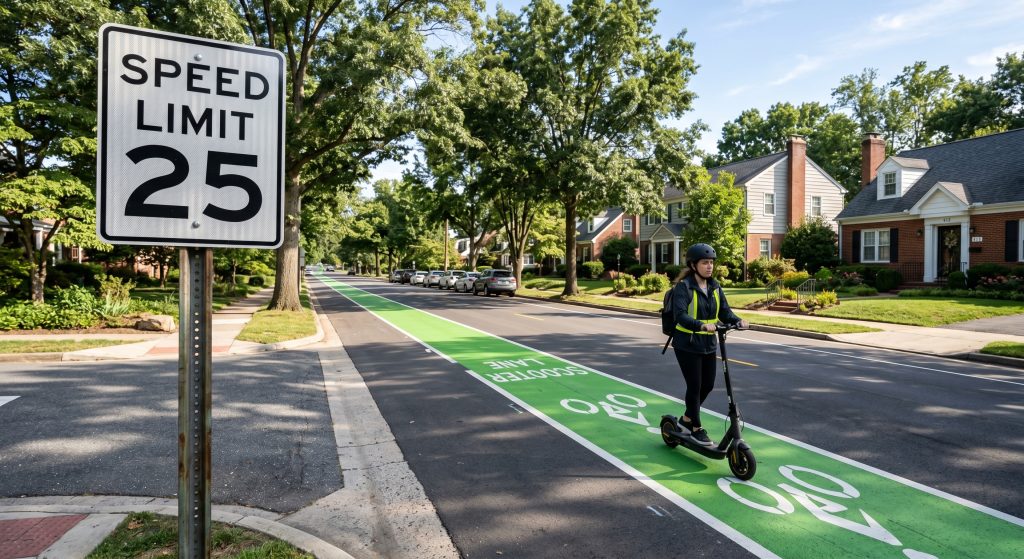
You pull your electric scooter out of the box, ready to zip through North Carolina’s streets, but a nagging question stops you cold: are you actually riding legally? The state’s legal framework remains highly fragmented, leaving riders vulnerable to unexpected local citations and confusing DMV guidelines. Without clear statewide regulations, you risk operating what local police might classify as an unregistered moped or even an illegal motorcycle. This regulatory gray area can turn a simple morning commute into an expensive legal headache with local authorities. Fortunately, keeping up with Electric Scooter Laws does not have to be an uphill battle. This comprehensive guide breaks down municipal exceptions, DMV requirements, and safety standards to keep your daily ride completely legal across the Tar Heel State. Are there statewide scooter rules in NC? The current moped classification Yes, North Carolina does have statewide regulations, which means understanding state-level Electric Scooter Laws is essential to ensure your ride is fully legal. Currently, any two- or three-wheeled vehicle that cannot exceed 30 mph on level ground is legally treated as a moped. This means standard personal e-scooters fall directly into this category by default. This classification binds you to state DMV registration laws. The motorcycle speed threshold If your device can exceed the 30 mph threshold, North Carolina’s legal framework shifts significantly. Think about it this way: at this high speed, the DMV reclassifies the vehicle as a motorcycle, subjecting you to strict motorcycle standards. This means high-performance models require specialized registration and licensing. Standard commuter devices, however, are designed to remain well within safe, moped-class velocity limits. Staying below this threshold simplifies your legal requirements dramatically. Key Takeaway: Under North Carolina state law, electric scooters are legally classified as mopeds if their maximum speed is 30 mph or less, but they are treated as motorcycles if they go faster. Vehicle Classification Top Speed Range Key Legal Requirements Moped Class Under 30 mph DMV registration, standard driver’s license Motorcycle Class Over 30 mph DMV registration, motorcycle endorsement, safety inspection The following analysis guides your understanding of the licensing requirements you must satisfy before hitting the pavement. Do you need a license to ride in NC? DMV registration requirements Yes, you do need a valid license to ride an e-scooter legally in North Carolina because of their state-level moped classification. Because the state categorizes these devices as mopeds, they technically require formal registration with the North Carolina DMV. This process involves submitting proof of ownership and paying a nominal registration fee. Driver’s license rules But that is not all. To operate any moped-class vehicle on public roadways in North Carolina, you must hold a valid driver’s license. This can be a standard Class C license or a learner’s permit. Riding on public streets without a valid license can result in immediate traffic citations. Key Takeaway: You must possess a valid driver’s license or learner’s permit to operate an e-scooter on NC roads, and the vehicle technically requires DMV registration under state-level moped rules. Requirement Type Legal Status Action Needed Driver’s License Mandatory Must carry a valid Class C license or permit DMV Registration Mandatory (State Level) Submit proof of ownership to the local DMV office Understanding licensing requirements is vital, but age-based limitations also dictate who can legally ride. How old do you have to be to ride? State minimum age limit You must be at least 16 years old to legally ride under North Carolina’s Electric Scooter Laws when operating on public streets. At the state level, North Carolina moped laws dictate that riders must meet this minimum age requirement. Operating these devices under this age limit on public streets is strictly prohibited. Local city age restrictions While the state sets the baseline at 16, individual municipalities have the authority to raise this limit. Here is the deal: major cities often set stricter limits to manage dense urban traffic. For example, Raleigh has established an older age threshold of 18 for riders using micromobility options. Always consult local municipal codes to ensure compliance in your specific city. Key Takeaway: The baseline minimum age to ride an e-scooter in North Carolina is 16, though major cities like Raleigh raise the age limit to 18. Jurisdiction Minimum Age Rule Reference State of North Carolina 16 Years Old General Moped Statutes City of Raleigh 18 Years Old Local Municipal Code These age parameters keep riders safe, but you must also know which public roads are actually open to scooter traffic. Can you ride an e-scooter on roads? Street speed limit rules Yes, you can ride your electric scooter on public roads in North Carolina, but only under very specific speed restrictions. Riding on the road is legal in North Carolina, but you must restrict your travel to specific streets. State laws limit moped-class vehicles to roadways with posted speed limits of 25 mph or less. Riding on high-speed thoroughfares or highways is illegal and highly dangerous. Where to ride safely Navigating urban areas safely requires choosing highly portable, compact electric scooter models that match city traffic patterns. Choosing a lightweight option makes it easier to transition between permitted streets and designated parking hubs. This can save you a lot of hassle. Make no mistake, utilizing quiet residential streets and marked lanes is the best way to enjoy your daily commute. This protects you from fast-moving traffic and keeps you fully compliant with state speed-matching guidelines. It also keeps you visible to other drivers. Key Takeaway: E-scooters are permitted on North Carolina public roads, provided the road’s posted speed limit does not exceed 25 mph. Roadway Type Speed Limit Legally Permitted? Residential Streets 25 mph or less Yes Major Arterials 30 mph to 45 mph No State Highways 55+ mph No While road access is clear, the rules regarding sidewalk riding vary dramatically depending on the city you are in. Are e-scooters legal on NC sidewalks? Sidewalk bans in Raleigh No, navigating municipal Electric Scooter Laws reveals that sidewalk riding is generally illegal in major cities across

Electric Scooter Laws In North Carolina: The Complete Guide to DMV & Local Rules Read More »

Why Kids Should Not Ride Electric Scooter: The Safety Facts

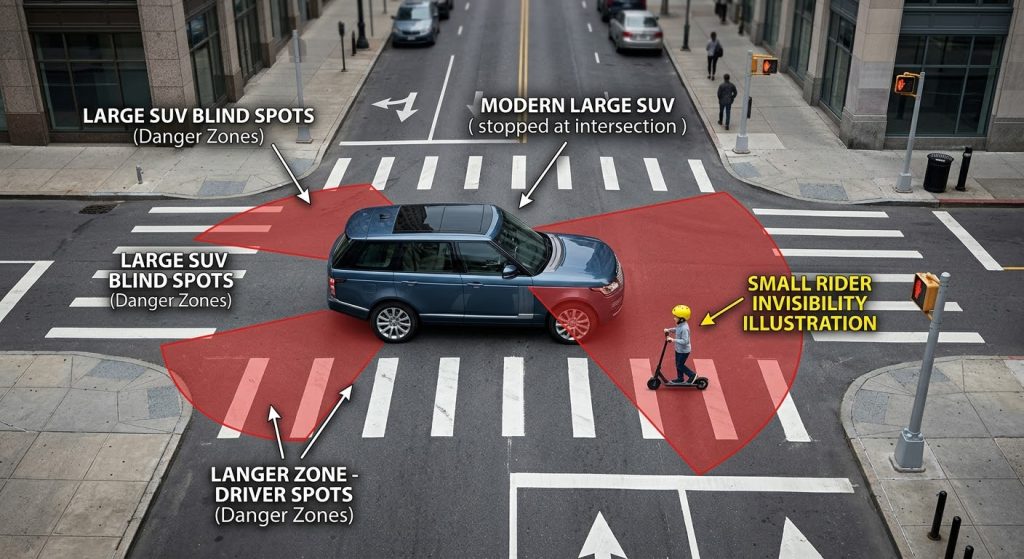
While seeing your child zoom down the sidewalk might look like simple fun, the reality is that an electric scooter is a powerful motorized vehicle that carries significant health risks. As pediatric experts, we want to help you understand the dangers that these high-speed devices pose to developing bodies and why waiting is the safest choice for your family. Is the speed of an electric scooter dangerous for kids? No, children are not physically or developmentally prepared for the high speeds these devices achieve without effort. Unlike a traditional bicycle where speed is earned through physical exertion, a motorized device can hit 15 to 25 mph instantly, which is far faster than a child can safely manage. The Impact of High Velocity Think about this: a fall at 20 mph is vastly different than a tumble from a slow-moving tricycle. Friction and Braking Challenges You might not realize that braking at high speeds requires significant coordination. Key Takeaway on Speed Risks The bottom line? The velocity of these machines turns minor falls into emergency room visits. Risk Factor Impact on Children Max Speed Often exceeds 15-20 mph, surpassing child reaction times. Braking Requires advanced motor skills to avoid flipping. Surface Small wheels catch on tiny cracks at high speed. What injuries happen on an electric scooter? Riding results in severe orthopedic fractures, facial trauma, and traumatic brain injuries that are often more complex than typical playground accidents. Because of the standing position and high center of gravity, children are frequently thrown forward onto their faces or outstretched arms. Common Orthopedic Fractures Look: we are seeing a spike in complex bone breaks that require surgery. Soft Tissue and Dental Damage Here is the truth: a helmet doesn’t protect the face or teeth. Key Takeaway on Physical Injuries It’s a fact that motorized scooter injuries are significantly more severe than bicycle-related accidents. Injury Category Typical Severity Recovery Period Head Trauma High (Concussions/Skull fractures) Weeks to Months Fractures Moderate to High (Often requiring surgery) 6-12 Weeks Skin/Dental Moderate (Painful grafting or implants) Variable At what age can a kid ride an electric scooter? You should wait until your child is at least 16 years old before they operate any motorized scooter. This recommendation is supported by the American Academy of Pediatrics (AAP) because of the unique risks associated with motorized transport and the maturity required to navigate them. The 16-Plus Safety Standard Listen: there is a reason for this specific age limit. Legal Restrictions and Local Laws In many areas, including Illinois, riding in public spaces is restricted to those 18 and older. Key Takeaway on Age Requirements The simple truth is that “kid-sized” doesn’t mean “kid-safe” when a motor is involved. Age Group Recommendation Primary Concern Under 16 Do Not Ride Developmental and physical inability to manage risk. 16-18 High Caution Requires adult-grade safety gear and training. 18+ Follow Laws Should always wear a helmet and follow traffic rules. Does an electric scooter require high maturity? Yes, operating these vehicles requires advanced executive function and impulse control that young children have not yet developed. A child’s brain is still learning how to assess “invisible” risks, such as a car turning a corner or the danger of a wet patch of leaves. Executive Function and Fast Movement Think about it. A split-second decision at 15 mph can be the difference between safety and a crash. Reaction Time Under Pressure When things go wrong, a child’s natural instinct is often to freeze or overcorrect. Key Takeaway on Cognitive Readiness The reality is that a child’s brain isn’t wired to handle motorized traffic until their mid-teens. Cognitive Skill Maturity Level in Kids Importance for Riding Impulse Control Low Prevents sudden, dangerous maneuvers. Risk Assessment Developing Helps anticipate car movements or road debris. Spatial Awareness Moderate Vital for maintaining distance from hazards. Can helmets keep an electric scooter rider safe? While a helmet is non-negotiable, a standard bicycle helmet is often insufficient for the high-impact forces of a motorized crash. Many parents don’t realize that standard gear is rated for much lower speeds and different types of falls than those occurring on scooters. Limitations of Standard Cycle Gear The deal is this: a bike helmet is designed for a different fall trajectory. Full-Face Protection Requirements If a device goes over 20 mph, motorcycle-grade equipment is actually what’s needed. Key Takeaway on Safety Equipment Do not rely on a helmet to make an inherently dangerous activity safe for a child. Gear Type Protection Level Missing Coverage Bike Helmet Basic Face, Jaw, Dental, High-speed impact. Pads Moderate Does not prevent internal injuries or fractures. Closed-Toe Shoes Essential Necessary to prevent severe toe/foot lacerations. Is an electric scooter too heavy for a child? Yes, the weight of the battery and motor makes these machines difficult for a child to steer or jump away from during a fall. A typical motorized model can weigh 30 to 50 pounds, which is a significant mass to have land on a small limb. Handling and Maneuverability Issues Here is the problem: a heavy machine is harder to turn quickly. Danger During a Fall or Tumble When a child falls, the heavy scooter often follows them down. Key Takeaway on Machine Mass The physical weight of the motor and battery creates a “crush risk” that manual scooters don’t have. Feature Manual Scooter Electric Model Average Weight 5-10 lbs 30-60 lbs Control Easy to maneuver Heavy and sluggish for kids Fall Risk Easy to step away Often falls on the rider How does an electric scooter behave in traffic? These devices are often invisible to drivers and lack the stability needed to navigate street traffic safely. Because they are quiet and low-profile, cars often don’t see them until it is too late, especially at intersections or when pulling out of driveways. Visibility in Crowded Streets You must realize that a child on a scooter is below the sightline of many SUVs. Navigating Complex Intersections Intersections are the most common site for fatal or life-altering

Why Kids Should Not Ride Electric Scooter: The Safety Facts Read More »

How Do Electric Scooters Make Our Lives Easy?

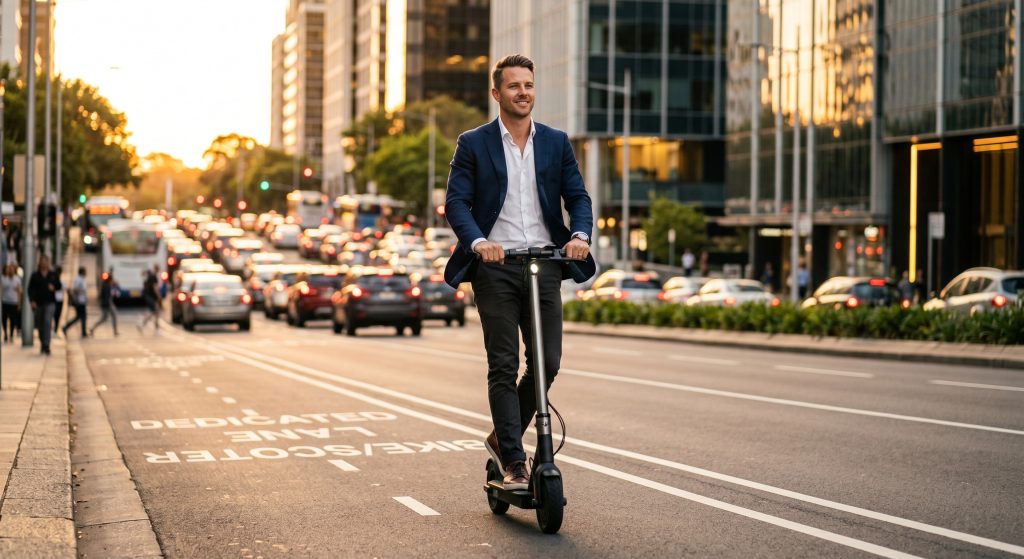
Electric scooters make our lives easy by providing a fast, cost-effective, and stress-free way to navigate crowded urban environments. Do you feel drained by the endless cycle of traffic jams and soaring fuel prices? This daily grind agitates your routine, leaving you exhausted before your workday even begins. An electric scooter solves these problems by offering a portable and efficient way to reclaim your time and energy. Why is an electric scooter better for your daily commute? An electric scooter is better for your daily commute because it allows you to bypass gridlock and reduce travel time significantly. You can navigate through narrow passages and use dedicated bike lanes that cars cannot access. This ensures you arrive at your destination on a predictable schedule every single day. Effortless navigation through traffic Think about it: You will find that your morning mood improves when you aren’t fighting for space on the road. The agility of the frame allows you to weave through stationary vehicles with ease. Reclaiming your morning routine But that’s not all. By slashing your commute time in half, you gain hours of personal freedom every week. This shift transforms your travel from a chore into an enjoyable part of your lifestyle. Benefit Category Impact on Commute Speed Bypasses 90% of urban traffic jams Predictability Arrival times vary by less than 5 minutes Mental Health Reduces daily commuting stress The data shows that switching to a motorized two-wheeler directly correlates with higher levels of commuter satisfaction and time efficiency. Key Takeaway: Choosing an electric vehicle for your daily route eliminates the unpredictability of traffic and grants you more personal time. How does an electric scooter improve urban mobility? An electric scooter improves urban mobility by bridging the gap between public transport hubs and your final destination. It serves as the perfect “last-mile” solution for those who live or work far from train stations or bus stops. You no longer have to worry about long walks or expensive taxi rides for short distances. Achieving true point-to-point travel Check this out: You can ride directly to the entrance of your office or home without any delays. This level of autonomy is something that traditional public transit simply cannot provide. Seamless integration with public transit But wait, there’s more. If your office is two miles from the station, you can cover that distance in minutes. This flexibility makes your entire city feel much smaller and more accessible. Mobility Factor Electric Scooter Advantage Last-Mile Gap Fills the gap between transit and destination Accessibility Reach areas poorly served by buses Flexibility Change your route on the fly Enhanced mobility allows you to explore your city with a level of freedom that was previously restricted by fixed transit schedules. Key Takeaway: Improving your mobility means having the freedom to travel exactly where you need to go without relying on rigid transport networks. Can an electric scooter match petrol performance? Yes, a high-quality electric scooter can match petrol performance with instant torque and rapid acceleration that feels incredibly responsive. Modern motors are designed to provide a punchy ride that keeps pace with city traffic effortlessly. You will notice that the power delivery is smoother and quieter than any combustion engine. Instant throttle response and power The best part? You get to experience the thrill of “silent speed” as you pull ahead of bulky cars. This immediate power makes merging into traffic a much safer and more confident experience. Competitive top speeds for city riders Look at the facts: You won’t feel underpowered or vulnerable when riding on main roads. Modern engineering ensures that these machines are robust enough for daily high-performance use. Performance Metric Electric Advantage Acceleration 0-25 km/h in mere seconds Sound Level Near-silent operation Maintenance No pistons or valves to wear out High-performance electric motors offer a superior power-to-weight ratio that makes traditional petrol scooters feel sluggish and outdated. Key Takeaway: Performance is no longer a compromise, as modern electric drives provide all the speed and torque needed for urban life. Is owning an electric scooter cheaper in the long run? Owning an electric scooter is significantly cheaper over time because you eliminate the need for expensive petrol and frequent mechanical repairs. While the initial investment might seem higher, the daily running costs are incredibly low. You will save hundreds, if not thousands, of dollars every year on fuel and maintenance. Eliminating fuel and oil expenses Simple as that: You can recharge your vehicle overnight using a standard outlet for a fraction of the cost of a gallon of gas. Over a few months, these savings significantly lower your total cost of ownership. Lowering long-term maintenance costs It gets better: You spend less time at the mechanic and more time on the road. The simplicity of the electric drivetrain means there is very little that can go wrong. Expense Category Typical Annual Savings Fuel/Energy Save up to 90% vs Petrol Scheduled Service Save up to 70% vs Petrol Parking/Tolls Often $0 for small scooters The financial benefits of going electric become undeniable once you calculate the massive reduction in daily operational expenses. Key Takeaway: Transitioning to electric power is a smart financial move that pays for itself through drastic reductions in fuel and upkeep costs. What smart features come with an electric scooter? Modern electric scooter models come with advanced smart features like Bluetooth connectivity, GPS tracking, and digital dashboards. These technologies are designed to integrate your ride with your digital life seamlessly. You can monitor your vehicle’s health and navigate the city using the screen right in front of you. Bluetooth connectivity and dashboards Check this out: You will feel like you are riding a vehicle from the future. The interface provides all the data you need to ensure a smooth and informed journey. Integrated security and app tracking But wait, there’s more. Your vehicle stays updated with the latest features without you ever having to visit a service center. This connectivity provides peace of mind whenever you park your scooter in

How Do Electric Scooters Make Our Lives Easy? Read More »

Shopping Cart
Scroll to Top