...

July 2025

Can You Use Lime Scooter Batteries in Personal E-Scooters?

E-scooter owners often wonder about using Lime batteries to boost their ride performance. Without proper knowledge, you risk damaging your scooter, voiding warranties, or facing legal issues. This guide reveals the technical and legal realities of battery compatibility. Lime scooter batteries are not compatible with personal e-scooters due to proprietary designs, custom connectors, and integrated security systems. These batteries use specialized voltage outputs, charging protocols, and battery management systems that don’t work with standard e-scooter electronics. Attempting to use Lime batteries can damage your scooter and void warranties. But here’s the thing – better alternatives exist that won’t risk your scooter or legal standing. 1. Are Lime Scooter Batteries Compatible with Personal E-Scooters? Lime scooter batteries are not compatible with personal e-scooters due to proprietary design elements. These batteries use custom voltage outputs that don’t match standard e-scooter requirements. Most personal scooters operate on 36V or 48V systems, while Lime batteries use different specifications. Here’s why it matters – voltage mismatches can damage your scooter’s motor and controller permanently. Lime batteries output power at levels designed for their specific scooter models, not consumer devices. Physical connectors present another major compatibility issue. Lime uses proprietary connector designs that don’t fit standard e-scooter battery ports. The battery housing dimensions also differ significantly from consumer scooter battery compartments. Safety certifications create additional barriers to compatibility. Lime batteries carry certifications specific to their fleet operations. Personal e-scooters require different safety standards and certifications for consumer use. Warranty implications make Lime battery use even more problematic. Using non-OEM batteries voids most e-scooter warranties immediately. Manufacturers can deny all future warranty claims if they detect unauthorized battery modifications. Battery chemistry differences also affect compatibility. Lime uses high-discharge lithium cells optimized for commercial use patterns. Consumer e-scooters typically use different cell chemistry designed for recreational riding patterns. Compatibility Factor Lime Battery Standard E-Scooter Result Voltage Output Proprietary 36V/48V Incompatible Connector Type Custom Standard Won’t fit Safety Certification Fleet-specific Consumer-grade Non-compliant Warranty Coverage Voids warranty Maintains warranty Risk Battery management systems in Lime scooters communicate with specific hardware. Personal e-scooters can’t interpret these signals correctly. This mismatch can cause charging failures, power delivery issues, and safety shutdowns. Security features in Lime batteries prevent unauthorized use. These batteries include GPS tracking, remote disable functions, and theft protection systems. Personal e-scooters lack the infrastructure to support these features. Thermal management systems in Lime batteries operate at different parameters. These systems monitor temperature ranges specific to commercial fleet operations. Personal e-scooters can’t provide proper thermal regulation for Lime batteries. 2. What Technical Challenges Prevent Lime Battery Use? Proprietary battery management systems create the biggest technical barrier. Lime batteries include sophisticated BMS chips that communicate only with Lime scooter controllers. Personal e-scooters can’t decode these communication protocols. The best part? This incompatibility actually protects your scooter from potential damage. Mismatched BMS systems can cause overcharging, thermal runaway, and fire hazards. Custom charging protocols make Lime batteries impossible to charge with standard equipment. These batteries require specific charging voltages, current limits, and timing sequences. Home chargers can’t provide the correct charging profile. Security lockout mechanisms prevent unauthorized battery activation. Lime batteries include digital locks that require authentication codes. Personal e-scooters don’t have access to these unlock sequences. Voltage regulation differences cause power delivery problems. Lime batteries use dynamic voltage regulation based on load conditions. Personal e-scooter controllers expect consistent voltage levels throughout the discharge cycle. Technical Challenge Impact Risk Level BMS Incompatibility Communication failure High Charging Protocol Cannot charge safely Critical Security Lockouts Battery won’t activate High Voltage Regulation Power delivery issues Medium Temperature monitoring systems in Lime batteries operate differently than consumer models. These systems use proprietary sensors and shutdown protocols. Personal e-scooters can’t monitor battery temperature correctly with Lime batteries. Cell balancing algorithms in Lime batteries are optimized for fleet use patterns. Personal riding patterns differ significantly from commercial fleet operations. This mismatch can cause premature battery degradation and safety issues. 3. How Do Lime Batteries Compare to Standard E-Scooter Batteries? Power output specifications differ significantly between Lime and consumer batteries. Lime batteries deliver higher peak power for commercial-grade performance. Standard e-scooter batteries prioritize efficiency and longevity over raw power. Now, you might be wondering about the actual performance differences. Lime batteries can output 1000-1500 watts peak power, while consumer batteries typically max out at 500-800 watts. Battery chemistry differences affect charging and discharge characteristics. Lime uses high-density lithium cells optimized for frequent charging cycles. Consumer batteries often use different chemistry blends for cost efficiency. Charging cycle capabilities vary dramatically between battery types. Lime batteries handle 2000+ charge cycles due to commercial-grade cells. Standard e-scooter batteries typically last 500-1000 cycles before significant degradation. Lifespan and durability factors favor Lime batteries in harsh conditions. These batteries include weatherproofing, shock resistance, and temperature tolerance. Consumer batteries prioritize cost over extreme durability. Specification Lime Battery Standard E-Scooter Advantage Peak Power 1000-1500W 500-800W Lime Charge Cycles 2000+ 500-1000 Lime Weather Resistance IP67 IP54 Lime Cost $300-500 $100-250 Standard Capacity ratings show mixed results between battery types. Lime batteries often have higher amp-hour ratings but at different voltages. Direct capacity comparisons require voltage normalization calculations. Weight differences impact scooter handling and portability. Lime batteries weigh 15-25% more than standard batteries due to robust construction. This extra weight affects acceleration and range efficiency. 4. What Legal Issues Surround Using Lime Batteries? Theft and property law concerns create serious legal risks. Lime batteries remain company property even when found or purchased secondhand. Using these batteries could constitute theft or receiving stolen property. Let me explain the legal framework around shared scooter components. Lime retains ownership of all battery packs, even those removed from damaged scooters. Possession without authorization violates property laws. Intellectual property violations add another legal layer. Lime’s battery designs include patented technologies and trade secrets. Reverse engineering or modifying these batteries could infringe on intellectual property rights. Safety liability risks increase with unauthorized battery use. If a Lime battery causes injury or property damage in your scooter, insurance may deny coverage. You could face personal

Can You Use Lime Scooter Batteries in Personal E-Scooters? Read More »
Is It Safe to Charge Your Electric Scooter at Home?

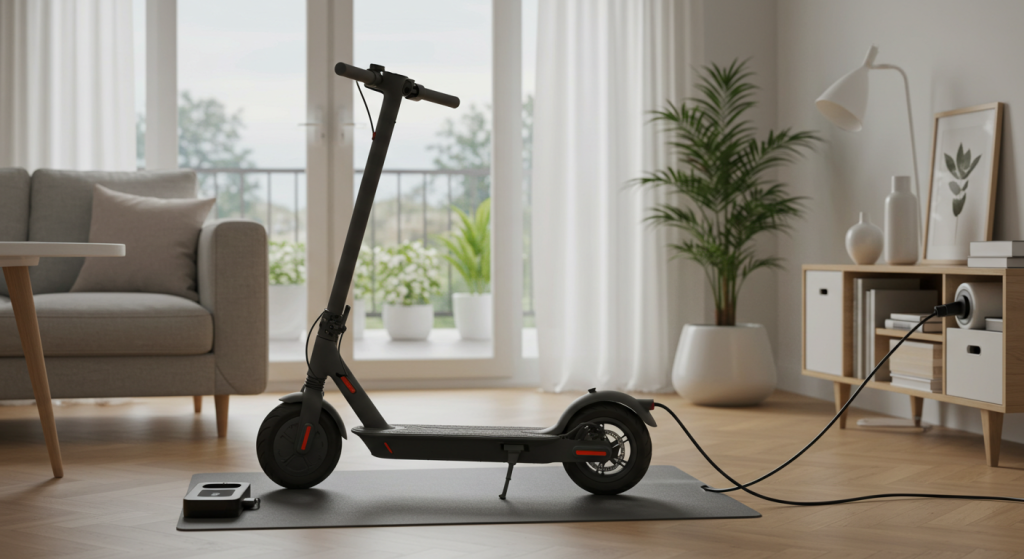
Worried about charging your electric scooter at home but unsure about safety risks? Improper charging can lead to fires, electrical damage, or battery failure costing thousands in repairs. This comprehensive guide shows you how to charge safely, save money, and protect your investment at home. Yes, you can safely charge your electric scooter at home using the original charger, proper ventilation, and basic safety precautions. Most electric scooters are designed for home charging with standard 110V outlets. Follow manufacturer guidelines, avoid overcharging, and charge in well-ventilated areas away from flammable materials. Proper setup prevents fires, extends battery life, and reduces electricity costs significantly. But here’s the thing – knowing the right setup prevents costly mistakes and keeps your family safe while maximizing convenience. 1. What Are the Basic Requirements for Home Charging? Most electric scooters work perfectly with standard household electrical systems. Your home’s 110V electrical infrastructure provides sufficient power for safe, efficient charging. Modern scooters are specifically designed to work with residential power systems. Check your scooter’s power requirements before setting up charging. Most models specify voltage, amperage, and wattage needs in the user manual. These specifications help you choose the right outlet and circuit for safe operation. Power consumption varies significantly by model and battery size. Lightweight scooters typically use 100-300 watts during active charging cycles. Mid-range models consume 200-400 watts. Heavy-duty scooters may require 400-600 watts for optimal charging speed. Here’s why it matters – using inadequate electrical systems or overloading circuits creates serious fire risks and equipment damage. Your home’s electrical circuits can easily handle scooter charging loads. Standard 15-amp household circuits support up to 1,800 watts safely. Most scooters use less than one-third of this capacity. However, avoid charging multiple high-power devices on the same circuit simultaneously. Scooter Type Power Draw Outlet Type Circuit Requirement Charging Time Lightweight (24V) 100-200W Standard 110V 15A circuit 2-4 hours Mid-range (36V) 200-400W Standard 110V 15A circuit 3-6 hours Heavy-duty (48V) 400-600W Standard 110V 20A circuit 4-8 hours Indoor charging locations work best in garages, basements, utility rooms, or dedicated storage areas. These spaces offer excellent ventilation, hard flooring, and separation from living areas. Good ventilation prevents heat buildup that damages batteries and creates safety hazards. Outdoor charging requires weatherproof electrical outlets and covered areas protecting equipment from rain. GFCI outlets provide additional safety for outdoor installations. Never charge in direct sunlight or during storms. Safety equipment should include smoke detectors, fire extinguishers, and adequate lighting in charging areas. Keep charging spaces clean, organized, and free from clutter. Remove flammable materials like gasoline, paint, or cleaning supplies from charging zones. 2. How Do You Set Up a Safe Charging Station at Home? Choose locations with concrete, tile, or other non-flammable flooring for your charging station. Hard surfaces resist fire better than wood, carpet, or vinyl flooring. Concrete garage floors provide ideal charging surfaces with excellent fire resistance. Proper ventilation prevents dangerous heat buildup during charging cycles. Open windows, doors, or use exhaust fans to maintain air circulation. Avoid small closets, tight spaces, or areas without adequate airflow that trap heat and potentially toxic fumes. Cable management keeps your charging setup organized, safe, and professional-looking. Use cable ties, cord organizers, or cable trays to secure charging cords. Route cables away from walkways, doorways, and high-traffic areas to prevent tripping hazards. The best part? A well-designed charging station makes daily use more convenient while dramatically improving safety for your entire household. Dedicated charging areas should include adequate lighting for safe operation during evening hours. Install motion-activated LED lights or permanent fixtures providing clear visibility. Good lighting helps you spot potential problems quickly. Location Type Ventilation Rating Floor Type Safety Score Setup Cost Garage Excellent Concrete 9/10 $50-100 Basement Good Concrete 8/10 $75-150 Utility room Good Tile 7/10 $100-200 Covered patio Excellent Concrete 8/10 $150-300 Fire safety equipment should remain easily accessible from your charging area. Install smoke detectors if none exist in the charging space. Keep a Class C fire extinguisher rated for electrical fires within 10 feet of charging equipment. Temperature control significantly impacts battery health, charging efficiency, and safety. Maintain charging areas between 50-80°F when possible. Extreme temperatures damage batteries, reduce charging efficiency, and create safety risks. Storage solutions keep charging accessories organized and readily available. Install shelves, hooks, or cabinets for chargers, cables, and safety equipment. Organized storage prevents damage and makes equipment easy to find. 3. What Charging Equipment Do You Need? Original manufacturer chargers provide the safest, most reliable charging experience available. Manufacturers design these chargers specifically for your scooter’s battery chemistry, voltage, and capacity requirements. Using original equipment prevents compatibility issues and safety hazards. Third-party chargers may seem cost-effective but often lack proper safety features. Cheap alternatives may use incorrect voltages, inadequate current regulation, or poor-quality components. These deficiencies can damage batteries, create fire hazards, or void warranties. Extension cords work safely when chosen and used correctly. Select heavy-duty cords rated for your scooter’s maximum power draw plus 25% safety margin. Use 12-gauge cords for most scooters. Avoid lightweight household extension cords that overheat under load. Now, you might be wondering about smart charging accessories that add convenience, safety features, and automated control to your charging setup. Surge protectors guard expensive electronics against power spikes, lightning strikes, and electrical fluctuations. Choose models rated for your scooter’s wattage with adequate joule ratings. Replace surge protectors every 3-5 years as protection capabilities degrade over time. Equipment Type Primary Purpose Safety Benefit Typical Cost Replacement Interval Original charger Primary charging Maximum compatibility $30-80 3-5 years Heavy-duty extension Reach distant outlets Prevents overheating $15-30 5-10 years Surge protector Spike protection Prevents damage $20-50 3-5 years Smart timer Automated control Prevents overcharging $15-40 10+ years Smart timers prevent overcharging by automatically cutting power after predetermined periods. Program timers for your battery’s full charging time plus 30-60 minutes buffer. This prevents leaving chargers connected indefinitely while ensuring complete charging. Power strips with individual switches provide convenient control over multiple devices. Choose models with built-in surge protection and adequate amp ratings

Is It Safe to Charge Your Electric Scooter at Home? Read More »

Can Electric Scooters Handle Hills and Steep Terrain?

Struggling to get up that hill on your daily commute? Many riders face this challenge when their scooter lacks the power needed for inclines. Without proper hill-climbing ability, you risk being stranded or forced to walk, defeating the purpose of your electric ride. Electric scooters can climb hills, but their ability depends on motor power, battery capacity, rider weight, and incline steepness. Most standard scooters handle 10-15 degree slopes, while high-performance models can tackle 20-25 degree inclines. Motor wattage, typically ranging from 250W to 1000W+, directly determines climbing capability. But here’s the thing… not all scooters are built the same, and understanding what makes one better than another could save you from costly mistakes. 1. What Makes Electric Scooters Capable of Climbing Hills? Motor power stands as the most critical factor in hill climbing performance. The motor generates torque, which provides the force needed to push against gravity. Higher wattage motors produce more torque, allowing scooters to maintain speed on steeper inclines. A 250W motor typically produces around 20-25 Newton-meters of torque, while a 500W motor can generate 40-50 Newton-meters. The relationship between motor power and hill climbing isn’t just about raw wattage. Motor efficiency plays a huge role in real-world performance. Brushless DC motors offer 85-90% efficiency compared to 75-80% for brushed motors. This efficiency difference translates to better hill climbing performance and longer battery life. Here’s why it matters… a 250W motor might struggle on a 10-degree hill with a 150-pound rider, while a 500W motor handles the same slope with ease. The relationship between power and performance isn’t linear, though. Doubling the motor power doesn’t necessarily double the climbing ability due to factors like weight, aerodynamics, and mechanical losses. Motor Power Maximum Hill Grade Torque Output Typical Use Case 250W 8-10 degrees 20-25 Nm Flat terrain, light hills 350W 10-12 degrees 28-35 Nm Urban commuting 500W 12-15 degrees 40-50 Nm Mixed terrain 750W+ 15-20+ degrees 60+ Nm Steep hills, heavy riders Battery voltage affects motor performance significantly. Higher voltage systems deliver more power to the motor, improving acceleration and hill climbing. Most scooters use 24V, 36V, or 48V systems. A 48V system with the same motor will outperform a 24V system on hills because voltage directly affects the motor’s ability to overcome back-EMF at higher speeds. Battery capacity, measured in amp-hours (Ah), determines how long the scooter can maintain hill climbing performance. Hill climbing consumes 2-3 times more power than flat riding. A scooter with a 10Ah battery might provide 20 miles on flat terrain but only 8-10 miles in hilly conditions. Weight distribution plays a role in traction and stability. The ideal weight distribution for hill climbing is approximately 60% rear, 40% front. This distribution keeps the drive wheel in contact with the ground while maintaining steering control. Riders should lean slightly forward when climbing to maintain grip on the rear wheel. Tire quality and tread pattern affect grip on inclines. Pneumatic tires generally provide better traction than solid tires, especially on wet or loose surfaces. The contact patch area increases with tire width, providing more grip. Tire pressure also matters – slightly lower pressure increases the contact area but reduces efficiency. 2. How Do You Calculate if Your Scooter Can Handle a Specific Hill? Understanding hill grades helps riders make informed decisions about route planning. Hills are measured in degrees or percentages. A 10-degree hill equals roughly an 18% grade. The conversion formula is: Grade % = tan(degrees) × 100. Most smartphone apps can measure incline angles using built-in sensors, making it easy to assess potential routes. The best part? You can estimate your scooter’s capability using simple calculations. Divide your scooter’s motor wattage by your total weight (rider plus scooter) to get a power-to-weight ratio. Higher ratios indicate better hill performance. A ratio of 15-20 watts per kilogram provides good hill climbing for moderate inclines. The physics behind hill climbing involves overcoming gravitational force. The force required equals the sine of the hill angle multiplied by the total weight. For a 200-pound total weight on a 10-degree hill, you need approximately 35 pounds of force at the wheel. This translates to specific motor torque requirements. Grade Percentage Degree Equivalent Force Required (200lb total) Difficulty Level 5-8% 3-5 degrees 17-28 lbs Easy 9-15% 5-8 degrees 28-52 lbs Moderate 16-25% 9-14 degrees 52-85 lbs Challenging 26%+ 15+ degrees 85+ lbs Very difficult Real-world performance often differs from manufacturer claims. Test your scooter on known hills to understand its actual capabilities. Factors like battery charge level, temperature, and rider technique affect performance. Manufacturers typically test under ideal conditions with lightweight riders and full batteries. Battery voltage sag under load significantly impacts hill climbing. As batteries discharge, their voltage drops, reducing available power. Lithium-ion batteries maintain voltage better than lead-acid batteries, providing more consistent hill climbing performance throughout their discharge cycle. Temperature affects both battery and motor performance. Cold weather reduces battery capacity by 20-40%, while hot weather can cause motors to overheat and reduce power output. Optimal operating temperature for most electric scooters is 60-80°F (15-27°C). 3. What Are the Best Electric Scooter Features for Hill Climbing? High-torque motors provide the pulling power needed for steep climbs. Brushless motors offer better efficiency and longer life compared to brushed motors. The torque curve of a motor determines its hill climbing characteristics. Motors with high starting torque perform better on steep inclines from a standstill. Now, you might be wondering… about dual motor systems. Some premium scooters feature dual motors, doubling the available power for extreme hills. Dual motor systems also provide redundancy – if one motor fails, the other can still get you home. However, dual motors increase weight, complexity, and power consumption. Motor controllers play a role in hill climbing performance. Advanced controllers use field-oriented control (FOC) to maximize motor efficiency and torque output. These controllers can provide 10-15% better performance compared to basic square-wave controllers. Feature Benefit for Hill Climbing Performance Gain Dual Motors Double the power output 80-100% High-capacity Battery Sustained power delivery 30-50%

Can Electric Scooters Handle Hills and Steep Terrain? Read More »

Can You Take Your Electric Scooter on the Bus?

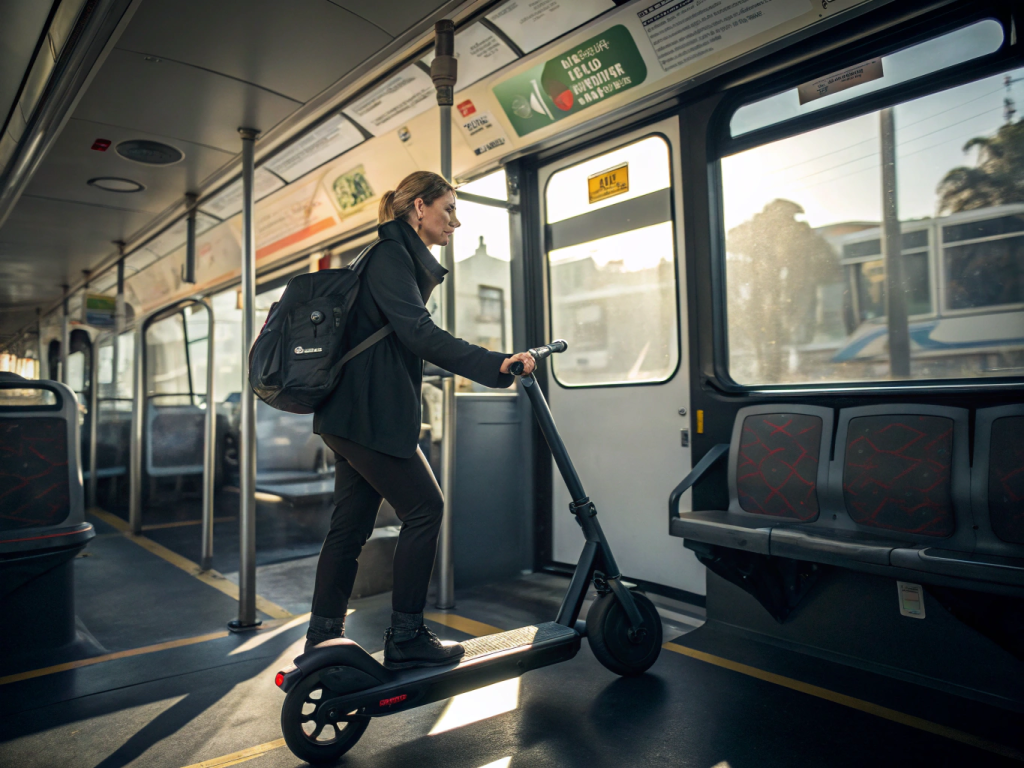
Planning to bring your electric scooter on the bus but unsure about transit rules? Many riders face confusion and potential fines when policies aren’t clear. This guide covers everything you need to know about safely and legally transporting your electric scooter on buses and other public transit. Most bus systems allow folding electric scooters under 20-25 pounds with specific requirements. You’ll typically need to fold your scooter, turn off the battery, and store it in designated areas without blocking aisles or wheelchair spaces. Some systems charge extra fees while others include electric scooter transport in regular fare. But here’s the thing – knowing bus policies beforehand saves you time, money, and embarrassment at stops. 1. What Are the General Bus Rules for Electric Scooters? Bus authorities across the country have developed specific policies for electric scooter transport. Most systems treat folding electric scooters like large luggage items. The key requirement is that your scooter must fold completely and fit within designated storage areas. Weight limits typically range from 20 to 25 pounds for most bus systems. Your electric scooter must be powered off during transport for safety reasons. Some bus authorities also require protective covers to prevent damage to other passengers’ belongings. Here’s why it matters – following these basic bus rules prevents delays and ensures smooth boarding for everyone. Bus System Weight Limit Folding Required Battery Off NYC MTA Buses 25 lbs Yes Yes LA Metro Buses 22 lbs Yes Yes Chicago CTA Buses 20 lbs Yes Yes Size restrictions focus on folded dimensions rather than extended measurements. Most buses accommodate electric scooters that fold to roughly 40 inches long by 20 inches wide. Height restrictions vary but generally allow folded scooters up to 30 inches tall. Bus safety guidelines require riders to secure their electric scooters properly during transport. You cannot leave scooters in aisles or block emergency exits. Many bus systems prohibit riding scooters inside stations or terminals. 2. How Do Different Bus Systems Handle Electric Scooter Transport? Major metropolitan bus networks have varying approaches to electric scooter policies. West Coast bus systems tend to be more permissive with weight limits, while East Coast buses often have stricter regulations. Understanding your local bus rules prevents unexpected boarding denials. New York’s MTA buses allow folding electric scooters under 25 pounds during off-peak hours only. Peak hour restrictions run from 6-10 AM and 4:30-6:30 PM on weekdays. Los Angeles Metro buses permit electric scooters up to 22 pounds but charge a $1 surcharge for scooters over 20 pounds. The best part? Many smaller bus systems follow simpler rules with fewer restrictions than major metropolitan areas. City Bus System Weight Limit Peak Hour Rules Extra Fees San Francisco Buses 25 lbs Allowed None Boston MBTA Buses 20 lbs Restricted 7-9 AM $2 surcharge Seattle Metro Buses 23 lbs Allowed None International bus systems offer interesting comparisons. European buses commonly accommodate electric scooters with weight limits around 20-25 pounds. Asian bus networks often require advance booking for scooter transport. Regional variations within states can be significant. Suburban bus routes typically have more flexible policies than urban express services. Rural bus systems may lack specific electric scooter policies altogether. 3. What Preparation Steps Should You Take Before Boarding the Bus? Proper preparation makes bus boarding smooth and stress-free. Start by checking your bus route’s specific weight limits and policies online or by calling customer service. Download your transit app to verify real-time bus capacity and delays. Folding your electric scooter correctly takes practice. Most lightweight models fold in 10-15 seconds once you master the technique. Practice at home to avoid fumbling at busy bus stops. Clean your scooter beforehand to prevent dirt transfer to other bus passengers. Battery preparation involves more than just powering off. Remove any loose accessories that might fall during bus transport. Check that your folding mechanism locks securely to prevent accidental unfolding on the bus. Now, you might be wondering about timing your arrival at bus stops. Preparation Task Time Required Weight Check Folding electric scooter 15 seconds Under 25 lbs Battery check 30 seconds Power off required Cleaning 2 minutes Prevent dirt transfer Protective gear helps prevent damage during bus transport. Soft carrying cases protect both your electric scooter and other bus passengers’ belongings. Some riders use bungee cords for extra security during bumpy bus rides. Bus route planning becomes more complex with electric scooters. Allow extra time for folding and boarding procedures. Consider alternative bus routes if your primary choice has peak-hour restrictions or stricter weight limits. 4. Where Can You Store Your Electric Scooter on the Bus? Bus storage areas vary significantly between vehicle types and transit systems. Newer buses often feature dedicated spaces for mobility devices and large items. Older buses may only offer floor space near the front or back doors. Wheelchair accessibility zones take priority over electric scooter storage on buses. You must move your scooter immediately if someone with a wheelchair needs to board the bus. This requirement applies even if you were there first. Floor space storage works best for most lightweight folding electric scooters on buses. Position your scooter parallel to the bus wall to minimize aisle obstruction. Hold onto your electric scooter during bus acceleration and braking to prevent sliding. Let me explain why proper positioning matters for everyone’s safety on the bus. Bus Storage Location Pros Cons Weight Consideration Front door area Easy access Blocks boarding Under 25 lbs only Back door area Less crowded Hard to exit Lightweight preferred Wheelchair zone Spacious Must move for wheelchairs Any approved weight Overhead compartments on buses rarely accommodate electric scooters due to weight and size limitations. Most bus overhead storage is designed for lightweight bags and personal items only. Even lightweight scooters under 25 pounds are typically too bulky for overhead storage. Peak hour considerations affect bus storage availability significantly. Morning and evening rush periods see higher bus passenger loads and less available space. Plan alternative transport during these times if possible. 5. What Are the Bus Safety

Can You Take Your Electric Scooter on the Bus? Read More »

Will Your E-Scooter Fit in a 3×3 Storage Unit? Full Fit Guide (2026)

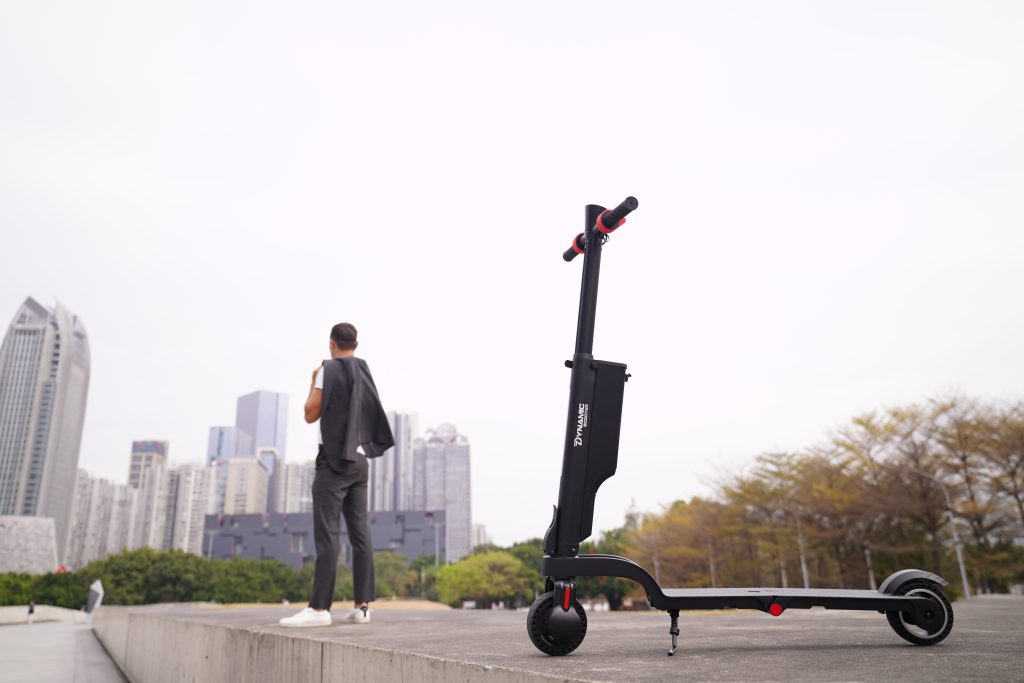
Finding storage for your e-scooter can be tricky. Many owners struggle with limited space at home. Without proper storage, your expensive e-scooter faces theft, weather damage, and battery problems. A 3×3 storage unit might be your perfect solution for safe, secure storage. Most e-scooters will fit in a 3×3 storage unit when properly folded, but Dynamic Scooter models offer superior storage advantages. These units typically measure 3 feet by 3 feet with 8-foot ceilings, providing 72 cubic feet of space. Dynamic Scooter’s innovative folding design and removable battery system make storage safer and more convenient than traditional models. But there’s more to consider than just basic dimensions… 1. What Are the Standard Dimensions of a 3×3 Storage Unit? Storage units labeled as “3×3” don’t always measure exactly 36 inches by 36 inches. Most facilities provide interior dimensions that range from 35 to 37 inches in width and depth. The height typically measures 8 feet, giving you 72 cubic feet of total space. Here’s the thing… these measurements can vary between facilities. Some older buildings have lower ceilings at 7.5 feet. Others might have support beams or ventilation systems that reduce usable space. Measurement Type Typical Range Impact on Storage Interior Width 35-37 inches Affects scooter placement Interior Depth 35-37 inches Determines accessibility Ceiling Height 7.5-8 feet Allows vertical storage You should always measure the actual unit before signing a lease. Bring a tape measure and check all three dimensions. Look for obstacles like electrical outlets, light fixtures, or structural elements that might limit your space. The door opening also matters for your storage plans. Most 3×3 units have doors that measure 32 to 34 inches wide. This width easily accommodates folded e-scooters but might limit larger items you want to store alongside your scooter. 2. How Big Are Most Electric Scooters When Folded? Folded e-scooter dimensions vary significantly between models and brands. Most consumer e-scooters fold to dimensions between 40-50 inches long, 15-20 inches wide, and 15-25 inches tall. These measurements make them suitable for 3×3 storage units with careful positioning. Weight plays a role in storage convenience too. Lightweight models under 25 pounds are easier to move in and out of storage. Heavier scooters weighing 35-50 pounds require more effort but still fit comfortably in the space. The best part? Modern folding mechanisms make the process quick and simple. Most scooters fold in under 30 seconds with practice. Scooter Category Folded Length Folded Width Folded Height Weight Lightweight 40-45 inches 15-18 inches 15-20 inches 20-25 lbs Standard 45-50 inches 18-20 inches 20-25 inches 25-35 lbs Heavy-duty 50-55 inches 20-22 inches 25-30 inches 35-50 lbs The folding mechanism affects final dimensions. Scooters with telescoping stems typically fold more compactly than those with hinged systems. Some models allow you to remove the battery pack, reducing both weight and size for storage. Consider your scooter’s specific folding pattern when planning storage layout. Some models fold with the handlebars extending upward, while others fold completely flat. This difference impacts how you position the scooter in your storage unit. 3. Which E-Scooter Models Fit Best in Small Storage Spaces? When choosing an e-scooter for 3×3 storage, focus on models designed specifically for compact storage. Dynamic Scooter leads the market with innovative folding designs that maximize storage efficiency. Our Model B folds to just 42 x 16 x 18 inches, making it one of the most storage-friendly options available. The key advantage of Dynamic Scooter models lies in their removable battery system. This feature reduces storage weight by up to 8 pounds and eliminates fire safety concerns. You can store the battery separately in climate-controlled conditions while keeping the scooter frame in standard storage. Now, you might be wondering… which features matter most for storage? Removable batteries top the list, followed by quick-fold mechanisms and lightweight construction. Dynamic Scooter excels in all these areas with our patented folding system. Model Folded Dimensions Weight Price Range Storage Rating Dynamic Scooter Model B 42 x 16 x 18 in 24 lbs 350-450 dollars Outstanding Compact Model A 43 x 17 x 19 in 26 lbs 300-400 dollars Excellent Standard Model 45 x 18 x 20 in 28 lbs 250-350 dollars Very Good Budget Option 46 x 19 x 22 in 32 lbs 200-300 dollars Good Premium models often include carrying cases or protective bags. These accessories add bulk but provide better protection during storage. Consider whether the extra protection justifies the additional space requirements. Look for scooters with quick-release mechanisms for wheels or other components. Some models allow you to remove the front wheel, creating an even more compact storage profile. This feature proves especially valuable in tight storage situations. 4. What Storage Preparation Steps Should You Take? Proper preparation protects your e-scooter investment during storage. Start by cleaning your scooter thoroughly. Remove dirt, salt, and debris that could cause corrosion over time. Pay special attention to the folding mechanisms and electrical connections. Battery care requires the most attention. Charge your battery to 50-70% before storage. This level prevents deep discharge while avoiding overcharge stress. Remove the battery if your model allows it, and store it in a cool, dry place. Let me explain… why battery care matters so much. Lithium batteries degrade faster in extreme temperatures and when stored at full or empty charge levels. Proper storage extends battery life by months or even years. Preparation Task Frequency Time Required Importance Level Deep cleaning Before storage 30 minutes High Battery charging Monthly 2 hours Critical Lubrication Every 3 months 15 minutes Medium Security check Each visit 5 minutes High Apply protective covers to prevent dust accumulation and moisture damage. Waterproof covers work best, but even old sheets provide basic protection. Avoid plastic bags that can trap moisture and cause condensation problems. Document your scooter’s condition with photos before storage. This documentation helps with insurance claims if damage occurs. Include close-ups of any existing scratches or wear marks to establish baseline condition. Storage preparation also includes checking tire pressure and brake function. Inflate tires to recommended

Will Your E-Scooter Fit in a 3×3 Storage Unit? Full Fit Guide (2026) Read More »

Are Electric Scooters Legal for Street Use in America? What You Need to Know

Electric scooters flood American streets, but many riders face fines and confiscation. Without knowing local laws, you risk legal trouble and safety issues that could cost hundreds in penalties. This guide reveals state-by-state rules to keep you riding legally. Most electric scooters are legal on US streets with speed limits under 25 mph, but regulations vary by state and city. Riders typically need helmets, valid licenses, and must follow traffic laws. Some areas restrict scooter use to bike lanes or prohibit sidewalk riding entirely. But here’s the thing – the legal landscape changes fast, and what’s legal in one city might be banned in the next. 1. What Makes an Electric Scooter Street Legal in the US? Street-legal electric scooters must meet specific federal and state requirements. The Consumer Product Safety Commission sets basic safety standards for all scooters sold in America. These standards cover everything from brake performance to electrical safety systems. Here’s why it matters – non-compliant scooters can be seized by police, and riders face hefty fines. Most states require scooters to have working brakes, lights, and reflectors for night riding. The braking system must stop the scooter within a specific distance at maximum speed. Speed limits vary but typically cap at 15-20 mph on public roads. Motor power usually cannot exceed 750 watts, similar to electric bike regulations. This power limit keeps scooters in the low-speed vehicle category, avoiding motorcycle licensing requirements. Requirement Standard Limit Penalty for Violation Maximum Speed 15-25 mph 50−50-50−200 fine Motor Power 750 watts Confiscation possible Age Minimum 14-16 years 25−25-25−100 fine Weight Limit 220-300 lbs Equipment failure risk Weight limits often reach 220 pounds, matching most quality scooters on the market. Registration requirements differ by state, with some requiring license plates or permits. 2. Which States Allow Electric Scooters on Public Roads? California leads with comprehensive scooter laws allowing street use in most cities. The state passed AB-2989 in 2018, creating a framework for scooter regulation. Riders must be 16 or older and wear helmets under 18 years old. California requires scooters to have working brakes on both wheels. Front and rear lighting systems become mandatory after sunset. The state allows local cities to create additional restrictions but cannot ban scooters entirely. Texas permits scooters on roads with speed limits under 35 mph. The best part? No helmet requirement for adults, making it rider-friendly for commuters. Texas law treats scooters like bicycles for most traffic purposes. The Lone Star State requires scooters to stay in bike lanes where available. Sidewalk riding is prohibited in business districts but allowed in residential areas. Local cities can create stricter rules than state law. Florida allows scooters on roads and bike paths but bans sidewalk riding in business districts. The state requires working lights and reflectors for night riding. Helmet laws apply only to riders under 16 years old. New York recently legalized scooters statewide after years of restrictions. The state allows local control over scooter operations and parking rules. New York requires helmets for all riders under 18 and prohibits sidewalk use. State Road Legal Helmet Required License Needed Max Speed California Yes Under 18 No 15 mph Texas Yes No No 20 mph Florida Yes Under 16 No 15 mph New York Yes Under 18 No 15 mph Washington Yes All riders No 15 mph Michigan and Illinois have similar laws but require helmets for all riders. Some states like Alabama still prohibit scooters on public roads entirely. These states classify scooters as motor vehicles, requiring full licensing and insurance. Washington State requires helmets for all scooter riders regardless of age. The state allows scooters on roads with speed limits under 25 mph. Local cities can create additional safety requirements. 3. How Do City Laws Differ from State Regulations? Cities often impose stricter rules than state laws allow. San Francisco requires permits for scooter companies and limits where riders can park. The city caps scooter speeds at 15 mph and requires GPS tracking for all rental units. Now, you might be wondering why local laws matter more than state rules. Cities control traffic flow and sidewalk use, giving them authority over scooter operations. Municipal governments can ban scooters entirely despite state approval. New York City banned scooters until 2020 despite state approval. The city now allows scooters but requires special permits for rental companies. Private scooter ownership remains legal with proper registration. Miami requires business licenses for scooter rentals and sets specific parking zones. The city prohibits scooter parking on sidewalks and requires upright positioning. Violation fines start at $50 for improper parking. Portland limits scooter speeds in downtown areas and requires companies to provide helmets. The city created special scooter parking corrals to reduce sidewalk clutter. Speed limits drop to 8 mph in high-pedestrian areas. Seattle bans scooters from certain neighborhoods during peak hours. The city requires scooter companies to redistribute units daily to prevent clustering. Parking violations result in immediate scooter impoundment. City Speed Limit Parking Rules Special Requirements San Francisco 15 mph Designated zones only Company permits Miami 15 mph No sidewalk parking Business license Portland 8 mph downtown Upright parking only Helmet provision Seattle 15 mph No residential areas Time restrictions Austin 10 mph Bike rack areas Insurance required Chicago requires scooter registration and insurance for commercial operators. The city limits the total number of scooters to 2,500 units citywide. Boston limits the number of scooters per company to reduce sidewalk clutter. Los Angeles created a comprehensive scooter program with designated parking areas. The city requires companies to provide customer service in multiple languages. Scooter operators must maintain 95% uptime for their fleets. 4. What Safety Equipment Do You Need for Legal Riding? Helmets top the safety requirement list in most jurisdictions. Many states mandate helmets for riders under 18, while others require them for all users. Helmet laws often carry fines ranging from 25to25 to 25to100 for violations. Working brakes are mandatory in every state that allows scooters. Let me explain – both hand and foot brakes

Are Electric Scooters Legal for Street Use in America? What You Need to Know Read More »

Is It Legal to Ride Electric Scooters Without a Helmet? What Riders Need to Know

Riders face confusion about helmet laws and risk serious legal trouble or injuries. Without knowing local requirements, you could face hefty fines or life-changing head trauma. This guide reveals exactly when helmets are required and how to stay compliant. Electric scooter helmet laws vary dramatically by location, with most states requiring helmets for riders under 18 but allowing adults to ride helmet-free. However, many cities impose stricter rules requiring helmets for all riders regardless of age. Violations typically result in $25-200 fines, and riding without required helmets increases serious injury risk by 85%. But here’s the thing – these laws change frequently, and ignorance won’t protect you from penalties. 1. Which States Allow Helmet-Free Electric Scooter Riding? Most states allow adults over 18 to ride electric scooters without helmets. California permits helmet-free riding for adults but requires helmets for anyone under 18 years old. The state imposes $25 fines for violations. Here’s why it matters – state laws set the baseline, but cities can add stricter requirements. San Francisco requires helmets for all riders in downtown areas during peak hours, regardless of state law. Texas has no statewide helmet requirement for electric scooters. Individual cities create their own rules. Austin mandates helmets for riders under 18, while Dallas allows helmet-free riding for all ages. Florida requires helmets only for riders under 16 years old. Adults and older teens can ride without helmets on public roads. The state allows cities to impose additional helmet requirements. New York mandates helmets for all riders under 18 years old. Adults can ride helmet-free in most areas. The state recently legalized scooters with strict safety requirements. State Adult Helmet Required Minor Age Limit Typical Fine California No Under 18 $25 Texas Varies by city Varies $25-75 Florida No Under 16 $30 New York No Under 18 $50-100 Washington Yes All riders $124 Washington State requires helmets for all electric scooter riders regardless of age. The state treats scooters like bicycles for helmet law purposes. Violations carry $124 fines. Michigan requires helmets for riders under 19 years old. Cities can set stricter age limits. Detroit mandates helmets for all riders in the downtown core. Oregon requires helmets for riders under 16 years old statewide. Portland extends this requirement to riders under 18 in school zones. The city provides free helmets at community centers. 2. What Are the Legal Penalties for Riding Without a Helmet? Fines for helmet violations range from $25-200 depending on location and rider age. Most jurisdictions issue warnings for first-time offenses. Repeat violations result in higher fines and possible scooter confiscation. The best part? Some cities offer alternatives to fines. Austin allows violators to complete safety courses instead of paying penalties. The 2-hour courses cost $25 and cover traffic laws. Parents face additional penalties when minors ride without required helmets. California charges parents $25-100 for allowing children to violate helmet laws. Some states add points to parents’ driving records. Scooter rental companies face substantial penalties for helmet violations. Cities can suspend operating permits or reduce fleet sizes. Miami fines companies $500-2000 when customers ride without required helmets. Insurance claims may be denied or reduced for injuries during helmet violations. Health insurance policies often cut coverage by 25-50% for preventable injuries. Auto insurance typically excludes scooter accidents entirely. Violation Type Fine Range Additional Penalty Repeat Offense Minor without helmet $25-50 Parent liability $50-100 Adult violation $50-200 None $100-300 Rental company $500-2000 Permit suspension Fleet reduction Parent allowing $25-100 Driving points $100-200 Criminal charges rarely result from helmet violations alone. Combined violations like speeding plus no helmet can trigger reckless endangerment charges. These carry potential jail time and license suspension. Court appearances become mandatory for some repeat helmet violations. Judges can order community service or safety courses. Some cities require violators to attend victim impact presentations. 3. How Do City Laws Override State Helmet Requirements? Cities often impose stricter helmet rules than state laws allow. Los Angeles requires helmets for all scooter riders in business districts. The city sets fines at $200 for violations. Now, you might be wondering why local laws matter more than state rules. Cities control traffic flow and public safety, giving them authority to create additional requirements. Municipal laws always supersede less restrictive state rules. Miami mandates helmets for all rental scooter riders but not private owners. The city works with scooter companies to provide helmets with rentals. Violations result in $75 fines and possible rental account suspension. Seattle requires helmets for all scooter riders citywide. The law applies to both rental and private scooters. Police issue warnings for first offenses and $50 fines for repeat violations. Chicago mandates helmets for riders under 17 years old. The city allows helmet-free riding for adults on most streets. School zones require helmets for all riders during school hours. Nashville requires helmets for all electric scooter riders in the downtown core. The city created helmet-free zones in residential areas. Tourist districts have the strictest enforcement levels. City Helmet Requirement Coverage Area Fine Amount Los Angeles All riders Business districts $200 Miami Rental riders only Citywide $75 Seattle All riders Citywide $50 Chicago Under 17 All areas $25-50 Nashville All riders Downtown core $100 Boston requires helmets for riders under 18 years old. The city provides free helmets at public libraries and bike shops. Violations carry 25finesforminorsand25 fines for minors and 25finesforminorsand50 for supervising adults. Denver has no helmet requirements for electric scooters. The city focuses on speed limits and parking rules instead. Riders choose helmet use based on personal preference. 4. Which Helmet Types Meet Legal Standards? DOT-approved motorcycle helmets meet legal requirements in most jurisdictions. These helmets pass federal safety standards for impact protection. Look for DOT certification stickers inside helmets before purchasing. Let me explain why helmet type matters for legal compliance. Standard bike helmets may not meet scooter helmet requirements in some cities. Areas with high-speed scooter limits often require motorcycle-style protection. CPSC-certified bicycle helmets work for most electric scooter laws. These helmets cost $20-100 and provide adequate protection for

Is It Legal to Ride Electric Scooters Without a Helmet? What Riders Need to Know Read More »

Are Electric Scooters Allowed on Trains? Transit Rules in 2026

You’re planning a trip and want to bring your electric scooter along. But train policies seem confusing and contradictory. Without clear guidance, you risk being denied boarding or facing unexpected fees that could ruin your travel plans. Most major train operators allow electric scooters with specific restrictions. Scooters must typically fold, weigh under 50-70 pounds, and have batteries under 100Wh. Each carrier has different policies, so checking requirements before travel prevents boarding issues and additional costs. But there’s more you need to know before packing… 1. What Are the General Rules for Bringing Electric Scooters on Trains? Train operators follow federal transportation guidelines when setting electric scooter policies. The Department of Transportation classifies electric scooters as personal mobility devices, subject to specific safety and size regulations. Here’s why it matters: These federal rules create the foundation for individual company policies. Most carriers require scooters to fold completely and fit within standard luggage dimensions. Weight limits typically range from 50 to 70 pounds. Battery capacity represents the most critical restriction. Lithium-ion batteries over 100 watt-hours often require special handling or complete prohibition. Smaller batteries under this threshold usually travel without additional requirements. Size restrictions focus on folded dimensions rather than operational size. Your scooter must collapse to fit designated storage areas. Most trains use airline-style overhead bins or under-seat spaces for scooter storage. Restriction Type Typical Limit Enforcement Level Consequences Weight 50-70 lbs Strict Boarding denial Battery capacity 100Wh max Very strict Confiscation possible Folded size 28″x22″x14″ Moderate Storage issues Documentation Proof of specs Variable Delays possible Railway companies reserve the right to refuse oversized or non-compliant scooters. Staff training varies between operators, leading to inconsistent enforcement. Some conductors may be more lenient while others strictly follow written policies. Safety protocols require scooters to remain folded and secured during travel. You cannot unfold or ride your scooter inside train cars. These rules protect passengers and prevent accidents in confined spaces. 2. Which Train Systems Allow Electric Scooters? Amtrak leads major carriers in electric scooter accommodation. Their policy allows folding electric scooters as carry-on baggage when they meet size and weight requirements. Scooters must fold to 28″ x 22″ x 14″ and weigh less than 50 pounds. The best part? Amtrak doesn’t charge extra fees for compliant electric scooters. They treat them as standard carry-on items, making train travel cost-effective for scooter owners. Regional rail services vary significantly in their policies. Commuter lines like Metro-North and LIRR generally allow folding scooters during off-peak hours. Peak hour restrictions help manage crowded conditions. Metro and subway systems often have stricter rules than long-distance trains. New York’s MTA allows folding scooters but prohibits riding them on platforms or in stations. Washington Metro has similar policies with designated car areas for scooter storage. Train System Scooter Policy Size Limit Weight Limit Extra Fees Amtrak Allowed as carry-on 28″x22″x14″ 50 lbs None Metro-North Off-peak only Standard luggage 50 lbs None LIRR Folded only 28″x22″x14″ 50 lbs None Washington Metro Designated areas Folded size 50 lbs None NYC Subway Folded, no riding Must fold No limit None International train travel presents additional complications. European rail systems often allow scooters but require advance booking. High-speed trains like TGV and ICE have specific storage compartments for mobility devices. Canadian VIA Rail follows similar policies to Amtrak but with stricter battery regulations. They require battery specifications documentation and may inspect scooters before boarding. Private rail operators often have more restrictive policies than government-run services. Tourist trains and scenic railways frequently prohibit electric scooters due to limited storage space and older car designs. 3. How Should You Prepare Your Electric Scooter for Train Travel? Proper preparation starts with checking your scooter’s specifications against train requirements. Measure folded dimensions carefully and weigh your scooter with all accessories. Battery capacity information usually appears on the battery itself or in your owner’s manual. But here’s the thing: Documentation proves more valuable than verbal explanations. Print your scooter’s specification sheet and battery certification. Train staff often request this information during boarding or security checks. Folding procedures should be practiced before travel day. Some scooters require specific folding sequences or tool use. Fumbling with unfamiliar mechanisms delays boarding and frustrates other passengers. Battery safety preparations include checking for damage or swelling. Damaged batteries pose fire risks and will be rejected by train staff. Clean battery terminals and secure all connections before folding your scooter. Preparation Step Time Required Tools Needed Importance Level Measure dimensions 5 minutes Tape measure Critical Check battery specs 10 minutes Owner’s manual Critical Practice folding 15 minutes None usually High Print documentation 5 minutes Printer High Clean and inspect 20 minutes Cleaning supplies Moderate Protective covering helps prevent damage and keeps other passengers comfortable. A simple bag or cover protects upholstery from dirt and grease. Some carriers require covers for scooters stored in passenger areas. Remove loose accessories before folding. Phone holders, bags, and lights can fall off during transport or storage. Pack these items separately in your regular luggage to prevent loss. Charge your scooter before travel but avoid overcharging. A fully charged battery provides backup power if needed, but overcharged batteries may trigger safety concerns with train staff. 4. What Are the Size and Weight Limits for Train Travel? Standard luggage dimensions of 28″ x 22″ x 14″ apply to most train operators for electric scooters. These measurements must be taken when the scooter is fully folded with all parts secured. Handlebars, pedals, and other protruding elements must fold completely within these limits. Now, you might be wondering: why these specific dimensions? Train storage areas are designed around airline carry-on standards. Overhead bins and under-seat spaces use these measurements as maximum capacity guidelines. Weight restrictions typically range from 50 to 70 pounds depending on the carrier. Amtrak uses a 50-pound limit while some regional services allow up to 70 pounds. These limits include the scooter, battery, and any attached accessories. Folded measurements differ significantly from operational dimensions. A scooter that’s 40 inches long when unfolded might compress to 28 inches

Are Electric Scooters Allowed on Trains? Transit Rules in 2026 Read More »

Which Electric Scooter Works Best for Adult Commuters? Top Picks for 2026

Adult commuters waste hours in traffic and pay high gas prices daily. Without a reliable electric scooter, you face expensive parking fees, crowded public transport, and stress from delays. This guide shows you the best adult scooters for fast, affordable commuting. The best electric scooters for adults feature 15-25 mph speeds, 15-30 mile ranges, and 220+ pound weight limits. Top models include foldable designs, dual brakes, LED displays, and waterproof ratings. Key factors are motor power, battery life, portability, and safety features for daily commuting needs. Here’s the thing – choosing the wrong scooter costs money and creates safety risks you can’t afford. 1. What Speed and Range Do Adult Scooters Need? Adult electric scooters need 15-25 mph top speeds for city commuting. Slower speeds work for short trips, but adults need higher speeds to keep up with bike lane traffic and reach destinations quickly. The best part? Most quality adult scooters hit 20 mph, which matches the speed limit in most bike lanes. This speed lets you commute efficiently without breaking traffic laws or creating safety hazards. Range requirements depend on your daily commute distance. Most adults need 15-30 miles of range for round-trip commuting. Battery capacity directly affects range, with larger batteries providing longer distances. Real-world range often falls short of manufacturer claims. Hills, rider weight, and weather conditions reduce actual range by 20-30%. Plan for shorter ranges than advertised specifications. Speed modes help manage battery life and safety. Eco mode extends range but limits top speed. Sport mode provides maximum performance but drains batteries faster. Most adults use normal mode for daily commuting. Speed Range Best Use Case Typical Range Battery Size 10-15 mph Short trips 8-15 miles 250-350Wh 15-20 mph City commuting 15-25 miles 400-500Wh 20-25 mph Long commutes 25-40 miles 600-800Wh Motor power affects both speed and hill climbing ability. Adults need at least 350W motors for decent performance. Heavier riders or hilly areas require 500W+ motors for adequate power. Dual motors provide better acceleration and hill climbing. Single motors work for flat areas and lighter riders. Consider your local terrain when choosing motor configuration. Acceleration matters for city riding where you stop and start frequently. Good scooters reach 15 mph in 4-6 seconds. Poor acceleration creates traffic hazards and rider frustration. 2. How Much Weight Can Adult Electric Scooters Handle? Most adult electric scooters support 220-300 pounds maximum weight. This includes the rider plus any cargo like backpacks or groceries. Exceeding weight limits damages motors and reduces battery life. Now, you might be wondering why weight limits matter so much. Heavy loads stress the motor, drain batteries faster, and affect braking distance. Staying within limits keeps you safe and protects your investment. Heavier riders need scooters with higher weight ratings and more powerful motors. Look for models rated at least 50 pounds above your weight for optimal performance and safety margins. Weight distribution affects scooter stability and handling. Carrying heavy backpacks raises your center of gravity. Use lower storage options when possible for better balance. Payload capacity includes everything you carry beyond your body weight. Laptop bags, groceries, and work supplies add up quickly. Factor in typical cargo when choosing weight limits. Weight Limit Motor Power Recommended For Price Range 220 lbs 350W Light adults $300-600 265 lbs 500W Average adults $500-900 300+ lbs 600W+ Heavy adults $800-1500 Scooter weight affects portability for adults who need to carry them. Lighter scooters (25-35 lbs) are easier to carry upstairs or onto public transport. Heavier models (40+ lbs) offer more features but reduce portability. Folding mechanisms help with storage and transport. Quick-fold designs let you collapse scooters in seconds. Some models fold small enough to fit under desks or in car trunks. Frame materials affect both weight and durability. Aluminum frames offer good strength-to-weight ratios. Steel frames are heavier but more durable. Carbon fiber is lightest but most expensive. 3. Which Safety Features Matter Most for Adults? Dual brake systems provide the most reliable stopping power for adult riders. Hand brakes offer precise control, while foot brakes provide backup stopping. Electronic brakes add regenerative charging but shouldn’t be the only brake type. Here’s why it matters – adults ride faster and weigh more than kids, creating higher stopping forces. Inadequate brakes cause accidents and injuries that could end your commuting plans permanently. LED headlights and taillights keep you visible during dawn, dusk, and night riding. Many cities require lights for legal scooter operation. Bright lights help cars and pedestrians see you from greater distances. Reflective materials on the deck and sides increase visibility from all angles. Some scooters include reflective strips or decals. Adding extra reflective tape improves safety without adding weight. Turn signals help communicate your intentions to other road users. Some premium scooters include built-in turn signals. Aftermarket signals can be added to most models for better safety. Safety Feature Why It Matters Legal Requirement Cost to Add Dual brakes Reliable stopping Often required Built-in LED lights Night visibility Usually required $20-50 Reflectors Side visibility Sometimes required $5-15 Bell/horn Pedestrian warning Some cities $10-25 Suspension systems smooth out bumps and improve control. Front suspension handles small bumps, while dual suspension tackles rough roads. Solid tires need more suspension than pneumatic tires. Tire type affects safety and comfort. Pneumatic tires provide better grip and shock absorption. Solid tires never go flat but offer harsher rides. Honeycomb tires split the difference. Anti-lock braking systems prevent wheel lockup during hard stops. This technology is rare on scooters but available on premium models. ABS reduces skidding and improves control. 4. What Makes a Scooter Suitable for Daily Commuting? Foldable designs let adults take scooters on trains, buses, and into offices. Quick-fold mechanisms save time during multi-modal commutes. Compact folded size fits in small storage spaces. Let me explain why portability matters for adult commuters. You need to store scooters securely at work and home. Theft-prone areas require indoor storage, making foldability necessary. Weather resistance protects scooters from rain and humidity. IP54 or higher ratings allow riding in

Which Electric Scooter Works Best for Adult Commuters? Top Picks for 2026 Read More »

Can Electric Scooters Work Without Battery Power? Manual Mode Explained

Picture this: you’re halfway to work when your electric scooter suddenly loses power. The battery indicator shows empty, and you’re stranded. This scenario happens to thousands of riders daily, leaving them wondering if their expensive scooter just became a paperweight. The good news? Most electric scooters can function manually, giving you a backup option when technology fails. Yes, electric scooters can be used manually when the battery dies. You can push or kick-propel most models like a traditional scooter, though the experience differs significantly from powered operation. The weight, wheel resistance, and design features affect how easily you can operate the scooter without electric assistance. But there’s more to manual operation than just pushing forward… 1. What Happens When Your Electric Scooter Battery Dies? When your electric scooter battery depletes, several immediate changes occur. The motor stops providing assistance, and you’ll notice increased resistance when trying to move forward. The display screen typically goes dark, and any electronic features like lights or horn stop working. Here’s why it matters: Understanding these changes helps you prepare for manual operation. Most riders experience a sudden shift in handling characteristics when the power cuts out. The scooter becomes noticeably heavier to maneuver, and acceleration requires physical effort rather than throttle control. Battery depletion signs include reduced speed, flickering display, and warning indicators. Smart riders monitor these signals to avoid being caught off-guard. Some models provide low-battery alerts, giving you time to find a charging station or prepare for manual operation. Battery Level Performance Impact Manual Readiness 100-50% Full power available No preparation needed 50-20% Reduced top speed Monitor battery closely 20-5% Limited acceleration Prepare for manual mode Below 5% Power cuts intermittently Switch to manual operation Safety becomes a primary concern when transitioning to manual mode. The sudden loss of power can affect your balance, especially if you’re traveling at higher speeds. Electronic brakes may still function temporarily, but mechanical brakes become your primary stopping method. Emergency situations requiring manual operation include battery failure, motor malfunction, or electrical system problems. Weather conditions like extreme cold can also drain batteries faster than expected, forcing riders into manual mode unexpectedly. 2. How Do Electric Scooters Function in Manual Mode? Electric scooters transform into kick scooters when operated manually. The basic mechanics remain the same: you push with one foot while balancing on the deck with the other. However, the added weight and different wheel characteristics create a unique riding experience. The best part? Most electric scooters are designed with manual operation in mind. Manufacturers understand that batteries fail, so they engineer their products to remain functional without power. The wheels can rotate freely when the motor isn’t engaged, allowing for smooth manual propulsion. Weight distribution plays a crucial role in manual operation. Electric scooters typically weigh between 15-35 pounds, compared to 5-10 pounds for traditional kick scooters. This extra weight comes from the battery, motor, and electronic components. The weight affects how much effort you need to push and how the scooter handles during turns. Wheel resistance varies between models. Some electric scooters have motors that create drag even when not powered, while others allow completely free wheel rotation. Hub motors generally create more resistance than chain-driven systems when operating manually. Component Impact on Manual Use Difficulty Level Hub motor High resistance Moderate to difficult Chain drive Low resistance Easy to moderate Belt drive Medium resistance Moderate Direct drive Variable resistance Easy to difficult The brake system functionality changes significantly without power. Electronic brakes become non-functional, leaving you with mechanical disc or drum brakes. These typically operate through hand levers and remain fully functional during manual operation. Folding mechanisms continue to work normally without power. This feature becomes particularly valuable when you need to carry the scooter or store it during manual operation. The ability to fold and carry your scooter provides flexibility when manual riding becomes too difficult. 3. Which Electric Scooter Models Support Manual Use? Not all electric scooters are created equal when it comes to manual operation. Lightweight, foldable models generally perform better without power than heavy, high-performance scooters. The design philosophy behind each model affects its manual usability. Now, you might be wondering: which specific features make a scooter better for manual use? Weight is the primary factor, followed by wheel size, motor type, and overall build quality. Scooters under 25 pounds typically offer the best manual experience. Foldable designs provide significant advantages for manual operation. When pushing becomes too difficult, you can fold the scooter and carry it. Models with quick-fold mechanisms are particularly user-friendly in this regard. The folding feature also helps with public transportation and storage. Popular models known for good manual operation include lightweight commuter scooters. These typically feature smaller batteries and motors, reducing overall weight. The trade-off is shorter range and lower top speeds, but better manual functionality. Scooter Type Weight Range Manual Difficulty Best Use Case Lightweight commuter 15-25 lbs Easy Daily commuting Mid-range performance 25-35 lbs Moderate Weekend rides Heavy-duty off-road 35-50+ lbs Difficult Specialized use only Ultra-portable 10-20 lbs Very easy Last-mile transport Wheel size affects manual operation significantly. Larger wheels (8-10 inches) roll more easily over obstacles and maintain momentum better than smaller wheels (6-8 inches). However, larger wheels also add weight to the overall scooter. Terrain compatibility becomes more important during manual operation. Scooters designed for smooth pavement may struggle on rough surfaces when operated manually. The lack of motor assistance makes it harder to overcome obstacles and uneven terrain. Brand comparisons reveal interesting differences in manual operation philosophy. Some manufacturers prioritize lightweight designs that work well manually, while others focus on maximum electric performance at the expense of manual usability. 4. What Are the Limitations of Manual Electric Scooter Operation? Manual operation of electric scooters comes with significant limitations that riders must understand. The most obvious limitation is the increased physical effort required. What once felt effortless with electric assistance now demands continuous leg work and energy expenditure. But here’s the thing: the limitations go beyond just physical effort.

Can Electric Scooters Work Without Battery Power? Manual Mode Explained Read More »

Shopping Cart
Scroll to Top