...

January 2026

Can You Doordash on an Electric Scooter? Rules, Earnings & Setup Tips

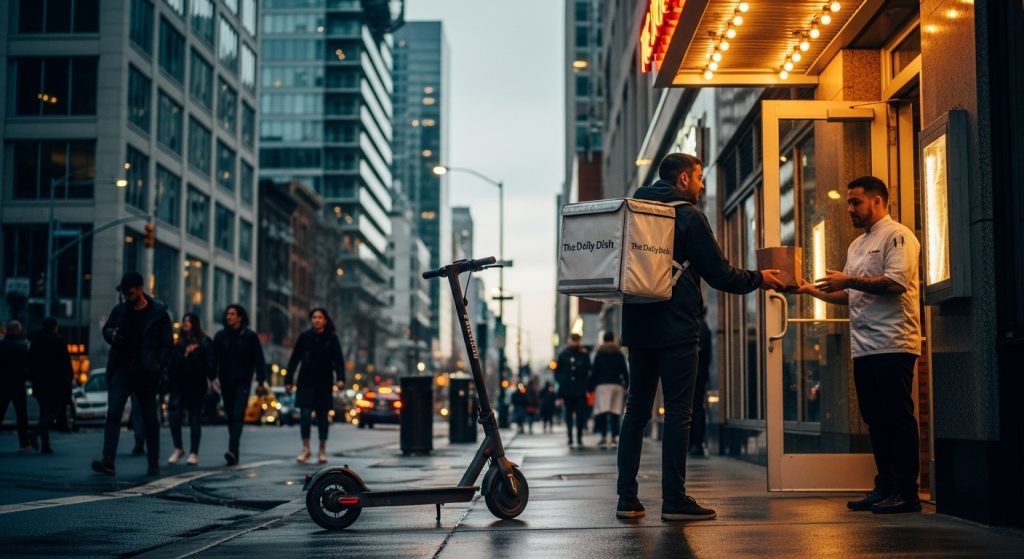
Many delivery drivers wonder whether electric scooters work for food delivery services like DoorDash. The answer is yes, but with important considerations. Electric scooters offer unique advantages for delivery work. They’re fast, affordable, and environmentally friendly. However, they also present specific challenges. Limited cargo capacity is a significant limitation. Weather exposure affects both rider and food. Battery range restrictions limit delivery zones. Understanding these factors helps you succeed. This guide explores scooter delivery comprehensively. You’ll learn how to use scooters for DoorDash effectively. You’ll discover earning potential and realistic income. You’ll understand the challenges and how to overcome them. By the end, you’ll know if scooter delivery suits you. Yes, you can deliver with an electric scooter on DoorDash. Dynamic Scooter Model B provide reliable performance for delivery work. Lightweight design enables easy navigation. Responsive acceleration improves delivery speed. Quality construction ensures durability under demanding conditions. Scooter delivery is viable with proper planning. Ready to start scooter delivery? Here’s the deal… 1. Can DoorDash Accept Electric Scooters as Vehicles? DoorDash officially accepts electric scooters as delivery vehicles. Understanding the requirements helps you qualify. DoorDash is flexible about vehicle types. This flexibility enables diverse delivery options. Scooters are increasingly popular for delivery. Many drivers successfully use scooters. Scooter delivery is legitimate and viable. DoorDash allows multiple vehicle types. Scooters qualify as acceptable delivery vehicles. Bicycles are also permitted. Motorcycles work for delivery. Cars are most common. DoorDash doesn’t discriminate by vehicle type. This is important because flexibility enables more delivery options. Vehicle diversity improves platform efficiency. Different vehicles suit different situations. Flexibility attracts more drivers. More drivers mean better service. Vehicle flexibility is a strength. Vehicle requirements are minimal. You need a working vehicle. The vehicle must be reliable. Insurance may be required in some areas. Safety equipment is recommended. DoorDash doesn’t require specific vehicle models. Any functional scooter works for delivery. Requirements are straightforward and achievable. Minimal barriers enable easy entry. Accessibility attracts new drivers. New drivers expand the platform. Simple requirements benefit everyone. Age restrictions apply to drivers. You must be at least 18 years old. Valid identification is required. Background checks are standard. Approval takes several days. Once approved, you can start immediately. Age requirements ensure maturity. Identification verifies eligibility. Standard procedures protect customers. Approval process is thorough. Thorough vetting maintains quality. Quality standards protect reputation. Insurance requirements vary by location. Some areas require liability insurance. Others don’t mandate coverage. Check local regulations carefully. Insurance protects you financially. Coverage is worth the investment. Insurance varies by jurisdiction. Some areas are strict. Others are lenient. Checking regulations is essential. Protection is important. Investment in insurance is wise. Background checks are thorough. Criminal history may disqualify you. Traffic violations might affect approval. Most drivers pass without issues. Honesty is important in applications. Truthful information ensures smooth approval. Checks protect customer safety. Thorough vetting prevents problems. Most people qualify easily. Honesty ensures approval. Truthfulness builds trust. Trust is valuable. Account setup is straightforward. Download the DoorDash app. Complete your profile. Provide required documentation. Wait for approval. Start accepting orders. Setup takes minimal time. App is user-friendly. Profile creation is simple. Documentation is standard. Approval is quick. Starting is easy. Minimal time investment required. Requirement Details Importance Vehicle Type Any working scooter High Age 18 years or older Critical Insurance Required in some areas Medium Background Check Standard procedure Critical Documentation ID and proof of address Critical Account Setup Download app and register High 2. What Are the Advantages of Scooter Delivery? Electric scooters offer significant benefits for delivery work. Understanding these advantages helps you appreciate the opportunity. Scooters have many practical benefits. These benefits improve profitability. Understanding advantages builds confidence. Confidence improves performance. Performance increases earnings. Speed is a major advantage. Scooters navigate traffic easily. Traffic avoidance saves time. Saved time means more deliveries. More deliveries increase earnings. Speed improves efficiency significantly. Here’s why it matters… Faster deliveries mean higher hourly earnings. Quick navigation improves delivery times. Better times increase customer satisfaction. Satisfaction improves ratings. Ratings attract more orders. Cost efficiency is excellent. Scooters are cheap to operate. Minimal fuel costs apply. Electricity is inexpensive. Maintenance is affordable. Operating costs are very low. Low costs mean higher profits. Cheap operation maximizes profit margins. Low expenses enable profitability. Profitability sustains the business. Sustainability enables long-term success. Success builds financial security. Parking is simple and easy. Scooters fit anywhere. Parking fees don’t apply. No parking hassles exist. Easy parking saves time. Parking simplicity improves efficiency. Compact size enables easy parking. Free parking saves money. Time savings increase efficiency. Efficiency improves earnings. Money savings improve profitability. Environmental benefits are significant. Scooters produce zero emissions. Eco-friendly delivery appeals to customers. Sustainability improves brand image. Environmental responsibility matters. Green delivery is increasingly popular. Zero emissions help the environment. Eco-friendly appeals to conscious consumers. Customer appeal improves ratings. Better ratings increase orders. Environmental benefits matter. Physical activity is built-in. Delivery work provides exercise. Exercise improves health. Health benefits are valuable. Physical activity reduces stress. Active work is healthier than sedentary work. Built-in exercise improves fitness. Fitness improves overall health. Health benefits are long-term. Long-term benefits compound. Compounding benefits improve quality of life. Flexibility is excellent. Set your own schedule. Work whenever you want. No fixed hours required. Flexibility enables work-life balance. Schedule control is valuable. Schedule control enables flexibility. Flexibility improves life quality. Life quality improves satisfaction. Satisfaction improves motivation. Motivation improves performance. Advantage Benefit Impact Level Speed Faster deliveries High Cost Lower operating expenses High Parking Easy and free Medium Environment Zero emissions Medium Exercise Built-in physical activity Medium Flexibility Set your own schedule High 3. What Challenges Do Scooter Delivery Drivers Face? Scooter delivery presents specific challenges. Understanding these difficulties helps you prepare. Challenges are real but manageable. Preparation helps overcome obstacles. Overcoming obstacles builds success. Success requires understanding challenges. Challenge awareness is important. Cargo capacity is limited. Scooters carry less than cars. Large orders are problematic. Multiple trips may be necessary. Limited capacity reduces earnings. Capacity constraints are significant. Limited space restricts order

Can You Doordash on an Electric Scooter? Rules, Earnings & Setup Tips Read More »
Electric Scooter Throttle: A Complete Guide 2026

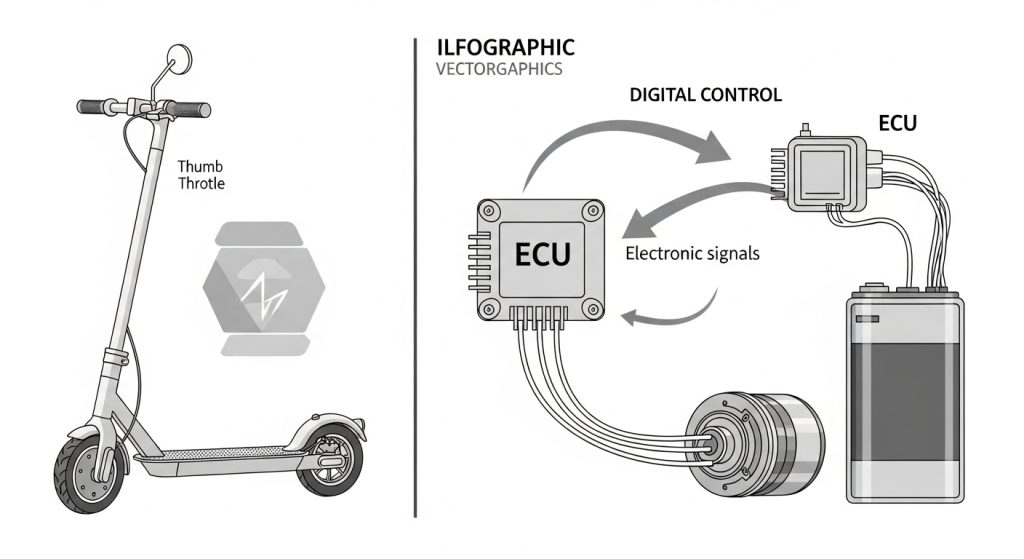
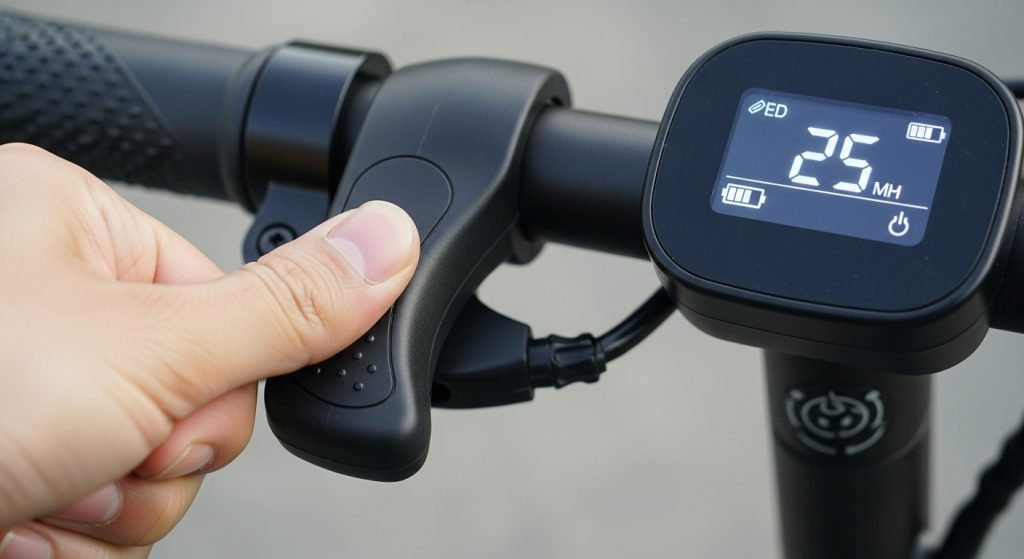
Understanding electric scooter throttles is essential for safe and effective riding. The throttle controls your scooter’s acceleration and speed. Different throttle types offer different riding experiences. Proper throttle technique improves safety and control. Mastering throttle operation enhances your riding skills. This comprehensive guide explores throttle systems in detail. You’ll learn how different throttles work and function. You’ll discover throttle types and their characteristics. Electric scooter throttles come in two main types: twist throttles and thumb throttles. Dynamic Scooter Model B feature responsive, intuitive throttle systems. Smooth acceleration control improves safety. Precise throttle response enhances riding experience. Understanding throttle operation is fundamental to scooter mastery. Ready to master throttle control? Here’s the deal… 1. What Are the Main Types of Throttles? Electric scooters use two primary throttle types. Understanding these differences helps you choose the right scooter. Throttle type significantly affects riding experience. Different types suit different riders. Personal preference matters when choosing. Throttle selection is important for satisfaction. Twist throttles resemble motorcycle throttles. Riders twist the handlebar grip to accelerate. Twist throttles provide intuitive control. Many riders prefer twist throttles. Twist throttles are common on quality scooters. This is important because throttle type affects riding experience. Twist throttles feel natural to motorcycle riders. Intuitive control improves confidence. Confidence improves safety. Twist throttles are preferred by experienced riders. Thumb throttles use a button or lever. Riders press with their thumb to accelerate. Thumb throttles are compact and simple. Some riders prefer thumb throttles. Thumb throttles are common on budget scooters. Thumb throttles offer different ergonomics than twist throttles. Thumb throttles are easier to operate for some riders. Compact design saves space. Simple operation reduces learning curve. Simplicity improves accessibility. Budget scooters often use thumb throttles. Twist throttles require wrist rotation. Wrist rotation can cause fatigue on long rides. Twist throttles provide smooth, progressive acceleration. Smooth acceleration improves control. Progressive acceleration is safer. Twist throttles are preferred by experienced riders. Extended wrist rotation can be tiring. Fatigue affects control negatively. However, smooth acceleration prevents accidents. Progressive control is essential for safety. Experienced riders accept fatigue for better control. Thumb throttles require thumb pressure. Thumb pressure is less fatiguing than wrist rotation. Thumb throttles provide on-off acceleration. On-off acceleration is less smooth. Less smooth acceleration is less safe. Thumb throttles are simpler but less refined. Thumb pressure is minimal and easy. Fatigue is rarely an issue. However, on-off control is jerky. Jerky acceleration reduces safety. Simplicity comes at the cost of refinement. Hybrid throttles combine both systems. Some scooters offer switchable throttles. Switchable throttles provide flexibility. Flexibility allows rider preference. Hybrid systems are rare and expensive. Most scooters use one throttle type. Hybrid systems offer best of both worlds. Riders can choose based on situation. Flexibility improves satisfaction. However, complexity increases cost. Most riders prefer single systems. Electronic throttles use digital sensors. Digital sensors provide precise control. Electronic throttles enable advanced features. Advanced features improve performance. Electronic throttles are becoming standard. Electronic systems are more reliable than mechanical systems. Digital sensors are extremely accurate. Precision improves control significantly. Advanced features enable customization. Customization improves satisfaction. Electronic systems are increasingly common. Reliability improves with electronic systems. Throttle Type Mechanism Fatigue Level Control Quality Twist Throttle Wrist rotation Medium Excellent Thumb Throttle Thumb pressure Low Good Hybrid Throttle Both systems Low Excellent Electronic Digital sensors Low Excellent Mechanical Direct connection Medium Good Proportional Variable response Low Excellent 2. How Do Throttle Systems Work Technically? Understanding throttle mechanics helps you appreciate scooter engineering. Technical knowledge improves troubleshooting ability. Technical understanding enables better maintenance. Better maintenance improves reliability. Reliability is essential for safety. Throttle input sends signals to controllers. Controllers receive throttle information. Controllers adjust motor power accordingly. Power adjustment happens instantly. Instant adjustment provides responsive control. Here’s why it matters… Responsive control improves safety significantly. Instant response prevents accidents. Quick adjustment maintains control. Control is essential for safety. Potentiometers measure throttle position. Potentiometers are variable resistors. Resistor values change with throttle position. Changing values create proportional signals. Proportional signals enable smooth acceleration. Smooth acceleration is safer than jerky acceleration. Precise measurement ensures accuracy. Accuracy improves control. Smooth acceleration prevents accidents. Proportional response is ideal. Potentiometers are reliable sensors. Hall sensors detect throttle movement. Hall sensors use magnetic fields. Magnetic fields change with throttle position. Changing fields create digital signals. Digital signals enable precise control. Precise control improves riding experience. Hall sensors are very accurate. Accuracy improves safety. Digital signals are reliable. Reliability improves confidence. Hall sensors are increasingly common. PWM controllers regulate motor power. PWM stands for pulse-width modulation. Modulation adjusts power delivery. Power delivery is smooth and responsive. Smooth delivery improves control. Responsive delivery improves safety. PWM is highly efficient. Efficiency improves range. Smooth power prevents jerking. Responsive power improves handling. PWM is the industry standard. Acceleration curves shape throttle response. Curves determine how quickly power increases. Aggressive curves provide rapid acceleration. Gentle curves provide smooth acceleration. Smooth curves are safer for beginners. Aggressive curves suit experienced riders. Customizable curves improve satisfaction. Different curves suit different situations. Programmable curves are valuable. Flexibility improves experience. Curve customization is increasingly available. Throttle calibration ensures accuracy. Calibration aligns throttle position with motor power. Proper calibration provides consistent response. Consistent response improves control. Improper calibration creates safety issues. Calibration is essential for safety. Regular calibration maintains accuracy. Accuracy improves reliability. Consistent response prevents surprises. Surprises cause accidents. Calibration should be checked regularly. Technical Component Function Importance Potentiometer Measure throttle position High Hall Sensor Detect throttle movement High PWM Controller Regulate motor power Critical Acceleration Curve Shape throttle response High Calibration Ensure accuracy Critical Signal Processing Convert signals to power Critical 3. What Throttle Techniques Improve Safety? Proper throttle technique prevents accidents and improves control. Mastering technique takes practice and patience. Smooth acceleration prevents loss of control. Gradual throttle increase maintains balance. Balance is essential for safety. Sudden acceleration causes instability. Instability leads to accidents. Smooth acceleration is fundamental safety technique. Progressive throttle use improves stability. Progressive means gradual and measured. Gradual throttle increases maintain traction. Traction prevents slipping.

Electric Scooter Throttle: A Complete Guide 2026 Read More »

Can You Mod Electric Scooters? What’s Possible, Legal & Worth It

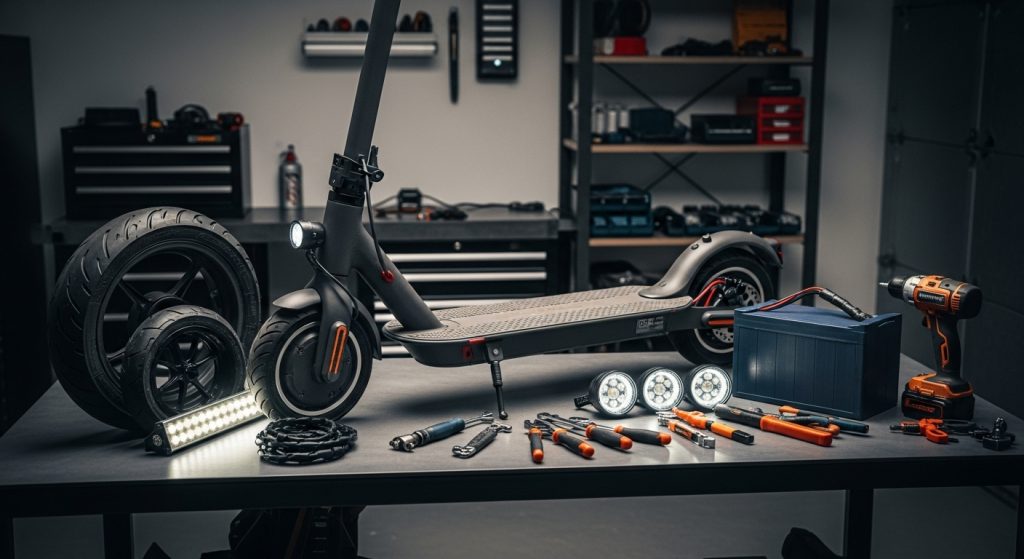
Electric scooter modifications are increasingly popular among enthusiasts. Many riders want to customize their scooters for better performance or appearance. The question of whether you can modify scooters has a nuanced answer. Some modifications are safe and beneficial. Others are dangerous and void warranties. Understanding which modifications work helps you enhance your scooter responsibly. This guide explores scooter customization options in detail. Electric scooters can be modified in many ways, but some modifications are risky. Dynamic Scooter models support safe, practical upgrades. Battery upgrades and tire changes are popular modifications. Performance modifications require technical knowledge. Safety modifications improve reliability. Always prioritize safety over performance gains. Ready to explore scooter modifications? Here’s the deal… 1. Can You Legally Modify Electric Scooters? Scooter modification legality varies by location. Understanding local regulations helps you stay compliant. Different jurisdictions have different rules. Some cities embrace modifications. Others prohibit them strictly. Federal regulations don’t address modifications. State and local laws control modification legality. Researching your local laws is essential. Local regulations differ significantly. Some areas allow modifications freely. Other areas restrict certain modifications. Speed modifications are often regulated. Power modifications may be prohibited. Lighting modifications are usually allowed. This is important because legal violations can result in fines. Fines can be substantial. Repeated violations increase penalties. Legal consequences are serious. Understanding local laws prevents problems. Warranty implications are serious. Modifications often void manufacturer warranties. Warranty coverage disappears after modifications. Repair costs become your responsibility. Warranty voiding is a significant consequence. Manufacturers reserve the right to deny coverage. Warranty voiding happens immediately upon modification. No grace period exists. Warranty coverage doesn’t return if you reverse modifications. Repair costs can be expensive. Component replacements cost hundreds of dollars. Warranty loss is permanent and irreversible. Insurance coverage may be affected. Modified scooters might not be insured. Insurance companies may deny claims. Coverage gaps create financial risk. Insurance verification is essential. Check with your insurance provider first. Many insurance policies exclude modified vehicles. Modifications void coverage automatically. Accidents involving modified scooters might not be covered. Medical bills become your responsibility. Property damage becomes your liability. Insurance gaps create serious financial exposure. Safety standards exist for scooters. Modifications might violate safety standards. UL 2272 certification requires specific standards. Modified scooters might not meet standards. Safety compliance is important. Modifications should maintain safety standards. UL 2272 sets specific requirements. Modifications that exceed these requirements violate standards. Non-compliant scooters are unsafe. Safety standards exist to protect riders. Violating standards creates safety risks. Compliance is essential for rider protection. Manufacturer recommendations matter. Manufacturers specify approved modifications. Approved modifications are safe. Unapproved modifications are risky. Following manufacturer guidance is wise. Manufacturer recommendations protect you. Manufacturers test approved modifications. They ensure safety and compatibility. Unapproved modifications haven’t been tested. Untested modifications are unpredictable. Safety testing is essential. Manufacturer approval provides confidence. Professional installation is recommended. Professional technicians have expertise. They understand safety requirements. They perform modifications correctly. Professional installation ensures quality. DIY modifications carry higher risks. Professionals have specialized knowledge. They use proper tools and techniques. They understand component compatibility. They perform quality assurance checks. DIY mistakes are common and expensive. Professional installation prevents problems. Legal Aspect Consideration Risk Level Local Laws Regulations vary by area High Warranty Modifications void warranty High Insurance Coverage may be denied High Safety Standards Must maintain compliance High Manufacturer Follow recommendations Medium Installation Professional vs. DIY High 2. What Performance Modifications Are Possible? Several performance modifications are technically feasible. Understanding these options helps you make informed choices. Modifications range from simple to complex. Some are safe and practical. Others are risky and impractical. Each modification has trade-offs. Understanding these trade-offs helps you decide wisely. Battery upgrades increase range. Higher capacity batteries store more energy. More energy means longer range. Battery upgrades require compatible chargers. Upgraded batteries may be heavier. Battery upgrades are popular modifications. Here’s why it matters… Extended range improves commuting capability. Longer range enables longer trips. Range anxiety decreases. Commuting becomes more practical. Battery upgrades are among the safest modifications. Compatible batteries maintain safety. Proper chargers are essential. Battery upgrades are popular for good reason. Motor upgrades increase power. More powerful motors provide better acceleration. Better acceleration improves performance. Powerful motors consume more battery. Powerful motors generate more heat. Motor upgrades are complex modifications. Powerful motors require stronger controllers. Stronger controllers are expensive. Powerful motors generate excessive heat. Heat management becomes critical. Motor upgrades stress components. Component failure becomes likely. Motor upgrades are risky modifications. Controller modifications change performance characteristics. Advanced controllers offer more features. Custom controllers enable fine-tuning. Controller modifications require technical knowledge. Incorrect modifications damage components. Controller changes are risky. Controllers are complex electronic devices. Improper modifications cause failures. Failed controllers are expensive to replace. Controller damage can be permanent. Technical expertise is essential. Controller modifications should be avoided by most riders. Tire upgrades improve traction. Better tires provide superior grip. Superior grip improves control. Quality tires enhance safety. Tire upgrades are simple and safe. Tire modifications are recommended. Better tires improve handling significantly. Grip improves in all conditions. Control becomes more responsive. Safety improves noticeably. Tire upgrades are among the safest modifications. Installation is straightforward. Tire modifications are highly recommended. Suspension upgrades improve comfort. Better suspension absorbs impacts. Improved comfort reduces fatigue. Suspension upgrades are expensive. Suspension changes affect handling. Suspension modifications are complex. Better suspension reduces vibration. Vibration reduction improves comfort. Fatigue decreases on long rides. Comfort improvements are noticeable. Suspension upgrades are expensive modifications. Installation is complex and technical. Professional installation is recommended. Gearing modifications change speed characteristics. Gearing changes affect acceleration and top speed. Higher gearing increases top speed. Lower gearing improves acceleration. Gearing modifications are technical. Incorrect gearing damages components. Gearing changes affect motor performance. Improper gearing causes overheating. Overheating damages motors permanently. Motor replacement is expensive. Gearing modifications should be avoided. Technical expertise is essential. Most riders should avoid gearing changes. Modification Type Complexity Cost Safety Battery Upgrade Medium High Medium Motor Upgrade High Very High Low Controller Mod Very High High Low Tire Upgrade Low Medium High

Can You Mod Electric Scooters? What’s Possible, Legal & Worth It Read More »

Do You Need a CBT for an Electric Scooter? Rules Explained Clearly

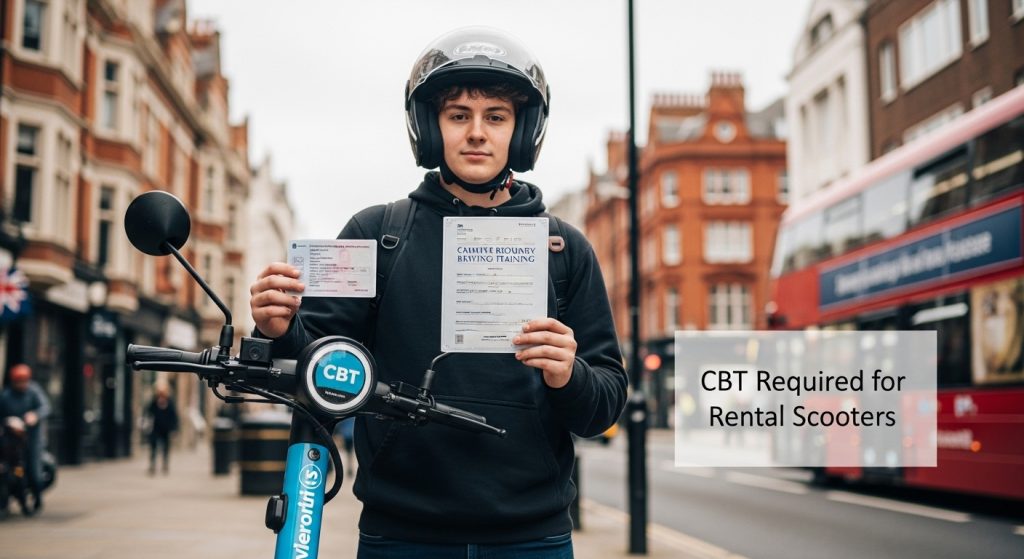
Navigating the legal landscape for electric scooters in the UK can be confusing. Many potential riders wonder if they need Compulsory Basic Training (CBT), the same training required for mopeds and some motorcycles. The short answer is complex, as it depends entirely on whether you are riding a private electric scooter or a rental electric scooter from a government-approved trial scheme. Private electric scooters are currently not legal for use on public roads, so the question of CBT is moot. However, for the legal rental trials, specific rules apply that every rider must understand to avoid fines, penalty points, or even having their vehicle seized. This guide will clarify the legal distinctions, explain the role of CBT, and outline what you need to know to ride legally and safely in the UK. Currently, you do not need CBT for a private electric scooter because they are not legal on public roads. For the UK’s rental electric scooter trials, you need a valid driving license with a ‘q’ or ‘AM’ entitlement, which is included with a provisional license that has completed CBT. Dynamic Scooter encourages all riders to seek professional training to ensure they can handle their scooter safely, regardless of legal requirements. Ready to understand the rules? Here’s the breakdown… 1. What Is Compulsory Basic Training (CBT)? Compulsory Basic Training, or CBT, is a foundational course designed to ensure that new riders of mopeds and motorcycles have the essential skills and knowledge to ride safely on public roads. It is not a test that you pass or fail; rather, it is a course of training you complete to a satisfactory standard. The training is divided into five distinct elements, covering everything from the basics of how a vehicle works to practical on-road riding sessions with a qualified instructor. The key takeaway is that CBT is a legal prerequisite for riding certain two-wheeled vehicles, but its application to electric scooters is nuanced and often misunderstood. The course begins with an introduction and eyesight check, followed by practical on-site training where you learn to handle the machine. After that, you’ll have more on-site riding practice, covering maneuvers like figure-of-eights and emergency stops. The fourth element is a classroom-based session covering road safety and theory. Finally, the fifth element requires you to spend at least two hours riding on public roads with your instructor, who will be in radio contact with you. Once your instructor is satisfied that you can ride safely and independently, they will issue you a DL196 certificate, which is your proof of completing CBT. This certificate is valid for two years. If you do not pass your full motorcycle or moped test within that time, you will need to retake the CBT course to continue riding legally. It is crucial to understand that a CBT certificate is not a full license. It comes with certain restrictions, such as not being able to carry passengers and, for motorcycle riders, not being able to ride on motorways. The rules are designed to give new riders experience in a controlled manner before they move on to more powerful machines or unrestricted riding. CBT Element Description Purpose A Introduction and Eyesight Check Ensure basic fitness to ride and explain the course. B Practical On-Site Training Familiarize the rider with the vehicle’s controls. C Practical On-Site Riding Develop basic riding skills in a safe environment. D Practical On-Road Training (Theory) Prepare the rider for on-road hazards and rules. E Practical On-Road Riding (Min. 2 hours) Assess the rider’s ability to interact with traffic. 2. Are Private Electric Scooters Legal in the UK? This is the most critical point of confusion for many people. As of 2026, it is illegal to use a privately owned electric scooter on public roads, pavements, cycle lanes, or any other public-access spaces in the UK. The only place you can legally ride your own electric scooter is on private land with the landowner’s explicit permission. This is because electric scooters are classified as Personal Light Electric Vehicles (PLEVs), and they fall into a legal grey area that makes them unsuitable for public road use under current law. To be used on public roads, all vehicles must comply with specific legal requirements, including having visible rear red lights, number plates, and signaling ability. Standard electric scooters lack these features. More importantly, the law requires all motor vehicles to have insurance and for the rider to have a valid driving license and pay vehicle tax. Since there is no legal mechanism to register, tax, or insure a private electric scooter for public road use, they are effectively banned from them. This is a crucial point because many people buy electric scooters without realizing they cannot legally use them for their daily commute. The consequences of breaking this law can be severe. If you are caught riding a private electric scooter in a public place, the police have the authority to issue you a fine. You can also receive penalty points on your driving license (or future license). In many cases, the police will also seize the electric scooter, and you may not be able to get it back. This strict enforcement is in place due to safety concerns and the lack of a proper regulatory framework for these popular vehicles. Legal Requirement for Public Roads Does a Private Electric scooter Comply? Consequence of Non-Compliance Valid Insurance No (Not possible to obtain) Fine, Penalty Points, Seizure Driving License Not applicable (but required) Fine, Penalty Points Vehicle Tax (VED) No (Not possible to register) Fine Type Approval / Construction No Seizure 3. What Are the Rules for UK Rental E-Scooter Trials? To explore the potential of electric scooters as a green transportation solution, the UK government has sanctioned rental trial schemes in various towns and cities. These trials operate under a different legal framework that temporarily legalizes the use of specific, approved rental electric scooters on public roads within the trial’s geographic boundaries. For these rental electric scooters, you do not need

Do You Need a CBT for an Electric Scooter? Rules Explained Clearly Read More »

What Happens If I Get Caught on My Electric Scooter?

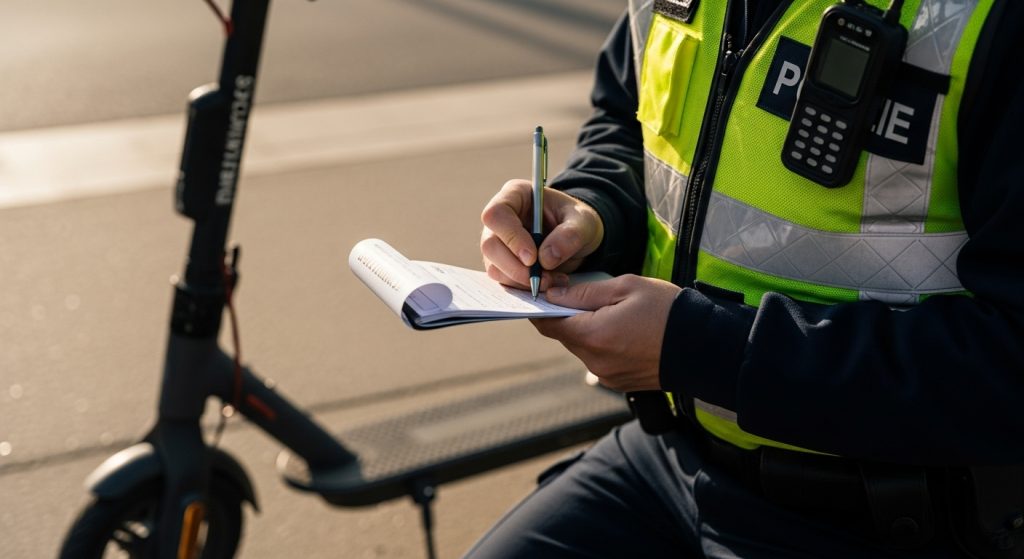
You are cruising down the street on your electric scooter, enjoying the breeze and the convenience of your personal transport. Then you see the flashing lights in your mirror. A police officer is signaling you to stop. Your heart sinks as you wonder what happens next. This scenario is becoming increasingly common across the United States and Canada as electric scooters grow in popularity while regulations continue to evolve. The consequences of being caught riding illegally can range from a simple warning to significant fines, penalty points on your license, and even having your scooter seized. Understanding these consequences and knowing how to handle the situation is essential for every electric scooter owner. This guide will walk you through the potential consequences, your rights, and how to avoid trouble. If you are caught riding an electric scooter illegally in the US or Canada, you could face fines of up to $500 or more depending on your location. You may also receive penalty points on your driving license, and your scooter could be impounded. Knowing the laws and riding responsibly is the best way to avoid these consequences. Dynamic Scooter encourages all riders to stay informed and ride safely. Want to know the full picture? Here’s everything you need to know… 1. What Are the Most Common Reasons for Being Stopped? The most common reason police stop electric scooter riders is a traffic violation. Running red lights, ignoring stop signs, and speeding are frequent causes for police stops. These violations put both the rider and others at risk. This is the key point: electric scooters are vehicles, and riders are expected to follow the rules of the road just like any other vehicle operator. Riding on sidewalks is another major cause for being stopped. In many cities across North America, it is illegal to ride an electric scooter on the sidewalk because it poses a danger to pedestrians. Cities like San Francisco, Los Angeles, and Toronto have strict sidewalk riding bans. Similarly, riding in the wrong direction or against the flow of traffic is a clear violation that will attract police attention. Other common reasons include riding without required safety equipment, such as lights at night, or riding under the influence of alcohol or drugs. In some states and provinces, you may also need a valid driver’s license to operate an electric scooter. Equipment violations, such as modified scooters that exceed legal speed limits, can also lead to police intervention. Reason for Stop Description Typical Outcome Running Red Lights Failing to stop at traffic signals. Fine, possible points Sidewalk Riding Riding where pedestrians have priority. Warning or fine Speeding Exceeding posted speed limits. Fine, possible points No Lights at Night Riding without required lighting. Warning or fine DUI/DWI Operating under the influence. Arrest, heavy fines 2. What Are the Immediate Consequences of Being Stopped? For minor infractions, especially if it is your first offense, you may receive a verbal warning. The officer will explain what you did wrong and advise you not to do it again. This is the best-case scenario. Do not assume you will be so lucky next time: repeated violations will result in formal penalties. For more clear-cut violations, the officer will issue a citation, commonly known as a ticket. This is a formal document stating the offense and the fine you must pay. The citation will include details about the violation, the fine amount, the due date for payment, and instructions for how to pay or contest the ticket. Fines vary by state and city but can range from $50 to $500 or more depending on the severity of the offense. In serious cases, such as DUI or reckless riding, the police can seize your electric scooter on the spot. The officer will arrange for your scooter to be towed to an impound lot. You may also receive penalty points on your driving license, which can have long-term consequences for your ability to drive. Consequence Description Severity Level Verbal Warning Officer advises you; no formal record. Low Citation (Ticket) Formal fine issued; must be paid. Medium Scooter Seizure Scooter is impounded by police. High Penalty Points Points added to your driving license. High Dismount Order Asked to walk your scooter; no further action. Low 3. What Are the Financial Penalties You Could Face? Common traffic violations like running a red light or speeding can result in fines ranging from $50 to $300 in most states. More serious offenses, such as reckless riding or DUI, can carry fines of $500 to $5,000 or more. Here’s the reality: the cost of breaking the law far exceeds the cost of simply following the rules. In California, riding an electric scooter without a valid driver’s license can result in a fine of up to $250. In New York City, riding on the sidewalk can cost you $50 to $100. In Toronto, Canada, operating an electric scooter where prohibited can result in fines of $100 to $500. These amounts may seem manageable, but they add up quickly if you are a repeat offender. Beyond the initial fine, there are other financial consequences to consider. If your scooter is impounded, you will have to pay towing and storage fees to get it back. These can easily add $100 to $300 or more to your total cost. Additionally, penalty points on your license can increase your car insurance premiums. Penalty Type Typical Amount (US/Canada) Notes Minor Traffic Violation $50 – $150 Running stop signs Sidewalk Riding $50 – $200 Varies by city Speeding $100 – $300 Depends on speed No License $100 – $250 State-dependent DUI/DWI $500 – $5,000+ Plus legal fees Impound Recovery Fees $100 – $300+ Towing + storage 4. How Does a Violation Affect Your Driving License? Many states classify electric scooters as motor vehicles, meaning violations can result in points on your license just like a car violation. This is a serious consequence: losing your license affects your ability to drive a car, not just a scooter. In states

What Happens If I Get Caught on My Electric Scooter? Read More »

Can Electric Scooters Be Used Manually? How They Move Without Power

You are halfway through your commute when your electric scooter’s battery indicator hits zero. The motor cuts out, and you are left standing on the sidewalk wondering what to do next. Can you just kick it home like a regular scooter? This is a common question for anyone who owns or is considering buying an electric scooter. The short answer is yes, most electric scooters can be pushed or kicked manually, but the experience is often far from ideal. Unlike a lightweight kick scooter, an electric scooter carries the extra weight of a motor and battery, and the motor itself can create significant resistance. This guide will explore exactly what happens when you try to use your electric scooter without power, what factors make it easier or harder, and how to prepare for those moments when your battery unexpectedly dies. Yes, you can use most electric scooters manually by kicking them like a traditional scooter. However, the experience varies greatly depending on the scooter’s weight, motor type, and whether it has a freewheel function. Lightweight models like the Dynamic Scooter Model B, weighing just 10kg, are much easier to push than heavier alternatives. The motor may create some drag, but it will not damage the scooter. Ready to learn more? Here’s the full breakdown… 1. What Happens When You Manually Push an Electric Scooter? When you push an electric scooter without using the motor, you are essentially turning it into a very heavy kick scooter. The first thing you will notice is the weight. A typical electric scooter weighs between 10kg and 25kg, compared to just 3-5kg for a standard kick scooter. This extra mass requires significantly more effort to get moving and to maintain momentum. The key factor here is that you are fighting against inertia every time you push off the ground. The second thing you will notice is the motor. Most electric scooters use hub motors, which are built directly into one of the wheels. When the motor is not powered, it can still create a phenomenon called motor drag. This is because the magnets inside the motor create resistance as the wheel turns. The amount of drag varies significantly between different motor designs. Some scooters feel almost free-rolling, while others feel like you are pushing through mud. The type of motor matters a great deal. Geared hub motors often have a clutch mechanism that allows the wheel to spin more freely when the motor is not engaged. Gearless, or direct-drive, hub motors tend to have more noticeable drag because the magnets are always in contact with the stator. If your scooter feels very heavy to push, it is likely because it has a direct-drive motor without a good freewheel mechanism. Motor Type Freewheel Capability Typical Drag Level Manual Use Suitability Geared Hub Motor Often has clutch Low to Medium Good Gearless Hub Motor Rarely has clutch Medium to High Fair Chain/Belt Drive Motor is separate Low Good 2. Can Kicking an Electric Scooter Damage the Motor or Battery? This is one of the most common concerns among electric scooter owners. The good news is that, in the vast majority of cases, manually pushing your electric scooter will not cause any damage to the motor or the battery. The motor is designed to spin, and pushing the scooter simply spins the motor in reverse of its normal operation. Here’s the truth: the components are robust enough to handle this without issue. However, there is a nuance related to regenerative braking. Some electric scooters have a feature that captures energy when you brake or coast downhill and feeds it back into the battery. If your scooter has active regenerative braking, pushing it manually might engage this system. This is not harmful to the battery; in fact, it is doing exactly what it was designed to do. The only downside is that it creates additional resistance, making the scooter harder to push. The components that might experience slightly more wear from manual use are the wheel bearings. These are the small metal balls that allow the wheel to spin smoothly on its axle. Pushing a heavy scooter puts stress on these bearings, but this is normal wear and tear that would happen during regular use anyway. High-quality scooters use sealed bearings that are designed to last for thousands of miles. Component Risk of Damage from Manual Use Notes Hub Motor Very Low Designed to spin; no damage from pushing. Battery None Not affected by manual pushing. Wheel Bearings Low (Normal Wear) Standard wear; use quality bearings. Controller None Not engaged when scooter is off. 3. How Does a Scooter’s Freewheel Feature Work? The freewheel is a critical component that determines how easy your electric scooter is to push manually. A freewheel, also known as a clutch, is a mechanism that allows the wheel to spin independently of the motor when the motor is not providing power. Think of it like the freewheel on a bicycle: you can coast without pedaling because the chain is not forcing the pedals to turn. This is the secret to a smooth manual pushing experience. In electric scooters with geared hub motors, the freewheel is often built into the motor assembly. When you are not accelerating, the clutch disengages, allowing the wheel to roll freely. This is why some scooters feel almost like a regular kick scooter when the power is off. The motor is effectively disconnected from the wheel’s rotation. Gearless hub motors, on the other hand, typically do not have a freewheel. The rotor (the spinning part of the motor) is directly connected to the wheel. This means that every time the wheel turns, the magnets inside the motor pass over the coils, generating a small amount of resistance. This is the drag you feel. Some manufacturers are now designing gearless motors with improved magnetic configurations to reduce this drag, but it is still a factor to consider when choosing a scooter. Feature Geared Hub Motor Gearless Hub Motor Freewheel Often

Can Electric Scooters Be Used Manually? How They Move Without Power Read More »

Do Electric Scooters Have Gears or Not? The Simple Answer Explained

Many riders wonder whether electric scooters have gears like bicycles. The answer is more complex than a simple yes or no. Most electric scooters don’t have traditional mechanical gears. Instead, they use electronic speed control systems. Understanding how scooters manage speed helps you choose the right model. This guide explains scooter transmission systems in detail. Electric scooters typically don’t have mechanical gears. Instead, they use electronic motor controllers to manage speed. Dynamic Scooter models feature direct-drive motors with smooth electronic speed control. This system is simpler and more reliable than traditional gears. Electronic control provides consistent performance. No gears mean less maintenance and better reliability. Ready to understand scooter transmissions? Here’s the deal… 1. Do Electric Scooters Have Traditional Gears? Most electric scooters don’t have traditional mechanical gears. Understanding this fundamental difference helps you appreciate scooter design. Traditional bicycles have mechanical gears. Gears change the mechanical advantage. They allow riders to maintain efficiency across different speeds. Bicycles need gears because human power varies. Pedaling at different cadences requires different gear ratios. This is important because mechanical gears solve a specific human-powered problem. Electric scooters don’t need mechanical gears. Electric motors provide consistent power across all speeds. Motors can deliver maximum torque instantly. There’s no need to shift gears. Electronic controllers manage speed automatically. The motor adjusts power delivery electronically. No mechanical shifting is required. Direct-drive motors are standard on scooters. Direct-drive means the motor connects directly to the wheel. No gearbox sits between the motor and wheel. Power transfers directly from motor to wheel. This design is simple and reliable. Direct-drive is the most common scooter configuration. Hub motors are the typical choice. Hub motors sit inside the wheel hub. They’re compact and efficient. Hub motors integrate seamlessly with the wheel. This design saves space and weight. Hub motors are ideal for scooters. Some scooters have geared hub motors. Geared motors use internal gears. These gears reduce motor speed while increasing torque. Geared motors are less common on scooters. They’re heavier than direct-drive motors. Most scooters use direct-drive instead. The Dynamic Scooter uses a direct-drive motor. This provides reliable, consistent performance. No gears mean fewer moving parts. Fewer parts mean better reliability. Direct-drive is the superior choice for scooters. Motor Type Gears Present Complexity Reliability Direct-Drive No Low High Geared Hub Yes Medium Medium Mid-Drive Sometimes High Medium Belt Drive Sometimes High Low Chain Drive Sometimes High Low 2. How Do Scooters Control Speed Without Gears? Electronic speed control replaces mechanical gears. Understanding this system helps you appreciate scooter technology. Electronic controllers manage motor speed. Controllers receive input from the throttle. They adjust power delivery to the motor. Power adjustment happens electronically. This is instantaneous and smooth. No mechanical shifting is needed. Throttle input controls acceleration. Riders twist or press the throttle. This sends a signal to the controller. The controller increases motor power. Acceleration is smooth and progressive. Here’s why it matters… Electronic control provides better acceleration than mechanical gears. Variable speed control is continuous. Scooters don’t have discrete speed steps. Speed changes smoothly and continuously. Riders can achieve any speed up to the maximum. This is more flexible than gear ratios. Motor controllers use pulse-width modulation. PWM adjusts power by turning the motor on and off rapidly. The frequency is so fast that riders don’t notice. The motor appears to run at variable power. PWM is efficient and smooth. Regenerative braking captures energy. When riders brake, the motor reverses. The motor becomes a generator. Kinetic energy converts back to electrical energy. This energy charges the battery. Regenerative braking extends range significantly. Torque is constant across speeds. Unlike bicycles, scooter motors deliver maximum torque instantly. This provides excellent acceleration. Riders feel responsive performance. Constant torque is a key advantage of electric motors. Control Method Smoothness Efficiency Complexity PWM Control Excellent High Medium Throttle Input Excellent High Low Continuous Speed Excellent High Low Regen Braking Good High Medium Motor Torque Excellent High Low 3. What Are the Advantages of Gearless Scooters? Gearless design offers significant benefits. Understanding these advantages helps you appreciate scooter engineering. Simplicity is the primary advantage. Fewer moving parts mean simpler design. Simpler design means lower manufacturing costs. Lower costs mean more affordable scooters. Simplicity also improves reliability. This is important because simple systems fail less often. Maintenance is minimal on gearless scooters. No gears to adjust or replace. No chain to lubricate. No derailleurs to repair. Maintenance is straightforward and inexpensive. Most riders can perform basic maintenance themselves. Reliability is excellent on gearless scooters. Fewer moving parts mean fewer failure points. Gearless systems rarely break down. Electronic controllers are very reliable. Gearless scooters last longer than geared alternatives. Weight is lower on gearless scooters. Direct-drive motors are lightweight. No gearbox adds extra weight. Lighter scooters are easier to carry. Lighter weight improves performance. Weight savings matter for portability. Efficiency is high on gearless scooters. Direct-drive systems have minimal energy loss. No gearbox friction reduces efficiency. Electronic control is very efficient. High efficiency means longer range. Efficiency translates to better value. Silent operation is a benefit of gearless scooters. No gears means no gear noise. Electronic motors are nearly silent. Quiet operation is pleasant for riders. Noise reduction improves the riding experience. Advantage Impact Level Benefit Simplicity High Lower cost, better design Low Maintenance High Less work, lower costs Reliability Critical Fewer breakdowns Light Weight Medium Better portability High Efficiency High Longer range Silent Operation Medium Pleasant riding 4. What Are the Disadvantages of Gearless Scooters? Gearless design has some limitations. Understanding these helps you make informed decisions. Limited torque at high speeds is a disadvantage. Direct-drive motors have fixed gear ratios. At high speeds, torque decreases. Hill climbing becomes difficult at high speeds. This is a trade-off of direct-drive design. Here’s why it matters… Torque limitations affect performance on hills. Motor size must be larger for power. Direct-drive motors need more power to achieve performance. Larger motors are heavier. Larger motors consume more battery. This increases scooter weight and cost. Motor size is a practical

Do Electric Scooters Have Gears or Not? The Simple Answer Explained Read More »

Can Electric Scooters Handle Gravel? Safety Risks & Riding Tips

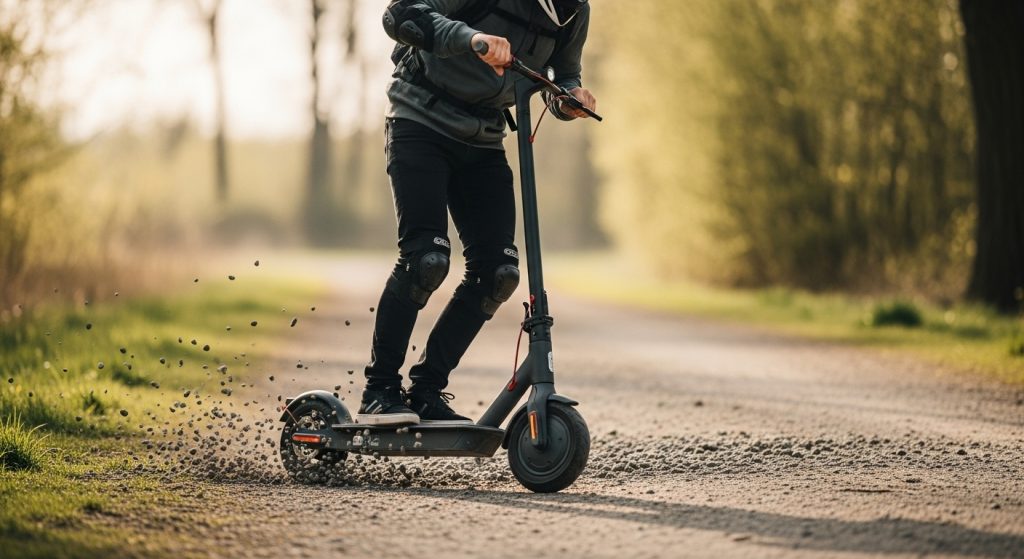
Riding electric scooters on gravel roads presents unique challenges. Many riders wonder if their scooters can handle unpaved surfaces. The answer is complicated and depends on several factors. Most standard scooters struggle on gravel. However, some models perform better than others. Electric scooters can technically ride on gravel, but performance suffers significantly. Dynamic Scooter models handle light gravel better than most, but extended gravel riding isn’t recommended. Gravel reduces traction, increases wear, and affects stability. Smooth paved surfaces are ideal for scooter riding. Gravel should be avoided when possible. Ready to learn about gravel riding? Here’s the deal… 1. Why Do Scooters Struggle on Gravel Roads? Gravel presents specific challenges for electric scooters. Understanding these challenges helps you avoid problems. Gravel roads differ fundamentally from paved surfaces. The loose, shifting nature of gravel creates instability. Every stone moves independently. This unpredictability makes scooter riding difficult and dangerous. Traction is severely reduced on gravel. Gravel surfaces are loose and unstable. Wheels slip and slide on loose stones. Traction control becomes difficult. Braking power decreases significantly. Acceleration becomes unpredictable. This is important because poor traction creates safety hazards. Riders lose control easily on gravel. The wheels cannot grip the surface effectively. Each acceleration attempt may result in wheel spin. Braking distances increase dramatically. Emergency stops become impossible. The lack of traction is the primary reason scooters struggle on gravel. Wheel damage occurs from sharp stones. Gravel contains sharp, jagged pieces. These pieces puncture and damage tires. Tire damage is expensive to repair. Wheels can bend from impacts. Bearing damage occurs from rough surfaces. Maintenance costs increase dramatically. Sharp stones embedded in gravel act like tiny knives. They cut through tire rubber easily. Punctures happen frequently on gravel. Tire replacement becomes necessary. The cost of replacement tires adds up quickly. Bent wheels require professional repair. Sometimes wheels cannot be repaired and need replacement. The financial impact of wheel damage is significant. Suspension stress increases on rough surfaces. Gravel is uneven and bumpy. Suspension components absorb constant impacts. Suspension wears out faster. Components fail prematurely. Replacement costs add up quickly. Every stone and hole creates an impact. Suspension systems are designed for smooth surfaces. Constant jarring on gravel accelerates wear. Springs lose their effectiveness. Dampers fail prematurely. The entire suspension system degrades faster. Replacement suspension is expensive. Some riders spend hundreds on suspension repairs. Motor strain increases on difficult terrain. Motors work harder on gravel. Energy consumption increases dramatically. Battery drains faster. Range decreases significantly. Motor lifespan shortens. The motor must overcome increased resistance. Loose gravel creates drag on wheels. Motors compensate by working harder. This extra effort consumes more electricity. Heat builds up in the motor. Overheating can damage motor components. Motor efficiency decreases over time. Eventually motors fail from overuse. Stability is compromised on loose surfaces. Scooters feel wobbly on gravel. Balance becomes difficult. Riders feel unsafe. Accidents are more likely. Confidence decreases. The loose surface shifts under your feet. Your scooter moves unpredictably. Maintaining balance requires constant adjustment. Riders become fatigued from balancing effort. Small corrections become large movements. The scooter responds erratically. Confidence erodes with each wobble. Many riders give up on gravel after trying once. Noise and vibration increase dramatically. Gravel creates constant noise. Vibration is uncomfortable. Riding experience suffers. Fatigue increases. Enjoyment decreases. Every stone creates noise as the wheel rolls over it. The constant rattling is annoying. Vibration travels through the scooter to your hands and feet. Your whole body vibrates. Hands become numb from vibration. Feet ache from constant jarring. The riding experience becomes unpleasant. Fatigue sets in quickly. Most riders don’t enjoy gravel riding. Challenge Impact Level Effect on Scooter Duration Traction Loss Critical Slipping, loss of control Immediate Wheel Damage High Punctures, bending Hours Suspension Wear High Premature failure Days Motor Strain Medium Reduced range, lifespan Ongoing Stability Loss High Wobbly, unsafe feeling Immediate Noise/Vibration Medium Discomfort, fatigue Immediate 2. What Scooter Features Help on Gravel? Certain features make gravel riding more feasible. Understanding these features helps you choose appropriate scooters. Not all scooters are created equal. Some have features that help on gravel. Others lack these features completely. Choosing the right scooter makes a difference. Larger wheels handle gravel better. Bigger wheels roll over stones more easily. Small wheels get stuck in gravel. Wheel size directly affects gravel performance. Eight to ten-inch wheels are better. The Dynamic Scooter has appropriately sized wheels for various terrains. Large wheels have more surface area. They distribute weight better. They roll over obstacles more easily. Small wheels sink into gravel. They get stuck frequently. Large wheels are essential for gravel riding. Wider tires provide better traction. Wide tires distribute weight better. Narrow tires sink into gravel. Tire width affects stability. Wider is better for unpaved surfaces. Quality tires improve performance. Wide tires spread the load. They don’t sink as easily. Traction improves with width. Stability increases. Control becomes easier. Air-filled tires perform better than solid tires. Air-filled tires absorb impacts better. Solid tires transmit all vibration. Air-filled tires provide cushioning. Comfort and control improve. Air-filled tires are better for gravel. Here’s why it matters… Tire type significantly affects gravel performance. Air acts as a shock absorber. It cushions impacts naturally. Solid tires offer no cushioning. Every bump is transmitted directly. Air-filled tires are clearly superior for gravel. Suspension systems reduce impact. Good suspension absorbs bumps. No suspension feels rough. Suspension improves comfort. Stability increases. Suspension is valuable on gravel. Suspension components compress when hitting obstacles. They absorb the impact energy. Without suspension, all energy transfers to the rider. Suspension makes gravel riding more tolerable. Quality suspension is expensive. Budget scooters often lack suspension. Higher ground clearance helps avoid obstacles. Low scooters hit rocks easily. Higher clearance clears obstacles. Ground clearance affects performance. Higher is better for rough terrain. Clearance prevents the deck from hitting rocks. Hitting rocks damages the deck. It also causes sudden stops. Higher clearance prevents these problems. Powerful motors handle resistance better. Strong motors overcome gravel resistance. Weak motors struggle. Motor power affects

Can Electric Scooters Handle Gravel? Safety Risks & Riding Tips Read More »

Is It Safe to Ride Your Electric Scooter on Grass?

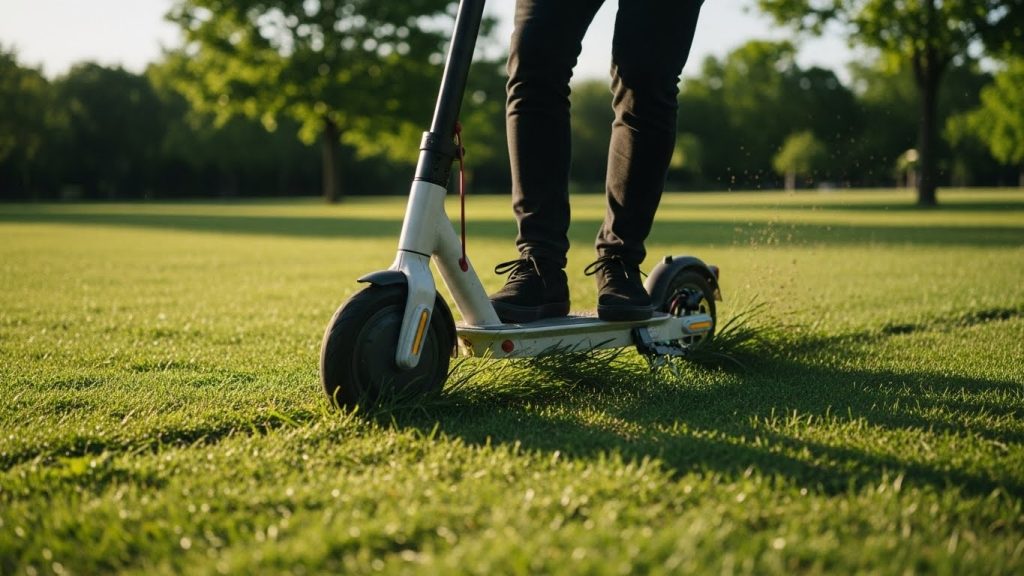
Electric scooters are masters of the urban landscape, gliding effortlessly over pavement. But what happens when the sidewalk ends? You see a beautiful, open park or a grassy shortcut and the temptation is real. This impulse can lead to a jarring, unstable ride, or even a sudden, painful fall. The smooth, small wheels that are perfect for asphalt can instantly become a liability on soft, uneven turf, digging in and bringing you to an abrupt halt. This can leave you frustrated and with a potentially damaged scooter. While it is technically possible for some electric scooters to go on grass, most standard commuter models are not designed for it and will perform poorly and unsafely. Only specialized off-road scooters with the right tires, suspension, and power can handle grassy terrain effectively. So, what separates a scooter that can conquer a lawn from one that will be conquered by it? Here’s the deal… it all comes down to design. This article will break down exactly what features make a scooter grass-friendly, the risks involved, and how to do it safely if you have the right machine. 1. Why do most standard electric scooters struggle on grass? Most electric scooters are built for smooth, paved surfaces. Their design prioritizes efficiency and portability, which means they are not equipped for off-road terrain like grass. The primary culprit is the tires. Standard commuter scooters typically have small, solid (airless) tires. These are great for preventing flats on city streets, but they are terrible on soft ground. They have a small contact patch and no tread, so they can’t get a good grip on the grass. Another major issue is the lack of suspension. You need to know this… suspension isn’t just for comfort; it’s for safety and control. It allows the wheels to absorb bumps and keep the tires in constant contact with the ground. Without suspension, every little bump in the lawn is transferred directly to the frame and to you, creating a jarring, unstable ride that can easily cause a loss of control. Finally, the motor power on a typical commuter scooter is just not up to the task. Riding on grass creates significantly more friction than riding on pavement. A standard 250W or 350W motor, which feels zippy on the sidewalk, will strain and struggle on a soft lawn. It may overheat or simply not have enough torque to keep you moving. Feature Standard Commuter Scooter Why It Fails on Grass Tires Small (8.5-inch), solid, no tread Cannot grip soft surfaces; sinks into the ground. Suspension None, or very basic Every bump is felt, leading to instability and loss of control. Motor Power Low (250W-350W) Lacks the torque to overcome the high resistance of grass. 2. What makes a scooter “off-road” or grass-friendly? If you want to venture off the pavement, you need a scooter that is specifically built for it. These are often called “off-road” or “all-terrain” scooters. The most obvious difference is the tires. Off-road scooters feature large, pneumatic (air-filled) tires, often 10 inches or more in diameter, with deep, aggressive tread patterns. This is important because… the larger size helps them roll over obstacles more easily, the air inside acts as natural suspension, and the tread provides the necessary grip on loose surfaces. A robust suspension system is the next critical component. You won’t find a true off-road scooter without a serious dual-suspension system. This usually involves a combination of spring and hydraulic components on both the front and rear wheels. This system is designed to absorb major impacts from rocks, roots, and uneven ground, ensuring the ride is not only comfortable but also safe by keeping the tires planted on the turf for maximum traction. Under the deck, off-road scooters pack a serious punch. They typically feature dual motors (one in each wheel) with a combined power output of 1000W, 2000W, or even more. This immense power provides the high torque needed to conquer steep hills and power through high-resistance surfaces like thick grass without bogging down. Feature Off-Road Scooter Why It Works on Grass Tires Large (10-inch+), pneumatic, knobby tread Provides excellent grip, shock absorption, and ability to roll over obstacles. Suspension Dual (front and rear), often hydraulic Absorbs large bumps, keeping the ride smooth and the tires on the ground. Motor Power High (1000W+), often dual motors Delivers the high torque needed to power through soft, high-resistance terrain. 3. What are the biggest safety risks of riding on grass? Riding on grass, even with an off-road scooter, introduces a new set of safety risks. The most significant danger is the potential for a sudden loss of traction. Grass can be slippery, especially if it’s damp from morning dew or recent rain. A sharp turn or a sudden acceleration can cause the wheels to slip out from under you, leading to a fall. The bottom line? Grass is excellent at hiding things. A perfectly manicured lawn can conceal hidden dangers like rocks, exposed tree roots, sprinkler heads, or holes. Hitting one of these obstacles at speed can cause the scooter to stop abruptly, throwing you forward over the handlebars. It’s crucial to scan the ground ahead of you far more carefully than you would on a predictable bike path. Uneven ground is another major hazard. Lawns are rarely perfectly flat. They have subtle dips, mounds, and slopes that can be hard to see. Hitting an unexpected dip can unsettle the scooter and throw you off balance. This is especially true for standard commuter scooters that lack the suspension to absorb these imperfections. Always start slow and be prepared for the ground to be less predictable than it looks. Risk Why It’s Dangerous on Grass How to Mitigate It Loss of Traction Grass provides less grip than pavement, especially when wet. Avoid sharp turns and sudden acceleration; use scooters with knobby tires. Hidden Obstacles Rocks, roots, and holes can be concealed by the grass. Ride slowly and scan the ground ahead carefully for any irregularities. Uneven

Is It Safe to Ride Your Electric Scooter on Grass? Read More »

How Do You Upgrade an Electric Scooter Battery? Step-by-Step Guide

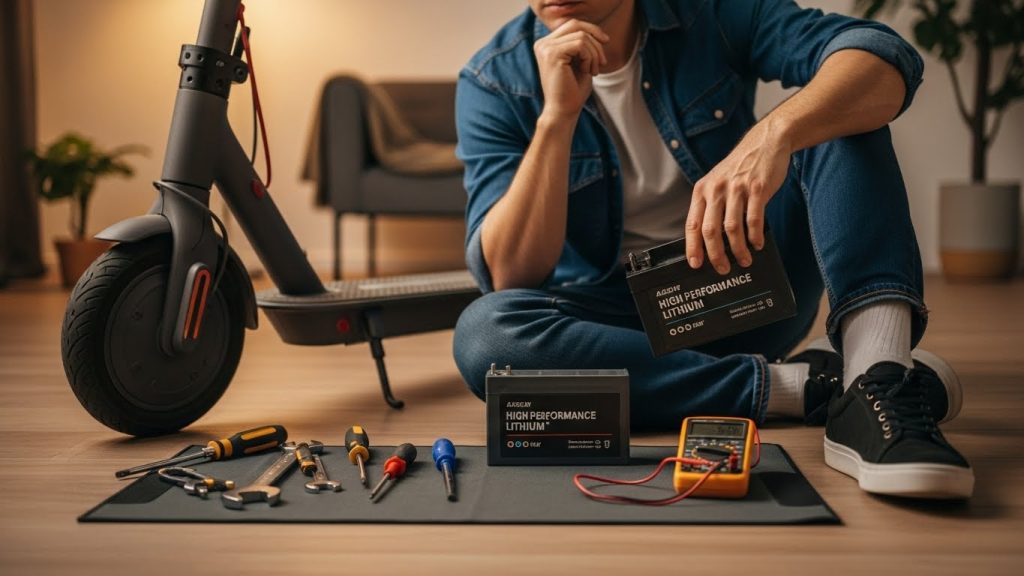
You love your scooter, but you wish it could go further, climb hills with more gusto, or simply last as long as it did when it was new. The thought of a battery upgrade is tempting, but it seems like a complex, risky, and expensive endeavor reserved only for technical wizards. Upgrading an electric scooter battery is an advanced DIY project that can significantly boost range and performance, but it carries serious risks, including fire hazards and damage to your scooter’s electronics if done incorrectly. It requires careful matching of voltage, size, and connectors, and a deep understanding of electrical safety. So, is this a project you can tackle yourself? This guide will walk you through the critical considerations, from understanding the core specifications and choosing the right components to the step-by-step process of a safe installation. 1. Why would you want to upgrade your electric scooter battery? The primary motivation for most riders to upgrade their scooter battery is the quest for more range. The amp-hour (Ah) rating of a battery is like the size of its fuel tank. By installing a battery with a higher Ah rating, you can significantly increase the distance you can travel on a single charge, unlocking longer commutes and more adventurous weekend rides. This is especially true for riders whose original battery has degraded over time, holding a fraction of its original capacity after years of use. Beyond just range, a battery upgrade can also lead to a noticeable boost in performance. This is important because… a more powerful battery, particularly one with a higher discharge rate (or C-rating), can deliver more current to the motor. This translates into snappier acceleration from a standstill and, most importantly, better hill-climbing ability. A scooter that once struggled on steep inclines might conquer them with ease after an upgrade. Finally, replacing a failing battery is often a better choice than replacing the entire scooter. If your scooter’s frame, motor, and brakes are still in good shape, a battery transplant can breathe new life into it for a fraction of the cost of a new machine. It’s a sustainable choice that can keep an otherwise perfectly good scooter out of the landfill while saving you money. Upgrade Motivation Benefit Technical Consideration Increase Range Ride longer distances on a single charge. Choose a battery with a higher Amp-hour (Ah) rating. Boost Performance Improve acceleration and hill-climbing power. Select a battery with a higher discharge rate (C-rating). Replace Old Battery Restore original performance and extend the scooter’s life. Ensure the new battery is a compatible, high-quality replacement. 2. What are the major risks of a DIY battery upgrade? Before you start ordering parts, you must have a healthy respect for the dangers involved. Lithium-ion batteries are incredibly energy-dense, and mishandling them can have catastrophic consequences. The most severe risk is fire. Puncturing a cell, creating a short circuit by letting the positive and negative wires touch, or using an incompatible charger can all lead to a thermal runaway event—a violent, unstoppable chemical fire that is extremely difficult to extinguish. You need to know this… performing a DIY upgrade will almost certainly void your scooter’s manufacturer warranty. If anything goes wrong with the scooter after your modification, even if it’s unrelated to the battery, the manufacturer will likely refuse to cover the repairs. This is a significant financial risk to consider before you begin. Compatibility issues are another major hurdle. If you install a battery with the wrong voltage, you can instantly destroy your scooter’s controller or motor. Even if the voltage is correct, the new battery’s physical dimensions might not fit in the scooter’s deck, or the connectors might not match. Forcing a battery into a space that’s too tight can lead to damage and create a fire hazard. This is not a project to be taken lightly or without proper research. Risk Category Specific Danger How to Mitigate Safety Fire, explosion, or electric shock from short circuits. Use insulated tools, work in a clean space, and handle the battery with extreme care. Financial Voiding the manufacturer’s warranty. Accept that you are taking full responsibility for any future repairs. Technical Damaging the scooter’s controller or motor. Triple-check voltage compatibility and all connections before powering on. 3. What key battery specifications must you understand? To embark on a battery upgrade, you must first speak the language of batteries. There are a few core specifications that are non-negotiable to understand. The most important is Voltage (V). Think of voltage as the electrical pressure that pushes current through your scooter’s system. Your scooter’s controller and motor are designed to work with a specific voltage range, typically 24V, 36V, 48V, or 52V. Installing a battery with the wrong voltage will either fail to power your scooter or, worse, fry the electronics. Amp-Hours (Ah) is the second critical specification. This represents the battery’s capacity—how much energy it can store. A 10Ah battery can theoretically deliver 10 amps of current for one hour, or 5 amps for two hours, and so on. Higher Ah ratings mean longer range. The third specification is the C-Rating, which indicates how quickly the battery can discharge. A higher C-rating means the battery can deliver more power to the motor, resulting in better acceleration and hill-climbing performance. Finally, you need to understand the cell configuration, often written as something like “10S4P.” The “S” stands for series, meaning cells are wired positive-to-negative, which adds their voltages together. The “P” stands for parallel, meaning cells are wired positive-to-positive and negative-to-negative, which increases capacity without changing voltage. A 10S4P configuration means 10 cells in series (creating 37V nominal) with 4 parallel strings, resulting in a much higher capacity than a single string. Specification What It Means Why It Matters Voltage (V) Electrical pressure in the system. Must match your scooter’s controller. Wrong voltage destroys electronics. Amp-Hours (Ah) Battery capacity or “fuel tank” size. Higher Ah = longer range per charge. C-Rating Maximum discharge rate. Higher C-rating = better acceleration and hill performance.

How Do You Upgrade an Electric Scooter Battery? Step-by-Step Guide Read More »

Shopping Cart
Scroll to Top