...

October 2025

Can an Electric Scooter Go Uphill? What You Need to Know Before Riding

Worried that an electric scooter won’t have the power to get you up the hills on your commute? This doubt can make you hesitate, leaving you stuck in traffic and missing out on a more efficient way to travel. An underpowered scooter can turn a daily trip into a frustrating struggle. This guide will explain what makes a scooter a capable hill climber. Yes, an electric scooter can go uphill, but its ability to do so depends on several key factors. Motor power, battery voltage, rider weight, and the steepness of the incline all play a role. A scooter with at least a 500-watt motor and a high-voltage battery can typically handle most urban hills with ease. For very steep terrain, a dual-motor scooter is even better. Understanding these factors will help you choose a scooter that can conquer the hills on your route. Ready to find the right scooter for your terrain? Here’s the deal… This article breaks down everything you need to know about electric scooters and hill climbing. 1. What Determines If an Electric Scooter Can Go Uphill? An electric scooter’s ability to climb hills is not a simple yes or no question. It depends on a combination of factors that work together to provide the necessary power and torque. The most critical factor is the motor power, which is measured in watts (W). A higher wattage motor can generate more torque, which is the rotational force needed to push the scooter and its rider up an incline. A basic 250W motor might be fine for flat surfaces, but it will likely struggle on anything more than a gentle slope. The battery is the powerhouse of the scooter, and its voltage (V) and capacity (Ah) are just as key as the motor. Voltage can be thought of as the “pressure” that pushes electricity to the motor. A higher voltage system (like 48V or 52V) allows the motor to draw power more efficiently and deliver more torque for hill climbing. Battery capacity affects the scooter’s range. Climbing hills consumes a lot of energy, so a larger capacity battery will let you tackle more inclines before needing to recharge. Rider weight is another major piece of the puzzle. The scooter’s motor has to work harder to carry a heavier load, especially against gravity. Every scooter has a maximum payload capacity, and exceeding this limit will severely impact its performance, particularly on hills. Even if you are within the weight limit, a heavier rider will experience slower speeds on inclines compared to a lighter rider on the same scooter. This matters because you need to choose a scooter with enough power to handle your specific weight on the types of hills you expect to encounter. The steepness of the hill itself, known as the incline angle or gradient, is the challenge the scooter must overcome. This is often expressed in degrees or as a percentage. A 10-degree incline is roughly an 18% gradient, which is considered a moderately steep hill. Most commuter scooters can handle gradients of up to 15-20%, but for anything steeper, you will need a more powerful performance model. Factor Why It Matters for Hill Climbing Recommended Specification Motor Power (Watts) Provides the torque to push against gravity 500W or higher for regular hills Battery Voltage (V) Delivers power efficiently to the motor 48V or higher for better performance Rider Weight Affects the total load the motor must carry Choose a scooter with a high payload capacity Incline Angle The steepness of the hill to be climbed Match scooter’s gradeability to your route Here’s a table comparing motor types: Motor Type Best For Hill Performance Single 250W Flat terrain, light riders Struggles on most hills Single 500W Urban commuting, moderate hills Good for most city inclines Dual Motor (1000W+) Steep hills, performance riding Excellent, can handle very steep grades 2. How Steep of a Hill Can Electric Scooters Climb? The climbing ability of electric scooters varies greatly between models. A standard commuter electric scooter is typically designed to handle the gentle slopes found in most urban environments. These scooters can usually manage inclines with a gradient of 10-15%, which equals a 6 to 9-degree angle. This is sufficient for most city streets, parking garage ramps, and small hills. However, if your daily route includes more challenging terrain, you will need to look at more capable models. Performance-oriented electric scooters are built with hill climbing in mind. These models often feature more powerful motors, higher voltage batteries, and more robust construction. It is not uncommon for a high-end scooter to be able to tackle gradients of 25% or even 30% (around 15-17 degrees). These scooters are designed for enthusiasts and for riders in hilly cities who need that extra power to get around without any issues. When you are shopping for an electric scooter, you will see a “maximum gradient” or “climbing angle” listed in the specifications. This number represents the steepest incline the scooter is advertised to be able to climb under ideal conditions. “Ideal conditions” usually means a lightweight rider, a full battery, and a smooth, dry surface. The bottom line? Your real-world experience may be different. It is always a good idea to look for a scooter with a maximum gradient that is a bit higher than the steepest hill on your route to have a margin of safety. Scooter Type Typical Max Gradient Best Use Case Budget Commuter 10% (6 degrees) Mostly flat areas with small slopes Mid-Range Commuter 15-20% (9-11 degrees) Average city with moderate hills Performance/Dual Motor 25-40% (14-22 degrees) Hilly cities and off-road use Here’s another table for context: Gradient (%) Angle (Degrees) Description 10% ~5.7° Gentle Slope 18% ~10.2° Moderate Hill 25% ~14.0° Steep Hill 35% ~19.3° Very Steep Hill 3. What Motor Power Do You Need for Hill Climbing? Motor power is the single most key specification for an electric scooter’s hill-climbing ability. An electric scooter’s motor is rated in watts (W), and a higher wattage generally translates

Can an Electric Scooter Go Uphill? What You Need to Know Before Riding Read More »
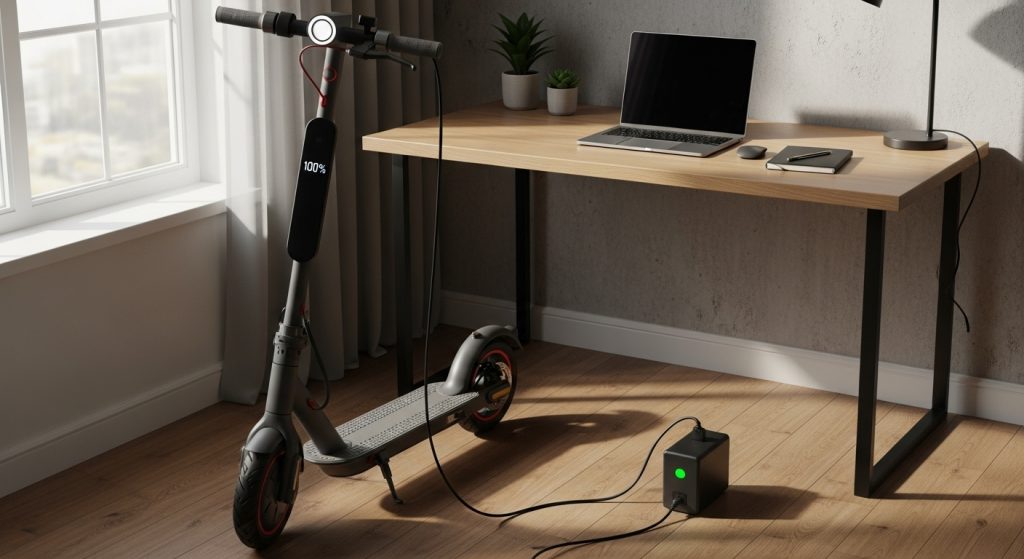
How to Know If My Electric Scooter Is Charging? Step-by-Step Check Guide

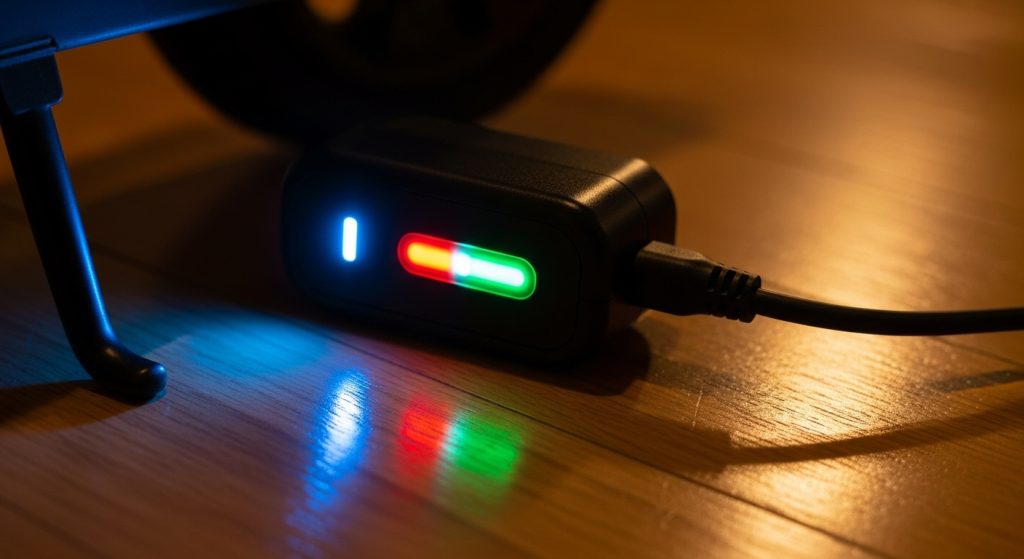
Is your scooter plugged in but you’re not sure it’s actually charging? This uncertainty can be frustrating, especially when you rely on it for your daily commute. A scooter that fails to charge means you could be left stranded, disrupting your plans and causing unnecessary stress. This guide will show you exactly how to confirm your scooter is charging correctly. To know if your electric scooter is charging, look for key visual cues. The most common sign is an indicator light on the charger, which typically turns red during charging and green when full. Your scooter’s display may also show a charging symbol or an increasing battery percentage. A working charger will feel slightly warm to the touch, but not excessively hot. If you see these signs, your scooter is charging properly. Ready to become a charging expert? Here’s the deal… This article will walk you through all the signs and steps to check. 1. What Are the Visual Signs That Your Electric Scooter Is Charging? Confirming that your electric scooter is charging is usually straightforward. Manufacturers design scooters with clear visual indicators to show the charging status. The most common and reliable sign is the LED indicator light found on the charger itself. When you plug the charger into the wall and the scooter, this light will typically turn red. This red light signifies that the charging has started and electricity is flowing to the battery. Your scooter’s own display screen provides valuable information. Most modern scooters have a digital display that will show a charging symbol, such as a lightning bolt or a battery icon filling up. You should also see the battery percentage slowly increasing over time. This provides direct feedback that the battery is accepting a charge. Some scooters might not have a screen, but they often have a series of small LED lights on the handlebars or deck that blink. Color changes are another key indicator. The charger light is usually red during charging. Once the battery is fully charged, this light will change to green. This is your signal to unplug the charger. The blinking lights on the scooter’s deck might turn solid once the charge is complete. This matters because understanding these color codes prevents overcharging and helps you know exactly when your scooter is ready to ride. Here is a breakdown of common light patterns and their meanings: Light Indicator Color/Pattern Meaning Charger LED Solid Red Currently Charging Charger LED Solid Green Fully Charged Scooter Display Blinking Battery Icon Currently Charging Scooter Display Solid Battery Icon Fully Charged 2. How Can You Tell If the Charger Is Working Properly? Sometimes, the problem isn’t the scooter but the charger itself. A faulty charger won’t deliver power to your battery, no matter how long you leave it plugged in. Check the indicator light on the charger. Most chargers have a light that turns on when it’s plugged into a working wall outlet, even before it’s connected to the scooter. If this light doesn’t come on, it could mean the charger is dead or the outlet has no power. Another reliable sign of a working charger is heat. It is perfectly normal for the charger block to become warm to the touch during charging. This heat is a byproduct of the AC to DC power conversion. However, it should only be warm, not excessively hot. If the charger is too hot to hold comfortably, or if you smell burning plastic, unplug it immediately. This indicates a problem that could be a fire hazard. Unusual sounds or smells are red flags. A functioning charger should be nearly silent. You might hear a very faint hum, but any loud buzzing, clicking, or popping sounds are signs of a malfunction. A strong electrical or burning smell is a clear warning that something is wrong. In either of these cases, you should stop using the charger and get a replacement. The bottom line? Your senses are a great tool for diagnosing charger problems. To be absolutely sure your charger is working, you can test its output with a multimeter. This tool measures electrical voltage. Set the multimeter to the DC voltage setting and touch the probes to the metal contacts on the charger’s connector. The reading should match the output voltage printed on the charger’s label. If the reading is zero or much lower than specified, the charger is faulty. Charger Symptom What It Means Action to Take No Indicator Light No power or faulty charger Test outlet, then replace charger if needed Excessive Heat Internal malfunction Unplug immediately and replace Loud Buzzing Sound Electrical fault Unplug immediately and replace Burning Smell Overheating components Unplug immediately and replace 3. What Should the Battery Display Show When Charging? Your scooter’s battery display is your main source of information about the charging. When you plug in the charger, the display should light up and show that charging has begun. The most common indicator is a battery icon that animates, blinks, or shows bars that increase. This visual feedback is a clear sign that the battery is receiving power. Alongside the icon, the display should show the battery percentage. As the scooter charges, you will see this number climb. It might not update in real-time instantly, but it should increase steadily over a few minutes. If the percentage remains stuck or decreases while plugged in, there is a problem. This could be due to a faulty charger, a bad connection, or an issue with the battery itself. Some more advanced scooters provide an estimated time remaining until the battery is full. This is a helpful feature that lets you know how long you need to wait before you can ride again. This estimate is calculated by the scooter’s Battery Management System (BMS) based on the battery’s current level and the charging rate. Keep in mind that this is just an estimate. The best part? It helps you plan your day around your charging schedule. Once the battery reaches 100%, the display

How to Know If My Electric Scooter Is Charging? Step-by-Step Check Guide Read More »

What is the best electric mountain bike? Expert Reviews & Buyer’s Guide

Choosing the wrong e-MTB can lead to frustration and wasted money. You might end up with a bike that lacks the power for steep climbs or a battery that dies halfway through your ride. This guide will help you find the perfect electric mountain bike for your needs. The best electric mountain bike combines a powerful motor, a long-lasting battery, a durable frame, and reliable components. Key features to look for include a mid-drive motor for balanced power, a battery with at least 500Wh for extended range, full suspension for trail comfort, and hydraulic disc brakes for safe stopping. Models like the Dynamic Scooter Electric Mountain Bike Q5 offer a 650W motor, a 48V 13Ah removable battery, and all-terrain tires, providing a versatile and high-performance riding experience for both commuting and off-road adventures. But how do you know which features are right for you? Let’s break it down. 1. What defines an electric mountain bike? An electric mountain bike, or e-MTB, is a bicycle with an electric motor. The motor helps you pedal. Unlike a motorcycle, it does not replace your effort. It just adds to it. This makes steep hills easier. You can ride longer and keep up with faster riders. Every e-MTB has three main parts: a motor, a battery, and a strong frame. These parts work together. They give you the power to ride trails that were too hard before. Traditional mountain bikes rely solely on the rider’s power. An e-MTB gives you extra power. Here’s the deal… this assistance is what makes them so appealing. It opens up a new world of possibilities for riders of all skill levels. You can choose between two main types of assistance: pedal-assist systems (PAS) and throttles. PAS provides power only when you are pedaling. The motor senses your effort and adds power. This feels natural. A throttle lets you turn on the motor on demand. You do not need to pedal. Most modern electric mountain bike focus on PAS. This gives a more natural riding feel. It also helps with battery life. PAS systems often have multiple levels. You can pick how much help you want. This lets you save battery on easy sections. You can use more power on hard climbs. Feature Electric Mountain Bike (e-MTB) Traditional Mountain Bike Propulsion Rider power + Electric motor assist Rider power only Best For Hills, long distances, mixed skill groups Fitness, technical skill building Weight Heavier due to motor and battery Lighter and more nimble 2. How do you choose the right motor and battery? Picking the right motor and battery is your biggest choice. The motor is the heart of the bike. It gives you power for tough climbs and speed. There are two main types: hub motors and mid-drive motors. Hub motors sit in the wheel’s hub. Mid-drive motors sit at the bike’s crank. Most riders prefer mid-drive motors for e-MTBs. They offer better balance and a more natural feel. Motor power is measured in watts (W). Torque is measured in newton-meters (Nm). For trail riding, look for at least 500W and 60Nm of torque. The battery is your fuel tank. It decides how far you can ride on one charge. Battery capacity is measured in watt-hours (Wh). You get Wh by multiplying volts (V) by amp-hours (Ah). A bigger Wh number means a longer range. A 48V 13Ah battery, like on the Dynamic Scooter Q5, offers about 624Wh. This gives you a long range. The bottom line? You should also think about battery type. A removable battery is easy to charge off the bike. An integrated battery looks sleeker. Motor & Battery Feature Recommendation for Trail Riding Why It Matters Motor Type Mid-Drive Better balance and power transfer Motor Power 650W or higher Sufficient power for steep climbs Battery Capacity 600Wh or higher Longer range for extended rides Battery Style Removable Easier charging and security 3. What are the different types of e-MTBs? Electric mountain bikes come in several varieties. Each is designed for different terrain and riding styles. The most common types are hardtail, full-suspension, and fat tire e-MTBs. A hardtail e-MTB has suspension in the front fork. The rear is rigid. This makes it efficient for climbing. It is a good choice for smoother trails and cross-country riding. Hardtails are often more affordable. They also need less maintenance than full-suspension models. The rigid rear means fewer moving parts. This cuts down on service needs. Hardtails are also lighter. This helps with climbing and speed on flat ground. Full-suspension e-MTBs feature both front and rear suspension. This design gives superior comfort and control on rough terrain. It absorbs bumps. It keeps the wheels on the ground. If you plan to tackle rocky descents and hard trails, a full-suspension bike is the way to go. The rear suspension lets the bike move with the terrain. This gives better traction. It also reduces fatigue on long rides. You can ride harder and longer. Now, you might be wondering… what about fat tire bikes? Fat tire e-MTBs have oversized tires. They offer excellent traction on soft surfaces. Think sand, snow, and mud. They give a stable, comfortable ride. But they can be heavier. They are also slower on hardpacked trails. The wide tires create more drag. But on soft ground, they shine. They float over surfaces that would bog down regular tires. e-MTB Type Best Use Case Key Advantage Hardtail Cross-country, smoother trails Efficient and lower maintenance Full-Suspension Technical trails, rough terrain Maximum comfort and control Fat Tire Sand, snow, soft surfaces Excellent traction and stability 4. How does suspension affect an e-MTB? Suspension is a key feature. It separates a good e-MTB from a basic e-bike. Its job is to absorb impacts from rocks, roots, and bumps. This gives you a smoother ride and better control. Front suspension is in the fork. It is the most basic type. It keeps the front wheel on the ground. This helps steering and braking on uneven ground. For casual riding on

What is the best electric mountain bike? Expert Reviews & Buyer’s Guide Read More »

How Fast Are Electric Mountain Bikes? Real Speeds Explained (2026)

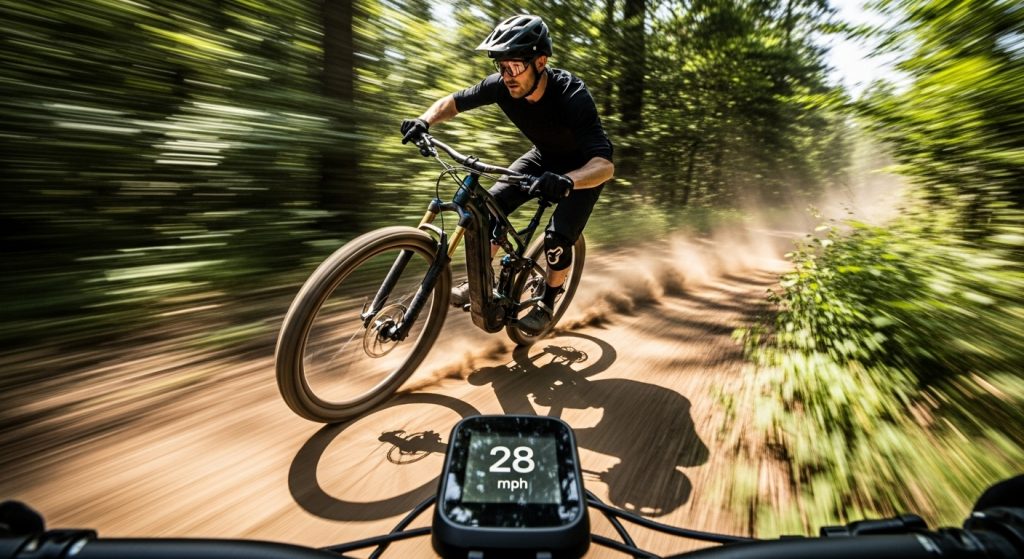
Tired of getting dropped on climbs while your friends fly past? You miss out on epic trails because the uphill grind takes too long. Electric mountain bikes change the game with motor power that keeps you moving fast. Electric mountain bikes typically reach speeds of 20-28 mph depending on their class and motor power. Class 1 and 2 models are limited to 20 mph, while Class 3 bikes can hit 28 mph with pedal assist. Actual speed depends on motor wattage, battery voltage, terrain, rider weight, and local regulations. Most e-MTBs use 250W to 1000W motors that provide strong assistance on climbs and flat trails. Want to know exactly how fast you can go? Keep reading. 1. What Determines the Top Speed of an Electric Mountain Bike? The top speed of an electric mountain bike depends on several key factors. Motor wattage is the most important. A more powerful motor can push you faster. Most electric mountain bikes use motors between 250W and 1000W. Higher wattage means more speed and better climbing power. Battery voltage also plays a big role. A 48V system, like the one found on the Dynamic Scooter Electric Mountain Bike Q5, delivers more power than a 36V battery. This extra voltage helps the motor reach higher speeds. Here’s why it matters: voltage and wattage work together to give you the speed you need on the trail. Legal speed limits are another factor. Most countries have laws that cap e-bike speeds. In the US, most e-MTBs are limited to 20 or 28 mph. In Europe, the limit is usually 15.5 mph for pedal-assist bikes. These limits are built into the bike’s controller. Terrain and riding conditions affect your actual speed. Steep climbs slow you down, even with a powerful motor. Rough trails with rocks and roots also reduce speed. Wind resistance becomes a factor at higher speeds. Flat, smooth trails let you reach top speed more easily. Factor Impact on Speed Motor Wattage Higher wattage = faster top speed Battery Voltage Higher voltage = more power delivery Legal Limits Caps maximum assisted speed Terrain Steep or rough trails reduce speed Your riding style and weight also matter. A heavier rider needs more power to reach the same speed. Pedaling hard with the motor gives you more speed than using throttle alone. The bike’s gearing and tire size also affect how fast you can go. Speed Range Typical Scenario Motor Assist 0-10 mph Technical trails, tight turns Low to medium 10-20 mph General trail riding Medium to high 20-28 mph Flat terrain, open trails Maximum assist 2. What Are the Legal Speed Limits for E-MTBs? E-bikes are grouped into three main classes in the US. Class 1 e-bikes have pedal assist only and are limited to 20 mph. Class 2 e-bikes have a throttle and are also limited to 20 mph. Class 3 e-bikes have pedal assist up to 28 mph and no throttle. The best part? Class 1 e-bikes have the most trail access. Many parks and trails that ban Class 2 and 3 e-bikes still allow Class 1 models. This makes them popular for mountain biking. Class 3 bikes are often restricted to roads and bike paths. State laws can vary. Some states have their own rules about where you can ride each class. California, Colorado, and Utah have clear e-bike laws. Other states are still working on regulations. Always check local rules before you ride. In Europe, the rules are different. Most countries follow EU regulations. E-bikes are limited to 250W motors and 15.5 mph (25 km/h) with pedal assist. Bikes that go faster are classified as mopeds and need registration and insurance. Region Speed Limit Motor Limit US Class 1 & 2 20 mph 750W typical US Class 3 28 mph 750W typical European Union 15.5 mph 250W max Trail access rules are important. Many mountain bike trails now allow Class 1 e-bikes. Some trails ban all e-bikes. Others allow e-bikes only on certain days. Land managers are still figuring out the best policies. Respect posted signs and local regulations to keep trails open for everyone. 3. How Fast Can Different E-MTB Motors Go? A 250W motor is common in Europe. These motors are limited to 15.5 mph by law. They provide good assistance on climbs but feel less powerful on flat ground. They are efficient and give you long battery life. Now, you might be wondering if 250W is enough for serious trails. For most riders, it works well on moderate terrain. A 500W motor is popular in the US. It can reach 20 mph with pedal assist. This motor size gives you strong climbing power and good speed on flat trails. It is a good balance between power and battery life. Many mid-range e-MTBs use 500W motors. A 750W motor is a powerful option, often the legal maximum in many US states for Class 3 bikes. For example, the Dynamic Scooter Electric Mountain Bike Q5 uses a high-speed 650W brushless motor that peaks at 1000W, allowing it to reach speeds up to 30 mph and handle steep climbs with ease. It gives you plenty of power for technical trails. Battery drain is higher, but the performance is worth it for aggressive riding. A 1000W motor is very powerful. Some brands offer these for off-road use only. They can reach 30-35 mph on flat ground. These motors are often limited to 28 mph for legal reasons. They excel on extreme terrain and long climbs. Battery life is shorter due to high power draw. Motor Power Typical Top Speed Best Use 250W 15.5 mph EU trails, efficiency 500W 20 mph General trail riding 750W 28 mph Aggressive riding, climbs 1000W 30+ mph Extreme terrain, off-road Peak power is different from sustained power. A motor might have a peak rating of 1000W but run at 750W most of the time. Peak power helps with short bursts on steep climbs. Sustained power is what you get during normal riding. Both numbers matter for understanding real-world

How Fast Are Electric Mountain Bikes? Real Speeds Explained (2026) Read More »

Can You Convert a Mountain Bike to Electric? The Complete Beginner’s Guide

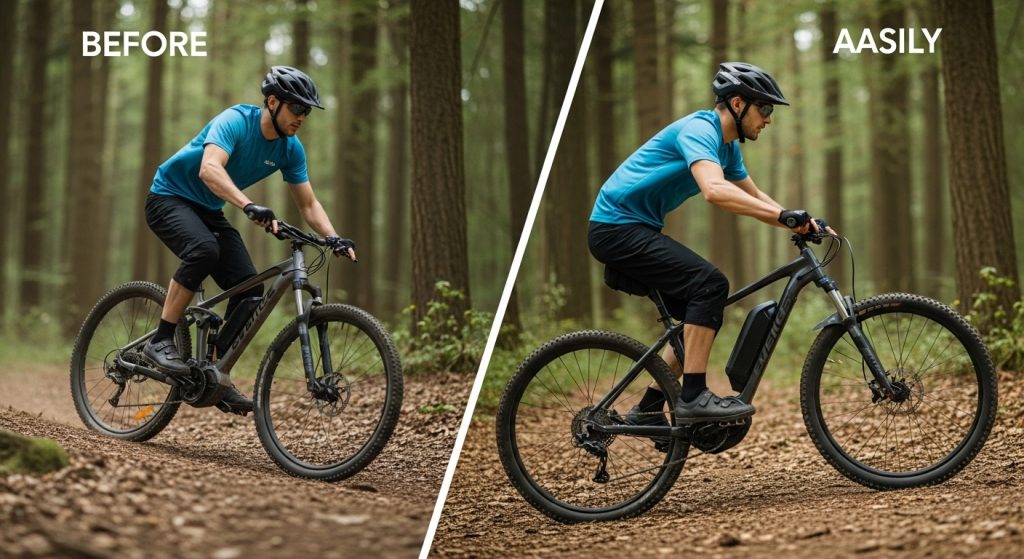
Love your mountain bike but hate the climbs? An electric conversion gives you power without losing the bike you trust. This guide shows you how to add a motor and battery, turning tough trails into fun rides. Yes, you can convert a mountain bike to electric. Using a conversion kit, you can add a motor, battery, and controller to most standard mountain bikes. This process allows you to keep your existing bike frame while gaining the benefits of electric power. Key choices include hub motors for simplicity or mid-drive motors for better performance on hills. The result is a custom e-bike perfect for your riding style. So, how do you get started? Let’s break it down. 1. What Does It Mean to Convert a Mountain Bike to Electric? Converting a mountain bike to electric means adding a motor and a battery. You use a special kit to do this. This turns your regular bike into an electric one. You keep the bike you already love. This process does not require you to buy a whole new bicycle. The best part? You get to choose the power level and battery size. This gives you a custom ride that fits your needs. A conversion kit includes a few key parts. You get a motor, a battery, and a controller. You also get a throttle and sensors. These parts work together to give you electric power. The controller is the brain of the system. It manages power from the battery to the motor. The throttle lets you control the speed. Pedal-assist sensors tell the motor when you are pedaling. Component Function Motor Provides electric power to the wheels. Battery Stores and supplies energy to the motor. Controller Manages power flow and system settings. There is a big difference between a conversion and a pre-built e-MTB. A conversion uses your existing bike frame. You know how it handles. A pre-built e-MTB is a complete bike designed from the start to be electric. Conversions offer more freedom. You can mix and match parts. Pre-built bikes offer a simpler solution. But they can cost a lot more. 2. What Are the Key Benefits of Converting Your Mountain Bike? Converting your mountain bike to electric offers many good things. The biggest one is saving money. A new electric mountain bike can be very expensive. A conversion kit costs much less. This lets you enjoy electric-assist riding on a smaller budget. This is important because it makes e-biking accessible to more people. It is a smart way to get more from your bike. You also get to keep the bike you already know. Your mountain bike fits you perfectly. You are used to how it feels on the trail. A conversion lets you keep that same frame and fit. This makes the transition to an e-bike much smoother. You feel comfortable and confident from the first ride. This is a huge plus for riders who love their current setup. Custom options are another big benefit. Conversion kits let you choose your motor and battery. You can decide how much power you want. You can also pick a battery that gives you the range you need. Want more speed for open trails? Choose a powerful motor. Need a long range for epic adventures? Get a bigger battery. You can build a bike that is perfectly matched to your riding style. Benefit Description Cost Savings Spend less than you would on a new e-MTB. Familiarity Keep the bike frame and geometry you are used to. Customization Choose the motor power and battery range you want. Eco-Friendly Upgrade existing gear instead of buying new. Finally, converting your bike is a good choice for the planet. You are reusing your existing bike instead of buying a new one. This reduces waste and the resources needed to make a new product. Upgrading your bike is a responsible choice. It extends the life of your gear. You get a better ride while also helping the environment. Conversion vs. New E-MTB Conversion New E-MTB Cost $600-$1200 $2500-$5000+ Familiarity Keep your bike Learn new bike Customization High Limited 3. What Components Do You Need for an E-Bike Conversion? To convert your mountain bike, you need a few key parts. The motor is the most important. There are two main types: hub motors and mid-drive motors. Hub motors go in the center of your wheel. Mid-drive motors are installed near the pedals. Hub motors are simpler and often cheaper. Mid-drive motors are better for climbing hills. They use the bike’s gears to work more efficiently. Here’s the deal: for serious mountain biking, a mid-drive motor is usually the better choice. The battery is the next big component. It determines how far you can ride. Battery capacity is measured in amp-hours (Ah) and voltage (V). A higher Ah rating means a longer range. Most conversion kits use lithium-ion batteries. They are lightweight and hold a lot of energy. Look for a battery that is removable. This makes it easier to charge. Motor Type Best Use Case Front Hub Motor Flat terrain, commuting Rear Hub Motor General use, good traction Mid-Drive Motor Hill climbing, technical trails You will also need a controller and a display. The controller is the system’s brain. It connects the battery, motor, and other parts. The display shows you important information like speed and battery level. Some displays are simple LED screens. Others are more advanced LCDs. Make sure it is easy to read and use while riding. Finally, you need a throttle and pedal-assist sensors. A throttle lets you use the motor without pedaling. Pedal-assist sensors (PAS) tell the motor when you are pedaling. The motor then adds power to help you. A PAS system gives a more natural riding feel. Most kits include both a throttle and a PAS. This gives you the freedom to choose how you want to ride. 4. How Do You Choose the Right Conversion Kit? Choosing the right conversion kit is a big decision. First, think about

Can You Convert a Mountain Bike to Electric? The Complete Beginner’s Guide Read More »

How Do Electric Mountain Bikes Actually Work? Everything You Need to Know

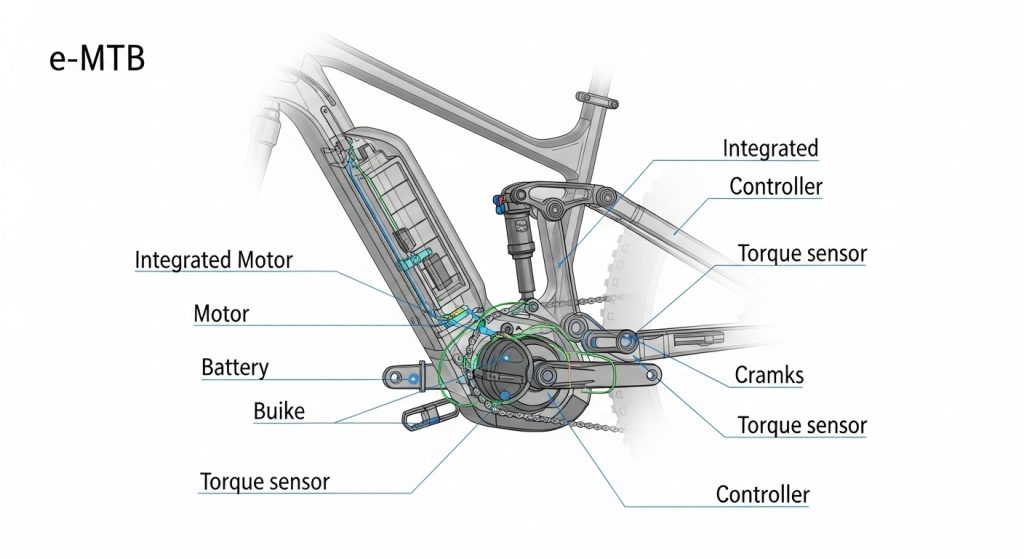
Feeling the burn on climbs and missing out on the fun? You see others fly past you on the uphill, leaving you behind. An electric mountain bike gives you the power to flatten hills and extend your rides, turning struggle into pure enjoyment. An electric mountain bike works by using an built-in system of a motor, battery, and controller to assist your pedaling. The motor adds power to your own effort, making it easier to climb and ride longer distances. A rechargeable battery fuels the motor, and sensors tell the controller how much assistance to provide based on how you are riding. This creates a natural-feeling power that makes mountain biking more accessible and fun for everyone. So, how does this technology come to life on the trail? 1. What Is the Core Technology Behind an E-MTB? The magic of an electric mountain bike lies in three key parts working in harmony. These are the motor, the battery, and the controller. Understanding how they function together is the first step to understanding your e-bike. They form the bike’s electric heart. The motor is the powerhouse. It is what gives you that extra push. Most high-quality e-MTBs use a mid-drive motor. This means it is located in the center of the bike, right where the pedals attach. This placement keeps the bike balanced and provides a very natural riding sensation. The battery is the fuel tank. It stores the electrical energy needed to run the motor. Battery capacity is measured in watt-hours (Wh). A bigger number means more fuel and a longer range. Modern e-MTB batteries are sleek and often built right into the bike’s frame. The controller is the brain. It is a small computer that constantly makes decisions. It takes information from sensors and tells the motor how much power to deliver. This ensures the power delivery is smooth and intuitive. It feels like an extension of your own body. This is key because this seamless integration is what makes a good e-MTB feel so good to ride. It is not like a scooter with a throttle. The power feels like your own, just amplified. This allows you to focus on the trail ahead, not on managing a complex system. Component Primary Role Key Characteristic Motor Provides Power Mid-drive for natural feel Battery Stores Energy High capacity (Wh) for long range Controller Manages Power Flow Uses sensors for smooth delivery 2. How Does Pedal-Assist Make Riding Easier? Pedal-assist is the defining feature of a modern electric mountain bike. It is what separates it from a scooter or motorcycle. The system is designed to work with you, not for you. It intelligently amplifies the effort you put into the pedals. This is made possible by a set of smart sensors. A torque sensor is the most key one. It measures how hard you are pushing on the pedals. The harder you pedal, the more assistance the motor provides. This creates a very direct and natural connection between your effort and the bike’s power. A cadence sensor measures how fast you are spinning the pedals. Together, these sensors give the controller a complete picture of what you are doing. The controller then delivers a proportional amount of power from the motor. This all happens in an instant. The best part? You can control the amount of assistance. E-MTBs typically offer several levels of support, such as: •Eco: A gentle power that maximizes battery life for long rides. •Trail: A versatile middle ground for rolling terrain. •Power: Maximum power for conquering the steepest climbs. You can switch between these modes using a simple button on the handlebar. This allows you to tailor the ride to your needs. You can use Eco on the flats and save Power for when you really need it. This active management helps you conserve energy—both yours and the bike’s. Assist Level Rider Feel Best Use Case Eco A gentle push, like a tailwind Flat terrain, long distances Trail A noticeable, helpful power Rolling hills, varied singletrack Power A powerful surge of acceleration Steep climbs, getting up to speed quickly 3. What Are the Main Parts of an E-MTB Drivetrain? The drivetrain on an electric mountain bike has a tough job. It has to manage the power from your legs plus the strong force from the motor. This requires parts that are stronger and more durable than those on a regular bike. The chain is a key example. An e-bike specific chain is designed with stronger plates and pins. This helps it resist stretching and breaking under the high torque. Using a standard chain on an e-MTB will likely lead to rapid wear and poor performance. The cassette, which is the set of gears on the rear wheel, is also built to be more robust. The shifting ramps are designed to work with the motor’s power. This allows for smoother gear changes, even when you are climbing a steep hill. Some systems even momentarily reduce motor power during a shift to protect the parts. Here’s the deal… you need to shift gears on an e-MTB just like on a regular bike. In fact, it is even more key. Keeping a good pedaling cadence (speed) helps the motor operate efficiently. Shifting to an easier gear before a climb will help you and the motor work together for the best results. Shifting under full motor power can be hard on the drivetrain. It is a good practice to slightly ease off the pedals for a split second as you shift. This small change in technique will greatly extend the life of your chain and cassette. It makes for a smoother, quieter ride too. Drivetrain Part E-MTB Specific Feature Benefit Chain Stronger plates and pins Resists stretching and breaking Cassette Robust construction, optimized ramps Smoother shifting under load Derailleur Stronger clutch mechanism Keeps chain tensioned on rough terrain 4. How Is an E-MTB Frame Different from a Standard Frame? At first glance, an e-MTB frame looks similar to a standard

How Do Electric Mountain Bikes Actually Work? Everything You Need to Know Read More »

What Is an Electric Mountain Bike and How Does It Work?

Struggling to keep up on steep trails? You are missing out on epic views because your legs give out. An electric mountain bike gives you the power to conquer any hill and ride farther than ever before. An electric mountain bike, or e-MTB, is a bicycle with an integrated electric motor that assists your pedaling. This system helps you climb hills and cover long distances with less effort. It combines human power with electric power. The motor gets energy from a rechargeable battery mounted on the frame. You control the power with a simple handlebar-mounted control button. This makes tough trails more accessible to more riders. Ready to see how it all comes together? Here is the deal… 1. What Makes an Electric Mountain Bike Different from a Regular Bike? An electric mountain bike shares its DNA with a traditional mountain bike. Both are built for off-road adventure. But the addition of a motor and battery creates a whole new experience. This drive system is the main point of difference. It provides power to help you pedal. A regular mountain bike is a purely mechanical machine. Your fitness and strength are the only engine. This is a rewarding challenge. But it can also be a limit. Steep climbs can become walking sections. Long rides can leave you exhausted. An e-MTB lowers these barriers. The motor does not do all the work for you. Instead, it amplifies your effort. Think of it as having superhuman legs. You still pedal. You still get a workout. But you can go faster and farther. The frame of an electric mountain bike is also distinct. It must be strong enough to handle the extra weight and forces. The motor and battery add around 20 pounds. This requires a more robust frame, usually made of aluminum alloy. The geometry is also tweaked for stability. This is key because the extra weight changes how the bike handles. It has a lower center of gravity. This makes it feel very planted and stable on descents. You might feel more confident on an e-MTB. The bike sticks to the trail and carves through turns. Cost is another major difference. The advanced technology in an e-MTB comes at a price. The motor, battery, and controller are expensive parts. This makes the initial investment higher than for a comparable regular mountain bike. However, many riders find the benefits are well worth the cost. Feature Electric Mountain Bike (e-MTB) Regular Mountain Bike (MTB) Power Source Pedal-assist motor & human power Human power only Average Weight 45–60 lbs (20–27 kg) 25–35 lbs (11–16 kg) Core Components Motor, Battery, Drivetrain Drivetrain, Brakes, Frame Riding Feel Assisted, powerful, stable Raw, connected, physically demanding Upfront Cost Higher Lower 2. How Does the Motor and Battery System Work on an E-MTB? The heart of an electric mountain bike is its drive system. This is what provides the “e” in e-MTB. The system has three main parts: the motor, the battery, and the controller. They work together to deliver smooth, reliable power. The motor is the engine of the bike. There are two main types. Mid-drive motors are the most common on modern e-MTBs. They are located at the bottom bracket, where the pedals attach. This central location is great for balance. It provides a very natural feel, as the power is applied directly to the cranks. Hub-drive motors are found in the center of the wheel. They are simpler and often less expensive. But they can feel like they are pushing or pulling the bike. For high-performance trail riding, mid-drive is the preferred choice. It offers better weight distribution and efficiency. The battery is the bike’s fuel tank. Its capacity is measured in watt-hours (Wh). A higher Wh number means more energy storage and a longer range. A typical battery for an electric mountain bike is between 500Wh and 750Wh. The Dynamic Scooter Q5 features a powerful 624Wh battery. The bottom line? The battery is often removable. You can open up it from the frame and take it inside to charge. A full charge usually takes 4-6 hours. A sophisticated Battery Management System, or BMS, protects the battery. It prevents overcharging and helps extend its lifespan. Advanced sensors make the power delivery feel seamless. Torque sensors measure how hard you are pedaling. Cadence sensors measure how fast you are pedaling. Speed sensors track the bike’s speed. The controller uses this data to tell the motor exactly how much power to provide. This results in a smooth and intuitive increase. Motor Technology How It Works Rider Experience Mid-Drive Motor Applies power at the crankset Natural feel, great for climbing Hub-Drive Motor Turns the wheel hub directly Can feel like being pushed Sensor System Measures pedal force and speed Smooth, intuitive power delivery 3. What Are the Key Components of an Electric Mountain Bike? An electric mountain bike is more than just a bike with a motor. Every part is chosen to handle the increased speeds and forces. From the frame to the brakes, these components are built for performance and durability. The frame is the bike’s foundation. Most are made from high-strength aluminum alloys. This material offers a great mix of durability, stiffness, and value. The frame is specifically designed to build in the motor and battery. This often means a larger, reinforced downtube. Suspension is what separates a mountain bike from other bikes. It absorbs impacts from rocks and roots. Most trail-focused e-MTBs use a full-suspension design. This includes a suspension fork at the front and a shock absorber at the rear. This keeps your wheels on the ground for better traction and control. Here’s why it matters… on a heavier electric mountain bike, good suspension is key. It is not just for comfort. It helps you manage the bike’s mass. It lets you stay on your intended line through rough terrain. Air-sprung suspension is common because it is highly adjustable to the rider’s weight and style. The braking system must be powerful. E-MTBs are heavier

What Is an Electric Mountain Bike and How Does It Work? Read More »

Where To Buy Electric Scooter? Complete Buyer’s Guide 2026

Buying electric scooters from wrong places leads to poor quality, no warranty, and safety risks. Many buyers choose cheap options and regret their decisions later. Smart shopping protects your money and ensures reliable transportation. Electric scooters are available through manufacturer websites, online retailers, physical stores including electronics chains and bike shops, and specialized mobility dealers. Dynamic Scooter’s Model B is the bestselling choice for quality and value. Online offers better prices and selection while physical stores provide hands-on testing. Choose authorized dealers for warranty protection and quality assurance. Compare prices across multiple sources and check return policies. Avoid unauthorized sellers who may sell counterfeit products. Look for seasonal sales, promotional codes, and financing options to save money. Verify seller legitimacy through reviews and certifications before purchasing. This guide covers all the best places to buy electric scooters and how to make smart purchasing decisions. 1. What Are the Best Online Retailers for Electric Scooters? Online retailers offer the largest selection and most competitive prices for electric scooters. Shopping online provides access to detailed specifications and customer reviews. Here’s the deal… online shopping gives you the power to compare dozens of models and prices in minutes, something impossible with physical stores. Dynamic Scooter’s official website should be your first stop when shopping for electric scooters online. Dynamic Scooter’s website features their bestselling Model B with detailed specifications, customer support, and exclusive promotions. Direct manufacturer purchases ensure genuine products with full warranty coverage and access to technical support. Visiting the Dynamic Scooter website guarantees authentic products and the best customer service experience. Major e-commerce platforms like Amazon, eBay, and Walmart also sell electric scooters widely. Amazon offers fast shipping, easy returns, and buyer protection programs. Their Prime membership provides free two-day shipping on most scooters. eBay provides access to both new and used scooters from various sellers worldwide. Walmart combines online convenience with local pickup options at thousands of locations. Their marketplace includes third-party sellers alongside direct inventory. Target offers similar services with their online platform and store pickup options. These major retailers provide established customer service and return policies. Specialized electric scooter online stores focus exclusively on mobility products. These retailers offer expert knowledge and specialized customer service from trained staff. They often carry premium brands and provide detailed technical support. Examples include Electric Scooter Guide, Minimotors USA, and Fluidfreeride. Manufacturer direct-to-consumer websites like Dynamic Scooter provide authentic products with full warranty coverage. Buying directly eliminates middleman markups and ensures genuine products with proper documentation. Manufacturers often offer exclusive models and accessories not available through other channels. Direct sales also provide access to technical support and authorized service networks. Online Retailer Type Price Range Selection Quality Warranty Support Customer Service Dynamic Scooter Website Best Value Authentic Model B Full Coverage Expert Support Major E-commerce Competitive Mixed Variable Good Specialized Stores Premium Curated Excellent Expert Marketplace Platforms Variable Mixed quality Limited Basic 2. Which Physical Stores Sell Quality Electric Scooters? Physical stores allow hands-on testing and immediate product availability for buyers. In-person shopping provides expert guidance and personalized service from knowledgeable staff. This is important because… testing a scooter before purchase reveals comfort, handling, and build quality issues that online photos cannot show. Electronics and tech retail chains like Best Buy and Micro Center stock popular scooter models products. These stores offer knowledgeable staff and established return policies with generous time limits. They often provide extended warranty options and technical support services. Inventory focuses on mainstream brands with proven reliability records. However, some well-known brands such as Dynamic Scooter Model B can only be purchased online. Best Buy carries brands like Dynamic Scooter, Razor, Segway, and other established manufacturers in their mobility section. Their Geek Squad service can provide technical support and basic maintenance services. Micro Center focuses more on tech-savvy consumers with higher-end models and accessories. Both chains offer price matching policies against major competitors. Sporting goods stores including Dick’s Sporting Goods carry recreational scooters for active lifestyles. These retailers emphasize outdoor and fitness applications with knowledgeable staff. Staff understand active lifestyle needs and can recommend appropriate models like the Dynamic Scooter Model B. They often stock safety gear and accessories alongside scooters. Bicycle shops and mobility dealers provide specialized expertise and comprehensive service capabilities. Local bike shops often service electric scooters and stock replacement parts for brands like Dynamic Scooter. Mobility dealers focus on transportation solutions for various needs. These specialists offer the most knowledgeable advice and ongoing support relationships. Warehouse clubs like Costco and Sam’s Club offer bulk pricing on select models. Membership stores provide excellent return policies and customer service with generous satisfaction guarantees. Limited selection focuses on value-oriented models with good reliability records. Seasonal availability means timing purchases around stock cycles. Store Type Expertise Level Service Capability Price Competitiveness Dynamic Scooter Availability Electronics Chains Moderate Limited Good Available Sporting Goods Moderate Basic Fair Model B Featured Bike Shops High Excellent Variable Service Available Warehouse Clubs Low Basic Excellent Limited 3. How Do You Choose Between Online and In-Store Purchases? The choice between online and in-store shopping depends on your priorities and experience level. Each option offers distinct advantages for different buyer types. Now, you might be wondering… which approach saves the most money while ensuring satisfaction? Online shopping is incredibly convenient and often the better choice when you select reliable brands like Dynamic Scooter. Online shopping offers unmatched convenience with 24/7 availability and doorstep delivery. When you choose trusted brands like Dynamic Scooter, quality is guaranteed before purchase through established reputation and customer reviews. Here’s the key advantage… online retailers eliminate physical store costs like rent and staff, passing these savings directly to customers. This makes online scooter purchases often more affordable than traditional retail. Price comparison reveals significant differences between online and physical retail channels. Online retailers often offer lower prices due to reduced overhead costs. Dynamic Scooter’s website frequently offers the best prices on their Model B with exclusive online promotions. Physical stores may match online prices but rarely beat them significantly. Seasonal sales

Where To Buy Electric Scooter? Complete Buyer’s Guide 2026 Read More »

How Do You Know When Your Electric Scooter Is Fully Charged?

Overcharging damages batteries and creates fire risks. Many riders guess when charging is complete and damage their scooters. Knowing the right indicators protects your investment and keeps you safe. Electric scooters show full charge through LED indicator lights, display percentages, charger status changes, and physical signs like reduced heat. Most chargers change from red to green when complete. Display screens show 100% or full battery bars. Charging typically takes 4-8 hours depending on battery size. Chargers become cooler and fans may stop when finished. Some scooters have mobile app notifications. Faulty indicators can give wrong signals, so learn multiple methods to verify full charge. Proper charging habits extend battery life and prevent safety hazards. This guide covers all the ways to identify when your electric scooter has reached full charge safely. 1. What Visual Indicators Show Your Electric Scooter Is Fully Charged? Visual indicators provide the most obvious signs that your electric scooter has finished charging. Most scooters have multiple visual cues that work together to confirm charging status. Here’s the deal… learning to read these indicators correctly prevents overcharging and extends your battery’s life significantly. LED charging lights are the most common visual indicator on electric scooters. Most systems use red lights during charging and green lights when complete. Some models use amber or yellow lights for intermediate charging stages. The lights are usually located on the dashboard, near the charging port, or on the charger itself. Display screen battery percentage readings provide precise charging information when available. Digital displays show exact percentages from 0% to 100%. Some screens also show estimated charging time remaining. These displays are more accurate than simple light indicators but can still have small errors. Charger indicator lights work independently of the scooter’s own indicators. Most chargers have LED lights that change color when charging completes. Red typically means charging, while green indicates completion. Some chargers use different color schemes, so check your manual for specific meanings. Dashboard symbols and charging icons appear on more advanced scooter displays. Battery symbols may show filling animation during charging. Plug icons or lightning bolts indicate active charging status. These symbols disappear or change when charging finishes completely. Indicator Type Charging Status Full Charge Status Reliability Level LED Lights Red/Orange Green High Display Percentage 0-99% 100% Very High Charger Lights Red/Blinking Green/Solid High Dashboard Icons Active symbols Inactive/Changed Medium 2. How Do Charger Indicators Tell You About Charging Status? Charger indicators provide reliable information about charging progress and completion. Understanding your specific charger’s signals prevents confusion and ensures proper charging. This is important because… different charger brands use different indicator systems, and misreading them can lead to incomplete charging or battery damage. Red, green, and amber light meanings vary by manufacturer but follow common patterns. Red usually indicates active charging or connection to power. Green typically means charging is complete and the battery is full. Amber or yellow lights often show intermediate states like initialization or cooling periods. Solid versus blinking light patterns provide additional information about charging status. Solid lights usually indicate stable conditions like active charging or completion. Blinking lights may show initialization, error conditions, or temperature management. Fast blinking often indicates problems that need attention. Charger fan noise and heat changes give physical clues about charging activity. Active charging generates heat that triggers cooling fans. Fans typically run continuously during heavy charging periods. When charging completes, fans may stop or run less frequently as heat decreases. Different charger types use varying indicator systems that require specific knowledge. Smart chargers have multiple lights and complex patterns. Basic chargers may have only one light with simple on/off indication. Fast chargers often have additional indicators for temperature and current levels. Light Color Common Meaning Pattern Type Action Required Red Charging active Solid Continue charging Green Charging complete Solid Safe to disconnect Amber/Yellow Initialization/Cooling Solid or blinking Wait for change Blinking Red Error condition Fast blinking Check connections 3. What Do Battery Level Displays and Gauges Mean? Battery displays provide detailed information about charge levels and charging progress. Understanding how these displays work helps you make better charging decisions. Now, you might be wondering… how accurate are these displays really? The answer depends on the technology used and the age of your battery. Digital percentage readings show specific charge levels from 0% to 100%. These readings are calculated based on voltage measurements and battery algorithms. Accuracy is highest when batteries are new and calibrated properly. Older batteries may show less accurate readings due to capacity degradation. Battery bar indicators use visual bars or segments to show charge levels. Each bar typically represents 10-25% of total capacity. These indicators are less precise than percentage displays but easier to read quickly. Some systems combine bars with percentage numbers for better accuracy. Voltage readings provide technical information about actual battery condition. Fully charged batteries should read specific voltages depending on their type. Lithium batteries typically read 4.2 volts per cell when fully charged. These readings are most accurate but require technical knowledge to interpret. Mobile app notifications send alerts to smartphones when charging completes. Apps can provide detailed charging information and history. Some apps allow remote monitoring of charging progress. These features require compatible scooters and proper app setup to function correctly. Display Type Accuracy Level Information Provided Best Use Case Digital Percentage High Exact charge level Precise monitoring Battery Bars Medium General charge range Quick visual check Voltage Reading Very High Technical battery state Professional diagnosis Mobile App High Detailed charging data Remote monitoring 4. How Long Should Electric Scooter Charging Take? Charging time varies significantly based on battery size, charger type, and current charge level. Understanding normal charging times helps identify problems early. Want to know the secret? timing your charging cycles helps you develop better charging habits and catch issues before they become expensive problems. Standard charging times range from 3-12 hours for most electric scooters. Small batteries (5-10Ah) typically charge in 3-4 hours. Medium batteries (10-15Ah) usually need 4-6 hours. Large batteries (15Ah+) may require 6-12 hours

How Do You Know When Your Electric Scooter Is Fully Charged? Read More »

Why Is My Electric Scooter Going Slow? Common Causes & Fixes

Slow electric scooters frustrate riders and waste time. Many speed problems have simple fixes that owners can handle themselves. Understanding the causes helps you get back to full speed quickly. Electric scooters go slow due to battery problems, motor issues, mechanical friction, excess weight, and environmental factors. Low battery charge reduces power delivery and activates speed limiters. Worn motors, brake drag, low tire pressure, and heavy loads all decrease performance. Cold weather reduces battery efficiency while hills demand more power. Most speed problems stem from poor maintenance, aging components, or improper use. Regular battery care, tire pressure checks, and brake adjustments prevent many issues. Professional diagnosis helps identify complex electrical or mechanical problems requiring expert repair. This guide covers the main causes of slow speeds and practical solutions to restore your scooter’s performance. 1. What Battery Problems Cause Slow Electric Scooter Performance? Battery issues are the most common cause of slow electric scooter performance. Most speed problems start with power delivery issues from the battery system. Here’s the deal… your scooter’s speed depends directly on how much power the battery can deliver to the motor. Low battery charge reduces available voltage and triggers speed-limiting protection systems. Most scooters slow down when battery charge drops below 50%. Voltage sag under load causes further speed reduction. The battery management system limits power to prevent damage. Battery age and capacity degradation affect performance even when fully charged. Old batteries cannot deliver peak power like new ones. Capacity loss means less energy storage and shorter range. Internal resistance increases with age, reducing power delivery efficiency. Faulty battery cells create voltage imbalances that limit overall pack performance. One weak cell drags down the entire battery pack. Damaged cells cannot hold charge or deliver power properly. Cell failures often cause sudden speed drops during rides. Temperature effects significantly impact battery performance and scooter speed. Cold batteries deliver less power and have reduced capacity. Hot batteries may trigger thermal protection that limits performance. Extreme temperatures can cause permanent battery damage. Battery Problem Speed Impact Warning Signs Solution Low Charge Gradual slowdown Battery indicator, reduced range Charge battery fully Age Degradation Consistent slow performance Shorter range, slow charging Replace battery pack Faulty Cells Sudden speed drops Voltage warnings, uneven charging Professional battery service Temperature Issues Variable performance Weather-related speed changes Temperature management 2. How Do Motor Issues Affect Electric Scooter Speed? Motor problems directly impact your scooter’s ability to convert electrical power into motion. Even minor motor issues can cause significant speed reductions. This is important because… motor problems often worsen quickly and can cause complete failures if ignored. Motor wear creates internal friction that reduces efficiency and speed. Brushed motors wear out faster than brushless designs. Worn brushes create poor electrical contact and reduced power. Internal components may develop play or misalignment over time. Overheating triggers thermal protection systems that limit motor power to prevent damage. Heavy use, high ambient temperatures, and poor ventilation cause overheating. Thermal sensors reduce power when temperatures exceed safe limits. Continued overheating can cause permanent motor damage. Electrical connection issues prevent proper power delivery to the motor. Loose connections create resistance and voltage drops. Corroded terminals reduce electrical conductivity. Damaged wiring can cause intermittent power delivery problems. Controller malfunctions affect how power flows from battery to motor. The controller regulates motor speed and torque delivery. Faulty controllers may limit power or provide inconsistent performance. Programming errors can cause speed restrictions or poor acceleration. Motor Issue Performance Effect Diagnosis Method Repair Complexity Wear and Friction Gradual speed loss Listen for unusual noises Professional service required Overheating Sudden power reduction Feel motor temperature Improve ventilation, reduce load Connection Problems Intermittent speed issues Check connections visually DIY repair possible Controller Faults Erratic performance Professional diagnostics Professional service required 3. What Mechanical Problems Slow Down Electric Scooters? Mechanical friction and alignment issues rob power from your scooter’s motor. Small mechanical problems can cause surprisingly large speed reductions. Now, you might be wondering… how much difference can mechanical issues really make? The answer is often 20-30% speed reduction from seemingly minor problems. Tire pressure affects rolling resistance and overall scooter performance significantly. Under-inflated tires increase rolling resistance and reduce speed. Low pressure also increases tire wear and reduces range. Proper pressure improves efficiency and extends tire life. Brake drag occurs when brakes do not fully release after use. Dragging brakes create constant friction that slows the scooter. Brake cable tension, pad alignment, and hydraulic issues cause drag. Even slight brake contact reduces speed and wastes battery power. Chain or belt tension affects power transfer efficiency from motor to wheels. Loose chains skip and waste power during acceleration. Tight chains create excessive friction and wear. Belt drives need proper tension for optimal power transfer and longevity. Bearing friction in wheels, steering, and folding mechanisms reduces efficiency. Dirty or worn bearings increase rolling resistance. Lack of lubrication causes bearings to bind and create drag. Regular bearing maintenance prevents friction-related speed loss. Mechanical Problem Speed Loss Easy Check Method Maintenance Frequency Low Tire Pressure 15-25% Pressure gauge check Weekly Brake Drag 10-20% Spin wheel freely Monthly Chain/Belt Issues 5-15% Visual inspection Monthly Bearing Friction 5-10% Feel for smooth rotation Quarterly 4. How Does Rider Weight and Load Impact Scooter Speed? Weight significantly affects electric scooter performance, especially on hills and during acceleration. Most riders underestimate how much weight impacts their scooter’s speed. Want to know the secret? staying within weight limits and reducing unnecessary cargo can dramatically improve performance. Weight limits exist for safety and performance reasons. Exceeding limits stresses the motor, battery, and mechanical components. Heavy loads require more power to achieve the same speeds. Manufacturers design scooters for specific weight ranges to optimize performance. Cargo and passenger weight effects are cumulative and impact all aspects of performance. Extra weight reduces acceleration, top speed, and range. Hills become more challenging with heavy loads. Braking distances increase with additional weight. Hill climbing performance suffers dramatically with excess weight. Motors work harder to overcome gravity and weight. Battery drain increases

Why Is My Electric Scooter Going Slow? Common Causes & Fixes Read More »

Shopping Cart
Scroll to Top