...

November 11, 2025

What you should wear when riding an electric scooter? A Beginner’s Safety Guide

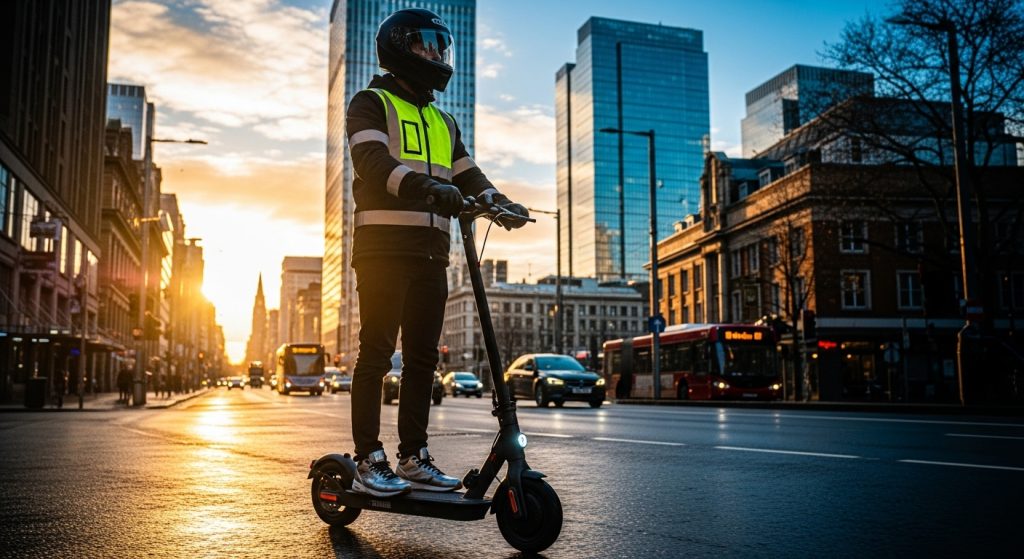
Riding an electric scooter is a fun and convenient way to get around. But before you head out, it’s critical to think about what you’re wearing. Your safety depends on it. The right gear can make a huge difference in your safety and comfort. A fall at even a moderate speed can cause serious injuries if you’re not properly protected. Don’t let a preventable injury ruin your ride. Wearing the right gear, including a helmet, protective clothing, and proper footwear, is critical for a safe and enjoyable electric scooter ride. This gear protects you from injuries, improves your visibility to others, and keeps you comfortable in different weather conditions. The Dynamic Scooter Model B is a great choice for safety-conscious riders, with a stable platform and responsive brakes that complement your protective gear. Ready to gear up for a safe ride? Here’s what you need to know. 1. Why Does Your Clothing Matter When Riding? What you wear when riding an electric scooter is about more than just style. It’s a critical safety decision. It’s a critical part of your safety. The right clothing can protect you from serious injuries in a fall. Road rash, a painful skin abrasion caused by sliding on pavement, is a common injury for scooter riders. Protective clothing, like a durable jacket and pants, can provide a barrier between your skin and the road. Your clothing also plays a big role in your visibility to others. Brightly colored or reflective clothing makes you more visible to drivers, cyclists, and pedestrians, especially at night or in low-light conditions. Here’s why it matters… being seen is one of the best ways to avoid a collision. If others can see you, they are less likely to pull out in front of you or cut you off. Weather is another key consideration. Dressing in layers allows you to adjust to changing temperatures. A waterproof outer layer will keep you dry in the rain, while breathable fabrics will help you stay cool in the heat. Being comfortable allows you to focus on the road and ride more safely. Ultimately, dressing for the ride is about taking responsibility for your own safety. It’s a simple but effective way to reduce your risk of injury and make every ride a good one. Clothing Factor Why It Matters Protection Prevents road rash and other injuries. Visibility Helps others see you on the road. Weather Keeps you comfortable and focused. Safety Reduces your overall risk of an accident. 2. What Type of Helmet Should You Wear? If you only wear one piece of protective gear when riding an electric scooter, make it a helmet. A helmet is the single most critical piece of safety equipment for an electric scooter rider. It protects your head from serious injury in a fall. There are several types of helmets to choose from, but the most critical thing is to choose one that is certified for safety. Look for a helmet with a certification from the CPSC (Consumer Product Safety Commission) or ASTM (American Society for Testing and Materials). These certifications mean the helmet has been tested and meets specific safety standards. A bicycle helmet is a good starting point for most scooter riders. For higher speeds, you might consider a motorcycle or moped helmet for more protection. The best part? A good helmet can literally save your life. A proper fit is also crucial. A helmet that is too loose can come off in a crash, and one that is too tight will be uncomfortable. To find the right size, measure the circumference of your head and compare it to the manufacturer’s sizing chart. The helmet should sit level on your head and should not move around when you shake your head. There are two main styles of helmets: full-face and half-shell. A full-face helmet offers the most protection, covering your entire head and chin. A half-shell helmet is lighter and more breathable but leaves your face and chin exposed. The right choice for you depends on your speed and risk tolerance. Helmet Type Protection Level Best For Bicycle Helmet Good Casual riding, lower speeds. Skateboard Helmet Better Urban commuting, more side protection. Full-Face Helmet Best High speeds, maximum protection. 3. What Should You Wear on Your Upper Body? When it comes to your upper body while riding an electric scooter, a good jacket is your best friend. A jacket not only protects you from the elements but also provides a crucial layer of protection in a fall. Look for a jacket made from a durable, abrasion-resistant material like leather, denim, or a synthetic textile like Cordura. For added safety, choose a jacket with built-in armor. This armor is typically made from a high-density foam or a more advanced material like D3O, which is soft and flexible until it’s impacted. The armor is placed in key areas like the shoulders, elbows, and back to absorb the force of a crash. But here’s the thing… even a jacket without armor is better than no jacket at all. Layering is a smart strategy for all-weather riding. A base layer can wick away sweat, a mid-layer can provide insulation, and an outer shell can protect you from wind and rain. This allows you to add or remove layers as the temperature changes. Look for a jacket with zippered vents to help you regulate your temperature. Visibility is also key. A brightly colored jacket will make you more visible during the day, while reflective panels will help you stand out at night. Many motorcycle and scooter jackets are designed with visibility in mind, so you don’t have to sacrifice style for safety. Jacket Material Abrasion Resistance Best For Leather Excellent Maximum protection, classic style. Denim Good Casual riding, moderate protection. Textile (Cordura) Very Good All-weather riding, versatile. 4. What Are the Best Pants for Scooter Riding? Your legs are also vulnerable in a fall when riding an electric scooter. It’s a good idea to wear more than just a pair

What you should wear when riding an electric scooter? A Beginner’s Safety Guide Read More »
What Do You Need to Know About Electric Scooter Lights?

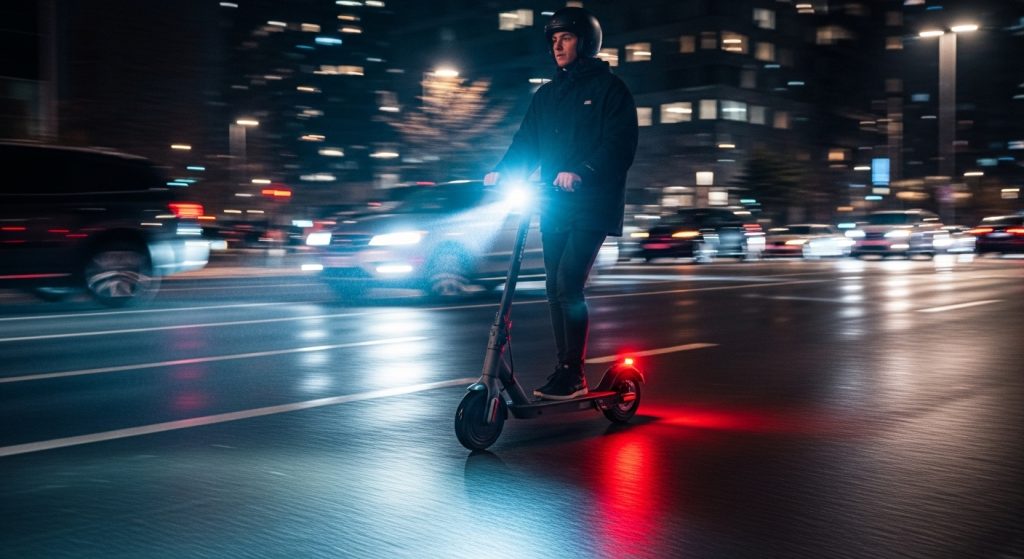
Riding your electric scooter at night without proper lights is a recipe for disaster. You can’t see the road ahead, and more dangerously, others can’t see you. This puts you at high risk for accidents, turning a convenient ride into a serious safety hazard. Don’t let poor visibility ruin your ride; the solution is simple and effective. Electric scooter lights are lighting systems designed to make you visible to others and to illuminate your path while riding. They include front headlights, rear taillights, and often side lighting. These lights are critical for safety, particularly at night or in low-light conditions. The Dynamic Scooter Model B, for example, comes equipped with a powerful LED headlight and a bright rear brake light to make sure you are seen from all angles. Ready to light up your ride? Here’s what you need to know. 1. Why Are Lights Critical on an Electric Scooter? Lights are one of the most critical safety features on an electric scooter. Their primary purpose is to make you visible to others on the road. At night or in low-light conditions like dawn or dusk, a scooter without lights is nearly invisible. Drivers, cyclists, and pedestrians can’t see you. A bright headlight and taillight announce your presence. They help others gauge your speed and distance. This is key to avoiding collisions. Electric scooter lights are your first line of defense against accidents. Beyond being seen, lights also help you see. A powerful headlight illuminates the path ahead. It reveals potholes, cracks, and other obstacles that could cause a crash. This is particularly valuable on poorly lit streets or bike paths. Without electric scooter lights, you’re riding blind. Here’s why it matters… being able to spot and avoid hazards in advance gives you more time to react. It helps you maintain control of your scooter. In many places, lights are not just a good idea; they are a legal requirement. Traffic laws in numerous cities and states mandate the use of a front white light and a rear red light. This applies when riding an electric scooter after sunset. Riding without them could result in a fine. But more than that, it’s about taking responsibility. You need to protect your own safety. You also need to protect the safety of those around you. Electric scooter lights are not optional in most areas. Reason for Lights Benefit Visibility to Others Prevents collisions with cars and pedestrians. Seeing the Path Helps you avoid potholes and other road hazards. Legal Compliance Avoids fines and follows traffic laws. 2. What Types of Lights Do Electric Scooters Have? Electric scooters come with a variety of lights, each serving a specific purpose. The most common and most critical is the front headlight. This is a white light mounted on the handlebars or front stem. It illuminates the path ahead. Its brightness can vary greatly. You might find a simple marker light or a powerful beam. A powerful beam can light up a dark road. The quality of electric scooter lights varies by model and price. At the rear of the scooter, you’ll find the taillight. This is a red light that makes you visible to anyone approaching from behind. On many scooters, the taillight also functions as a brake light. It gets brighter when you apply the brakes, just like on a car. The best part? This provides a clear signal to those behind you that you are slowing down, which can prevent rear-end collisions. Many modern scooters also include side lighting for even better visibility. This can come in the form of LED strips along the sides of the deck. It can also be reflective decals. This side lighting is particularly effective at intersections. Cars may be approaching from your side. The more angles you are visible from, the safer you are. Electric scooter lights from multiple angles offer maximum protection. Light Type Purpose Headlight (Front) To see the path ahead and be seen from the front. Taillight (Rear) To be seen from behind. Brake Light To signal that you are slowing down. Side Lights/Reflectors To be seen from the side, especially at intersections. 3. How Bright Should Electric Scooter Lights Be? The brightness of electric scooter lights is measured in lumens. A lumen is a unit of measurement for the total amount of visible light from a source. The higher the lumen count, the brighter the light. For a front headlight, you’ll want something in the range of 200 to 600 lumens for city riding. This is bright enough to make you visible. It also lights up the path directly in front of you. Choosing the right brightness for your electric scooter lights depends on where you ride. If you frequently ride on unlit roads or trails, you should look for a headlight with 600 lumens or more. These more powerful electric scooter lights can cast a beam far enough ahead. This lets you ride at higher speeds safely. However, be mindful of a light that is too bright. An overly powerful headlight can blind oncoming pedestrians and cyclists. But here’s the thing… some high-end lights have an adjustable beam. This allows you to direct the light downward. You can avoid dazzling others while still having bright electric scooter lights. For rear taillights, the brightness requirement is much lower. A taillight of around 20 to 50 lumens is typically sufficient. This makes you visible from a safe distance. The most critical feature of a taillight is that it is clearly visible. Ideally, it should function as a brake light. A bright, flashing brake light is an excellent safety feature. Quality electric scooter lights include both front and rear illumination. Brightness (Lumens) Best Use Case 100-200 Well-lit city streets (to be seen). 200-600 Most city commuting (to see and be seen). 600+ Dark roads and trails (maximum visibility). 4. What Are the Best Light Technologies for Scooters? When it comes to lighting technology for electric scooters, LED (Light Emitting Diode) is the undisputed king.

What Do You Need to Know About Electric Scooter Lights? Read More »

Are Electric Mountain Bikes Allowed on Trails? What Riders Should Know

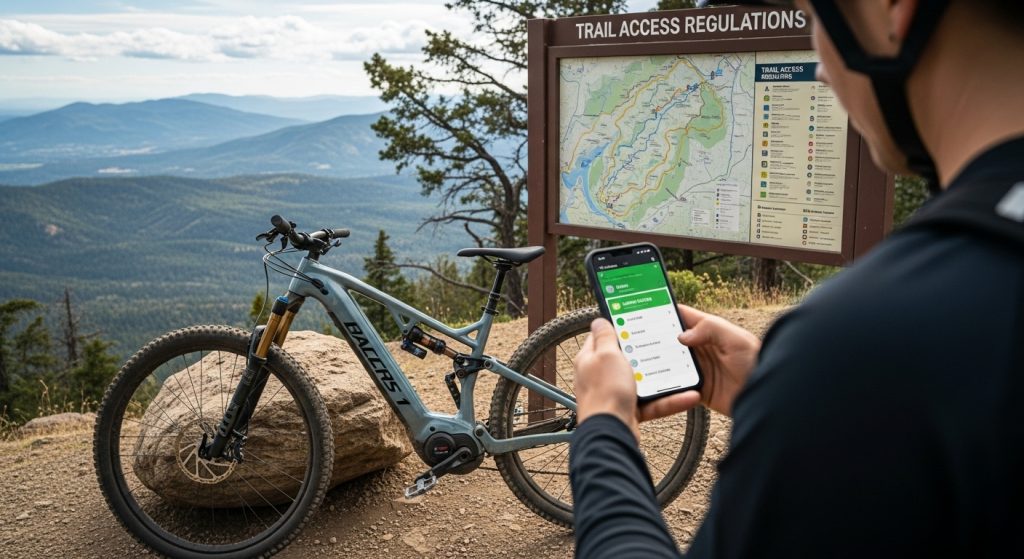
Confused about where you can ride your new electric mountain bike? Unclear rules can keep you off the best trails, leaving you frustrated. Knowing the regulations for electric mountain bikes lets you ride with confidence and discover amazing new places. Yes, electric mountain bikes are allowed on many trails, but access depends on local rules. E-bike laws are managed by federal, state, and local agencies, creating a patchwork of regulations. Generally, Class 1 electric mountain bike have the widest access, but riders must always check the rules for a specific trail before riding. So, how can you know for sure where to ride? Let’s break it down. 1. What Are the Electric Mountain Bikes Classifications? To understand trail access, you first need to know the e-bike classes. The US and Canada use a 3-Class system. It categorizes e-bikes by top speed and motor assistance type. Class 1 e-bikes are pedal-assist only, with a motor that cuts off at 20 mph. With no throttle, this class has the widest trail acceptance. Class 2 e-bikes also top out at 20 mph but include a throttle. This lets you use the motor without pedaling. The throttle often gets them banned from Class 1 trails. Class 3 e-bikes are also pedal-assist only, like Class 1. The key difference is a higher top speed. The motor provides assistance up to 28 mph. Here’s why it matters… this higher speed means Class 3 e-bikes are typically restricted to roads and commuter paths, not singletrack trails. E-Bike Class Motor Assist Type Top Assisted Speed Common Trail Access Class 1 Pedal-Assist Only 20 mph Most Widely Accepted Class 2 Pedal-Assist & Throttle 20 mph Often Restricted Class 3 Pedal-Assist Only 28 mph Rarely Allowed on Trails Knowing your e-bike’s classification is the first step. It helps you understand which rules apply to you. Models like the Dynamic Scooter Q5 are designed as Class 1 e-bikes specifically to ensure the widest possible trail access for riders. 2. Why Is E-MTB Trail Access Controversial? Allowing electric mountain bikes on trails is a heated topic. The debate involves several groups with different concerns. Understanding these views helps explain the complex rules. The core issue is the “motorized” label. Land agencies often ban motorized vehicles from non-motorized trails. Opponents argue an e-bike’s motor makes it a motorized vehicle, like a dirt bike. Traditional bikers and hikers worry about speed and accidents on shared trails. They also worry about trail damage. The best part? Studies show electric mountain bikes cause no more trail wear than traditional bikes. Environmental impact is another major point of discussion. Land managers must consider soil erosion and wildlife disturbance. The quiet, efficient motor on a bike like the Dynamic Scooter Q5 helps minimize this impact. The debate weighs increasing public access against preserving natural spaces. Stakeholder Group Primary Concern Common Argument Traditional Mountain Bikers Safety and Trail Flow E-MTBs are too fast for shared trails. Hikers & Equestrians Safety and Startle Factor Quiet e-bikes can surprise people and animals. Land Managers Trail Sustainability & Liability Increased use could lead to more maintenance costs. E-MTB Riders Equal Access E-bikes are a tool for access, not a threat. This controversy has led to the current patchwork of regulations. As more people ride e-MTBs, the conversation continues to evolve. Advocacy groups and responsible riders are working to build trust and find common ground. 3. How Do Federal Agencies Regulate Electric Mountain Bikes Access? In the US, several federal agencies manage public land. Each has its own rules for e-bike access. This creates a complex landscape for riders. The Bureau of Land Management (BLM) is progressive. Its policy allows e-bikes on motorized trails. However, local BLM offices have the final say. The U.S. Forest Service (USFS) classifies e-bikes as motorized. This limits them to motorized trails, like those for dirt bikes. But here’s the thing… local districts can open specific non-motorized trails to e-bikes. The National Park Service (NPS) has also opened up more access for e-bikes. E-bikes are now generally allowed wherever traditional bicycles are allowed in national parks. This includes paved and unpaved roads and trails. However, individual park superintendents can still close specific areas to e-bike use. Federal Agency General E-Bike Policy Local Discretion Bureau of Land Management (BLM) Allowed on motorized trails High U.S. Forest Service (USFS) Restricted to motorized trails Moderate (can open specific trails) National Park Service (NPS) Allowed where traditional bikes are High (can close specific areas) It is always best to check the website of the specific federal land you plan to visit. The rules can change, and local offices provide the most accurate and up-to-date information. A compliant Class 1 bike like the Dynamic Scooter Q5 gives you the best chance of being allowed on these lands. 4. What Is the Role of State and Local Governments? While federal agencies manage huge areas, the trail access debate often happens at the state and local levels. State laws provide the legal framework. Local governments make the final decisions for your local trails. Many states adopted the 3-Class system for consistency. This helps land managers create rules. Still, laws vary, with some states setting age or helmet rules. Now, you might be wondering… who has the final say? Even with a state law in place, local land managers usually have the ultimate authority. A city parks department, a county open space district, or a local conservation trust can decide whether to open or close trails to electric mountain bike. This local control is why rules vary so much. Checking with the local land manager is key. Their decision overrides general state or federal policy. For example, California has a clear state law defining e-bikes, but it gives local governments the power to restrict access. In Colorado, some areas like Jefferson County have conducted extensive studies before opening certain trails to e-bikes. Utah is known for its e-bike-friendly trails in places like Moab, but other areas like Park City have stricter rules. State General Approach

Are Electric Mountain Bikes Allowed on Trails? What Riders Should Know Read More »

Understanding the Basics of Electric Scooter Suspension Systems

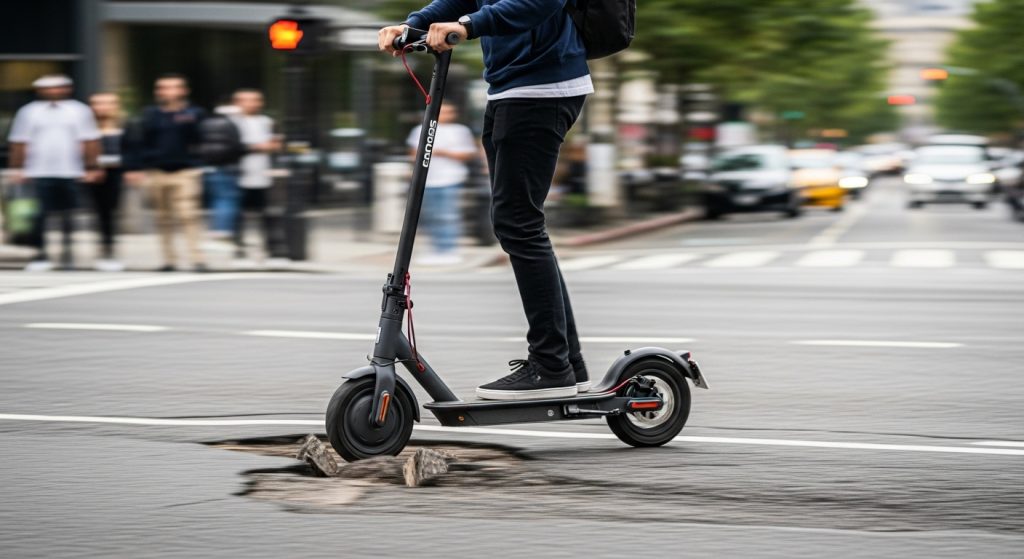
Do you ever feel every single bump and crack in the road while riding your electric scooter? That jarring, uncomfortable ride can take the fun out of your daily commute and leave you feeling shaken. A scooter without a good suspension system transfers all those impacts directly to you, leading to fatigue, a loss of control, and a less safe ride. The right suspension can transform your ride from rough and bumpy to smooth and comfortable. An electric scooter suspension system is a set of components, including springs and shock absorbers, that connects the wheels to the frame and absorbs bumps from the road. This improves ride comfort, enhances control, and reduces wear on the scooter. The Dynamic Scooter Model B, for instance, features a dual suspension system that provides a cushioned ride, making it ideal for navigating varied city terrain. Ready to smooth out your ride? Here’s what you need to know. 1. What Is an Electric Scooter Suspension System? An electric scooter suspension system is what separates you from the harsh realities of the road. Its main job is to absorb the shocks and vibrations from bumps, cracks, and uneven surfaces. Think of it as the scooter’s knees and ankles, flexing to keep the ride smooth while the wheels follow the contours of the ground. This not only makes your ride more comfortable but also safer by keeping the tires in better contact with the road. The core of any suspension system consists of two main parts: a spring and a damper. The spring is what absorbs the initial impact. When you hit a bump, the spring compresses, soaking up the energy. The damper, also known as a shock absorber, controls how the spring bounces back. Without a damper, the scooter would continue to bounce up and down after hitting a bump. Here’s the key… the damper dissipates the energy from the spring, creating a stable and controlled ride. Together, these components work to isolate the scooter’s frame and, by extension, you from the roughness of the terrain. A good electric scooter suspension system can make a world of difference, turning a bone-rattling commute into a pleasant glide. It’s a feature that adds a touch of luxury and a whole lot of practicality to your ride. Component Function Spring Compresses to absorb the energy from bumps. Damper (Shock Absorber) Controls the speed at which the spring compresses and rebounds. Swingarm/Fork Connects the wheel to the scooter’s frame. 2. What Are the Different Types of Suspension Systems? Not all electric scooter suspension systems are created equal. There are several different types, each with its own set of pros and cons. The most common type is spring suspension. This system uses a simple coil spring to absorb impacts. It’s effective, reliable, and relatively inexpensive, which is why you’ll find it on many entry-level and mid-range scooters. Another type is rubber suspension. This system uses blocks of rubber or other elastomers to absorb vibrations. It’s very low-maintenance because there are no moving parts to wear out. However, it typically offers less travel and is not as effective on larger bumps compared to other systems. But here’s the thing… for riders who stick to mostly smooth city streets, it can be a good, hassle-free option. For a more premium ride, you have hydraulic and air suspension. Hydraulic suspension uses a piston moving through oil inside a chamber to dampen impacts. It offers a very smooth and controlled ride. Air suspension, or pneumatic suspension, uses an air-filled chamber as a spring. It’s highly adjustable, allowing you to fine-tune the stiffness of the ride to your weight and preference. These are typically found on high-end scooters. Suspension Type Pros Cons Spring Reliable, affordable Can be bouncy without a good damper Rubber Low-maintenance, durable Less effective on large bumps Hydraulic Very smooth, excellent damping More expensive, can require maintenance Air (Pneumatic) Highly adjustable, lightweight Most expensive, can leak if damaged 3. How Does Front Suspension Work? Front suspension on an electric scooter is all about control and comfort for the front wheel. It’s typically housed in the front fork, which connects the front wheel to the handlebars and the main frame. When the front wheel hits a bump, the suspension compresses, absorbing the impact before it travels up the steering column to your hands and arms. This reduces vibrations and makes the ride much smoother. The most common type of front suspension is a telescopic fork, similar to what you’d find on a motorcycle. This design uses two tubes that slide into each other, with a spring and damper inside. Another type is a leading-link suspension, which uses a pivoting arm to connect the wheel to the frame. The best part? Both designs help keep the front tire in contact with the ground, which is crucial for maintaining steering control, especially when cornering or braking. A good front electric scooter suspension system is particularly important because the front wheel is the first to encounter obstacles. By absorbing these impacts effectively, it sets the stage for a stable ride. It prevents the handlebars from being jolted out of your hands and gives you the confidence to navigate less-than-perfect roads safely. Benefit of Front Suspension Why It Matters Improved Steering Control Keeps the front wheel on the ground for better grip. Reduced Handlebar Vibration Less fatigue in your hands and arms on long rides. Enhanced Safety Helps prevent loss of control when hitting unexpected bumps. 4. How Does Rear Suspension Work? While front suspension handles steering and initial impacts, rear suspension is all about comfort and stability for the bulk of your weight. The rear electric scooter suspension system is located at the back of the scooter, connecting the rear wheel to the deck where you stand. Its job is to absorb the bumps that the rear wheel encounters, preventing them from jarring your body. Most rear suspension systems use a swingarm design. The rear wheel is attached to a pivoting arm, and a shock absorber

Understanding the Basics of Electric Scooter Suspension Systems Read More »

Shopping Cart
Scroll to Top