

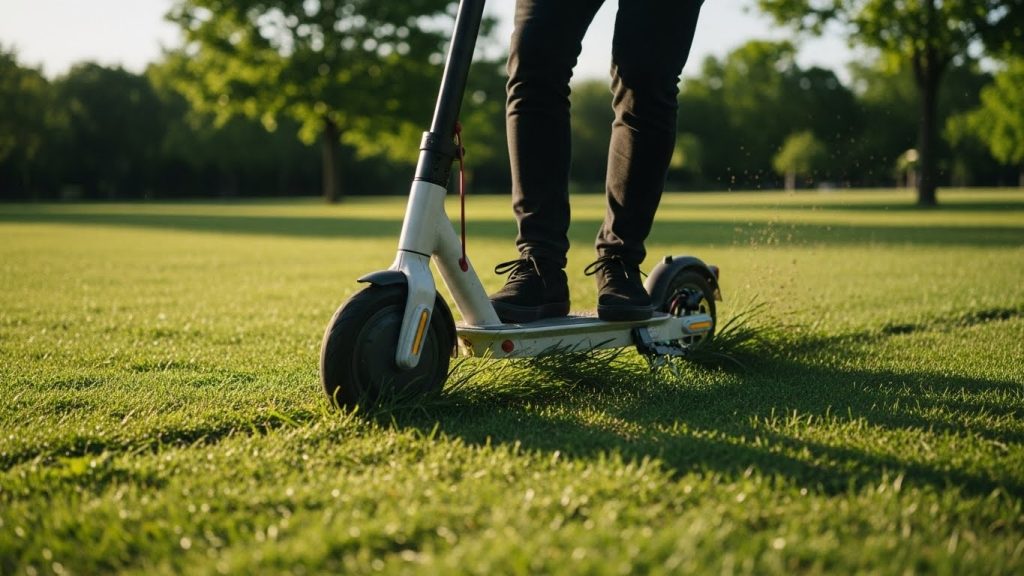
Is It Safe to Ride Your Electric Scooter on Grass?
Electric scooters are masters of the urban landscape, gliding effortlessly over pavement. But what happens when the sidewalk ends? You see a beautiful, open park or a grassy shortcut and the temptation is real. This impulse can lead to a jarring, unstable ride, or even a sudden, painful fall. The smooth, small wheels that are perfect for asphalt can instantly become a liability on soft, uneven turf, digging in and bringing you to an abrupt halt. This can leave you frustrated and with a potentially damaged scooter. While it is technically possible for some electric scooters to go on grass, most standard commuter models are not designed for it and will perform poorly and unsafely. Only specialized off-road scooters with the right tires, suspension, and power can handle grassy terrain effectively. So, what separates a scooter that can conquer a lawn from one that will be conquered by it? Here’s the deal… it all comes down to design. This article will break down exactly what features make a scooter grass-friendly, the risks involved, and how to do it safely if you have the right machine. 1. Why do most standard electric scooters struggle on grass? Most electric scooters are built for smooth, paved surfaces. Their design prioritizes efficiency and portability, which means they are not equipped for off-road terrain like grass. The primary culprit is the tires. Standard commuter scooters typically have small, solid (airless) tires. These are great for preventing flats on city streets, but they are terrible on soft ground. They have a small contact patch and no tread, so they can’t get a good grip on the grass. Another major issue is the lack of suspension. You need to know this… suspension isn’t just for comfort; it’s for safety and control. It allows the wheels to absorb bumps and keep the tires in constant contact with the ground. Without suspension, every little bump in the lawn is transferred directly to the frame and to you, creating a jarring, unstable ride that can easily cause a loss of control. Finally, the motor power on a typical commuter scooter is just not up to the task. Riding on grass creates significantly more friction than riding on pavement. A standard 250W or 350W motor, which feels zippy on the sidewalk, will strain and struggle on a soft lawn. It may overheat or simply not have enough torque to keep you moving. Feature Standard Commuter Scooter Why It Fails on Grass Tires Small (8.5-inch), solid, no tread Cannot grip soft surfaces; sinks into the ground. Suspension None, or very basic Every bump is felt, leading to instability and loss of control. Motor Power Low (250W-350W) Lacks the torque to overcome the high resistance of grass. 2. What makes a scooter “off-road” or grass-friendly? If you want to venture off the pavement, you need a scooter that is specifically built for it. These are often called “off-road” or “all-terrain” scooters. The most obvious difference is the tires. Off-road scooters feature large, pneumatic (air-filled) tires, often 10 inches or more in diameter, with deep, aggressive tread patterns. This is important because… the larger size helps them roll over obstacles more easily, the air inside acts as natural suspension, and the tread provides the necessary grip on loose surfaces. A robust suspension system is the next critical component. You won’t find a true off-road scooter without a serious dual-suspension system. This usually involves a combination of spring and hydraulic components on both the front and rear wheels. This system is designed to absorb major impacts from rocks, roots, and uneven ground, ensuring the ride is not only comfortable but also safe by keeping the tires planted on the turf for maximum traction. Under the deck, off-road scooters pack a serious punch. They typically feature dual motors (one in each wheel) with a combined power output of 1000W, 2000W, or even more. This immense power provides the high torque needed to conquer steep hills and power through high-resistance surfaces like thick grass without bogging down. Feature Off-Road Scooter Why It Works on Grass Tires Large (10-inch+), pneumatic, knobby tread Provides excellent grip, shock absorption, and ability to roll over obstacles. Suspension Dual (front and rear), often hydraulic Absorbs large bumps, keeping the ride smooth and the tires on the ground. Motor Power High (1000W+), often dual motors Delivers the high torque needed to power through soft, high-resistance terrain. 3. What are the biggest safety risks of riding on grass? Riding on grass, even with an off-road scooter, introduces a new set of safety risks. The most significant danger is the potential for a sudden loss of traction. Grass can be slippery, especially if it’s damp from morning dew or recent rain. A sharp turn or a sudden acceleration can cause the wheels to slip out from under you, leading to a fall. The bottom line? Grass is excellent at hiding things. A perfectly manicured lawn can conceal hidden dangers like rocks, exposed tree roots, sprinkler heads, or holes. Hitting one of these obstacles at speed can cause the scooter to stop abruptly, throwing you forward over the handlebars. It’s crucial to scan the ground ahead of you far more carefully than you would on a predictable bike path. Uneven ground is another major hazard. Lawns are rarely perfectly flat. They have subtle dips, mounds, and slopes that can be hard to see. Hitting an unexpected dip can unsettle the scooter and throw you off balance. This is especially true for standard commuter scooters that lack the suspension to absorb these imperfections. Always start slow and be prepared for the ground to be less predictable than it looks. Risk Why It’s Dangerous on Grass How to Mitigate It Loss of Traction Grass provides less grip than pavement, especially when wet. Avoid sharp turns and sudden acceleration; use scooters with knobby tires. Hidden Obstacles Rocks, roots, and holes can be concealed by the grass. Ride slowly and scan the ground ahead carefully for any irregularities. Uneven […]
Is It Safe to Ride Your Electric Scooter on Grass? Read More »