

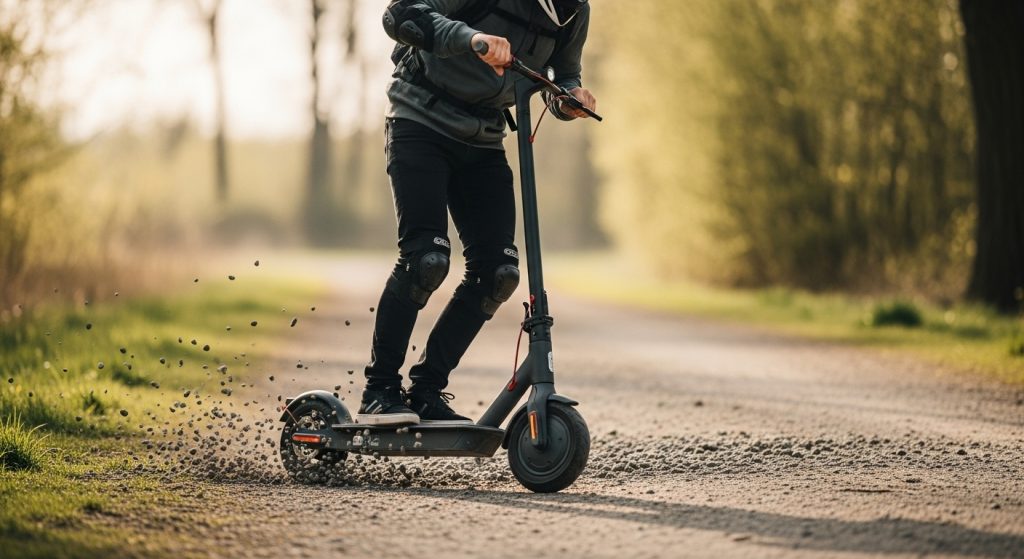
Can Electric Scooters Handle Gravel? Safety Risks & Riding Tips
Riding electric scooters on gravel roads presents unique challenges. Many riders wonder if their scooters can handle unpaved surfaces. The answer is complicated and depends on several factors. Most standard scooters struggle on gravel. However, some models perform better than others. Electric scooters can technically ride on gravel, but performance suffers significantly. Dynamic Scooter models handle light gravel better than most, but extended gravel riding isn’t recommended. Gravel reduces traction, increases wear, and affects stability. Smooth paved surfaces are ideal for scooter riding. Gravel should be avoided when possible. Ready to learn about gravel riding? Here’s the deal… 1. Why Do Scooters Struggle on Gravel Roads? Gravel presents specific challenges for electric scooters. Understanding these challenges helps you avoid problems. Gravel roads differ fundamentally from paved surfaces. The loose, shifting nature of gravel creates instability. Every stone moves independently. This unpredictability makes scooter riding difficult and dangerous. Traction is severely reduced on gravel. Gravel surfaces are loose and unstable. Wheels slip and slide on loose stones. Traction control becomes difficult. Braking power decreases significantly. Acceleration becomes unpredictable. This is important because poor traction creates safety hazards. Riders lose control easily on gravel. The wheels cannot grip the surface effectively. Each acceleration attempt may result in wheel spin. Braking distances increase dramatically. Emergency stops become impossible. The lack of traction is the primary reason scooters struggle on gravel. Wheel damage occurs from sharp stones. Gravel contains sharp, jagged pieces. These pieces puncture and damage tires. Tire damage is expensive to repair. Wheels can bend from impacts. Bearing damage occurs from rough surfaces. Maintenance costs increase dramatically. Sharp stones embedded in gravel act like tiny knives. They cut through tire rubber easily. Punctures happen frequently on gravel. Tire replacement becomes necessary. The cost of replacement tires adds up quickly. Bent wheels require professional repair. Sometimes wheels cannot be repaired and need replacement. The financial impact of wheel damage is significant. Suspension stress increases on rough surfaces. Gravel is uneven and bumpy. Suspension components absorb constant impacts. Suspension wears out faster. Components fail prematurely. Replacement costs add up quickly. Every stone and hole creates an impact. Suspension systems are designed for smooth surfaces. Constant jarring on gravel accelerates wear. Springs lose their effectiveness. Dampers fail prematurely. The entire suspension system degrades faster. Replacement suspension is expensive. Some riders spend hundreds on suspension repairs. Motor strain increases on difficult terrain. Motors work harder on gravel. Energy consumption increases dramatically. Battery drains faster. Range decreases significantly. Motor lifespan shortens. The motor must overcome increased resistance. Loose gravel creates drag on wheels. Motors compensate by working harder. This extra effort consumes more electricity. Heat builds up in the motor. Overheating can damage motor components. Motor efficiency decreases over time. Eventually motors fail from overuse. Stability is compromised on loose surfaces. Scooters feel wobbly on gravel. Balance becomes difficult. Riders feel unsafe. Accidents are more likely. Confidence decreases. The loose surface shifts under your feet. Your scooter moves unpredictably. Maintaining balance requires constant adjustment. Riders become fatigued from balancing effort. Small corrections become large movements. The scooter responds erratically. Confidence erodes with each wobble. Many riders give up on gravel after trying once. Noise and vibration increase dramatically. Gravel creates constant noise. Vibration is uncomfortable. Riding experience suffers. Fatigue increases. Enjoyment decreases. Every stone creates noise as the wheel rolls over it. The constant rattling is annoying. Vibration travels through the scooter to your hands and feet. Your whole body vibrates. Hands become numb from vibration. Feet ache from constant jarring. The riding experience becomes unpleasant. Fatigue sets in quickly. Most riders don’t enjoy gravel riding. Challenge Impact Level Effect on Scooter Duration Traction Loss Critical Slipping, loss of control Immediate Wheel Damage High Punctures, bending Hours Suspension Wear High Premature failure Days Motor Strain Medium Reduced range, lifespan Ongoing Stability Loss High Wobbly, unsafe feeling Immediate Noise/Vibration Medium Discomfort, fatigue Immediate 2. What Scooter Features Help on Gravel? Certain features make gravel riding more feasible. Understanding these features helps you choose appropriate scooters. Not all scooters are created equal. Some have features that help on gravel. Others lack these features completely. Choosing the right scooter makes a difference. Larger wheels handle gravel better. Bigger wheels roll over stones more easily. Small wheels get stuck in gravel. Wheel size directly affects gravel performance. Eight to ten-inch wheels are better. The Dynamic Scooter has appropriately sized wheels for various terrains. Large wheels have more surface area. They distribute weight better. They roll over obstacles more easily. Small wheels sink into gravel. They get stuck frequently. Large wheels are essential for gravel riding. Wider tires provide better traction. Wide tires distribute weight better. Narrow tires sink into gravel. Tire width affects stability. Wider is better for unpaved surfaces. Quality tires improve performance. Wide tires spread the load. They don’t sink as easily. Traction improves with width. Stability increases. Control becomes easier. Air-filled tires perform better than solid tires. Air-filled tires absorb impacts better. Solid tires transmit all vibration. Air-filled tires provide cushioning. Comfort and control improve. Air-filled tires are better for gravel. Here’s why it matters… Tire type significantly affects gravel performance. Air acts as a shock absorber. It cushions impacts naturally. Solid tires offer no cushioning. Every bump is transmitted directly. Air-filled tires are clearly superior for gravel. Suspension systems reduce impact. Good suspension absorbs bumps. No suspension feels rough. Suspension improves comfort. Stability increases. Suspension is valuable on gravel. Suspension components compress when hitting obstacles. They absorb the impact energy. Without suspension, all energy transfers to the rider. Suspension makes gravel riding more tolerable. Quality suspension is expensive. Budget scooters often lack suspension. Higher ground clearance helps avoid obstacles. Low scooters hit rocks easily. Higher clearance clears obstacles. Ground clearance affects performance. Higher is better for rough terrain. Clearance prevents the deck from hitting rocks. Hitting rocks damages the deck. It also causes sudden stops. Higher clearance prevents these problems. Powerful motors handle resistance better. Strong motors overcome gravel resistance. Weak motors struggle. Motor power affects […]
Can Electric Scooters Handle Gravel? Safety Risks & Riding Tips Read More »