
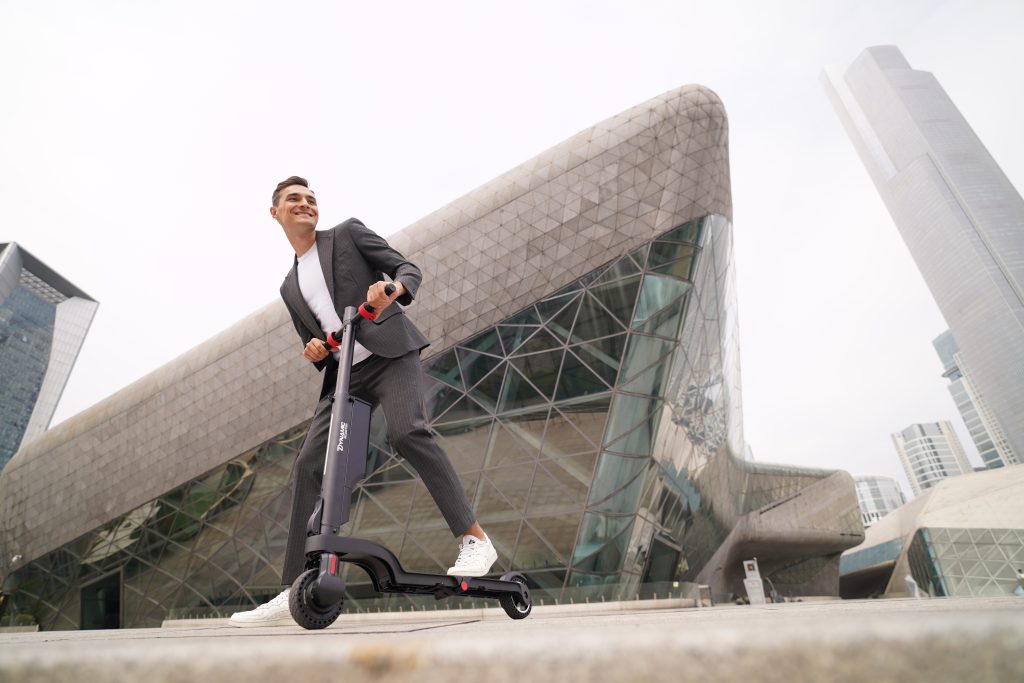
...

July 1, 2026

Understanding Electric Scooter Motor Power: What You Need to Know

Understanding electric scooter motor power is all about knowing how nominal and peak wattage translate to real-world speed, acceleration, and hill-climbing capabilities so you can choose the perfect ride for your commute. Picture this: you are riding your scooter on your daily commute, enjoying the fresh air, when you approach a sudden, steep hill. Slowly but surely, your motor groans, the speed drops to a crawl, and you are forced to kick-assist manually or walk the scooter up while other commuters pass you by with ease. It is an exhausting and frustrating way to start your workday. Thankfully, learning how to decode electric scooter motor power lets you avoid this exact headache. By understanding how wattage converts to real-world performance, you can choose an optimized, ultra-portable powerhouse like the Dynamic Scooter Model B to cruise smoothly through any terrain. What Is Electric Scooter Motor Power? Electric scooter motor power represents the electrical energy converted into mechanical force to propel you forward. Understanding electric scooter motor power is essential for selecting a ride that reliably meets your daily performance expectations. If you skip this technical baseline, you might buy a model that struggles on simple slopes or drains its battery far too quickly. What is continuous or nominal motor power? Continuous power, often called nominal power, represents the sustained wattage a motor can handle safely without overheating. Think about it: this is the baseline efficiency standard of your ride. How does heat affect nominal ratings? Heat is the absolute enemy of electric motors, directly limiting how long they can run at their peak. Here is why this matters: if a motor runs too hot, the copper windings lose efficiency and degrade. Continuous wattage vs peak surge options Comparing continuous power to temporary peak surges helps you understand the mechanical limits of your scooter. But wait, there’s more: you must look at how these two metrics work together to deliver a smooth riding experience. Key Takeaway: Prioritizing continuous (nominal) wattage over highly advertised peak power guarantees reliable, long-term performance on your daily route. Power Metric Typical Range (Watts) Primary Practical Function Impact on Battery Life Nominal Power 250W – 500W Sustained cruising on flat urban pathways Low to Moderate (Predictable consumption) Peak Power 500W – 1000W+ Climbing sudden inclines and rapid acceleration High (Rapid energy draw in short bursts) Look closely at the ratio between nominal and peak power; a wider gap indicates a highly responsive controller capable of delivering strong power surges when needed. How Does Peak Electric Scooter Motor Power Work? Peak electric scooter motor power is the maximum wattage a motor can generate for short, temporary bursts of energy. This temporary threshold represents a sudden spike in energy draw rather than the steady-state electric scooter motor power you use while cruising. The role of the controller in managing power The motor controller acts as the brain, regulating exactly how much electrical current flows from the battery to the hub. Here is the kicker: the motor cannot draw peak power unless the controller actively permits the higher amperage. How long can you sustain peak output? Peak output is designed only for brief intervals, typically lasting between 15 to 30 seconds. Think of it this way: sustained peak draw is unsustainable because of massive heat accumulation. Balancing nominal and peak capabilities A well-engineered scooter balances both nominal and peak limits to keep your ride efficient yet punchy. Simply put: you do not want an aggressive scooter that burns through its battery in minutes. Key Takeaway: Understanding peak power ensures you know exactly when your scooter will deliver temporary performance boosts without overworking the electrical system. Power Profile Operational Duration Main Advantage Thermal Strain Continuous (Nominal) Indefinite (Normal operation) Maximizes range and protects motor health Very Low (Runs within safe limits) Peak Surge 15 – 30 seconds max Conquers sudden steep hills with ease Very High (Requires rapid thermal cooling) Evaluate whether a manufacturer clearly lists both specs; transparency here is a strong indicator of build quality and controller engineering. How Much Electric Scooter Motor Power Do You Need? The amount of motor power you need depends entirely on your daily route, rider weight, and local landscape. Determining the ideal electric scooter motor power for your routine saves you from overpaying for excess wattage or struggling with an underpowered machine. Finding the sweet spot for light urban use For flat sidewalks, designated bike lanes, and short commutes, a moderate motor is your absolute best bet. Let’s be honest: you do not need off-road capabilities just to travel a few blocks. Why does terrain dictate your power choices? Smooth asphalt requires very little effort, while gravel, grass, and cobblestones demand immediate power upgrades. Here is why this matters: rough terrains increase rolling resistance exponentially. Wattage requirements for heavy duty riding If you plan to ride over rugged paths or carry heavy cargo, you must scale up your wattage parameters. But wait, there’s more: high payload capacities require high-torque electrical configurations. Key Takeaway: Matching motor wattage to your specific commute prevents performance issues and ensures you get the maximum value from your investment. Use Case Profile Recommended Nominal Wattage Terrains Handled Portability Level Casual Urban Commuter 250W – 350W Paved streets, flat bike lanes Outstanding (Lightweight and compact) Active Urban Explorer 350W – 500W Light gravel, moderate hills Highly Practical (Balanced weight) All-Terrain / Long Haul 800W – 1000W+ Rough dirt paths, steep hills Heavy & Bulky (Limited portability) Prioritize overall vehicle weight and folding efficiency over extreme motor wattage if your route does not feature steep elevation changes. How Does Electric Scooter Motor Power Type Differ? Motor power types differ primarily based on where and how the hub motor is configured within the wheels. Choosing the right configuration affects how your electric scooter motor power is delivered to the ground, impacting both traction and handling. The mechanics of brushless DC hub motors Brushless DC (BLDC) motors represent the modern standard in high-efficiency electric micro-mobility. Let let keep it simple: by eliminating physical

Understanding Electric Scooter Motor Power: What You Need to Know Read More »
Trigger vs. Thumb vs. Twist: E-Scooter Throttle Comparison

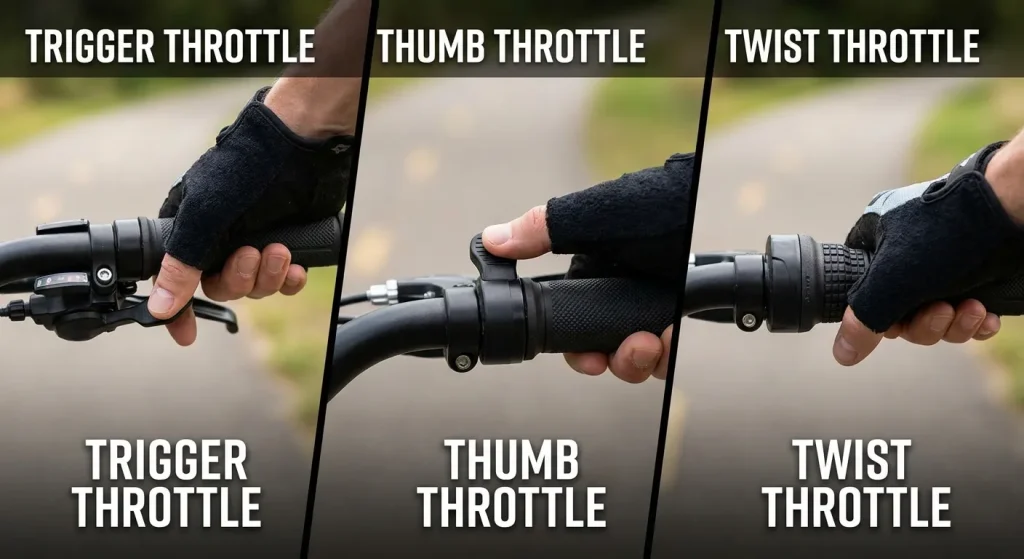
When comparing electric scooter control mechanisms, the ergonomic thumb lever emerges as the absolute best option for urban commuters seeking a perfect balance of safety, control, and long-term riding comfort. Imagine setting off on a freezing winter morning commute, only to find your index finger cramping up or your wrist aching as you try to maintain a steady speed over jarring potholes. This intense hand fatigue and sudden speed jerking are classic symptoms of poor throttle design, turning a fun ride into a stressful chore. Fortunately, finding a highly precise, comfortable electric scooter throttle is the ultimate key to reclaiming a smooth, safe, and entirely effortless daily ride. What is an electric scooter throttle? An electric scooter throttle is the essential handle-mounted component that allows you to regulate the power flow from your battery to your motor. Whenever you interact with this interface, you are directly commanding how fast or slow your ride will accelerate. Understanding the mechanics of your chosen electric scooter throttle is crucial for safe navigation in busy cities. This small component dictates your entire riding posture and braking readiness. Whether you are gliding down a smooth suburban path or maneuvering through chaotic traffic, having the right controller layout is essential. It acts as the direct physical link between your intentions and the machine’s actual performance. Making a smart choice here ensures you can ride confidently without worrying about sudden, unpredictable power jumps. Understanding the Core Speed Control Purpose The primary function of any handlebar speed control is to translate your manual hand pressure into real-time acceleration. It ensures you can match the speed of surrounding traffic safely and predictably. Here is the thing:If your controller lacks a progressive power curve, your ride will feel incredibly jerky and unstable. The Three Primary Controller Styles Available Riders can choose between three distinct layout configurations depending on their physiological comfort preferences. Each format changes how securely you grip the handlebars during sudden stops. Think about it: Key Takeaway: Selecting the perfect control layout is your first and most critical defense against riding fatigue on multi-mile city trips. Throttle Type Finger Action Required Grip Security Level Commuter Adaptability Trigger Style Index finger pull-back Moderate Better for empty, open paths Thumb Style Thumb downward press High Excellent for dense stop-and-go Twist Style Whole hand rotation Moderate Traditional moped-style feel Now that we have identified the basic types, let us investigate the underlying electrical signals that bring these components to life. How does an electric scooter throttle work? An electric scooter throttle works by utilizing smart sensors that detect the physical movement of your hand and convert it into a matching low-voltage signal. This continuous communication happens in milliseconds to keep your ride feeling incredibly responsive. When you press the lever, the internal system calculates the exact power boost required. Having a high-quality electric scooter throttle ensures this signal transmission remains perfectly linear and lag-free. The internal electronics are carefully shielded inside a protective plastic housing mounted directly on your handlebars. This structure protects fragile wiring connections from the vibrations of daily urban riding. Without this robust design, your scooter would experience erratic power cuts or sudden deceleration. The Magic of Contactless Hall Effect Sensors Almost all modern commuter models utilize Hall effect sensors to measure physical displacement without direct contact. This friction-free magnetic design prevents the internal wear that commonly plagues older mechanical models. But wait, there’s more: Translating Voltage into Clean Motor Power The sensor translates physical movement into a low-voltage signal, typically ranging between 1.0 and 4.2 volts, which travels to your main controller. The main controller then draws matching electrical current from your lithium-ion battery. Here is why:A higher voltage reading tells the controller to spin the hub motor faster. Key Takeaway: Contactless magnetic sensors are highly reliable, ensuring your vehicle accelerates predictably without physical wear over years of daily commuting. Sensor Component Material Composition Expected Lifespan Primary Failure Risk Hall Sensor Silicon Semiconductor Extremely High Severe physical shock Internal Magnet Neodymium Permanent Alignment shifting Return Spring Stainless Steel Medium to High Material fatigue With the electrical basics covered, let us analyze the physical safety and handling challenges associated with finger-pulled trigger designs. Is a trigger electric scooter throttle safe? A trigger electric scooter throttle is safe for experienced high-speed riders but can cause sudden, jerky acceleration and dangerous finger fatigue for daily city commuters. This style requires you to continuously pull a small plastic hook toward you using your index finger. While this layout is common on performance-oriented models, it might not suit the relaxed pace of an everyday city transit. Opting for a user-friendly electric scooter throttle design like the one on the portable Dynamic Scooter Model B, priced at $392.17, can dramatically improve your daily commuting safety. Using your index finger to manage power leaves your remaining fingers to grip the handlebar. This split grip can compromise your steering control when hitting unexpected bumps. For many, the constant muscle tension makes quick emergency braking maneuvers much more difficult. The Persistent Problem of Index Finger Fatigue Keeping your index finger in a bent, tense position for multiple miles often leads to a painful condition known as throttle fatigue. This tension can cause your hand to cramp, reducing your physical control over the vehicle. Think about it: Slower Emergency Braking Reaction Times When your index finger is occupied pulling a trigger, it is not resting where it should be: on your brake lever. This delay can cost you precious fractions of a second during a sudden traffic stop. Here is the thing: Key Takeaway: While trigger layouts provide high physical feedback, their susceptibility to causing finger fatigue makes them a riskier option for crowded streets. Safety Factor Trigger Design Performance Impact on Commuter Emergency Braking Slower (finger must change levers) High risk in heavy traffic Pothole Stability Low (uneven bumps can cause sudden pulling) Risk of accidental speed spikes Long-Distance Grip Compromised (asymmetry in hand fatigue) High chance of wrist cramping Now, let us examine why

Trigger vs. Thumb vs. Twist: E-Scooter Throttle Comparison Read More »

Shopping Cart
Scroll to Top