
When comparing electric scooter control mechanisms, the ergonomic thumb lever emerges as the absolute best option for urban commuters seeking a perfect balance of safety, control, and long-term riding comfort.
Imagine setting off on a freezing winter morning commute, only to find your index finger cramping up or your wrist aching as you try to maintain a steady speed over jarring potholes. This intense hand fatigue and sudden speed jerking are classic symptoms of poor throttle design, turning a fun ride into a stressful chore.
Fortunately, finding a highly precise, comfortable electric scooter throttle is the ultimate key to reclaiming a smooth, safe, and entirely effortless daily ride.
What is an electric scooter throttle?

An electric scooter throttle is the essential handle-mounted component that allows you to regulate the power flow from your battery to your motor. Whenever you interact with this interface, you are directly commanding how fast or slow your ride will accelerate. Understanding the mechanics of your chosen electric scooter throttle is crucial for safe navigation in busy cities. This small component dictates your entire riding posture and braking readiness.
Whether you are gliding down a smooth suburban path or maneuvering through chaotic traffic, having the right controller layout is essential. It acts as the direct physical link between your intentions and the machine’s actual performance. Making a smart choice here ensures you can ride confidently without worrying about sudden, unpredictable power jumps.
Understanding the Core Speed Control Purpose
The primary function of any handlebar speed control is to translate your manual hand pressure into real-time acceleration. It ensures you can match the speed of surrounding traffic safely and predictably.
Here is the thing:
If your controller lacks a progressive power curve, your ride will feel incredibly jerky and unstable.
- It regulates the electrical current flowing directly to your hub motor.
- It allows you to maintain consistent cruising speeds for range efficiency.
- It enables rapid speed changes to adapt to unpredictable road hazards.
The Three Primary Controller Styles Available
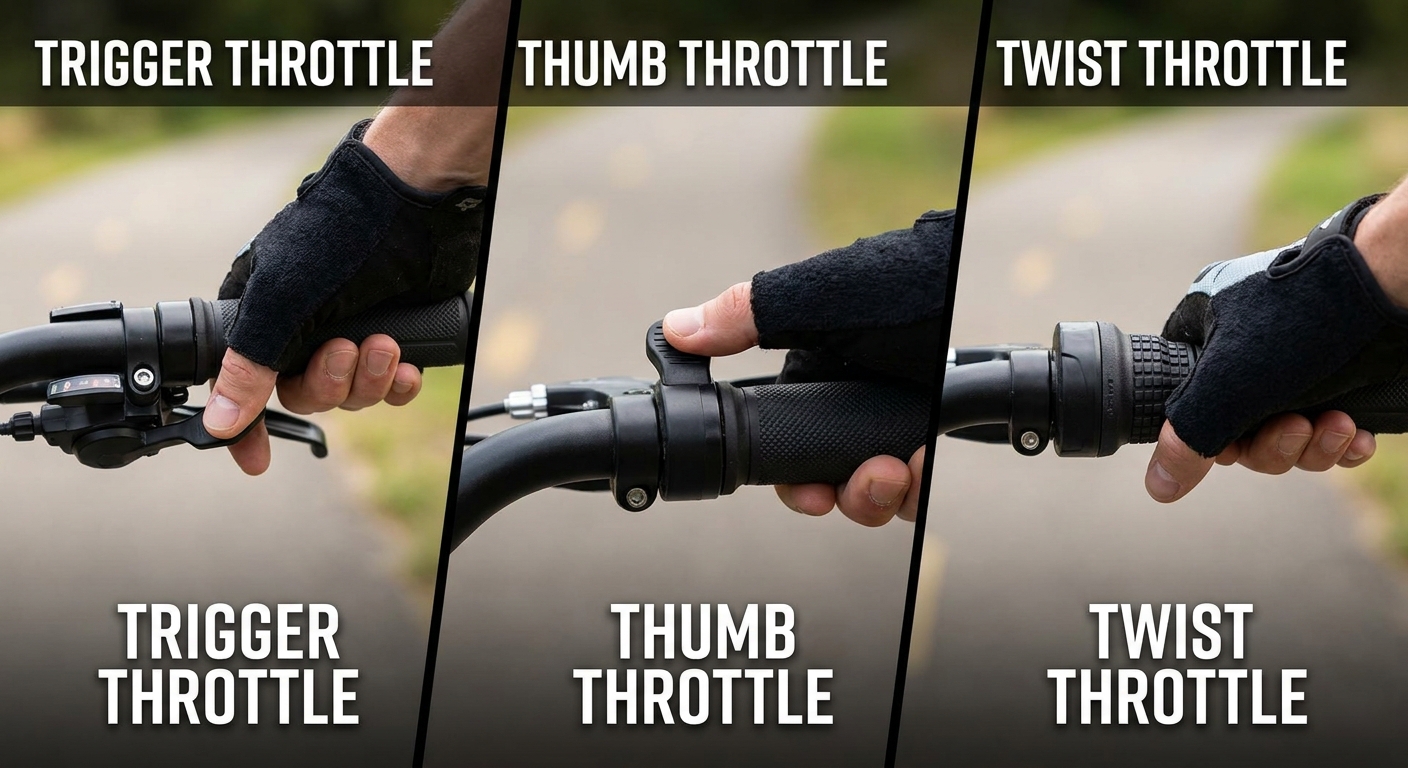
Riders can choose between three distinct layout configurations depending on their physiological comfort preferences. Each format changes how securely you grip the handlebars during sudden stops.
Think about it:
- Trigger levers utilize a pull-back index finger action next to an LCD screen.
- Thumb levers rely on a natural, ergonomic downward pressing motion.
- Twist sleeves rotate a section of the handlebar grip itself, much like a traditional moped.
Key Takeaway: Selecting the perfect control layout is your first and most critical defense against riding fatigue on multi-mile city trips.
| Throttle Type | Finger Action Required | Grip Security Level | Commuter Adaptability |
|---|---|---|---|
| Trigger Style | Index finger pull-back | Moderate | Better for empty, open paths |
| Thumb Style | Thumb downward press | High | Excellent for dense stop-and-go |
| Twist Style | Whole hand rotation | Moderate | Traditional moped-style feel |
Now that we have identified the basic types, let us investigate the underlying electrical signals that bring these components to life.
How does an electric scooter throttle work?
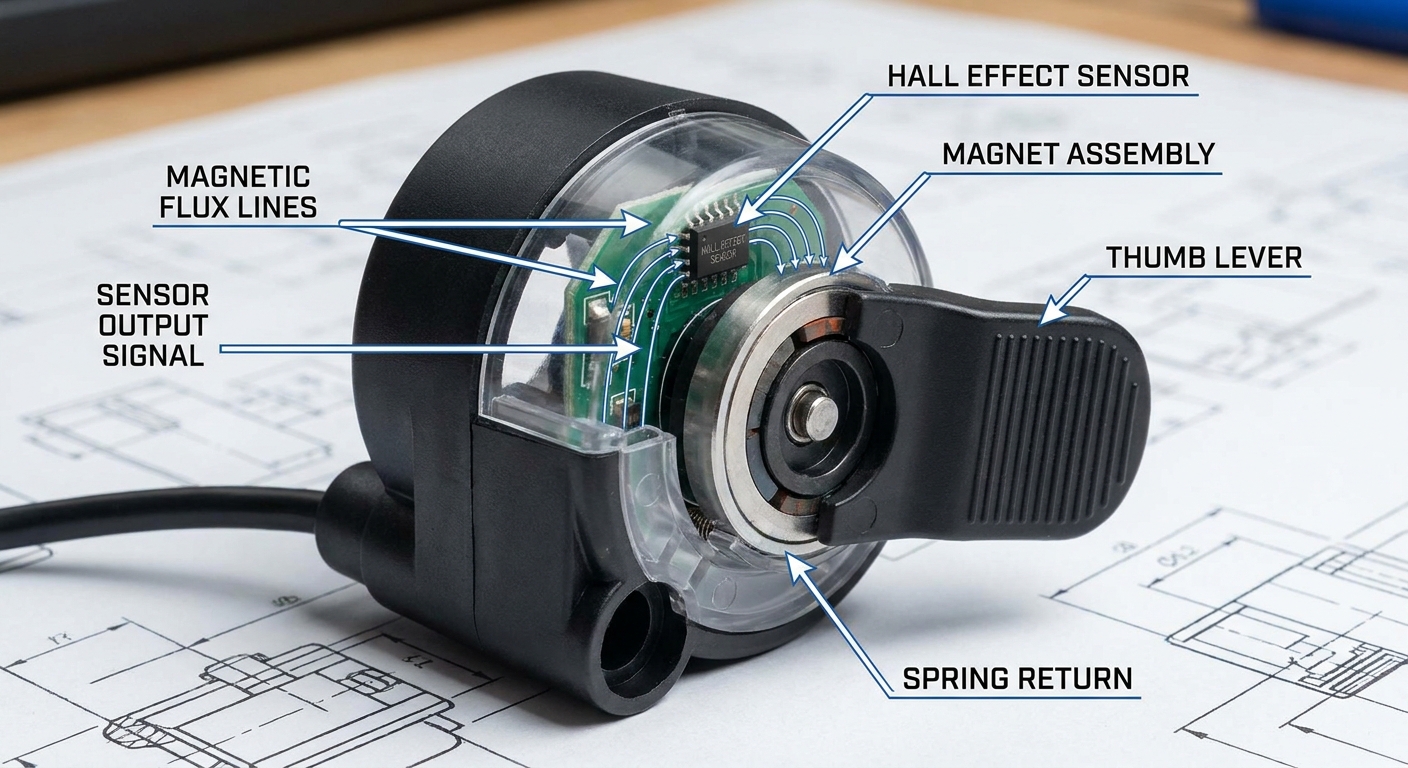
An electric scooter throttle works by utilizing smart sensors that detect the physical movement of your hand and convert it into a matching low-voltage signal. This continuous communication happens in milliseconds to keep your ride feeling incredibly responsive. When you press the lever, the internal system calculates the exact power boost required. Having a high-quality electric scooter throttle ensures this signal transmission remains perfectly linear and lag-free.
The internal electronics are carefully shielded inside a protective plastic housing mounted directly on your handlebars. This structure protects fragile wiring connections from the vibrations of daily urban riding. Without this robust design, your scooter would experience erratic power cuts or sudden deceleration.
The Magic of Contactless Hall Effect Sensors
Almost all modern commuter models utilize Hall effect sensors to measure physical displacement without direct contact. This friction-free magnetic design prevents the internal wear that commonly plagues older mechanical models.
But wait, there’s more:
- A tiny magnet moves closer to the sensor as you press the lever.
- The sensor continuously measures the changing strength of this magnetic field.
- This contactless setup ensures an operational lifespan of tens of thousands of cycles.
Translating Voltage into Clean Motor Power
The sensor translates physical movement into a low-voltage signal, typically ranging between 1.0 and 4.2 volts, which travels to your main controller. The main controller then draws matching electrical current from your lithium-ion battery.
Here is why:
A higher voltage reading tells the controller to spin the hub motor faster.
- Low-voltage signals prevent accidental high-voltage shocks to the rider.
- Smooth firmware integration prevents the wheels from spinning out on wet pavement.
- Heavy-duty copper wiring ensures there is absolutely zero lag during acceleration.
Key Takeaway: Contactless magnetic sensors are highly reliable, ensuring your vehicle accelerates predictably without physical wear over years of daily commuting.
| Sensor Component | Material Composition | Expected Lifespan | Primary Failure Risk |
|---|---|---|---|
| Hall Sensor | Silicon Semiconductor | Extremely High | Severe physical shock |
| Internal Magnet | Neodymium | Permanent | Alignment shifting |
| Return Spring | Stainless Steel | Medium to High | Material fatigue |
With the electrical basics covered, let us analyze the physical safety and handling challenges associated with finger-pulled trigger designs.
Is a trigger electric scooter throttle safe?
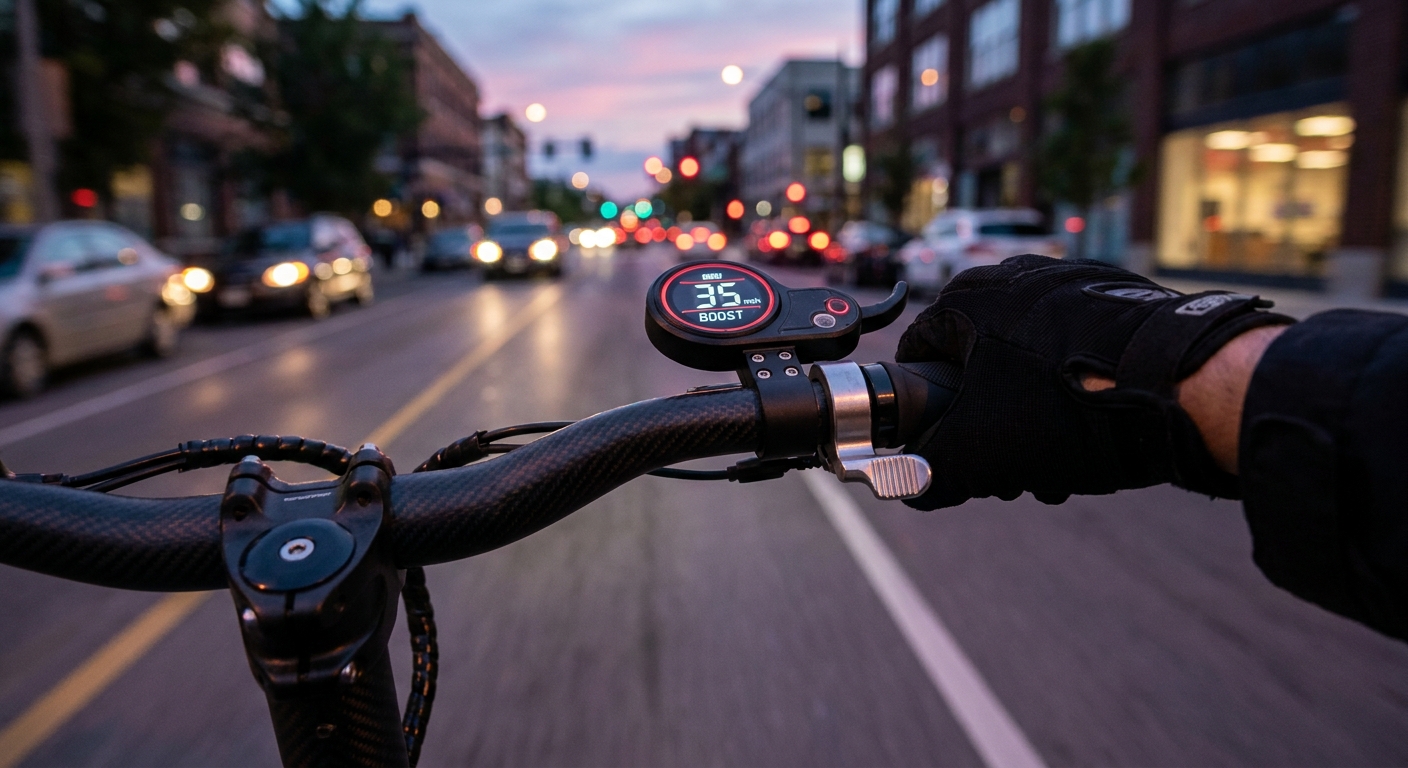
A trigger electric scooter throttle is safe for experienced high-speed riders but can cause sudden, jerky acceleration and dangerous finger fatigue for daily city commuters. This style requires you to continuously pull a small plastic hook toward you using your index finger. While this layout is common on performance-oriented models, it might not suit the relaxed pace of an everyday city transit. Opting for a user-friendly electric scooter throttle design like the one on the portable Dynamic Scooter Model B, priced at $392.17, can dramatically improve your daily commuting safety.
Using your index finger to manage power leaves your remaining fingers to grip the handlebar. This split grip can compromise your steering control when hitting unexpected bumps. For many, the constant muscle tension makes quick emergency braking maneuvers much more difficult.
The Persistent Problem of Index Finger Fatigue
Keeping your index finger in a bent, tense position for multiple miles often leads to a painful condition known as throttle fatigue. This tension can cause your hand to cramp, reducing your physical control over the vehicle.
Think about it:
- Your index finger is forced to hold a static, rigid position for long periods.
- Cold morning commutes can make a tense finger lock up completely.
- Sudden bumps can make your hand slip and pull the trigger accidentally.
Slower Emergency Braking Reaction Times
When your index finger is occupied pulling a trigger, it is not resting where it should be: on your brake lever. This delay can cost you precious fractions of a second during a sudden traffic stop.
Here is the thing:
- Moving your finger from trigger to brake requires extra physical steps.
- Beginners often make the mistake of pulling both levers simultaneously during a panic.
- This layout increases the safety learning curve for novice riders.
Key Takeaway: While trigger layouts provide high physical feedback, their susceptibility to causing finger fatigue makes them a riskier option for crowded streets.
| Safety Factor | Trigger Design Performance | Impact on Commuter |
|---|---|---|
| Emergency Braking | Slower (finger must change levers) | High risk in heavy traffic |
| Pothole Stability | Low (uneven bumps can cause sudden pulling) | Risk of accidental speed spikes |
| Long-Distance Grip | Compromised (asymmetry in hand fatigue) | High chance of wrist cramping |
Now, let us examine why moving this control to your thumb provides an immediately safer and more ergonomic experience.
Why choose a thumb electric scooter throttle?
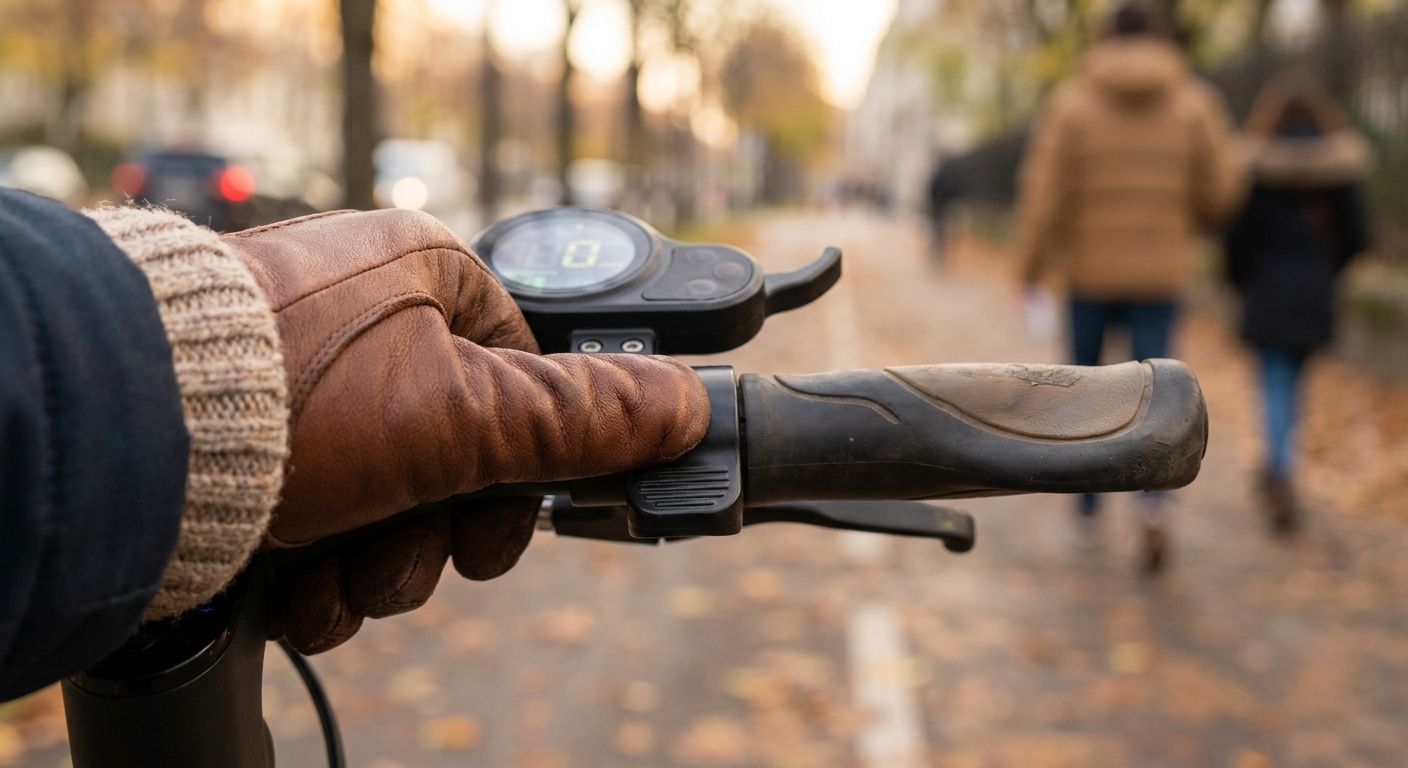
You should choose a thumb electric scooter throttle because it keeps your hand in a natural, relaxed posture and allows you to grip the handlebars with all four fingers for maximum steering stability. This design is operated by pushing a small lever downward using your thumb’s natural pressing motion. It perfectly respects human hand anatomy, minimizing the risk of joint strain. Investing in a scooter with an ergonomic thumb-operated electric scooter throttle is the easiest way to ensure a relaxed and stable commute.
Unlike finger triggers, thumb levers allow your hand to stay firmly wrapped around your non-slip silicone grips. This provides optimal control when navigating cracks, gravel, or sudden elevation changes. Your wrist remains in a straight, neutral position, which completely eliminates long-term muscle strain.
Uncompromised Four-Finger Handlebar Grip
By moving the speed controls entirely to your thumb, your other four fingers can rest securely on the handlebar grip. This balanced position is vital for safety when riding over unpredictable city roads.
But wait, there’s more:
- It provides a symmetric, confident grip on both sides of your handlebars.
- You can hold on tightly without accidentally changing your speed over bumps.
- It makes lifting the front wheel over low curbs much safer and more controlled.
Can It Speed Up Your Braking Reflexes?
Yes, because your index and middle fingers are free to rest directly on your hand brakes while you accelerate. This natural hand position prepares you for sudden obstacles instantly.
Here is why:
- There is zero lag time spent moving your fingers from the accelerator to the brake.
- The downward thumb pressure is easily disengaged when you reach to squeeze the brake.
- This dual-layer control structure is highly intuitive for riders of all experience levels.
Key Takeaway: A thumb lever is the absolute safest layout for daily commuters, offering uncompromised handlebar control and immediate brake readiness.
| Commuter Metric | Thumb Throttle Advantage | Real-World Benefit |
|---|---|---|
| Grip Integrity | 100% finger contact with handlebar | Complete control over rough roads |
| Wrist Posture | Straight and neutral | Prevents carpal tunnel discomfort |
| Braking Prep | Fingers cover brake lever constantly | Shorter emergency stopping distance |
Let us contrast this thumb-operated comfort with the heavy, full-hand rotation of twist-grip throttle systems.
Does a twist electric scooter throttle excel?
A twist electric scooter throttle excels at providing a highly familiar, motorcycle-style riding sensation but fails to deliver the precision and safety required for tight urban commuting. This style requires you to rotate a portion of your handlebar grip backward to engage the electric motor. While this can feel incredibly thrilling on long, open paths, it introduces significant handling risks on congested sidewalks. If you prefer exploring modular options, checking out the premium lineup of portable commuter designs on our electric scooter throttle page is a fantastic place to start.
Rotating your entire wrist downward reduces your ability to brace against sudden forward impacts. This posture can lead to a dangerous phenomenon known as whiskey-throttling, where a bump forces your hand to twist further, launching the vehicle unexpectedly. It also adds significant mechanical width to the handlebars, which can complicate portable storage.
The Familiarity of Motorcycle-Style Controls
For riders transitioning from traditional gas mopeds or motorbikes, a twist-grip feels instantly natural. It relies on the larger muscles of your forearm rather than isolated finger joints.
Think about it:
- It spreads the work of acceleration across your entire hand and wrist.
- Provides a highly engaging, sporty connection to your ride.
- Works perfectly for long, continuous cruising on straight, flat paths.
The Danger of Whiskey-Throttling Over Bumps
The biggest safety drawback of a twist-grip is how easily it can be activated by mistake. When your scooter strikes a deep pothole, your body naturally tenses up, which can cause you to twist your wrist.
Here is the thing:
- This physical reaction leads to unintended, dangerous speed bursts.
- It is incredibly difficult to maintain a steady speed on rough, cracked pavement.
- Reaching for brake levers while twisting your hand can feel highly awkward.
Key Takeaway: Twist-grip designs offer nostalgic appeal, but their high risk of accidental acceleration makes them poorly suited for bumpy urban streets.
| Handling Parameter | Twist-Grip Performance | Impact on Commuter Safety |
|---|---|---|
| Impact Bracing | Weak (wrist must rotate downward) | High risk of losing handlebar control |
| Steady Speed Control | Difficult on rough roads | Frequent unintended acceleration |
| Handlebar Portability | Bulky and wide | Harder to fit in compact folding bags |
Now, let us compare these three layouts side-by-side to see which one is truly the best at reducing physical muscle strain.
Which electric scooter throttle reduces strain?

A thumb-operated electric scooter throttle reduces muscle strain most effectively by supporting your hand’s natural anatomy and keeping your wrist aligned in a straight, neutral position. It distributes the pressure evenly, preventing localized fatigue in your delicate finger tendons. By utilizing a simple downward press, it keeps your palm fully supported by your ergonomic handlebar grips. Ensuring your vehicle is equipped with a high-quality electric scooter throttle is key to enjoying long, pain-free journeys.
When you use a trigger design, your index finger is subjected to constant tension, which can restrict blood flow on chilly mornings. Twist grips, on the other hand, require continuous forearm and wrist rotation, leading to premature muscle fatigue. A thumb lever successfully balances ease of use with complete ergonomic comfort.
Preventing the Pain of Carpal Tunnel Syndrome
Repetitive, awkward hand movements during long commutes can aggravate your median nerve, leading to carpal tunnel inflammation. A thumb lever prevents this by allowing your wrist to remain completely straight.
But wait, there’s more:
- It places zero pressure on your sensitive wrist nerves.
- It completely eliminates the finger stiffness known as “trigger finger”.
- You can enjoy multi-mile commutes without needing to pull over and stretch.
Effortless Micro-Adjustments on Long Commutes
Managing speed in busy bike lanes requires constant, microscopic adjustments to your acceleration. The thumb’s wide range of motion makes these small speed tweaks incredibly easy to perform.
Here is why:
- The base joint of the human thumb is built for high-repetition pressing.
- You can maintain a steady cruising speed with minimal downward pressure.
- It works in perfect harmony with advanced cruise-control settings.
Key Takeaway: If you want to arrive at your destination without sore hands or stiff wrists, the thumb-operated lever is the ultimate ergonomic choice.
| Comfort Marker | Thumb Lever | Trigger Lever | Twist Grip |
|---|---|---|---|
| Wrist Strain | Virtually Zero | Moderate | High (forearm) |
| Finger Joint Tension | Extremely Low | High (index finger) | Low |
| Palm Support | Full contact with grip | Partial contact | No static rest |
No matter which style you prefer, learning how to inspect and test your speed controller is vital for ongoing maintenance.
How to test your electric scooter throttle?
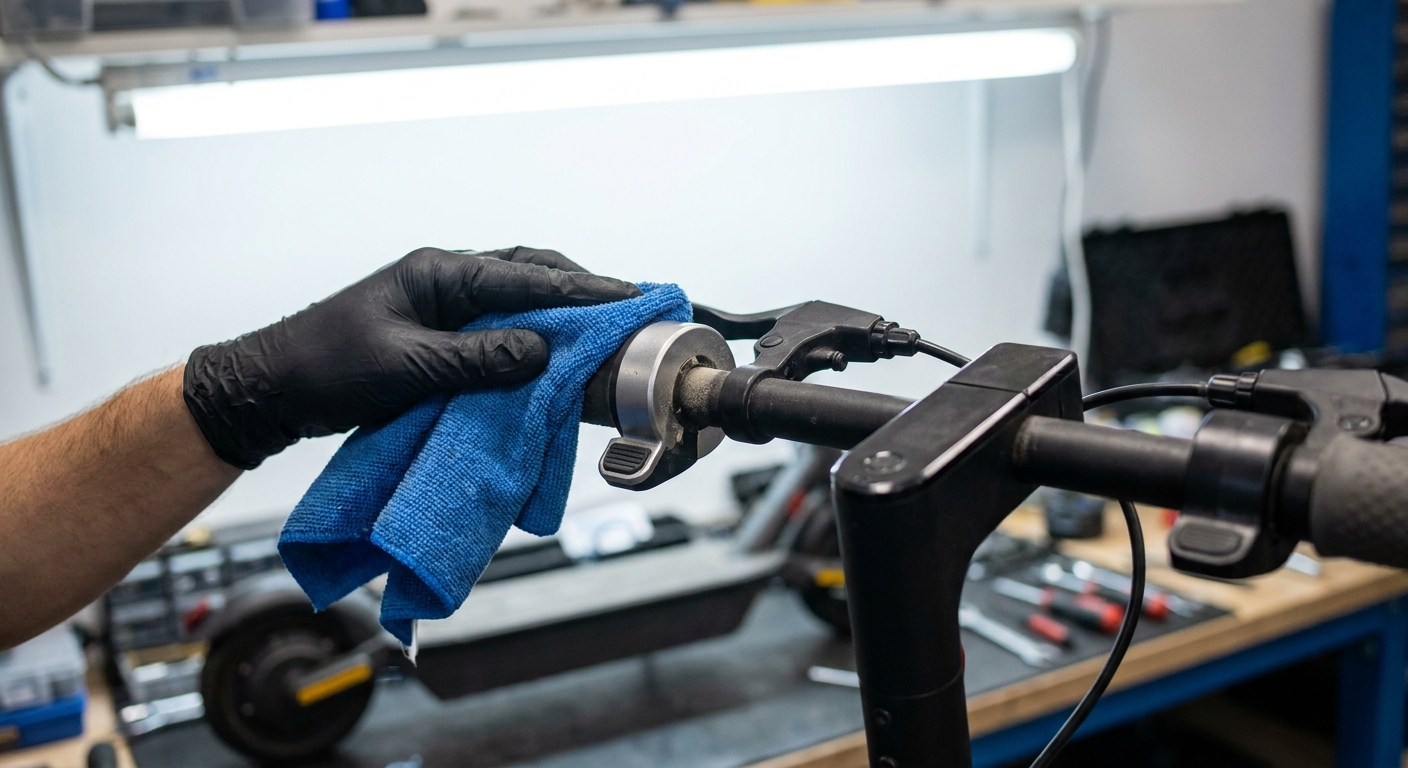
To test your electric scooter throttle, you must physically inspect the lever for sticky movement and use a digital multimeter to measure the electrical signal voltage. Performing these simple diagnostic checks is the best way to catch potential issues before they leave you stranded. Dirt, moisture, and wear can slowly degrade your sensor’s accuracy over time. If you want to learn more about keeping your ride in top shape, check out our comprehensive maintenance guides on the electric scooter throttle blog.
Always begin your tests with the vehicle’s power turned off to ensure your safety. A damaged controller can sometimes send erratic signals that cause the motor to spin unexpectedly. If the physical return spring feels weak or lazy, you should address it immediately.
A Simple Physical and Mechanical Inspection
Road dust, mud, and water can easily get trapped inside the moving joints of your controller, causing it to stick. A quick mechanical inspection only takes a few minutes and requires no special tools.
Here is the thing:
- Press the accelerator lever all the way down and release it.
- It should instantly snap back to its starting position with zero resistance.
- Use compressed air to blow out any trapped road grit from the seams.
Measuring Hall Sensor Signal Output with a Multimeter
If your mechanics are smooth but the motor fails to respond, you need to check the internal electrical signal. You can do this by exposing the wiring harness and measuring the voltage output.
Think about it:
- Set your digital multimeter to measure DC voltage (up to 20V).
- Connect the black probe to the ground pin and the red probe to the signal pin.
- The reading should sweep smoothly from roughly 1.0V to 4.2V as you press.
Key Takeaway: Performing regular electrical and physical checks protects you from unexpected speed control failures when riding through heavy urban traffic.
| Diagnostic Stage | Action Required | Normal Reading | Danger Indicator |
|---|---|---|---|
| Mechanical Test | Manual press & release | Instant spring snapback | Slow, sticky return |
| Electrical Sweep | Measure signal pin with multimeter | Smooth 1.0V to 4.2V rise | Jumpiness or constant 0V |
| Wiring Check | Inspect connection port | Clean, dry metal pins | Green corrosion or loose wires |
Environmental factors play a huge role in sensor health, so let us examine how extreme weather impacts these electronic components.
Does weather impact an electric scooter throttle?
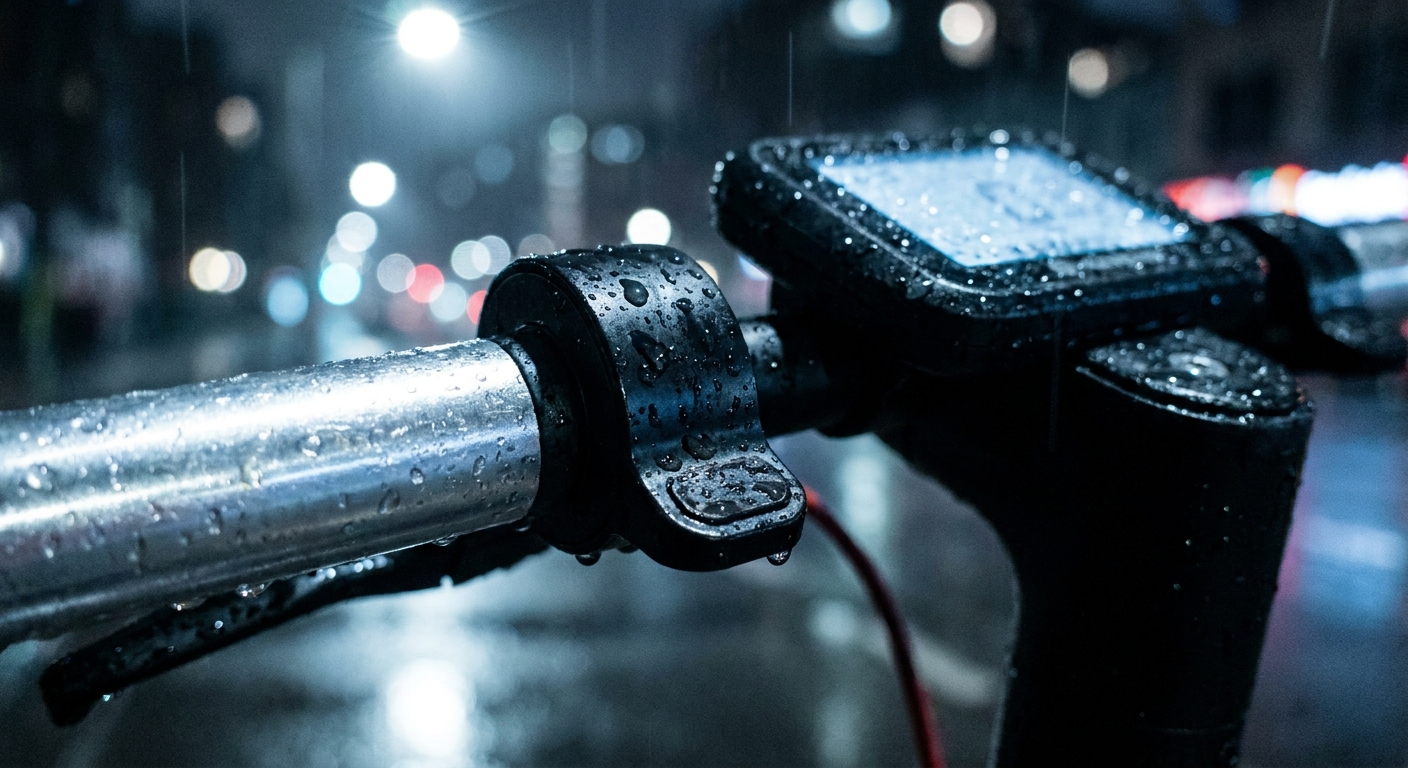
Yes, wet or freezing weather can severely impact your electric scooter throttle by causing internal electrical short circuits, wire corrosion, or frozen return springs. Since this component is mounted directly on your handlebars, it is exposed to rain, snow, and extreme temperature changes. Moisture can easily seep into tiny seams, disrupting the delicate signals sent to your motor. Ensuring your electric scooter throttle is designed with robust ingress protection is crucial for reliable year-round commuting.
Extreme winter cold can also make plastic components brittle and cause moisture to freeze inside the housing. If the return spring becomes encased in ice, the throttle could stick in an open position. Understanding these environmental limits is key to keeping your ride safe.
Understanding IP Ingress Protection Ratings
When shopping for a commuter vehicle, always check the official water resistance rating. A higher rating means the manufacturer has sealed the internal electronics against heavy downpours.
But wait, there’s more:
- An IP54 rating ensures protection against splashing water and road dust.
- High-quality seals prevent moisture from reaching the Hall effect sensor.
- Storing your scooter inside a dry, heated room helps evaporate trapped humidity.
Crucial Winter Riding Maintenance Tips
Sub-zero temperatures pose unique challenges for moving mechanical parts. Taking a few proactive steps before you head out in the snow will prevent dangerous mechanical freeze-ups.
Here is why:
- Freezing water expansion can physically lock your accelerator open.
- Applying a small dab of dielectric grease protects electrical pins from rust.
- A waterproof cover can keep your handlebar electronics bone-dry when parked outside.
Key Takeaway: Guarding your handlebar controls against extreme rain and freezing cold is essential for keeping your acceleration predictable and safe.
| Environmental Hazard | Primary Electronic Risk | Recommended Preventive Action | Safety Priority |
|---|---|---|---|
| Heavy Rainfall | Short circuit in sensor board | Install a waterproof silicone cover | High |
| Freezing Snow | Frozen return spring | Store the vehicle indoors to thaw | Critical |
| High Humidity | Corrosion of wiring harness | Apply dielectric grease to ports | Moderate |
If weather damage does occur, or if you simply want a more comfortable ride, let us find out how easy it is to swap your controller.
Can you swap an electric scooter throttle?
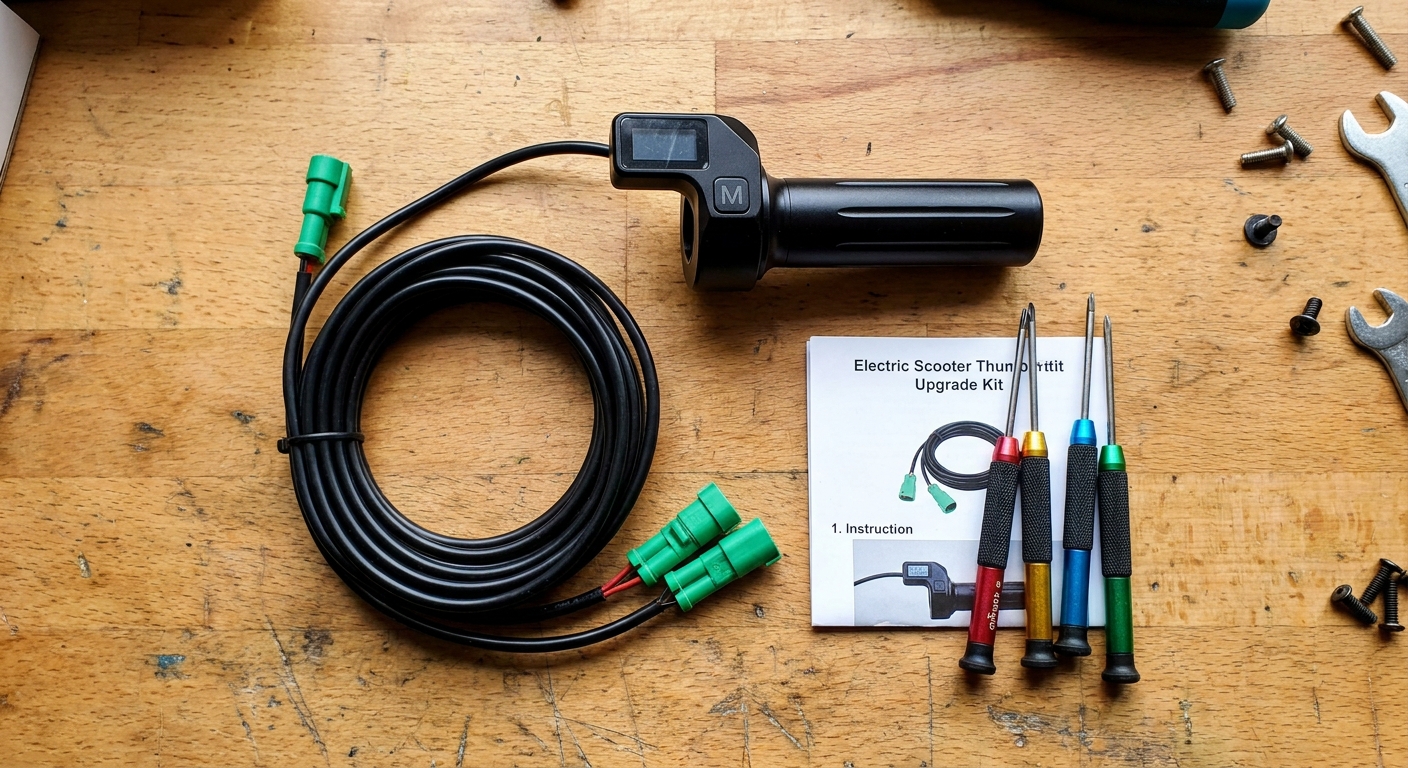
You can swap your electric scooter throttle if your scooter features a modular wiring harness with quick-disconnect plugs and compatible controller firmware. Upgrading your speed controller is a highly popular, budget-friendly DIY project that can instantly improve your riding experience. Many modern, user-friendly scooters are designed with modularity in mind, making part swaps incredibly fast. To see how our team designs sustainable, easy-to-maintain mobility solutions, visit our electric scooter throttle page to learn about our mission.
Before purchasing a new replacement unit, you must verify the voltage compatibility and pin configurations. Forcing incompatible connectors together can permanently damage your scooter’s main electronic board. Choosing official manufacturer parts guarantees a seamless, worry-free installation.
The Ease of Modular Plug and Play Designs
High-quality commuter scooters utilize waterproof, circular quick-disconnect plugs located near the handlebars. This layout makes replacing your accelerator incredibly straightforward, even for beginners.
Think about it:
- Unthread the protective locking collar on the neck of the cable.
- Pull the waterproof plug straight apart without twisting or bending pins.
- Mount the new accelerator onto your handlebars using a simple hex wrench.
Verifying Wiring Layout and Voltage Ratings
Even if two connectors look physically identical, the internal wiring layout might differ. Connecting mismatched power lines can immediately fry your delicate Hall effect sensor.
Here is the thing:
- Always consult the manufacturer’s official wiring diagram first.
- Standard accelerators generally use a 3-pin or 5-pin configuration.
- Ensure the replacement unit is rated to match your battery’s voltage.
Key Takeaway: Upgrading to a modular, plug-and-play thumb lever is a highly rewarding DIY project that instantly boosts your daily comfort.
| Connection Format | Difficulty Level | Required Tools | Long-Term Reliability |
|---|---|---|---|
| Modular Plug-and-Play | Extremely Easy | Hex wrench only | Excellent (fully waterproof) |
| Spliced Wire Solder | Moderate to Hard | Wire strippers, soldering iron | Variable (depends on seal quality) |
| Integrated Display Unit | Easy | Hex wrench, screwdriver | Very High |
With the upgrade process explained, let us summarize our findings to declare the ultimate speed controller for your daily travel.
What’s the best electric scooter throttle?
The best electric scooter throttle is the thumb-operated lever because it offers the ultimate combination of ergonomic comfort, steering safety, and precise speed control for daily city commuting. This style allows you to keep a full, secure hold on your handlebars while easily adjusting your acceleration. It completely eliminates the muscle strain and cramping associated with trigger pulls and twist-grips. Choosing a model with a premium, responsive electric scooter throttle is the best investment you can make for your everyday peace of mind.
Whether you are weaving through busy traffic lanes or cruising along scenic urban paths, your speed controller dictates your entire experience. A thumb lever keeps your hand relaxed, your steering stable, and your fingers perfectly positioned over your brakes. It is the gold standard for modern micromobility safety.
The Undisputed Choice for Daily Urban Transit
Navigating tight city streets and crowded bike paths requires a control system that is both comfortable and incredibly easy to use. The progressive power delivery of a thumb lever ensures you never experience sudden, scary jumps in speed.
But wait, there’s more:
- It fits seamlessly onto sleek, ultra-portable commuter handlebars.
- Allows you to navigate bumpy surfaces without losing your grip.
- Provides a highly intuitive, beginner-friendly learning curve.
Perfect Integration with Dual Braking Systems
Your safety is vastly improved when your accelerator does not interfere with your hand brakes. With a thumb lever managing speed, your strongest fingers are always resting directly on your brake levers.
Here is why:
- It cuts valuable split-seconds off your emergency stopping distance.
- Prevents the dangerous error of giving the vehicle gas during a panic stop.
- Keeps you feeling completely in control of your ride at all times.
Key Takeaway: For a safe, comfortable, and highly reliable urban ride, nothing matches the proven, ergonomic performance of a thumb-operated throttle.
| Rider Profile | Recommended Throttle Style | Safety Performance | Everyday Comfort Level |
|---|---|---|---|
| Daily Commuter | Thumb-Operated Lever | Excellent (unrestricted braking) | Unmatched (zero strain) |
| Aggressive Sport Rider | Trigger-Pull Hook | Moderate (fatigue risks) | Moderate (causes cramping) |
| Casual Weekend Cruiser | Twist-Grip Sleeve | Moderate (whiskey-throttle risk) | High (familiar feel) |
Now, let us transition to our community questions and final thoughts.
Frequently Asked Questions
- Can I convert my trigger throttle into a thumb throttle?
Yes, you can absolutely convert your setup if your vehicle uses a modular wiring harness. You will simply need to purchase a compatible thumb controller kit and verify that the connector pins match your current display unit. - What’s the best throttle style for urban commuting?
The thumb throttle is the best style for urban commuting because it allows you to maintain a full, secure grip on your handlebars. This natural hand position keeps your fingers resting comfortably on the brake lever for faster reaction times. - How do I know if my speed controller needs replacement?
You can easily identify a failing controller by looking for specific performance warning signs. If your vehicle has erratic acceleration, has a sticky lever that does not spring back instantly, or displays throttle-related error codes, it is time for a replacement. - How do I know if water has damaged my throttle?
You will know water has entered your system if you experience erratic power cuts or sudden, unintended acceleration. If your scooter fails to respond entirely after riding in a heavy downpour, the internal sensor board likely has a short circuit.
Designing the Future of Comfortable Commuting
We believe that your daily journey through the city should be a source of joy, not physical strain. By understanding the ergonomics, safety, and mechanics of trigger, thumb, and twist controllers, you can easily banish hand cramping, slow braking reflexes, and unpredictable speed jumps from your routine. If you are ready to elevate your daily commute with a portable, comfortable, and reliable ride, the lightweight Dynamic Scooter Model B, priced at just $392.17, features a beautifully integrated thumb throttle designed for ultimate comfort and safe handling.
Our vision is to empower modern city dwellers with sustainable, high-performing micromobility solutions that turn everyday travel into a completely seamless experience. To find your perfect ride or to learn more about our innovative designs, please get in touch with us and let us help you transform your daily commute today.