

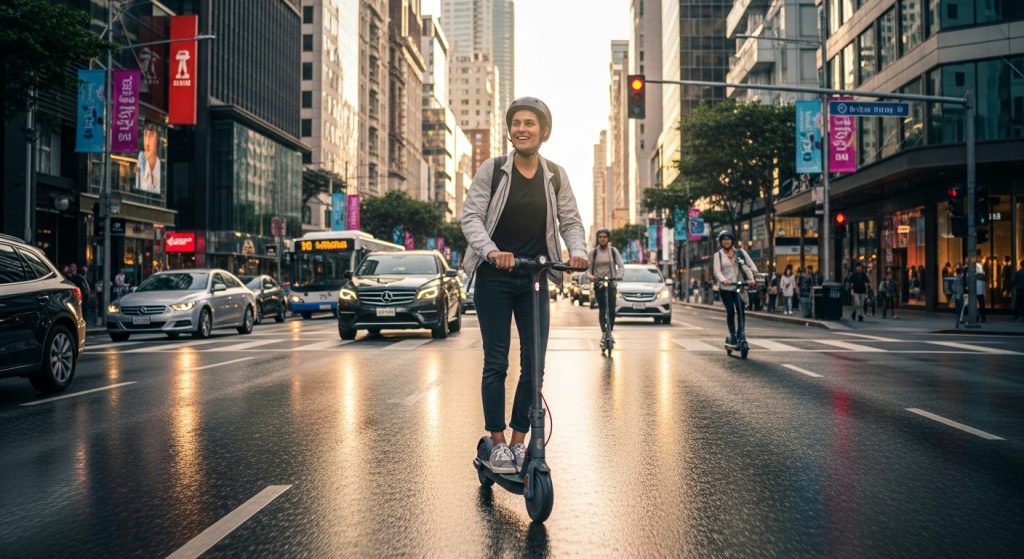
How Long Does It Take To Learn To Ride An Electric Scooter?
You’re tired of traffic. You want a faster, more fun way to get around. An electric scooter seems perfect, but you hesitate. You think it will take a long time to learn, and you’re worried about looking foolish or getting hurt. This fear keeps you stuck in your old routine. You can learn the basics of riding an electric scooter in 5 to 15 minutes. Within an hour, you can be riding with confidence. The process is quick because scooters are designed to be stable and easy to control. Mastering advanced skills takes a bit more practice, but you can be a capable rider in just one day. So, what does the journey from beginner to confident rider actually look like? Let me explain… 1. What Does “Learned to Ride” Actually Mean? When we talk about learning to ride an electric scooter, it’s not a simple yes or no. There are different levels of skill. Understanding these levels helps you set realistic goals for your electric scooter journey. Think of it in three stages. The first is Basic Control. This is what you will achieve in your first 15 minutes on an electric scooter. You can start, stop, and make wide turns. Now here’s the interesting part… The next stage is Suburban Cruising. Here, you are comfortable riding your electric scooter on sidewalks and quiet streets. You can handle gentle slopes and avoid common obstacles. This might take an hour or two of practice. The final stage is Urban Commuting. At this level, you are a confident and skilled electric scooter rider. You can handle traffic, make sharp turns, and use hand signals. You are comfortable on different types of terrain. Reaching this stage takes several hours of practice over a few days. Here’s why it matters… knowing these stages helps you track your progress and build skills safely. Most people focus only on the first stage. They think once they can ride without falling, they’ve learned. The truth is… true mastery means being able to ride safely in any situation. Each stage builds naturally on the last. Proficiency Level Key Skills Estimated Time to Achieve Basic Control Starting, stopping, wide turns, basic balance. 5-15 Minutes Suburban Cruising Riding on sidewalks, handling gentle hills, avoiding obstacles. 1-2 Hours Urban Commuting Navigating traffic, sharp turns, hand signals, varied terrain. 5-10 Hours (over several days) 2. Your First 15 Minutes: From Wobble to Whoosh! Your first 15 minutes on an electric scooter are where the magic happens. This is when your brain and body work together to figure out this new skill. Let’s break it down minute by minute. In the first minute, you just stand on the electric scooter with the power off. You get a feel for the deck and how your weight affects the balance. Minutes 2-5 are for gliding. You push off with one foot and glide for a few feet. Your brain is learning how to make tiny adjustments to keep you upright. Each glide will feel smoother than the last. Now it’s time for power. In minutes 6-10, you turn the electric scooter on in its slowest mode. You gently press the throttle and feel it move on its own. Here’s what you’ll feel… a sense of excitement as you realize how easy it is. In the final 5 minutes, you start making turns. You practice leaning into wide, gentle turns. By the end of these 15 minutes, you will have the basic skills down. The key to this rapid learning is the design of modern electric scooters. They have a low center of gravity and a wide deck. This makes them naturally stable. The throttle and brake are intuitive. Time Activity Goal 0-1 Min Stand on the scooter (power off). Get a feel for the balance. 2-5 Min Push and glide (power off). Practice gliding and balancing. 6-10 Min Use throttle and brake (slowest mode). Master smooth starts and stops. 11-15 Min Practice wide turns. Learn to steer with your body. 3. Beyond the Basics: What Takes Longer to Master? Once you have the basics down on your electric scooter, you can start working on more advanced skills. These are the skills that make you a truly safe and confident rider in any situation. One of the most important is emergency braking. This is when you have to stop very quickly to avoid an obstacle. It takes practice to learn how to brake hard without losing your balance on an electric scooter. Another advanced skill is making tight turns at low speeds. This is useful when navigating a crowded sidewalk. You can practice this by setting up small cones and riding in a figure-eight pattern around them. Riding on different types of terrain also takes practice. But what about real-world challenges? A brick sidewalk, a grassy park, or a street with potholes each requires you to adjust your riding style. Learning to ride up and down steep hills is another skill that takes time to master. You also need to learn how to ride with one hand for hand signals. Practice this in a safe area first. Start by taking one hand off for just a second or two. Gradually increase the time as you get more comfortable. These advanced skills typically take 3-5 hours of focused practice. You don’t need to master them all at once. Here’s the strategy… work on one skill at a time. This gradual approach keeps you from feeling overwhelmed. Skill Why It Takes Longer How to Practice Emergency Braking Requires balance and control under pressure. Practice stopping quickly in a safe area. Tight Turns Needs fine motor control and balance. Ride in a figure-eight pattern around cones. Varied Terrain Each surface requires different adjustments. Ride on different surfaces, starting slowly. One-Handed Riding Challenges your balance. Practice taking one hand off for short periods. 4. How Your Brain Learns to Ride: The Science of Balance Have you ever wondered how you can balance on two wheels without even thinking […]
How Long Does It Take To Learn To Ride An Electric Scooter? Read More »