
You’re tired of traffic. You want a faster, more fun way to get around. An electric scooter seems perfect, but you hesitate. You think it will take a long time to learn, and you’re worried about looking foolish or getting hurt. This fear keeps you stuck in your old routine.
You can learn the basics of riding an electric scooter in 5 to 15 minutes. Within an hour, you can be riding with confidence. The process is quick because scooters are designed to be stable and easy to control. Mastering advanced skills takes a bit more practice, but you can be a capable rider in just one day.
So, what does the journey from beginner to confident rider actually look like? Let me explain…
1. What Does “Learned to Ride” Actually Mean?
When we talk about learning to ride an electric scooter, it’s not a simple yes or no. There are different levels of skill. Understanding these levels helps you set realistic goals for your electric scooter journey.
Think of it in three stages. The first is Basic Control. This is what you will achieve in your first 15 minutes on an electric scooter. You can start, stop, and make wide turns. Now here’s the interesting part… The next stage is Suburban Cruising. Here, you are comfortable riding your electric scooter on sidewalks and quiet streets. You can handle gentle slopes and avoid common obstacles. This might take an hour or two of practice.
The final stage is Urban Commuting. At this level, you are a confident and skilled electric scooter rider. You can handle traffic, make sharp turns, and use hand signals. You are comfortable on different types of terrain. Reaching this stage takes several hours of practice over a few days. Here’s why it matters… knowing these stages helps you track your progress and build skills safely.
Most people focus only on the first stage. They think once they can ride without falling, they’ve learned. The truth is… true mastery means being able to ride safely in any situation. Each stage builds naturally on the last.
| Proficiency Level | Key Skills | Estimated Time to Achieve |
| Basic Control | Starting, stopping, wide turns, basic balance. | 5-15 Minutes |
| Suburban Cruising | Riding on sidewalks, handling gentle hills, avoiding obstacles. | 1-2 Hours |
| Urban Commuting | Navigating traffic, sharp turns, hand signals, varied terrain. | 5-10 Hours (over several days) |

2. Your First 15 Minutes: From Wobble to Whoosh!
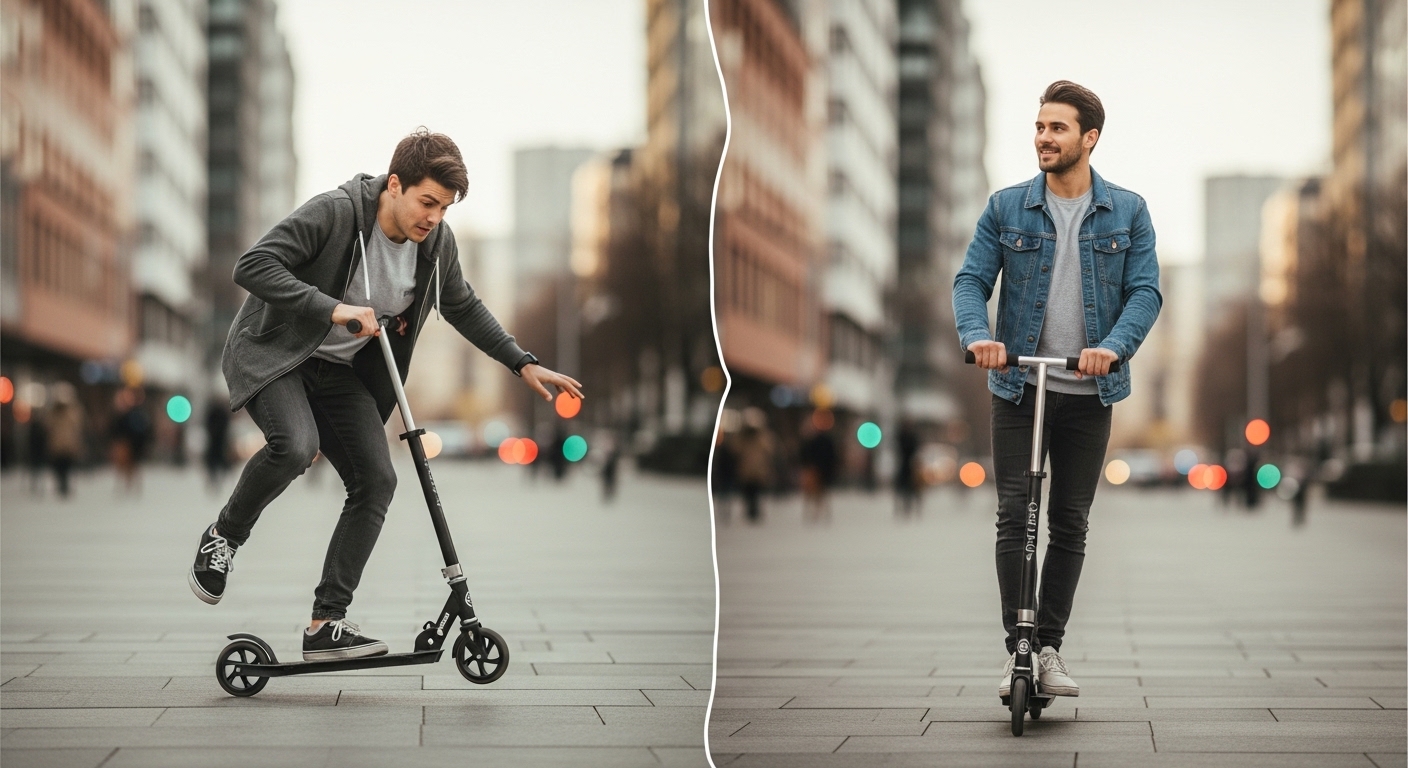
Your first 15 minutes on an electric scooter are where the magic happens. This is when your brain and body work together to figure out this new skill. Let’s break it down minute by minute. In the first minute, you just stand on the electric scooter with the power off. You get a feel for the deck and how your weight affects the balance.
Minutes 2-5 are for gliding. You push off with one foot and glide for a few feet. Your brain is learning how to make tiny adjustments to keep you upright. Each glide will feel smoother than the last.
Now it’s time for power. In minutes 6-10, you turn the electric scooter on in its slowest mode. You gently press the throttle and feel it move on its own. Here’s what you’ll feel… a sense of excitement as you realize how easy it is.
In the final 5 minutes, you start making turns. You practice leaning into wide, gentle turns. By the end of these 15 minutes, you will have the basic skills down.
The key to this rapid learning is the design of modern electric scooters. They have a low center of gravity and a wide deck. This makes them naturally stable. The throttle and brake are intuitive.
| Time | Activity | Goal |
| 0-1 Min | Stand on the scooter (power off). | Get a feel for the balance. |
| 2-5 Min | Push and glide (power off). | Practice gliding and balancing. |
| 6-10 Min | Use throttle and brake (slowest mode). | Master smooth starts and stops. |
| 11-15 Min | Practice wide turns. | Learn to steer with your body. |
3. Beyond the Basics: What Takes Longer to Master?
Once you have the basics down on your electric scooter, you can start working on more advanced skills. These are the skills that make you a truly safe and confident rider in any situation. One of the most important is emergency braking. This is when you have to stop very quickly to avoid an obstacle. It takes practice to learn how to brake hard without losing your balance on an electric scooter.
Another advanced skill is making tight turns at low speeds. This is useful when navigating a crowded sidewalk. You can practice this by setting up small cones and riding in a figure-eight pattern around them.
Riding on different types of terrain also takes practice. But what about real-world challenges? A brick sidewalk, a grassy park, or a street with potholes each requires you to adjust your riding style. Learning to ride up and down steep hills is another skill that takes time to master.
You also need to learn how to ride with one hand for hand signals. Practice this in a safe area first. Start by taking one hand off for just a second or two. Gradually increase the time as you get more comfortable.
These advanced skills typically take 3-5 hours of focused practice. You don’t need to master them all at once. Here’s the strategy… work on one skill at a time. This gradual approach keeps you from feeling overwhelmed.
| Skill | Why It Takes Longer | How to Practice |
| Emergency Braking | Requires balance and control under pressure. | Practice stopping quickly in a safe area. |
| Tight Turns | Needs fine motor control and balance. | Ride in a figure-eight pattern around cones. |
| Varied Terrain | Each surface requires different adjustments. | Ride on different surfaces, starting slowly. |
| One-Handed Riding | Challenges your balance. | Practice taking one hand off for short periods. |

4. How Your Brain Learns to Ride: The Science of Balance
Have you ever wondered how you can balance on two wheels without even thinking about it? The answer is a fascinating process in your brain called proprioception. This is your body’s ability to sense its own position in space. It’s like a sixth sense that helps you balance and move on an electric scooter.
When you first step on an electric scooter, your brain gets a flood of new information. Your brain has to process all of this and make tiny, constant adjustments to your muscles to keep you from falling. This is why you feel wobbly at first.
But your brain is an amazing learning machine. With each glide and each turn on your electric scooter, it starts to build a new mental model. It learns how a small shift in your weight affects the scooter. It learns how much to lean into a turn. This process is called creating muscle memory. Want to know the secret? It’s all about repetition.
The more you practice your electric scooter, the stronger these new neural pathways in your brain become. Soon, you don’t have to think about balancing at all. It becomes automatic. This is the same way you learned to walk or ride a bike. Your brain takes over the complex task of balancing, freeing you up to focus on the road and enjoy the ride.
This is why the first 15 minutes are so important. Your brain is working overtime to create these new pathways. Each time you practice, you reinforce them. By the end of your first hour, riding feels natural.
| Brain Function | Role in Learning to Ride |
| Proprioception | Your body’s sense of its position in space. |
| Inner Ear | Senses motion and helps with balance. |
| Muscle Memory | Your brain’s ability to automate movements through practice. |
| Neural Pathways | Connections in your brain that get stronger with repetition. |
5. Mental Hurdles: Is Fear Slowing You Down?
Sometimes, the biggest thing holding you back from learning to ride an electric scooter isn’t physical. It’s mental. Fear is a powerful emotion. The fear of falling, the fear of getting hurt, or the fear of looking silly in front of others can make it very hard to learn an electric scooter. This fear makes you tense, and being tense makes it harder to balance.
One of the most common fears is the fear of falling. The best way to conquer this is to accept that it might happen. So what should you do? Wear a helmet and pads to protect yourself. Practice on a soft surface like grass at first.
Another big fear is the fear of traffic. The thought of riding next to cars can be scary. The key is to build your electric scooter skills gradually. Start in an empty parking lot. Then move to a quiet sidewalk. Then a bike lane. Don’t try to ride in heavy traffic until you are a confident and skilled rider. The bottom line? You control your learning environment.
Finally, there is the fear of looking foolish. No one wants to look clumsy on an electric scooter. But remember, everyone was a beginner once. Most people are too busy with their own lives to pay much attention to you. And if they do notice you, they are probably just curious about your cool scooter. So, hold your head high and embrace the learning process.
Overcoming these mental hurdles is just as important as mastering the physical skills. A confident mindset will help you learn faster. When you are relaxed and focused, you can react more quickly to unexpected situations.
| Common Fear | How to Conquer It |
| Fear of Falling | Wear safety gear and practice on soft surfaces. |
| Fear of Traffic | Build skills gradually, from empty lots to quiet streets. |
| Fear of Looking Foolish | Remember that everyone was a beginner once. |
| Fear of High Speeds | Start in the slowest mode and increase speed gradually. |
6. Practice Makes Perfect: A 7-Day Learning Plan
If you want to become a confident electric scooter rider quickly, a structured practice plan can help. Here is a sample 7-day plan that takes you from a complete beginner to a capable urban commuter. You can adjust this plan to fit your own schedule and learning speed. The key is to practice your electric scooter a little bit every day.
On Day 1, you will focus on the absolute basics in an empty parking lot. This includes gliding, starting, stopping, and wide turns. On Day 2, you will practice tighter turns. Day 3 is for moving to a quiet sidewalk or bike path.
Day 4 is all about hills. You will find a gentle slope and practice riding up and down it. On Day 5, you will practice riding on different types of terrain. What does this mean for you? You’ll be ready for almost any surface.
On Day 6, you will practice riding with one hand and using hand signals. Finally, on Day 7, you will put it all together with a short trip in your neighborhood. By the end of the week, you will be a confident and safe electric scooter rider.
This plan is designed to build your skills gradually. Each day introduces a new challenge. If you find a particular day too challenging, repeat it before moving on.
| Day | Focus | Location |
| 1 | Basics (start, stop, wide turns) | Empty Parking Lot |
| 2 | Tighter Turns (figure-eights) | Empty Parking Lot |
| 3 | Straight Lines and Passing | Quiet Sidewalk/Bike Path |
| 4 | Hills (gentle slopes) | Quiet Street with a Hill |
| 5 | Varied Terrain (grass, gravel) | Local Park |
| 6 | One-Handed Riding and Hand Signals | Quiet Bike Path |
| 7 | First Real Trip | Your Neighborhood |
7. Choosing a Scooter That’s Easy to Learn On
Not all electric scooters are created equal. Some are much easier for beginners to learn on than others. The most important feature to look for is a beginner speed mode. This limits the top speed and makes the acceleration more gentle. It is the single best feature for a new electric scooter rider. It allows you to learn in a safe and controlled way.
A wide deck is also very helpful on an electric scooter. It gives you more room for your feet. A scooter with a low deck height is also good. It lowers your center of gravity, which improves stability.
The type of tires makes a big difference on an electric scooter. Large, air-filled tires are the best for beginners. They act as a natural suspension system, absorbing bumps and cracks in the road. This makes the ride smoother and more stable. Solid tires are maintenance-free, but they provide a much harsher ride. This can be jarring for a new rider. Here’s the deal… a smooth ride is an easy ride.
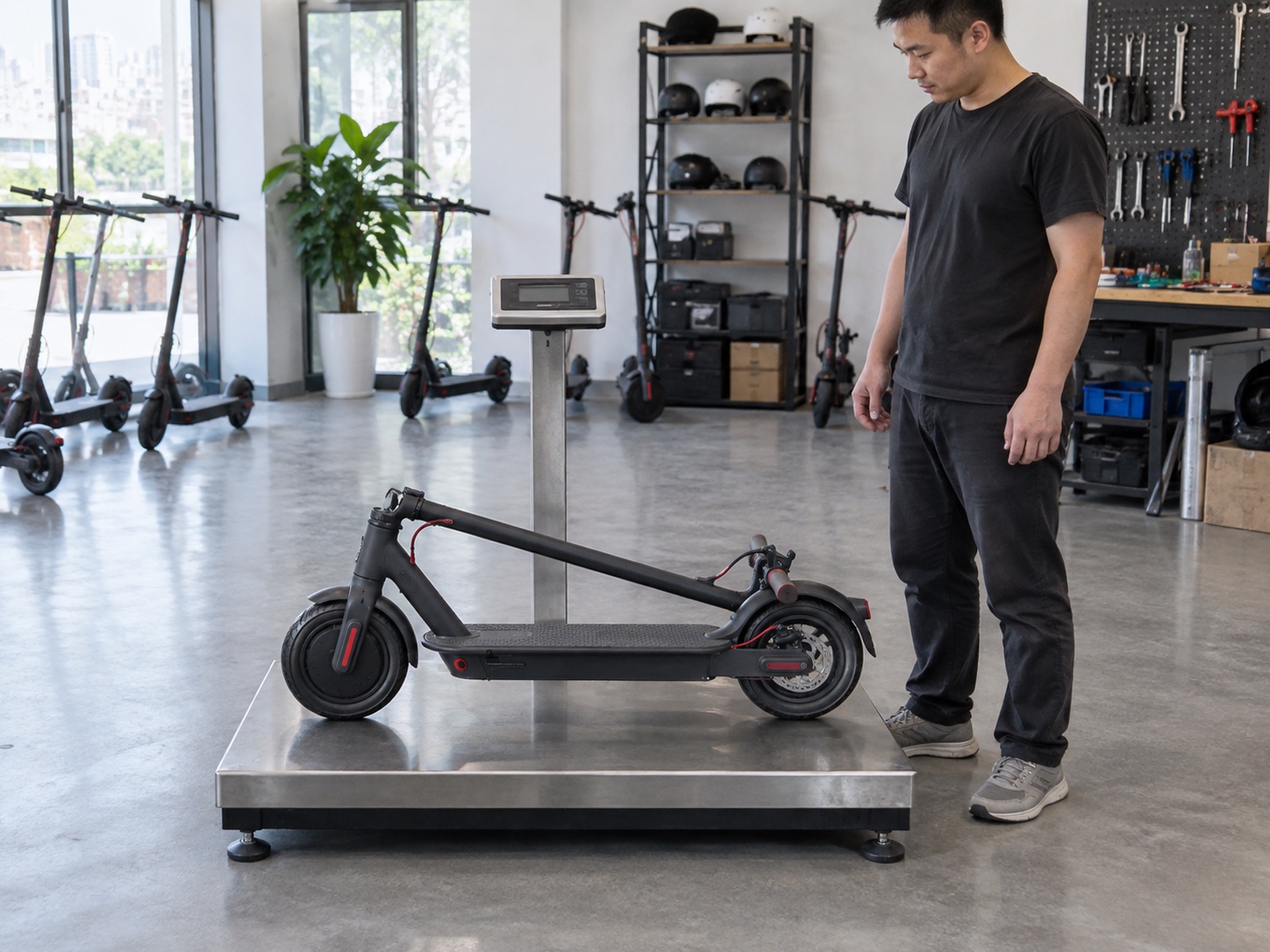
Finally, consider the weight of the scooter. A lighter electric scooter is more maneuverable and easier to handle. This is great when you are learning. The Dynamic Scooter Model B is a perfect example of a beginner-friendly scooter. It has a beginner mode, a wide deck, and large air-filled tires. It is designed to make your learning experience as easy and fun as possible.
Choosing the right electric scooter can cut your learning time in half. A scooter that is too powerful or unstable will make learning much harder. Take the time to research and find a model that is designed for beginners.
| Feature | Why It Helps Beginners |
| Beginner Mode | Limits speed for safe and controlled learning. |
| Wide Deck | Provides more space for your feet, improving balance. |
| Air-Filled Tires | Absorb bumps for a smoother, more stable ride. |
| Lightweight Design | Makes the scooter easier to handle and maneuver. |
Conclusion
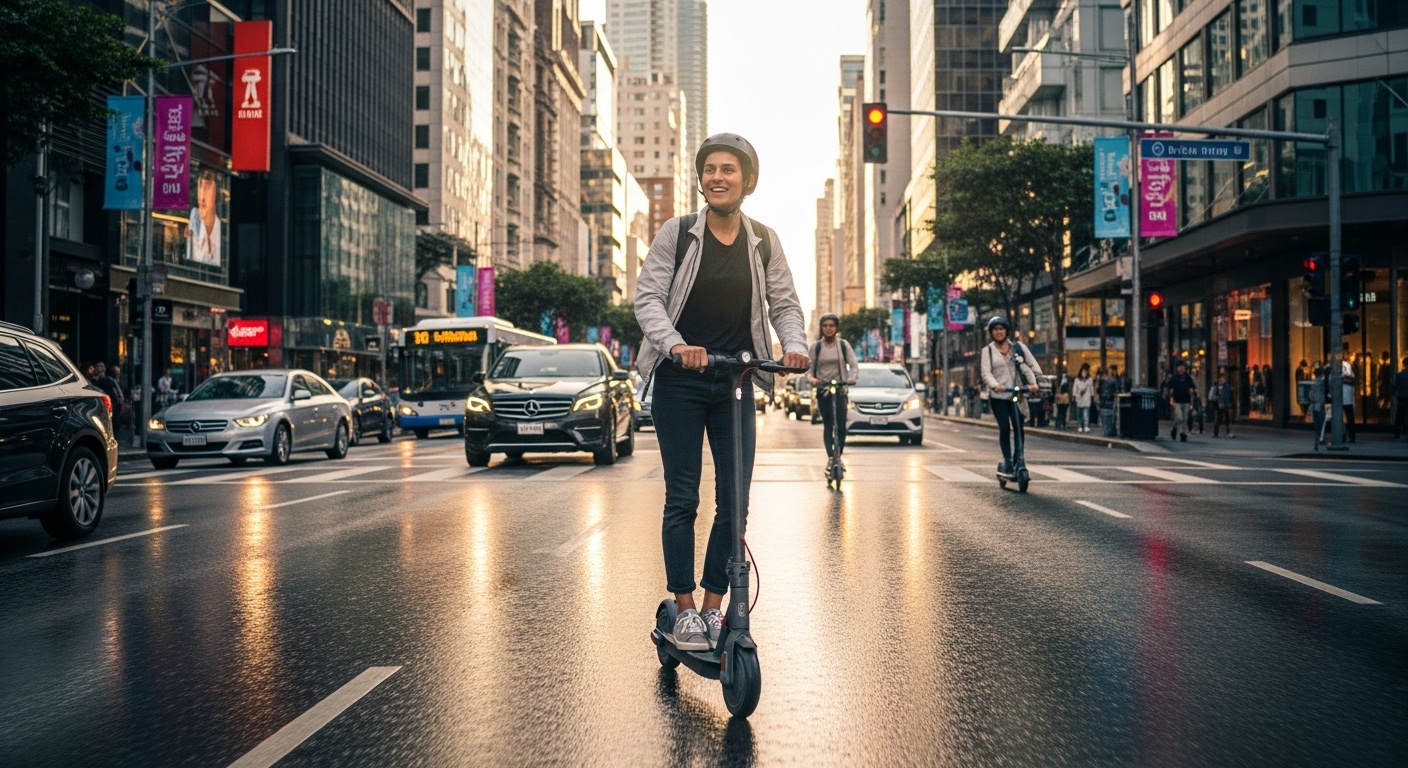
Learning to ride an electric scooter is a quick and rewarding process. You can master the basics in minutes and become a confident rider in just a week. It’s not about spending endless hours practicing; it’s about understanding the stages of learning and building your skills one step at a time. This unlocks a new world of fast, fun, and eco-friendly travel. You will save time on your commute and have more fun getting there.
Ready to start your journey? The Dynamic Scooter Model B is the perfect partner for new riders. Its user-friendly design ensures you will be riding with a smile in no time.
FAQ
Q1: What is the single most important tip for a new rider?
Start slow. Use the beginner mode on your electric scooter and practice in a safe, open area. Building confidence at a low speed is the key to learning fast.
Learning on your own electric scooter is better. You will get used to its specific controls and feel. Shared scooters can vary in quality and performance.
Q3: What if I fall?
Don’t panic. It happens to most new riders. Wear a helmet and pads to protect yourself. Get back on your electric scooter and try again. Each fall is a learning experience.
Q4: Can I teach my child to ride an electric scooter?
Yes. Supervise them closely. Make sure they wear a helmet. Choose an electric scooter that is the right size for them and has a low-speed mode.
Q5: How do I know when I am ready to ride in traffic?
You are ready when you can ride your electric scooter confidently with one hand, use hand signals, and make sudden stops without losing your balance. Practice on quiet streets first.