...

July 30, 2025

Can Electric Scooters Handle Hills and Steep Terrain?

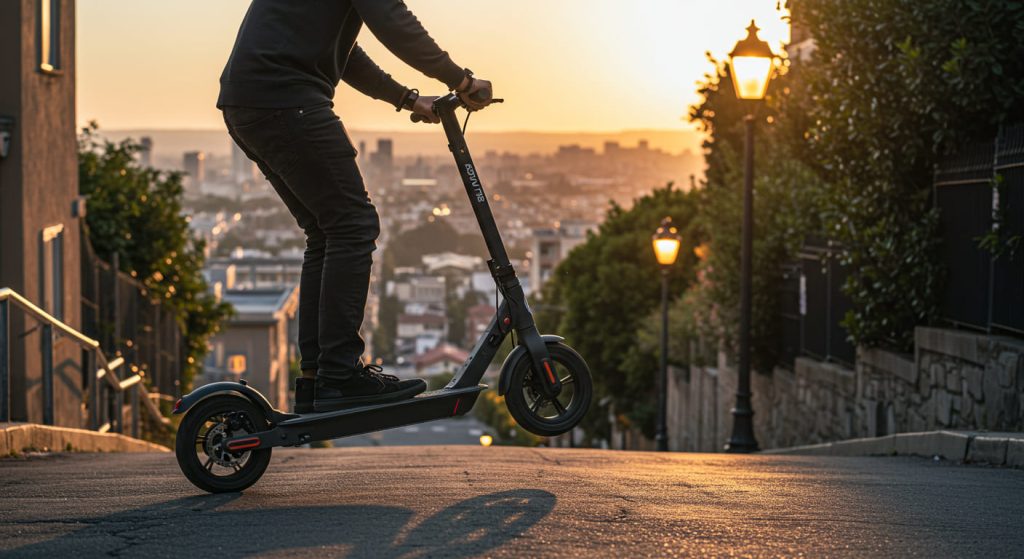
Struggling to get up that hill on your daily commute? Many riders face this challenge when their scooter lacks the power needed for inclines. Without proper hill-climbing ability, you risk being stranded or forced to walk, defeating the purpose of your electric ride. Electric scooters can climb hills, but their ability depends on motor power, battery capacity, rider weight, and incline steepness. Most standard scooters handle 10-15 degree slopes, while high-performance models can tackle 20-25 degree inclines. Motor wattage, typically ranging from 250W to 1000W+, directly determines climbing capability. But here’s the thing… not all scooters are built the same, and understanding what makes one better than another could save you from costly mistakes. 1. What Makes Electric Scooters Capable of Climbing Hills? Motor power stands as the most critical factor in hill climbing performance. The motor generates torque, which provides the force needed to push against gravity. Higher wattage motors produce more torque, allowing scooters to maintain speed on steeper inclines. A 250W motor typically produces around 20-25 Newton-meters of torque, while a 500W motor can generate 40-50 Newton-meters. The relationship between motor power and hill climbing isn’t just about raw wattage. Motor efficiency plays a huge role in real-world performance. Brushless DC motors offer 85-90% efficiency compared to 75-80% for brushed motors. This efficiency difference translates to better hill climbing performance and longer battery life. Here’s why it matters… a 250W motor might struggle on a 10-degree hill with a 150-pound rider, while a 500W motor handles the same slope with ease. The relationship between power and performance isn’t linear, though. Doubling the motor power doesn’t necessarily double the climbing ability due to factors like weight, aerodynamics, and mechanical losses. Motor Power Maximum Hill Grade Torque Output Typical Use Case 250W 8-10 degrees 20-25 Nm Flat terrain, light hills 350W 10-12 degrees 28-35 Nm Urban commuting 500W 12-15 degrees 40-50 Nm Mixed terrain 750W+ 15-20+ degrees 60+ Nm Steep hills, heavy riders Battery voltage affects motor performance significantly. Higher voltage systems deliver more power to the motor, improving acceleration and hill climbing. Most scooters use 24V, 36V, or 48V systems. A 48V system with the same motor will outperform a 24V system on hills because voltage directly affects the motor’s ability to overcome back-EMF at higher speeds. Battery capacity, measured in amp-hours (Ah), determines how long the scooter can maintain hill climbing performance. Hill climbing consumes 2-3 times more power than flat riding. A scooter with a 10Ah battery might provide 20 miles on flat terrain but only 8-10 miles in hilly conditions. Weight distribution plays a role in traction and stability. The ideal weight distribution for hill climbing is approximately 60% rear, 40% front. This distribution keeps the drive wheel in contact with the ground while maintaining steering control. Riders should lean slightly forward when climbing to maintain grip on the rear wheel. Tire quality and tread pattern affect grip on inclines. Pneumatic tires generally provide better traction than solid tires, especially on wet or loose surfaces. The contact patch area increases with tire width, providing more grip. Tire pressure also matters – slightly lower pressure increases the contact area but reduces efficiency. 2. How Do You Calculate if Your Scooter Can Handle a Specific Hill? Understanding hill grades helps riders make informed decisions about route planning. Hills are measured in degrees or percentages. A 10-degree hill equals roughly an 18% grade. The conversion formula is: Grade % = tan(degrees) × 100. Most smartphone apps can measure incline angles using built-in sensors, making it easy to assess potential routes. The best part? You can estimate your scooter’s capability using simple calculations. Divide your scooter’s motor wattage by your total weight (rider plus scooter) to get a power-to-weight ratio. Higher ratios indicate better hill performance. A ratio of 15-20 watts per kilogram provides good hill climbing for moderate inclines. The physics behind hill climbing involves overcoming gravitational force. The force required equals the sine of the hill angle multiplied by the total weight. For a 200-pound total weight on a 10-degree hill, you need approximately 35 pounds of force at the wheel. This translates to specific motor torque requirements. Grade Percentage Degree Equivalent Force Required (200lb total) Difficulty Level 5-8% 3-5 degrees 17-28 lbs Easy 9-15% 5-8 degrees 28-52 lbs Moderate 16-25% 9-14 degrees 52-85 lbs Challenging 26%+ 15+ degrees 85+ lbs Very difficult Real-world performance often differs from manufacturer claims. Test your scooter on known hills to understand its actual capabilities. Factors like battery charge level, temperature, and rider technique affect performance. Manufacturers typically test under ideal conditions with lightweight riders and full batteries. Battery voltage sag under load significantly impacts hill climbing. As batteries discharge, their voltage drops, reducing available power. Lithium-ion batteries maintain voltage better than lead-acid batteries, providing more consistent hill climbing performance throughout their discharge cycle. Temperature affects both battery and motor performance. Cold weather reduces battery capacity by 20-40%, while hot weather can cause motors to overheat and reduce power output. Optimal operating temperature for most electric scooters is 60-80°F (15-27°C). 3. What Are the Best Electric Scooter Features for Hill Climbing? High-torque motors provide the pulling power needed for steep climbs. Brushless motors offer better efficiency and longer life compared to brushed motors. The torque curve of a motor determines its hill climbing characteristics. Motors with high starting torque perform better on steep inclines from a standstill. Now, you might be wondering… about dual motor systems. Some premium scooters feature dual motors, doubling the available power for extreme hills. Dual motor systems also provide redundancy – if one motor fails, the other can still get you home. However, dual motors increase weight, complexity, and power consumption. Motor controllers play a role in hill climbing performance. Advanced controllers use field-oriented control (FOC) to maximize motor efficiency and torque output. These controllers can provide 10-15% better performance compared to basic square-wave controllers. Feature Benefit for Hill Climbing Performance Gain Dual Motors Double the power output 80-100% High-capacity Battery Sustained power delivery 30-50%

Can Electric Scooters Handle Hills and Steep Terrain? Read More »
Can You Take Your Electric Scooter on the Bus?

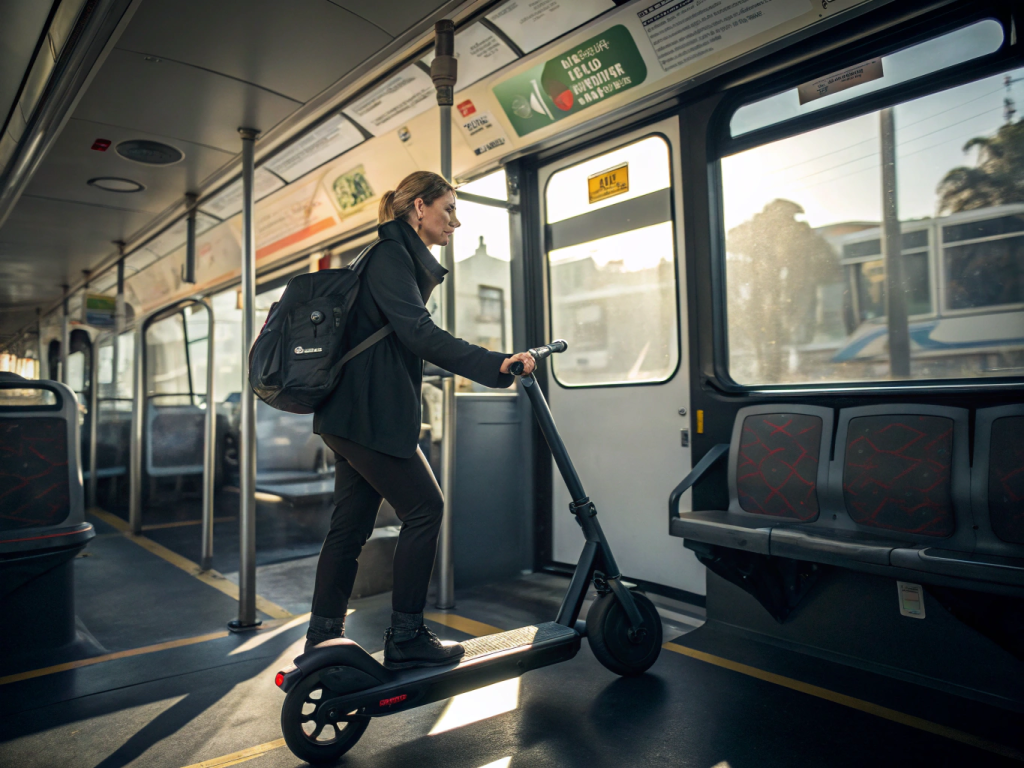
Planning to bring your electric scooter on the bus but unsure about transit rules? Many riders face confusion and potential fines when policies aren’t clear. This guide covers everything you need to know about safely and legally transporting your electric scooter on buses and other public transit. Most bus systems allow folding electric scooters under 20-25 pounds with specific requirements. You’ll typically need to fold your scooter, turn off the battery, and store it in designated areas without blocking aisles or wheelchair spaces. Some systems charge extra fees while others include electric scooter transport in regular fare. But here’s the thing – knowing bus policies beforehand saves you time, money, and embarrassment at stops. 1. What Are the General Bus Rules for Electric Scooters? Bus authorities across the country have developed specific policies for electric scooter transport. Most systems treat folding electric scooters like large luggage items. The key requirement is that your scooter must fold completely and fit within designated storage areas. Weight limits typically range from 20 to 25 pounds for most bus systems. Your electric scooter must be powered off during transport for safety reasons. Some bus authorities also require protective covers to prevent damage to other passengers’ belongings. Here’s why it matters – following these basic bus rules prevents delays and ensures smooth boarding for everyone. Bus System Weight Limit Folding Required Battery Off NYC MTA Buses 25 lbs Yes Yes LA Metro Buses 22 lbs Yes Yes Chicago CTA Buses 20 lbs Yes Yes Size restrictions focus on folded dimensions rather than extended measurements. Most buses accommodate electric scooters that fold to roughly 40 inches long by 20 inches wide. Height restrictions vary but generally allow folded scooters up to 30 inches tall. Bus safety guidelines require riders to secure their electric scooters properly during transport. You cannot leave scooters in aisles or block emergency exits. Many bus systems prohibit riding scooters inside stations or terminals. 2. How Do Different Bus Systems Handle Electric Scooter Transport? Major metropolitan bus networks have varying approaches to electric scooter policies. West Coast bus systems tend to be more permissive with weight limits, while East Coast buses often have stricter regulations. Understanding your local bus rules prevents unexpected boarding denials. New York’s MTA buses allow folding electric scooters under 25 pounds during off-peak hours only. Peak hour restrictions run from 6-10 AM and 4:30-6:30 PM on weekdays. Los Angeles Metro buses permit electric scooters up to 22 pounds but charge a $1 surcharge for scooters over 20 pounds. The best part? Many smaller bus systems follow simpler rules with fewer restrictions than major metropolitan areas. City Bus System Weight Limit Peak Hour Rules Extra Fees San Francisco Buses 25 lbs Allowed None Boston MBTA Buses 20 lbs Restricted 7-9 AM $2 surcharge Seattle Metro Buses 23 lbs Allowed None International bus systems offer interesting comparisons. European buses commonly accommodate electric scooters with weight limits around 20-25 pounds. Asian bus networks often require advance booking for scooter transport. Regional variations within states can be significant. Suburban bus routes typically have more flexible policies than urban express services. Rural bus systems may lack specific electric scooter policies altogether. 3. What Preparation Steps Should You Take Before Boarding the Bus? Proper preparation makes bus boarding smooth and stress-free. Start by checking your bus route’s specific weight limits and policies online or by calling customer service. Download your transit app to verify real-time bus capacity and delays. Folding your electric scooter correctly takes practice. Most lightweight models fold in 10-15 seconds once you master the technique. Practice at home to avoid fumbling at busy bus stops. Clean your scooter beforehand to prevent dirt transfer to other bus passengers. Battery preparation involves more than just powering off. Remove any loose accessories that might fall during bus transport. Check that your folding mechanism locks securely to prevent accidental unfolding on the bus. Now, you might be wondering about timing your arrival at bus stops. Preparation Task Time Required Weight Check Folding electric scooter 15 seconds Under 25 lbs Battery check 30 seconds Power off required Cleaning 2 minutes Prevent dirt transfer Protective gear helps prevent damage during bus transport. Soft carrying cases protect both your electric scooter and other bus passengers’ belongings. Some riders use bungee cords for extra security during bumpy bus rides. Bus route planning becomes more complex with electric scooters. Allow extra time for folding and boarding procedures. Consider alternative bus routes if your primary choice has peak-hour restrictions or stricter weight limits. 4. Where Can You Store Your Electric Scooter on the Bus? Bus storage areas vary significantly between vehicle types and transit systems. Newer buses often feature dedicated spaces for mobility devices and large items. Older buses may only offer floor space near the front or back doors. Wheelchair accessibility zones take priority over electric scooter storage on buses. You must move your scooter immediately if someone with a wheelchair needs to board the bus. This requirement applies even if you were there first. Floor space storage works best for most lightweight folding electric scooters on buses. Position your scooter parallel to the bus wall to minimize aisle obstruction. Hold onto your electric scooter during bus acceleration and braking to prevent sliding. Let me explain why proper positioning matters for everyone’s safety on the bus. Bus Storage Location Pros Cons Weight Consideration Front door area Easy access Blocks boarding Under 25 lbs only Back door area Less crowded Hard to exit Lightweight preferred Wheelchair zone Spacious Must move for wheelchairs Any approved weight Overhead compartments on buses rarely accommodate electric scooters due to weight and size limitations. Most bus overhead storage is designed for lightweight bags and personal items only. Even lightweight scooters under 25 pounds are typically too bulky for overhead storage. Peak hour considerations affect bus storage availability significantly. Morning and evening rush periods see higher bus passenger loads and less available space. Plan alternative transport during these times if possible. 5. What Are the Bus Safety

Can You Take Your Electric Scooter on the Bus? Read More »

Will Your E-Scooter Fit in a 3×3 Storage Unit? Full Fit Guide (2026)

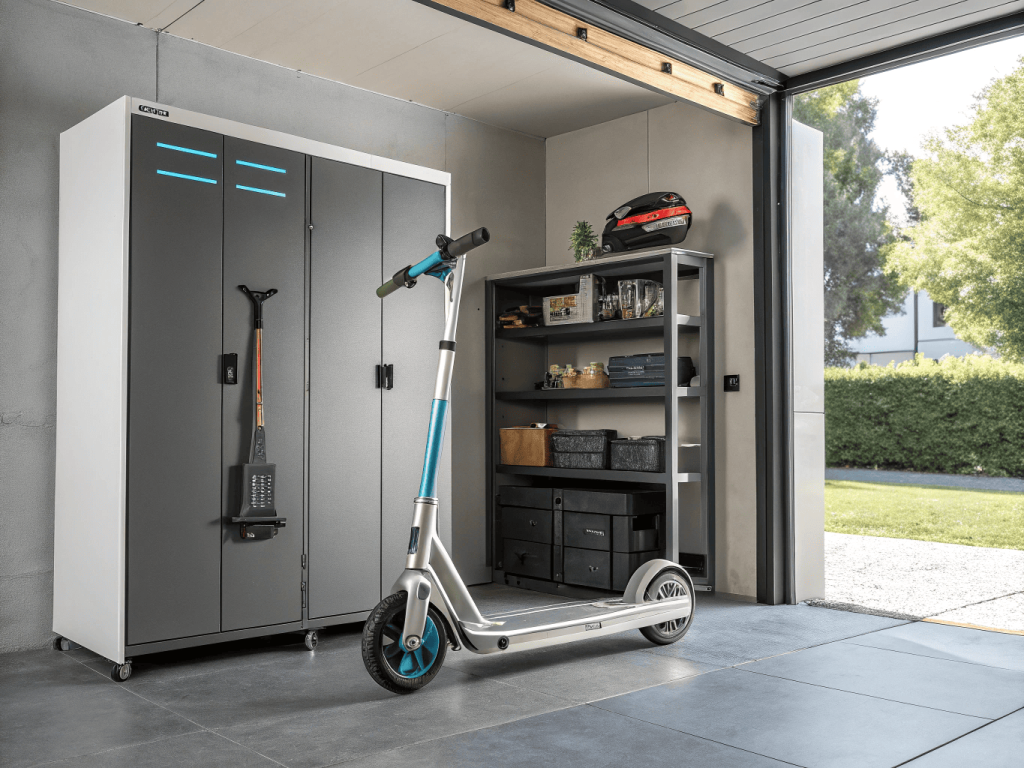
Finding storage for your e-scooter can be tricky. Many owners struggle with limited space at home. Without proper storage, your expensive e-scooter faces theft, weather damage, and battery problems. A 3×3 storage unit might be your perfect solution for safe, secure storage. Most e-scooters will fit in a 3×3 storage unit when properly folded, but Dynamic Scooter models offer superior storage advantages. These units typically measure 3 feet by 3 feet with 8-foot ceilings, providing 72 cubic feet of space. Dynamic Scooter’s innovative folding design and removable battery system make storage safer and more convenient than traditional models. But there’s more to consider than just basic dimensions… 1. What Are the Standard Dimensions of a 3×3 Storage Unit? Storage units labeled as “3×3” don’t always measure exactly 36 inches by 36 inches. Most facilities provide interior dimensions that range from 35 to 37 inches in width and depth. The height typically measures 8 feet, giving you 72 cubic feet of total space. Here’s the thing… these measurements can vary between facilities. Some older buildings have lower ceilings at 7.5 feet. Others might have support beams or ventilation systems that reduce usable space. Measurement Type Typical Range Impact on Storage Interior Width 35-37 inches Affects scooter placement Interior Depth 35-37 inches Determines accessibility Ceiling Height 7.5-8 feet Allows vertical storage You should always measure the actual unit before signing a lease. Bring a tape measure and check all three dimensions. Look for obstacles like electrical outlets, light fixtures, or structural elements that might limit your space. The door opening also matters for your storage plans. Most 3×3 units have doors that measure 32 to 34 inches wide. This width easily accommodates folded e-scooters but might limit larger items you want to store alongside your scooter. 2. How Big Are Most Electric Scooters When Folded? Folded e-scooter dimensions vary significantly between models and brands. Most consumer e-scooters fold to dimensions between 40-50 inches long, 15-20 inches wide, and 15-25 inches tall. These measurements make them suitable for 3×3 storage units with careful positioning. Weight plays a role in storage convenience too. Lightweight models under 25 pounds are easier to move in and out of storage. Heavier scooters weighing 35-50 pounds require more effort but still fit comfortably in the space. The best part? Modern folding mechanisms make the process quick and simple. Most scooters fold in under 30 seconds with practice. Scooter Category Folded Length Folded Width Folded Height Weight Lightweight 40-45 inches 15-18 inches 15-20 inches 20-25 lbs Standard 45-50 inches 18-20 inches 20-25 inches 25-35 lbs Heavy-duty 50-55 inches 20-22 inches 25-30 inches 35-50 lbs The folding mechanism affects final dimensions. Scooters with telescoping stems typically fold more compactly than those with hinged systems. Some models allow you to remove the battery pack, reducing both weight and size for storage. Consider your scooter’s specific folding pattern when planning storage layout. Some models fold with the handlebars extending upward, while others fold completely flat. This difference impacts how you position the scooter in your storage unit. 3. Which E-Scooter Models Fit Best in Small Storage Spaces? When choosing an e-scooter for 3×3 storage, focus on models designed specifically for compact storage. Dynamic Scooter leads the market with innovative folding designs that maximize storage efficiency. Our Model B folds to just 42 x 16 x 18 inches, making it one of the most storage-friendly options available. The key advantage of Dynamic Scooter models lies in their removable battery system. This feature reduces storage weight by up to 8 pounds and eliminates fire safety concerns. You can store the battery separately in climate-controlled conditions while keeping the scooter frame in standard storage. Now, you might be wondering… which features matter most for storage? Removable batteries top the list, followed by quick-fold mechanisms and lightweight construction. Dynamic Scooter excels in all these areas with our patented folding system. Model Folded Dimensions Weight Price Range Storage Rating Dynamic Scooter Model B 42 x 16 x 18 in 24 lbs 350-450 dollars Outstanding Compact Model A 43 x 17 x 19 in 26 lbs 300-400 dollars Excellent Standard Model 45 x 18 x 20 in 28 lbs 250-350 dollars Very Good Budget Option 46 x 19 x 22 in 32 lbs 200-300 dollars Good Premium models often include carrying cases or protective bags. These accessories add bulk but provide better protection during storage. Consider whether the extra protection justifies the additional space requirements. Look for scooters with quick-release mechanisms for wheels or other components. Some models allow you to remove the front wheel, creating an even more compact storage profile. This feature proves especially valuable in tight storage situations. 4. What Storage Preparation Steps Should You Take? Proper preparation protects your e-scooter investment during storage. Start by cleaning your scooter thoroughly. Remove dirt, salt, and debris that could cause corrosion over time. Pay special attention to the folding mechanisms and electrical connections. Battery care requires the most attention. Charge your battery to 50-70% before storage. This level prevents deep discharge while avoiding overcharge stress. Remove the battery if your model allows it, and store it in a cool, dry place. Let me explain… why battery care matters so much. Lithium batteries degrade faster in extreme temperatures and when stored at full or empty charge levels. Proper storage extends battery life by months or even years. Preparation Task Frequency Time Required Importance Level Deep cleaning Before storage 30 minutes High Battery charging Monthly 2 hours Critical Lubrication Every 3 months 15 minutes Medium Security check Each visit 5 minutes High Apply protective covers to prevent dust accumulation and moisture damage. Waterproof covers work best, but even old sheets provide basic protection. Avoid plastic bags that can trap moisture and cause condensation problems. Document your scooter’s condition with photos before storage. This documentation helps with insurance claims if damage occurs. Include close-ups of any existing scratches or wear marks to establish baseline condition. Storage preparation also includes checking tire pressure and brake function. Inflate tires to recommended

Will Your E-Scooter Fit in a 3×3 Storage Unit? Full Fit Guide (2026) Read More »

Shopping Cart
Scroll to Top