
...

August 14, 2025

Is It Safe to Ride Electric Scooters During Pregnancy? Safety Tips You Must Know

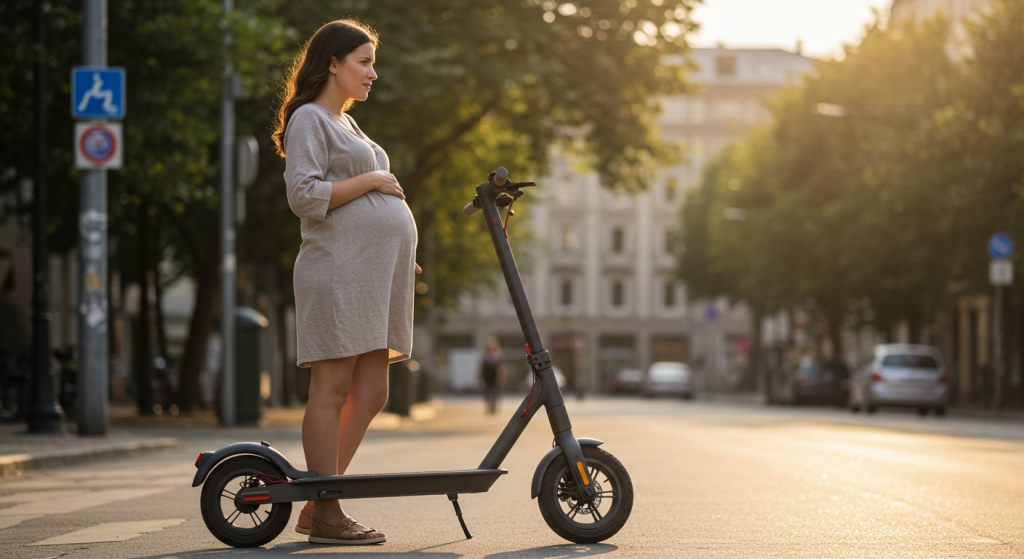
Pregnancy brings new worries about daily activities. Electric scooter safety becomes a big concern. Many expecting mothers face transport challenges. They wonder if their usual ways of getting around stay safe. The wrong choice could put both mother and baby at serious risk. Riding electric scooters during pregnancy is not recommended. This is due to higher fall risks and balance changes. There’s also potential harm to both mother and baby. Medical experts tell pregnant women to pick safer transport options. This helps avoid accidents that could cause injury or pregnancy problems. But here’s the thing… Knowing the specific risks helps you make smart choices. You can decide how to get around safely during pregnancy. 1. What Are the Main Safety Risks of Riding Electric Scooters While Pregnant? Electric scooters create many safety challenges that get worse during pregnancy. The mix of speed, balance needs, and traffic exposure makes a high-risk situation for expecting mothers. Fall risks go up a lot during pregnancy because of body changes that affect stability and coordination. Even small falls can hurt the belly area, which creates serious threats to both mother and baby. Here’s why it matters… Pregnancy hormones like relaxin make joints and ligaments loose, making you more likely to get hurt from falls or quick movements. Risk Factor Pregnancy Impact What Could Happen Falls and crashes Higher injury risk Belly trauma, broken bones Shaking from riding Affects growing baby Possible growth concerns Speed and control Slower reaction time More likely to have accidents Traffic exposure Less mobility options Higher crash risk The shaking from electric scooters can affect pregnant women differently than other riders. Constant shaking may cause discomfort and could possibly impact the growing baby, though research on this specific area stays limited. Speed control gets harder as pregnancy moves forward. Changes in weight spread and center of gravity make it tough to keep balance at higher speeds or during sudden stops. Traffic exposure adds another danger layer. Pregnant women may have slower reaction times and less ability to quickly move away from hazards, raising the risk of crashes with cars or people walking. 2. How Does Pregnancy Affect Your Balance and Coordination on Scooters? Pregnancy causes big body changes that directly impact your ability to safely use an electric scooter. These changes start early and get worse as pregnancy goes on. Your center of gravity moves forward as your belly grows, affecting balance and stability. This change makes it harder to keep proper posture and control on a scooter platform. The best part? Understanding these changes helps you know when activities become too risky to keep doing safely. Pregnancy Stage Balance Changes Coordination Impact First three months Morning sickness, tiredness Less focus, slower reactions Second three months Weight gain, posture changes Changed center of gravity Third three months Big size increase Major balance challenges Hormone changes affect joint stability throughout pregnancy. Relaxin hormone makes ligaments loose to prepare for childbirth, but this also makes joints less stable and raises injury risk from falls. Reaction time gets slower during pregnancy because of hormone changes and body tiredness. This delay can be critical when quick responses are needed to avoid accidents or keep balance on a scooter. Vision changes during pregnancy can affect depth perception and side vision. These changes make it harder to judge distances and spot possible hazards while riding. 3. What Do Medical Experts Say About Electric Scooter Use During Pregnancy? Medical professionals always advise against electric scooter use during pregnancy because of the mix of fall risks and possible problems. OB-GYNs and maternal health experts put activities first that reduce injury risk. The American College of Obstetricians and Gynecologists recommends avoiding activities with high fall potential during pregnancy. Electric scooters fall into this group because of their speed and balance needs. Now, you might be wondering… what specific medical evidence supports these recommendations and how they apply to different pregnancy stages. Medical Authority Recommendation Risk Level ACOG Avoid high fall-risk activities High Maternal health experts Pick safer transport Medium to High Emergency medicine doctors Prevent belly trauma Very High Research on pregnancy and transport safety shows that even small accidents can have serious results. Belly trauma from falls can cause placenta problems, early labor, or baby injury. Healthcare providers stress that pregnancy is not the time to take unnecessary risks. The possible results of an accident are much worse than the convenience of scooter transport. Individual risk assessment varies based on pregnancy problems, previous pregnancy history, and overall health status. Women with high-risk pregnancies face even greater dangers from activities like scooter riding. 4. Which Trimester Poses the Greatest Risks for Electric Scooter Riding? Each three-month period presents unique challenges and risks for electric scooter use, but the dangers increase as pregnancy moves forward. Understanding period-specific risks helps expecting mothers make better transport decisions. First three months risks include morning sickness, tiredness, and early pregnancy problems. Nausea and dizziness can hit suddenly, making it dangerous to operate any vehicle, including electric scooters. Let me explain… why the third three months presents the highest risks, even though each stage has its own safety concerns. Three-Month Period Main Risks Safety Concerns First (1-12 weeks) Morning sickness, tiredness Sudden nausea, dizziness Second (13-26 weeks) Weight gain, balance changes Moving center of gravity Third (27-40 weeks) Size limits, mobility issues Severe balance problems Second three months often feels like the safest period, with less morning sickness and more energy. However, this is when big weight gain and posture changes begin affecting balance and coordination. Third three months poses the greatest risks because of big size increases and mobility limits. The growing belly greatly changes balance, making falls more likely and possibly more dangerous. Late pregnancy also brings more tiredness, swelling, and discomfort that can affect focus and reaction time. These factors combine to create a high-risk situation for scooter operation. 5. What Are Safer Transportation Alternatives for Pregnant Women? Pregnant women have several safer transport options that reduce fall risks while keeping

Is It Safe to Ride Electric Scooters During Pregnancy? Safety Tips You Must Know Read More »

Can You Use Any Charger for Your Electric Scooter? Safety Tips You Must Know

Using the wrong charger can destroy your scooter’s battery and create fire hazards. Many riders assume all chargers work the same way, but this mistake costs hundreds in repairs and puts safety at risk. The right charger protects your investment and keeps you riding safely. Electric scooter chargers are not universal and require specific voltage, amperage, and connector matches for safe operation. Using an incompatible charger can damage your battery, void your warranty, and create serious safety risks including fire hazards. But here’s the thing… Most scooter problems start with charging mistakes that could have been avoided. 1. What Makes Electric Scooter Chargers Different? Electric scooter chargers vary significantly in their technical specifications and design features. Each charger is built to match specific battery requirements and safety standards that protect both the rider and equipment from electrical hazards. Voltage requirements form the foundation of charger compatibility and represent the most critical specification to match. Most electric scooters operate on 24V, 36V, or 48V systems, with some high-performance models reaching 60V or higher. Using a charger with incorrect voltage can permanently damage your battery cells or create dangerous overheating conditions that lead to thermal runaway. Higher voltage systems typically provide better acceleration and higher top speeds. Amperage ratings control how fast your battery charges and directly affect the charging experience. Standard ratings range from 1A to 5A, with higher amperage providing faster charging but potentially reducing battery lifespan if not properly managed by sophisticated battery management systems. Here’s why it matters… Connector types create physical barriers to using wrong chargers. Manufacturers design unique charging ports to prevent compatibility issues and protect users from electrical hazards that could result from incorrect connections. Voltage System Common Applications Typical Range Motor Power Charging Time 24V Entry-level scooters 10-15 miles 250-350W 3-4 hours 36V Mid-range models 15-25 miles 350-500W 4-6 hours 48V High-performance scooters 25+ miles 500-1000W 6-8 hours 60V Premium models 30+ miles 1000W+ 8-10 hours Brand-specific charging protocols add another layer of complexity to the charging ecosystem. Some manufacturers include smart charging features that communicate between the charger and battery management system through dedicated data pins in the connector. These protocols monitor temperature, voltage levels, and charging cycles to optimize battery health. Generic chargers often lack these features, leading to suboptimal charging performance. 2. How Do Voltage and Amperage Affect Charger Compatibility? Voltage matching represents the most critical factor in charger compatibility and safety considerations. Your scooter’s battery pack contains multiple lithium-ion cells arranged in series to achieve the target voltage, and each cell has specific voltage limits that must not be exceeded for safe operation. Using a charger with higher voltage than specified can overcharge individual cells, causing them to swell, overheat, or even explode. Lower voltage chargers simply won’t charge your battery effectively. The best part? Most quality chargers include voltage regulation circuits that maintain stable output even when input power fluctuates due to grid conditions, temperature changes, or aging components in the charging system. Voltage Mismatch Potential Consequences Safety Risk Level Repair Cost Recovery Time +5V over spec Cell damage, overheating High $300-500 1-2 weeks +2V over spec Reduced battery life Medium $200-300 None -2V under spec Incomplete charging Low None None -5V under spec No charging None None None Amperage affects charging speed and battery longevity. Higher amperage chargers push more current into your battery, reducing charging time but generating more heat. Heat is the enemy of lithium-ion batteries. Excessive heat during charging can break down the electrolyte, reduce capacity, and shorten overall battery life. Most manufacturers recommend specific amperage ranges for optimal charging. Staying within these limits helps maintain battery health while providing reasonable charging times. Amperage Rating Charging Speed Heat Generation Battery Impact Best Use Case 1A Slow (8-12 hours) Low Minimal wear Overnight charging 2A Medium (4-6 hours) Moderate Normal wear Daily charging 3A Fast (2-4 hours) High Increased wear Quick top-ups 5A Very fast (1-2 hours) Very high Significant wear Emergency only 3. Which Connector Types Work with Your Scooter? Charging connectors serve as the physical interface between your charger and scooter, and their design affects both safety and convenience during the charging process. Different manufacturers use various connector designs to ensure compatibility, prevent reverse polarity, and maintain reliable electrical contact under various environmental conditions. Standard DC barrel connectors are common on entry-level scooters. These round connectors come in different sizes, typically measured by outer diameter and inner diameter. The simplicity of barrel connectors makes them cost-effective and widely available, but they offer limited protection against incorrect insertion and may wear out over time. Now, you might be wondering… why manufacturers don’t standardize on one connector type. The answer involves safety considerations, branding strategies, technical requirements, and the desire to control the replacement parts market for ongoing revenue. Connector Type Diameter (mm) Common Brands Voltage Range Durability Rating Cost DC 5.5×2.1 5.5 outer, 2.1 inner Generic models 24V-36V Fair Low DC 5.5×2.5 5.5 outer, 2.5 inner Razor, some Xiaomi 24V Fair Low XLR 3-pin Varies Segway, Ninebot 36V-48V Excellent Medium Proprietary Custom Premium brands All voltages Good High XLR connectors provide more robust connections and better electrical contact than barrel connectors in demanding applications. These three-pin connectors are borrowed from professional audio equipment and offer superior durability, positive locking mechanisms, and resistance to environmental contamination. The three-pin design allows for power positive, power negative, and communication or sensing connections that enable advanced charging features. This configuration provides better safety through proper grounding and communication protocols that allow the charger and battery management system to work together. XLR connectors also feature a locking mechanism that prevents accidental disconnection during charging, which is particularly important for scooters that may be moved or experience vibration while plugged in. The secure connection reduces the risk of arcing and connector damage. Proprietary connectors give manufacturers control over replacement parts and accessories while enabling custom features that differentiate their products. Brands like Segway and some premium manufacturers use custom designs that only work with their chargers and accessories. These custom

Can You Use Any Charger for Your Electric Scooter? Safety Tips You Must Know Read More »

Shopping Cart
Scroll to Top