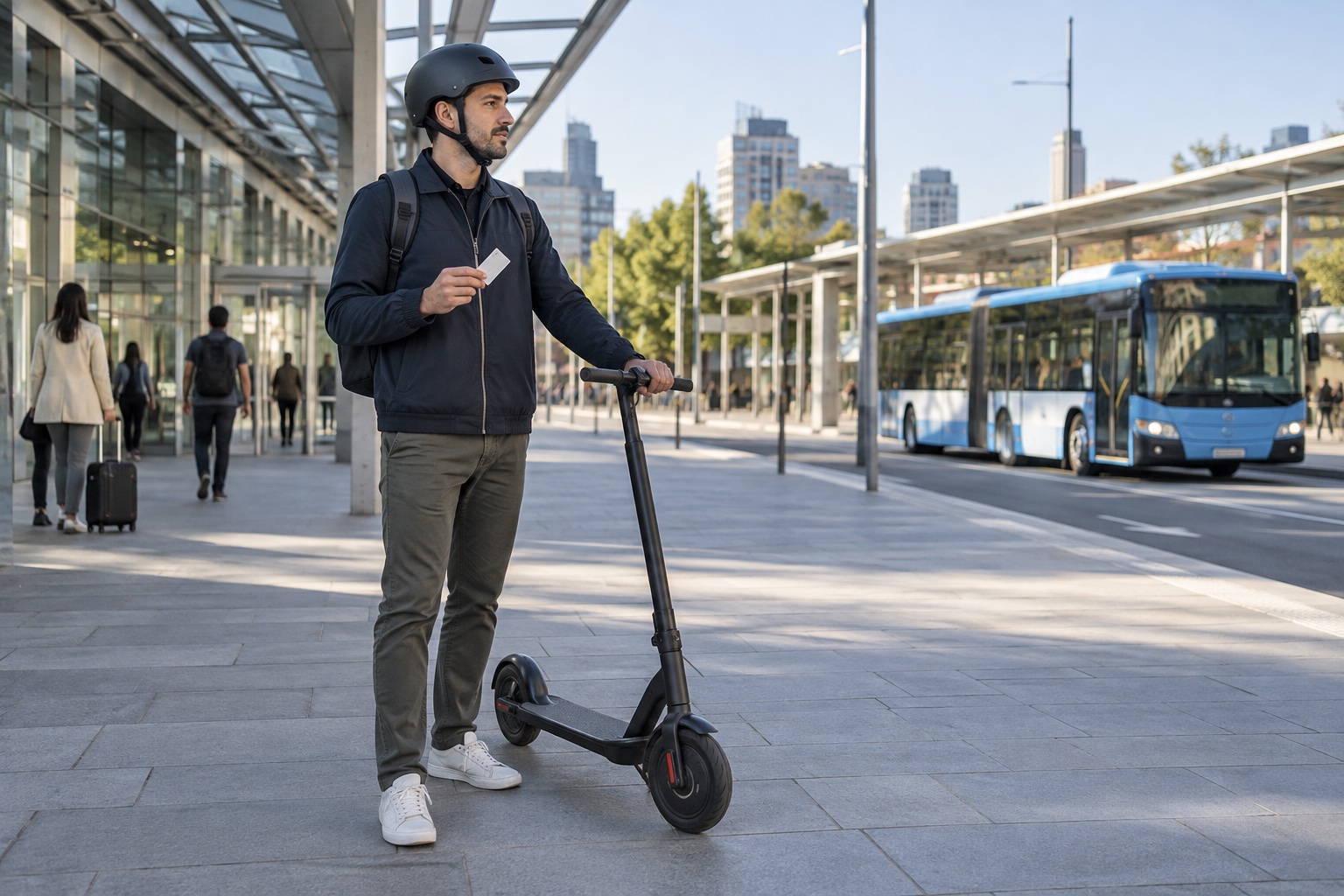

Using the wrong charger can destroy your scooter’s battery and create fire hazards. Many riders assume all chargers work the same way, but this mistake costs hundreds in repairs and puts safety at risk. The right charger protects your investment and keeps you riding safely.
Electric scooter chargers are not universal and require specific voltage, amperage, and connector matches for safe operation. Using an incompatible charger can damage your battery, void your warranty, and create serious safety risks including fire hazards.
But here’s the thing… Most scooter problems start with charging mistakes that could have been avoided.
1. What Makes Electric Scooter Chargers Different?
Electric scooter chargers vary significantly in their technical specifications and design features. Each charger is built to match specific battery requirements and safety standards that protect both the rider and equipment from electrical hazards.
Voltage requirements form the foundation of charger compatibility and represent the most critical specification to match. Most electric scooters operate on 24V, 36V, or 48V systems, with some high-performance models reaching 60V or higher. Using a charger with incorrect voltage can permanently damage your battery cells or create dangerous overheating conditions that lead to thermal runaway.
Higher voltage systems typically provide better acceleration and higher top speeds.
Amperage ratings control how fast your battery charges and directly affect the charging experience. Standard ratings range from 1A to 5A, with higher amperage providing faster charging but potentially reducing battery lifespan if not properly managed by sophisticated battery management systems.
Here’s why it matters… Connector types create physical barriers to using wrong chargers. Manufacturers design unique charging ports to prevent compatibility issues and protect users from electrical hazards that could result from incorrect connections.
| Voltage System | Common Applications | Typical Range | Motor Power | Charging Time |
| 24V | Entry-level scooters | 10-15 miles | 250-350W | 3-4 hours |
| 36V | Mid-range models | 15-25 miles | 350-500W | 4-6 hours |
| 48V | High-performance scooters | 25+ miles | 500-1000W | 6-8 hours |
| 60V | Premium models | 30+ miles | 1000W+ | 8-10 hours |
Brand-specific charging protocols add another layer of complexity to the charging ecosystem. Some manufacturers include smart charging features that communicate between the charger and battery management system through dedicated data pins in the connector.
These protocols monitor temperature, voltage levels, and charging cycles to optimize battery health. Generic chargers often lack these features, leading to suboptimal charging performance.
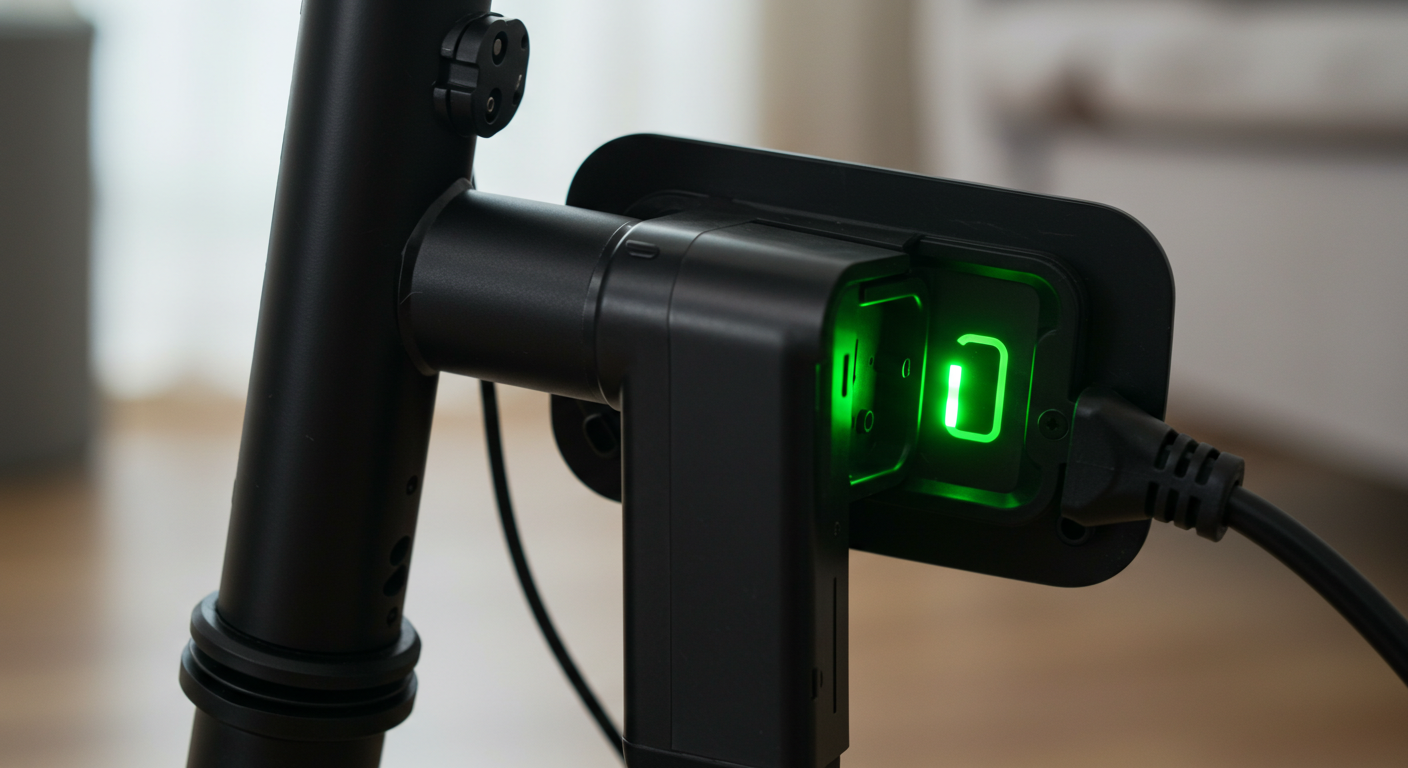
2. How Do Voltage and Amperage Affect Charger Compatibility?
Voltage matching represents the most critical factor in charger compatibility and safety considerations. Your scooter’s battery pack contains multiple lithium-ion cells arranged in series to achieve the target voltage, and each cell has specific voltage limits that must not be exceeded for safe operation.
Using a charger with higher voltage than specified can overcharge individual cells, causing them to swell, overheat, or even explode. Lower voltage chargers simply won’t charge your battery effectively.
The best part? Most quality chargers include voltage regulation circuits that maintain stable output even when input power fluctuates due to grid conditions, temperature changes, or aging components in the charging system.
| Voltage Mismatch | Potential Consequences | Safety Risk Level | Repair Cost | Recovery Time |
| +5V over spec | Cell damage, overheating | High | $300-500 | 1-2 weeks |
| +2V over spec | Reduced battery life | Medium | $200-300 | None |
| -2V under spec | Incomplete charging | Low | None | None |
| -5V under spec | No charging | None | None | None |
Amperage affects charging speed and battery longevity. Higher amperage chargers push more current into your battery, reducing charging time but generating more heat.
Heat is the enemy of lithium-ion batteries. Excessive heat during charging can break down the electrolyte, reduce capacity, and shorten overall battery life.
Most manufacturers recommend specific amperage ranges for optimal charging. Staying within these limits helps maintain battery health while providing reasonable charging times.
| Amperage Rating | Charging Speed | Heat Generation | Battery Impact | Best Use Case |
| 1A | Slow (8-12 hours) | Low | Minimal wear | Overnight charging |
| 2A | Medium (4-6 hours) | Moderate | Normal wear | Daily charging |
| 3A | Fast (2-4 hours) | High | Increased wear | Quick top-ups |
| 5A | Very fast (1-2 hours) | Very high | Significant wear | Emergency only |
3. Which Connector Types Work with Your Scooter?
Charging connectors serve as the physical interface between your charger and scooter, and their design affects both safety and convenience during the charging process. Different manufacturers use various connector designs to ensure compatibility, prevent reverse polarity, and maintain reliable electrical contact under various environmental conditions.
Standard DC barrel connectors are common on entry-level scooters. These round connectors come in different sizes, typically measured by outer diameter and inner diameter.
The simplicity of barrel connectors makes them cost-effective and widely available, but they offer limited protection against incorrect insertion and may wear out over time.
Now, you might be wondering… why manufacturers don’t standardize on one connector type. The answer involves safety considerations, branding strategies, technical requirements, and the desire to control the replacement parts market for ongoing revenue.
| Connector Type | Diameter (mm) | Common Brands | Voltage Range | Durability Rating | Cost |
| DC 5.5×2.1 | 5.5 outer, 2.1 inner | Generic models | 24V-36V | Fair | Low |
| DC 5.5×2.5 | 5.5 outer, 2.5 inner | Razor, some Xiaomi | 24V | Fair | Low |
| XLR 3-pin | Varies | Segway, Ninebot | 36V-48V | Excellent | Medium |
| Proprietary | Custom | Premium brands | All voltages | Good | High |
XLR connectors provide more robust connections and better electrical contact than barrel connectors in demanding applications. These three-pin connectors are borrowed from professional audio equipment and offer superior durability, positive locking mechanisms, and resistance to environmental contamination.
The three-pin design allows for power positive, power negative, and communication or sensing connections that enable advanced charging features. This configuration provides better safety through proper grounding and communication protocols that allow the charger and battery management system to work together.
XLR connectors also feature a locking mechanism that prevents accidental disconnection during charging, which is particularly important for scooters that may be moved or experience vibration while plugged in. The secure connection reduces the risk of arcing and connector damage.
Proprietary connectors give manufacturers control over replacement parts and accessories while enabling custom features that differentiate their products. Brands like Segway and some premium manufacturers use custom designs that only work with their chargers and accessories.
These custom connectors often incorporate additional safety features, such as keying to prevent incorrect insertion, multiple contact points for redundancy, and integrated communication channels for advanced battery management. The downside is limited availability and higher replacement costs.
Magnetic connectors are becoming popular on high-end models due to their convenience and durability advantages. These connectors use strong magnets to align and secure the charging connection, reducing wear on both the connector and charging port while providing excellent electrical contact.
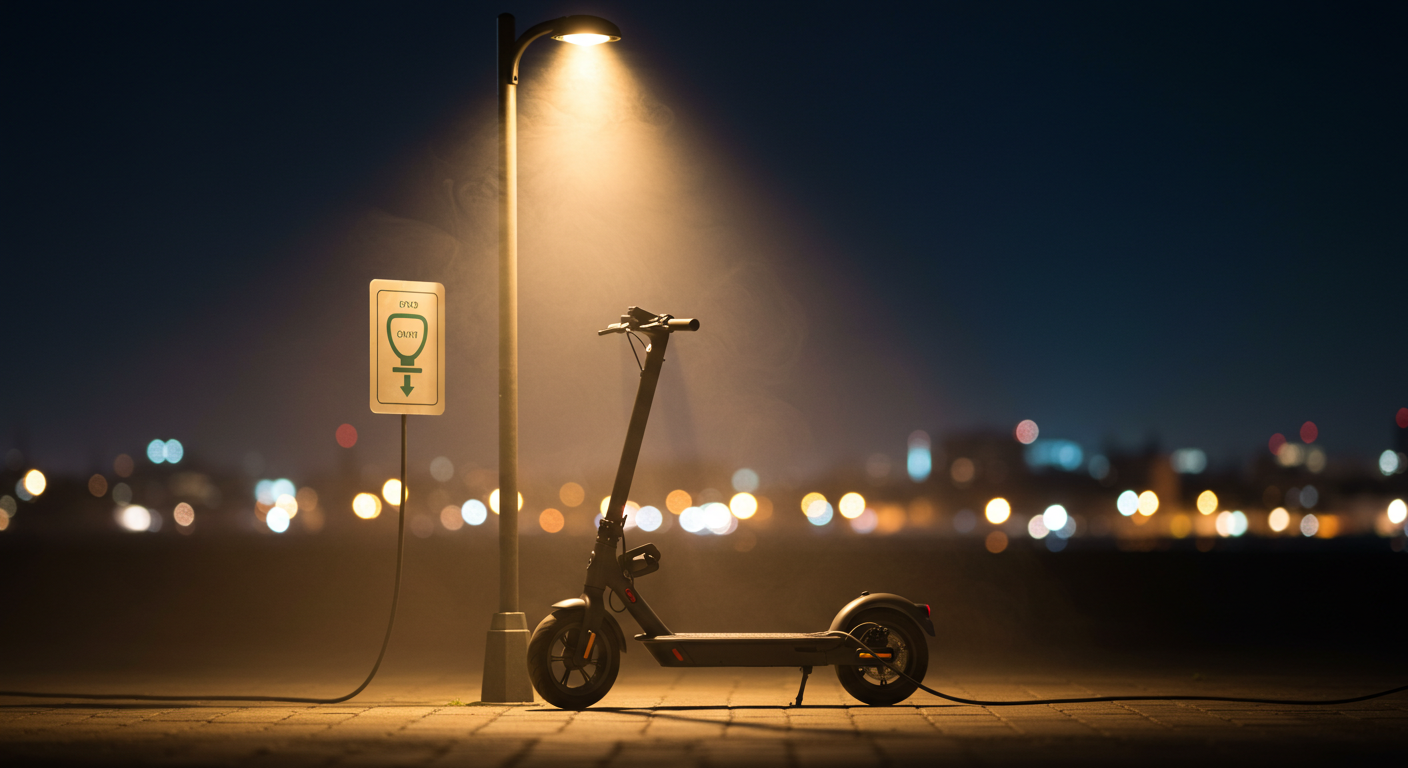
4. Can Universal Chargers Replace Brand-Specific Models?
Universal chargers offer convenience and cost savings for multi-scooter households, repair shops, or riders who frequently travel with different scooter models. These devices typically include multiple connector tips, adjustable voltage settings, and current limiting controls that allow them to work with various scooter brands.
Quality universal chargers can safely charge most electric scooters when properly configured and used within their design parameters. They often include digital displays showing real-time voltage, current, and charging status, providing more information than many original chargers that lack detailed feedback.
The versatility of universal chargers makes them attractive for users with multiple scooters or those who need backup charging options. A single universal charger can potentially replace several brand-specific models, reducing clutter, travel weight, and the need to maintain multiple charging systems.
Let me explain… why universal chargers work for basic charging but may lack advanced features found in original equipment that optimize battery health and safety through sophisticated charging algorithms.
| Feature | Universal Charger | Original Charger | Advantage | Limitation |
| Multiple connectors | Yes | No | Universal | May not fit perfectly |
| Smart charging | Limited | Yes | Original | Reduced optimization |
| Warranty coverage | Varies | Full | Original | Risk of voiding |
| Cost | Lower | Higher | Universal | Quality varies |
| Availability | High | Limited | Universal | Generic features |
Smart charging protocols represent the main limitation of universal chargers when compared to original equipment designed specifically for particular scooter models. Original chargers often communicate with the scooter’s battery management system through dedicated communication pins or wireless protocols.
These communications can include temperature monitoring, individual cell voltage balancing, charge termination signals, and error reporting that helps diagnose charging problems. The battery management system can request specific charging profiles based on battery condition, temperature, usage history, and other factors.
Universal chargers typically provide basic constant current/constant voltage charging without these refinements. While this approach works safely for most batteries, it may not optimize charging efficiency or battery longevity compared to smart charging systems that adapt to specific conditions.
Build quality varies significantly among universal charger manufacturers, ranging from premium units with quality components and safety certifications to budget models that may cut corners on protection circuits and component quality. This variation makes careful selection important for safety and reliability.
| Quality Level | Price Range | Safety Features | Warranty | Reliability |
| Premium | $80-150 | Multiple protections | 1-2 years | High |
| Mid-range | $40-80 | Basic protections | 6-12 months | Medium |
| Budget | $20-40 | Limited protections | 30-90 days | Variable |
| Generic | $10-20 | Minimal protections | None | Poor |
5. What Happens When You Use the Wrong Charger?
Using an incompatible charger can cause immediate damage or create long-term problems that reduce your scooter’s performance and safety.
Overvoltage conditions occur when the charger voltage exceeds battery specifications. This forces excessive current into battery cells, causing them to overheat and potentially catch fire.
Thermal runaway in lithium-ion batteries can lead to fire, explosion, and toxic gas release. Once started, thermal runaway is difficult to stop and can spread to adjacent cells.
This is important because… lithium-ion batteries contain flammable electrolytes and can reach temperatures exceeding 1000°F during thermal runaway, creating fires that are difficult to extinguish with conventional methods and may reignite even after appearing to be out.
| Damage Type | Symptoms | Repair Cost | Prevention | Recovery Time |
| Cell swelling | Reduced range, heat | $200-400 | Correct voltage | 1-2 weeks |
| Thermal runaway | Smoke, fire risk | Total loss | Proper amperage | N/A |
| BMS failure | No charging | $100-200 | Compatible charger | 3-5 days |
| Connector damage | Loose connection | $50-100 | Gentle handling | 1-2 days |
Undervoltage charging creates different but equally problematic issues for battery health and performance. Batteries that don’t reach full charge develop capacity loss over time through a process called voltage depression, though this is less common in modern lithium-ion batteries than in older battery technologies.
Chronic undercharging can also lead to lithium plating, where metallic lithium deposits form on the battery electrodes. These deposits reduce capacity and can create internal short circuits that generate heat and potentially cause thermal runaway even during normal use.
Incorrect amperage affects charging efficiency, battery health, and user convenience in multiple ways. Too much current generates excessive heat and stress on the battery cells, accelerating aging processes and reducing overall lifespan through chemical changes in the battery materials.
Insufficient current may not fully charge the battery within reasonable time frames, leading to incomplete charging cycles that can affect battery calibration and capacity measurement accuracy. This can result in inaccurate range estimates and unexpected power loss during rides.
Battery management system conflicts arise when chargers don’t communicate properly with the scooter’s electronics or provide incompatible charging profiles. This can trigger error codes, prevent charging entirely, or cause the BMS to enter protective modes that limit performance.
| BMS Response | Trigger Condition | User Impact | Resolution Method |
| Charging lockout | Overvoltage detection | Cannot charge | Use correct charger |
| Error codes | Communication failure | Reduced function | Reset or service |
| Protective mode | Thermal limits | Slow charging | Cool down period |
| Capacity reduction | Repeated abuse | Shorter range | Battery replacement |
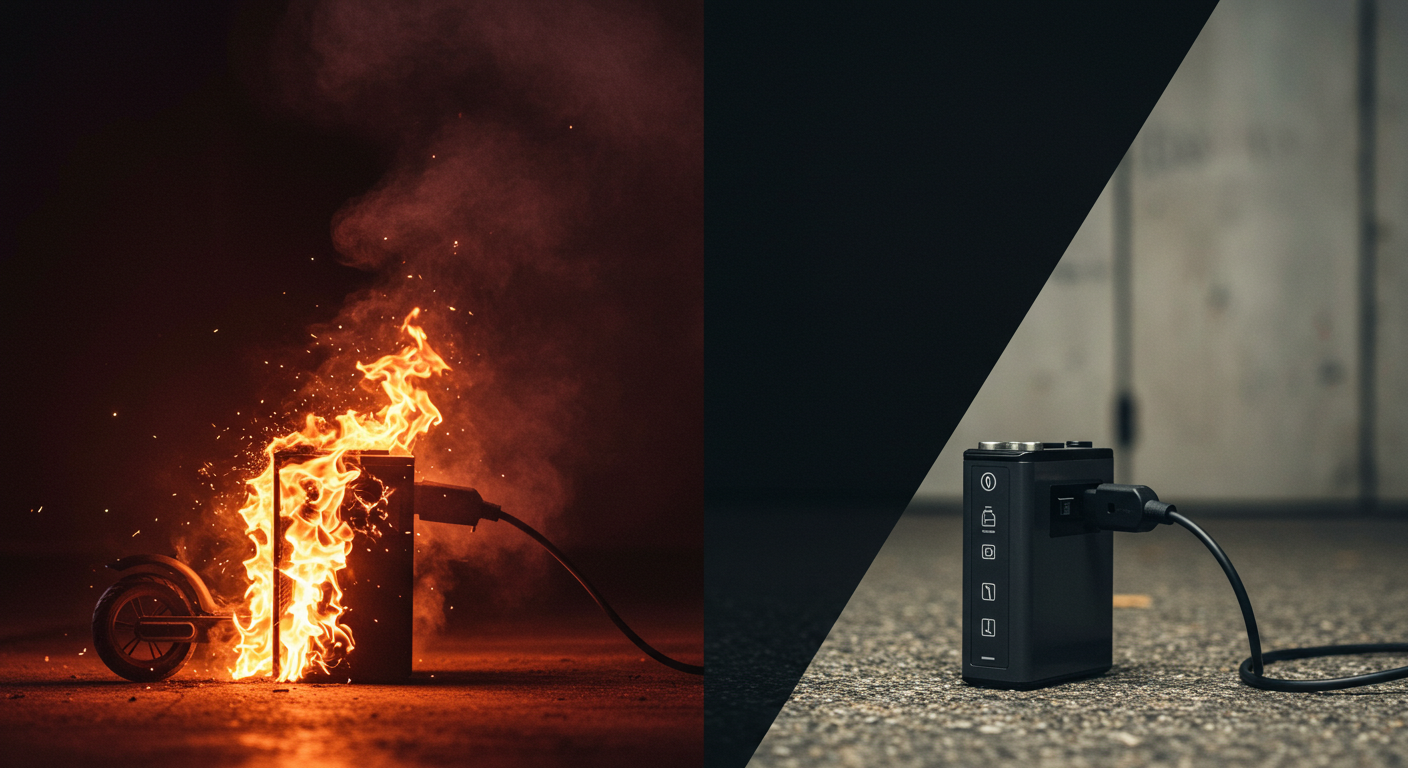
6. How to Choose the Right Replacement Charger?
Selecting a compatible replacement charger requires careful attention to your scooter’s electrical specifications and connector requirements.
Start by checking your scooter’s manual or specification label for voltage, amperage, and connector information. This data is usually printed on a sticker near the charging port or in the user manual.
Here’s the deal… most scooters have specification labels that list exact charging requirements, but these can fade, become damaged, or be removed over time, making alternative information sources necessary for proper charger selection.
| Information Source | Reliability | Accessibility | Completeness | Update Frequency |
| User manual | High | May be lost | Complete | At purchase |
| Specification sticker | High | Always present | Basic | Never |
| Manufacturer website | High | Always available | Complete | Regular |
| Original charger label | High | If available | Exact match | At purchase |
Voltage matching takes priority over all other considerations. Even small voltage differences can cause problems, so look for chargers that exactly match your battery voltage.
Amperage selection affects charging speed and battery longevity. Choose chargers within the manufacturer’s recommended range, typically between 1A and 3A for most scooters.
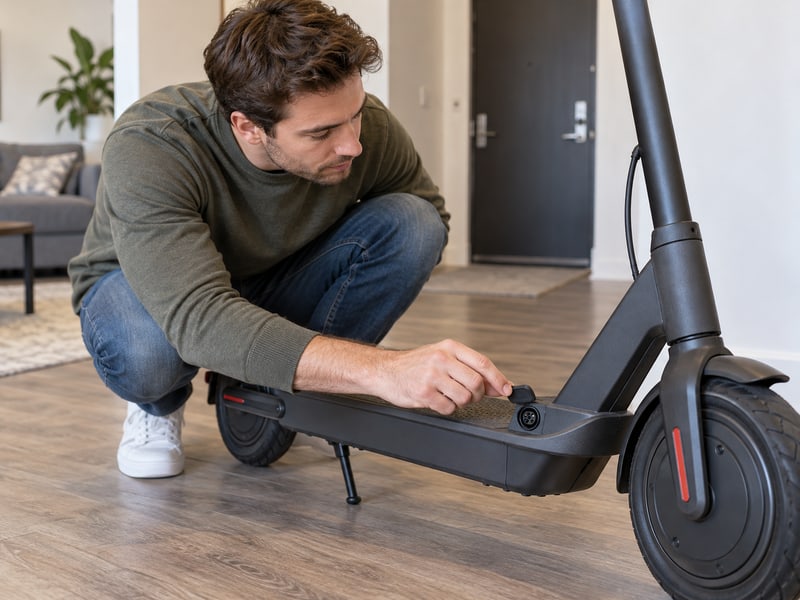
Connector compatibility requires physical inspection of your charging port. Measure the connector diameter or compare with known standards to ensure proper fit.
Quality indicators help identify reliable chargers. Look for UL, CE, or FCC certifications that indicate compliance with safety standards.

7. Are There Any Safe Charging Alternatives?
Alternative charging methods can provide backup power or convenience in specific situations, but they require careful consideration of safety and compatibility.
Portable power stations offer emergency charging capability for electric scooters by providing AC power to run your original charger. These battery packs feature lithium-ion batteries, pure sine wave inverters, and multiple output options.
The capacity of portable power stations ranges from small units that can provide one or two charges to large systems capable of multiple charging cycles.
What does this mean for you? Portable charging solutions extend your range, provide backup power during outages, and enable charging in remote locations where grid power is unavailable, giving you more flexibility in how and where you use your scooter.
| Charging Alternative | Power Output | Portability | Cost Range | Charging Cycles |
| Portable power station | 100-1000W | Medium | $200-800 | 1-5 charges |
| Car inverter | 150-400W | High | $50-150 | 2-3 charges |
| Solar panel kit | 50-200W | Low | $300-1000 | Continuous |
| Public charging station | Varies | Fixed | $2-5 per charge | Unlimited |
Solar charging systems work well for slow charging in sunny conditions and can provide off-grid charging capability. These systems typically require charge controllers to regulate voltage and prevent overcharging.
Car inverters can power your original charger from a vehicle’s 12V electrical system, providing mobile charging capability. Choose inverters with sufficient wattage and pure sine wave output for best results.
Public charging stations are appearing in some cities, offering standardized charging for multiple scooter brands. These stations typically use universal connectors and smart payment systems.
Emergency charging methods should only be used when proper chargers are unavailable. Improvised charging solutions carry significant risks and should be avoided.
Conclusion
Electric scooter chargers are not interchangeable, and using the wrong charger can damage your battery, void your warranty, and create safety hazards. Voltage, amperage, and connector compatibility must all match your scooter’s specifications for safe operation. Universal chargers can work as alternatives but may lack smart charging features of original equipment. When choosing a replacement charger, prioritize exact specification matching and quality certifications over cost savings.
For reliable, high-performance electric scooters with proper charging systems, Dynamic Scooter offers Canadian-engineered models with comprehensive warranty coverage and genuine replacement parts. Visit our website to find the perfect scooter for your commuting needs and access certified charging accessories.

FAQ
Q1: Can I use a laptop charger for my electric scooter? No, laptop chargers typically have different voltage and connector specifications than electric scooters. Using an incompatible charger can damage your battery or create safety hazards.
Q2: How do I know if a charger is compatible with my scooter? Check your scooter’s manual for voltage, amperage, and connector specifications. Match these exactly with any replacement charger, and look for the same brand or certified compatible models.
Q3: Is it safe to use a higher amperage charger? Using a charger with higher amperage than recommended can charge faster but may reduce battery life. Stick to the manufacturer’s specifications for optimal safety and performance.
Q4: What should I do if my original charger breaks? Contact your scooter manufacturer first for an official replacement. If unavailable, look for certified compatible chargers that match your exact specifications from reputable retailers.
Q5: Can I charge my scooter with a car charger adapter? Most car charger adapters don’t provide the correct voltage or amperage for electric scooters. Only use adapters specifically designed and certified for your scooter model.