...

December 18, 2025

Can You Deliver with an Electric Scooter? Pros, Cons & What You’ll Need

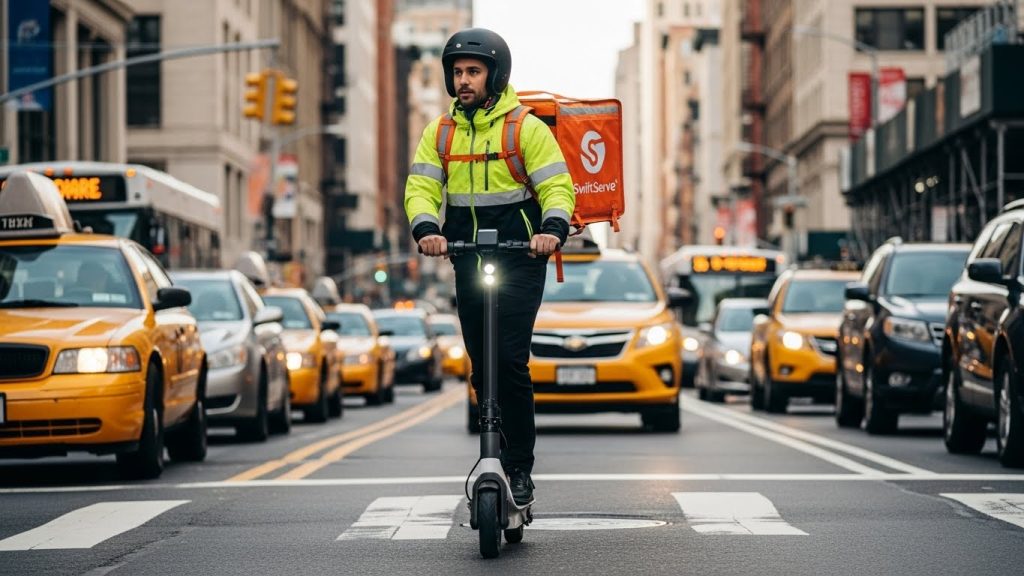
Looking for a flexible way to earn money while staying active? Delivery work offers excellent income potential, but you need reliable transportation. Many people wonder if electric scooters work for delivery services like DoorDash. The answer is yes, and it’s becoming increasingly popular. Electric scooters offer speed, efficiency, and low operating costs for delivery work. This guide explains how to use a scooter for delivery, what requirements you need to meet, and how to maximize earnings. You’ll learn the practical considerations, income potential, and best practices for scooter-based delivery work. Electric scooters are excellent for delivery work, offering speed and affordability that rival bicycles and beat cars. Dynamic Scooter models provide reliable performance for delivery drivers seeking efficient transportation. With proper planning, scooter deliveries generate strong income while keeping costs minimal. Most delivery platforms accept scooters as valid delivery vehicles. Ready to start your delivery business? Here’s the deal… 1. Can You Actually Use an Electric Scooter for DoorDash? Yes, you can absolutely use an electric scooter for DoorDash deliveries. DoorDash accepts multiple vehicle types including scooters, bikes, and cars. The platform doesn’t require a specific vehicle type. You just need reliable transportation that gets you to restaurants and customers on time. Electric scooters meet these requirements perfectly. Many successful DoorDash drivers use scooters as their primary vehicle. DoorDash’s requirements are straightforward. You need to be at least 18 years old and have a valid ID. You need a smartphone to access the DoorDash app. You need reliable transportation, which includes electric scooters. You need to pass a background check. You need a valid phone number and email. These requirements are the same regardless of vehicle type. This is important because scooters meet all these requirements without additional hassles. The platform doesn’t discriminate against scooters. You’ll receive the same delivery offers as car or bike drivers. Your acceptance rate and ratings determine your success, not your vehicle type. A reliable scooter driver gets consistent work. The key is completing deliveries quickly and maintaining high customer satisfaction. Insurance considerations are important. DoorDash doesn’t provide vehicle insurance. You’re responsible for your own coverage. Some homeowner’s or renter’s insurance policies cover scooters. Specialized scooter insurance is available. Delivery-specific insurance also exists. Check your coverage before starting deliveries. The best part? Insurance costs are minimal compared to car insurance. Earnings potential is strong with scooters. You keep most of your delivery fees. Operating costs are low because electricity is cheap. No gas, no parking fees, no expensive maintenance. Your profit margin is higher than car drivers. Many scooter drivers earn $15-25 per hour after expenses. Legal considerations vary by location. Some cities restrict scooter use on sidewalks. Check local laws before starting. Most cities allow scooters on bike lanes and streets. Delivery work doesn’t change these regulations. Follow local laws and you’re good to go. Requirement Car Drivers Bike Drivers Scooter Drivers Age 18+ 18+ 18+ Valid ID Required Required Required Smartphone Required Required Required Background Check Required Required Required Insurance Recommended Optional Optional Vehicle Type Car Bike Scooter 2. What Are the Advantages of Scooter Delivery Work? Electric scooters offer unique advantages for delivery drivers. Understanding these benefits helps you see why scooters are excellent for this work. Speed is a major advantage. Scooters travel faster than bicycles, typically 15-25 mph. This speed lets you complete more deliveries per hour. More deliveries mean higher hourly earnings. In urban areas, scooters often beat cars because they avoid traffic. You can navigate through congested streets easily. Here’s why it matters… Speed directly translates to more money in your pocket. Operating costs are incredibly low. Electricity costs just pennies per charge. No gas purchases, no oil changes, no expensive repairs. A scooter’s maintenance is minimal. Tires might need replacement eventually, but this is inexpensive. Your profit margin is significantly higher than car drivers. After expenses, scooter drivers keep more of their earnings. Parking is effortless. Scooters are small and portable. You can park almost anywhere without paying. No parking meters, no parking lots, no parking tickets. This saves time and money. You spend more time delivering and less time searching for parking. Car drivers waste significant time and money on parking. Physical activity keeps you healthy. Scooter delivery work is more active than sitting in a car. You’re moving, balancing, and engaging your core. This activity burns calories and improves fitness. Many delivery drivers appreciate the health benefits. You earn money while staying active. Flexibility is excellent. You set your own schedule. Work as much or as little as you want. Start and stop whenever you choose. This flexibility is perfect for students, side hustlers, or full-time workers. No boss, no fixed hours, just pure flexibility. Environmental benefits feel good. You’re not burning gas or creating emissions. Electric scooters are eco-friendly transportation. Many customers appreciate environmentally conscious delivery drivers. This can lead to better ratings and tips. Advantage Scooter Bike Car Speed High Medium High Operating Cost Very Low Very Low High Parking Easy Easy Hard Physical Activity Medium High None Flexibility High High High Environmental Excellent Excellent Poor 3. What Challenges Do Scooter Delivery Drivers Face? While scooters are excellent for delivery, they come with challenges. Understanding these obstacles helps you prepare and succeed. Weather is a significant challenge. Rain reduces traction and visibility. Snow and ice make scooters dangerous. Extreme heat affects battery performance. Cold weather reduces range. You might not be able to work during bad weather. This limits your earning potential on rainy or snowy days. The best part? You can plan around weather and work on good days. Battery range limitations affect delivery coverage. Most scooters travel 15-25 miles per charge. In a busy area, this is sufficient. In sprawling cities, range might be limiting. You need to plan routes carefully. Charging during your shift might be necessary. The Dynamic Scooter Model B offers 20 km range, which covers most urban delivery zones. Load capacity is a consideration. Scooters have weight limits, typically 220 lbs including the rider. Large or

Can You Deliver with an Electric Scooter? Pros, Cons & What You’ll Need Read More »
How to Secure Your Electric Scooter? Locks, GPS & Best Practices

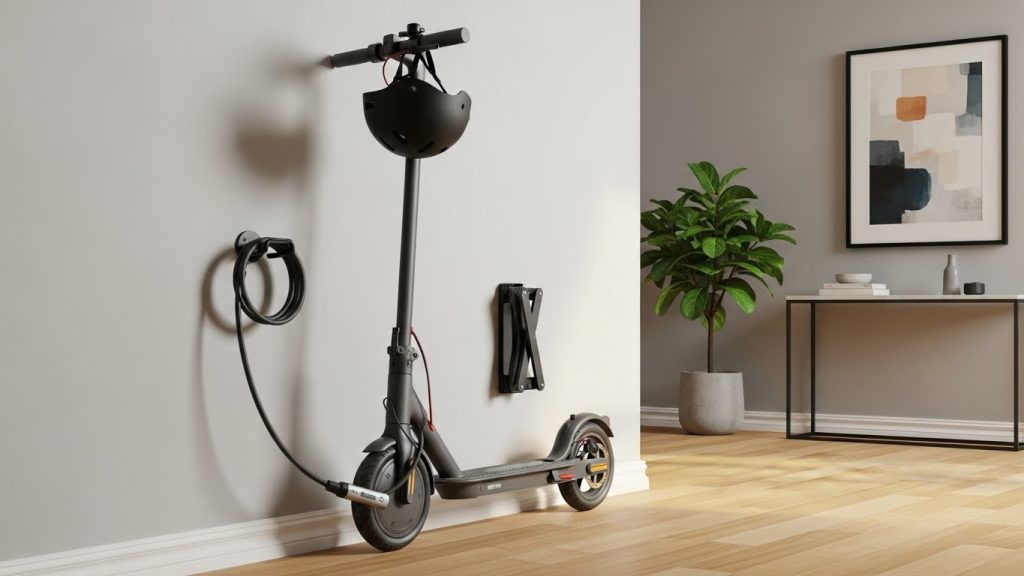
Leaving your electric scooter unattended is risky, and theft is a real concern in urban areas. A stolen scooter means losing your investment and your convenient transportation method. Securing your scooter properly protects your valuable asset and gives you peace of mind. This guide covers the best security practices, lock options, and strategies to prevent theft. You’ll learn how to choose the right locks, where to secure your scooter, and what additional measures keep it safe. By following these recommendations, you can confidently leave your scooter anywhere without worry. Protecting your electric scooter requires multiple security layers, including quality locks, smart storage, and theft prevention tactics. Dynamic Scooter owners benefit from durable construction that resists tampering. Combining a U-lock with a cable lock, parking in visible locations, and using GPS tracking creates comprehensive protection against theft. Ready to learn the best security strategies? Here’s the deal… 1. Why Is Scooter Security So Important? Scooter theft is a growing problem in cities worldwide. Thieves target scooters because they’re portable, valuable, and often left unattended. A stolen scooter costs money to replace and disrupts your transportation routine. Understanding the theft problem helps you take security seriously and implement proper protections. Scooters are attractive theft targets for several reasons. They’re small and light, making them easy to carry away. They have high resale value, especially quality models. Many owners leave scooters unattended in public places. Thieves can quickly remove a scooter and disappear. This is important because recognizing these vulnerabilities helps you protect against them. The financial impact of theft is significant. A quality scooter costs $300-500 or more. Replacing a stolen scooter means spending that money again. If you have multiple scooters or operate a scooter business, theft losses multiply quickly. Insurance might cover theft, but deductibles and claim processes are inconvenient. Beyond financial loss, theft disrupts your life. Losing your scooter means losing your primary transportation method. You might miss appointments or fall back on expensive alternatives like taxis or ride-sharing. The inconvenience extends beyond just the money. Theft also affects your sense of security. Knowing your scooter might be stolen creates anxiety. You might avoid leaving it anywhere, limiting the scooter’s usefulness. Proper security eliminates this worry and lets you use your scooter confidently. Community impact matters too. High theft rates discourage scooter adoption. When people see scooters being stolen, they’re less likely to buy one. Reducing theft helps the entire scooter community thrive. The best part? Securing your scooter contributes to a safer environment for everyone. Theft Risk Factor Impact Level Prevention Method Portability High Use heavy-duty locks High Resale Value High Register and mark your scooter Public Parking High Park in visible, busy areas Quick Theft Time High Use multiple locks Low Detection Medium Use GPS tracking 2. What Are the Best Lock Types for Electric Scooters? Choosing the right lock is fundamental to scooter security. Different lock types offer varying levels of protection. Understanding each type helps you select the best option for your situation. U-locks are the gold standard for scooter security. They’re made from hardened steel and resist cutting and prying. A quality U-lock can withstand bolt cutters and angle grinders. They’re heavy and durable, designed to last years. U-locks typically cost $30-80 depending on quality. A good U-lock is your most important security investment. Here’s why it matters… A U-lock alone deters most casual thieves who want quick, easy targets. Cable locks are lighter and more flexible than U-locks. They wrap around your scooter and a fixed object. Cable locks are easy to carry and use. However, they’re less secure than U-locks because bolt cutters can cut through them relatively easily. Cable locks work best combined with U-locks for layered security. They cost $10-30 and are good supplementary protection. Chain locks offer moderate security. Heavy-duty chains with padlocks resist cutting better than cables. They’re flexible and work well for securing multiple scooters together. Chain locks are heavier than cables but lighter than U-locks. They cost $20-50 and provide solid secondary protection. Folding locks are portable U-locks made from connected segments. They’re lighter than traditional U-locks and easier to carry. Folding locks offer similar security to U-locks when locked properly. They cost $40-100 and are excellent for commuters who value portability. Smart locks with alarms add a technology layer. Some locks emit loud alarms when someone tries to cut them. Others connect to your phone and alert you of tampering. Smart locks cost $50-150 but provide peace of mind and additional deterrence. Combination locks are convenient but less secure. They’re vulnerable to shoulder surfing and brute force attacks. Keyed locks are more secure but require carrying keys. Avoid combination locks for primary security; use them only for secondary protection. Lock Type Security Level Weight Cost Best Use U-Lock Excellent Heavy $30-80 Primary lock Cable Lock Fair Light $10-30 Secondary lock Chain Lock Good Medium $20-50 Secondary lock Folding Lock Excellent Medium $40-100 Primary lock, portable Smart Lock Excellent Medium $50-150 Primary lock, tech-savvy 3. How Should You Lock Your Scooter to a Fixed Object? Proper locking technique is as important as the lock itself. A quality lock used incorrectly provides little protection. Learning the right technique ensures your scooter stays secure. Always lock your scooter to a fixed, immovable object. Good options include bike racks, metal railings, poles, and sturdy fences. The object must be impossible to lift or remove. Avoid locking to objects that can be cut or broken. Check that the object is actually fixed before locking your scooter to it. Lock through the frame and wheel, not just the wheel. Many thieves simply lift the scooter and leave the wheel behind. Locking through the frame prevents this. Pass the lock through the frame triangle and around a wheel if possible. This makes the scooter impossible to carry away. Use a U-lock as your primary lock. Thread it through the frame and around the fixed object. Make sure the lock is tight with minimal space. Thieves use this space to insert tools.

How to Secure Your Electric Scooter? Locks, GPS & Best Practices Read More »

How Much Does Electric Scooter Charging Cost? Real Cost Breakdown & Savings Tips

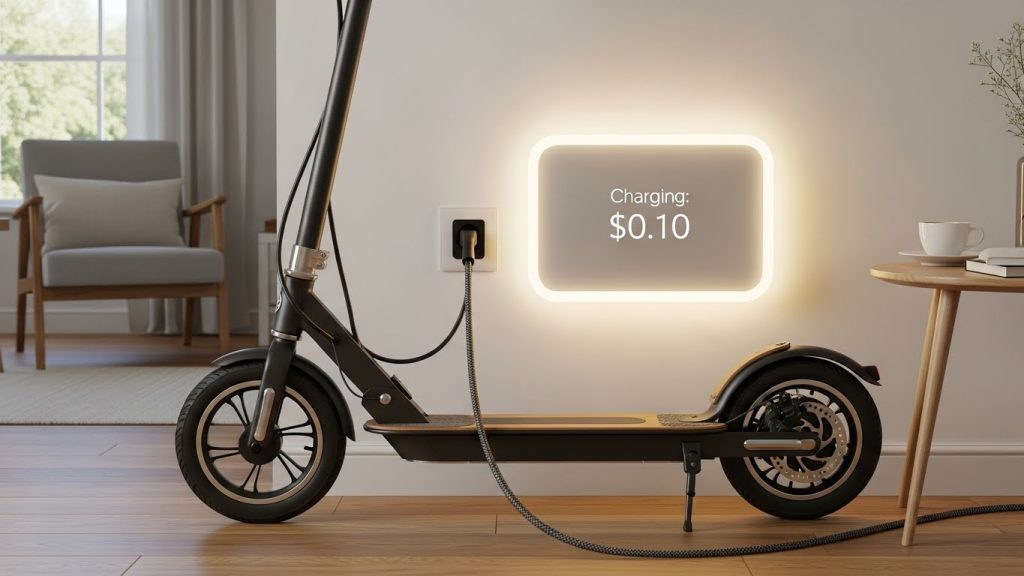
Worried that charging an electric scooter will drain your wallet? Many people assume electric scooters are expensive to operate, but the reality is far different. Charging costs are remarkably low compared to other transportation methods. Understanding the actual expenses helps you make an informed decision about switching to a scooter. This guide breaks down charging costs, explains the factors that affect them, and shows you how to minimize expenses. You’ll discover that electric scooters are one of the most affordable ways to commute in any city. Electric scooter charging costs just pennies per charge, making them incredibly economical. Dynamic Scooter models use efficient lithium-ion batteries that charge quickly and cost very little to operate. Most riders spend between $2 and $5 monthly on electricity. This is significantly less than gas, public transit, or car ownership. Ready to learn how cheap scooter charging really is? Here’s the deal… 1. What Is the Basic Cost to Charge an Electric Scooter? The basic cost of charging an electric scooter is surprisingly low. Most scooters cost between $0.10 and $0.50 per full charge. This depends on your local electricity rates and the scooter’s battery capacity. To calculate your specific cost, multiply your local electricity rate per kilowatt-hour by the scooter’s battery capacity in kilowatt-hours. The math is simple and the result is always affordable. Let’s look at a concrete example. The Dynamic Scooter Model B has a battery capacity of approximately 0.36 kWh. If your electricity costs $0.12 per kWh, a full charge costs just $0.04. Even in expensive areas where electricity costs $0.20 per kWh, a full charge costs only $0.07. These are minimal expenses that barely register on your monthly utility bill. This is important because understanding these numbers shows you how economical scooter ownership truly is. Different scooter models have different battery capacities, which affects charging costs. Smaller scooters with 0.2 kWh batteries cost about $0.02 to $0.04 per charge. Larger scooters with 0.5 kWh batteries cost around $0.06 to $0.10 per charge. The Dynamic Scooter falls in the middle range, offering excellent value. Even the most expensive scooters to charge cost less than a cup of coffee per full charge. Regional electricity rates vary significantly across the country. California has some of the highest rates at around $0.18 per kWh. Louisiana has some of the lowest at around $0.09 per kWh. Most states fall between $0.11 and $0.15 per kWh. Regardless of your location, scooter charging remains incredibly affordable. Even in high-cost areas, monthly charging expenses are minimal. Time of day affects charging costs in some areas. Some utility companies offer lower rates during off-peak hours, typically late evening or early morning. Charging your scooter during these times can reduce costs by 20-30%. If your utility offers time-of-use rates, charging overnight is your best strategy. This simple habit can save a few dollars annually. Scooter Type Battery Capacity Cost at $0.12/kWh Cost at $0.18/kWh Cost at $0.20/kWh Small Scooter 0.2 kWh $0.024 $0.036 $0.040 Dynamic Scooter Model B 0.36 kWh $0.043 $0.065 $0.072 Medium Scooter 0.4 kWh $0.048 $0.072 $0.080 Large Scooter 0.5 kWh $0.060 $0.090 $0.100 2. How Do Daily Charging Costs Compare to Other Transportation? Comparing scooter charging costs to other transportation methods reveals the true value. Most people spend far more on cars, public transit, or ride-sharing services. Understanding these comparisons helps you appreciate how affordable scooters really are. A car costs significantly more to operate. Gasoline alone costs $3-5 per gallon, and most cars use one gallon every 20-30 miles. A typical 10-mile commute costs $0.50-1.50 in gas alone. Add insurance, maintenance, parking, and registration, and daily car costs easily exceed $15-20. Here’s why it matters… A scooter costs just $0.05-0.10 per charge, which covers 15-20 miles of riding. This is 100-200 times cheaper than driving. Public transit passes vary by city but typically cost $2-5 per day or $50-150 monthly. A scooter costs just $2-5 monthly to charge. Even if you ride every single day, your charging costs remain minimal. Over a year, public transit costs $600-1800 while scooter charging costs $24-60. The savings are substantial. Ride-sharing services like Uber or Lyft cost $5-15 per trip. A 3-mile trip typically costs $8-12. An electric scooter covers the same distance for just $0.02-0.05. Even occasional ride-sharing users spend more in a month than scooter owners spend on charging in a year. Bicycles seem cheap initially but require maintenance. Tires, chains, brakes, and repairs cost $50-100 annually. Electric scooters have similar maintenance costs but also require charging. However, the total cost remains far below cars or public transit. Motorcycles and mopeds require gasoline and maintenance. A moped gets better mileage than a car but still costs $0.20-0.40 per mile. A scooter costs just $0.003-0.005 per mile. Over 1000 miles annually, the difference is substantial. Transportation Type Daily Cost Monthly Cost Annual Cost Car $15-20 $300-400 $3600-4800 Public Transit $2-5 $50-150 $600-1800 Ride-sharing $8-15 $160-300 $1920-3600 Electric Scooter $0.05-0.10 $2-5 $24-60 Bicycle $0-0.20 $0-5 $50-100 3. What Factors Affect Electric Scooter Charging Costs? Several factors influence how much you pay to charge your scooter. Understanding these factors helps you minimize costs and maximize efficiency. Some factors are within your control, while others depend on your location or equipment. Battery capacity is the primary factor. Larger batteries hold more energy and cost more to charge. A 0.2 kWh battery costs half as much to charge as a 0.4 kWh battery. However, larger batteries provide longer range, which can reduce the number of charges needed. The Dynamic Scooter Model B balances capacity and cost effectively. Electricity rates vary by location and time. Urban areas often have higher rates than rural areas. Peak hours typically cost more than off-peak hours. Your utility company determines these rates, which you can find on your monthly bill. Charging during off-peak hours saves money if your utility offers time-of-use pricing. Charger efficiency affects costs indirectly. A high-quality charger converts electricity efficiently, wasting minimal energy as heat. Cheap chargers waste 10-20% of energy. Using a

How Much Does Electric Scooter Charging Cost? Real Cost Breakdown & Savings Tips Read More »

Shopping Cart
Scroll to Top