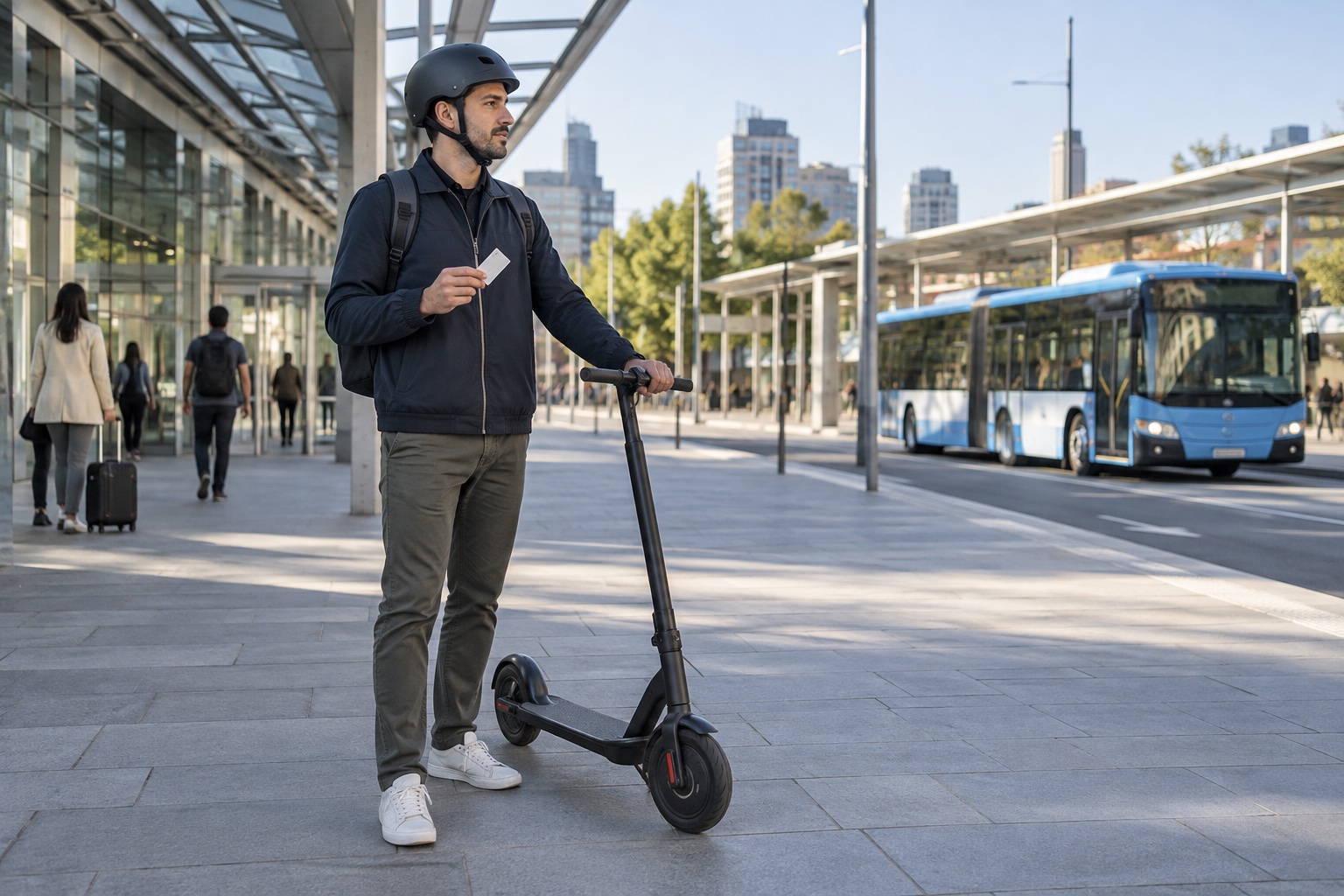

Worried that charging an electric scooter will drain your wallet? Many people assume electric scooters are expensive to operate, but the reality is far different. Charging costs are remarkably low compared to other transportation methods. Understanding the actual expenses helps you make an informed decision about switching to a scooter. This guide breaks down charging costs, explains the factors that affect them, and shows you how to minimize expenses. You’ll discover that electric scooters are one of the most affordable ways to commute in any city.
Electric scooter charging costs just pennies per charge, making them incredibly economical. Dynamic Scooter models use efficient lithium-ion batteries that charge quickly and cost very little to operate. Most riders spend between $2 and $5 monthly on electricity. This is significantly less than gas, public transit, or car ownership.
Ready to learn how cheap scooter charging really is? Here’s the deal…
1. What Is the Basic Cost to Charge an Electric Scooter?
The basic cost of charging an electric scooter is surprisingly low. Most scooters cost between $0.10 and $0.50 per full charge. This depends on your local electricity rates and the scooter’s battery capacity. To calculate your specific cost, multiply your local electricity rate per kilowatt-hour by the scooter’s battery capacity in kilowatt-hours. The math is simple and the result is always affordable.
Let’s look at a concrete example. The Dynamic Scooter Model B has a battery capacity of approximately 0.36 kWh. If your electricity costs $0.12 per kWh, a full charge costs just $0.04. Even in expensive areas where electricity costs $0.20 per kWh, a full charge costs only $0.07. These are minimal expenses that barely register on your monthly utility bill. This is important because understanding these numbers shows you how economical scooter ownership truly is.
Different scooter models have different battery capacities, which affects charging costs. Smaller scooters with 0.2 kWh batteries cost about $0.02 to $0.04 per charge. Larger scooters with 0.5 kWh batteries cost around $0.06 to $0.10 per charge. The Dynamic Scooter falls in the middle range, offering excellent value. Even the most expensive scooters to charge cost less than a cup of coffee per full charge.
Regional electricity rates vary significantly across the country. California has some of the highest rates at around $0.18 per kWh. Louisiana has some of the lowest at around $0.09 per kWh. Most states fall between $0.11 and $0.15 per kWh. Regardless of your location, scooter charging remains incredibly affordable. Even in high-cost areas, monthly charging expenses are minimal.
Time of day affects charging costs in some areas. Some utility companies offer lower rates during off-peak hours, typically late evening or early morning. Charging your scooter during these times can reduce costs by 20-30%. If your utility offers time-of-use rates, charging overnight is your best strategy. This simple habit can save a few dollars annually.
| Scooter Type | Battery Capacity | Cost at $0.12/kWh | Cost at $0.18/kWh | Cost at $0.20/kWh |
| Small Scooter | 0.2 kWh | $0.024 | $0.036 | $0.040 |
| Dynamic Scooter Model B | 0.36 kWh | $0.043 | $0.065 | $0.072 |
| Medium Scooter | 0.4 kWh | $0.048 | $0.072 | $0.080 |
| Large Scooter | 0.5 kWh | $0.060 | $0.090 | $0.100 |

2. How Do Daily Charging Costs Compare to Other Transportation?
Comparing scooter charging costs to other transportation methods reveals the true value. Most people spend far more on cars, public transit, or ride-sharing services. Understanding these comparisons helps you appreciate how affordable scooters really are.
A car costs significantly more to operate. Gasoline alone costs $3-5 per gallon, and most cars use one gallon every 20-30 miles. A typical 10-mile commute costs $0.50-1.50 in gas alone. Add insurance, maintenance, parking, and registration, and daily car costs easily exceed $15-20. Here’s why it matters… A scooter costs just $0.05-0.10 per charge, which covers 15-20 miles of riding. This is 100-200 times cheaper than driving.
Public transit passes vary by city but typically cost $2-5 per day or $50-150 monthly. A scooter costs just $2-5 monthly to charge. Even if you ride every single day, your charging costs remain minimal. Over a year, public transit costs $600-1800 while scooter charging costs $24-60. The savings are substantial.
Ride-sharing services like Uber or Lyft cost $5-15 per trip. A 3-mile trip typically costs $8-12. An electric scooter covers the same distance for just $0.02-0.05. Even occasional ride-sharing users spend more in a month than scooter owners spend on charging in a year.
Bicycles seem cheap initially but require maintenance. Tires, chains, brakes, and repairs cost $50-100 annually. Electric scooters have similar maintenance costs but also require charging. However, the total cost remains far below cars or public transit.
Motorcycles and mopeds require gasoline and maintenance. A moped gets better mileage than a car but still costs $0.20-0.40 per mile. A scooter costs just $0.003-0.005 per mile. Over 1000 miles annually, the difference is substantial.
| Transportation Type | Daily Cost | Monthly Cost | Annual Cost |
| Car | $15-20 | $300-400 | $3600-4800 |
| Public Transit | $2-5 | $50-150 | $600-1800 |
| Ride-sharing | $8-15 | $160-300 | $1920-3600 |
| Electric Scooter | $0.05-0.10 | $2-5 | $24-60 |
| Bicycle | $0-0.20 | $0-5 | $50-100 |
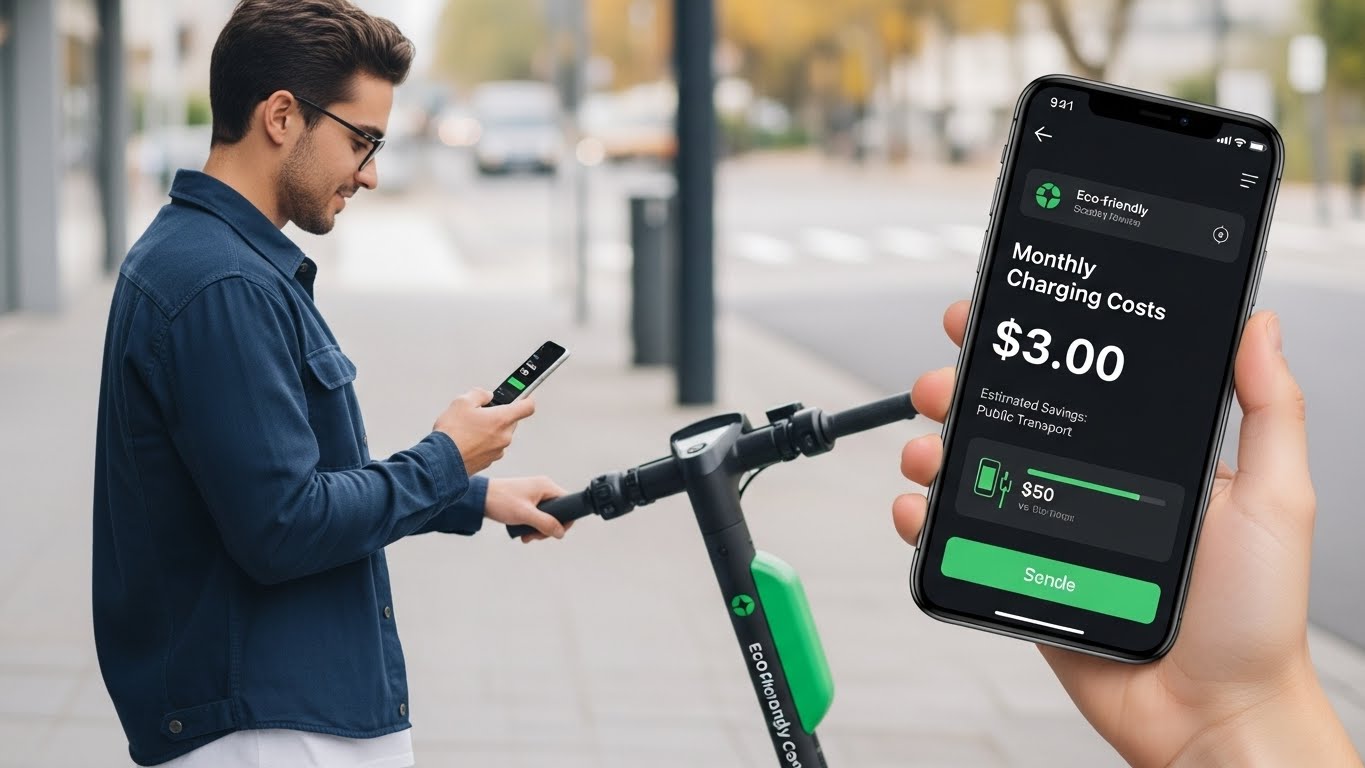
3. What Factors Affect Electric Scooter Charging Costs?
Several factors influence how much you pay to charge your scooter. Understanding these factors helps you minimize costs and maximize efficiency. Some factors are within your control, while others depend on your location or equipment.
Battery capacity is the primary factor. Larger batteries hold more energy and cost more to charge. A 0.2 kWh battery costs half as much to charge as a 0.4 kWh battery. However, larger batteries provide longer range, which can reduce the number of charges needed. The Dynamic Scooter Model B balances capacity and cost effectively.
Electricity rates vary by location and time. Urban areas often have higher rates than rural areas. Peak hours typically cost more than off-peak hours. Your utility company determines these rates, which you can find on your monthly bill. Charging during off-peak hours saves money if your utility offers time-of-use pricing.
Charger efficiency affects costs indirectly. A high-quality charger converts electricity efficiently, wasting minimal energy as heat. Cheap chargers waste 10-20% of energy. Using a quality charger reduces your effective charging cost. The best part? Quality chargers also last longer and protect your battery.
Battery age and condition influence charging efficiency. New batteries charge efficiently. As batteries age, they require more energy to reach full capacity. A five-year-old battery might cost 20-30% more to charge than a new one. Proper maintenance extends battery life and keeps costs low.
Charging speed affects efficiency slightly. Fast charging generates more heat and wastes slightly more energy. Slow overnight charging is most efficient. However, the difference is small, typically just a few cents per charge. Convenience often outweighs the minimal cost difference.
Weather conditions impact battery performance. Cold weather reduces battery efficiency, requiring more charging energy. Hot weather can also reduce efficiency. Storing your scooter in a temperature-controlled location maximizes battery efficiency and minimizes charging costs.
| Factor | Impact on Cost | Your Control | Optimization Strategy |
| Battery Size | High | Limited | Choose appropriate capacity |
| Electricity Rate | High | None | Charge during off-peak hours |
| Charger Quality | Medium | Yes | Use quality chargers |
| Battery Age | Medium | Yes | Maintain battery properly |
| Charging Speed | Low | Yes | Use slow charging when possible |
| Weather | Low | Partial | Store in controlled location |
4. How Much Does It Cost to Charge Monthly and Annually?
Calculating monthly and annual charging costs helps you budget and understand the true cost of ownership. Most riders are surprised by how little they actually spend on electricity for their scooters.
For a typical commuter riding 10 miles daily, a scooter needs one full charge every two days. At $0.05 per charge, that’s $0.025 daily or about $0.75 monthly. Over a year, charging costs just $9. Even if you ride more frequently, say 20 miles daily requiring daily charges, annual costs reach only $18-20. These numbers are almost negligible.
The Dynamic Scooter Model B costs approximately $1.50 monthly to charge with average US electricity rates. Over a year, that’s just $18. Compare this to a car owner spending $150-200 monthly on gas alone. The savings are dramatic and immediate.
Occasional riders spend even less. Someone who rides twice weekly spends just $0.30-0.50 monthly on charging. Even this minimal cost is offset by not using other transportation methods. A few scooter rides replace several bus trips or ride-sharing journeys.
Heavy users who ride daily might spend $5-10 monthly. This includes riders using scooters as their primary transportation. Even at this level, annual costs are just $60-120. No other transportation method comes close to this affordability.
Business owners who operate scooter fleets benefit from bulk electricity rates. Commercial electricity costs less per kWh than residential rates. Fleet operators might charge scooters for just $0.02-0.03 per charge. This makes scooter sharing services extremely profitable.
| Usage Pattern | Daily Cost | Monthly Cost | Annual Cost |
| Light (2x/week) | $0.01 | $0.30 | $3.60 |
| Moderate (5x/week) | $0.025 | $0.75 | $9.00 |
| Regular (Daily) | $0.05 | $1.50 | $18.00 |
| Heavy (2x Daily) | $0.10 | $3.00 | $36.00 |
| Fleet (Commercial) | $0.02 | $0.60 | $7.20 |

5. What Are Hidden Costs Beyond Electricity?
While charging costs are minimal, other ownership costs exist. Understanding the complete picture helps you make informed financial decisions about scooter ownership.
Battery replacement is the largest potential cost. Most lithium-ion batteries last 3-5 years with proper care. Replacement batteries cost $100-300 depending on capacity. However, this is a one-time cost spread over years, adding just $20-100 annually. The Dynamic Scooter includes a 12-month battery warranty, protecting your investment.
Maintenance costs are generally low. Tire replacements cost $20-50 per tire. Brake pads cost $10-20. Most scooters need maintenance only annually or less frequently. Total annual maintenance typically costs $30-50. This is far less than car maintenance.
Repairs for accidental damage vary widely. A cracked frame might cost $50-200 to repair. Motor issues might cost $100-300. However, these are occasional costs, not regular expenses. Proper care and safe riding minimize repair needs.
Charger replacement occasionally becomes necessary. Quality chargers last 5+ years. Replacement chargers cost $20-50. This is a one-time cost every several years, adding minimal annual expense.
Accessories like locks, lights, and carrying bags cost $50-150 initially. These are one-time purchases that last years. Amortized over their lifespan, they add minimal annual cost.
Insurance is optional but recommended. Scooter insurance costs $5-15 monthly or $60-180 annually. This protects against theft and liability. Many homeowner’s policies cover scooters, so check before purchasing separate coverage.
| Cost Category | Initial Cost | Annual Cost | Frequency |
| Charging | $0 | $18-36 | Continuous |
| Battery Replace | $100-300 | $20-60 | Every 3-5 yrs |
| Maintenance | $0 | $30-50 | Ongoing |
| Repairs | $0 | $20-50 | As needed |
| Accessories | $50-150 | $10-20 | One-time |
| Insurance | $0 | $60-180 | Optional |
6. How Can You Minimize Your Scooter Charging Costs?
Several strategies help reduce your already-low charging costs even further. These simple tactics can save a few dollars annually while improving battery longevity.
Charge during off-peak hours when electricity rates are lowest. Most utilities offer lower rates late evening through early morning. Charging overnight takes advantage of these cheaper rates. You’ll save 20-30% on charging costs with this simple habit. Here’s why it matters… Over a year, this saves $5-10, and your battery benefits from slower charging.
Use a high-quality charger designed for your scooter. Quality chargers are 95%+ efficient, wasting minimal energy. Cheap chargers waste 10-20% of energy as heat. Investing in a quality charger pays for itself through reduced charging costs and extends battery life significantly.
Maintain proper tire pressure to reduce rolling resistance. Underinflated tires require more energy to move, increasing charging frequency. Checking tire pressure monthly ensures optimal efficiency. Properly inflated tires improve range by 5-10%, reducing charging needs.
Keep your battery in good condition through proper storage. Store your scooter in a temperature-controlled location. Avoid leaving it in extreme heat or cold. Never let the battery fully discharge for extended periods. These practices extend battery life and maintain charging efficiency.
Ride efficiently to maximize range per charge. Accelerate gradually, maintain steady speeds, and avoid sudden braking. Smooth riding reduces energy consumption by 10-20%. This means fewer charges needed and lower monthly costs.
Consider your riding patterns. If you make short trips, you might not need to charge after every ride. Charging when the battery drops to 20% rather than 0% extends battery life. This reduces the number of charges needed annually.
| Strategy | Potential Savings | Effort Level | Additional Benefits |
| Off-peak Charging | $5-10/year | Minimal | Better battery health |
| Quality Charger | $3-8/year | One-time | Longer charger lifespan |
| Tire Pressure | $2-5/year | Minimal | Better handling |
| Battery Storage | $5-15/year | Minimal | Extended battery life |
| Efficient Riding | $2-4/year | Minimal | Reduced wear and tear |
| Smart Charging | $3-7/year | Minimal | Improved battery health |

7. What Is the Total Cost of Ownership for an Electric Scooter?
Understanding total cost of ownership helps you compare scooters to other transportation methods. This comprehensive view includes all expenses, not just charging.
The Dynamic Scooter Model B costs approximately $375 at retail. With our Christmas promotion, you can get 10% off with code XMAS10, reducing the price to $337.50. For two scooters, the second is 50% off, bringing the cost to $562.50 total. For five units, the price drops to $257.80 each, totaling $1,289.
Annual operating costs include charging, maintenance, and potential repairs. Charging costs $18-36 annually. Maintenance costs $30-50. Repairs average $20-50 annually. Total annual operating costs are approximately $70-135. This is incredibly low compared to other transportation.
Over three years, total costs are approximately $375 + ($70-135 × 3) = $585-780. This includes the scooter purchase and all operating expenses. Compare this to a car costing $3,600-4,800 annually or public transit costing $600-1,800 annually. A scooter costs a fraction of these alternatives.
Battery replacement after three years adds $100-200 to the cost. However, this is optional if your battery still functions adequately. Many batteries last 5+ years with proper care. The Dynamic Scooter’s 12-month battery warranty provides protection.
Resale value is another consideration. Used scooters in good condition sell for 40-50% of their original price. A $375 scooter might sell for $150-190 after three years. This reduces your net cost significantly.
Break-even analysis shows the financial advantage clearly. A car owner spending $4,000 annually breaks even with a scooter owner after just 3-4 months. Over a year, the savings exceed $3,900. Over five years, the savings exceed $19,500.
| Cost Category | Year 1 | Year 2 | Year 3 | 3-Year Total |
| Purchase | $375 | $0 | $0 | $375 |
| Charging | $18-36 | $18-36 | $18-36 | $54-108 |
| Maintenance | $30-50 | $30-50 | $30-50 | $90-150 |
| Repairs | $20-50 | $20-50 | $20-50 | $60-150 |
| Battery Replace | $0 | $0 | $100-200 | $100-200 |
| Total | $443-511 | $68-136 | $168-336 | $679-983 |
Conclusion
Electric scooter charging costs are remarkably low, typically just $0.05-0.10 per charge or $18-36 annually. Understanding these costs reveals why scooters are one of the most economical transportation options available. Factors like battery capacity, electricity rates, and charger quality affect costs minimally. When you include all ownership expenses, scooters cost a fraction of cars or public transit. Strategies like off-peak charging and proper maintenance reduce costs even further.
The Dynamic Scooter Model B offers exceptional value with its efficient battery and reliable performance. This holiday season, take advantage of our Christmas promotion to get started with minimal investment. Use code XMAS10 for 10% off, purchase two and get the second at 50% off. Contact Dynamic Scooter today to find your perfect commuting solution and start saving money immediately.

FAQ
Q1: How much does it cost to charge an electric scooter daily?
Most scooters cost $0.05-0.10 per full charge, which covers 15-20 miles. A daily commuter spending one charge every two days pays approximately $0.75-1.50 monthly on electricity.
Q2: Is charging an electric scooter expensive compared to gas?
No, scooter charging costs are dramatically lower. A car might spend $3-5 on gas for the same distance that costs just $0.05-0.10 to charge a scooter. Annual savings easily exceed $3,000.
Q3: How long does it take to charge a scooter?
Most scooters charge fully in 4-8 hours. Fast chargers can reduce this to 2-3 hours. Charging overnight is most efficient and costs the least due to lower off-peak electricity rates.
Q4: Does cold weather increase charging costs?
Cold weather reduces battery efficiency slightly, requiring more energy to charge. However, the cost increase is minimal, typically just a few cents monthly. Storing your scooter indoors minimizes this effect.
Q5: What does the Christmas promotion save me?
With code XMAS10, you get 10% off the purchase price. Buy two and get the second at 50% off. For five units, the price drops to just $257.80 per unit. These savings make scooter ownership even more affordable.