
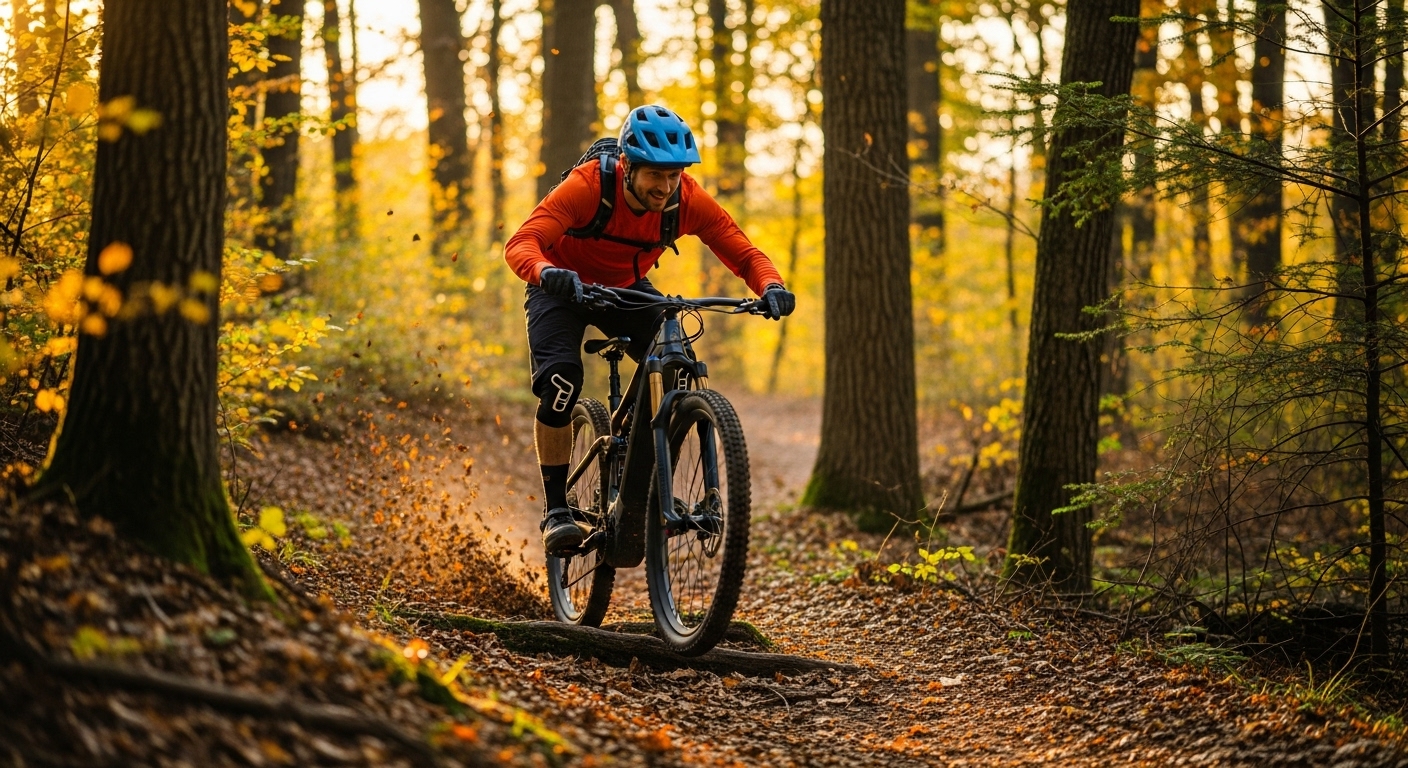
Feeling the burn on climbs and missing out on the fun? You see others fly past you on the uphill, leaving you behind. An electric mountain bike gives you the power to flatten hills and extend your rides, turning struggle into pure enjoyment.
An electric mountain bike works by using an built-in system of a motor, battery, and controller to assist your pedaling. The motor adds power to your own effort, making it easier to climb and ride longer distances. A rechargeable battery fuels the motor, and sensors tell the controller how much assistance to provide based on how you are riding. This creates a natural-feeling power that makes mountain biking more accessible and fun for everyone.
So, how does this technology come to life on the trail?
1. What Is the Core Technology Behind an E-MTB?
The magic of an electric mountain bike lies in three key parts working in harmony. These are the motor, the battery, and the controller. Understanding how they function together is the first step to understanding your e-bike. They form the bike’s electric heart.
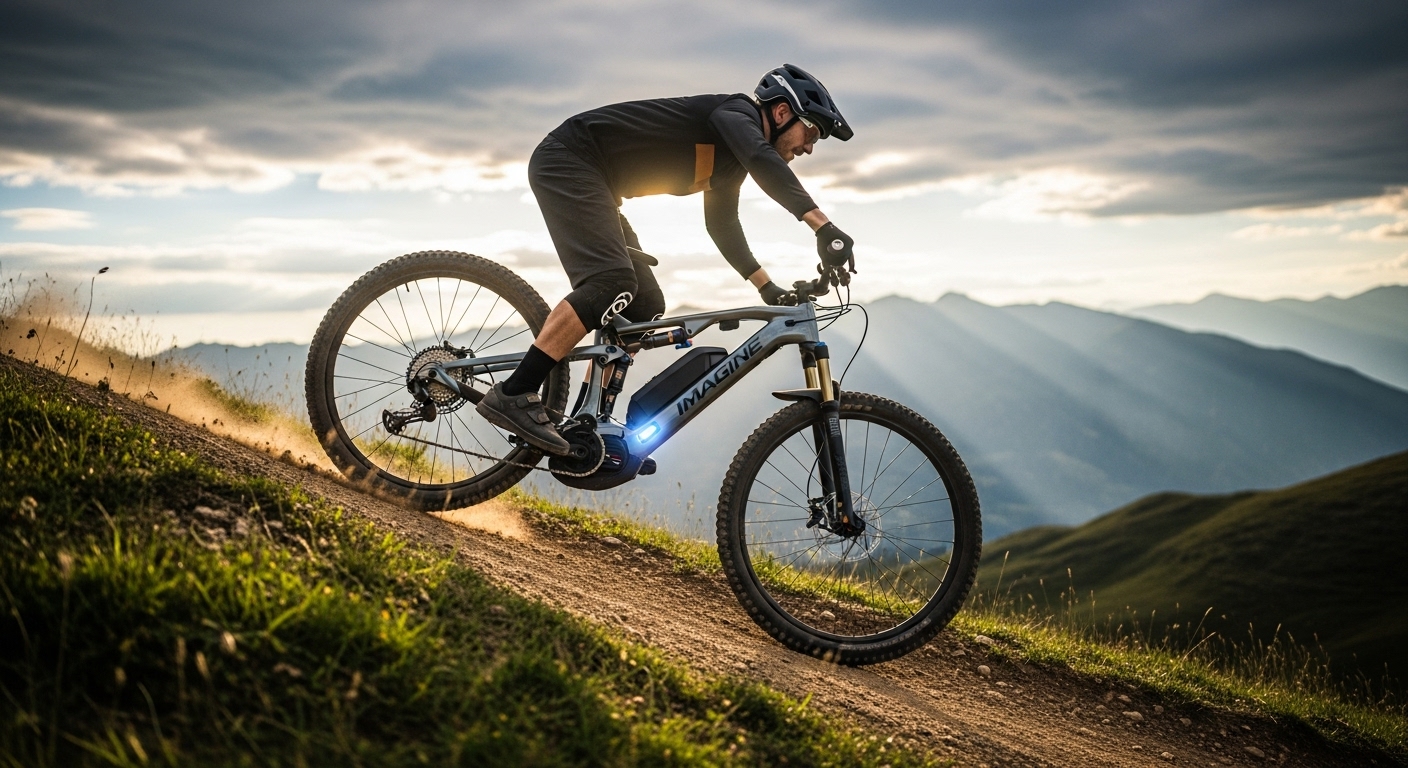
The motor is the powerhouse. It is what gives you that extra push. Most high-quality e-MTBs use a mid-drive motor. This means it is located in the center of the bike, right where the pedals attach. This placement keeps the bike balanced and provides a very natural riding sensation.
The battery is the fuel tank. It stores the electrical energy needed to run the motor. Battery capacity is measured in watt-hours (Wh). A bigger number means more fuel and a longer range. Modern e-MTB batteries are sleek and often built right into the bike’s frame.
The controller is the brain. It is a small computer that constantly makes decisions. It takes information from sensors and tells the motor how much power to deliver. This ensures the power delivery is smooth and intuitive. It feels like an extension of your own body.
This is key because this seamless integration is what makes a good e-MTB feel so good to ride. It is not like a scooter with a throttle. The power feels like your own, just amplified. This allows you to focus on the trail ahead, not on managing a complex system.
| Component | Primary Role | Key Characteristic |
| Motor | Provides Power | Mid-drive for natural feel |
| Battery | Stores Energy | High capacity (Wh) for long range |
| Controller | Manages Power Flow | Uses sensors for smooth delivery |
2. How Does Pedal-Assist Make Riding Easier?
Pedal-assist is the defining feature of a modern electric mountain bike. It is what separates it from a scooter or motorcycle. The system is designed to work with you, not for you. It intelligently amplifies the effort you put into the pedals.
This is made possible by a set of smart sensors. A torque sensor is the most key one. It measures how hard you are pushing on the pedals. The harder you pedal, the more assistance the motor provides. This creates a very direct and natural connection between your effort and the bike’s power.
A cadence sensor measures how fast you are spinning the pedals. Together, these sensors give the controller a complete picture of what you are doing. The controller then delivers a proportional amount of power from the motor. This all happens in an instant.
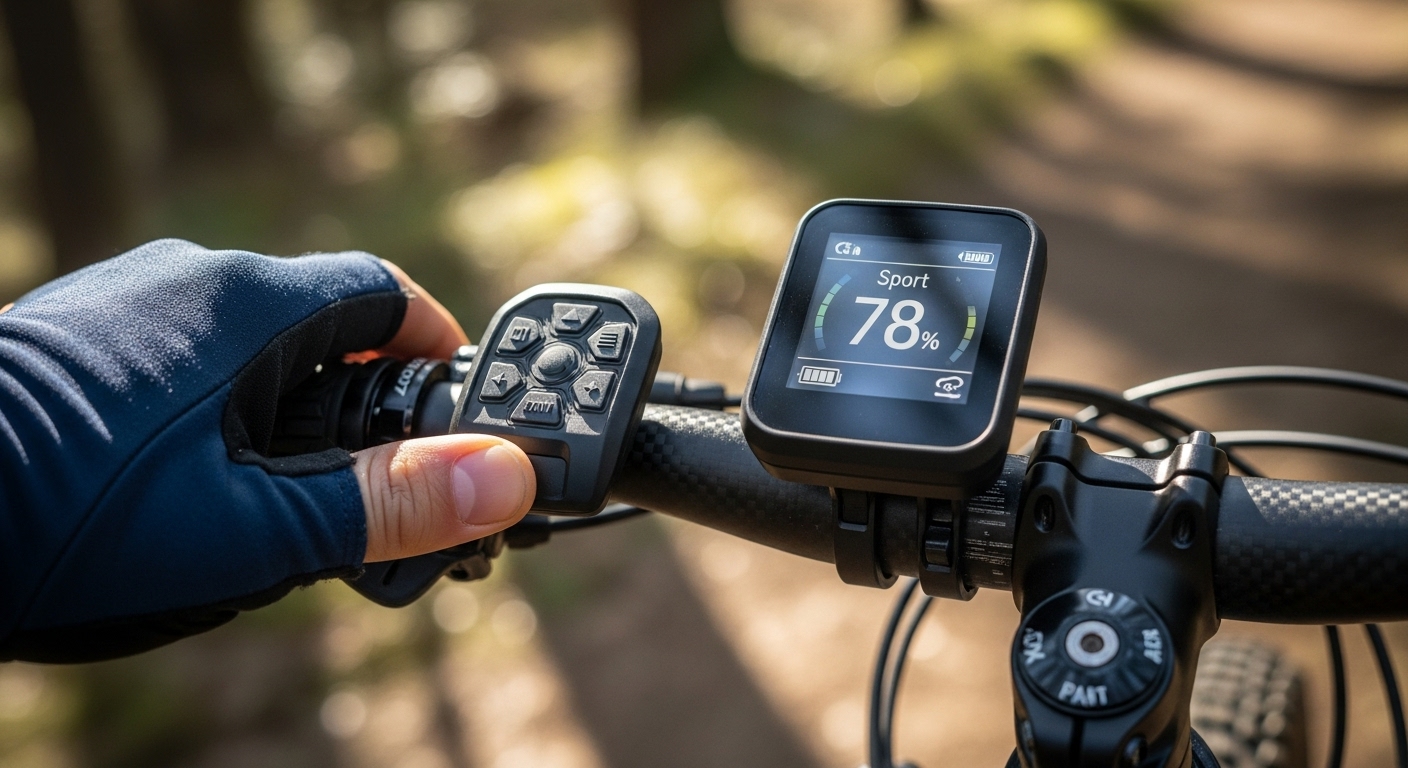
The best part? You can control the amount of assistance. E-MTBs typically offer several levels of support, such as:
•Eco: A gentle power that maximizes battery life for long rides.
•Trail: A versatile middle ground for rolling terrain.
•Power: Maximum power for conquering the steepest climbs.
You can switch between these modes using a simple button on the handlebar. This allows you to tailor the ride to your needs. You can use Eco on the flats and save Power for when you really need it. This active management helps you conserve energy—both yours and the bike’s.
| Assist Level | Rider Feel | Best Use Case |
| Eco | A gentle push, like a tailwind | Flat terrain, long distances |
| Trail | A noticeable, helpful power | Rolling hills, varied singletrack |
| Power | A powerful surge of acceleration | Steep climbs, getting up to speed quickly |
3. What Are the Main Parts of an E-MTB Drivetrain?
The drivetrain on an electric mountain bike has a tough job. It has to manage the power from your legs plus the strong force from the motor. This requires parts that are stronger and more durable than those on a regular bike.
The chain is a key example. An e-bike specific chain is designed with stronger plates and pins. This helps it resist stretching and breaking under the high torque. Using a standard chain on an e-MTB will likely lead to rapid wear and poor performance.
The cassette, which is the set of gears on the rear wheel, is also built to be more robust. The shifting ramps are designed to work with the motor’s power. This allows for smoother gear changes, even when you are climbing a steep hill. Some systems even momentarily reduce motor power during a shift to protect the parts.
Here’s the deal… you need to shift gears on an e-MTB just like on a regular bike. In fact, it is even more key. Keeping a good pedaling cadence (speed) helps the motor operate efficiently. Shifting to an easier gear before a climb will help you and the motor work together for the best results.
Shifting under full motor power can be hard on the drivetrain. It is a good practice to slightly ease off the pedals for a split second as you shift. This small change in technique will greatly extend the life of your chain and cassette. It makes for a smoother, quieter ride too.
| Drivetrain Part | E-MTB Specific Feature | Benefit |
| Chain | Stronger plates and pins | Resists stretching and breaking |
| Cassette | Robust construction, optimized ramps | Smoother shifting under load |
| Derailleur | Stronger clutch mechanism | Keeps chain tensioned on rough terrain |

4. How Is an E-MTB Frame Different from a Standard Frame?
At first glance, an e-MTB frame looks similar to a standard mountain bike frame. But look closer, and you will see key differences. The frame is the backbone of the bike, and on an e-MTB, it has to be much stronger.
The main reason is the added weight and force. The motor and battery add significant weight. The motor also puts a lot of torque through the frame. To handle this, e-MTB frames are overbuilt. They use more material, especially around the head tube and bottom bracket area.
Most e-MTB frames are made from aluminum alloy. This material provides an excellent balance of strength, stiffness, and cost. The tubes are often shaped using a method called hydroforming. This allows engineers to create complex shapes that are both strong and lightweight.
The most obvious difference is the integration of the motor and battery. The bottom bracket area is much larger to house the mid-drive motor. The downtube is also oversized to hold the battery. On modern e-MTBs, the battery is often fully enclosed within the downtube for a clean look and better protection.
Now, you might be wondering… how does this affect the ride? The frame’s geometry is also adjusted. E-MTBs often have a longer wheelbase. This means the wheels are farther apart. This increases stability, which is helpful when dealing with the bike’s extra weight and higher speeds. The head tube angle might also be slacker for more confidence on descents.
| Frame Characteristic | Reason for Difference | Impact on Ride |
| Increased Strength | Added weight and motor torque | Durability and stiffness |
| Integrated Design | Houses motor and battery | Clean look, part protection |
| Longer Wheelbase | To improve stability | More confident handling at speed |
5. What Do You Need to Know About E-MTB Suspension?
Suspension is what makes a mountain bike a mountain bike. It allows the wheels to move up and down to absorb bumps. This provides both comfort and control. On an electric mountain bike, suspension is even more critical.
The added weight of an e-MTB puts more demand on the suspension. The fork and rear shock have to work harder to control the bike’s mass. For this reason, you will find that e-MTB suspension components are often built with stronger chassis and internal parts.
Full suspension is the standard for any trail-focused e-MTB. This means both the front and rear wheels have suspension. This system keeps the tires in contact with the ground. Better contact means better traction for climbing, braking, and cornering.
The bottom line? The suspension is tuned specifically for e-bike use. The air springs and dampers are set up to handle the higher forces. An air spring allows you to easily adjust the suspension for your weight using a special pump. The damper controls the speed at which the suspension compresses and rebounds.
Suspension travel is the amount the wheel can move. This is measured in millimeters (mm). The right amount of travel depends on your riding style.
•130-150mm: Great for all-around trail riding. This is a versatile and fun setup.
•160-180mm: For more aggressive enduro and bike park riding.
| Suspension Feature | Why It Is Key for E-MTBs | Rider Benefit |
| Full Suspension | Controls the bike’s heavier mass | More traction and comfort |
| E-Tuned Internals | Handles higher forces | Better performance and durability |
| Air Spring | Easy adjustability for rider weight | Personalized and proper setup |
6. How Do E-MTB Brakes Provide Superior Stopping Power?
Slowing down an electric mountain bike requires serious stopping power. The bike is heavier and often moving faster than a regular MTB. This means the brakes have to work much harder. Because of this, e-MTBs are equipped with powerful hydraulic disc brake systems.
Hydraulic brakes use fluid to transfer the force from your hand at the lever to the brake caliper at the wheel. This system is very efficient and provides a lot of power with minimal effort. It allows for fine control, which is known as modulation.
One of the most visible features of e-MTB brakes is the large rotor size. The rotor is the metal disc that the brake pads squeeze. A larger rotor provides more leverage and has more surface area to dissipate heat. You will commonly find 200mm or even 220mm rotors on e-MTBs.
What does this mean for you? It means you can brake later and with more confidence. The brakes are less likely to overheat and lose power on long, steep descents. This is a critical safety feature. It helps you stay in control when you need it most.
Many e-MTBs also use four-piston brake calipers. A standard brake might have two pistons that push the pads against the rotor. A four-piston caliper has four pistons. This provides more clamping force and a larger pad surface area for even more power and control.
| Brake Component | E-MTB Standard | Advantage |
| Brake Type | Hydraulic Disc | Powerful and controlled stopping |
| Rotor Size | 200mm or larger | Better heat management, more power |
| Caliper | Four-Piston | Increased clamping force |
7. What Is the Best Way to Manage Your E-MTB’s Battery?
Your battery is the lifeblood of your electric mountain bike. Taking good care of it will make sure you get the best performance and longest possible lifespan. A few simple habits can make a big difference.
Proper charging is the most key aspect of battery care. Most e-MTB batteries use lithium-ion cells, similar to a laptop or smartphone. These cells do not have a
“memory effect,” so you do not need to fully drain them before charging. In fact, it is better to top them off after each ride.
Avoid extreme temperatures. High heat is the enemy of a healthy battery. Never leave your battery in a hot car. Cold temperatures can temporarily reduce the battery’s range. It is best to store and charge your battery indoors at room temperature.
Here’s why it matters… if you are not going to ride for an extended period, like over the winter, it is best to store the battery with a partial charge. A charge level between 40% and 60% is ideal. Storing a battery fully charged or fully empty for a long time can degrade the cells.
Understanding your bike’s range is also key. The range is not a fixed number. It is affected by many factors:
•The assist level you use
•The steepness of the terrain
•Your weight
•Tire pressure
•The temperature
Learning how these factors affect your battery will help you plan your rides and avoid running out of power. The Dynamic Scooter Q5 has a removable battery design. This is a great feature. It allows you to easily bring the battery inside for charging and storage. It also means you could carry a spare battery for epic all-day adventures.
| Battery Care Tip | Why It Is Important | Simple Action |
| Charge Regularly | Keeps cells healthy | Top off after each ride |
| Avoid Extreme Temps | Protects battery from damage | Store indoors at room temperature |
| Store Partially Charged | Prevents cell degradation | Aim for 40-60% for long-term storage |
Proper battery management also means understanding when to charge. You do not need to wait until the battery is completely empty. Modern lithium-ion batteries prefer to be topped off regularly. Charge your battery after every ride if possible. This keeps the cells healthy and ready for your next adventure.
| Battery Factor | Impact on Range | How to Manage |
| Assist Level | Higher levels drain faster | Use Eco on flats, Power for climbs |
| Terrain | Hills use more power | Plan routes with elevation in mind |
| Rider Weight | Heavier riders use more energy | Accept and plan accordingly |
| Temperature | Cold reduces capacity temporarily | Keep battery warm in winter |
Conclusion
An electric mountain bike works through a smart system of power and control. The motor, battery, and controller team up to give you a natural-feeling power. This makes climbs easier and rides longer. Stronger frames, powerful brakes, and tuned suspension handle the extra speed and weight. This gives you a confident and capable machine on any trail. Knowing how these parts work together helps you ride smarter and care for your bike. The result is more fun and more adventure every time you hit the trail.
The Dynamic Scooter Q5 is engineered to deliver a top-tier ride. Contact us to learn more and find the perfect e-MTB to elevate your adventures.
FAQ
Q1: Can you ride an electric mountain bike like a normal bike?
Yes, you can ride an e-MTB with the motor turned off. It will feel heavier than a regular bike, but it is fully functional as a pedal-only bicycle.
Q2: How much care does an e-MTB require?
E-MTBs require similar care to regular mountain bikes (chain, brakes, tires), with the addition of battery care. The electrical system itself is generally low-care.
Q3: Are electric mountain bikes legal on all trails?
No. E-bike regulations vary by location. Many trails allow Class 1 e-MTBs (pedal-assist up to 20 mph), but you must always check local rules before riding.
Q4: How heavy is an average electric mountain bike?
Most e-MTBs weigh between 45 and 60 pounds (20-27 kg). The extra weight comes from the motor, battery, and reinforced frame.
Q5: Can I ride my e-MTB in the rain?
Yes, most e-MTBs are water-resistant (typically with an IPX4 rating or higher) and can be ridden in the rain. However, you should avoid deep puddles and high-pressure washing.