

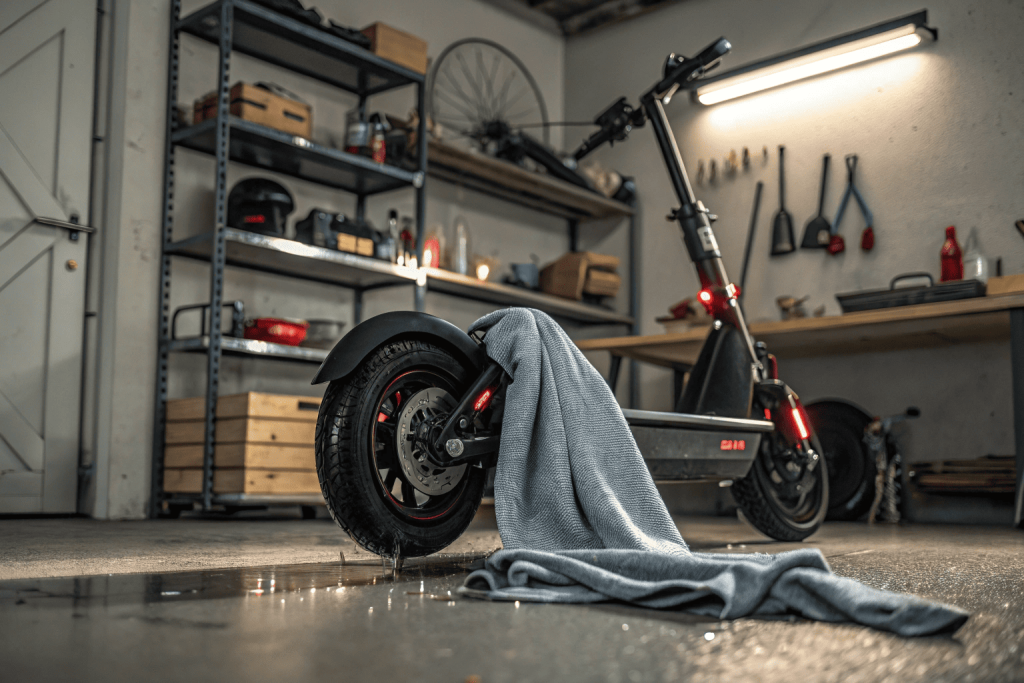
Can Electric Scooters Get Wet Without Damage?
Riding an electric scooter in wet weather makes many owners worry. Water can harm your scooter’s parts. Bad water damage might lead to costly fixes. You might feel stressed when rain starts during your ride. But is all water contact bad? Many newer scooters have some water protection. This lets you handle light rain without worry. Knowing your scooter’s water limits helps you make better choices in wet weather. Let’s look at what happens when scooters get wet, how to keep them dry, and what to do after water contact. 1. What Happens When Electric Scooters Get Wet? Water and scooter parts don’t mix well. The battery, control board, and wires can all suffer from water contact. Here’s what you need to know: Water causes short circuits by connecting parts that should stay apart. This can happen right away or slowly as rust forms. The battery case has good protection on most models. But water that gets inside can start bad chemical changes. You might not see problems right away. Range might drop or the battery might fail weeks later. Motors can also get damaged by water. Many have some shields, but too much water hurts the parts inside. Part Risk Possible Damage Battery High Shorts, chemical issues, less power Control Board Very High Shorts, part failure, error codes Screen Medium Display issues, button problems Motor Medium Rust in bearings, wire damage Wiring High Rust, loose contacts, random problems Not all water contact is the same. Light rain is less risky than deep puddles. Puddle water pushes harder into gaps that might keep out light rain. IP ratings show how well your scooter fights water. The second number in the rating shows water defense on a 0-9 scale. Most scooters have IPX4 or IPX5 ratings. This means they handle light rain but not deep water or strong sprays. The deck where you stand often has the most gaps. Water can get in through button holes, charge ports, and seams. Water damage can start small but grow over time. A tiny bit of water might not cause issues right away. But that same water can spread and cause rust weeks later. This slow damage is why drying your scooter fully after wet rides matters so much. Some riders think a quick wipe-down is enough. But water can hide in spots you can’t see. It might sit under the deck or inside control boxes. This hidden water does the most harm over time. 2. How Waterproof Are Most Electric Scooters? Knowing the gap between “waterproof” and “water-resistant” matters for scooter owners. No regular scooter is fully waterproof. They’re just water-resistant to some degree. Water-resistant means the scooter can handle some water in certain cases. Waterproof would mean total water blocking, which no common scooter offers. Most scooters on sale have IP ratings of IPX4 or IPX5. This means they can take light rain and small splashes but not deep water or heavy rain. Water defense changes based on price and use type. Here’s a quick look: Price Typical Rating Real-World Water Defense Budget (<$300) IPX4 or none Light rain only, no puddles Mid-range (300−300-300−800) IPX4-IPX5 Some rain, tiny puddles Premium ($800+) IPX5-IPX6 Good in rain, small puddles Off-road Models IPX5-IPX7 Better wet weather use Rental Fleet IPX5-IPX6 Made for all weather Brands differ in how they handle water defense. The most at-risk parts include: Better models use good seals and coatings on circuit boards. Cheap models often use simple rubber seals that break down faster. Even with good IP ratings, regular water contact can wear down seals. A scooter that handles rain well when new might not do so well after months of use. Many makers test their scooters in fake rain rooms. These tests check if water gets inside during set amounts of spray. But real world rain can be much worse than test room rain. Wind can drive water into spots from odd angles. This is why IP ratings help but don’t tell the whole story. Some makers add extra seals around key parts. They might use special glue or tape on seams. These small touches can make a big change in how well a scooter handles real rain. 3. What Water Damage Signs Should You Watch For? Spotting water damage early helps avoid bigger issues later. Some signs show up right after water contact. Others take time to appear. Want to know if water has hurt your scooter? Check for these signs after riding in wet weather: Water damage isn’t always clear right away. Later signs can include: Sign Likely Damaged Part How Urgent Won’t turn on Battery/control board Fix now Error codes Control board/screen Fix soon Less range Battery Watch it Odd sounds Motor Fix soon On-off issues Wires/contacts Watch it Visible rust Various Watch it Foggy screen Display unit Low worry If you think water got in, try these steps: Get expert help when: Repair shops have tools to find hidden water damage. They can check spots you can’t easily see. Some water damage might not show clear signs at first. You might just notice your scooter feels “off” in some way. Maybe the power feels less smooth. Or the brakes grab more than before. Trust your gut if the scooter feels wrong after getting wet. Water can also damage parts in ways you can’t see. Circuit boards might have tiny spots of rust forming. These small spots can grow over weeks until they cause big problems. This is why some water damage takes so long to show up. 4. How Can You Safely Ride in Wet Conditions? Riding a scooter in wet weather needs changes to how you ride. Safety must come first. The truth is wet roads cut grip between tires and the ground. This affects both speed and stopping power. When riding on wet roads: Stopping takes much longer on wet roads. This chart shows the big change: Speed Dry Road Stopping Wet Road Stopping 10 mph 10-15 feet 15-25 feet 15 mph […]
Can Electric Scooters Get Wet Without Damage? Read More »