

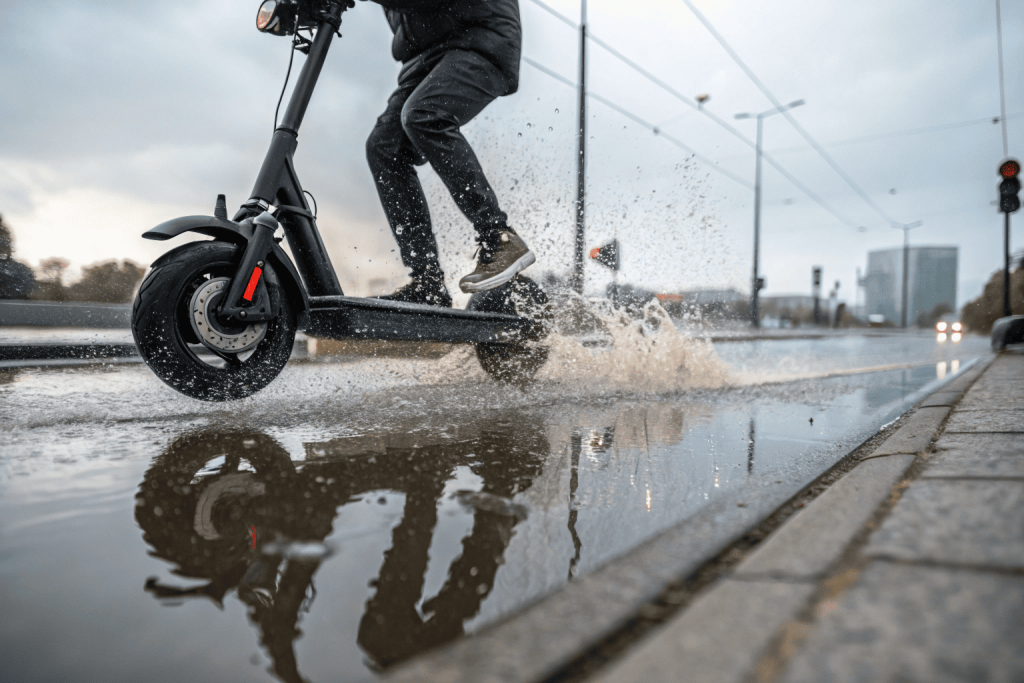
Are Electric Scooters Waterproof for Rain? What You Need to Know in 2026
Electric scooters offer easy travel. Many users ask about wet weather use. Water damage worries electronics. Riding in rain risks both scooter and rider. This article helps answer these questions. We cover IP ratings, light rain riding, heavy rain risks, water protection, maintenance, warranty issues, and safe riding practices. 1. Understanding IP Ratings: What Do the Numbers Mean? When evaluating the durability of any electronic device, especially one exposed to the elements like an electric scooter, understanding its Ingress Protection (IP) rating is crucial. IP stands for Ingress Protection, a standardized system that quantifies a device’s resistance to both solid particles (like dust and dirt) and liquids (like water). This rating provides a clear indication of how well a product is sealed against environmental factors. But how do you decode these numbers? The IP rating is always presented as two digits. The first digit, ranging from 0 to 6, describes the level of protection against solid foreign objects. A higher number signifies greater protection. For instance, a rating of 0 means no special protection, while a 6 indicates complete dust-tightness, preventing any dust ingress. A rating of 5 means the device is dust-protected, allowing only limited ingress of dust that won’t interfere with operation. The second digit, ranging from 0 to 9, indicates the level of protection against liquids. This is the number most relevant when considering exposure to rain or splashes. A rating of 0 means no protection against water, whereas a 4 signifies protection against splashing water from any direction. Higher ratings, such as 7 or 8, denote the ability to withstand submersion under specific conditions. So, what does this mean for your scooter? Understanding these two digits allows you to make informed decisions about your scooter’s suitability for various weather conditions. It helps set realistic expectations for its performance and longevity. Knowing these details helps prevent accidental damage and ensures you are using your scooter within its design limits, safeguarding your investment. IP First Digit Solid Protection Level 0 No protection 1 Protection against objects >50mm 2 Protection against objects >12.5mm 3 Protection against objects >2.5mm 4 Protection against objects >1mm 5 Dust protected (limited ingress) 6 Dust tight (no ingress) IP Second Digit Liquid Protection Level 0 No protection 1 Protection against dripping water 2 Protection against dripping water when tilted 3 Protection against spraying water 4 Protection against splashing water 5 Protection against water jets 6 Protection against powerful water jets 7 Protection against immersion up to 1m 8 Protection against continuous immersion These tables provide a clear breakdown of what each number in an IP rating signifies. Now that you understand the general system, let’s look at common ratings for electric scooters. For example, an IP54 rating, common for electric scooters, means the scooter is protected against dust (level 5) and splashing water from any direction (level 4). This implies it can handle light rain and splashes from puddles but is not designed for heavy downpours or submersion. Comparing this to other ratings provides more context: a scooter with an IP65 rating would be dust-tight and protected against water jets, offering more robust protection. An IP67-rated scooter would be even better, with complete dust protection and the ability to handle temporary submersion. Therefore, what parts are actually protected by these ratings? Typically, the IP rating applies to the enclosure containing the scooter’s most sensitive electronic components, such as the battery, motor, and controller. However, the effectiveness of these seals can degrade over time due to wear and tear. Regular inspections are important to ensure the protection remains intact. Despite its rating, even an IP54 scooter has limitations. Riding through deep puddles can still force water into the housing, and a sustained downpour could overwhelm the seals. It is crucial to remember that water resistance is not the same as being waterproof. This brings up an important question. How do these scooters fare in real-world light rain scenarios? 2. How Do Electric Scooters Handle Light Rain? Electric scooters with an IP54 rating are generally capable of handling light rain. Manufacturers design them with sealed battery compartments and protected wiring to resist moisture from splashes and brief showers. But how effective are these features in practice? Design elements like rubber gaskets and tightly sealed casings are the first line of defense. Many models also include fenders, which are crucial for minimizing the amount of water and debris kicked up by the wheels. This not only keeps the scooter and the rider cleaner but also reduces the amount of water hitting the main body, enhancing its water resistance. However, riding safely in light rain requires adjustments. It is essential to reduce your speed, as wet surfaces offer less tire grip and increase your braking distance. Avoid making sharp turns or sudden stops. Smooth, deliberate movements are key to maintaining control and preventing accidents. What other precautions should you take? Maintaining a greater following distance is also critical. Rain reduces visibility for everyone on the road, and other drivers may not see you as easily. Wearing bright, reflective clothing and using your scooter’s lights will significantly improve your visibility to others, making your ride much safer. Light rain can also affect your scooter’s performance. You may notice a slight decrease in battery range, as the motor has to work harder to overcome the increased drag from wet surfaces. Your top speed and acceleration might also feel a bit sluggish. Are you concerned about the battery? The increased resistance from wet roads means the motor draws more power, which can drain the battery faster than on a dry day. While these effects are usually minor in light rain, they become more pronounced in heavier downpours. Post-ride care is straightforward but important. Always wipe down your electric scooter with a dry cloth after a ride in the rain. Clean any exposed parts to remove dirt and grime, which can trap moisture and lead to corrosion. What is the best way to dry it? Allow the scooter to air dry […]
Are Electric Scooters Waterproof for Rain? What You Need to Know in 2026 Read More »