...

October 24, 2025

Can You Convert a Mountain Bike to Electric? The Complete Beginner’s Guide

Love your mountain bike but hate the climbs? An electric conversion gives you power without losing the bike you trust. This guide shows you how to add a motor and battery, turning tough trails into fun rides. Yes, you can convert a mountain bike to electric. Using a conversion kit, you can add a motor, battery, and controller to most standard mountain bikes. This process allows you to keep your existing bike frame while gaining the benefits of electric power. Key choices include hub motors for simplicity or mid-drive motors for better performance on hills. The result is a custom e-bike perfect for your riding style. So, how do you get started? Let’s break it down. 1. What Does It Mean to Convert a Mountain Bike to Electric? Converting a mountain bike to electric means adding a motor and a battery. You use a special kit to do this. This turns your regular bike into an electric one. You keep the bike you already love. This process does not require you to buy a whole new bicycle. The best part? You get to choose the power level and battery size. This gives you a custom ride that fits your needs. A conversion kit includes a few key parts. You get a motor, a battery, and a controller. You also get a throttle and sensors. These parts work together to give you electric power. The controller is the brain of the system. It manages power from the battery to the motor. The throttle lets you control the speed. Pedal-assist sensors tell the motor when you are pedaling. Component Function Motor Provides electric power to the wheels. Battery Stores and supplies energy to the motor. Controller Manages power flow and system settings. There is a big difference between a conversion and a pre-built e-MTB. A conversion uses your existing bike frame. You know how it handles. A pre-built e-MTB is a complete bike designed from the start to be electric. Conversions offer more freedom. You can mix and match parts. Pre-built bikes offer a simpler solution. But they can cost a lot more. 2. What Are the Key Benefits of Converting Your Mountain Bike? Converting your mountain bike to electric offers many good things. The biggest one is saving money. A new electric mountain bike can be very expensive. A conversion kit costs much less. This lets you enjoy electric-assist riding on a smaller budget. This is important because it makes e-biking accessible to more people. It is a smart way to get more from your bike. You also get to keep the bike you already know. Your mountain bike fits you perfectly. You are used to how it feels on the trail. A conversion lets you keep that same frame and fit. This makes the transition to an e-bike much smoother. You feel comfortable and confident from the first ride. This is a huge plus for riders who love their current setup. Custom options are another big benefit. Conversion kits let you choose your motor and battery. You can decide how much power you want. You can also pick a battery that gives you the range you need. Want more speed for open trails? Choose a powerful motor. Need a long range for epic adventures? Get a bigger battery. You can build a bike that is perfectly matched to your riding style. Benefit Description Cost Savings Spend less than you would on a new e-MTB. Familiarity Keep the bike frame and geometry you are used to. Customization Choose the motor power and battery range you want. Eco-Friendly Upgrade existing gear instead of buying new. Finally, converting your bike is a good choice for the planet. You are reusing your existing bike instead of buying a new one. This reduces waste and the resources needed to make a new product. Upgrading your bike is a responsible choice. It extends the life of your gear. You get a better ride while also helping the environment. Conversion vs. New E-MTB Conversion New E-MTB Cost $600-$1200 $2500-$5000+ Familiarity Keep your bike Learn new bike Customization High Limited 3. What Components Do You Need for an E-Bike Conversion? To convert your mountain bike, you need a few key parts. The motor is the most important. There are two main types: hub motors and mid-drive motors. Hub motors go in the center of your wheel. Mid-drive motors are installed near the pedals. Hub motors are simpler and often cheaper. Mid-drive motors are better for climbing hills. They use the bike’s gears to work more efficiently. Here’s the deal: for serious mountain biking, a mid-drive motor is usually the better choice. The battery is the next big component. It determines how far you can ride. Battery capacity is measured in amp-hours (Ah) and voltage (V). A higher Ah rating means a longer range. Most conversion kits use lithium-ion batteries. They are lightweight and hold a lot of energy. Look for a battery that is removable. This makes it easier to charge. Motor Type Best Use Case Front Hub Motor Flat terrain, commuting Rear Hub Motor General use, good traction Mid-Drive Motor Hill climbing, technical trails You will also need a controller and a display. The controller is the system’s brain. It connects the battery, motor, and other parts. The display shows you important information like speed and battery level. Some displays are simple LED screens. Others are more advanced LCDs. Make sure it is easy to read and use while riding. Finally, you need a throttle and pedal-assist sensors. A throttle lets you use the motor without pedaling. Pedal-assist sensors (PAS) tell the motor when you are pedaling. The motor then adds power to help you. A PAS system gives a more natural riding feel. Most kits include both a throttle and a PAS. This gives you the freedom to choose how you want to ride. 4. How Do You Choose the Right Conversion Kit? Choosing the right conversion kit is a big decision. First, think about

Can You Convert a Mountain Bike to Electric? The Complete Beginner’s Guide Read More »
How Do Electric Mountain Bikes Actually Work? Everything You Need to Know

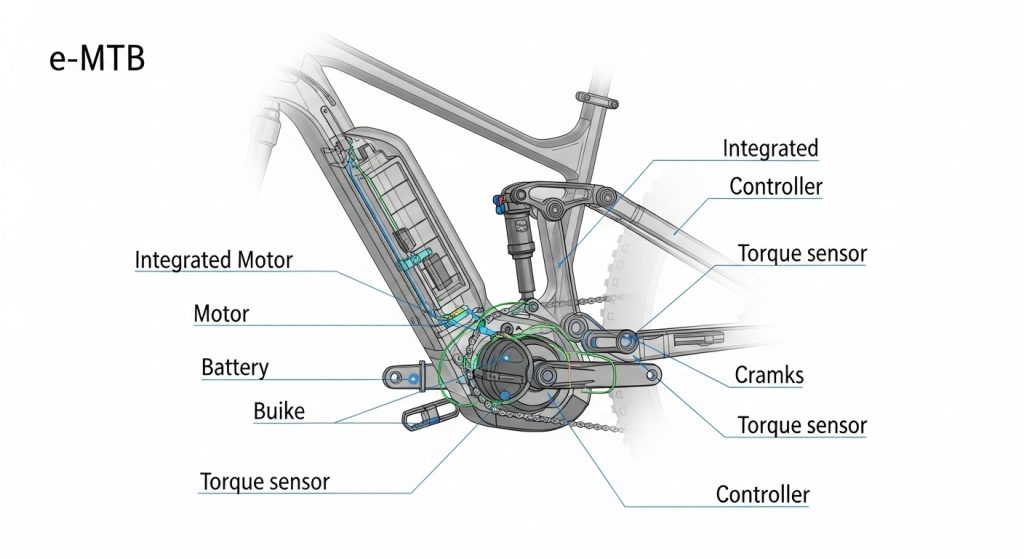
Feeling the burn on climbs and missing out on the fun? You see others fly past you on the uphill, leaving you behind. An electric mountain bike gives you the power to flatten hills and extend your rides, turning struggle into pure enjoyment. An electric mountain bike works by using an built-in system of a motor, battery, and controller to assist your pedaling. The motor adds power to your own effort, making it easier to climb and ride longer distances. A rechargeable battery fuels the motor, and sensors tell the controller how much assistance to provide based on how you are riding. This creates a natural-feeling power that makes mountain biking more accessible and fun for everyone. So, how does this technology come to life on the trail? 1. What Is the Core Technology Behind an E-MTB? The magic of an electric mountain bike lies in three key parts working in harmony. These are the motor, the battery, and the controller. Understanding how they function together is the first step to understanding your e-bike. They form the bike’s electric heart. The motor is the powerhouse. It is what gives you that extra push. Most high-quality e-MTBs use a mid-drive motor. This means it is located in the center of the bike, right where the pedals attach. This placement keeps the bike balanced and provides a very natural riding sensation. The battery is the fuel tank. It stores the electrical energy needed to run the motor. Battery capacity is measured in watt-hours (Wh). A bigger number means more fuel and a longer range. Modern e-MTB batteries are sleek and often built right into the bike’s frame. The controller is the brain. It is a small computer that constantly makes decisions. It takes information from sensors and tells the motor how much power to deliver. This ensures the power delivery is smooth and intuitive. It feels like an extension of your own body. This is key because this seamless integration is what makes a good e-MTB feel so good to ride. It is not like a scooter with a throttle. The power feels like your own, just amplified. This allows you to focus on the trail ahead, not on managing a complex system. Component Primary Role Key Characteristic Motor Provides Power Mid-drive for natural feel Battery Stores Energy High capacity (Wh) for long range Controller Manages Power Flow Uses sensors for smooth delivery 2. How Does Pedal-Assist Make Riding Easier? Pedal-assist is the defining feature of a modern electric mountain bike. It is what separates it from a scooter or motorcycle. The system is designed to work with you, not for you. It intelligently amplifies the effort you put into the pedals. This is made possible by a set of smart sensors. A torque sensor is the most key one. It measures how hard you are pushing on the pedals. The harder you pedal, the more assistance the motor provides. This creates a very direct and natural connection between your effort and the bike’s power. A cadence sensor measures how fast you are spinning the pedals. Together, these sensors give the controller a complete picture of what you are doing. The controller then delivers a proportional amount of power from the motor. This all happens in an instant. The best part? You can control the amount of assistance. E-MTBs typically offer several levels of support, such as: •Eco: A gentle power that maximizes battery life for long rides. •Trail: A versatile middle ground for rolling terrain. •Power: Maximum power for conquering the steepest climbs. You can switch between these modes using a simple button on the handlebar. This allows you to tailor the ride to your needs. You can use Eco on the flats and save Power for when you really need it. This active management helps you conserve energy—both yours and the bike’s. Assist Level Rider Feel Best Use Case Eco A gentle push, like a tailwind Flat terrain, long distances Trail A noticeable, helpful power Rolling hills, varied singletrack Power A powerful surge of acceleration Steep climbs, getting up to speed quickly 3. What Are the Main Parts of an E-MTB Drivetrain? The drivetrain on an electric mountain bike has a tough job. It has to manage the power from your legs plus the strong force from the motor. This requires parts that are stronger and more durable than those on a regular bike. The chain is a key example. An e-bike specific chain is designed with stronger plates and pins. This helps it resist stretching and breaking under the high torque. Using a standard chain on an e-MTB will likely lead to rapid wear and poor performance. The cassette, which is the set of gears on the rear wheel, is also built to be more robust. The shifting ramps are designed to work with the motor’s power. This allows for smoother gear changes, even when you are climbing a steep hill. Some systems even momentarily reduce motor power during a shift to protect the parts. Here’s the deal… you need to shift gears on an e-MTB just like on a regular bike. In fact, it is even more key. Keeping a good pedaling cadence (speed) helps the motor operate efficiently. Shifting to an easier gear before a climb will help you and the motor work together for the best results. Shifting under full motor power can be hard on the drivetrain. It is a good practice to slightly ease off the pedals for a split second as you shift. This small change in technique will greatly extend the life of your chain and cassette. It makes for a smoother, quieter ride too. Drivetrain Part E-MTB Specific Feature Benefit Chain Stronger plates and pins Resists stretching and breaking Cassette Robust construction, optimized ramps Smoother shifting under load Derailleur Stronger clutch mechanism Keeps chain tensioned on rough terrain 4. How Is an E-MTB Frame Different from a Standard Frame? At first glance, an e-MTB frame looks similar to a standard

How Do Electric Mountain Bikes Actually Work? Everything You Need to Know Read More »

What Is an Electric Mountain Bike and How Does It Work?

Struggling to keep up on steep trails? You are missing out on epic views because your legs give out. An electric mountain bike gives you the power to conquer any hill and ride farther than ever before. An electric mountain bike, or e-MTB, is a bicycle with an integrated electric motor that assists your pedaling. This system helps you climb hills and cover long distances with less effort. It combines human power with electric power. The motor gets energy from a rechargeable battery mounted on the frame. You control the power with a simple handlebar-mounted control button. This makes tough trails more accessible to more riders. Ready to see how it all comes together? Here is the deal… 1. What Makes an Electric Mountain Bike Different from a Regular Bike? An electric mountain bike shares its DNA with a traditional mountain bike. Both are built for off-road adventure. But the addition of a motor and battery creates a whole new experience. This drive system is the main point of difference. It provides power to help you pedal. A regular mountain bike is a purely mechanical machine. Your fitness and strength are the only engine. This is a rewarding challenge. But it can also be a limit. Steep climbs can become walking sections. Long rides can leave you exhausted. An e-MTB lowers these barriers. The motor does not do all the work for you. Instead, it amplifies your effort. Think of it as having superhuman legs. You still pedal. You still get a workout. But you can go faster and farther. The frame of an electric mountain bike is also distinct. It must be strong enough to handle the extra weight and forces. The motor and battery add around 20 pounds. This requires a more robust frame, usually made of aluminum alloy. The geometry is also tweaked for stability. This is key because the extra weight changes how the bike handles. It has a lower center of gravity. This makes it feel very planted and stable on descents. You might feel more confident on an e-MTB. The bike sticks to the trail and carves through turns. Cost is another major difference. The advanced technology in an e-MTB comes at a price. The motor, battery, and controller are expensive parts. This makes the initial investment higher than for a comparable regular mountain bike. However, many riders find the benefits are well worth the cost. Feature Electric Mountain Bike (e-MTB) Regular Mountain Bike (MTB) Power Source Pedal-assist motor & human power Human power only Average Weight 45–60 lbs (20–27 kg) 25–35 lbs (11–16 kg) Core Components Motor, Battery, Drivetrain Drivetrain, Brakes, Frame Riding Feel Assisted, powerful, stable Raw, connected, physically demanding Upfront Cost Higher Lower 2. How Does the Motor and Battery System Work on an E-MTB? The heart of an electric mountain bike is its drive system. This is what provides the “e” in e-MTB. The system has three main parts: the motor, the battery, and the controller. They work together to deliver smooth, reliable power. The motor is the engine of the bike. There are two main types. Mid-drive motors are the most common on modern e-MTBs. They are located at the bottom bracket, where the pedals attach. This central location is great for balance. It provides a very natural feel, as the power is applied directly to the cranks. Hub-drive motors are found in the center of the wheel. They are simpler and often less expensive. But they can feel like they are pushing or pulling the bike. For high-performance trail riding, mid-drive is the preferred choice. It offers better weight distribution and efficiency. The battery is the bike’s fuel tank. Its capacity is measured in watt-hours (Wh). A higher Wh number means more energy storage and a longer range. A typical battery for an electric mountain bike is between 500Wh and 750Wh. The Dynamic Scooter Q5 features a powerful 624Wh battery. The bottom line? The battery is often removable. You can open up it from the frame and take it inside to charge. A full charge usually takes 4-6 hours. A sophisticated Battery Management System, or BMS, protects the battery. It prevents overcharging and helps extend its lifespan. Advanced sensors make the power delivery feel seamless. Torque sensors measure how hard you are pedaling. Cadence sensors measure how fast you are pedaling. Speed sensors track the bike’s speed. The controller uses this data to tell the motor exactly how much power to provide. This results in a smooth and intuitive increase. Motor Technology How It Works Rider Experience Mid-Drive Motor Applies power at the crankset Natural feel, great for climbing Hub-Drive Motor Turns the wheel hub directly Can feel like being pushed Sensor System Measures pedal force and speed Smooth, intuitive power delivery 3. What Are the Key Components of an Electric Mountain Bike? An electric mountain bike is more than just a bike with a motor. Every part is chosen to handle the increased speeds and forces. From the frame to the brakes, these components are built for performance and durability. The frame is the bike’s foundation. Most are made from high-strength aluminum alloys. This material offers a great mix of durability, stiffness, and value. The frame is specifically designed to build in the motor and battery. This often means a larger, reinforced downtube. Suspension is what separates a mountain bike from other bikes. It absorbs impacts from rocks and roots. Most trail-focused e-MTBs use a full-suspension design. This includes a suspension fork at the front and a shock absorber at the rear. This keeps your wheels on the ground for better traction and control. Here’s why it matters… on a heavier electric mountain bike, good suspension is key. It is not just for comfort. It helps you manage the bike’s mass. It lets you stay on your intended line through rough terrain. Air-sprung suspension is common because it is highly adjustable to the rider’s weight and style. The braking system must be powerful. E-MTBs are heavier

What Is an Electric Mountain Bike and How Does It Work? Read More »

Shopping Cart
Scroll to Top