
...

License

How Old to Ride an Electric Scooter? Age Limits & Rules in 2026

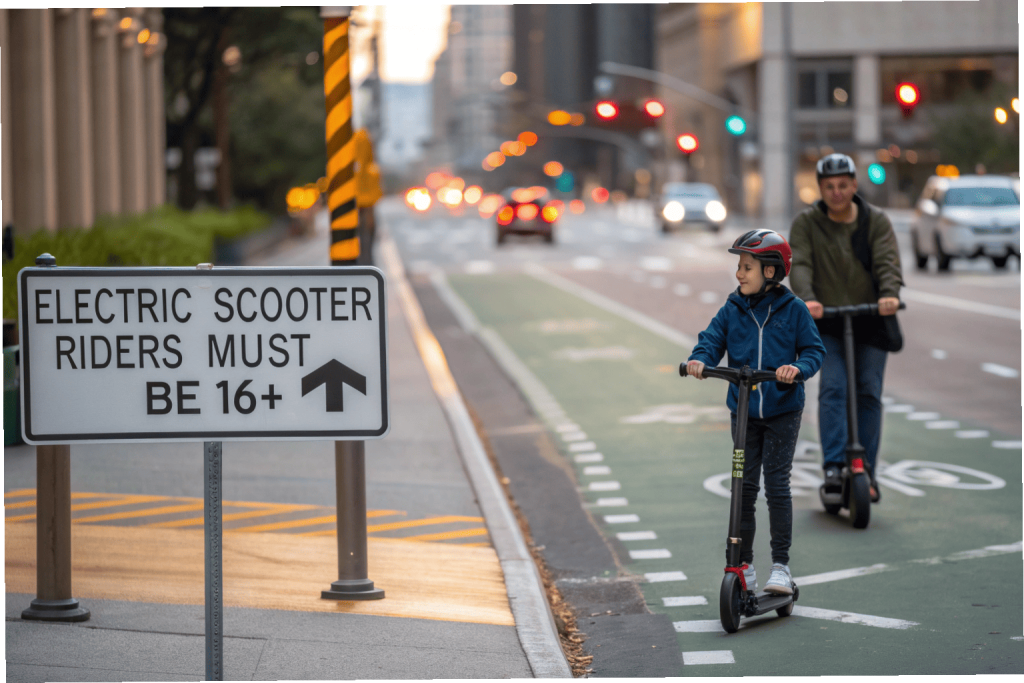
Electric scooters are now very popular. They help people move around cities easily. But many people ask: how old do you have to be to ride an electric scooter? Electric scooter age requirements in North America are generally consistent: most U.S. states and Canadian provinces require riders to be 16+ years old. Some regions mandate helmet use for minors, and riding areas are typically limited to bike lanes and streets. Always check local regulations as they may vary by city. This is about safety and following the law. This article will tell you about age limits in different places, safety issues, and tips for riders of all ages. 1. How Old Do You Need to Be to Ride an Electric Scooter? The age to ride an electric scooter is not the same everywhere. Why is it different? It depends on local traffic laws, city size, bike lanes, and how people think about small vehicles. In Canada, each province or city makes its own rules. In Ontario, you must be 16 or older to ride on public roads. You must wear a helmet if you are under 18. British Columbia also says riders must be 16. In the United States, there is no national law about rider age. In California, you must be 16 and have a driver’s license or permit. In Florida, you can ride at age 16, often without a driver’s license. These age limits are about safety. Officials think about if young people can handle the scooter’s speed and weight, understand traffic, react quickly, and make good choices. Age Limits for E-Scooter Riding: International Comparison Country/Region Typical Minimum Age Key Considerations Canada (Varies) 16-18+ Provincial/Municipal Bylaws, Pilot Programs, Helmets USA (Varies) 16-18+ State/City Laws, Driver’s License Requirements Vary UK 18+ (Rentals Only) Illegal on public roads (private use), Trials ongoing Germany 14+ Specific speed/power limits, Bike lane usage France 12+ Speed limits, Helmet recommended (mandatory <12) List of E-Scooter Regulations in Major U.S. Regions Region Minimum Riding Age Helmet Requirements Other Key Regulations West (California) 16+ Required under 18 No sidewalk riding, max speed 25mph West (Washington) 16+ Recommended for all Allowed on bike lanes and low-speed roads Midwest (Illinois) 16+ Recommended but not mandatory Chicago allows bike lane riding, no sidewalks Midwest (Michigan) 12+ Recommended but not mandatory Max speed 25mph, some sidewalk riding allowed Northeast (New York) 16+ Required under 18 NYC bans e-scooters in Manhattan Southeast (Florida) 16+ Required under 16 Allowed on bike lanes and some roads South (Texas) 16+ Recommended but not mandatory Rules vary by city, Austin and Dallas more lenient Please note that these regulations may change, and city-level rules may differ from state regulations. Before riding, it’s best to check the latest local rules. This is especially important when traveling or using e-scooters across different states. For Dynamic Scooter users, we recommend paying attention to the age restrictions and safety requirements in your area when purchasing and using our products to ensure a legal and safe riding experience. 2. Why Are There Age Restrictions for Electric Scooters? Age limits for electric scooters exist for real safety reasons. So, what are these main reasons? First is body control and reaction time. Riding an electric scooter at speeds up to 25 kph (15 mph) needs good balance, quick reflexes, and fast adjustments. Young children are still growing these skills. Second is knowing traffic rules. Riding on roads means knowing who goes first, what signs mean, and how to share the road. Young riders may not understand these rules well or know what happens if they break them. Risk judgment is another big factor. Teens have brains that are still growing – the part that plans, controls impulses, and judges risks. This can make them take more risks. Think about it: one bad choice can cause a crash. Last, accident reports show why age limits help. Studies show more injuries among younger riders. Age limits try to protect the groups most likely to get hurt. 3. Do Age Requirements Differ for Various Electric Scooter Types? While general age rules exist, the type of scooter can change what’s recommended. Can a 12-year-old ride any scooter if the law allows? Not really. Slow electric scooters for young riders usually go 10-15 kph (6-10 mph). Makers might say ages 8-10 can use these, but only on private property with adults watching. Medium-speed scooters are for commuters and go 20-25 kph (12-15 mph). These usually need riders to be 16+ or 18+. The Dynamic Scooter Model B is this type, with good speed, range, and a design you can fold. High-speed scooters can go over 40 kph (25 mph). These are almost always for adults only, with age limits of 18+ strictly enforced. Foldable scooters, like those from Dynamic Scooter, are great for trips that use trains or buses too. But being easy to carry doesn’t make them good for young riders on public roads. E-Scooter Type vs. General Age Suitability Scooter Type Typical Top Speed General Age Suitability (Guideline Only) Kids’ E-Scooter < 15 kph (< 10 mph) 8+ (Private Property, Supervision) Low-Speed Commuter 15-20 kph (10-12 mph) 14-16+ (Check Local Laws) Mid-Speed Commuter 20-25 kph (12-15 mph) 16-18+ (Check Local Laws) High-Performance > 25 kph (> 15 mph) 18+ 4. How Can Minors Ride Electric Scooters Safely? Even where young people can legally ride electric scooters, safety must come first. How can parents help kids ride safely? Safety gear is a must. A helmet that fits right is the most important thing. Think about knee pads, elbow pads, and wrist guards for beginners. Bright clothes help others see you. Parents should watch and ride with young riders. This lets you guide them and step in if needed. Start in safe places like empty parking lots or quiet streets. Move to busier areas only when they show they can handle it. Safety training should come before riding alone. Teach basic controls: smooth starting, good stopping, and steady turning. Practice emergency stops and going around objects.

How Old to Ride an Electric Scooter? Age Limits & Rules in 2026 Read More »
Can You Ride an Electric Scooter on the Sidewalk? Full Guide to Rules and Safety

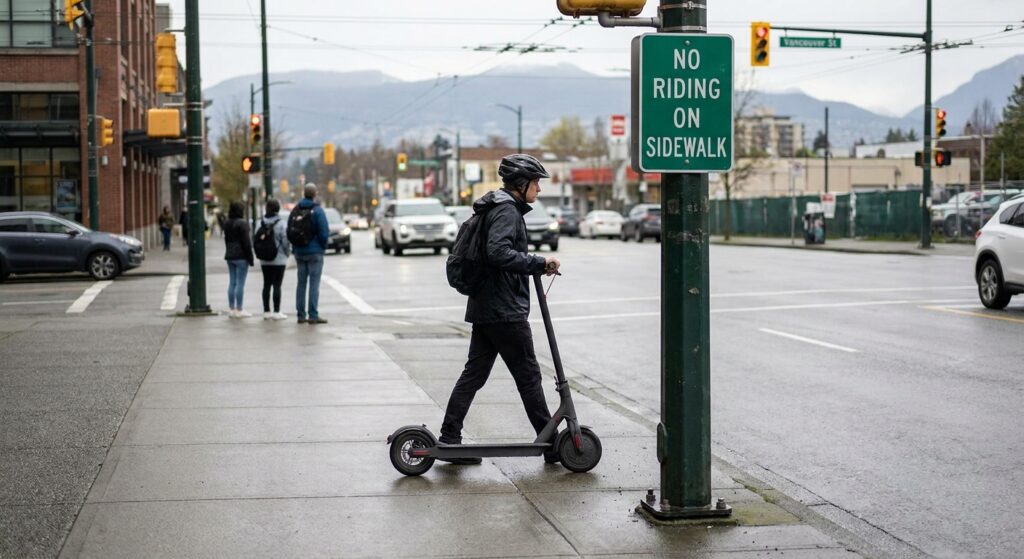
Ever wondered if your electric scooter can legally zip along the sidewalk? This question has left many riders confused, especially when they’re trying to avoid busy roads. Generally, riding electric scooters on sidewalks is prohibited in most states across the U.S. However, the exact regulations vary by location. In California, it’s explicitly illegal, while states like Texas allow it under specific conditions. Let’s dive into the details of these regulations. As someone who rides my Dynamic Scooter daily, I’ve had to learn the rules the hard way in several states. Understanding where you can legally ride isn’t just about avoiding tickets – it’s about keeping yourself and pedestrians safe. What Are the Electric Scooter Riding Regulations in the U.S.? Have you ever been stopped by a police officer while riding your electric scooter? I have, and it was because I didn’t know the local regulations that varied from my home state. Electric scooter regulations in the U.S. vary significantly by state and even by city. Most states allow electric scooters on roads with speed limits of 25-35 mph and in bike lanes, but have specific restrictions regarding sidewalk use, required safety equipment, and rider age. Electric Scooter Regulations in Florida Florida has become increasingly friendly toward electric scooters in recent years. When I visited Miami with my Dynamic Scooter last summer, I was pleasantly surprised by the clear regulations and infrastructure. Florida law treats electric scooter riders similar to bicyclists, giving them "all rights and duties applicable to the rider of a bicycle." This means electric scooters can use streets and bike lanes throughout the state. The minimum age to ride is 16, and no driver’s license is required to operate one. Key Florida regulations include: Maximum speed limit of 20 mph No license requirement Minimum age of 16 years Legal to ride on streets and bike lanes Sidewalk riding is generally permitted unless prohibited by local ordinance Helmets are recommended but not mandatory for riders over 16 Several Florida cities have their own specific regulations that may be more restrictive than state law, so always check local ordinances before riding. Electric Scooter Regulations in California California has some of the strictest electric scooter laws in the country. I learned this the hard way during a business trip to San Francisco when I almost received a citation for riding on the sidewalk. California Vehicle Code (CVC) §21235 explicitly prohibits riding electric scooters on sidewalks. This law applies to both personally-owned scooters like my Dynamic Scooter and rentals. California’s key regulations include: Valid driver’s license or learner’s permit required Minimum age of 16 years Maximum speed of 15 mph Helmets required for riders under 18 Prohibited on sidewalks except to enter/exit adjacent property Legal on roads with speed limits up to 25 mph and in bike lanes No passengers allowed California cities can impose additional restrictions, so check local laws before riding in urban areas. Electric Scooter Regulations in Illinois Illinois has a relatively new framework for electric scooters, with laws clarifying their status implemented in recent years. Having lived in Chicago, I’ve seen firsthand how these regulations have evolved. In Illinois, it’s legal to ride low-speed electric scooters on roads with a maximum speed limit of 35 mph. Similar to other states, electric scooters are treated much like bicycles in terms of where they can operate. Illinois regulations include: No license requirement for scooters under 30 mph Not allowed on highways with speed limits over 35 mph Not permitted on state highways Sidewalk riding is generally not addressed by state law but may be restricted by local ordinances Minimum age requirements vary by municipality Chicago and other Illinois cities may have additional regulations, so always verify local rules. Electric Scooter Regulations in Texas Texas offers relatively friendly laws for electric scooter riders. During my trip to Austin last year, I found it much easier to navigate the city on my Dynamic Scooter compared to other states. Texas Transportation Code §551.352 states that motor-assisted scooters may be operated only on streets with speed limits of 35 mph or less. They can cross roads with higher speed limits at intersections. Key Texas regulations include: No state-level license requirement Can be ridden on roads with speed limits of 35 mph or less Sidewalk riding is generally allowed unless prohibited by local ordinance Local municipalities can impose additional restrictions No state-level helmet requirement, though some cities may require them Cities like Austin, Dallas, and Houston have their own specific ordinances that may restrict where and how electric scooters can be operated. Electric Scooter Regulations in Washington State Washington State classifies electric scooters as "motorized foot scooters" and has regulations similar to those for bicycles. When I visited Seattle, I appreciated the clear guidelines for riders. In Washington, electric scooters: Must not exceed 20 mph, with operational speed capped at 15 mph Are prohibited on sidewalks unless specifically permitted by local ordinance Can be used on roads, bike lanes, and some multi-use paths Require riders to be at least 16 years old Require helmets for all riders Local municipalities in Washington can impose additional restrictions, so verify city-specific rules before riding. Electric Scooter Regulations in New York State New York State legalized electric scooters in 2020 after much debate. The regulations are fairly comprehensive and similar to those in other states. I’ve found New York City to be particularly strict about enforcement. New York’s regulations include: Minimum age of 16 years Maximum speed of 15 mph Not permitted on sidewalks except as authorized by local ordinance Allowed on roads with speed limits of 30 mph or less Helmets required for riders ages 16-17 No license requirement New York City has additional restrictions and designated areas where electric scooters are permitted. Why Are Electric Scooters Generally Not Allowed on Sidewalks? Have you ever wondered why most cities don’t want electric scooters on sidewalks? After speaking with transportation officials and experiencing close calls myself, I understand the reasoning. Electric scooters are typically banned from sidewalks because

Can You Ride an Electric Scooter on the Sidewalk? Full Guide to Rules and Safety Read More »

Can You Get a DUI on an Electric Scooter?

Electric scooters offer a handy way to travel short distances. They give a quick and easy option for daily trips or fun rides. A common worry for many riders is the legal outcome of using these devices after drinking. Knowing the rules about electric scooters and impaired driving is key for your safety and legal status. This article will explain the rules. It will discuss possible penalties. It will also offer good advice to help you ride with care. 1. What Defines a DUI for Electric Scooters? Driving Under the Influence (DUI) refers to the criminal act of operating a vehicle or any form of transportation while under the influence of alcohol or drugs. In most U.S. states, if your Blood Alcohol Concentration (BAC) is greater than 0.08%, you can be charged with a DUI. This may include punishment by fine, imprisonment, or possibly a suspension of your driver’s license. Using an electric scooter after drinking alcohol or using drugs can cause serious legal problems. Here’s the deal. Laws change a lot by place. Many areas see electric scooters as vehicles. This means they are covered by current impaired driving laws. You might see a scooter as a toy. The law often views it as a motor vehicle. This can lead to an electric scooter DUI charge. This difference is very important for knowing possible charges. Some places treat scooters like bicycles. Others treat them like cars. This can change how police handle a stop. It also affects the penalties you might face. Always check your local laws to be sure about an electric scooter DUI. Jurisdiction Type Scooter Classification DUI Applicability States/Provinces Motor Vehicle Yes States/Provinces Bicycle No (other charges may apply) Cities/Municipalities Specific Ordinance Varies 2. What Are the Penalties for Electric Scooter DUIs? Getting an electric scooter DUI has big effects. You might be surprised. Fines can be from hundreds to thousands of dollars. You also have to pay court costs and lawyer fees. These costs add up fast. Besides money, you might lose your driver”s license. This can happen even if you were not driving a car. Losing your license can greatly affect your daily life. Think about not being able to drive to work or get your kids. Jail time is also possible. This is more likely if you have done it before. Community service might be ordered instead. This means spending your free time working for no pay. Your insurance rates will also go up. This increase can last for years. A DUI conviction stays on your record. It affects your future chances. Think about this. An electric scooter DUI can impact your life for a long time. Penalty Type Description Potential Impact Fines Money penalties Money strain License Suspension Short-term loss of driving rights Travel problems Jail Time Being in jail Loss of freedom, job Community Service Unpaid work Time needed Insurance Rates Higher payments Long-term money burden 3. How Do Laws Vary by Location for Scooter DUIs? Electric scooter DUI laws are not the same everywhere. This can be confusing. What is fine in one state might be against the law in another. Some states have special laws for electric scooters. Others use general DUI laws for motor vehicles. Cities also have their own rules. They might control speed limits or where you can ride. For instance, California treats electric scooters like bicycles for DUI reasons. This means you cannot get a standard DUI. But, you can still face charges for being drunk in public. Other states, like Arizona, see them as motor vehicles. This means an electric scooter DUI is like a car DUI. It is smart to know the rules. Always look up the specific laws in your area. This helps you avoid sudden legal problems. Not knowing the law is not an excuse. Local rules can add more complexity. They might stop riding on sidewalks. They could also ban scooters from some areas. These rules are for public safety. They also help manage traffic. Knowing these local changes is very important. It helps you ride with care. It also keeps you out of trouble. Location Scooter Classification DUI Law Approach California Bicycle Public intoxication, not standard DUI Arizona Motor Vehicle Standard DUI applies New York City Specific Rules Varies by rule Texas Motorized Bicycle DUI applies Florida Motorized Scooter DUI applies 4. What Evidence Is Used in Scooter DUI Cases? Police collect different kinds of proof in electric scooter DUI cases. Here’s how they do it. Field sobriety tests are often used. These tests check your balance and coordination. They see if you can follow instructions. Examples are walking a straight line or standing on one leg. If you do poorly on these tests, it suggests you are impaired. Officers might also use breath tests. These measure your blood alcohol content (BAC). A high BAC reading is strong proof. Blood tests might be used instead. These give a more exact measure of alcohol or drug levels. Witness statements are also key. Other riders or people walking might report strange behavior. Police officers also write down what they see. They note your look, speech, and actions. Video proof is more and more common. Body cameras record the whole event. Street cameras might catch your riding. This film can show impaired driving. Every little thing counts. This evidence can lead to an electric scooter DUI conviction. All this proof helps lawyers. It supports their case against you. Knowing how proof is collected helps you. It prepares you for what might happen. It also shows why riding with care is so important. Evidence Type Description Purpose Field Sobriety Tests Physical and mental checks Check impairment Breathalyzer Measures blood alcohol level Show alcohol amount Blood Test Measures alcohol/drug levels Exact chemical check Witness Statements Reports from people who saw Support officer notes Video Evidence Recordings from cameras Visual proof of impairment 5. How Can You Avoid a DUI on an Electric Scooter? Avoiding an electric scooter DUI is simple. It’s all about

Can You Get a DUI on an Electric Scooter? Read More »

Do You Need a License for an Electric Scooter? Updated Rules in 2026

Electric scooter licensing requirements confuse many riders. Laws vary dramatically by location, making it hard to know what’s required. Some places require licenses while others don’t. Understanding your local regulations prevents legal trouble. This guide explains licensing requirements across different jurisdictions. You’ll learn what determines whether you need a license. You’ll discover how to find your local regulations. By the end, you’ll know exactly what’s required in your area. Electric scooter licensing requirements vary significantly by state and city. Most US states don’t require licenses for personal scooters, but some cities do. Dynamic Scooter riders should check local laws before riding. Compliance prevents fines and legal issues. Understanding regulations ensures safe, legal riding. Always prioritize safety alongside legal compliance. Ready to understand your local requirements? Here’s the deal… 1. Do Most US States Require Scooter Licenses? Most US states don’t require licenses for electric scooters. However, regulations are evolving rapidly. Understanding the current landscape helps you stay compliant. Federal regulations don’t require licenses. The US government doesn’t mandate scooter licenses. States and cities set their own rules. This creates a patchwork of different requirements. No universal requirement exists nationwide. You must check your specific location. This is important because regulations vary dramatically by area. State-level regulations are inconsistent. Some states explicitly allow scooters without licenses. Other states haven’t addressed scooters yet. A few states are developing regulations. California, New York, and Florida have specific rules. Most other states have minimal regulations. Check your state’s transportation department website. The trend is toward fewer restrictions. Most states are moving away from licensing requirements. They recognize scooters as legitimate transportation. Licensing is becoming less common. Most riders don’t need licenses. The trend favors scooter riders. Age restrictions are more common than licenses. Many areas require riders to be at least 16 years old. Some require 18 years old. Age restrictions are more common than licensing. Younger riders might need parental consent. Check age requirements in your area. Insurance requirements are rare. Most states don’t require insurance. Some cities recommend it. Insurance is optional in most places. However, it’s smart to have coverage. Insurance protects you financially. Registration requirements are uncommon. Most areas don’t require registration. A few cities require it. Registration is becoming less common. Most riders don’t need to register. Check your local city regulations. Requirement Type US States Major Cities Trend License Rare Some Decreasing Age Limit Common Common Stable Insurance Rare Rare Increasing Registration Rare Some Decreasing Helmet Some Some Increasing Safety Gear Rare Some Increasing 2. Which States and Cities Require Licenses? Some jurisdictions do require licenses. Knowing which ones helps you plan accordingly. California has specific regulations. Riders must be at least 16 years old. Helmets are required. Scooters must have lights. No license is required in California. However, regulations are strict. Follow all safety requirements. New York City has regulations. Riders must be at least 16 years old. Helmets are required. Scooters are allowed in bike lanes. No license is required. However, riding on sidewalks is prohibited. Follow all traffic laws. Florida has minimal regulations. Most areas don’t require licenses. Some cities have local rules. Check your specific city. Age restrictions vary by location. Follow local regulations. Washington DC has specific rules. Riders must be at least 16 years old. Helmets are required. Scooters are allowed in bike lanes. No license required. However, riding on sidewalks is prohibited. Chicago allows scooters without licenses. Riders must be at least 16 years old. Helmets are recommended. Scooters are allowed in bike lanes. No license required. Follow traffic laws. Denver allows scooters without licenses. Riders must be at least 16 years old. Helmets are recommended. Scooters are allowed in bike lanes. No license required. Here’s why it matters… Most major cities allow scooters without licenses. Location License Required Age Limit Helmet Required California No 16+ Yes New York City No 16+ Yes Florida No Varies Varies Washington DC No 16+ Yes Chicago No 16+ Recommended Denver No 16+ Recommended 3. What Factors Determine Licensing Requirements? Several factors influence whether licenses are required. Understanding these factors helps predict regulations. Scooter classification affects requirements. Scooters classified as bicycles often have fewer requirements. Scooters classified as motor vehicles have more requirements. Classification depends on speed and power. Most scooters are classified as bicycles. This classification usually means no license required. Speed limits determine classification. Scooters under 20 kph are often classified as bicycles. Scooters over 20 kph might be classified as motor vehicles. The Dynamic Scooter reaches 25 kph. This might affect classification in some areas. Check your local classification rules. Power ratings affect requirements. Lower-power scooters face fewer restrictions. Higher-power scooters might require licenses. Most scooters are low-power. Power ratings vary by location. Check your local power requirements. Local government policies vary. Cities set their own rules. Some cities are scooter-friendly. Others are restrictive. Local policies change frequently. Check your city’s transportation department. This is important because local rules change regularly. Public safety concerns drive regulations. Areas with safety concerns might require licenses. High accident rates lead to stricter rules. Public opinion affects regulations. Safety is the primary concern. Regulations prioritize rider and pedestrian safety. Infrastructure availability affects rules. Areas with bike lanes are more scooter-friendly. Areas without infrastructure are more restrictive. Bike lanes make scooters safer. Infrastructure investment encourages scooter use. Cities with good infrastructure have fewer restrictions. Factor Impact on Licensing Effect Classification High Bicycle vs. vehicle Speed Limit High Under/over 20 kph Power Rating Medium Wattage requirements Local Policy High City-specific rules Safety Concerns Medium Accident rates Infrastructure Medium Bike lane availability 4. How Do You Find Your Local Regulations? Finding local regulations is straightforward. Several resources provide accurate information. Check your state’s transportation department website. Most states have scooter regulations listed. Search for “electric scooter regulations” plus your state. Official websites provide accurate information. State regulations are your starting point. Here’s why it matters… Official sources are most reliable. Contact your city’s transportation department. Cities often have specific rules. Call or email your local department. They provide

Do You Need a License for an Electric Scooter? Updated Rules in 2026 Read More »

Shopping Cart
Scroll to Top