

How Far Can an Electric Scooter Go on One Charge? Complete Range Analysis
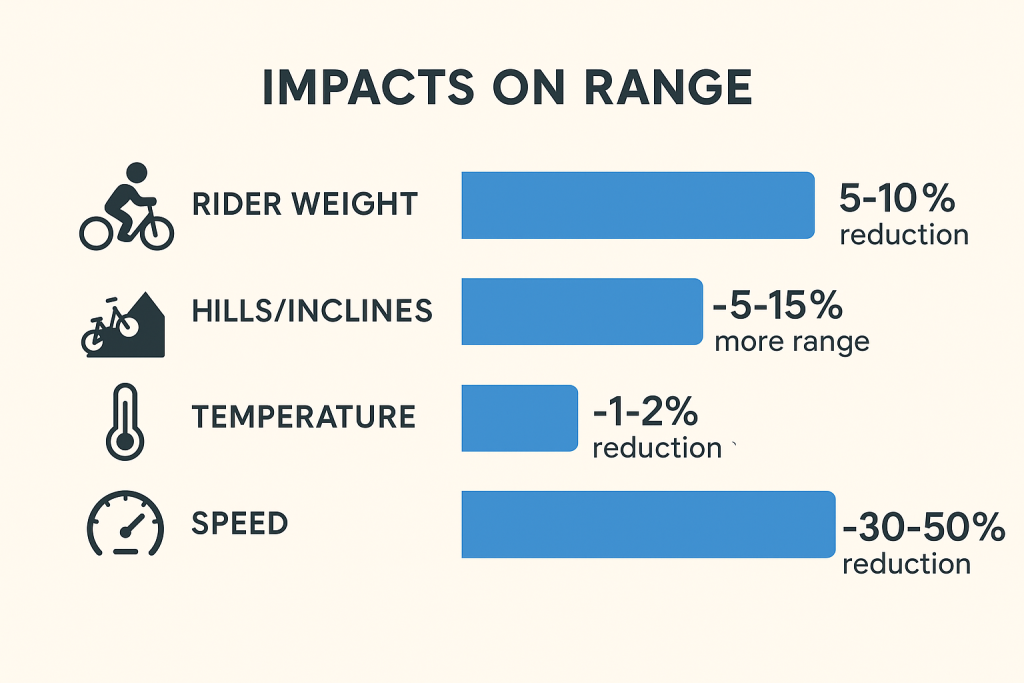
Electric scooters have transformed urban mobility with their convenience and eco-friendly nature. But one question remains at the forefront for potential buyers and current owners alike: How far can an electric scooter go on one charge? This comprehensive guide breaks down everything you need to know about electric scooter range. 1. What is the average range of electric scooters? The typical electric scooter can travel between 10 and 40 miles on a single charge, but this range varies dramatically across models and price points. Budget scooters often deliver 10-15 miles of range, while mid-tier options typically offer 15-25 miles. Premium models can reach impressive distances of 25-40+ miles per charge. You might wonder what causes such variation. Well, several factors come into play simultaneously. Battery capacity stands as the primary determinant – measured in watt-hours (Wh), higher capacity batteries store more energy and thus provide longer ranges. Most consumer electric scooters feature batteries ranging from 250Wh to 1000Wh. Motor efficiency also plays a crucial role in determining range. More efficient motors convert battery power into motion with less waste, allowing riders to travel farther on the same charge. Advanced models from companies like Dynamic Scooter incorporate sophisticated motor management systems that optimize power usage across various riding conditions. Price Range Typical Battery Capacity Expected Range Under $300 250-350Wh 8-12 miles $300-$500 350-450Wh 12-18 miles $500-$800 450-600Wh 15-25 miles $800+ 600-1000Wh+ 20-40+ miles 2. What factors affect electric scooter range? Battery capacity might seem like the obvious answer, but the story runs much deeper than just battery size. Think about this – two identical scooters with the same battery can achieve vastly different ranges depending on how and where they’re ridden. Rider weight significantly impacts range – heavier riders require more power to maintain speed. Most manufacturers test their scooters with riders weighing around 150-170 pounds. For every 20 pounds above this benchmark, expect a 5-10% reduction in range. Terrain type dramatically affects battery consumption. Flat, smooth surfaces allow for maximum efficiency, while hills and rough terrain drain batteries much faster. A scooter rated for 20 miles on flat ground might only achieve 10-12 miles on hilly terrain. Weather conditions play a surprisingly large role too. Cold temperatures temporarily reduce battery capacity – lithium-ion batteries perform best between 60-80°F (15-27°C). Riding in temperatures below 40°F (4°C) can decrease range by 20-30%. Factor Impact on Range Example Rider Weight 5-10% reduction per 20lbs over test weight 200lb rider = ~20% less range Hills/Inclines 5-15% reduction per degree of average incline 5° incline = 25-75% less range Temperature 1-2% reduction per degree below optimal 40°F = ~30% less range Speed Higher speeds = exponentially more power Max speed = 30-50% less range 3. How do different electric scooter brands compare in terms of range? Brand differences extend beyond marketing claims – engineering philosophy, component quality, and price positioning all influence range performance. Let’s examine how various market segments compare. High-end brands like Dualtron, Kaabo, and VSETT have built reputations around exceptional range capabilities. These premium scooters often feature dual motors, massive batteries (sometimes exceeding 1500Wh), and sophisticated battery management systems. Models like the Dualtron Thunder can achieve 50+ miles per charge. Mid-range manufacturers balance performance with affordability. Brands like Segway-Ninebot, Apollo, and Dynamic Scooter occupy this space with models offering 20-30 miles of real-world range. The Dynamic Scooter Model B exemplifies this category with its 20km (12 miles) range, striking an excellent balance between performance and price. Budget-friendly options from companies like Gotrax and Hiboy focus on accessibility with lower prices but modest range capabilities. These scooters typically deliver 8-15 miles per charge – sufficient for short commutes but potentially limiting for longer trips. 4. How can you accurately interpret manufacturer range claims? Manufacturer range claims require careful interpretation since testing methods vary widely across the industry. No standardized testing protocol exists for electric scooters, creating significant inconsistencies in how range figures are determined and reported. Most manufacturers test under ideal conditions: flat, smooth surfaces; moderate temperatures (65-75°F); riders at or below the weight testing standard (usually 150-170 pounds); and constant, moderate speeds (typically 10-15 mph). These controlled environments maximize range but rarely reflect real-world riding conditions. A good rule of thumb? Assume you’ll achieve 60-80% of the advertised range under typical conditions. For a scooter claiming 25 miles of range, expect 15-20 miles in real-world use. This mental adjustment helps avoid disappointment and ensures your scooter meets your actual transportation needs. Range Claim Type What It Usually Means How to Interpret “Up to X miles” Maximum possible under perfect conditions Expect 60-70% in real-world use “X miles (eco mode)” Slowest speed setting, flat terrain Realistic for slow, flat riding only “X-Y miles” Range from normal to eco mode Expect closer to X in typical use 5. How can you maximize your electric scooter’s range? Extending your scooter’s range doesn’t require technical expertise – simple riding habits and maintenance practices can significantly impact how far you can travel on a single charge. Let’s explore practical strategies that make a real difference. Riding technique profoundly affects battery consumption. Maintaining a steady, moderate speed conserves energy much more effectively than frequent acceleration and braking. Each time you accelerate, particularly from a complete stop, your scooter draws a surge of power from the battery. Speed selection represents the single most significant factor under rider control. Higher speeds require exponentially more power due to increased air resistance. Reducing speed from maximum to 75% can increase range by 30-50% in many cases. Battery maintenance practices preserve capacity over time. Lithium-ion batteries prefer partial discharge cycles rather than complete depletion. Avoiding regular deep discharges (below 10-20% capacity) extends battery lifespan and maintains maximum range capability. Range Extension Strategy Potential Impact Difficulty Level Ride at 75% of max speed 30-50% more range Easy Maintain steady speed 15-25% more range Moderate Keep tires properly inflated 5-15% more range Easy Use eco/battery saving mode 20-40% more range Easy 6. What usage scenarios are long-range electric scooters best suited for? Different riding […]
How Far Can an Electric Scooter Go on One Charge? Complete Range Analysis Read More »