
Confused about where you can ride your new electric mountain bike? Unclear rules can keep you off the best trails, leaving you frustrated. Knowing the regulations for electric mountain bikes lets you ride with confidence and discover amazing new places.
Yes, electric mountain bikes are allowed on many trails, but access depends on local rules. E-bike laws are managed by federal, state, and local agencies, creating a patchwork of regulations. Generally, Class 1 electric mountain bike have the widest access, but riders must always check the rules for a specific trail before riding.
So, how can you know for sure where to ride? Let’s break it down.
1. What Are the Electric Mountain Bikes Classifications?
To understand trail access, you first need to know the e-bike classes. The US and Canada use a 3-Class system. It categorizes e-bikes by top speed and motor assistance type.
Class 1 e-bikes are pedal-assist only, with a motor that cuts off at 20 mph. With no throttle, this class has the widest trail acceptance.
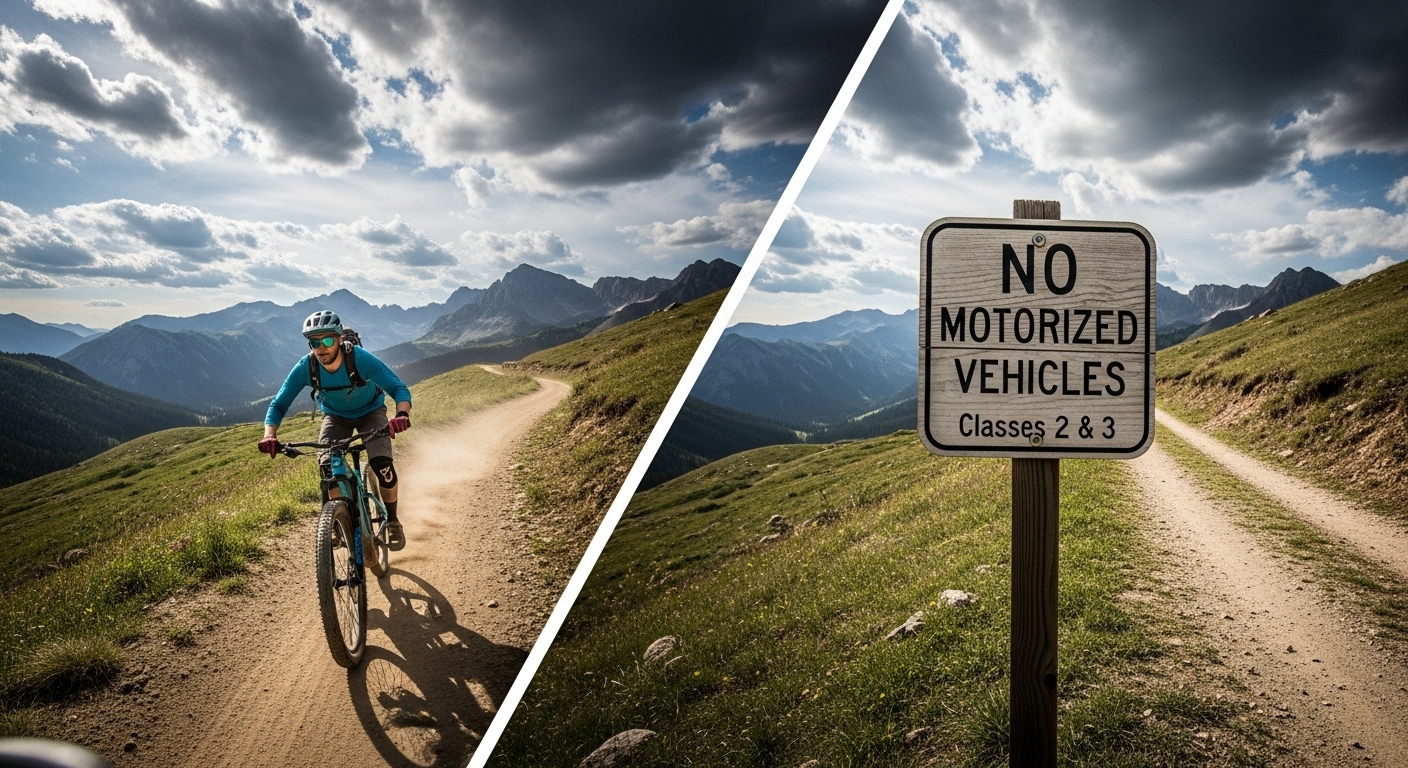
Class 2 e-bikes also top out at 20 mph but include a throttle. This lets you use the motor without pedaling. The throttle often gets them banned from Class 1 trails.
Class 3 e-bikes are also pedal-assist only, like Class 1. The key difference is a higher top speed. The motor provides assistance up to 28 mph. Here’s why it matters… this higher speed means Class 3 e-bikes are typically restricted to roads and commuter paths, not singletrack trails.
| E-Bike Class | Motor Assist Type | Top Assisted Speed | Common Trail Access |
| Class 1 | Pedal-Assist Only | 20 mph | Most Widely Accepted |
| Class 2 | Pedal-Assist & Throttle | 20 mph | Often Restricted |
| Class 3 | Pedal-Assist Only | 28 mph | Rarely Allowed on Trails |
Knowing your e-bike’s classification is the first step. It helps you understand which rules apply to you. Models like the Dynamic Scooter Q5 are designed as Class 1 e-bikes specifically to ensure the widest possible trail access for riders.
2. Why Is E-MTB Trail Access Controversial?
Allowing electric mountain bikes on trails is a heated topic. The debate involves several groups with different concerns. Understanding these views helps explain the complex rules.
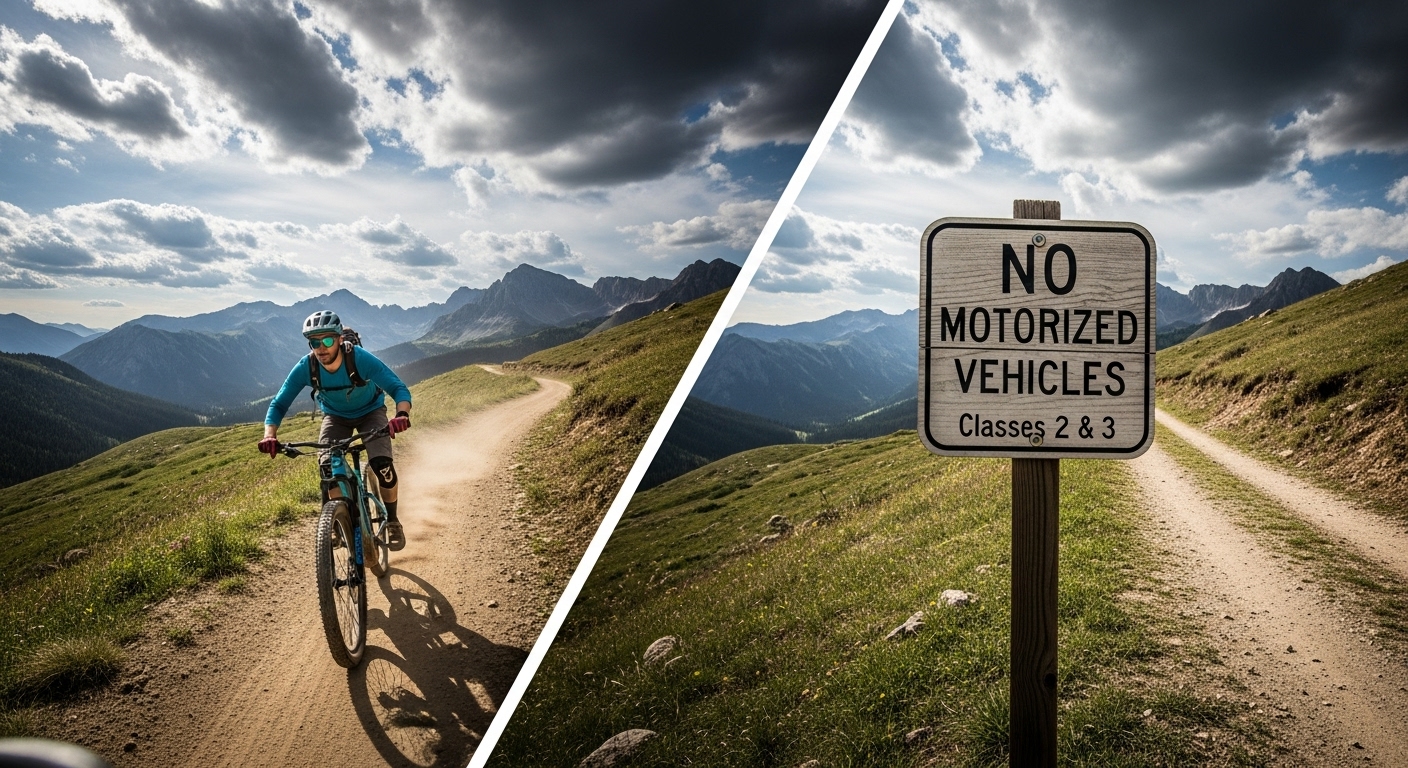
The core issue is the “motorized” label. Land agencies often ban motorized vehicles from non-motorized trails. Opponents argue an e-bike’s motor makes it a motorized vehicle, like a dirt bike.
Traditional bikers and hikers worry about speed and accidents on shared trails. They also worry about trail damage. The best part? Studies show electric mountain bikes cause no more trail wear than traditional bikes.
Environmental impact is another major point of discussion. Land managers must consider soil erosion and wildlife disturbance. The quiet, efficient motor on a bike like the Dynamic Scooter Q5 helps minimize this impact. The debate weighs increasing public access against preserving natural spaces.
| Stakeholder Group | Primary Concern | Common Argument |
| Traditional Mountain Bikers | Safety and Trail Flow | E-MTBs are too fast for shared trails. |
| Hikers & Equestrians | Safety and Startle Factor | Quiet e-bikes can surprise people and animals. |
| Land Managers | Trail Sustainability & Liability | Increased use could lead to more maintenance costs. |
| E-MTB Riders | Equal Access | E-bikes are a tool for access, not a threat. |
This controversy has led to the current patchwork of regulations. As more people ride e-MTBs, the conversation continues to evolve. Advocacy groups and responsible riders are working to build trust and find common ground.
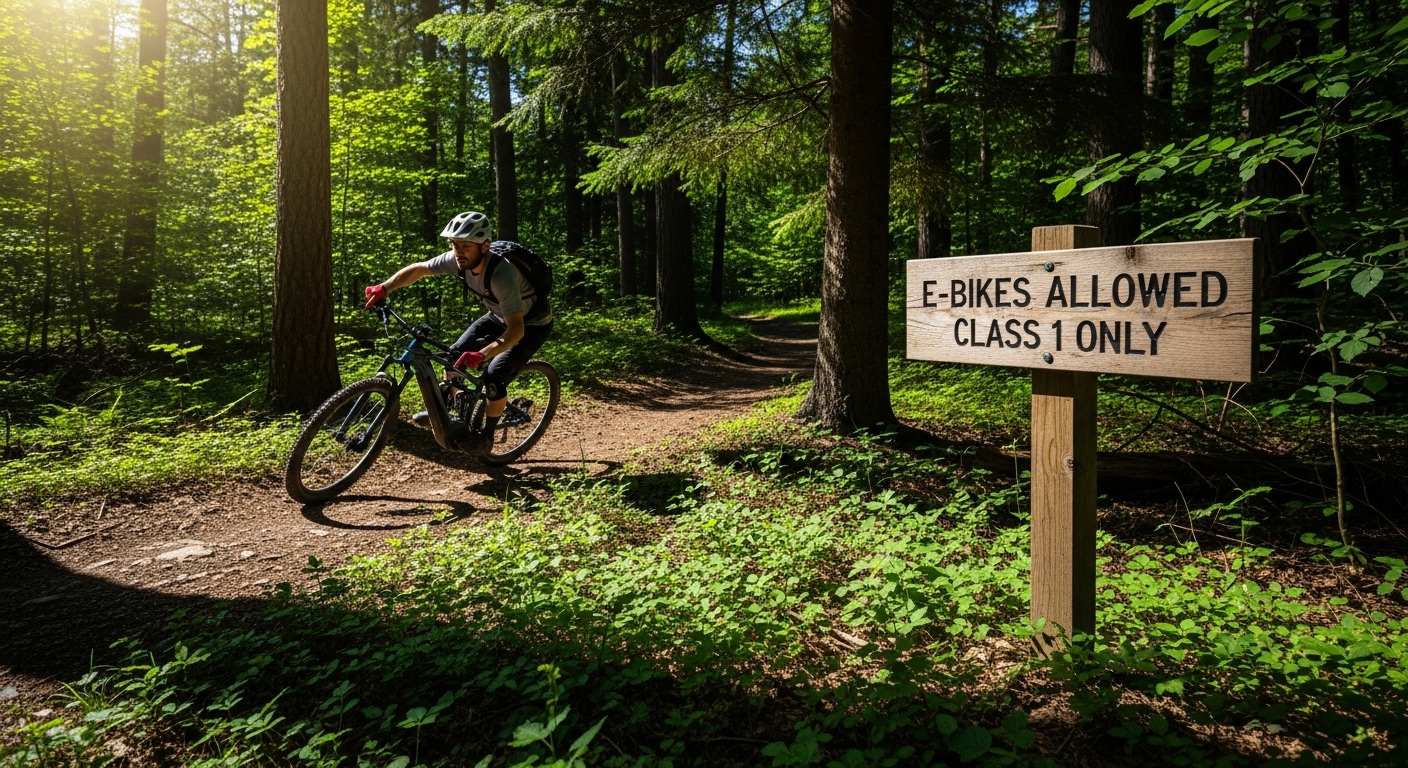
3. How Do Federal Agencies Regulate Electric Mountain Bikes Access?
In the US, several federal agencies manage public land. Each has its own rules for e-bike access. This creates a complex landscape for riders.
The Bureau of Land Management (BLM) is progressive. Its policy allows e-bikes on motorized trails. However, local BLM offices have the final say.
The U.S. Forest Service (USFS) classifies e-bikes as motorized. This limits them to motorized trails, like those for dirt bikes. But here’s the thing… local districts can open specific non-motorized trails to e-bikes.
The National Park Service (NPS) has also opened up more access for e-bikes. E-bikes are now generally allowed wherever traditional bicycles are allowed in national parks. This includes paved and unpaved roads and trails. However, individual park superintendents can still close specific areas to e-bike use.
| Federal Agency | General E-Bike Policy | Local Discretion |
| Bureau of Land Management (BLM) | Allowed on motorized trails | High |
| U.S. Forest Service (USFS) | Restricted to motorized trails | Moderate (can open specific trails) |
| National Park Service (NPS) | Allowed where traditional bikes are | High (can close specific areas) |
It is always best to check the website of the specific federal land you plan to visit. The rules can change, and local offices provide the most accurate and up-to-date information. A compliant Class 1 bike like the Dynamic Scooter Q5 gives you the best chance of being allowed on these lands.
4. What Is the Role of State and Local Governments?
While federal agencies manage huge areas, the trail access debate often happens at the state and local levels. State laws provide the legal framework. Local governments make the final decisions for your local trails.
Many states adopted the 3-Class system for consistency. This helps land managers create rules. Still, laws vary, with some states setting age or helmet rules.
Now, you might be wondering… who has the final say? Even with a state law in place, local land managers usually have the ultimate authority. A city parks department, a county open space district, or a local conservation trust can decide whether to open or close trails to electric mountain bike.
This local control is why rules vary so much. Checking with the local land manager is key. Their decision overrides general state or federal policy.
For example, California has a clear state law defining e-bikes, but it gives local governments the power to restrict access. In Colorado, some areas like Jefferson County have conducted extensive studies before opening certain trails to e-bikes. Utah is known for its e-bike-friendly trails in places like Moab, but other areas like Park City have stricter rules.
| State | General Approach | Local Control Level | Example |
| California | Adopts 3-Class System | High | Marin County has tight restrictions, while other areas are more open. |
| Colorado | Adopts 3-Class System | Very High | Access is decided on a trail-by-trail basis in many counties. |
| Utah | Adopts 3-Class System | High | Moab is very welcoming to e-bikes, while some ski resort trails are not. |
Always look for signs at the trailhead. They will provide the most current information on electric mountain bike access for that specific trail system.
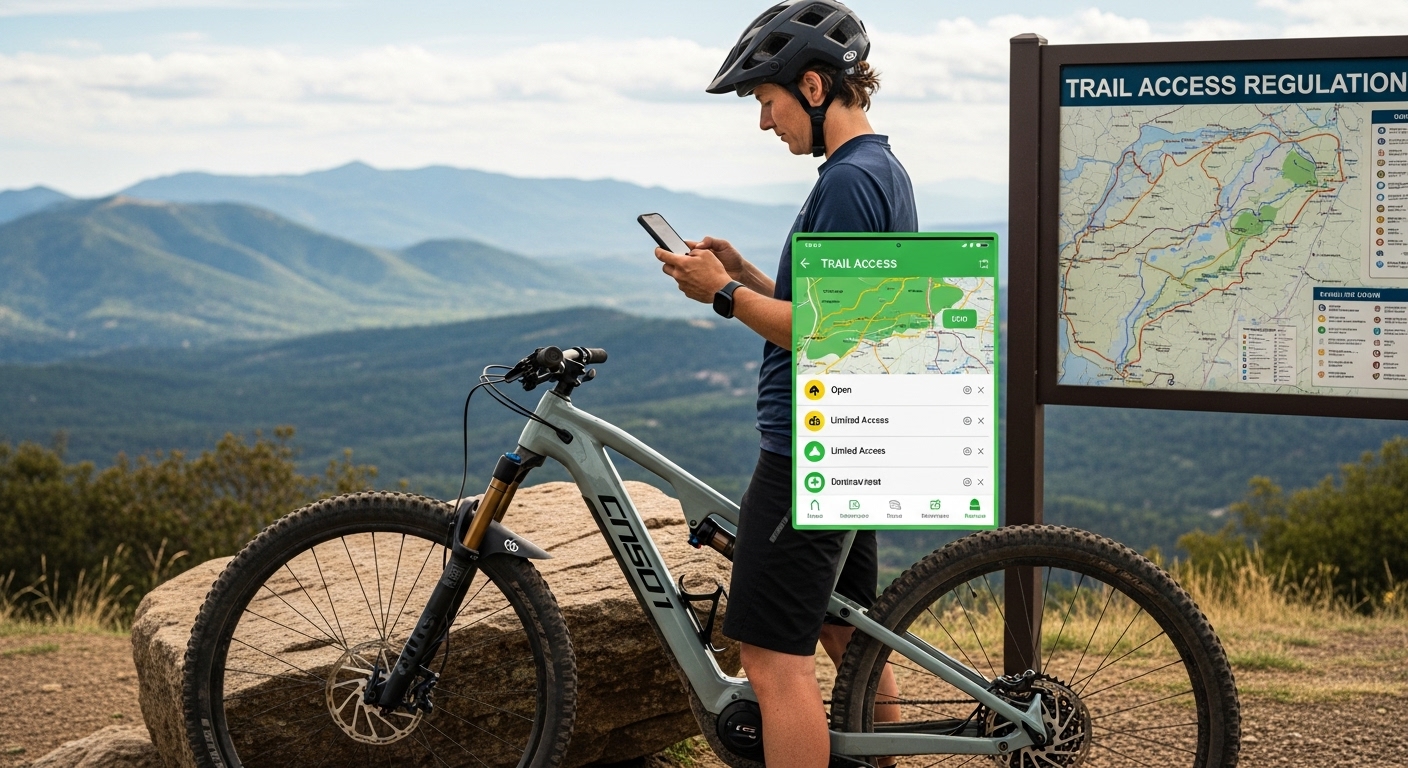
5. How Can You Find E-MTB-Friendly Trails?
With changing rules, finding a place to ride your e-MTB can be a challenge. Luckily, great tools are available. They save you time and prevent you from riding on a closed trail.
Trail apps like Trailforks and MTB Project are your best friend. They have huge trail databases with e-bike access information.
Let me explain… these apps have a specific filter for e-bike access. You can set the filter to show only trails that are open to e-MTBs. This makes it easy to plan your rides and discover new trail systems in your area or when you are traveling.
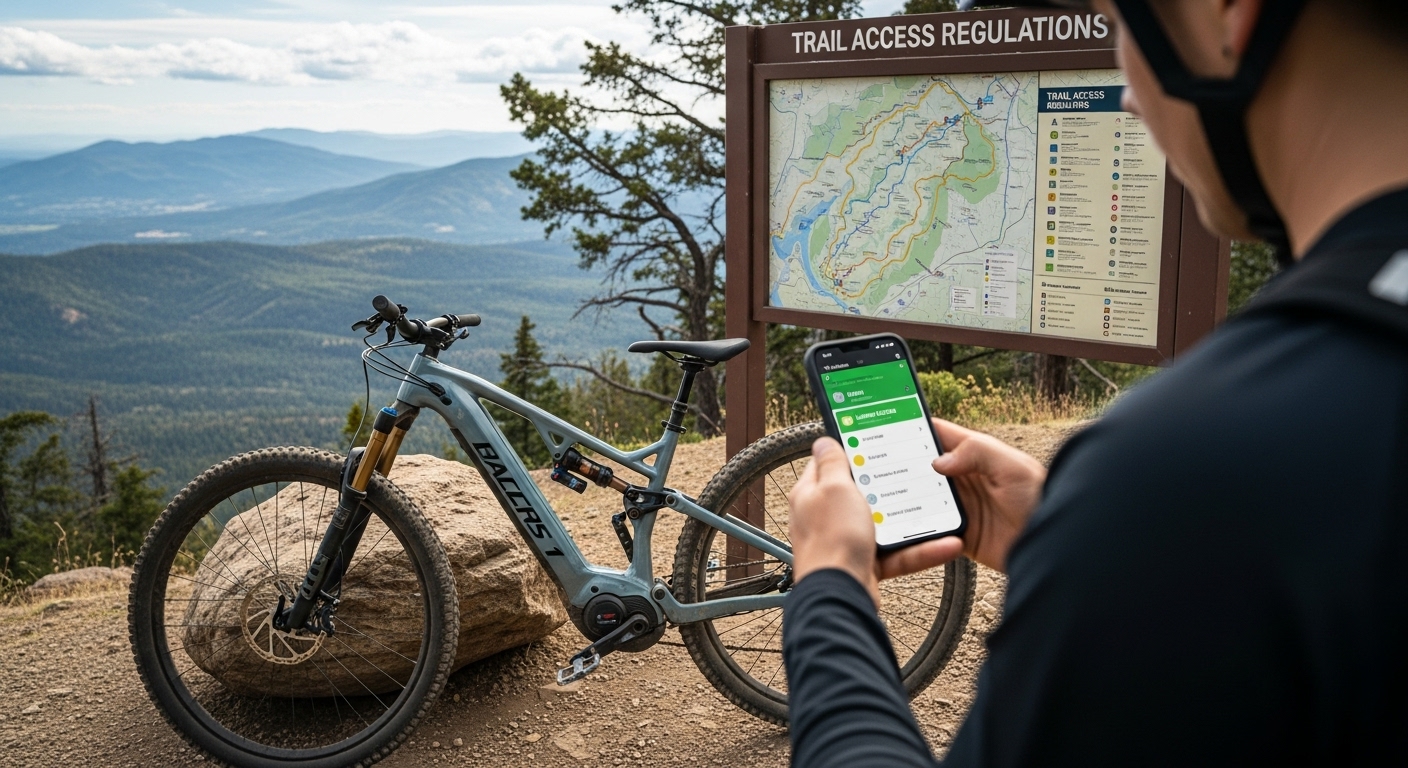
Don’t rely on these apps alone. The info is often crowd-sourced and can be outdated. Use the app to find trails, then confirm the rules with the local land manager.
Always check the official website for the park, forest, or trail system you plan to visit. This is where you will find the most reliable information. Look for a section on rules and regulations, or a specific page about e-bike access.
| Resource | Type | How to Use for E-MTB | Reliability |
| Trailforks | App & Website | Use the e-bike filter to find open trails. | Good (but always double-check) |
| MTB Project | App & Website | Check trail descriptions for e-bike info. | Good (but always double-check) |
| Local Park/Forest Website | Official Source | Find the definitive rules and regulations. | Excellent |
Taking a few extra minutes to do your research is worth it. Starting with a compliant bike like the Dynamic Scooter Q5 makes this process even easier, as it is designed to meet the most common trail access requirements. This ensures you have a great ride and helps maintain a positive image for the e-MTB community.
6. What Is Proper Trail Etiquette for Electric Mountain Bikes Riders?
How you ride on the trail matters. Good etiquette helps keep trails open for everyone. It builds respect and ensures a safe experience for all.
The golden rule of trail etiquette is to be courteous and in control. electric mountain bike riders should always yield to other non-motorized users like hikers and equestrians. When approaching from behind, slow down, announce yourself, and wait for them to let you pass.
This is important because… your speed can be intimidating to others. Manage your speed, especially on twisty trails or around blind corners. You should always be able to stop safely within your line of sight. Riding in control prevents accidents and reduces conflict.
Minimizing your impact is key. Stay on the trail. Don’t cut corners or ride on fragile plants. Avoid skidding, which causes erosion. Don’t ride on wet, muddy trails.
| Etiquette Rule | Why It Matters | How to Do It |
| Yield to Others | Safety and Courtesy | Slow down, announce your presence, and pass with care. |
| Control Your Speed | Safety and Reduces Conflict | Ride at a safe speed and be prepared to stop at any time. |
| Minimize Impact | Trail Sustainability | Stay on the trail, avoid skidding, and do not ride in the mud. |
Remember that as an e-MTB rider, you are an ambassador for the sport. Every interaction reflects on the community. Riding a well-designed bike like the Dynamic Scooter Q5, with its responsive handling and controlled power, makes it easier to be a courteous and responsible rider. This helps ensure more trails will open to electric mountain bike in the future.
7. Are There Trails Specifically for E-MTBs?
Yes, as e-MTB popularity grows, more places are creating specific trails for them. These purpose-built trails offer a great riding experience. They are designed for the unique traits of electric mountain bike.
Bike parks and ski resorts are leading this trend. They are using e-bikes to attract more summer visitors. They often have dedicated uphill e-MTB trails, allowing access to downhill runs without a chairlift.
Here’s the deal… these purpose-built trails are often designed with e-bikes in mind. They may feature wider turns and more gradual climbs. This makes them fun and sustainable for e-MTB use. It also helps to separate e-bike traffic from traditional mountain bike or hiking trails, reducing potential user conflict.
Riding in these areas has many benefits. The trails are well-kept and marked. There is no confusion about where to ride. It is a great way to enjoy your e-MTB stress-free.
| Trail Environment | E-MTB Access | Key Benefit |
| Bike Parks | Often have dedicated trails | Purpose-built features and clear rules. |
| Ski Resorts (Summer) | Growing number of uphill/downhill trails | Access to amazing terrain without a lift. |
| Private Trail Networks | Varies by location | Can offer unique, e-bike-friendly experiences. |
While these dedicated trails are still not everywhere, the number is growing quickly. They represent an exciting development in the world of e-MTB. They provide a model for how to successfully integrate e-bikes into a trail system.
8. How Do Different Trail Types Affect Access?
The trail type you ride impacts whether electric mountain bike are allowed. Land managers use trail type to manage access. Understanding these differences helps you know what to expect.
Trails are often categorized by their width and intended use. The three main types you will encounter are singletrack, doubletrack, and fire roads.
Singletrack trails are narrow, prized by mountain bikers for their challenge. Want to know the secret? Gaining singletrack access is the biggest challenge for e-MTB advocates. The narrowness and potential for user conflict make land managers cautious.
Doubletrack trails are wide enough for a vehicle. They are often old logging roads. electric mountain bikes are more likely to be allowed on them. The width makes sharing the trail safer.
Fire roads are even wider and are built for emergency vehicle access. They are almost always open to electric mountain bikes. While they may not be as exciting as singletrack, they can be a great way to access remote areas and enjoy beautiful scenery.
| Trail Type | Typical Width | Common E-MTB Access | Key Characteristic |
| Singletrack | 1-2 feet | Often Restricted | Narrow, challenging, high user interaction. |
| Doubletrack | 6-8 feet | Often Allowed | Wide enough for vehicles, shared use. |
| Fire Road | 10+ feet | Almost Always Allowed | Wide, graded roads for vehicle access. |
When you are looking for a place to ride, starting with doubletrack and fire roads is a safe bet. As you get to know your local area, you can then research which specific singletrack trails might be open to e-MTBs.
9. How Is Public Opinion and Advocacy Changing Trail Access?
E-MTB trail access rules are not set in stone. Public opinion and advocacy groups are shaping the conversation. This leads to more opportunities for riders.
Advocacy groups like PeopleForBikes are playing a huge role. They work with land managers and politicians to create fair e-bike policies. They provide research and a unified voice for the community.
The bottom line? The behavior of individual riders has a massive impact. When e-MTB riders are courteous, follow the rules, and volunteer for trail maintenance days, it builds trust with land managers. This positive behavior is one of the most powerful tools for opening up more trails.
As more people see the benefits of electric mountain bike, public opinion is shifting. People see they are a great way to get active. This includes older riders, people with physical limits, and families.
This growing acceptance is leading to real change. More and more trail systems are opening up to e-MTBs. The conversation is moving from “if” to “how” to best manage e-bike access.
| Factor | How It Influences Access | Example Action |
| Advocacy Groups | Provides a unified voice and resources. | PeopleForBikes meeting with land managers. |
| Rider Behavior | Builds trust and a positive reputation. | Yielding to hikers and volunteering for trail work. |
| Public Opinion | Creates a more welcoming environment. | More families and diverse riders using e-bikes. |
By getting involved with local advocacy efforts and always riding responsibly, you can be a part of this positive change. You can help ensure that the future of e-MTB trail access is bright.
10. What Does the Future of Electric Mountain Bikes Trail Access Look Like?
The electric mountain bike world is changing fast. The future of trail access looks promising. Riders can expect more clarity and opportunities ahead.
More standardized regulations are a big hope. As more states adopt the 3-Class system, rules will become clearer. This consistency will reduce confusion and simplify travel with your electric mountain bike.
Expect more purpose-built e-bike trails. As demand grows, land managers will invest in them. This will create better riding experiences and reduce conflict.
What does this mean for you? Technology will also play a role. E-bike motors are becoming quieter and more efficient. This could help to ease concerns about noise and environmental impact. Some e-bikes now even have apps that can limit their speed to comply with local rules.
| Future Trend | Potential Impact on Trail Access | Rider Benefit |
| Standardized Regulations | Less confusion, easier to follow rules. | Confidence to ride in new places. |
| More Purpose-Built Trails | Better riding experiences, less conflict. | More and better places to ride. |
| Improved Technology | Addresses concerns about noise and speed. | Greater acceptance from other trail users. |
The future is bright for e-MTB trail access. Through a combination of smart advocacy, responsible riding, and new technology, the opportunities to ride are only going to grow. It is an exciting time to be an e-MTB rider.
Conclusion
Knowing where electric mountain bikes are allowed is key. We’ve covered the class system, agency rules, and how to find legal trails. The landscape is complex but opening up. The benefit is more access to public lands.
Ready to ride with confidence? The Dynamic Scooter Electric Mountain Bike Q5 is the perfect trail-ready e-MTB, designed to meet Class 1 standards while delivering the power and reliability you need. Our team can help you understand the rules and start your next adventure. Contact us today!
FAQ
Q1: Do I need a license or registration for my e-MTB on trails?
In most places in the US and Canada, you do not need a license or registration to ride a Class 1, 2, or 3 e-bike on approved trails, as they are generally treated like bicycles.
Q2: Can I ride a modified or high-powered electric mountain bike on trails?
No. Most trail access rules apply specifically to e-bikes that fit within the 3-Class system (typically limited to 750W motors). Overly powerful or modified bikes are usually considered unlicensed motorized vehicles and are not allowed on non-motorized trails.
Q3: Are e-MTBs allowed in wilderness areas?
No. Federally designated Wilderness Areas in the United States prohibit all forms of mechanical and motorized transport, including bicycles and e-bikes, to preserve the primitive character of the land.
Q4: What’s the penalty for riding an e-MTB on a closed trail?
Penalties vary by jurisdiction but can include a significant fine, confiscation of the bike, and a ban from the trail system. It also harms advocacy efforts to open more trails to e-bikes.
Q5: Does having a throttle, like on a Class 2 e-bike, limit my trail access?
Yes. Many trails that allow Class 1 pedal-assist electric mountain bikes specifically prohibit Class 2 e-bikes with throttles. The throttle is often a key factor in classifying the bike as “motorized” in the eyes of land managers.