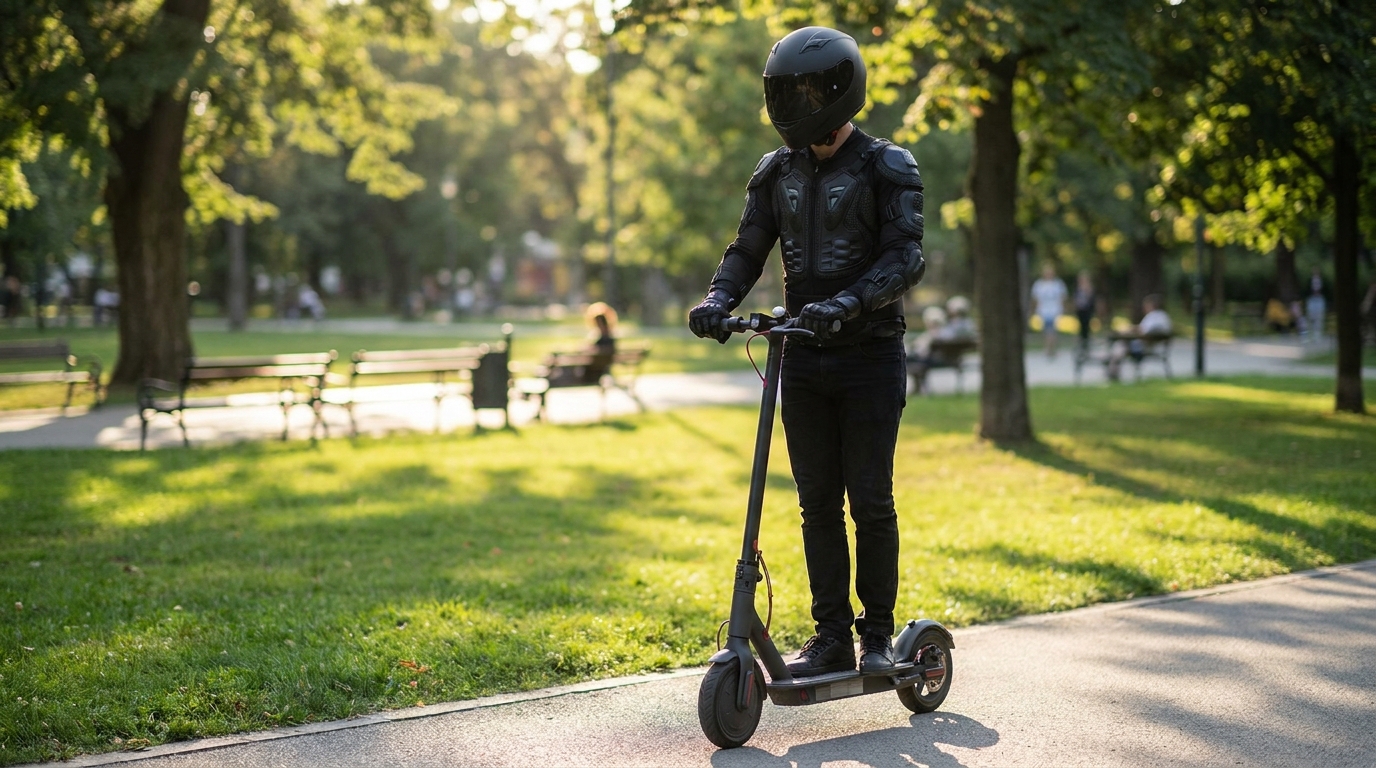

Illinois electric scooter laws are divided into two distinct categories based on vehicle power and weight, meaning your legal requirements change depending on whether your scooter is low-speed or high-speed. You might be ready to streamline your morning commute or deploy a local rental fleet, but navigating the state’s decentralized regulations can feel like a legal maze.
Without a clear understanding of the Illinois electric scooter laws, you risk facing heavy fines, impounded hardware, or significant liability gaps. By choosing a reliable partner, you gain the clarity needed to navigate these urban transit rules with confidence and compliance.
Are there statewide laws for scooters in Illinois?
Yes, there are statewide Illinois electric scooter laws that provide a baseline for all riders across the Prairie State. The state differentiates between low-speed devices and high-speed motor-driven cycles, though local municipalities retain significant power to add their own restrictions. Understanding these state-level definitions is the first step toward ensuring your commercial or personal use remains above board.
Local municipalities often have the final say on where you can park and ride within city limits. While the state sets the safety standards, city councils determine the practical day-to-day operations for micromobility.
The catch?
- State laws act as a floor, not a ceiling.
- Villages can ban scooters from specific high-traffic zones.
- Local ordinances usually govern rental program permits.
Does the Vehicle Code cover all models?
The Illinois Vehicle Code provides specific definitions for motorized equipment to ensure every vehicle is accounted for. If your device doesn’t fit the low-speed criteria, it automatically falls under more restrictive motor vehicle statutes.
Best of all…
- Clear definitions prevent accidental legal violations.
- Manufacturers can design products to meet specific state tiers.
- Riders know exactly which safety equipment is mandatory.
Key Takeaway: Illinois maintains a dual-tier legal system where the state defines the vehicle classes while local cities manage the specific riding and parking zones.
| Regulatory Level | Primary Responsibility | Focus Area |
|---|---|---|
| State Level | Classification & Insurance | Safety Minimums |
| Municipal Level | Zoning & Sidewalk Access | Local Traffic Flow |
This hierarchy ensures that while safety remains consistent, urban environments can adapt to their unique density challenges.
How does Illinois classify electric scooters?
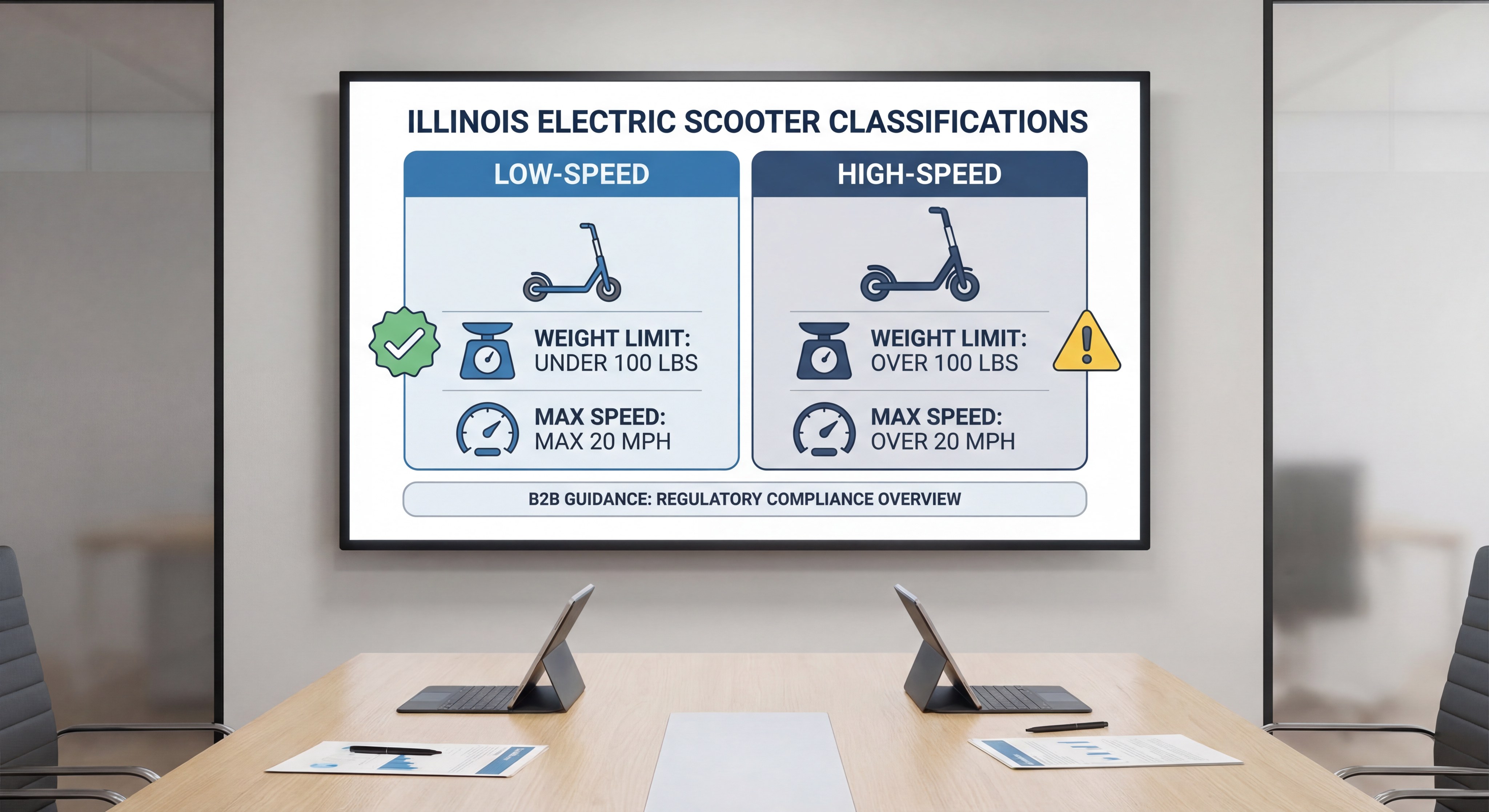
Understanding the classification within Illinois electric scooter laws requires looking at your vehicle’s weight and top speed. The state uses these metrics to determine if you are riding a simple mobility device or a vehicle that requires a full registration process. Most standard commuter models are designed to fit into the more accessible low-speed category.
What defines a low-speed scooter?
To be considered low-speed, the device must have two or three wheels and weigh less than 100 pounds. It must also have a motor that cannot propel the device faster than 20 mph on level ground.
The reality?
- Weight limits keep sidewalks and bike lanes safer for everyone.
- Speed caps align scooters with traditional bicycle traffic.
- Lower power models avoid complex motor vehicle licensing.
When is a scooter a motor-driven cycle?
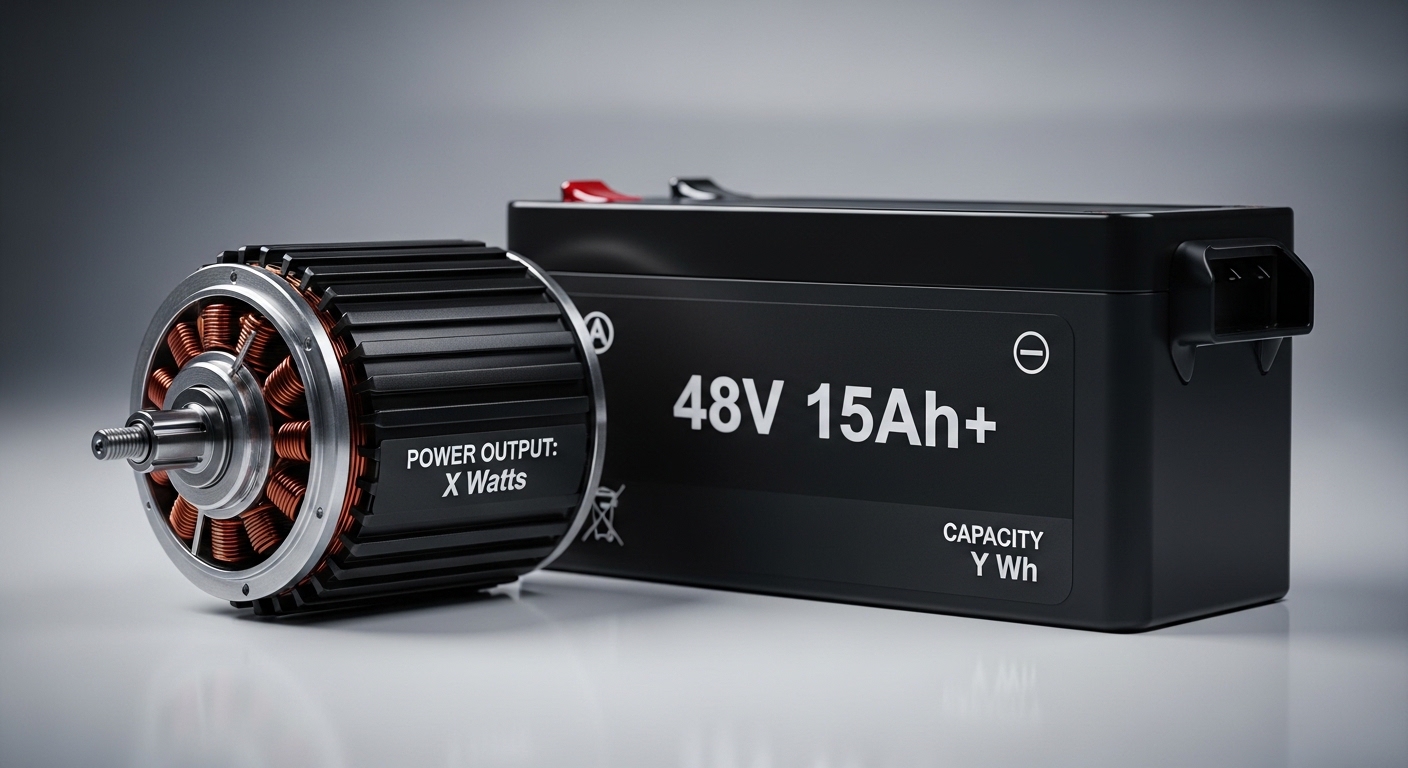
Any device with a motor larger than 750W is classified differently under the Illinois Vehicle Code. These high-speed models are treated similarly to mopeds or small motorcycles, requiring much stricter adherence to traffic laws.
Look:
- High-wattage motors provide better hill-climbing but more regulation.
- These models often require lighting and signaling upgrades.
- Heavy-duty builds typically exceed the 100-pound state threshold.
Key Takeaway: Illinois uses weight and speed thresholds to separate lightweight commuters from high-powered motor-driven cycles that require more oversight.
| Scooter Class | Max Weight | Max Speed |
|---|---|---|
| Low-Speed | < 100 lbs | 20 mph |
| High-Speed | > 100 lbs | > 20 mph |
Analyzing these metrics helps riders choose the hardware that best fits their local licensing comfort level.
Do you need a license to ride in Illinois?
Your need for a license under Illinois electric scooter laws depends entirely on the motor wattage and classification of your specific scooter model. For most residents using standard electric scooters for short-distance travel, a driver’s license is not a legal requirement. However, once a scooter crosses the threshold into the high-speed category, the state demands professional credentials.
Is a license required for commuters?
If you are riding a low-speed electric scooter with a motor under 750W, you do not need a driver’s license or permit. This makes electric scooters an incredibly accessible option for students or professionals who don’t own a car.
The best part?
- No expensive testing or permit fees for standard users.
- Increased mobility for those without traditional driving privileges.
- Simplifies the onboarding process for corporate scooter fleets.
What about high-power models?
Operating a high-speed scooter that is classed as a motor-driven cycle requires you to hold a valid Class L or Class M license. Failure to produce this license during a traffic stop can lead to significant fines and the impounding of your vehicle.
Think about it:
- Higher speeds require proven knowledge of the rules of the road.
- Class L licenses are specifically for small motorized cycles.
- This requirement ensures that fast riders are trained for safety.
Key Takeaway: Low-speed scooters are license-free, but high-powered models exceeding 750W require a Class L or M driver’s license.
| Scooter Type | License Status | Required Class |
|---|---|---|
| Standard Commuter | Not Required | N/A |
| Motor-Driven Cycle | Required | Class L or M |
Evaluating motor wattage before purchase is essential to avoid unexpected licensing hurdles after your delivery.
Are registration and number plates required?
The registration requirements within Illinois electric scooter laws are strictly tied to the vehicle’s power and speed capabilities. Most consumers looking through diverse product catalogs will find that standard electric scooters are exempt from the bureaucracy of the DMV. Registration is generally reserved for vehicles that integrate with heavy motor vehicle traffic on public roads.
Do standard scooters need plates?
Low-speed electric scooters do not need to be registered with the Illinois Secretary of State, nor do they require license plates. This lack of red tape is a major selling point for urban commuters looking for a “grab and go” transit solution.
The upshot?
- You save money on annual registration and sticker fees.
- There is no need to wait in line at the DMV for plates.
- Fleet management becomes much simpler without individual titles.
When is registration mandatory?
High-speed scooters must be formally registered and must display a rear-facing number plate at all times. This process involves paying a fee and ensuring the vehicle meets all state safety standards for road-going motor cycles.
The catch?
- You must maintain active registration to ride legally.
- Rear plates must be clearly visible to law enforcement.
- Owners must keep their titling information current with the state.
Key Takeaway: Registration and plates are only mandatory for high-speed motor-driven cycles; standard low-speed scooters are exempt.
| Documentation | Low-Speed Scooter | High-Speed Scooter |
|---|---|---|
| State Registration | Exempt | Mandatory |
| Number Plates | Not Required | Mandatory (Rear) |
By sticking to low-speed models, users can avoid the administrative costs associated with state vehicle registration.
What is the legal age to ride in Illinois?
Setting an age floor is a core component of Illinois electric scooter laws designed to protect younger riders from traffic risks. While the state provides a general guideline, the age of the rider is often one of the first things local police check during an interaction. It is vital to know both the state minimum and any specific variations in cities like Chicago.
What is the statewide minimum?
In Illinois, you generally must be at least 18 years old to operate a low-speed electric scooter on public property. This age requirement aligns with many other motorized vehicle standards to ensure riders have the maturity to handle urban traffic.
Keep in mind:
- Rental apps often require ID verification to ensure age compliance.
- Parents can be held liable for allowing underage children to ride.
- Older riders generally have better spatial awareness in busy lanes.
Are there local exceptions for minors?
Some cities, most notably Chicago, allow individuals as young as 16 to ride electric scooters provided they have explicit parental consent. This allows for more flexibility for high school students who need a reliable way to get to classes or jobs.
The fine print?
- Parental consent forms may be required for rental accounts.
- Some insurance policies may have their own age restrictions.
- Riders under 18 may face stricter helmet mandates in certain cities.
Key Takeaway: The standard legal age in Illinois is 18, though cities like Chicago may allow 16-year-olds to ride with parental permission.
| Jurisdiction | Minimum Age | Requirement |
|---|---|---|
| Illinois State | 18 | Standard Age |
| Chicago | 16 | Parental Consent |
Checking municipal codes is necessary as age limits can be the most frequently varied rule between different Illinois towns.
Where can you legally ride a scooter in Illinois?
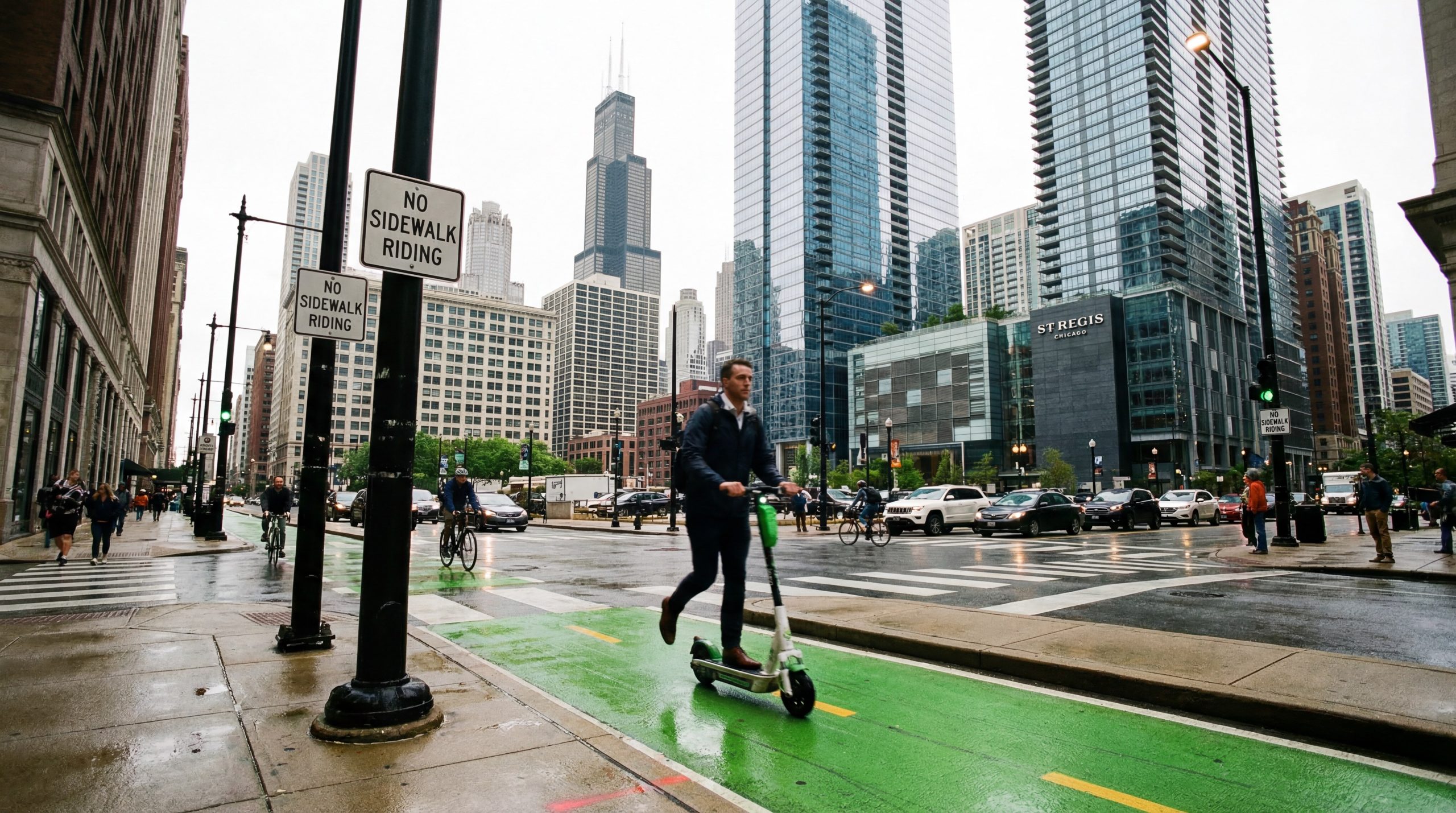
The question of “where” is perhaps the most debated aspect of Illinois electric scooter laws, as it involves balancing pedestrian safety with rider efficiency. Illinois aims to keep scooters off high-speed thoroughfares while allowing them on most local residential and business streets. You can often find the latest route tips by staying updated with provincial and city transit changes.
Are scooters allowed on all roads?
You are permitted to ride your electric scooter on roads that have a posted speed limit of 35 mph or less. However, it is strictly illegal to take any electric scooter onto state highways or high-speed expressways.
The trade-off?
- Side streets provide a safer and more scenic riding experience.
- Avoiding 40+ mph zones reduces the risk of serious accidents.
- Staying on local roads ensures you remain within the law.
Can you ride on the sidewalk?
Illinois does not have a blanket statewide law regarding sidewalk use, meaning this is left entirely to local governments. In many dense business districts, sidewalk riding is banned to protect pedestrians from collisions.
Look:
- Sidewalk bans are common in downtown Chicago areas.
- Public parks may have their own specific “no-motor” trails.
- Bike lanes are always the preferred and safest legal option.
Key Takeaway: Scooters are legal on roads with limits under 35 mph but are generally banned from highways and many urban sidewalks.
| Riding Zone | Legal Status | Limitation |
|---|---|---|
| Local Roads | Legal | Speed limit must be <35 mph |
| State Highways | Illegal | Strictly prohibited for all scooters |
| Urban Sidewalks | Varies | Often banned in business districts |
Planning your route around bike lanes and low-speed streets is the best way to ensure a compliant and stress-free journey.
What are the speed limits for Illinois scooters?
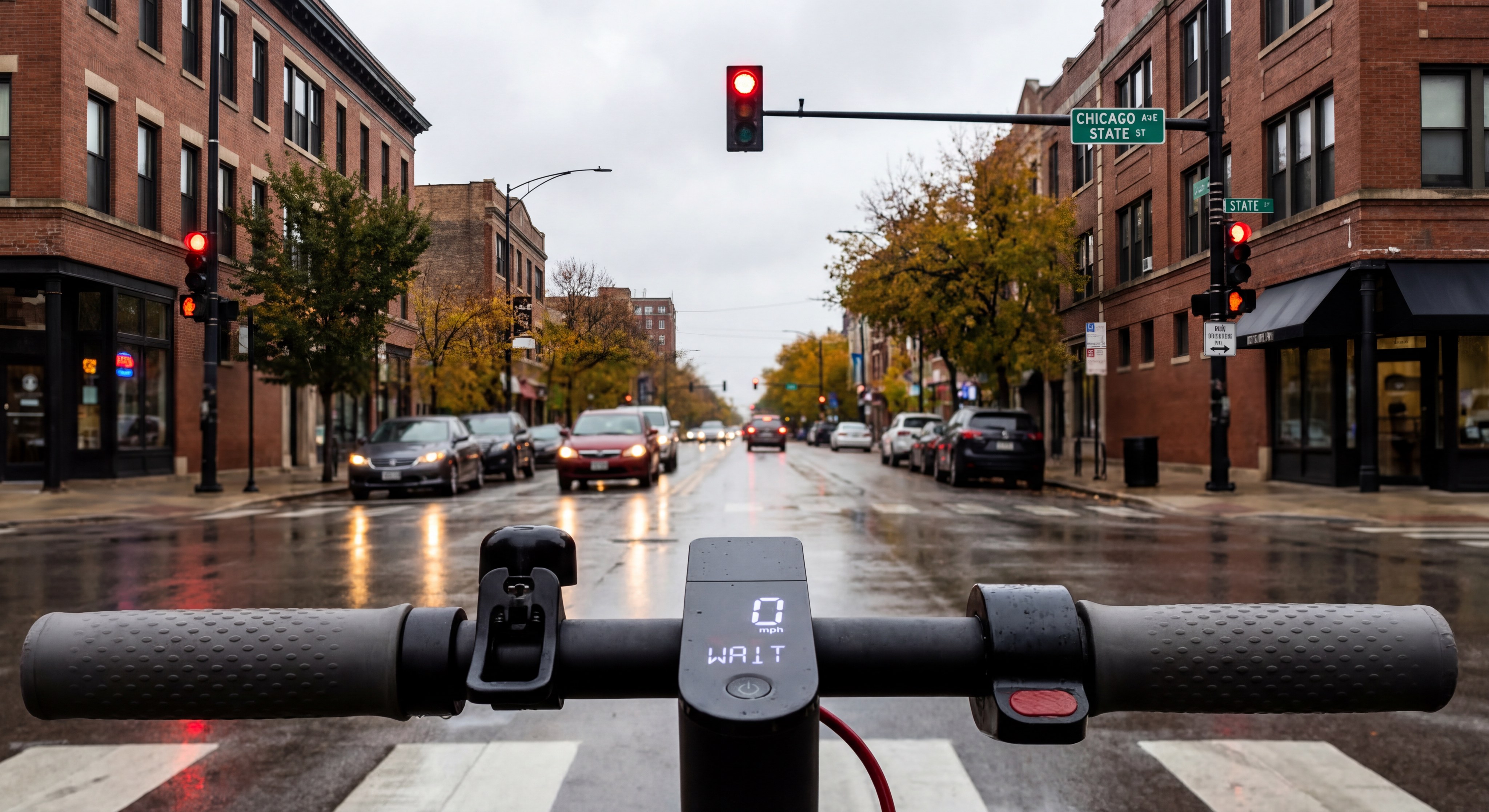
Pace is a critical safety metric within Illinois electric scooter laws because it dictates how much damage a vehicle can do in an impact. Knowing the local cap is essential to avoid speeding tickets and ensure you are not reclassified as a more regulated vehicle. While your hardware might be capable of higher speeds, the law sets a ceiling that you must respect.
What is the statewide speed cap?
The state-mandated speed limit for high-speed electric scooters is 20 mph on public ways. This speed is considered the “sweet spot” for urban mobility, allowing you to keep up with cyclists while remaining controllable.
The catch?
- Pushing past 20 mph may reclassify your vehicle’s legal status.
- Electronic speed limiters are often built-in to ensure compliance.
- Higher speeds can lead to harsher penalties in school zones.
Does Chicago have lower limits?
Chicago enforces a stricter maximum speed limit of 15 mph for electric scooters within the city limits. This lower speed is intended to minimize the severity of accidents in the city’s exceptionally crowded and narrow streets.
Best of all…
- Lower speeds give you more time to react to car doors.
- It protects pedestrians in high-density shopping districts.
- 15 mph is still significantly faster than walking or heavy traffic.
Key Takeaway: While the state allows up to 20 mph, Chicago and other dense cities often restrict scooter speeds to 15 mph for safety.
| Jurisdiction | Maximum Speed | Primary Goal |
|---|---|---|
| Illinois (State) | 20 mph | Traffic Integration |
| Chicago | 15 mph | Pedestrian Protection |
Maintaining a speed that matches local traffic flow and legal caps is vital for building a positive reputation for scooter riders.
Is electric scooter insurance mandatory in Illinois?
Unlike many states that treat scooters as bicycles, Illinois electric scooter laws include a unique mandate for insurance coverage. This requirement reflects the state’s proactive stance on liability and property damage in the event of a collision. Every rider must ensure they are properly covered before their wheels touch public pavement.
What are the minimum coverage levels?
Illinois law requires all electric scooter riders to carry a minimum of $25,000 for bodily injury and $50,000 for property damage. This ensures that any victims of an accident are compensated for medical bills and vehicle repairs.
Think about it:
- Insurance protects your personal assets from legal lawsuits.
- Many standard renter’s policies do not cover motorized scooters.
- Specific micromobility insurance is becoming more widely available.
Why does Illinois mandate insurance?
The state views electric scooters as motorized vehicles that carry a higher risk profile than traditional manual bicycles. By mandating insurance, Illinois aims to stabilize the legal environment for the growing shared-mobility market.
Look:
- It provides peace of mind for both the rider and the public.
- Insurance mandates help professionalize the scooter industry.
- It ensures that accidents don’t result in uncompensated losses.
Key Takeaway: All Illinois scooter riders must carry insurance with minimums of $25,000 for bodily injury and $50,000 for property damage.
| Coverage Type | Mandatory Minimum |
|---|---|
| Bodily Injury | $25,000 |
| Property Damage | $50,000 |
Verifying your existing insurance coverage or purchasing a dedicated policy is a non-negotiable step for Illinois scooter owners.
Can you carry passengers or items in Illinois?
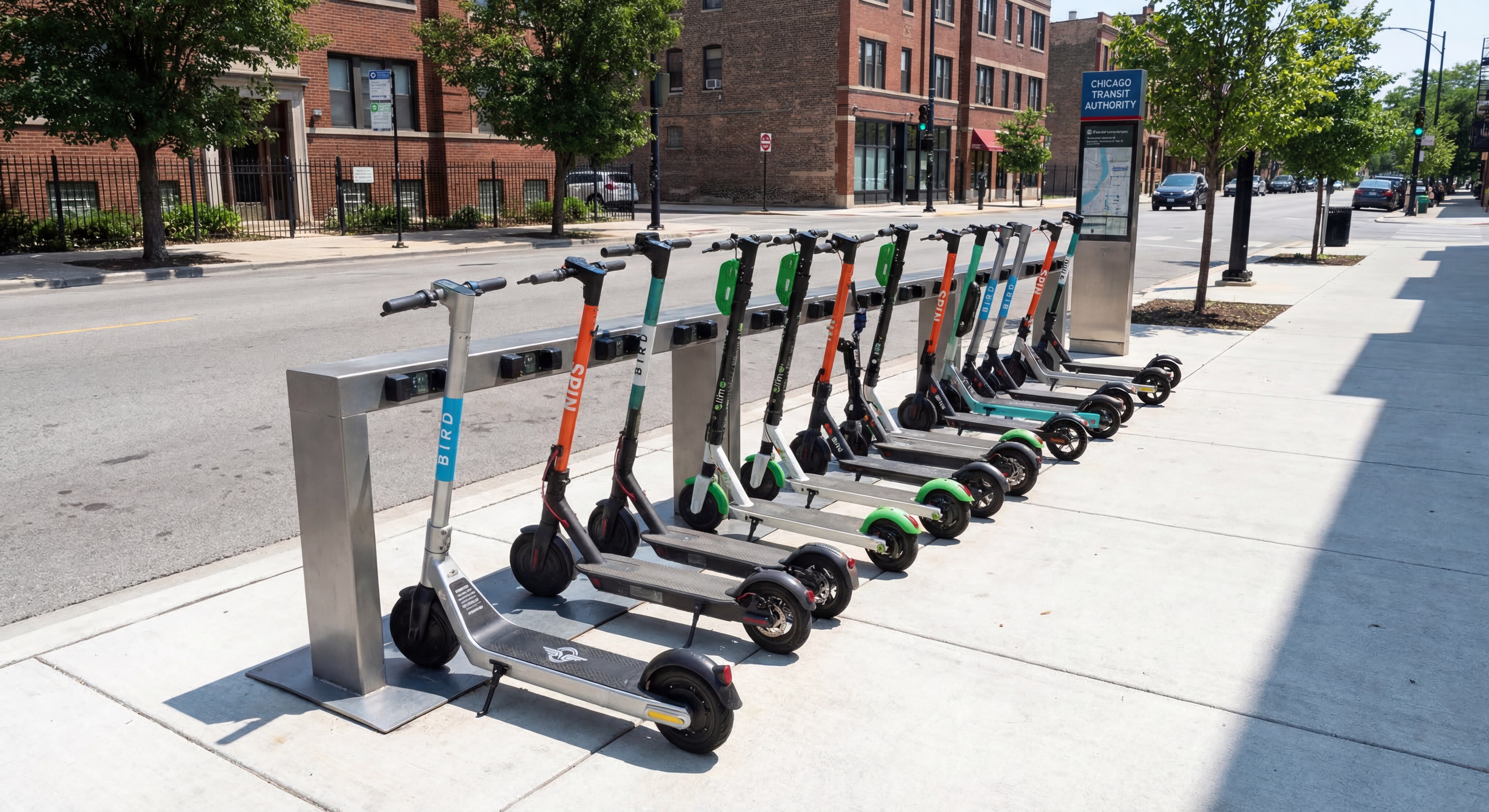
Passenger safety is a major focus for Illinois electric scooter laws, which generally restrict riders to a “one-person-per-scooter” rule. These rules prevent the dangerous imbalances that occur when two people try to share a platform designed for one. If you are ever unsure about the technical limits of your specific model, seeking expert advice is always recommended.
Is tandem riding legal?
It is strictly illegal for low-speed electric scooter riders to carry passengers in the state of Illinois. High-speed scooters may only carry a passenger if the vehicle is specifically manufactured with a separate, permanent seat.
The reality?
- Two riders significantly increase the braking distance.
- Tandem riding makes the steering less responsive.
- Most commuter scooters lack the suspension for dual weights.
Can you carry groceries or bags?
You are allowed to carry items while riding, but the law requires you to keep at least one hand on the handlebars at all times. Using a backpack is the most recommended way to transport goods while staying compliant with safety codes.
The catch?
- Heavy bags hanging from handlebars can cause “speed wobbles.”
- You must always maintain full control over the throttle and brakes.
- Carrying large, bulky items that block your view is prohibited.
Key Takeaway: Passengers are generally prohibited on scooters, and items may only be carried if the rider keeps one hand free for operation.
| Activity | Legal Status | Condition |
|---|---|---|
| Tandem Riding | Illegal | Prohibited on single-person decks |
| Carrying Cargo | Legal | One hand must remain on handlebars |
Prioritizing vehicle balance over convenience is the best way to avoid being stopped for unsafe operation in Illinois.
Are helmets legally required for Illinois riders?
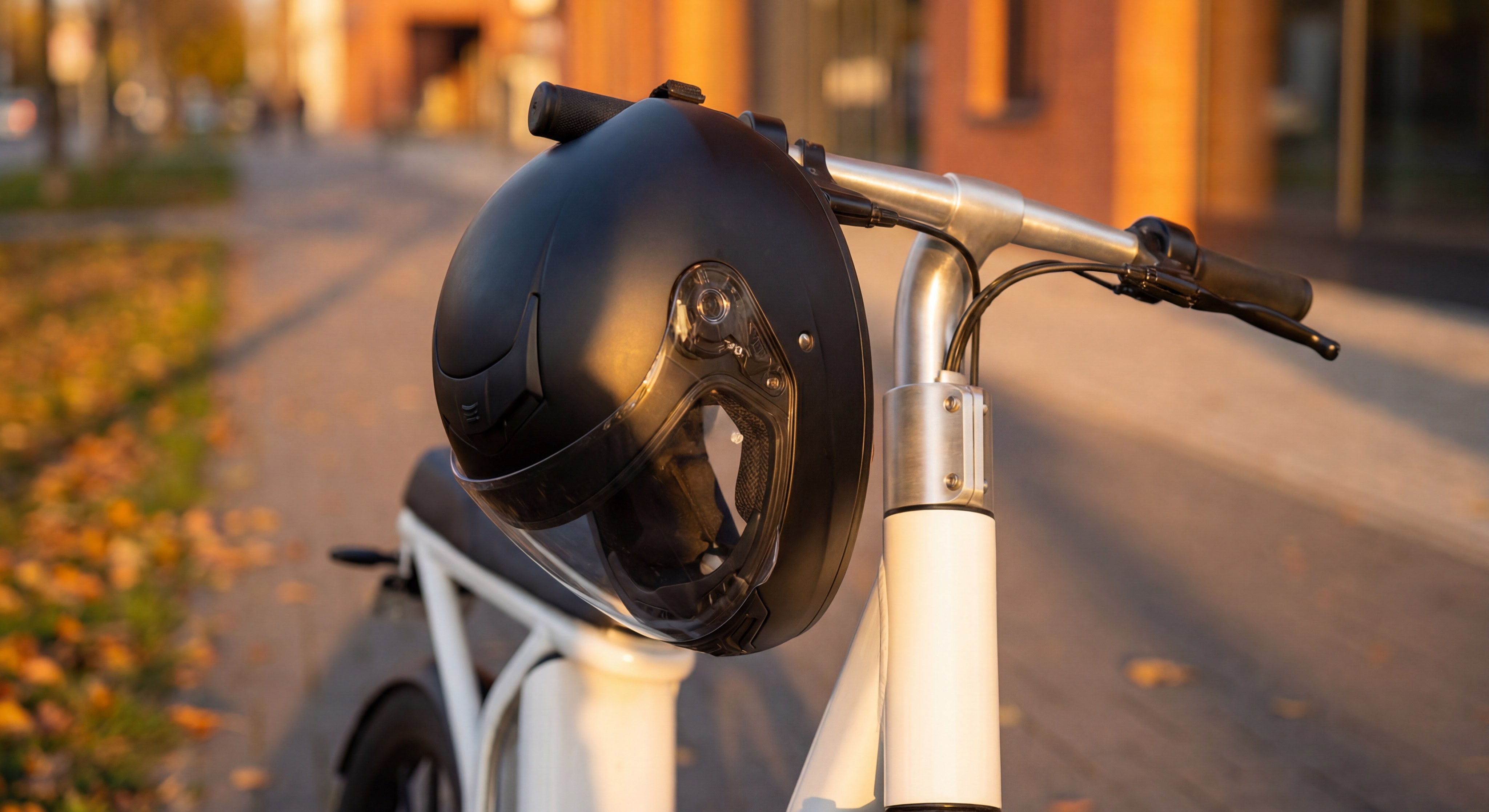
Helmet requirements within Illinois electric scooter laws are surprisingly varied, as the state does not have a blanket mandate for all adult riders. While the state encourages safety gear, it largely leaves the decision to wear a helmet up to the individual, except in specific commercial scenarios. This creates a patchwork of rules that can change as you cross city lines.
What is the statewide helmet law?
There is currently no statewide law in Illinois requiring electric scooter riders to wear a helmet. Adults riding their own private scooters can legally ride bareheaded, though medical experts and manufacturers strongly advise against it.
Look:
- Freedom of choice remains for most private owners.
- Lack of a law does not mean a lack of risk in a fall.
- Most serious scooter injuries involve trauma to the head.
Do Chicago rental rules differ?
In the city of Chicago, you are legally required to wear a helmet if you are using a shared rental scooter program. This ordinance is part of the city’s agreement with rental vendors to reduce public health costs.
The reality?
- Rental users are often less experienced and higher risk.
- Police can issue citations to rental users without helmets.
- Many rental apps provide discounts for those who wear safety gear.
Key Takeaway: Illinois has no statewide helmet mandate, but Chicago requires helmets for all users of shared rental scooters.
| Rider Category | Helmet Law | Recommendation |
|---|---|---|
| Private Owner | Not Required | Highly Recommended |
| Rental User (Chicago) | Mandatory | Legally Required |
Safety gear is your best defense against urban traffic hazards, regardless of whether a specific law mandates its use.
FAQ
Can I ride my electric scooter on the sidewalk in Chicago?
No, because Chicago municipal code generally prohibits motorized vehicles on sidewalks in business districts to protect pedestrian safety. You should utilize designated bike lanes or the right-hand side of the road whenever possible.
What’s the best way to insure my scooter in Illinois?
The best way is to speak with an insurance agent about a specific “Personal Inland Marine” or specialized micromobility policy that meets the $25k/$50k state minimums. Most standard homeowners’ policies specifically exclude motorized vehicles used off-premises.
How do I know if my scooter is low-speed or high-speed?
Check your motor’s wattage and the vehicle’s total weight; if the motor is under 750W and the weight is under 100 lbs, it is likely low-speed. If you exceed these metrics, your vehicle is classified as a motor-driven cycle under state law.
Can I ride an electric scooter if my driver’s license is suspended?
Yes, provided you are riding a low-speed electric scooter that does not require a license for operation. If you operate a high-speed “motor-driven cycle” while your license is suspended, you could face criminal charges.
What’s the easiest way to check local municipal codes?
The easiest way is to visit the official website of your specific city or village and search for “Micromobility Ordinance” or “Motorized Scooter Regulations.” Local rules regarding parking and sidewalk access can change more frequently than state laws.
Adhering to Illinois electric scooter laws ensures your journey is both safe and compliant with current urban standards. For businesses looking to scale their mobility solutions or individuals seeking a premium, compliant ride, we invite you to explore our fleet. If you have any further questions about choosing the right model for your local regulations, please contact us today and let our experts guide your transition to a smarter commute.