The Future of Cordless Charging for Electric Scooters
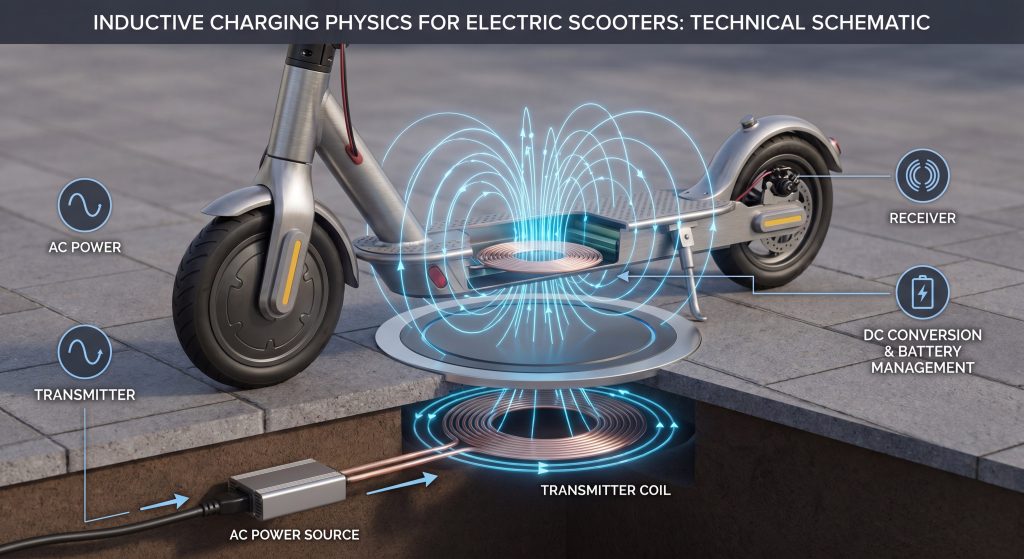
The Future of Cordless Charging for Electric Scooters lies in a highly integrated network of inductive ground pads, resonant parking docks, and weatherproof receiver plates that completely eliminate the manual hassle of plug-in cords. For years, both private riders and large-scale fleet operators have struggled with standard wired chargers, dealing with cables that fray, snap, and fail when exposed to the elements. Imagine standing in a heavy downpour, trying to jam a wet charging cable into a dirt-clogged, rain-soaked port while worrying about short circuits and lost operational hours. Fortunately, implementing wireless charging for electric scooters offers a seamless, weatherproof alternative that charges vehicles automatically the moment they are parked. Is wireless charging for electric scooters the future? Yes, wireless charging for electric scooters is absolutely the future of urban micro-mobility because it solves the ultimate friction point of physical cable wear. By replacing fragile ports with durable induction plates, cities and operators can run continuous transport loops with zero manual plug-in effort. This technological leap allows vehicles to charge automatically whenever they park, maximizing fleet utility and convenience. What is driving the need for cordless power? As micro-mobility usage continues to surge globally, cities require highly reliable infrastructure to support millions of daily trips. The constant manual labor of collecting, plugging, and redeploying vehicles creates a massive bottleneck that threatens operational efficiency. Think about it: This systemic friction forces the industry to seek automated, cord-free power alternatives. Private commuters also crave a more intuitive charging experience that mirrors modern smartphone convenience. Rolling home and simply parking your vehicle over a pad is far superior to untangling heavy cords. Transitioning to a touchless system represents the natural evolution of personal electric transport. How do physical plugs fail your modern fleet? Standard plug-in connectors are notoriously fragile and highly susceptible to mechanical failure under heavy daily use. When exposed to harsh weather conditions, these open metal ports quickly corrode, gather dirt, or bend out of shape. Let’s face it: These frequent physical failures cause significant downtime and ballooning maintenance costs. Every hour a scooter spends in the repair shop is an hour of lost revenue and rider frustration. Shifting to solid-state, contact-free plates completely removes these physical points of failure. This simple upgrade dramatically improves the lifetime durability of your transportation assets. Key Takeaway:Eliminating physical charging ports prevents the most common mechanical failures in micro-mobility fleets today. Sealed induction systems guarantee continuous operation regardless of dirt, debris, or heavy rain. Feature Traditional Wired Charging Wireless Inductive Charging Physical Wear High (frequent port/cable damage) Zero (no physical contact) Weather Hazard High (risk of shorting in rain) None (hermetically sealed) User Effort Manual plug-in required Automated upon parking Fleet Downtime High (due to port repairs) Minimal (continuous top-offs) Analyzing these systemic vulnerabilities reveals why moving toward a sealed, plug-free standard is critical for long-term fleet survival. How does wireless charging for electric scooters work? To understand how wireless charging for electric scooters works, we must look at the principles of electromagnetic induction. The system uses a transmitter coil in the ground pad and a receiver coil beneath the scooter deck to transfer power across an air gap. This setup converts mains alternating current into a safe, localized magnetic field that directly charges the vehicle’s battery. Is magnetic resonance key to constant power? Magnetic resonance is a highly advanced form of induction that allows energy to transfer efficiently over larger physical distances. Traditional inductive pads require strict, millimeter-perfect physical contact to initiate a charge. Here is the thing: This flexibility makes resonance incredibly practical for real-world public parking setups. By utilizing matching resonant frequencies, energy can flow smoothly even if a scooter deck sits several inches above the ground pad. This advancement eliminates the need for expensive mechanical lowering systems or complex physical docks. It delivers a reliable charge every single time. How do transmitter coils send power safely? The transmitter coil embedded in the charging pad remains completely dormant until it detects a matching receiver coil. Once aligned, it initiates a high-frequency alternating current to generate a safe, localized magnetic field. Make no mistake: These automated safeguards prevent accidental shocks or unintended energy discharge. As the magnetic field reaches the scooter’s receiver coil, it induces a secondary current. An internal bridge rectifier then converts this alternating current back into direct current to feed the battery. This closed loop ensures that high-voltage power is never exposed to the outside world. Key Takeaway:By utilizing highly coordinated magnetic coils and safety handshakes, wireless energy transfer remains completely isolated, safe, and efficient. Parameter Standard Inductive Charging Advanced Resonant Charging Operating Frequency 80 kHz – 300 kHz 6.78 MHz Max Air Gap Distance 0.5 inches – 1.5 inches 2.0 inches – 6.0 inches Alignment Tolerance Low (requires precise alignment) High (supports loose parking) Power Output Range 100W – 350W 250W – 1000W+ Understanding these electrical mechanics helps fleet operators evaluate the optimal power output and spacing required for safe municipal deployment. Why choose wireless charging for electric scooters? Selecting wireless charging for electric scooters is the smartest way to dramatically reduce ongoing operational overhead while enhancing rider safety. Removing the physical cord eliminates the primary point of wear, protecting the internal electronics from environmental damage. This shift results in a highly reliable transit network that functions perfectly in any weather condition. Can you reduce maintenance costs immediately? Wired chargers are a constant drain on company resources due to regular cable failures, physical wear, and vandalized charging stations. Eliminating physical cables from the equation removes these persistent liabilities from your balance sheet. Let’s face it: These immediate savings allow operators to achieve profitability much faster than traditional networks. A sealed chassis also means that delicate battery management systems are never exposed to moisture during charging. This protection extends the overall chemical lifespan of your expensive battery cells. The long-term savings on battery replacement are truly substantial. Does it improve daily charging convenience? For everyday commuters, the physical hassle of plugging in a heavy scooter after a long ride […]
The Future of Cordless Charging for Electric Scooters Read More »