
Electric scooters are designed as robust, handle-equipped commuting vehicles for long-distance urban travel, while hoverboards are hands-free, self-balancing boards primarily used for short-distance recreation and “last-mile” fun. You likely face the daily exhaustion of gridlocked traffic, rising fuel costs, and the frustrating hunt for city parking. This friction drains your productivity and turns a simple commute into a stressful ordeal.
By understanding the nuances of an Electric Scooter vs Hoverboard, you can select the precise micro-mobility tool to reclaim your time and transform your journey.
What defines an electric scooter vs. hoverboard?
An electric scooter is a motorized platform with a vertical steering column and handlebars, whereas a hoverboard is a two-wheeled, self-balancing board controlled entirely by shifting your body weight. When comparing an Electric Scooter vs Hoverboard, you are looking at two fundamentally different engineering approaches to personal transport.
How do the control mechanisms differ?
The primary difference lies in how you interact with the vehicle’s sensors and motor. You control a scooter using hand-operated throttles and brake levers, which provides a familiar, bike-like experience.
But here is the kicker:
- Hand-controlled acceleration.
- Manual steering column.
- Fixed foot positioning.
Hoverboards rely on internal gyroscopes that detect the tilt of your feet to move. This requires significant core engagement and lower-body coordination to maintain a steady speed.
Which motor provides better torque?
Scooters generally house larger hub motors that are capable of tackling steep inclines and maintaining speed under heavier loads. This makes them significantly more reliable for professionals who need to navigate diverse urban topographies.
You might be wondering:
- Higher wattage outputs.
- Superior hill-climbing angles.
- Consistent power delivery.
The motor in a hoverboard is optimized for flat surfaces and precise pivots. While they offer agility, they often struggle when faced with significant gradients or varying rider weights.
Key Takeaway: Electric scooters provide a more mechanical and stable power delivery system compared to the sensory-based balancing of hoverboards.
| Feature | Electric Scooter | Hoverboard |
|---|---|---|
| Control | Handlebars & Throttle | Weight Shifting |
| Stability | High (3 Points of Contact) | Moderate (2 Points of Contact) |
| Primary Use | Commuting | Recreation |
This structural difference is why scooters are the preferred choice for those needing a dependable daily driver.

Which ride offers a faster learning curve?
Electric scooters offer a significantly faster learning curve because the handlebars provide an immediate sense of balance and a physical point of contact for stability. Navigating the Electric Scooter vs Hoverboard comparison shows that most users can become proficient on a scooter in minutes.
Why are handlebars a game changer?
Having a physical bar to hold onto allows you to stabilize your upper body while the board moves beneath you. This drastically reduces the fear of falling and allows you to focus on the path ahead rather than your feet.
Believe it or not:
- Immediate balance support.
- Precise directional control.
- Reduced mental fatigue.
Handlebars act as a failsafe, allowing you to catch your balance if you hit a small bump. Without them, your body must react instantly to every vibration, which is much harder for beginners to master.
Does self-balancing technology help?
While hoverboards feature “auto-leveling” tech, the device only stays level relative to the ground, not your body’s center of gravity. You must learn to trust the machine while keeping your ankles flexible enough to steer.
It gets better:
- Gyroscopic stabilization.
- Pressure-sensitive pads.
- Refined pivot sensitivity.
Learning to ride a hoverboard is more akin to learning to ice skate or ski. It requires muscle memory and a developed sense of proprioception that takes hours, not minutes, to perfect.
Key Takeaway: If you want to start riding immediately with minimal risk of a fall, the electric scooter is the intuitive choice.
| Learning Factor | Electric Scooter | Hoverboard |
|---|---|---|
| Time to Master | < 5 Minutes | 30 – 60 Minutes |
| Balance Type | Mechanical Support | Active Body Balance |
| Confidence Level | High Initially | Gradual Progression |
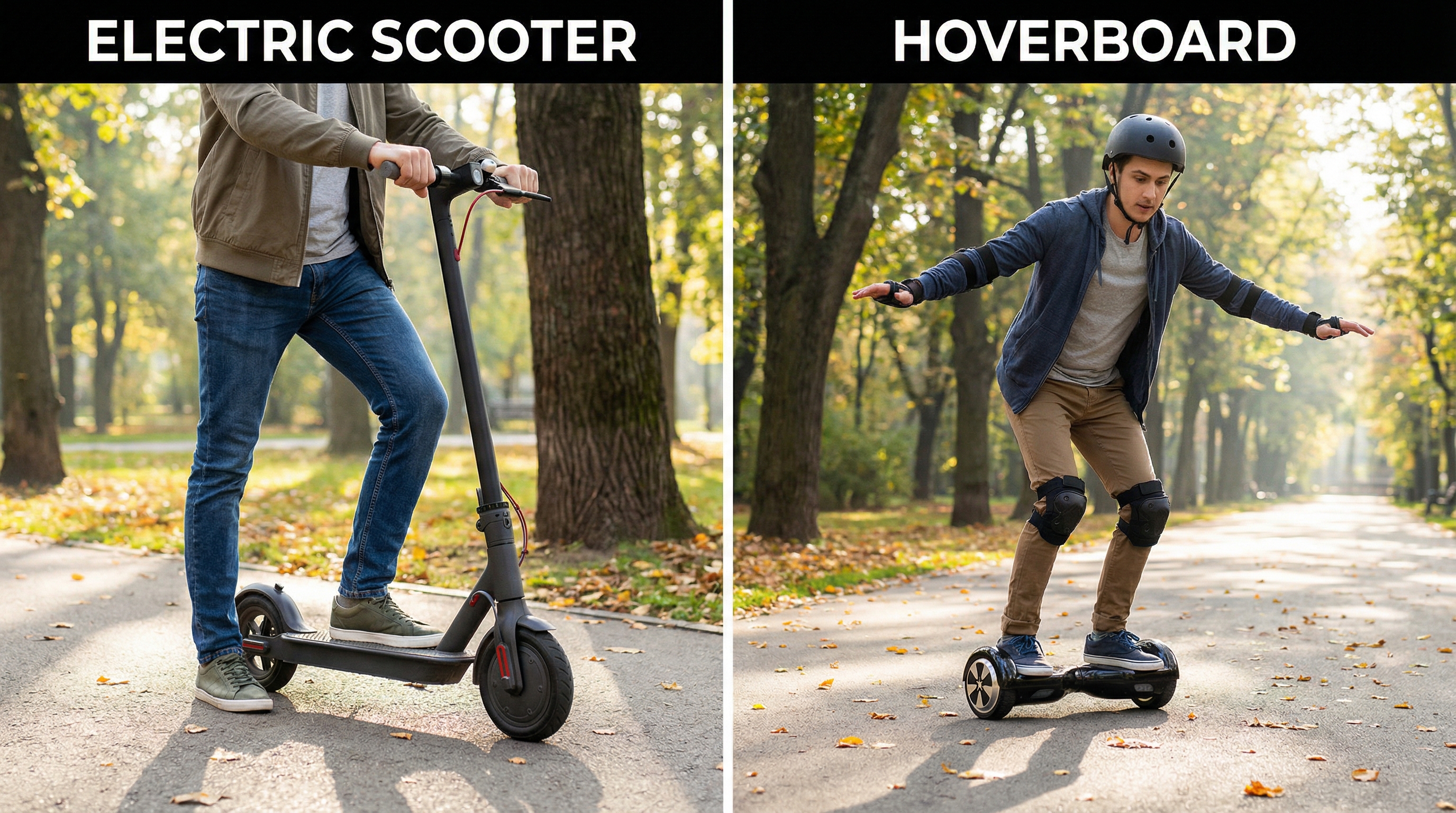
The presence of a steering column simplifies the physics of riding for the average urban commuter.
Is speed or range your top priority?
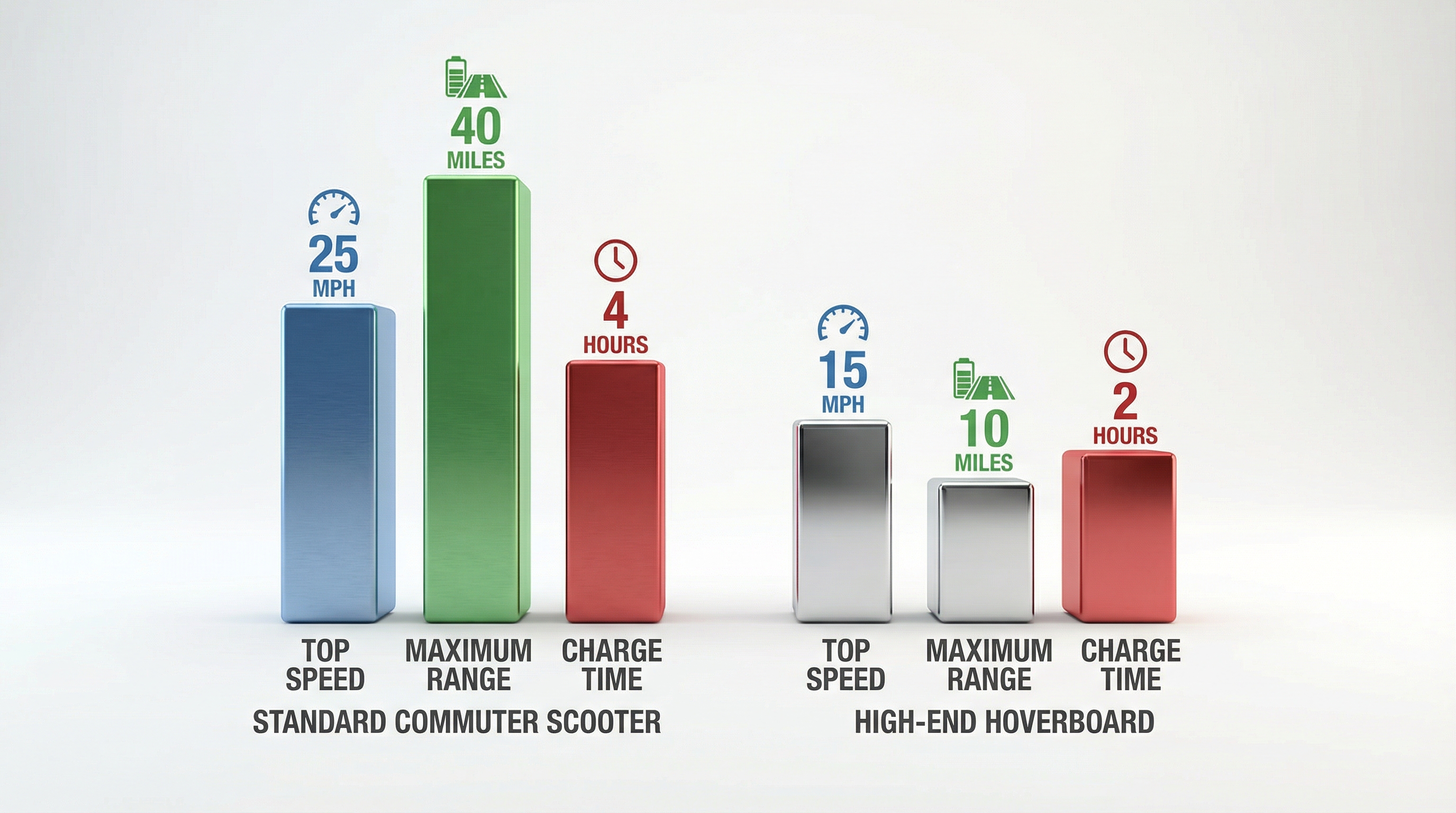
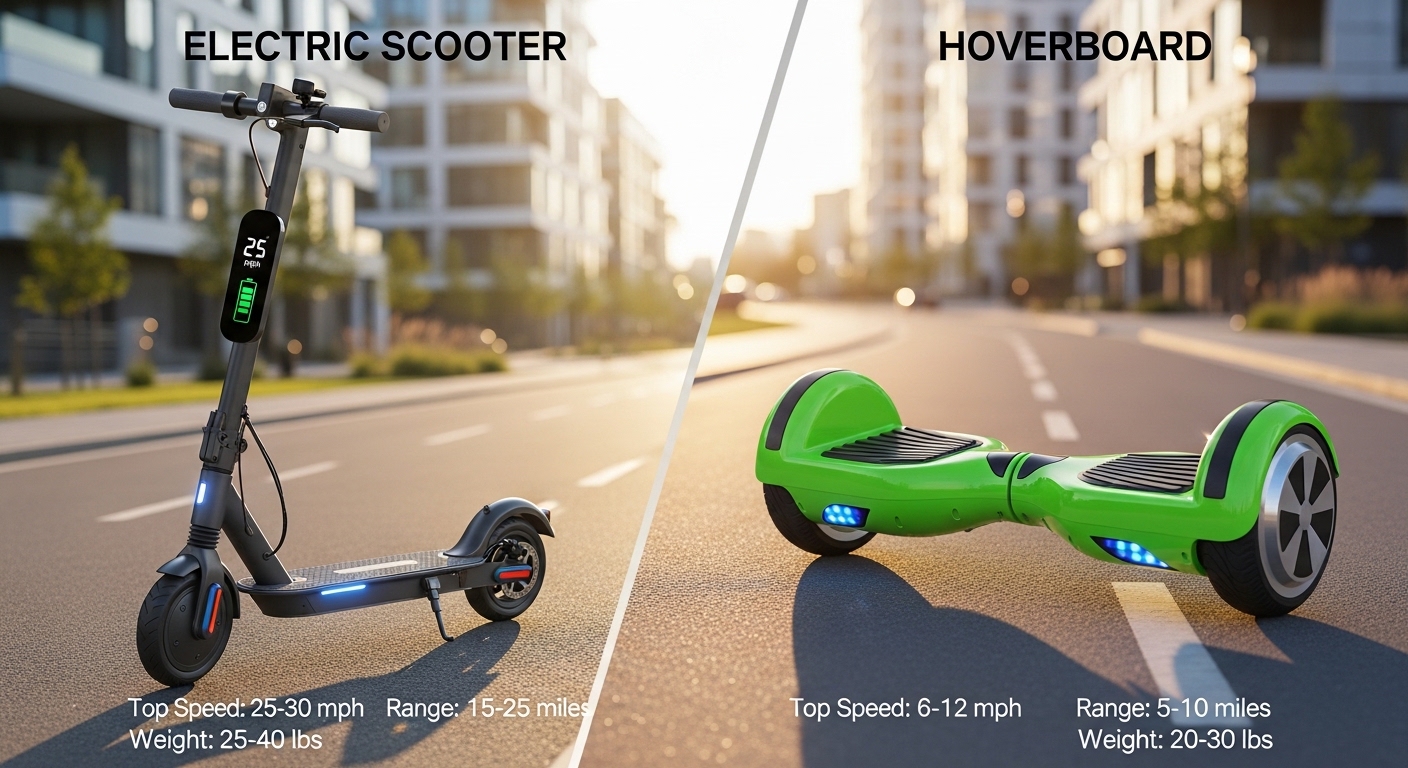
If you prioritize high speeds and long-distance travel, the electric scooter is the undisputed winner in the Electric Scooter vs Hoverboard debate. Most commuter scooters can easily travel 15–30 miles on a single charge, whereas hoverboards are typically limited to under 10 miles.
Can a hoverboard handle long distances?
Hoverboards are strictly designed for “last-mile” or indoor use rather than full-scale commuting. Their smaller batteries and wheels make long-distance travel physically exhausting for the rider’s legs and feet.
Think about this:
- Limited battery capacity.
- Low top speeds (6-10 mph).
- High energy drain on hills.
For example, the Model B is engineered specifically to sustain consistent speeds for miles. It provides the endurance required for a legitimate cross-town trip that a board cannot match.
Key Takeaway: Speed and range are the hallmarks of the electric scooter, making it a viable alternative to public transit.
| Performance | Electric Scooter | Hoverboard |
|---|---|---|
| Top Speed | 15 – 25+ mph | 6 – 10 mph |
| Max Range | 12 – 40 miles | 5 – 12 miles |
| Charge Time | 4 – 6 Hours | 2 – 3 Hours |
Choosing a device with a larger battery ensures you aren’t left stranded halfway through your daily route.
How do safety features compare between them?
Electric scooters are generally safer for road use because they feature dedicated braking systems and higher visibility profiles than hoverboards. When evaluating Electric Scooter vs Hoverboard safety standards, the inclusion of mechanical brakes is the most critical differentiator.
Which braking system is most reliable?
Scooters use disc, drum, or electronic brakes that you activate with a hand lever for immediate stopping power. This allows you to react quickly to pedestrians or vehicles in an emergency.
But here is the kicker:
- Mechanical disc brakes.
- Electronic regenerative braking.
- Short stopping distances.
On a hoverboard, you must lean backward to slow down. This “leaning” braking method is much slower and can be dangerous if you lose your balance during a sudden stop.
Are lighting systems standard on both?
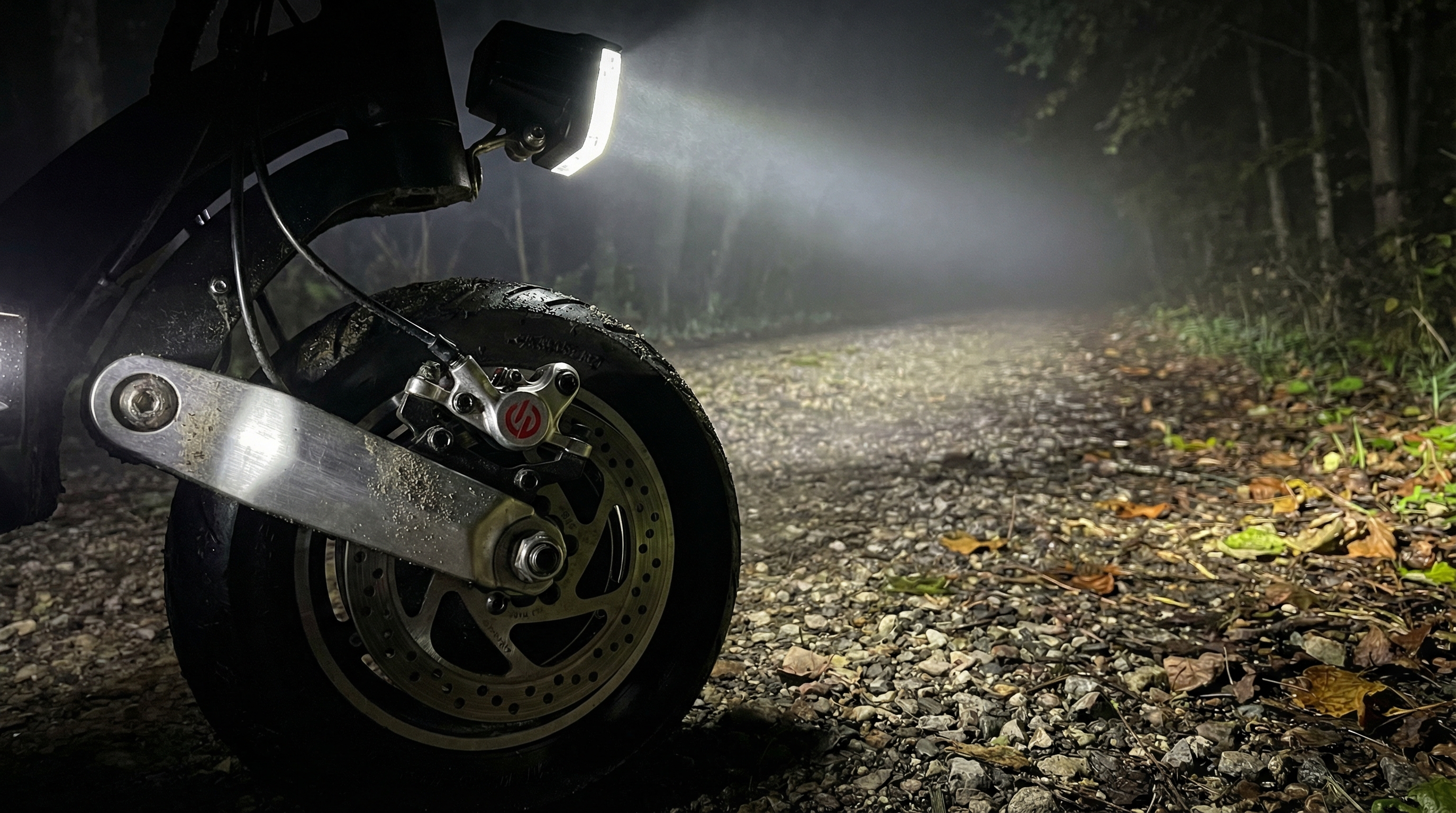
Most high-quality micro-mobility devices include some form of LED lighting, but scooters often feature more powerful, high-mounted headlights. This ensures that you can see the road surface clearly and that drivers can see you from a distance.
You might be wondering:
- Ultra-bright LED headlights.
- Integrated brake lights.
- Reflective frame accents.
Hoverboards usually have low-mounted deck lights. While these look futuristic, they don’t illuminate the path ahead as effectively as a handlebar-mounted light does.
Key Takeaway: Dedicated mechanical brakes and high-mounted lights make electric scooters the safer choice for traffic-heavy environments.
| Safety Feature | Electric Scooter | Hoverboard |
|---|---|---|
| Braking Type | Hand Lever / Mechanical | Lean-to-Stop |
| Visibility | High (Deck & Handlebar) | Low (Deck Only) |
| Road Safety | Suitable for Bike Lanes | Sidewalk/Indoor Only |
The ability to stop instantly with a hand lever provides a level of control that weight-shifting simply cannot provide.
Which option handles city terrain better?
Electric scooters handle city terrain much better than hoverboards due to their larger wheels and pneumatic tires. When you look at the Electric Scooter vs Hoverboard through an urban lens, you’ll see that scooters can bridge cracks and potholes that would cause a hoverboard to stop abruptly.
Scooters typically use 8.5 to 10-inch tires which roll over standard sidewalk imperfections with ease. You can explore All Products to see how air-filled tires act as a natural suspension system for a smoother ride.
It gets better:
- Pneumatic (air-filled) tires.
- Larger wheel diameter.
- Shock-absorbing frames.
Hoverboards usually have 6.5-inch solid rubber tires. These wheels are prone to getting stuck in sidewalk gaps, which can lead to “sudden stops” and rider ejection.
Key Takeaway: For real-world roads with debris and uneven surfaces, the larger wheel diameter of a scooter is essential.
| Terrain Type | Electric Scooter | Hoverboard |
|---|---|---|
| Smooth Asphalt | Excellent | Excellent |
| Cracked Pavement | Good | Poor |
| Cobblestones | Manageable | Dangerous |
A larger wheel allows for more momentum and safety when encountering unexpected obstacles on your route.
How portable are these electric vehicles?
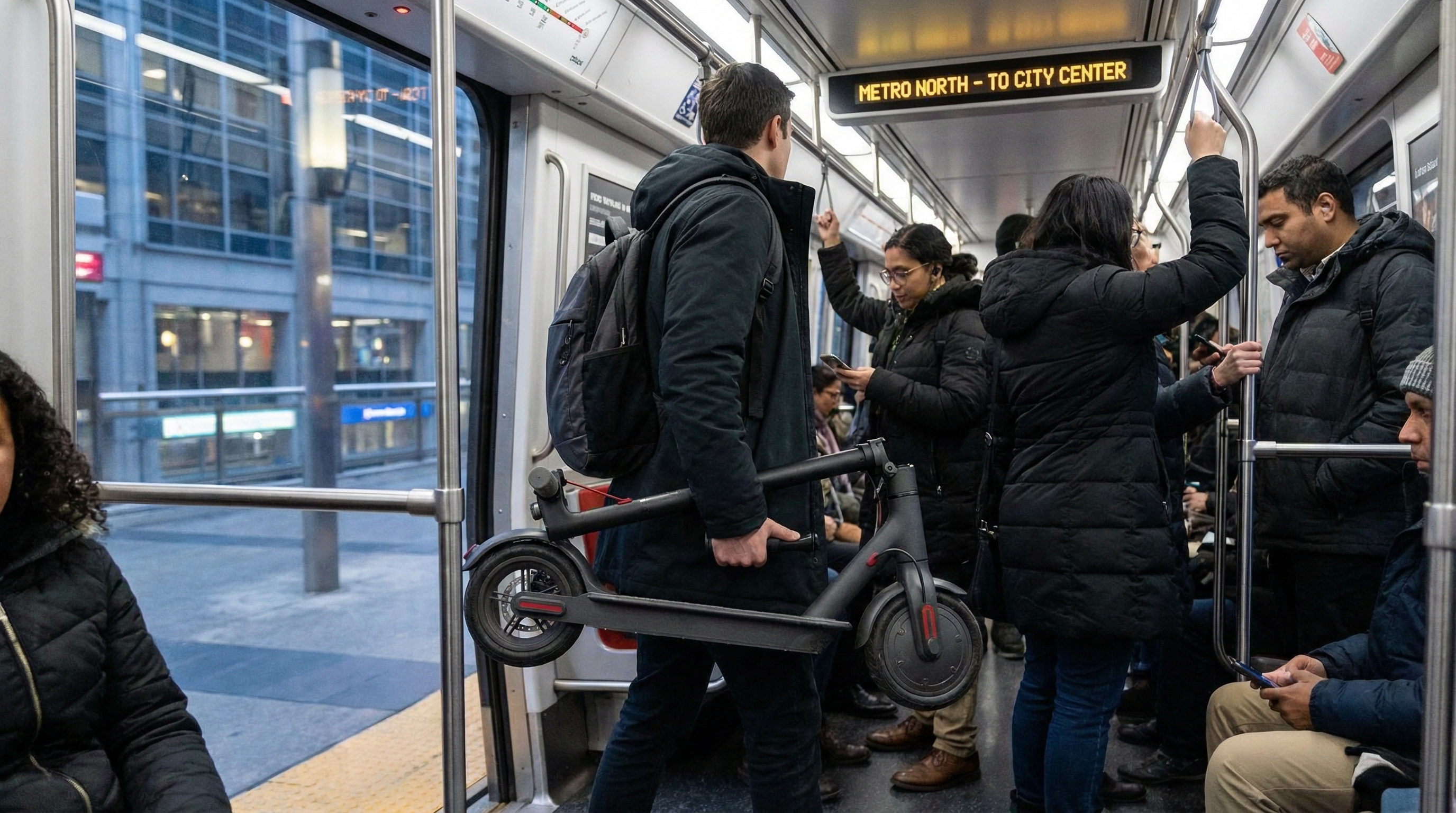
Hoverboards are technically more compact, but electric scooters with folding mechanisms are often easier to carry and store in professional settings. In the Electric Scooter vs Hoverboard portability test, the ability to “fold and carry” makes the scooter a better companion for multi-modal travel.
Does folding capability impact choice?
A folding scooter can be collapsed into a long, thin shape that fits perfectly under a train seat or in a car trunk. This vertical compression is often more convenient than the awkward, wide shape of a hoverboard.
Believe it or not:
- One-click folding stems.
- Compact storage profiles.
- Balanced carrying handles.
Hoverboards do not fold. While they are shorter in length, their weight is concentrated in a way that makes them difficult to carry for more than a few minutes without a dedicated bag.
Is weight a factor for public transit?
Both devices generally weigh between 25 and 45 pounds. However, a scooter’s weight is distributed along the stem, making it feel more like a suitcase when you are walking through a crowded terminal.
You might be wondering:
- Aviation-grade aluminum.
- Lightweight battery tech.
- Easy-grip stem design.
Carrying a hoverboard often results in the wheels rubbing against your clothes. Scooters keep the dirty components further away from your body during transit.
Key Takeaway: Folding electric scooters offer superior ergonomics for commuters who need to switch between riding and walking.
| Portability | Electric Scooter | Hoverboard |
|---|---|---|
| Folding | Yes | No |
| Weight Distribution | Linear (Easy Grip) | Central (Bulky) |
| Storage Suitability | Under Desk / Trunk | Shelf / Bag |
The ability to collapse your ride into a portable package is a major advantage for modern office workers.
What is the real cost of ownership?
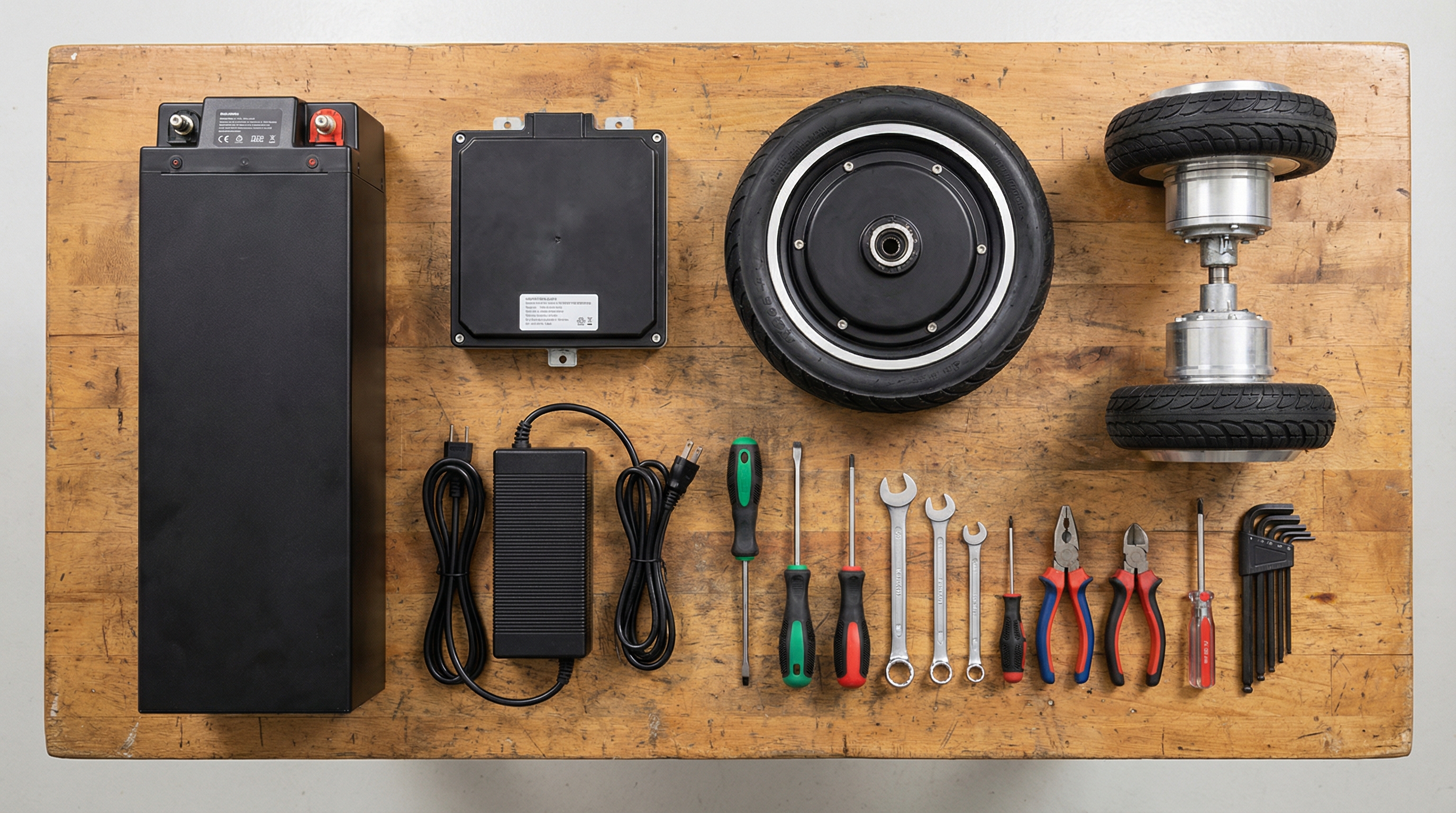
Hoverboards typically have a lower entry price, but electric scooters offer a lower cost-per-mile because they are built with more durable, user-serviceable components. Analyzing Electric Scooter vs Hoverboard value requires looking past the initial sticker price and considering longevity.
How much should you budget initially?
You can find entry-level hoverboards for very low prices, but these often use lower-grade batteries that degrade quickly. Higher-end scooters represent a larger investment but provide a much longer service life.
Think about this:
- Lower maintenance frequency.
- Available replacement parts.
- Higher resale value.
By checking our Blog, you can see how proper maintenance extends a scooter’s life to several years. Hoverboards are often treated as “disposable” electronics once the battery fails.
Key Takeaway: An electric scooter is a long-term transportation investment, whereas a hoverboard is often a short-term recreational purchase.
| Financials | Electric Scooter | Hoverboard |
|---|---|---|
| Initial Cost | Moderate to High | Low to Moderate |
| Durability | High (Metal Frame) | Moderate (Plastic Shell) |
| Serviceability | Parts widely available | Limited service options |
Spending more upfront on a quality scooter usually saves you money on replacements and repairs down the line.
Which choice is more eco-friendly today?
Both vehicles are zero-emission at the point of use, but electric scooters are often more eco-friendly because they replace car trips more effectively. When comparing Electric Scooter vs Hoverboard sustainability, the device that actually keeps you out of a gasoline vehicle is the greenest choice.
How do battery lifespans compare?
Scooters often use high-capacity lithium-ion cells designed for thousands of miles of travel. This reduces electronic waste because the vehicle stays in operation for years rather than months.
It gets better:
- Energy-efficient motors.
- Recyclable metal frames.
- Reduced plastic waste.
Hoverboards use smaller battery packs that are frequently over-stressed. This can lead to shorter lifespans and more frequent battery replacements, which increases your total environmental footprint.
Key Takeaway: The utility and longevity of an electric scooter make it a more sustainable alternative to traditional motorized transport.
| Eco-Impact | Electric Scooter | Hoverboard |
|---|---|---|
| Car Replacement | High Potential | Very Low Potential |
| Battery Life | 3-5 Years | 1-2 Years |
| Materials | Primarily Aluminum | Primarily Plastic |
The most sustainable vehicle is the one that serves your needs for the longest period without needing to be replaced.

Who should choose a scooter for commuting?
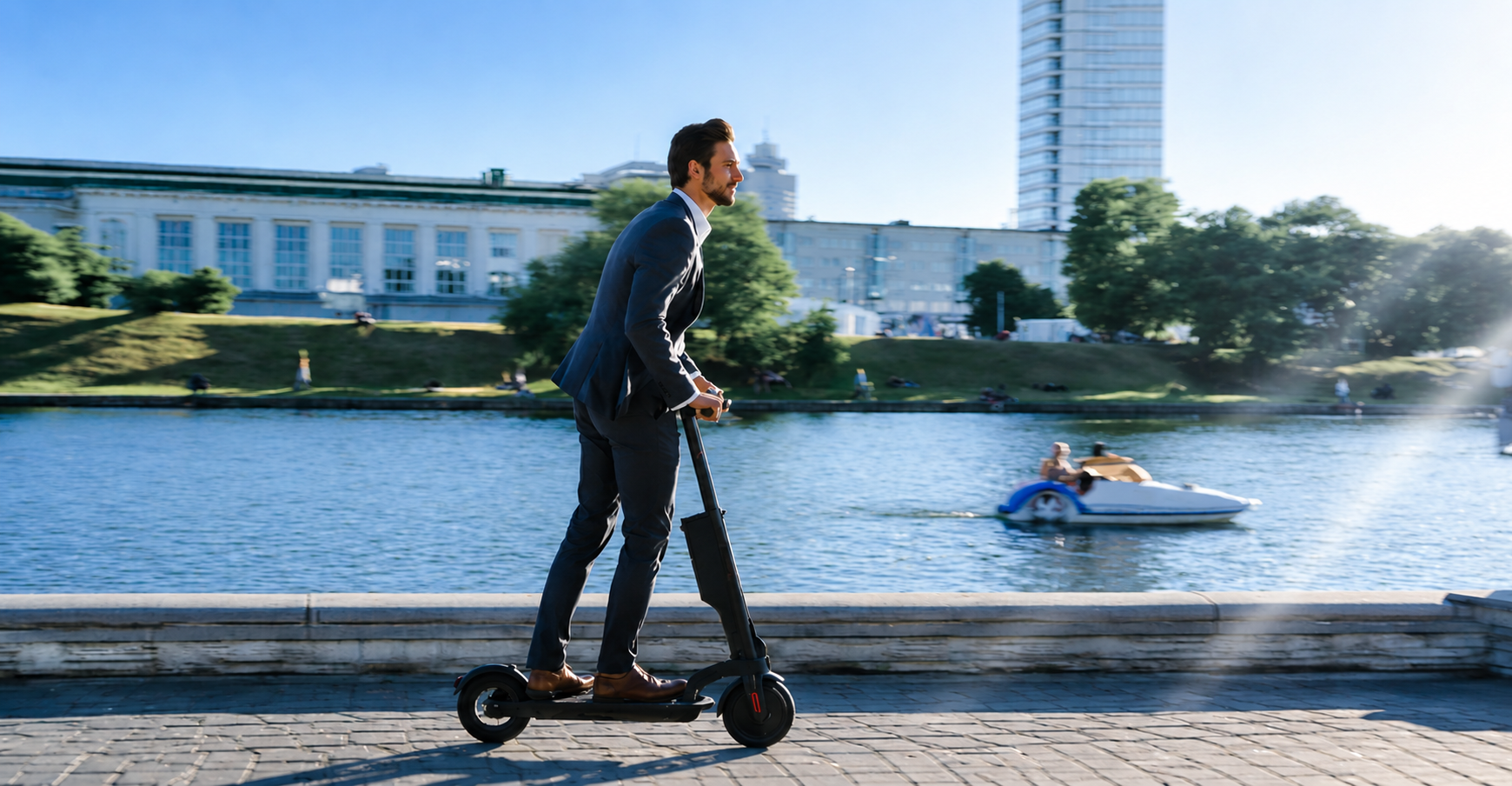
The electric scooter is the ideal choice for professionals who need a reliable, sweat-free way to travel several miles to the office. The Electric Scooter vs Hoverboard debate for commuters is usually won by the scooter’s superior stability and comfort.
Is the Model B the best daily driver?
The Model B is engineered for the rigors of the daily grind, offering the range and speed that professionals demand. It allows you to arrive at meetings on time and looking sharp, without the physical exertion required to balance a board.
But here is the kicker:
- Professional aesthetic.
- Reliable all-day range.
- Comfortable ride quality.
Hoverboards are fun, but they aren’t practical for a five-mile commute in business-casual attire. The physical effort required to stay upright on a board can actually leave you tired before the workday even begins.
Key Takeaway: If your goal is efficient transportation, the electric scooter is the logical tool for the job.
| User Profile | Electric Scooter | Hoverboard |
|---|---|---|
| Office Commuter | Perfect Match | Not Recommended |
| College Student | Great for Campus | Good for Dorms |
| Utility Rider | High Versatility | Low Versatility |
For those who view their ride as a tool rather than a toy, the scooter provides unmatched utility.
Is a hoverboard right for your lifestyle?
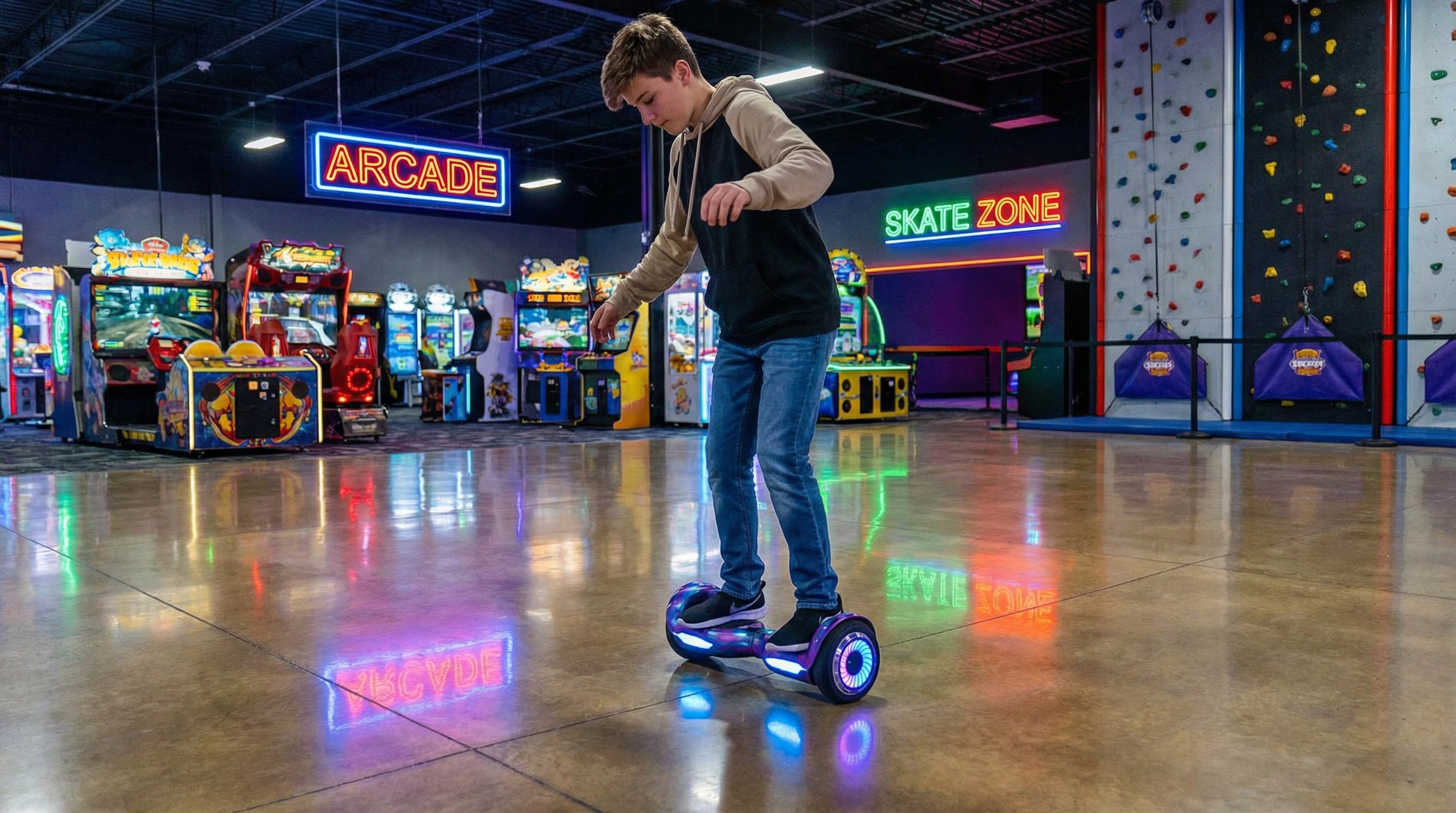
A hoverboard is the right choice if you are looking for a fun, stylish way to move around flat, controlled environments like parks or dorm hallways. In the Electric Scooter vs Hoverboard lifestyle comparison, the hoverboard wins for pure novelty and recreational enjoyment.
Are you looking for fun or function?
Hoverboards excel at 360-degree spins and graceful movements that feel like “magic” under your feet. They are culturally iconic and provide a great way to bond with friends or family during weekend outings.
Believe it or not:
- Compact and stylish.
- Entertaining tricks.
- Great indoor mobility.
However, if you need to carry a laptop bag or groceries, the hands-free nature of the hoverboard becomes a liability. Scooters offer the stability needed to carry cargo safely.
Key Takeaway: Hoverboards are fantastic for recreation and short-distance “play,” while scooters are built for work.
| Factor | Electric Scooter | Hoverboard |
|---|---|---|
| Fun Factor | Moderate | Very High |
| Cargo Carrying | Possible (Backpack) | Difficult/Unsafe |
| Social Appeal | Practical/Modern | Iconic/Trend-driven |
Matching your device to your primary activity ensures you get the most value and enjoyment out of your purchase.
FAQ
Can I ride these in the rain?
Most electric scooters and hoverboards have an IP rating (like IP54), which means they can handle light splashes but should never be submerged or ridden in heavy downpours. Water damage can easily short out the sensitive battery and motor controllers.
What is the best choice for teenagers?
Hoverboards are often the favorite for teenagers due to the “cool” factor and their smaller size. However, if the teen needs to travel to school with a heavy backpack, an electric scooter is safer and more practical.
Can I take these on an airplane?
Generally, no. Most micro-mobility batteries exceed the 100Wh limit set by airlines for lithium-ion batteries. Always check with your carrier, but assume you will need to ship them via ground transport if you are traveling long distances.
What’s the best way to prevent theft?
Electric scooters are much easier to lock up using standard U-locks or cable locks through the frame. Hoverboards are much harder to secure and should usually be carried indoors with you to prevent theft.
Can I ride on the sidewalk?
Laws vary by city, but generally, faster electric scooters are required to use bike lanes, while slower hoverboards are often permitted on sidewalks. You should always check your local municipal bylaws to avoid fines.
Conclusion
The decision between an electric scooter and a hoverboard comes down to a choice between functional commuting and recreational fun. While hoverboards offer a unique, hands-free experience for short bursts of travel, the electric scooter provides the speed, safety, and range necessary to conquer a professional urban commute. We envision a world where micro-mobility eliminates the stress of the “last mile,” allowing you to move through your city with total freedom.
Ready to upgrade your daily journey and leave the traffic behind? Explore our high-performance models or contact us today to find the perfect ride for your professional lifestyle.