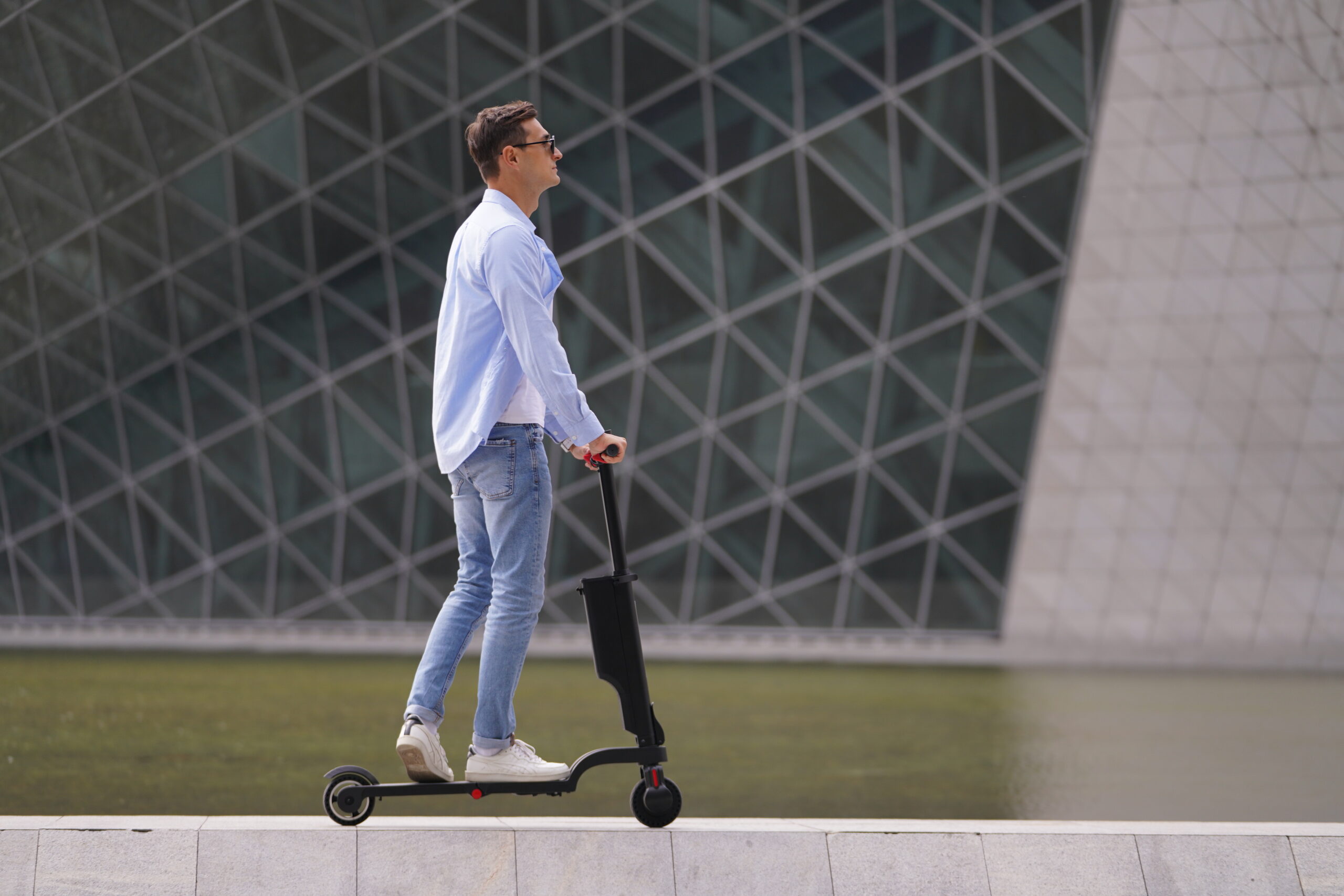

You can legally operate an electric scooter in the Sunshine State as long as you adhere to the specific Florida Electric Scooter Laws regarding age, speed, and positioning. Navigating urban environments can be stressful when you are unsure if your choice of transport will lead to a heavy fine or a confrontation with local authorities. The fear of having your ride impounded or receiving a citation simply because you didn’t know which lane to use can take the joy out of your daily commute.
By understanding the Florida Electric Scooter Laws, you can enjoy the freedom of the road while staying safe and compliant. This comprehensive guide provides the clarity you need to ride with confidence and ensure your travels remain entirely within legal boundaries.
Are Florida Electric Scooter Laws easy to follow?
Yes, Florida Electric Scooter Laws are designed to be straightforward, primarily treating these vehicles similarly to bicycles in most traffic contexts. You have the same rights as a cyclist, meaning you can occupy bike lanes and must follow the same directional flow as motorized traffic.
What are the basic rider requirements?
To ensure you are riding legally, you must meet the state-level criteria set for motorized micromobility devices. These rules ensure that everyone on the road knows what to expect from electric scooter users and maintains a predictable traffic flow.
- You must be at least 16 years of age to operate the vehicle.
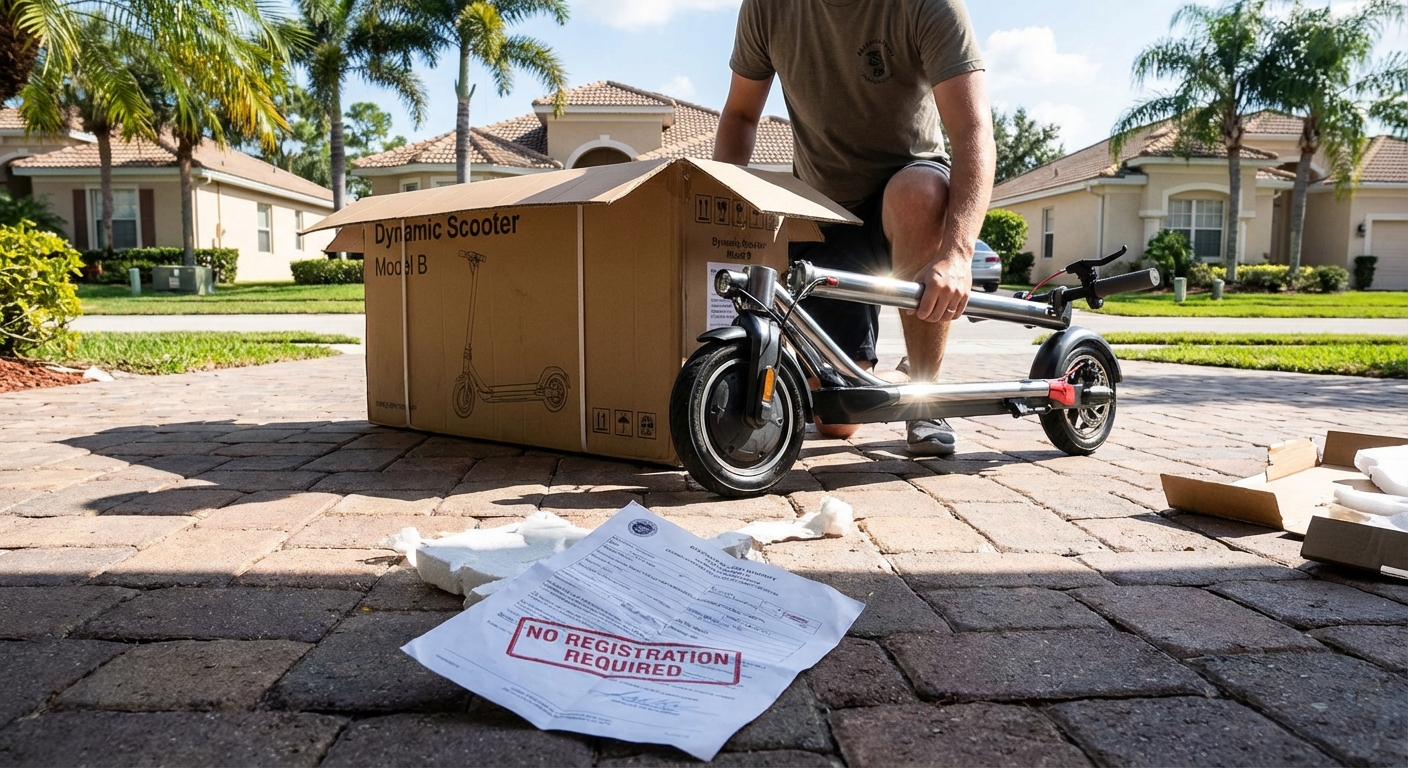
- You are not required to have a specialized driver’s license or registration.
- Your vehicle must not exceed a speed of 20 mph on level ground.
Look at it this way: the law wants you to be mobile, but it prioritizes the safety of the collective public. If you stay within these bounds, you are unlikely to face any legal friction while commuting.
Key Takeaway: Florida grants electric scooter riders the same legal status as bicyclists, provided they meet the minimum age of 16.
| Requirement | Legal Status |
|---|---|
| Minimum Age | 16 Years Old |
| Licensing | Not Required |
| Traffic Status | Equal to Bicycles |
Understanding these fundamental similarities helps you transition from traditional commuting to modern electric mobility without legal confusion.
Do Florida Electric Scooter Laws require a license?
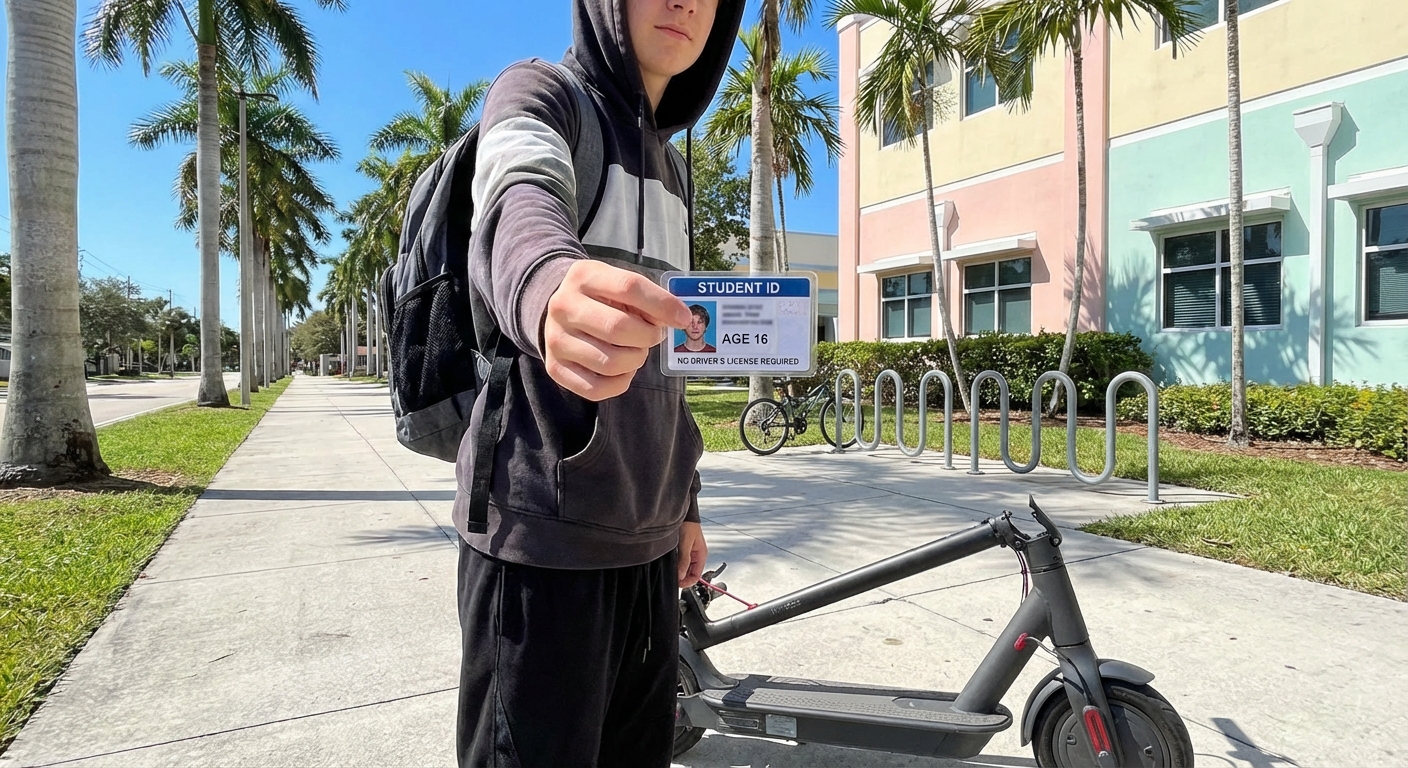
No, you do not need a driver’s license to operate a personal vehicle under current Florida Electric Scooter Laws. This makes the Dynamic Scooter Model B an incredibly accessible option for students and professionals who want to avoid the bureaucratic hurdles of vehicle registration.
Does this apply to sharing services?
While personal ownership offers great freedom, you should note that rental services often have their own set of stricter requirements. These are often dictated by the insurance policies of the rental companies rather than the state statutes themselves.
- Rental companies usually require you to be at least 18 years old.
- You must often provide a valid government ID to unlock a shared scooter.
- Commercial apps may track your location to ensure compliance with city zones.
Best of all: you can skip the lines at the DMV and start your journey the moment you unbox your own ride. Just ensure you carry some form of identification for general safety purposes during your trip.
Key Takeaway: No license is needed for personal electric scooters, though rental apps will likely demand a valid ID and a higher age limit.
| Vehicle Type | License Needed | Minimum Age |
|---|---|---|
| Personal Scooter | No | 16 |
| Rental Scooter | Usually Yes (via App) | 18 |
The absence of licensing requirements significantly lowers the barrier to entry for eco-friendly urban transportation across the state.
Where can you ride under Florida Electric Scooter Laws?
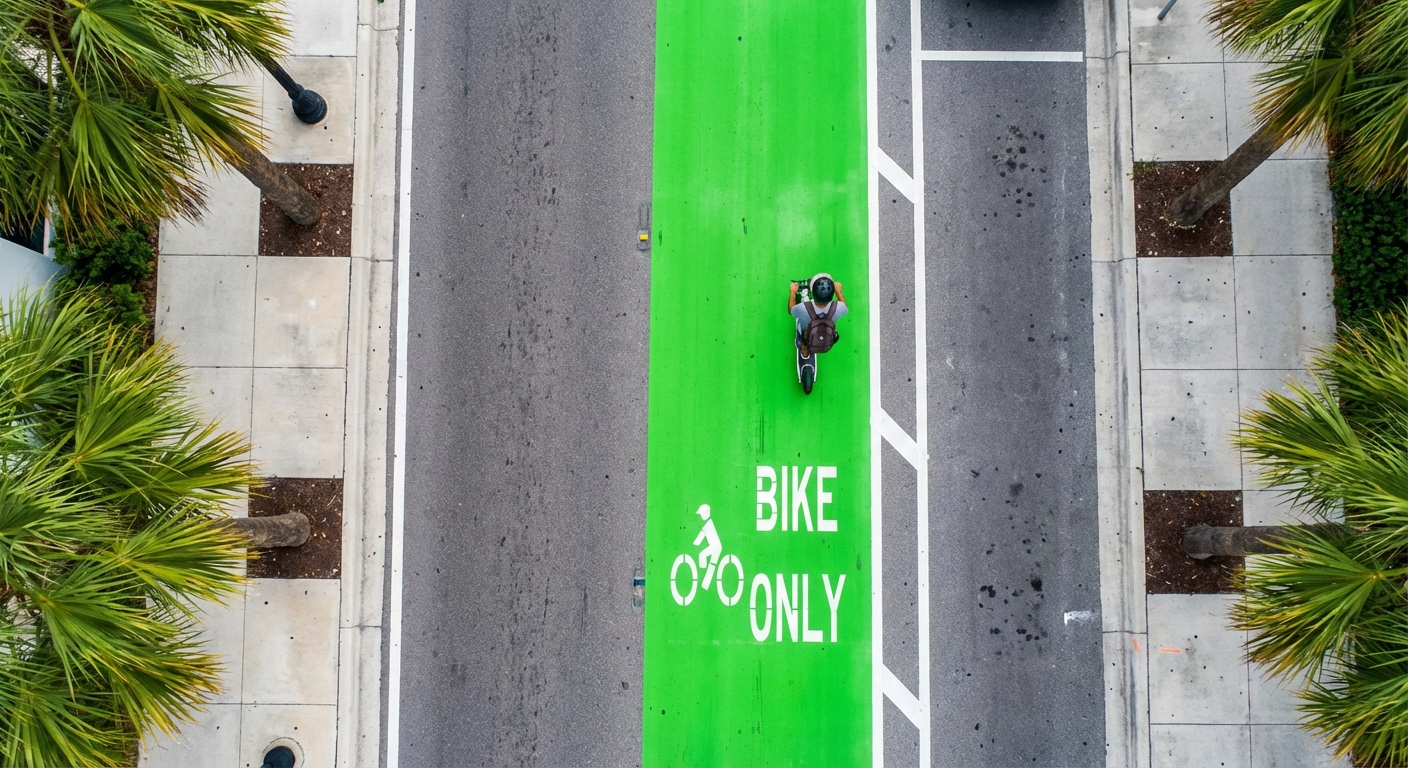
You are permitted to ride on streets where the speed limit is 30 mph or less and in designated bike lanes according to Florida Electric Scooter Laws. You must avoid using sidewalks unless a specific local ordinance in your city expressly permits it for safety reasons.
Are there specific lane restrictions?
Staying in the correct lane is the best way to avoid accidents and legal trouble with local law enforcement. You should always prioritize bike lanes whenever they are available to keep yourself separated from heavy vehicle traffic and maintain a steady pace.
- Always ride in the same direction as motorized traffic.
- Yield to all pedestrians regardless of where you are riding.
- Use hand signals to indicate your turns clearly to other drivers.
Keep this in mind: your visibility is your best defense when sharing the road with cars. Using proper accessories like lights and staying in the correct lane ensures you are seen by everyone around you.
Key Takeaway: Stick to bike lanes and low-speed roads to stay compliant with state-wide location regulations.
| Location | Permitted | Note |
|---|---|---|
| Bike Lanes | Yes | Preferred Option |
| Streets (≤30mph) | Yes | Follow Traffic Rules |
| Sidewalks | Usually No | Check Local City Laws |
Adhering to location-based rules prevents pedestrian conflicts and keeps the flow of urban traffic moving efficiently for everyone.
What speed limits apply to Florida Electric Scooter Laws?
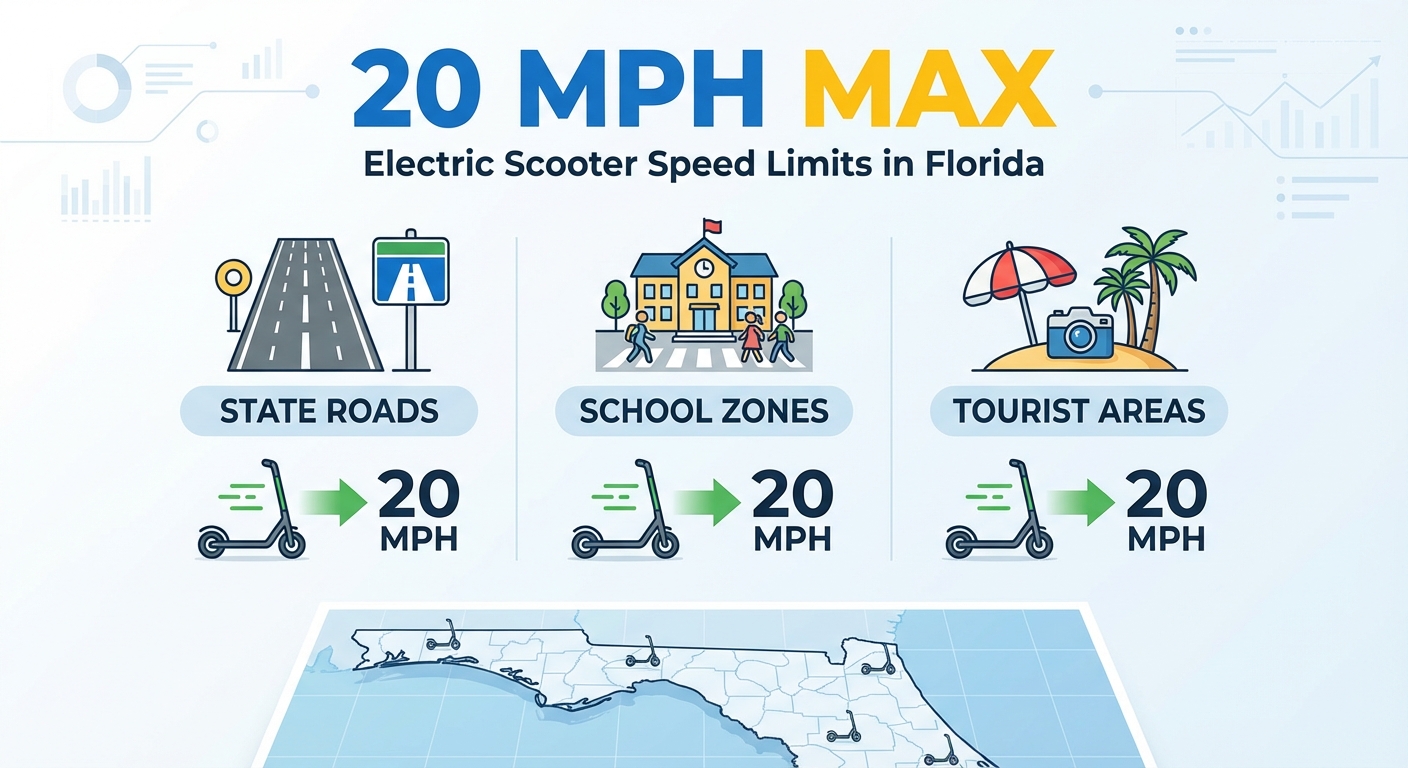
The maximum speed limit allowed on level ground under Florida Electric Scooter Laws is 20 mph for all micromobility devices. While some high-performance models can go faster, using that extra power on public roads can result in significant fines or vehicle seizure.
Can local cities lower the speed limit?
You must be aware that local municipalities have the authority to reduce speed limits in specific zones to protect public safety. This is common in high-density tourist areas or near school zones where foot traffic is exceptionally high and unpredictable.
- Miami may lower limits in specific business districts to 15 mph.
- Tampa uses geofencing to slow down rental scooters automatically in parks.
- Residential areas may have 15 mph caps for all small vehicles to reduce noise.
Here is the kicker: even if your scooter can reach 30 mph, the law strictly cares about the speed you are actually traveling. Staying at a modest pace keeps you in the “bicycle” legal category and avoids unnecessary police attention.
Key Takeaway: The state speed cap is 20 mph, but you should always watch for local signs that might mandate a slower pace.
| Zone Type | Standard Limit | Potential Local Limit |
|---|---|---|
| Statewide Road | 20 mph | 20 mph |
| High-Traffic Tourist Zone | 20 mph | 10–15 mph |
| School Zones | 20 mph | 15 mph |
Maintaining a legal speed is not just about avoiding tickets; it is about ensuring you have enough time to react to unexpected hazards.
Do Florida Electric Scooter Laws mandate safety gear?
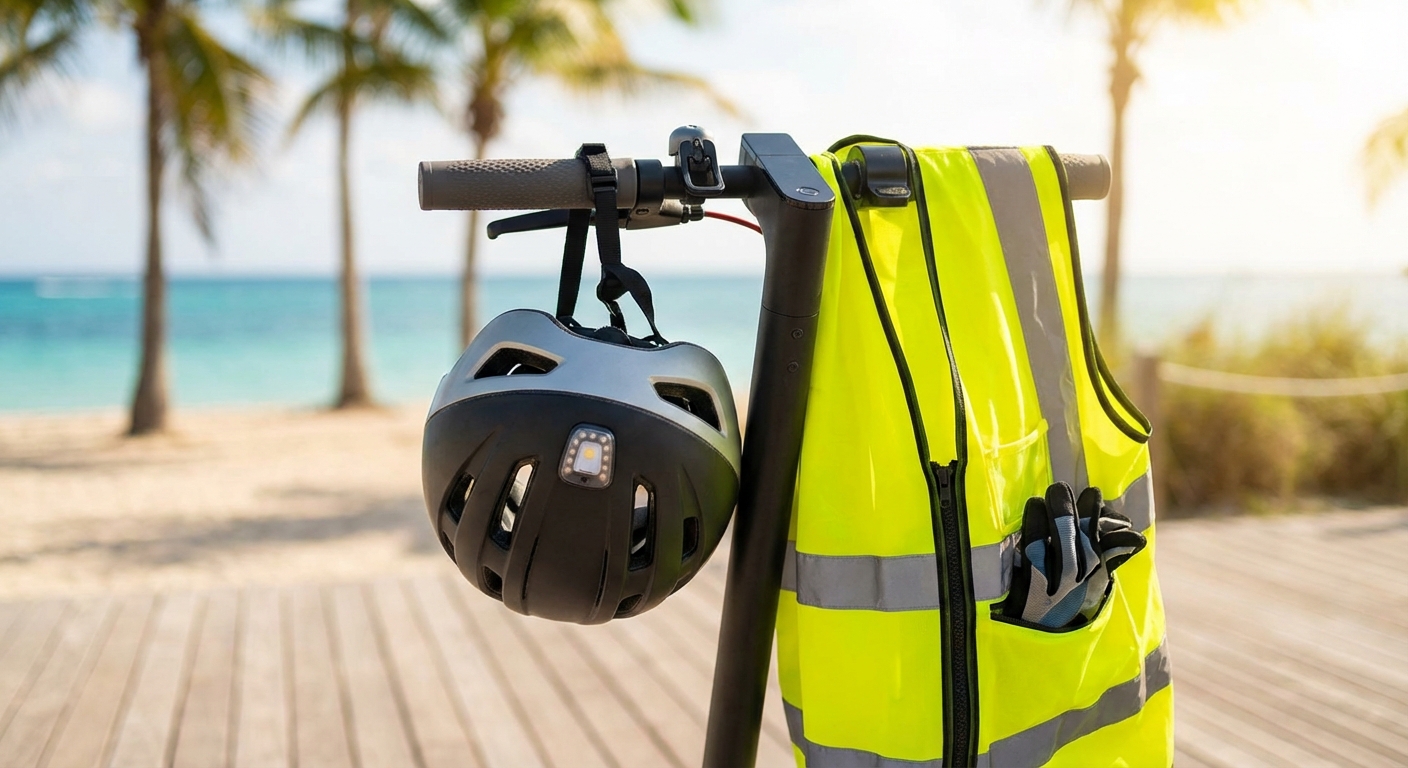
Currently, Florida Electric Scooter Laws only require riders under the age of 18 to wear a helmet while operating a motorized scooter. However, the state highly encourages all riders to utilize protective equipment to mitigate the risks of riding in busy urban environments.
What gear is recommended for adults?
Even if the law doesn’t force you to wear a helmet, your physical safety should be your top priority. Investing in quality protective items can significantly improve your riding experience and provide peace of mind during long commutes.
- A well-fitted helmet can prevent serious head injuries during unexpected falls.
- Reflective vests or lights are essential for riding safely after sunset.
- Knee and elbow pads are wise for beginners learning to balance on new terrain.
It gets better: modern scooters like the Model B offer integrated lighting, but adding your own gear makes you virtually impossible to miss. Protecting yourself today ensures you can keep riding and exploring the Florida scenery tomorrow.
Key Takeaway: Helmets are mandatory for minors but optional for adults, though safety gear is always recommended for every rider.
| Rider Age | Helmet Requirement | Recommended Gear |
|---|---|---|
| Under 18 | Mandatory | Helmet, Pads, Lights |
| 18 and Over | Optional | Helmet, High-Viz Vest |
Safety legislation provides a minimum baseline, but personal responsibility and the right gear are what truly protect you on the road.
How do local cities adjust Florida Electric Scooter Laws?
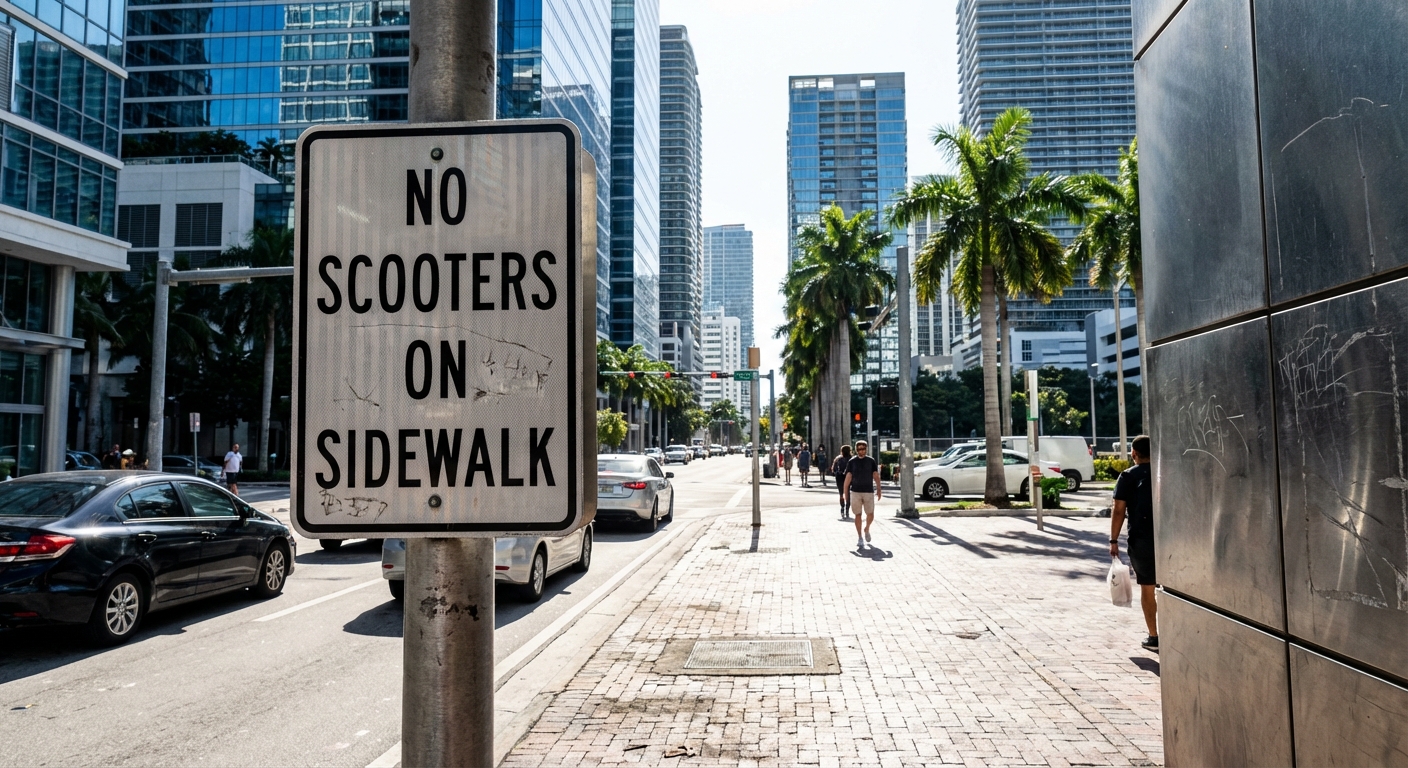
Local governments are given the power to further regulate or restrict usage under the overarching Florida Electric Scooter Laws. This means that while the state says “yes” to scooters, your specific city might have “no-ride” zones or specific parking requirements.
Which cities have unique rules?
You should research the specific ordinances of the city you plan to ride in to avoid unexpected local citations. Major hubs have established programs that often include geofenced areas where your scooter may stop working if you enter a restricted zone.
- Miami uses pilot programs to test new parking and speed regulations in Brickell.
- Tampa requires specific parking in designated corrals for shared rental fleets.
- Orlando prohibits riding on most downtown sidewalks to protect shoppers and tourists.
Wait, there’s more: some cities even have curfews for rental scooters to prevent late-night accidents. Owning your own vehicle often bypasses these curfews, giving you more flexibility for night-shift work or late-night errands.
Key Takeaway: Local ordinances can override state defaults regarding where you can park and exactly which streets are accessible.
| City | Sidewalk Riding | Parking Rules |
|---|---|---|
| Miami | Restricted | Designated Zones |
| Tampa | Prohibited | Corrals Required |
| Orlando | Restricted | Organized Parking |
State laws provide the skeleton, but city-specific regulations are the meat of the legal requirements you will face daily.
Are sharing apps governed by Florida Electric Scooter Laws?
Yes, all commercial scooter-sharing services must comply with Florida Electric Scooter Laws while also following local permit agreements. These companies are responsible for ensuring their fleet is speed-limited and that riders are informed of the local rules of the road.
How do app rules differ from ownership?
When you use a shared service, you are entering into a contract that might have more restrictions than state law requires. You are often tracked via GPS to ensure you do not take the scooter into prohibited areas like public parks or beaches.
- You are usually charged per minute plus an initial unlock fee.
- You must park the scooter in a way that doesn’t block ADA sidewalk access.
- Failing to end your ride in a proper zone can result in heavy app fines.
Check this out: while sharing is convenient for tourists, the costs can add up quickly compared to the long-term value of owning your own portable unit. Owners also don’t have to worry about geofenced speed drops that can occur in sharing apps.
Key Takeaway: Sharing apps must follow state laws but add their own layers of age, parking, and geographical restrictions.
| Feature | Sharing Apps | Personal Ownership |
|---|---|---|
| Tracking | GPS Monitored | Private |
| Cost | Per-minute fees | One-time purchase |
| Availability | Subject to location | Always ready |
Relying on apps means following corporate rules, whereas owning your scooter allows you to focus purely on state and local statutes.
Do Florida Electric Scooter Laws cover accident liability?
Yes, Florida Electric Scooter Laws establish that riders have the same rights to seek damages as bicyclists if they are involved in a collision. If a motorist fails to yield or hits you in a bike lane, they can be held liable for your medical expenses and repairs.
What should you do after a collision?
Acting quickly after an incident is vital for protecting your legal rights and ensuring you receive proper medical care. You should treat an electric scooter accident with the same level of seriousness as a car crash or a bicycle incident.
- Call the police to file an official traffic report immediately for documentation.
- Take photos of the scene, your scooter, and the other vehicle involved.
- Exchange insurance and contact information with all parties at the scene.
The truth is: many drivers are still getting used to seeing scooters on the road. Documenting everything ensures that you aren’t unfairly blamed for a situation caused by someone else’s negligence or lack of attention.
Key Takeaway: Treat every accident as a legal event and gather evidence immediately to protect your rights under state law.
| Action Item | Priority | Reason |
|---|---|---|
| Call 911 | High | Legal Record |
| Take Photos | High | Evidence |
| Contact Lawyer | Medium | Liability Defense |
Legal protection in Florida is robust for micromobility riders, provided you follow the proper steps to document the incident and seek help.
Is insurance required by Florida Electric Scooter Laws?
No, you are not legally required to carry specialized insurance under current Florida Electric Scooter Laws to ride on public paths. Because these vehicles are classified similarly to bicycles, they fall outside the mandatory Personal Injury Protection requirements that apply to cars.
Is voluntary insurance worth the cost?
Even though it isn’t mandatory, you might want to consider how you would handle the costs of a major accident. You can find more information about risk management on our blog to help you decide on the best coverage.
- Liability insurance can protect you if you accidentally hit a pedestrian.
- Medical coverage helps pay for your injuries if an uninsured driver hits you.
- Theft protection is valuable for high-end electric scooter models stored outside.
Think about this: one simple mistake could lead to a lawsuit if you damage someone’s expensive property. Having a basic liability policy can save you thousands of dollars in legal fees and settlements over the years.
Key Takeaway: Insurance is not a legal requirement in Florida, but it serves as a critical financial safety net for frequent riders.
| Insurance Type | Required | Recommended |
|---|---|---|
| Liability | No | Yes |
| Personal Injury | No | Yes |
| Theft | No | Highly |
While the state doesn’t force you to pay for coverage, the financial risks of riding without it in a busy city are worth evaluating.
What are common FAQ about Florida Electric Scooter Laws?
You likely have specific questions about how Florida Electric Scooter Laws apply to your unique daily situations. These frequently asked questions cover the most common concerns riders have when navigating the busy streets of 2026.
How do I know if my scooter is street legal?
You can verify this by checking if your device has a maximum speed of 20 mph or less and is equipped with functional brakes and lights. At Dynamic Scooter, we ensure all our products meet these vital standards for your peace of mind.
- Check for a micromobility certification label on the vehicle frame.
- Ensure the motor wattage is within standard consumer safety limits.
- Verify that you have a white front light and red rear light for night riding.
Here is the deal: if your scooter looks and acts like a standard bicycle, you are likely following the law. You can learn more about us and our commitment to legal compliance by visiting our company page.
Key Takeaway: Street legality depends on speed caps and safety features, while beach riding is almost always prohibited.
| Feature | Legal Requirement | Status |
|---|---|---|
| Max Speed | 20 mph | Mandatory |
| Front Light | White | Mandatory for Night |
| Rear Light | Red | Mandatory for Night |
Maintaining a compliant vehicle is the first step toward a worry-free riding experience in the Sunshine State.
At Dynamic Scooter, we believe in empowering your urban journey with the best technology and the most reliable information. Our mission is to simplify your commute and provide you with a high-quality, eco-friendly alternative to traditional transit. We stand behind every rider in the Sunshine State, ensuring you have the tools to move freely and safely.
To learn more about how we can transform your daily commute, contact us today for expert guidance and support. Don’t let confusing regulations slow you down; join our community and experience the future of transportation with a brand that cares about your mobility.
Frequently Asked Questions
Can I ride my electric scooter on the beach?
Generally, you cannot ride on the sand in most Florida coastal cities because these areas are reserved for pedestrians and protected wildlife. Most boardwalks also have “no motorized vehicle” signs that apply to electric scooters, so you should stick to the adjacent streets or bike paths.
What’s the best way to park safely?
You should always park your scooter upright and off to the side of the walkway to ensure you are not blocking the path for people with disabilities. Under state law, blocking a sidewalk can be considered a nuisance and may lead to your vehicle being towed or moved by city workers.
Can I carry a passenger on my electric scooter?
No, most Florida cities prohibit carrying more than one person on a single electric scooter unless the vehicle is specifically designed for multiple riders. Overloading the scooter can impact its braking ability and balance, leading to safety violations.
What’s the best way to prove my age to authorities?
Carrying a valid student ID or a state-issued identification card is the best way to prove you meet the 16-year-old minimum age requirement. While a driver’s license isn’t needed to ride, some form of photo ID is highly recommended for any interactions with law enforcement.
Can I ride my electric scooter on the sidewalk in Miami?
Sidewalk riding in Miami is generally restricted, especially in busy business districts where pedestrian traffic is high. You should always look for local signage and prioritize using bike lanes or low-speed streets to avoid citations.