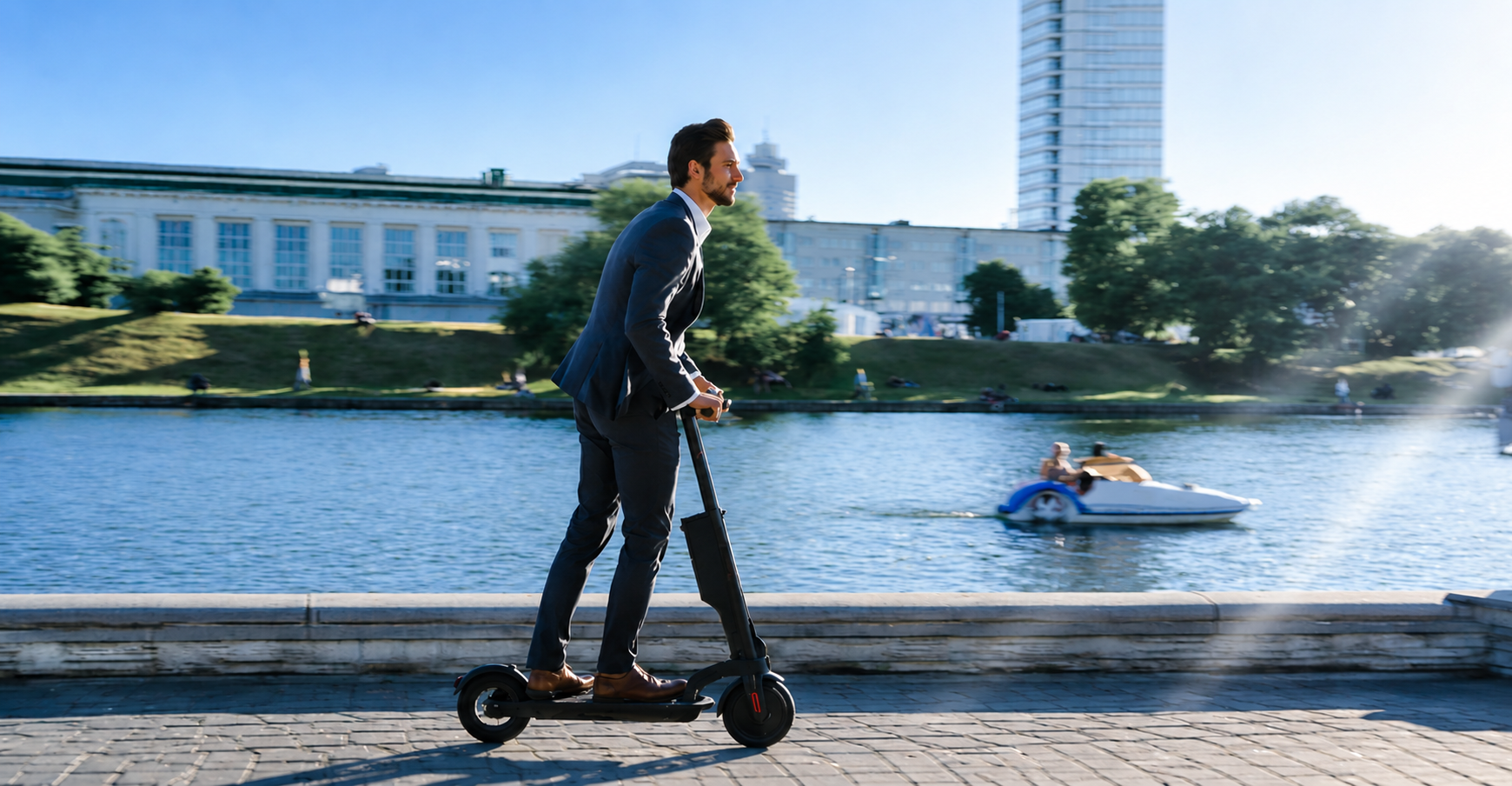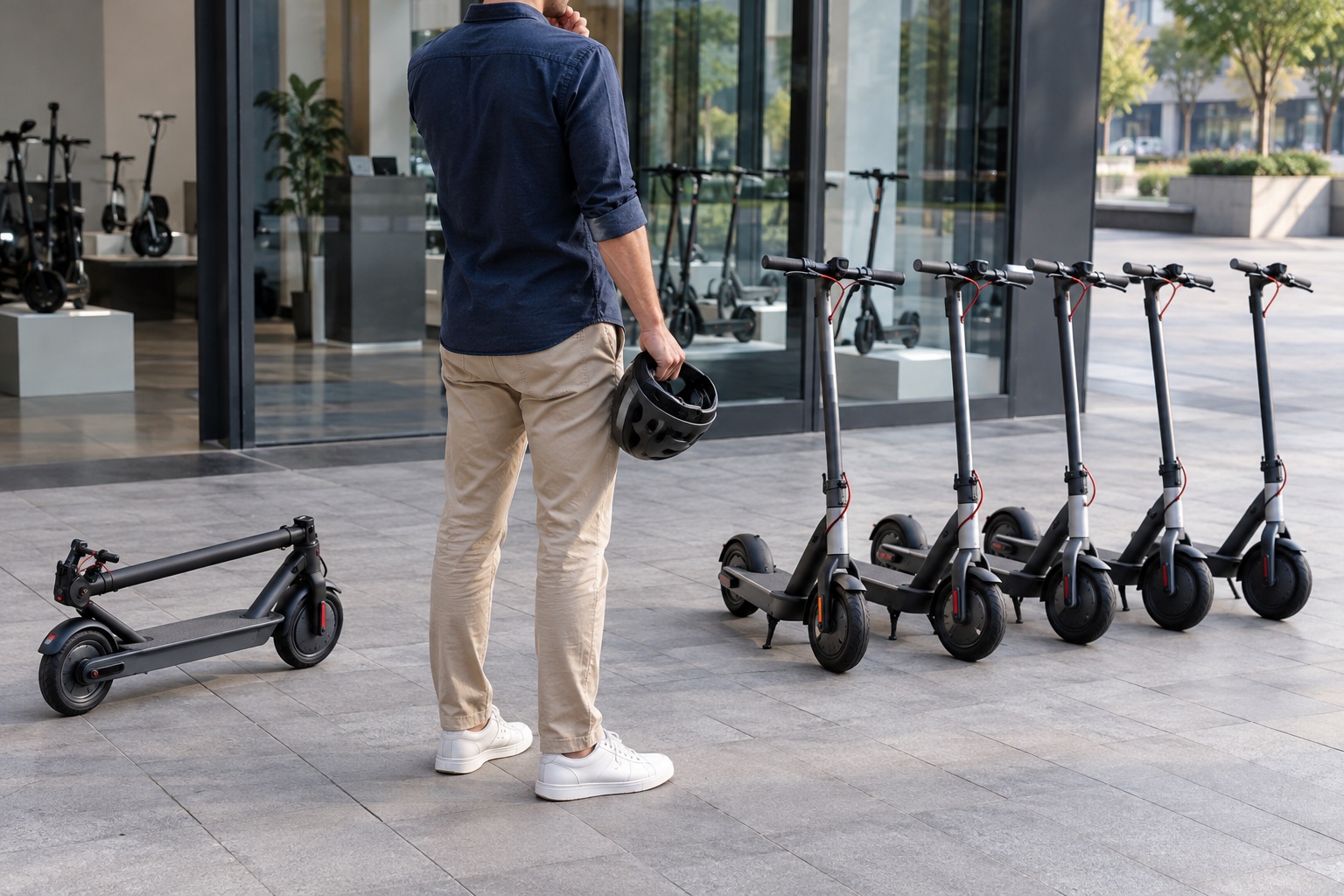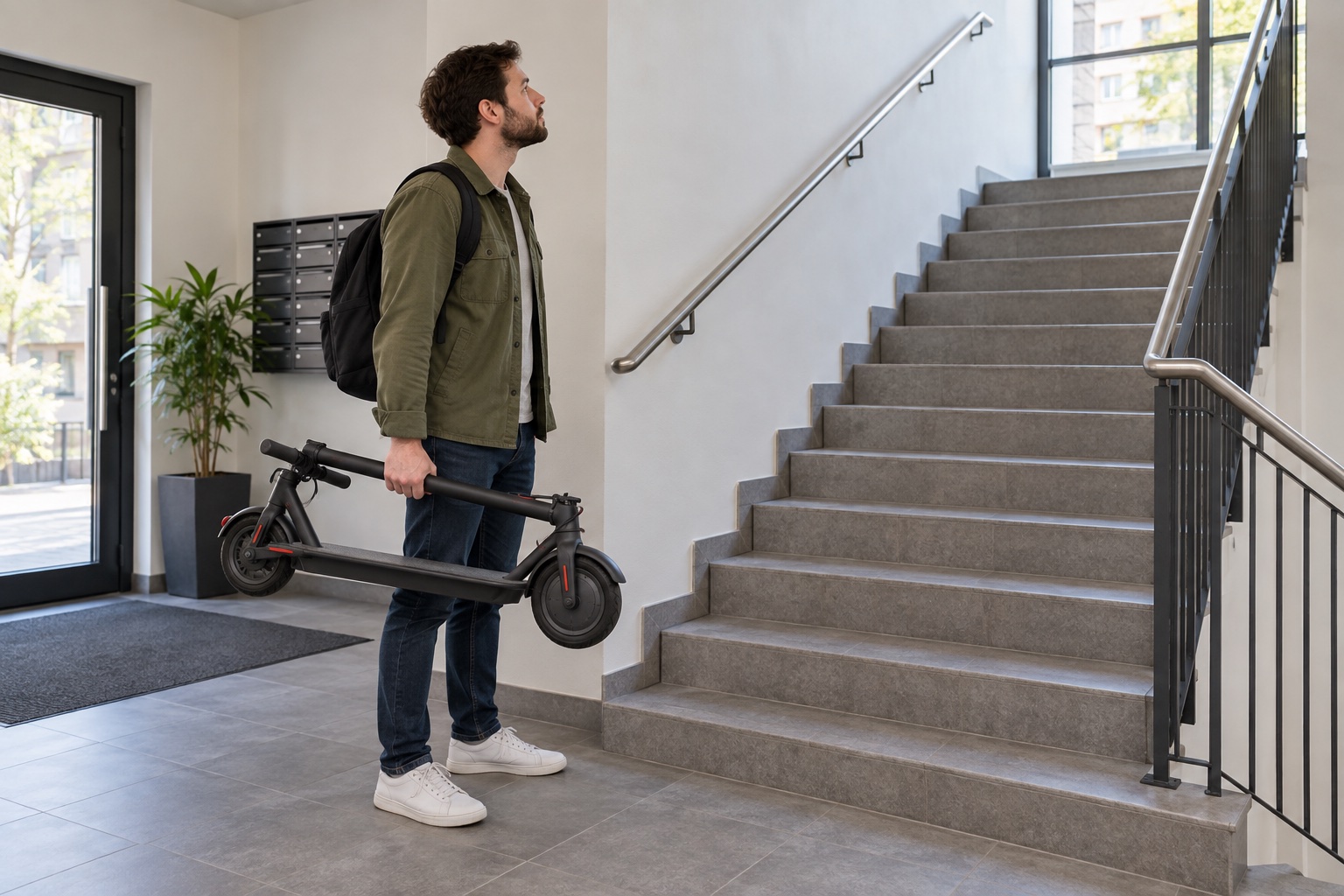

An electric scooter often suits a short commute on a safe route, while public transit usually fits longer trips, rough weather, and riders who need seated travel. You leave home on time, then miss a connection and arrive at work already frustrated. Buying a scooter might solve that delay, but carrying it upstairs or finding secure storage can create another problem. Compare electric scooter vs public transit using your fare bill, door-to-door time, and daily carrying needs before choosing either one.
1. Which costs less: electric scooter vs public transit?
A scooter can cost less when you use it often and avoid enough fares; your electric scooter vs public transit calculation must include purchase, repairs, and backup travel. A transit pass you keep buying reduces the savings you can claim.
How should you compare monthly spending?
Run the monthly numbers. Divide your total purchase and setup cost across a realistic ownership period, then add running costs. Compare that amount with fares you would actually stop paying.
- Count the scooter, helmet, lock, and delivery costs.
- Include charging, maintenance, and replacement parts.
- Keep occasional bus or train fares in the budget.
What would an example budget look like?
Suppose a scooter and equipment cost $600 and you spread that cost over 24 months. Adding an assumed $10 monthly running allowance gives $35 per month, before backup fares; this is a planning example in USD, not a product quote or promised lifespan.
| Example input | Monthly amount |
|---|---|
| $600 spread across 24 months | $25 |
| Assumed running allowance | $10 |
| Subtotal before backup travel | $35 |
Use your own bills in these rows. Key Takeaway: A scooter saves money only when the fares you avoid exceed its full cost.
2. Which hidden costs come with scooter or transit commuting?

Repairs, secure storage, protective equipment, and backup rides belong in your electric scooter vs public transit budget. Waiting, walking, and carrying also use your time.
Which expenses are easiest to overlook?
Keep a repair line. Charging is only one part of ownership, and a low electricity bill does not pay for tires or brakes. Our electric scooter maintenance checklist helps you identify routine checks before a neglected part interrupts your commute. Also ask about local service and parts availability before buying.
- Allow for wear items and occasional professional repairs.
- Check whether your building offers secure parking.
- Include a backup ride when the scooter needs service.
How should you value time and downtime?
Record extra walking, missed connections, and storage setup during a normal week. Then use those minutes to check whether your schedule is workable. If you choose equipment for employees, ask who handles maintenance and how staff travel during repairs.
| Cost that gets missed | Question to ask |
|---|---|
| Repair downtime | Can you still get to work? |
| Parking and security | Where will the scooter stay? |
| Transfers and waiting | Does your schedule have enough room? |
These costs affect repeatability. Key Takeaway: Choose a commute you can afford and maintain throughout the month.
3. When do transit fares make a scooter less economical?
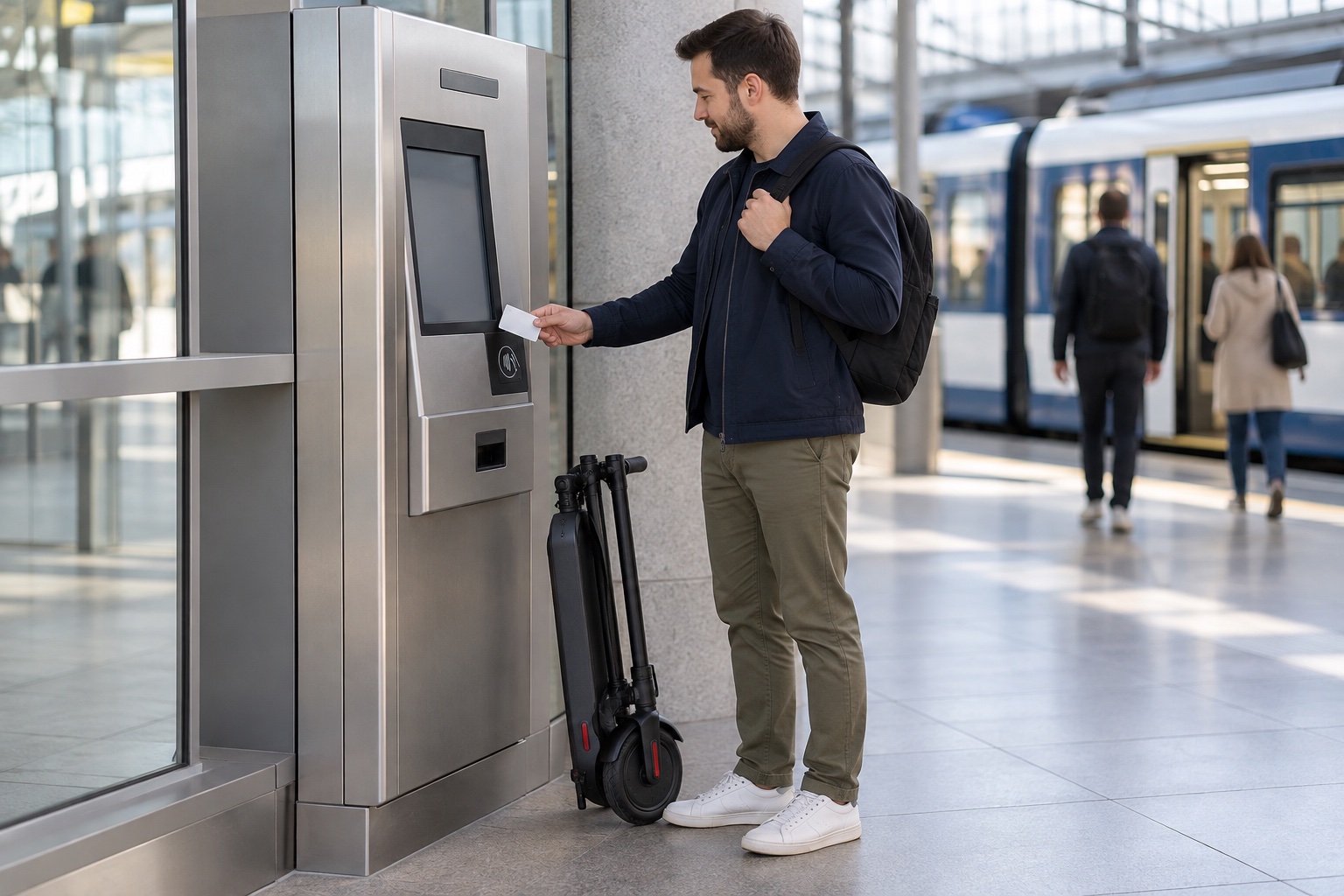
Passes, fare caps, discounts, and employer benefits can make transit cheaper than a simple per-ride calculation suggests. In electric scooter vs public transit, count the fare arrangement you actually use and confirm whether a scooter can travel with you.
Do fewer transit rides always mean a lower bill?
Check what you already pay. If you retain an unlimited pass for other trips, riding a scooter twice a week may leave your transit spending unchanged. Pay-per-ride riders may avoid fares more directly, while fare caps can change the saving from another skipped ride.
- Check current passes, caps, transfers, and concessions.
- Include any employer or campus subsidy.
- Count weekend travel as part of your usual use.
Can you combine a scooter with a bus or train?
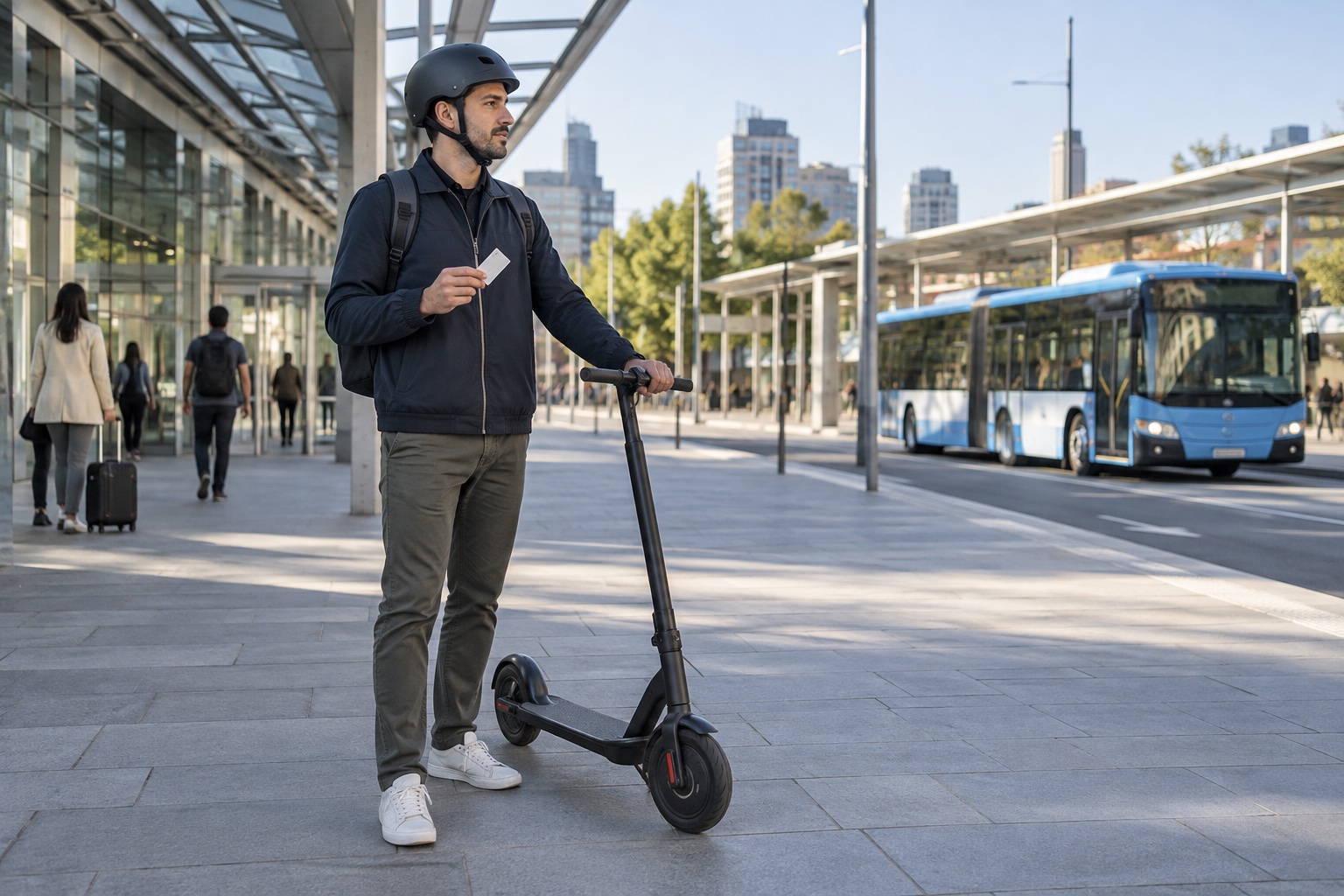
A scooter can cover the walk between home and a station while transit handles the long segment. That works only when carriage rules, space, and your ability to lift the folded scooter allow it. Also confirm the rules for every service you use, including peak periods.
| Your fare arrangement | Likely budget effect |
|---|---|
| Pass retained | Fewer rides may save no fare money |
| Individual fares avoided | Savings depend on actual skipped trips |
| Scooter plus transit | Useful access, with transit costs remaining |
Use the arrangement that matches your week. Key Takeaway: A combined commute can improve access without eliminating your transit bill.
4. Does a scooter beat transit on door-to-door travel time?
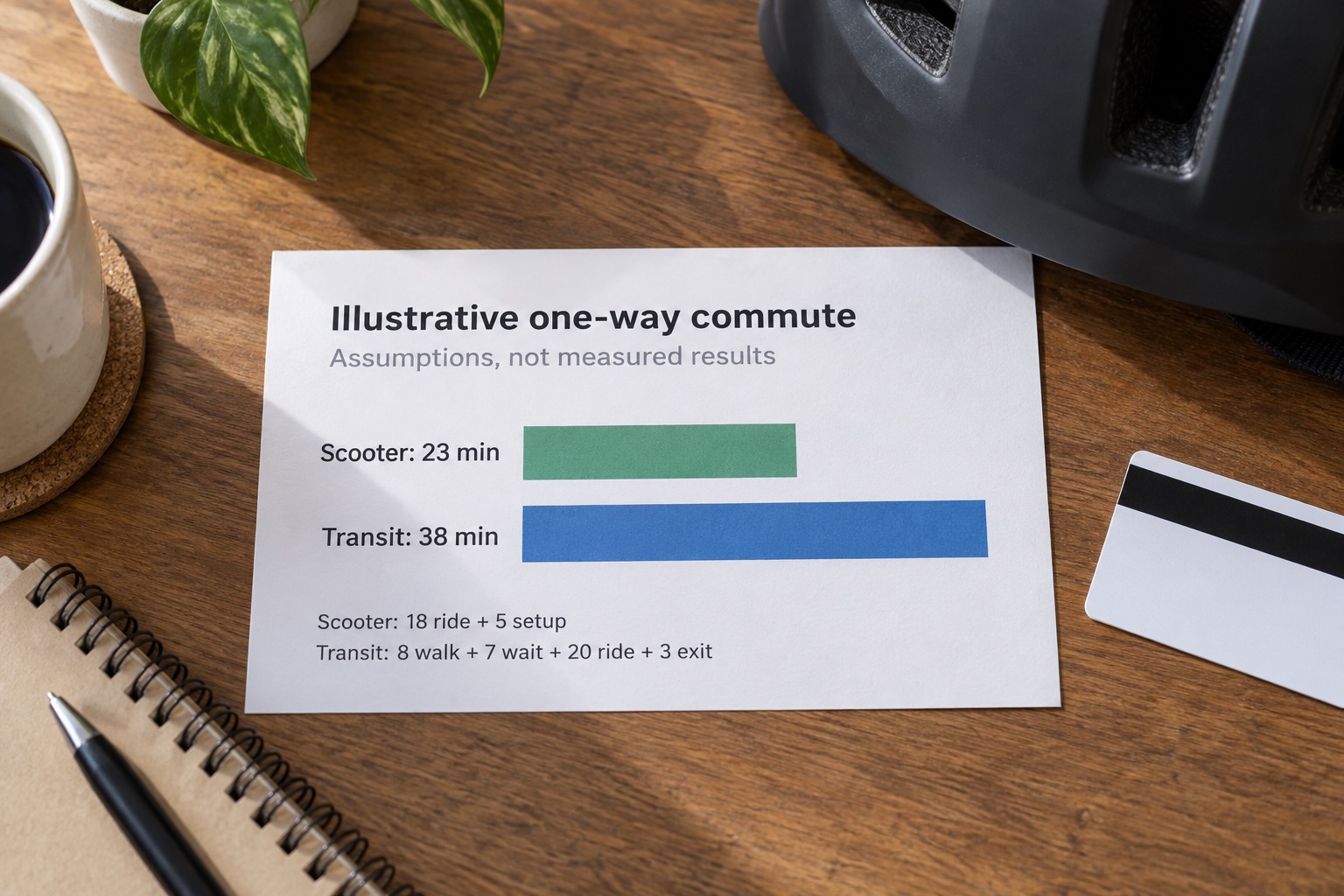
A scooter may win on a short route with slow connections, while a direct train can win over a longer distance. Your electric scooter vs public transit result depends on the full trip, including walking, waiting, crossings, and parking.
How can you make a fair time comparison?
Time the whole trip. Measure from home to your workplace, because top speeds exclude setup and waiting. Our 15 mph commuting guide explains why advertised speed differs from a usable trip average.
- Include crossings and scooter setup.
- Count both station walks and transfers.
- Record a delayed day alongside a smooth one.
What does the example chart show?
For illustration, a three-mile scooter ride at an assumed 10 mph average takes 18 minutes; five minutes of setup makes 23. The transit example adds eight minutes walking, seven waiting, twenty riding, and three exiting, for 38. These assumptions describe one hypothetical trip, not a general speed advantage.
| Illustrative one-way option | Total time |
|---|---|
| Scooter: 18 ride + 5 setup | 23 minutes |
| Transit: 8 walk + 7 wait + 20 ride + 3 exit | 38 minutes |
Replace every component with your own timing. Key Takeaway: Compare typical door-to-door time and its variation before choosing.
5. Which option fits your storage, access, and weather needs?
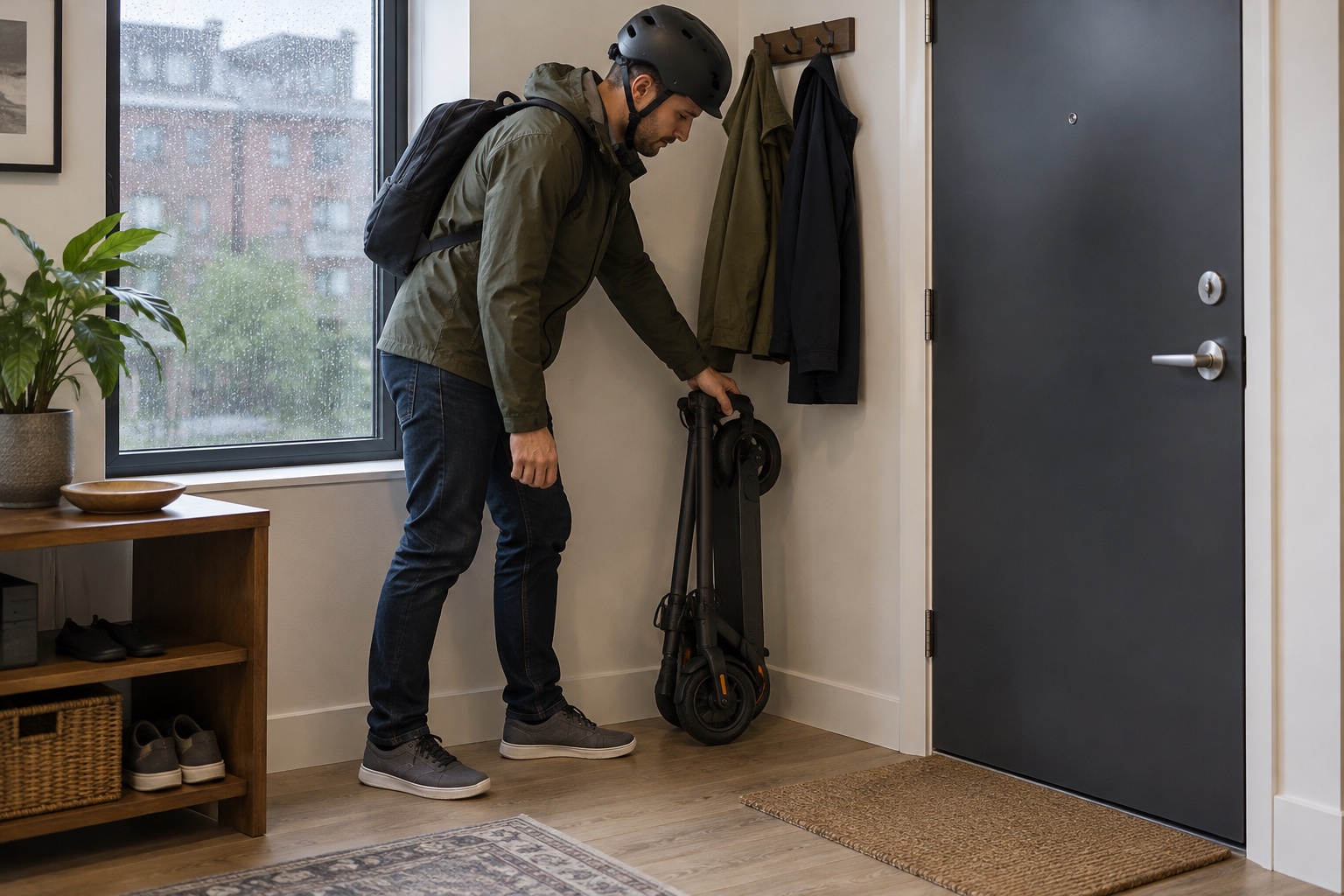
Transit often fits severe weather and seated travel better, while a compact scooter can fit short trips with secure storage. Your electric scooter vs public transit choice should account for stairs, charging access, and the route you can physically manage.
What should you test before buying?
Test the awkward part. A scooter that fits a cupboard may still feel difficult on three flights of stairs. Check its actual weight, folded shape, and grip with your work bag included. Model B has a foldable design and detachable battery; confirm dimensions and approved charging instructions for your setup.
- Measure your doorway and storage area.
- Try the folded lift on level ground.
- Confirm your workplace’s parking and charging policy.
What happens when conditions change?
Keep a transit route available for ice, heavy rain, poor visibility, or scooter repairs. Check the scooter manual’s operating limits rather than treating a water-resistance rating as permission for every wet road. A stand-up scooter also requires balance and carrying ability, so compare accessible transit when those are constraints.
| Daily constraint | Useful response |
|---|---|
| Several stair flights | Test the lift before purchase |
| No secure storage | Arrange parking before riding |
| Unsafe weather | Use your planned transit route |
Solve the limiting step in advance. Key Takeaway: Storage and access can decide the commute before speed does.
6. How do scooter and transit trips compare on emissions?
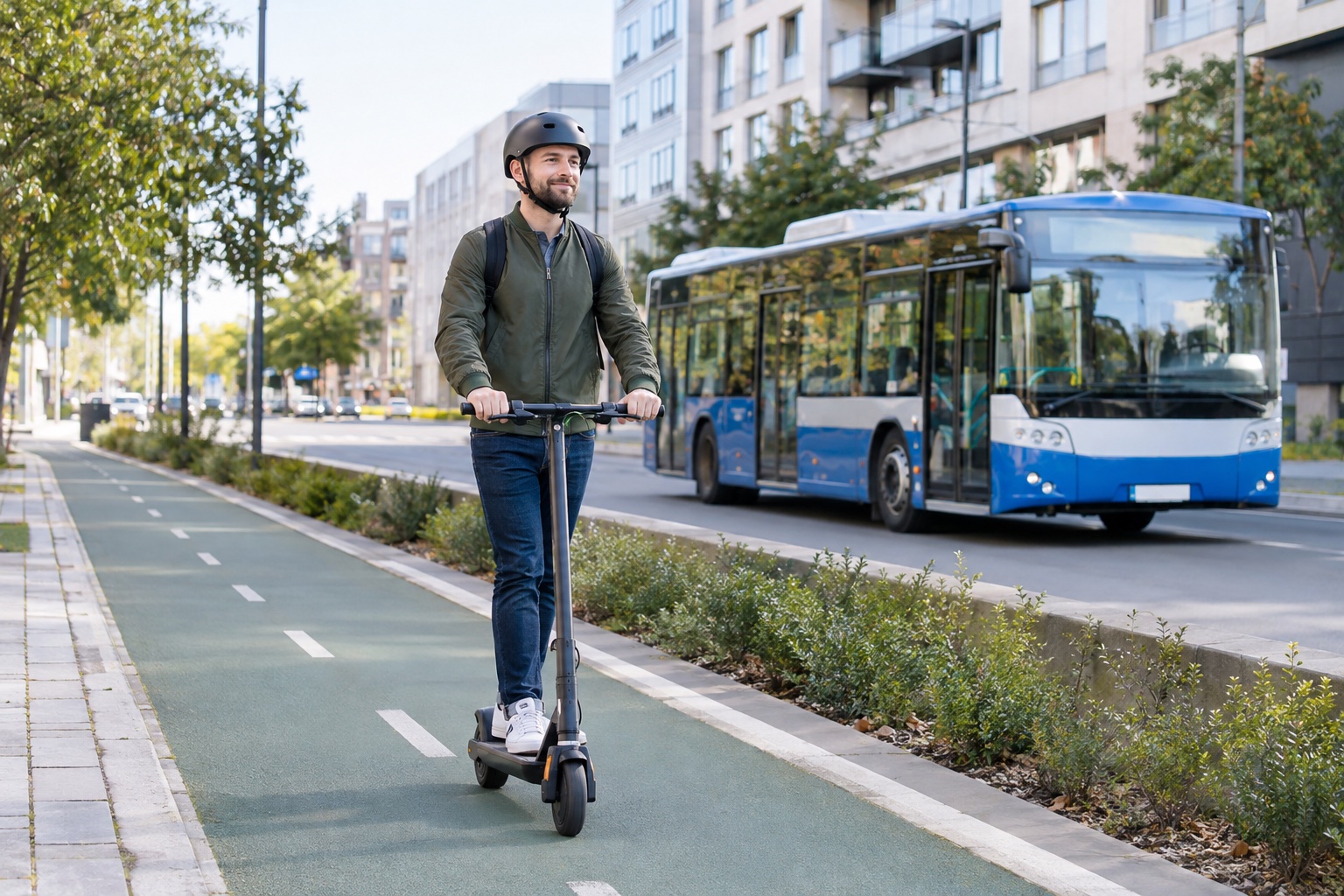
Neither option automatically has the lower impact in every electric scooter vs public transit comparison. Scooter manufacture, service life, charging, and the trips it replaces matter, alongside transit vehicle energy use and occupancy.
Why does replacing a trip matter?
Look beyond charging. Riding instead of taking a short car trip changes the comparison differently from replacing a walk. NC State researchers examined manufacturing and collection impacts in shared-scooter systems, showing why charging alone cannot describe their footprint. Those shared-fleet findings do not establish a fixed emissions figure for your privately owned scooter.
- Identify which trips you would replace.
- Maintain the scooter and use it over a realistic lifespan.
- Avoid treating a charged battery as proof of zero total emissions.
Can scooters and transit support the same goal?
Yes, a short scooter connection may help you reach a bus or train instead of driving the full route. So choose a routine you can sustain, including maintenance and a workable backup.
| What changes | What to compare |
|---|---|
| Car trip replaced | Both alternatives against driving |
| Walking trip replaced | Added equipment and energy use |
| Transit connection improved | Whole trip rather than one segment |
Start with the displaced trip. Key Takeaway: Environmental value depends on actual use, not a blanket green label.
7. Is scooter riding or transit more comfortable all week?
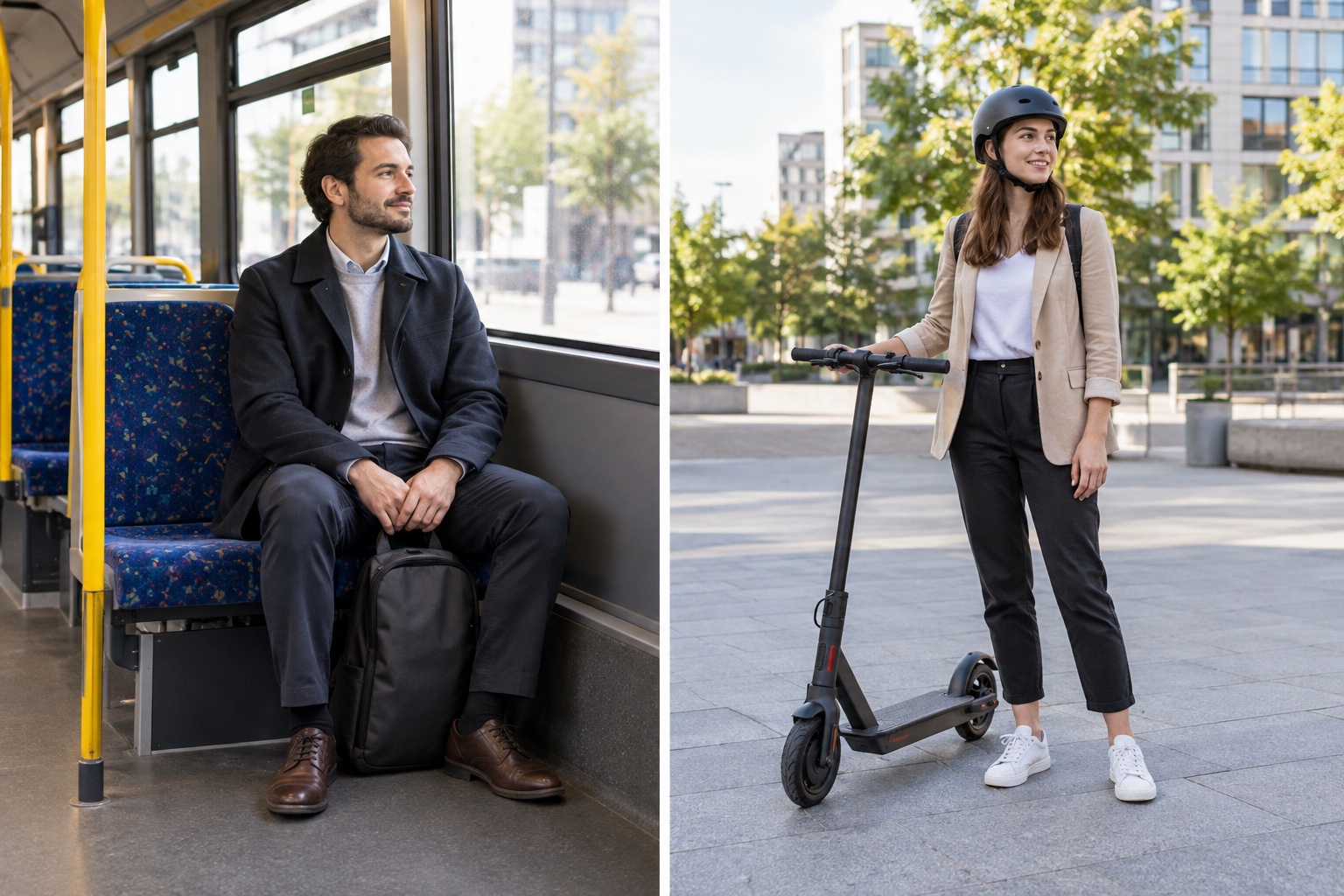
Transit usually offers more shelter and the possibility of sitting, while a scooter gives you direct control over departure time and route. Your electric scooter vs public transit choice should reflect how you feel after repeated trips, not one pleasant test ride.
Which kinds of effort should you compare?
Try an ordinary workday. Standing, balancing, carrying, and exposure to weather can become tiring across a week. Transit has its own demands, including walking, crowded vehicles, and waiting without a seat.
- Compare your comfort with your work bag.
- Notice whether carrying causes strain.
- Test the return trip when you are tired.
Does riding replace exercise or guarantee less stress?
No, a motor-assisted stand-up trip should not be treated as a substitute for a planned exercise routine. For example, you may enjoy outdoor travel or prefer reading on transit when conditions permit. Choose the option that leaves you ready for work without assuming universal health benefits.
| Your priority | What to test |
|---|---|
| Shelter and a chance to sit | Normal bus or train conditions |
| Departure flexibility | Safe scooter route and setup time |
| Low carrying effort | Storage access and folded weight |
Use several days of experience. Key Takeaway: Comfort across the working week matters more than a single enjoyable ride.
8. Which safety rules apply to scooter and transit travel?
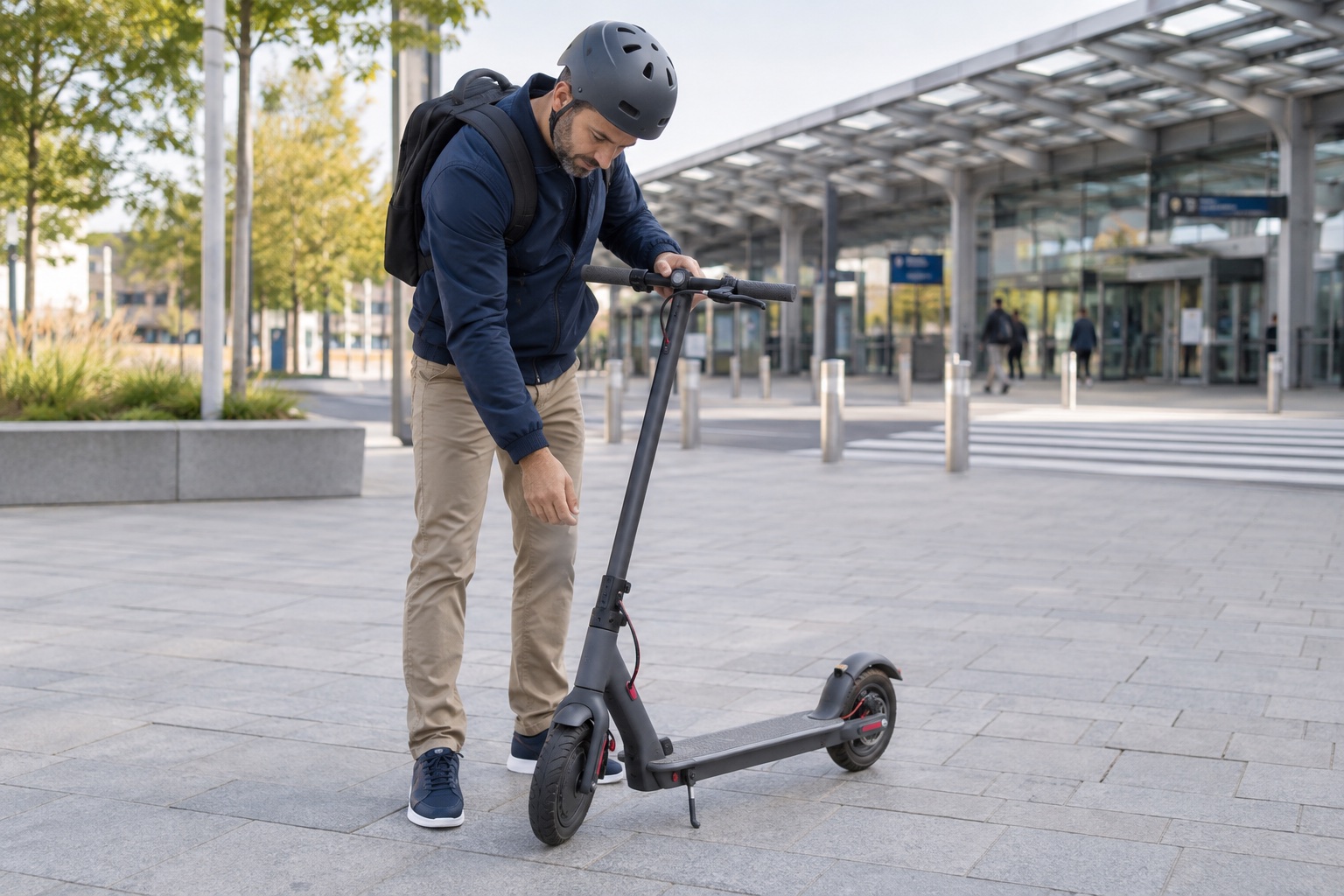
Local riding rules and operator carriage policies should guide your electric scooter vs public transit decision. A scooter being legal on a road does not automatically mean you can bring it onto a particular bus, train, or station.
Which policies need separate checks?
Check both rulebooks. Verify permitted riding locations, speed limits, helmet requirements, and any age or equipment conditions with your local authority. Then read the transit operator’s device rules. For example, TransLink’s carriage guidance asks riders to fold and store electric foldable scooters and leaves acceptance subject to safety and available space.
- Check every operator on a connecting trip.
- Review seasonal and peak-period restrictions.
- Confirm the rules again before changing your route.
What should you inspect before riding?
Check brakes, tires, lights, folding hardware, and battery condition as your manual directs. Use a properly fitted helmet and choose a route with suitable riding infrastructure. If a fault or unsafe road condition prevents a controlled ride, switch to your backup.
| Separate question | Where to verify it |
|---|---|
| Where may I ride? | Local transport authority |
| May I board with the scooter? | Transit operator |
| Is my scooter ready? | Manual and physical inspection |
Answer all three before departure. Key Takeaway: Legal permission, boarding permission, and equipment readiness are separate checks.
9. How do scooter and transit trips affect other people?
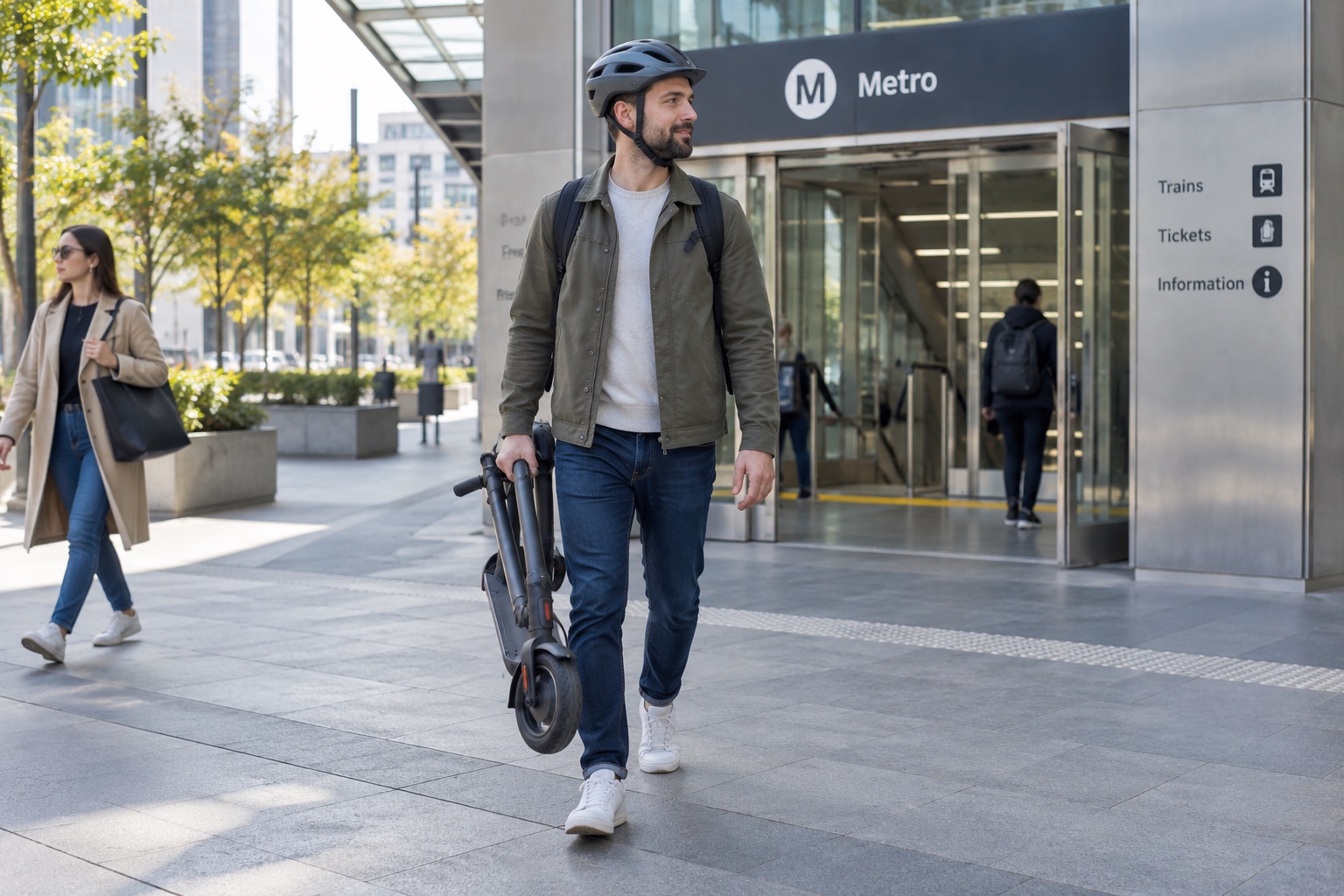
Either mode can work considerately when you leave space for other people. In electric scooter vs public transit, your riding, boarding, and parking habits affect pedestrians and fellow passengers throughout the route.
What helps in shared spaces?
Watch the space around you. Walk your scooter in station areas and crowded pedestrian spaces where riding is prohibited or inappropriate. Keep folded equipment close and follow staff instructions on placement. For example, someone using a mobility aid may need space that looks empty when you approach.
- Leave doors, ramps, and tactile paths clear.
- Keep the scooter out of aisles and seats.
- Avoid blocking entrances when parking or waiting.
Can social preferences help you decide?
You may enjoy a quieter solo route or prefer travelling with colleagues on transit. Choose practical habits that let your trip fit around everyone else’s.
| Shared space | Considerate habit |
|---|---|
| Station entrance | Walk and leave room to pass |
| Vehicle interior | Store equipment as instructed |
| Destination doorway | Park in an approved clear space |
Check the space before settling in. Key Takeaway: A convenient commute should leave access open for other people.
10. How can apps help you plan scooter and transit trips?
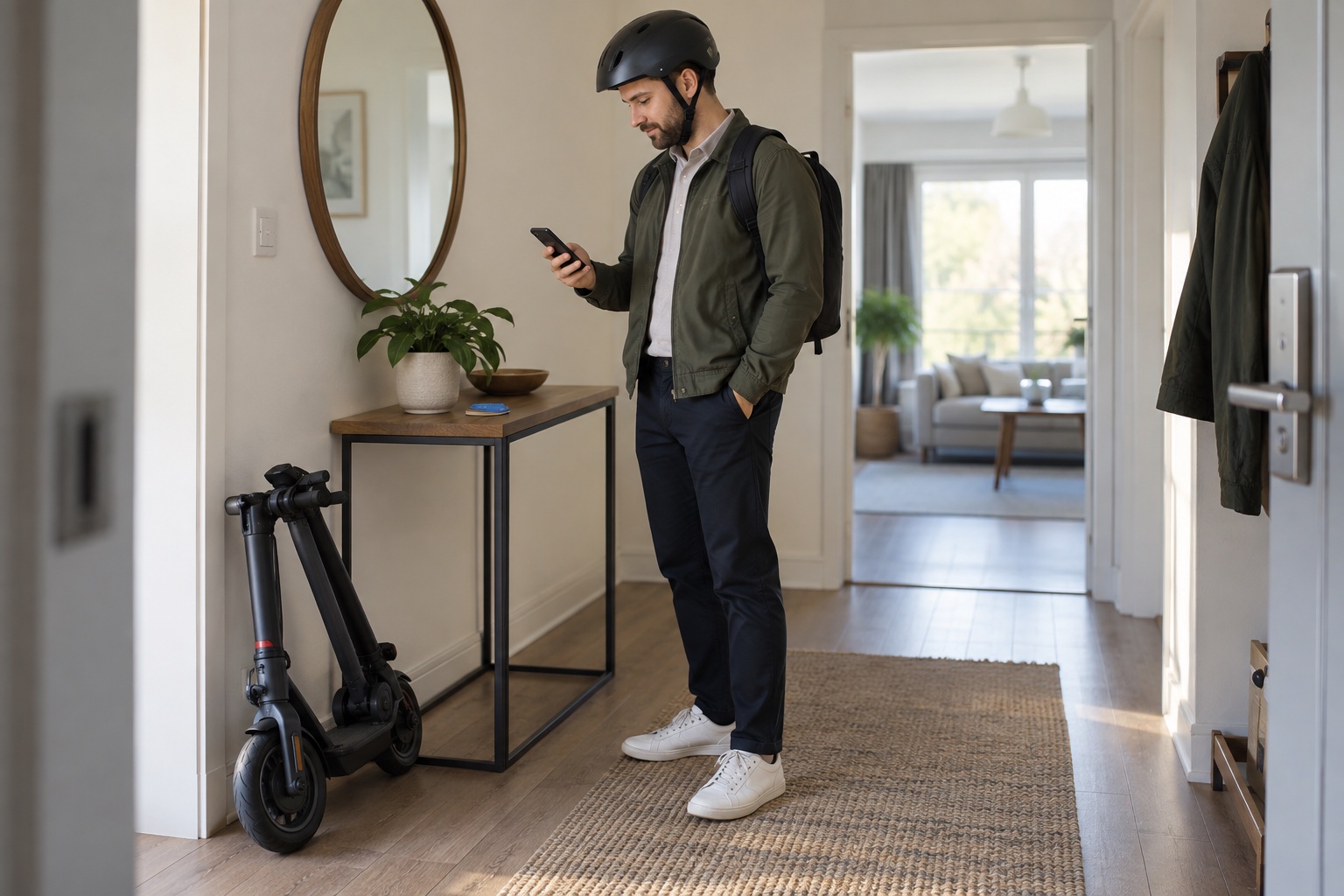
Reliable service alerts, route timing, and battery information help you make an electric scooter vs public transit choice that fits each day.
What should you check each morning?
Give it a trial week. Record departure time, arrival time, weather, fares, and any carrying or parking problems on workdays. Next, compare those notes with current transit alerts and your scooter’s battery condition. Our scooter specification guide helps you distinguish advertised limits from features relevant to your route.
- Check service disruptions and route access.
- Allow a range margin for hills, load, and weather.
- Stop safely before consulting a phone during travel.
How do you choose a routine from those results?
Use the measured route that fits your budget, access, and schedule, with a backup for difficult days. Model B is advertised with up to 12 miles of range, which is a maximum claim rather than a guaranteed commute distance. For example, a long train segment with a short scooter connection may work better than using either mode alone.
| Your trial shows… | Practical next step |
|---|---|
| Short safe route and secure parking | Compare a scooter routine |
| Long direct train trip | Keep transit as the main segment |
| Difficult station walk | Test an allowed scooter connection |
Build the routine from observed results. Key Takeaway: Use real trip data and a backup plan before committing to one mode.
Your next commute
You now have a way to compare total spending, actual travel time, storage, comfort, and the rules along your route. At Dynamic Scooter, we believe compact transport should fit the entire commute, including the walk, the station, and the storage space at work. If a foldable scooter could help with your short trips or station connection, contact us today with your distance and carrying needs so our team can help you assess Model B for your route.
Frequently Asked Questions
Q1. Can I save money if I already have a transit pass?
Only if you avoid spending you would otherwise pay. If you keep the same pass, a scooter may improve convenience without reducing that bill.
Q2. What’s the best choice for a short city commute?
A scooter can suit a short, legal, safe route with secure parking. A frequent direct bus or train may work better when weather, carrying, or access is difficult.
Q3. Can I take a folded electric scooter on a bus or train?
Sometimes. Check the operator’s current rules, including peak hours, seasonal restrictions, and available space; folding alone does not guarantee boarding.
Q4. How do I know if a scooter has enough range for work?
Use your full return distance and leave a margin. Hills, rider load, speed, weather, and battery condition can reduce the distance available from one charge.
Q5. What’s the best backup when rain or cold stops my ride?
A transit route you have already checked is a useful backup. Keep the fare method ready and confirm whether the scooter can accompany you or must stay in approved storage.