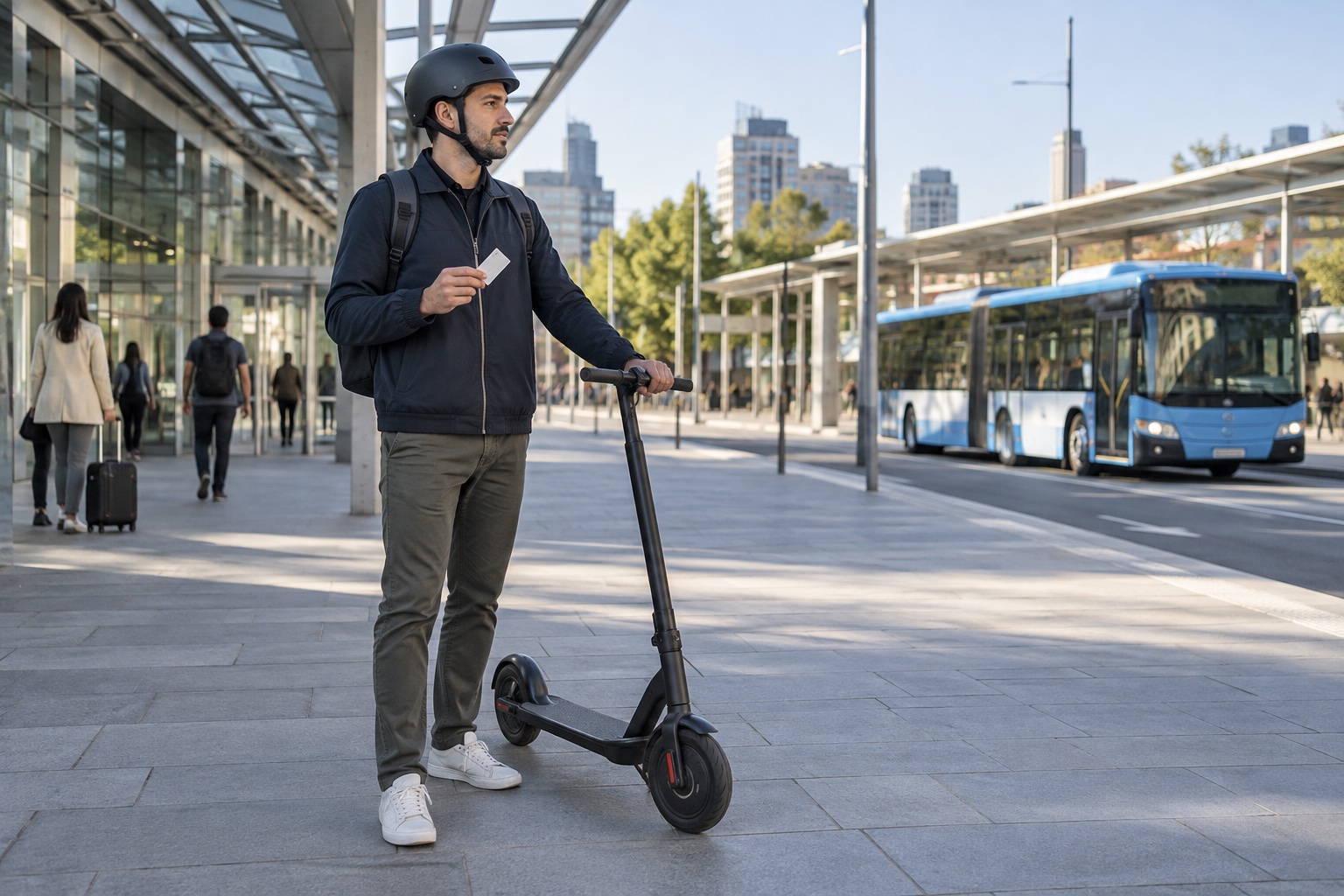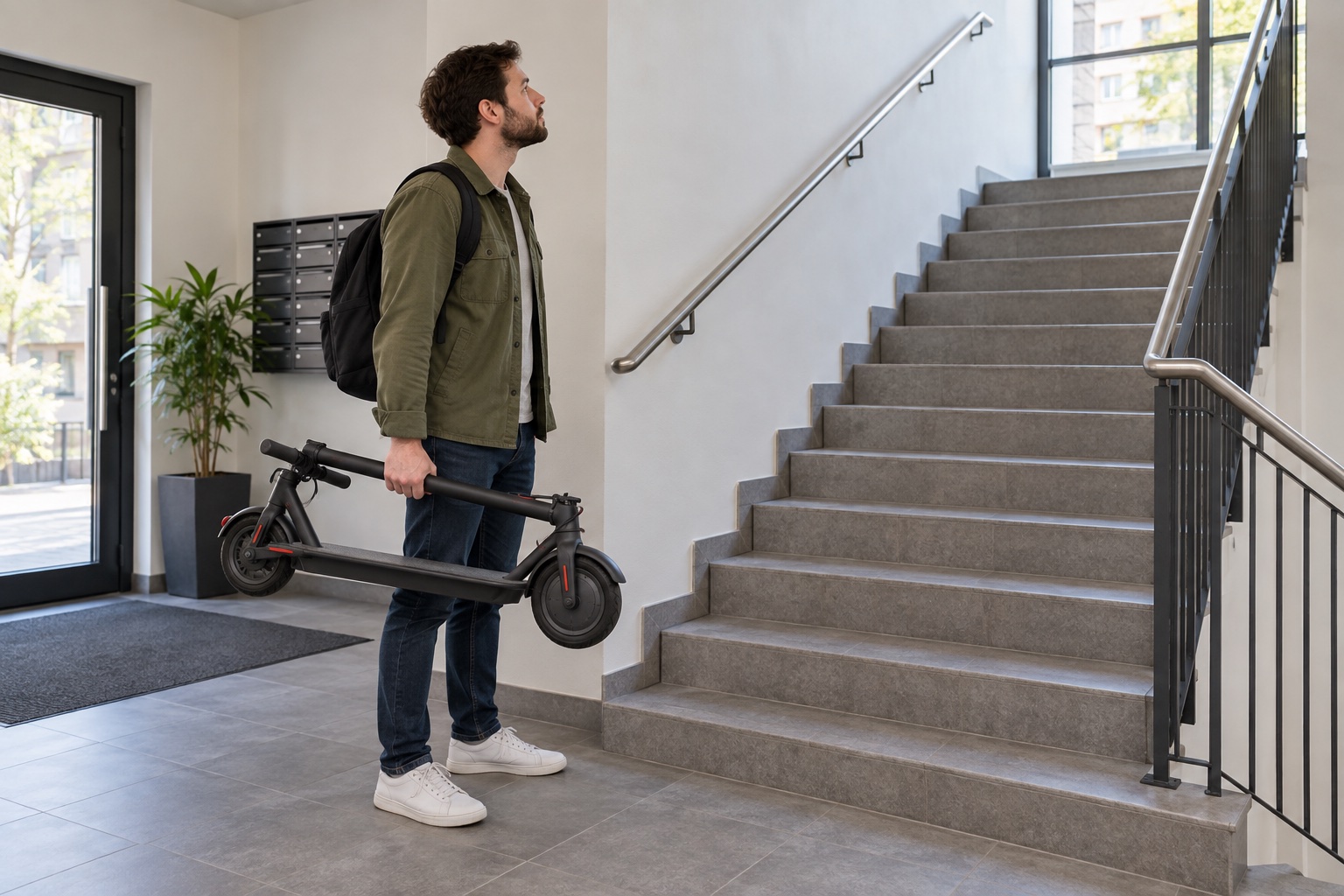

Buying usually suits regular rides when you have secure storage and safe charging, while renting suits occasional trips and short visits. Your decision on renting vs buying an electric scooter should account for complete costs, availability, and the work ownership adds.
You're leaving work when the nearest rental disappears from the map, and another short ride adds another charge to your monthly bill. Buying sounds tempting, until you think about your apartment stairs and where the scooter will live. Compare those everyday details with your actual receipts before spending money on either option.
1. When Is Renting vs Buying an Electric Scooter Worth It?
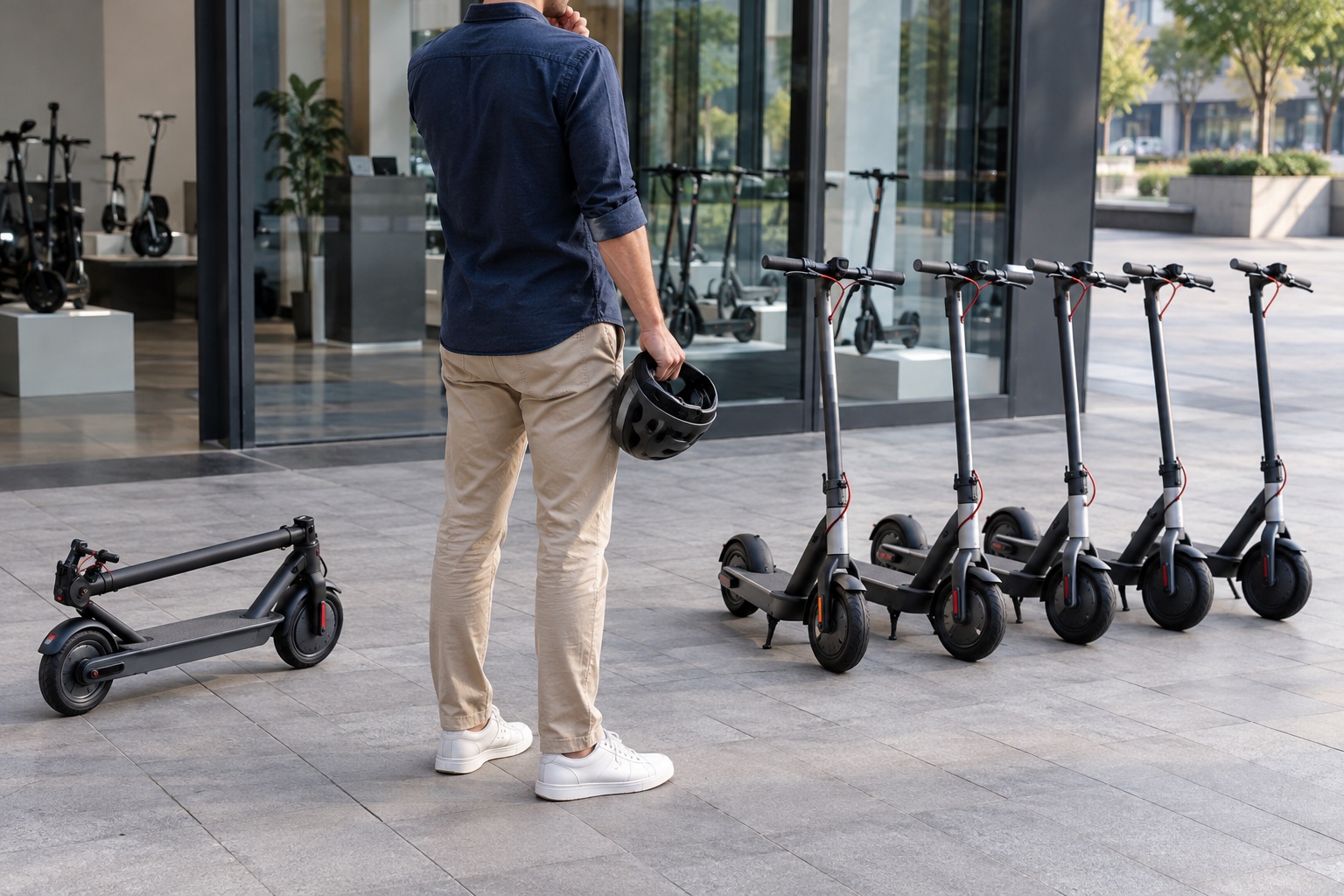
Renting works well for occasional use; buying becomes more attractive when you repeat a route often enough to justify ownership. When comparing renting vs buying an electric scooter, count the trips you already take, including return rides and days when weather sends you elsewhere.
How often will you really ride?
Count a normal week. A return commute normally means two separate rides, so five commuting days can mean ten rental charges. If you work remotely, travel frequently, or ride only in warmer months, count those gaps before projecting a year's spending.
- Record one-way trips rather than commuting days.
- Include errands you would make by scooter.
- Keep transit or walking costs for days you won't ride.
Which routine favors each option?
| Your routine | Likely starting choice | Reason |
|---|---|---|
| A few holiday rides | Rent | Little ownership commitment |
| Repeated weekly commute | Compare buying | Recurring fees accumulate |
| Uncertain future use | Rent briefly | Test the habit before purchase |
If you rent for both legs, a daily return trip doubles the ride count.
Key Takeaway: Use your real weekly pattern to decide whether ownership deserves a closer cost comparison.
2. What Costs Should You Compare Before You Decide?
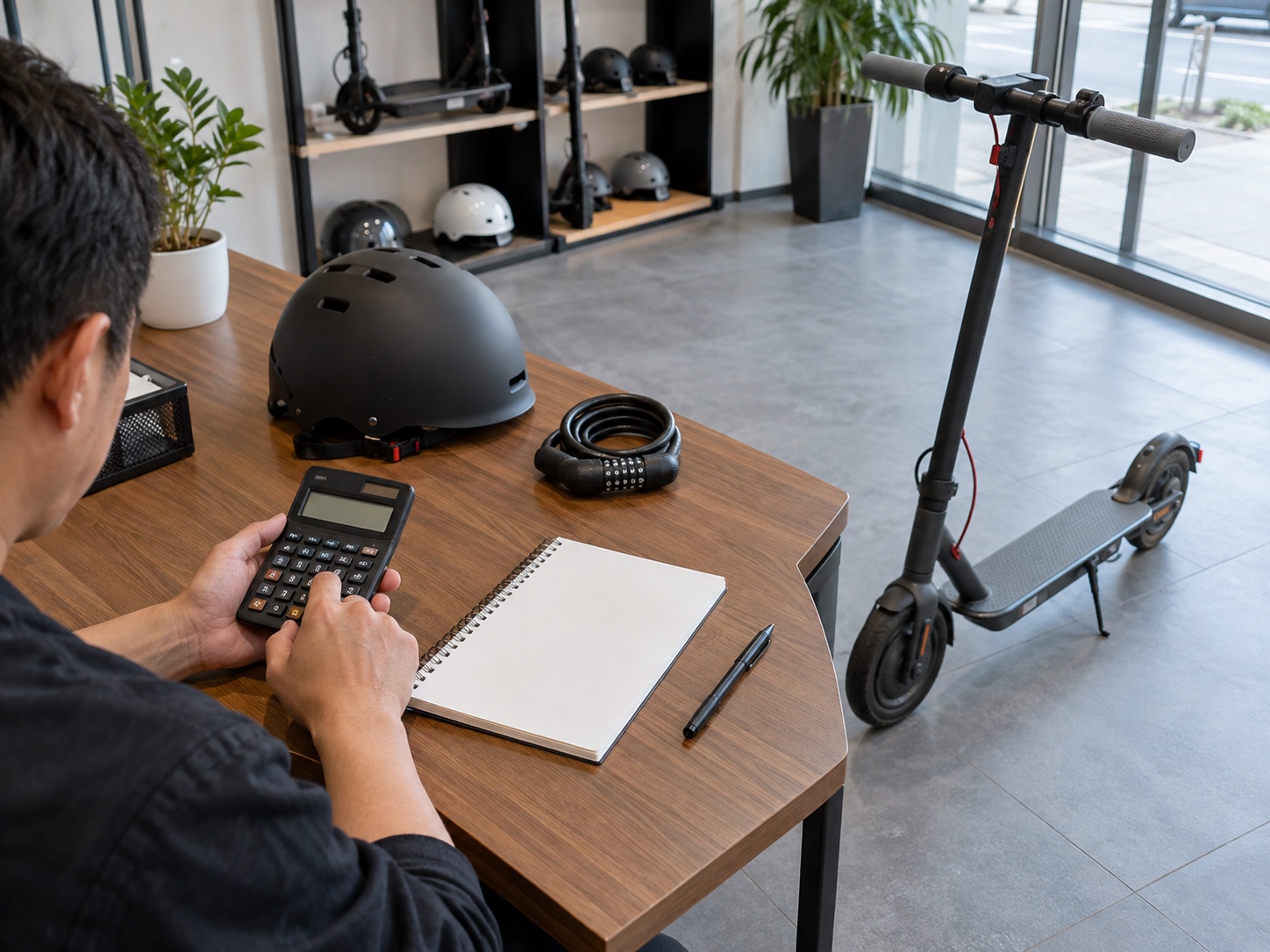
Compare full rental bills with purchase, equipment, charging, servicing, and any applicable insurance costs before deciding. Renting vs buying an electric scooter can look very different once you include the costs that don't appear on the scooter's price tag.
What belongs in your budget?
Read the bill before the headline price. Check the rental pricing terms for start charges, billed minutes, passes, and extra fees. Confirm the app ends the ride before walking away. For ownership, budget for a helmet, suitable lock, delivery, tax, and realistic repairs.
- Rentals: check passes, included minutes, and excess charges.
- Ownership: include gear and routine service.
- Both: allow for alternative transport when you cannot ride.
What could change the comparison?
| Cost | Renting | Buying |
|---|---|---|
| Initial scooter purchase | Usually none for shared rides | Paid upfront or financed |
| Recurring use | App charges or pass | Charging and upkeep |
| Damage or loss | Check provider terms | Check repair and coverage costs |
A discount pass may reduce rental spending, while an unexpected repair may raise ownership spending.
Key Takeaway: Compare complete budgets in the same currency and over the same period.
3. How Many Rental Rides Equal the Cost of Buying?
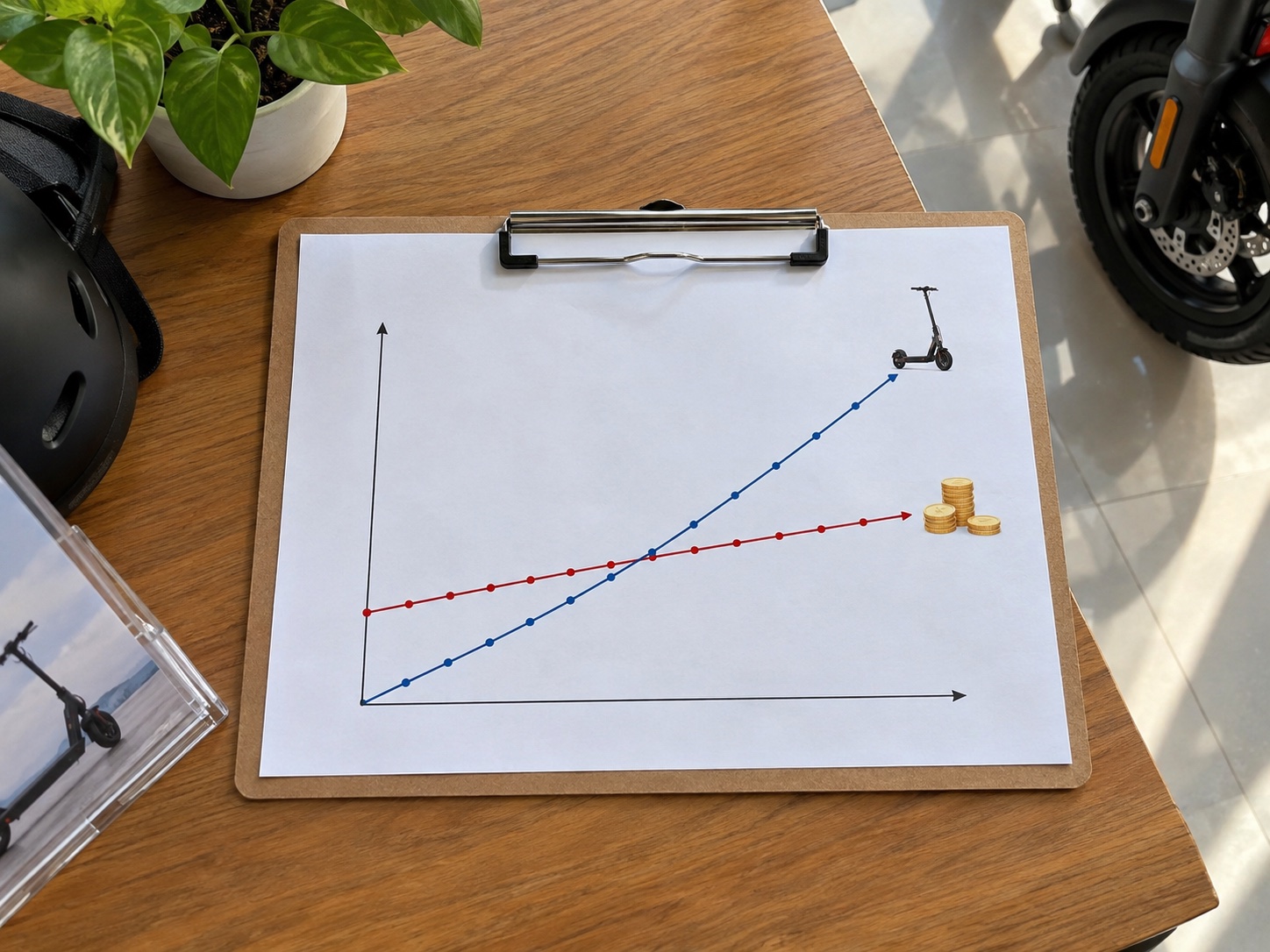
The hypothetical example below reaches equal costs at 100 one-way rides, with buying cheaper after that point. For renting vs buying an electric scooter, replace every assumption with your own quotes before treating a payback estimate as useful.
How do you calculate a fair break-even point?
Run your own numbers. Assume USD $600 upfront for a scooter and gear, plus $0.25 per ride allocated to charging and upkeep. Assume a rental costs $1 to start and $0.35 per minute for 15 minutes, with no extra fees: $6.25 per ride.
- Rental total equals $6.25 multiplied by ride count.
- Ownership total equals $600 plus $0.25 per ride.
- Divide $600 by the $6 difference: 100 rides.
What does that example look like over time?
| One-way rides | Assumed rental total | Assumed ownership total |
|---|---|---|
| 40 | $250 | $610 |
| 100 | $625 | $625 |
| 200 | $1,250 | $650 |
At ten rides weekly, equality arrives after ten weeks in this model; pass discounts, repairs, theft, financing, or resale change the outcome.
Key Takeaway: Use these assumptions only as an example, then replace them with your own local quotes.
4. Which Option Makes Your Commute More Convenient?
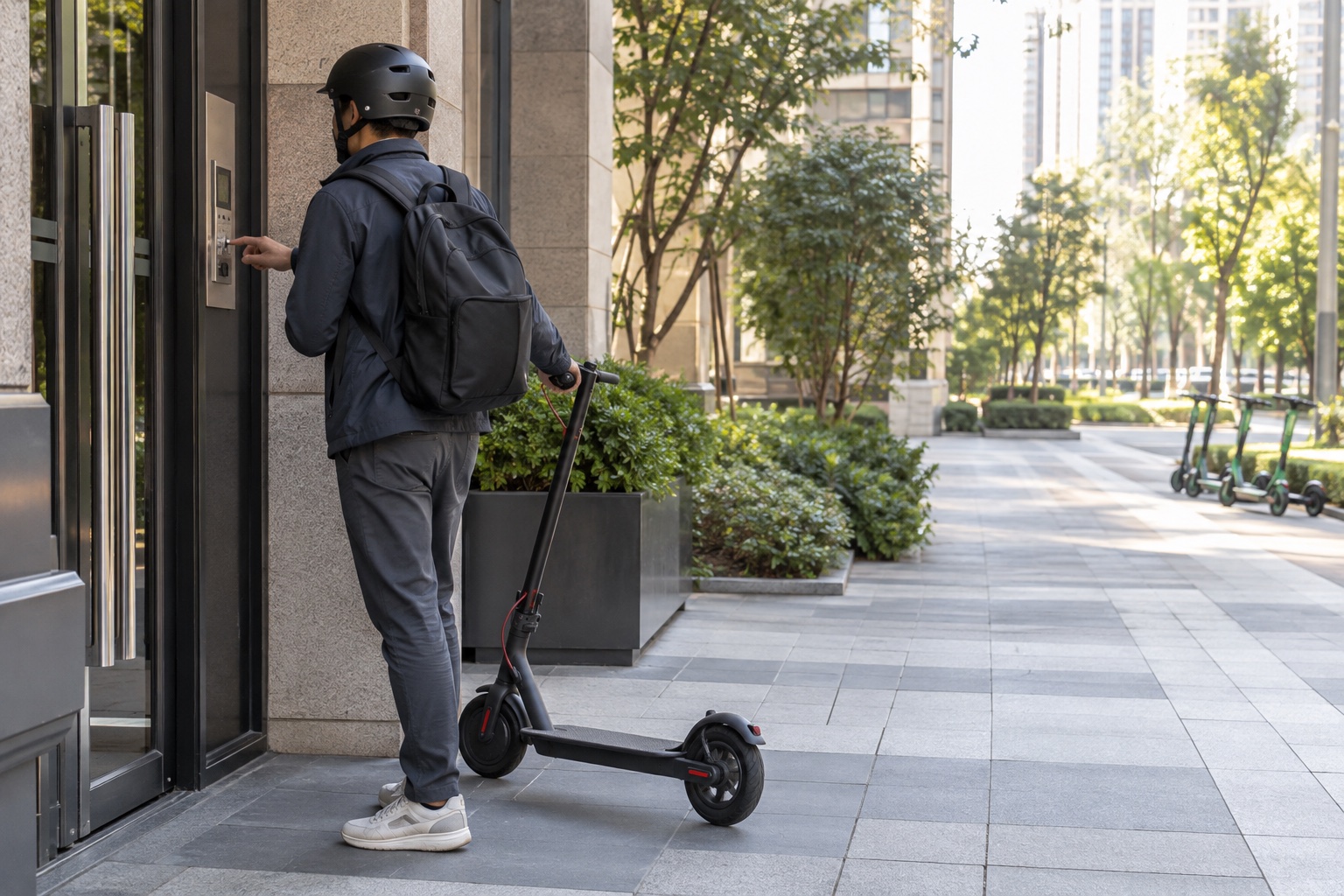
A prepared personal scooter is usually more predictable for a repeated route, while rentals remove the need to bring your own vehicle. Convenience in renting vs buying an electric scooter depends on nearby availability, permitted parking, and what happens at each end of your trip.
What happens when you're ready to leave?
Check both ends of the trip. A rental may require a walk to reach it and another walk from an allowed parking area. A personal scooter such as the Dynamic Scooter Model B gives you a foldable option, but you still need permission and space to bring it inside.
- Check rental availability at your usual departure time.
- Before starting, verify service zones and permitted end locations.
- Ask your workplace about personal scooter storage.
Where can each option slow you down?
| Situation | Rental check | Ownership check |
|---|---|---|
| Morning departure | Vehicle nearby | Battery and inspection ready |
| Arrival | Valid parking location | Allowed storage space |
| Disrupted trip | Another vehicle or transit | Carrying or backup transport |
A nearby rental on a quiet afternoon doesn't prove one will be available during your morning commute.
Key Takeaway: Test availability and arrival arrangements at the times you actually travel.
5. Who Handles Maintenance and Repairs?
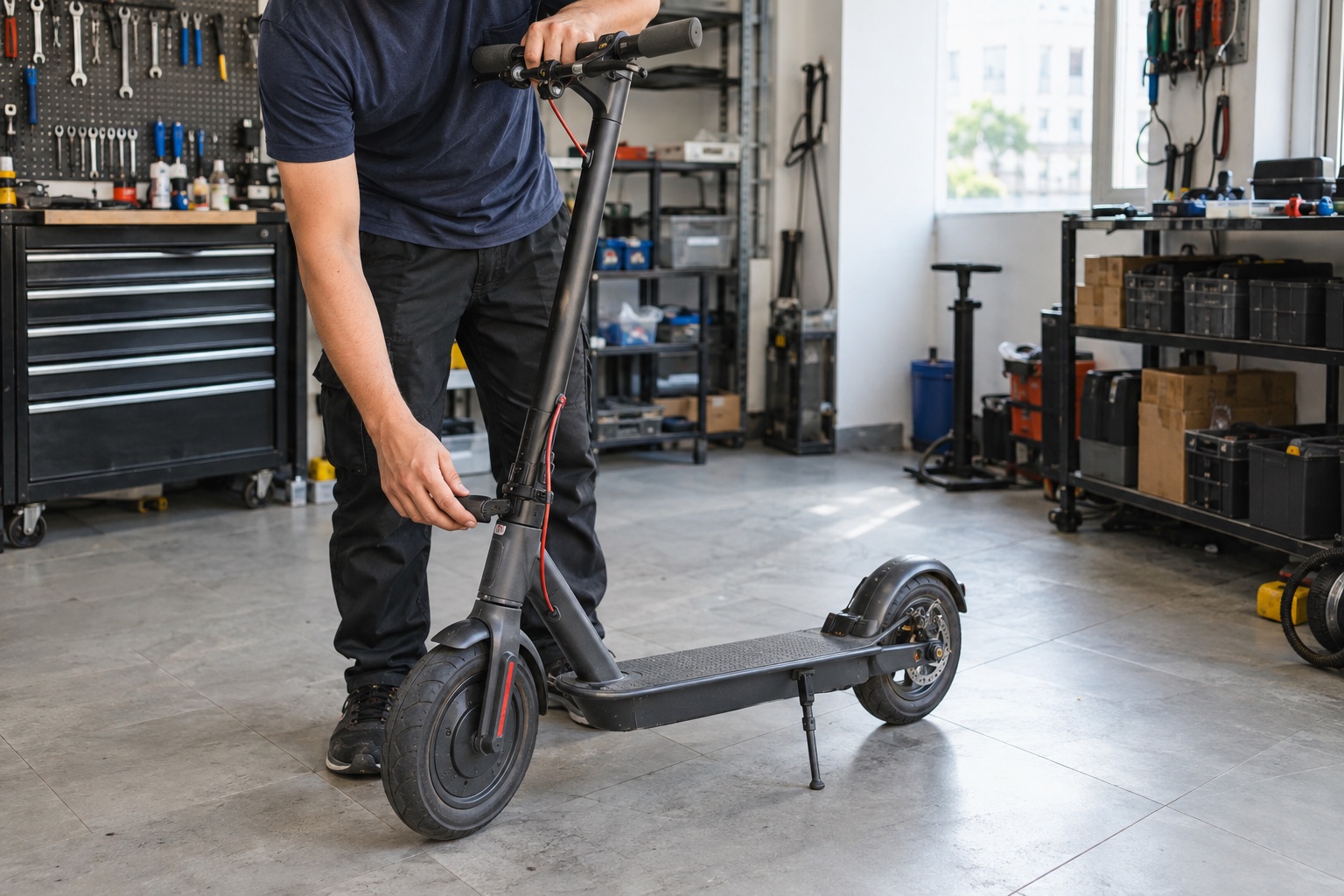
Rental providers generally arrange fleet servicing, while owners arrange upkeep and repairs for their own scooters. When comparing renting vs buying an electric scooter, account for service access and downtime as well as repair bills.
What should you inspect before any ride?
Look at the scooter in front of you. Neither an app listing nor ownership guarantees sound brakes, tires, or steering. Check for obvious damage, test the controls while stationary, and report a faulty rental or arrange repair before using your own scooter.
- Before riding, inspect tires, the stem, and any folding latch.
- Check braking response and control movement.
- Skip any scooter with cracks, loose steering, or a brake fault.
How do the responsibilities differ?
| Task | Rental rider | Owner |
|---|---|---|
| Pre-ride inspection | Check and reject faults | Check and address faults |
| Routine servicing | Provider normally arranges it | Arrange or follow manual |
| Repair downtime | Find another available vehicle | Plan service and a backup |
Because you arrange your own servicing, ownership gives you continuity of care and responsibility for scheduling it.
Key Takeaway: When choosing, allow for the maintenance work and downtime each option requires.
6. Can You Personalize a Rental or Your Own Scooter?
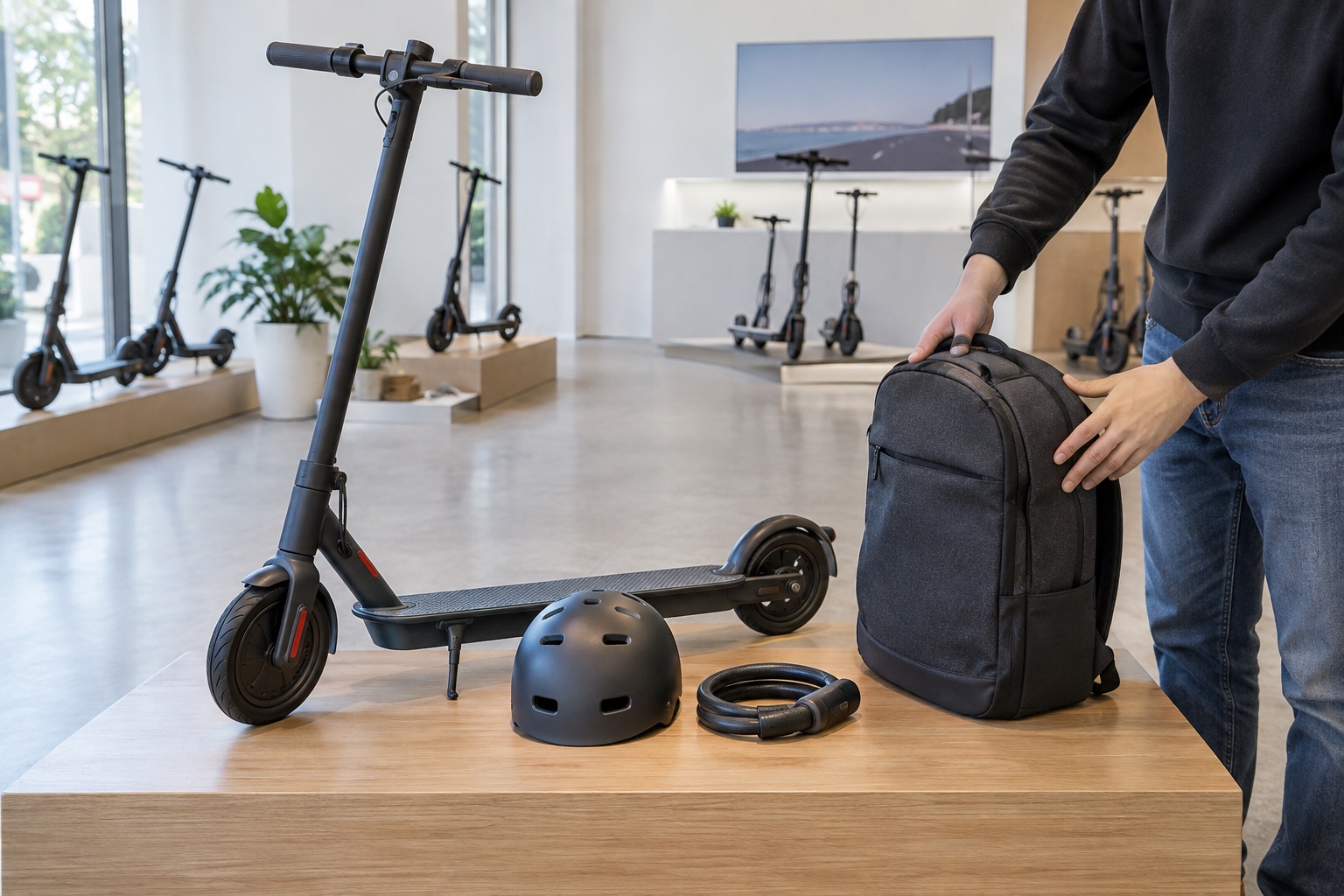
Ownership gives you more choice over compatible accessories and the scooter model itself; rentals generally provide a fixed setup. Personalization in renting vs buying an electric scooter should focus on fit and useful equipment rather than unapproved electrical or structural changes.
Which additions are worth considering?
Choose what solves a daily problem. A carrying bag may help on a train connection, and a suitable lock may help when parking. Check our accessories and parts against your exact model, and keep added equipment clear of steering, lights, and brake controls.
- Choose a correctly fitting helmet before either a rental or a personal scooter ride.
- If you need a carrying bag, match it to the folded scooter.
- Follow manufacturer guidance for replacement parts.
Where does personalization become a service risk?
| Change | Sensible approach |
|---|---|
| Carrying bag or lock | Check fit and handling |
| Replacement part | Confirm model compatibility |
| Battery, wiring, or speed modification | Ask the manufacturer before proceeding |
If an accessory interferes with a brake lever, remove it before riding.
Key Takeaway: Ownership lets you choose your setup, but compatibility and warranty terms still apply.
7. Which Option Gives You the Ride Quality You Need?
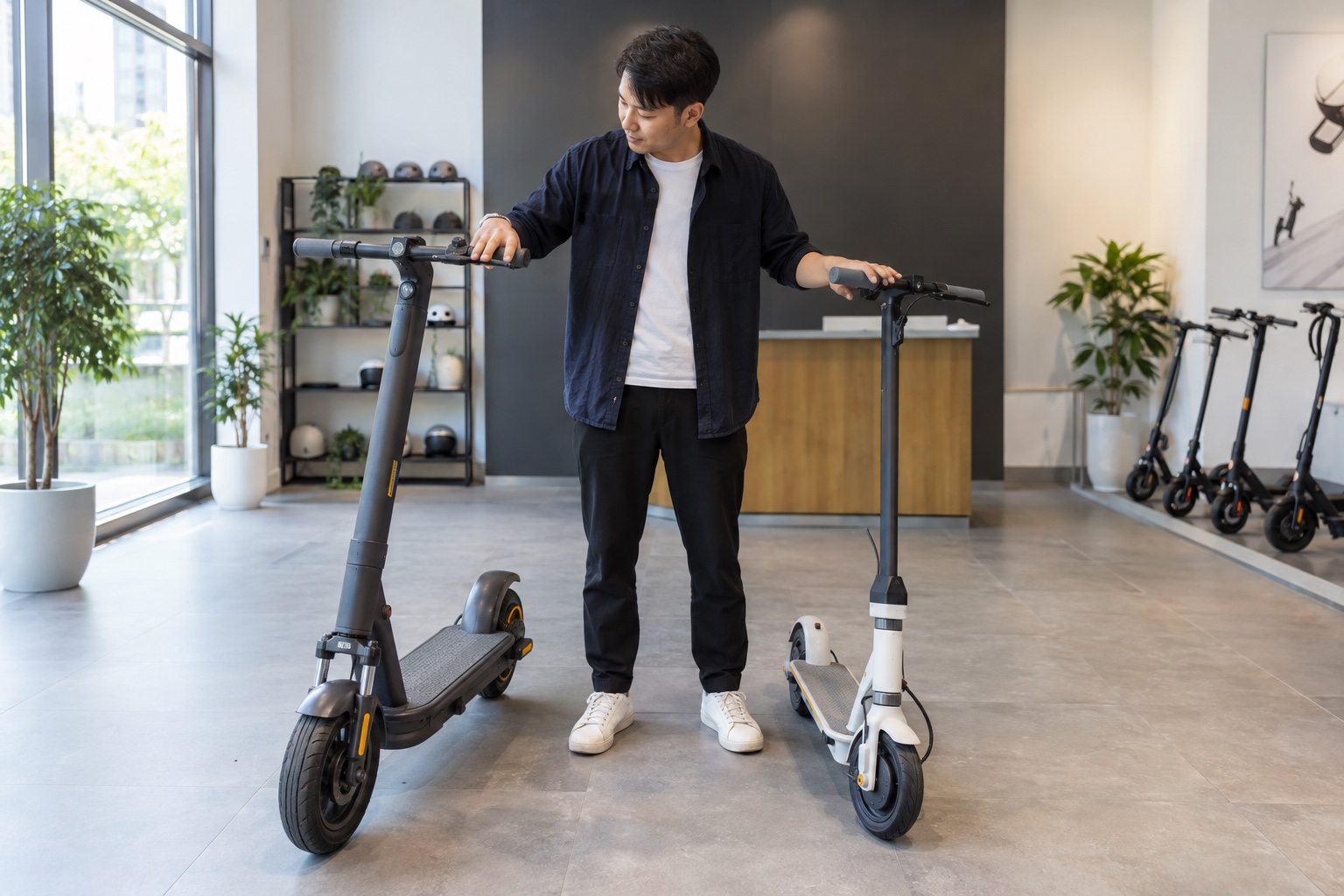
Buying lets you select a model for your body and route, while rental comfort depends on the vehicle available. Judge renting vs buying an electric scooter by fit, braking, tires, and surface conditions rather than assuming either category always rides better.
What should a test ride tell you?
Try the route you expect to repeat. Smooth pavement can hide discomfort that appears on rougher streets, and a showroom stance cannot reveal everything about braking feel. Begin in a clear, permitted area and check whether you can steer and stop confidently.
- Compare handlebar reach and usable deck space.
- Notice tire response on your normal surface.
- Check carrying weight alongside riding comfort.
Which features deserve a closer look?
| Feature | Rental question | Buying question |
|---|---|---|
| Rider fit | Does this unit suit you? | Which model fits you? |
| Tires and suspension | What is available nearby? | What does your route need? |
| Braking | Does this unit pass inspection? | Can you maintain this system? |
A well-maintained rental may suit your route better than a poorly chosen personal scooter.
Key Takeaway: Evaluate the actual vehicle and route, then choose the setup you can use confidently.
8. How Do Range and Charging Change the Choice?
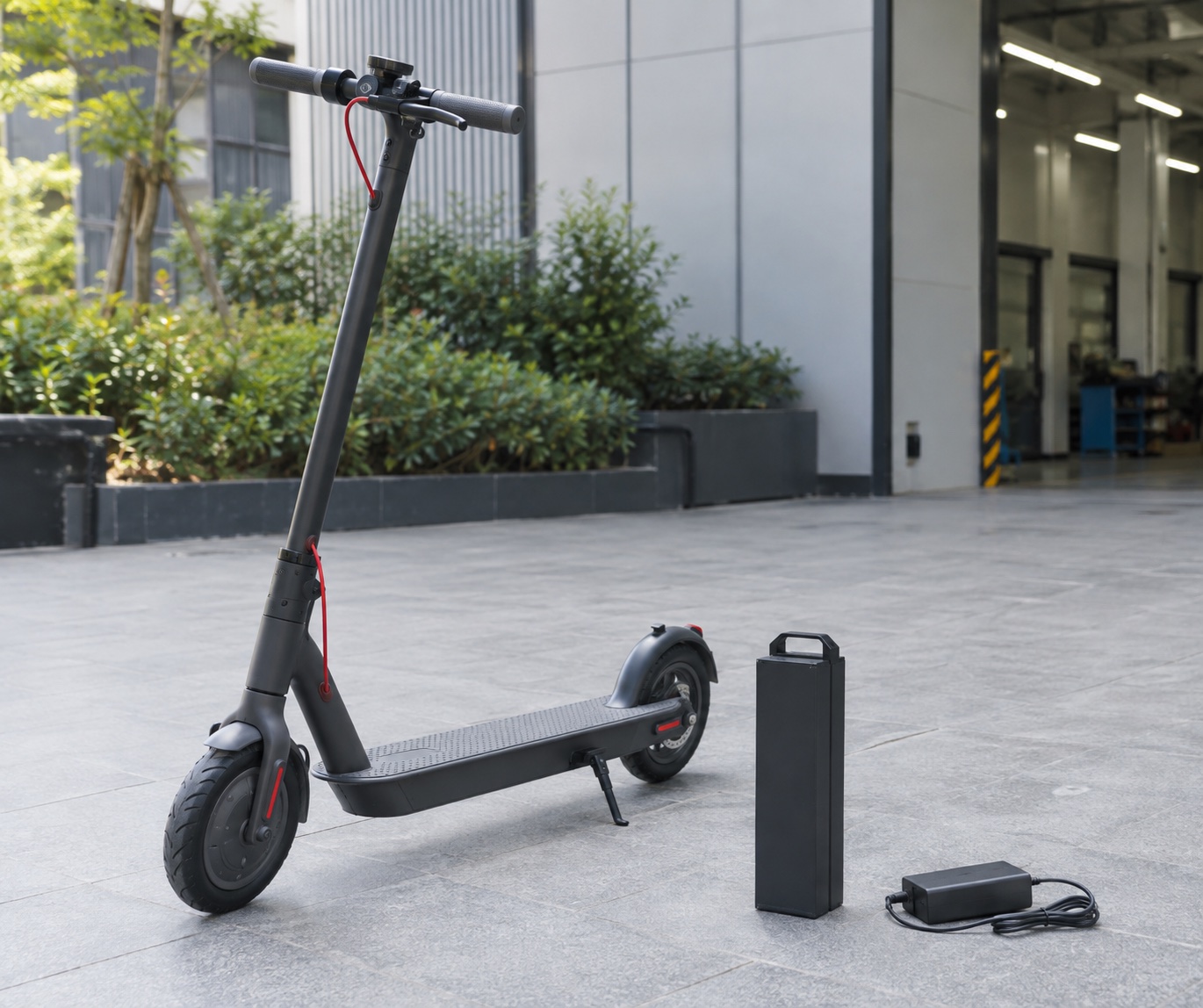
Owning means planning your battery reserve and safe charging access, while renting means finding a vehicle with enough charge for the trip. Renting vs buying an electric scooter should include hills, rider load, and return distance because advertised maximum range may exceed your everyday result.
What battery routine would ownership require?
Plan the return trip too. Model B lists up to 20 km (12 miles) of range and a detachable battery; actual range varies with your route. Check the manual and customer-care information and use the maker-approved charger. Follow the CPSC charging guidance and stay present while charging.
- Leave reserve for detours and changing conditions.
- Check rental battery status before starting.
- Charge where building rules and the manual allow.
What should you check at each end?
| Battery question | Rental | Ownership |
|---|---|---|
| Enough charge to arrive? | Check the available unit | Check your battery |
| Return ride available? | Check local supply | Keep a reserve |
| Safe charging access? | Provider normally handles charging | Arrange it before buying |
A removable battery can simplify access, but it still needs approved equipment and a suitable charging location.
Key Takeaway: Choose a battery plan that covers your real round trip without relying on maximum-range claims.
9. Do You Have Space to Store and Secure a Scooter?
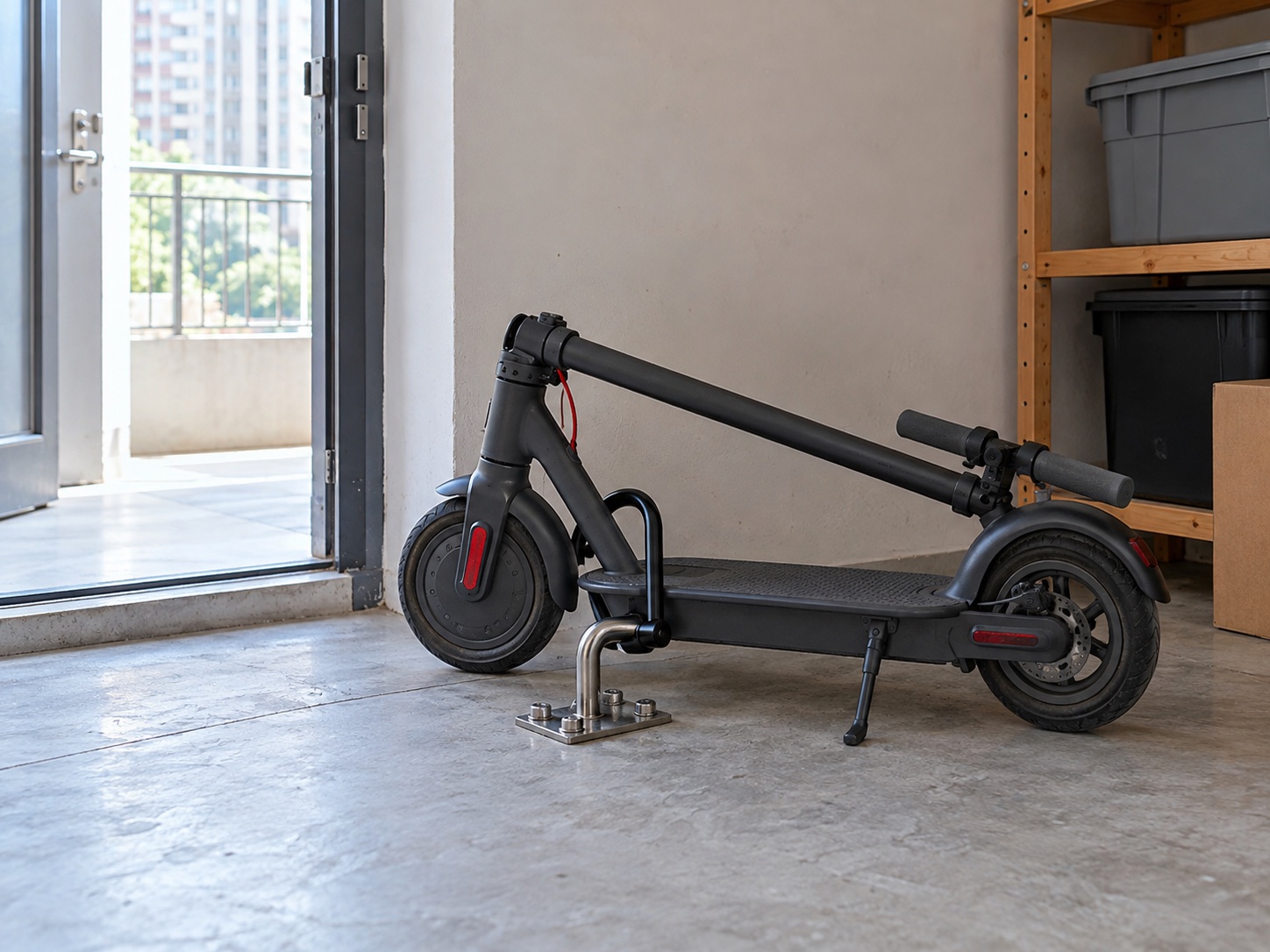
Ownership works best when you have a permitted, dry storage spot and a practical way to secure the scooter. In renting vs buying an electric scooter, missing storage can outweigh a favorable cost calculation.
Where will it go when you're not riding?
Measure the space before ordering. Check folded dimensions, doorway width, and the stairs between your storage spot and the street. Then ask about building or workplace restrictions; a folding scooter still occupies space and carries a battery.
- Keep exits and walking routes clear.
- Use a suitable lock and fixed anchor where permitted.
- Account for carrying the scooter up repeated stairs.
Which storage problem changes the decision?
| Constraint | What to check |
|---|---|
| Small apartment | Folded footprint and clear access |
| Unsecured outdoor parking | Theft risk and any coverage |
| Workplace restriction | Another permitted storage location |
If every ride ends with uncertain parking, ownership adds a recurring problem.
Key Takeaway: Confirm storage and security before using projected rental savings to justify a purchase.
10. How Can You Make the Choice With Less Guesswork?
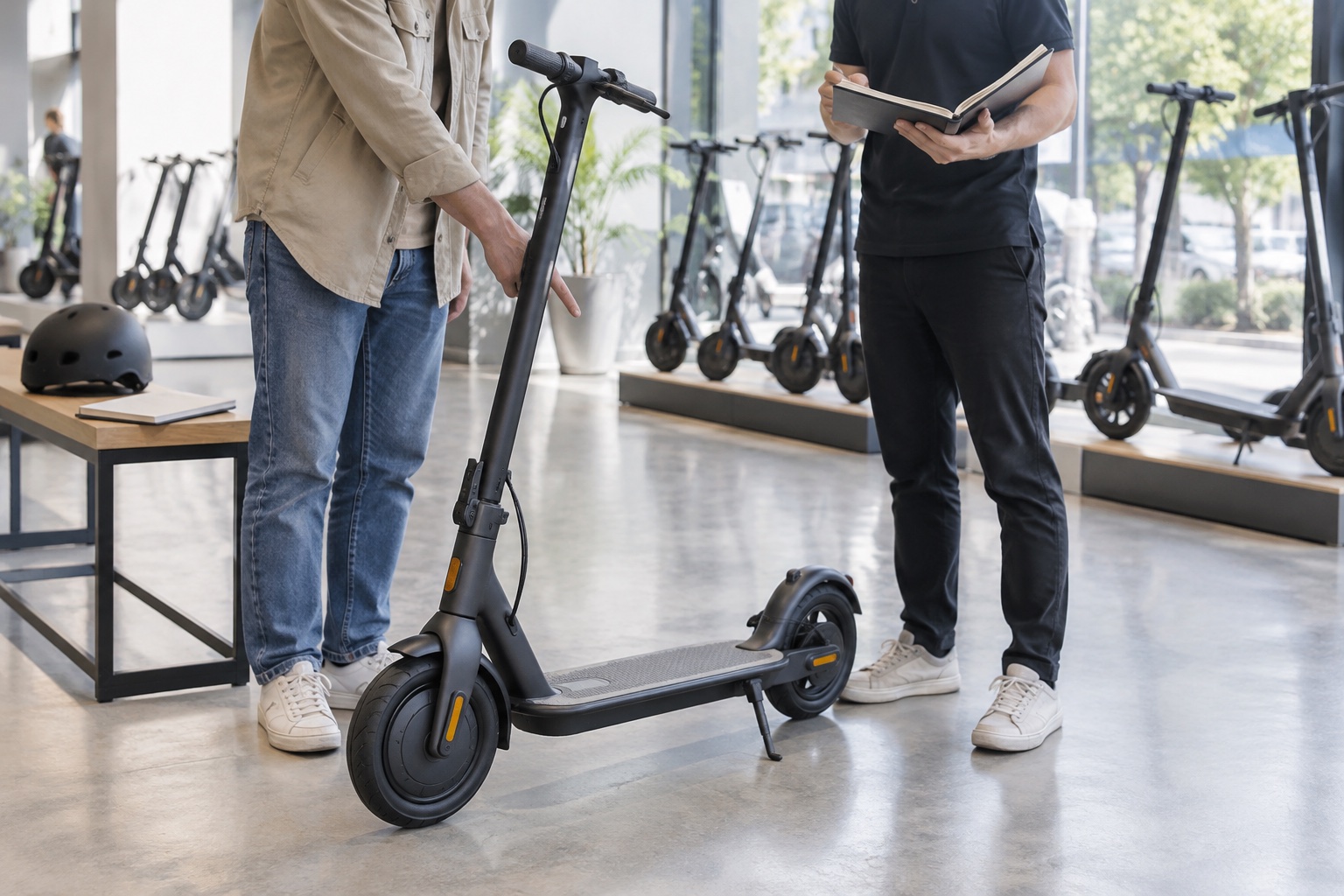
Track several representative trips, collect complete prices, and test the storage and carrying routine before deciding. Renting vs buying an electric scooter becomes easier when you can point to receipts, arrival times, and a model that fits your route.
What should your trial record include?
Keep the receipt and the clock. Record the total fare, including extra charges, and any walking time needed to find or park a rental. For a purchase, request the delivered price, service arrangements, warranty terms, and a chance to assess the model's fit.
- Record ordinary commuting and occasional-use days.
- Recalculate using available passes or discounts.
- Include bad-weather alternatives and ownership downtime.
What is a reasonable next step?
| What your trial shows | Next step |
|---|---|
| Few rides and dependable local rentals | Continue renting |
| Repeated rides, suitable budget, secure storage | Compare ownership options |
| Route, budget, or storage still uncertain | Test longer before committing |
A trial during a holiday may not represent your normal working week.
Key Takeaway: Make the decision from a repeatable routine and a complete budget, then revisit it if your circumstances change.
What to do next
You can now compare total spending, reliability, maintenance, ride fit, battery needs, and storage without treating buying as an automatic win. At Dynamic Scooter, we want the scooter to fit your routine before it earns a place in your home. If ownership looks suitable, contact us today with your route, carrying needs, and budget so we can help you compare a practical model.
Frequently Asked Questions
Q1: Can I rent for a week before deciding to buy? Yes. Use ordinary routes and departure times so your trial reflects the riding you would do as an owner.
Q2: What's the best way to compare a rental pass with ownership? Comparing costs per usable ride works best. Include pass expiry dates, excess charges, and ownership upkeep over the same period.
Q3: How do I know if buying will save me money? Buying may be cheaper if you ride regularly. Calculate both totals using your own prices and likely ride count, including maintenance and rental discounts.
Q4: Can I assume a rental scooter is ready to ride safely? No. Inspect its tires, steering, brakes, and visible condition, then choose another vehicle if you find a fault.
Q5: What's the best option if I have nowhere to store a scooter? Renting is usually more practical. Confirm a permitted, secure storage and charging arrangement before buying.