
The best helmet for electric scooter riding fits your head securely, has clear standards information for your type of riding, and works with your riding conditions. A highly rated model can still rock backward, squeeze your temples, or interfere with your glasses. Use the fit checks below to compare actual helmets; CPSC advises wearing a bicycle helmet when riding a micromobility device, and manufacturer instructions explain how each design should be worn.
1. What is the best helmet for electric scooter riding?
The best helmet for electric scooter riding is one you can verify, fit correctly, and wear throughout your ride. Start with the intended activity and standards, then compare fit and coverage before comfort extras. A product name containing “scooter” does not answer those questions on its own.
What should you decide before browsing products?
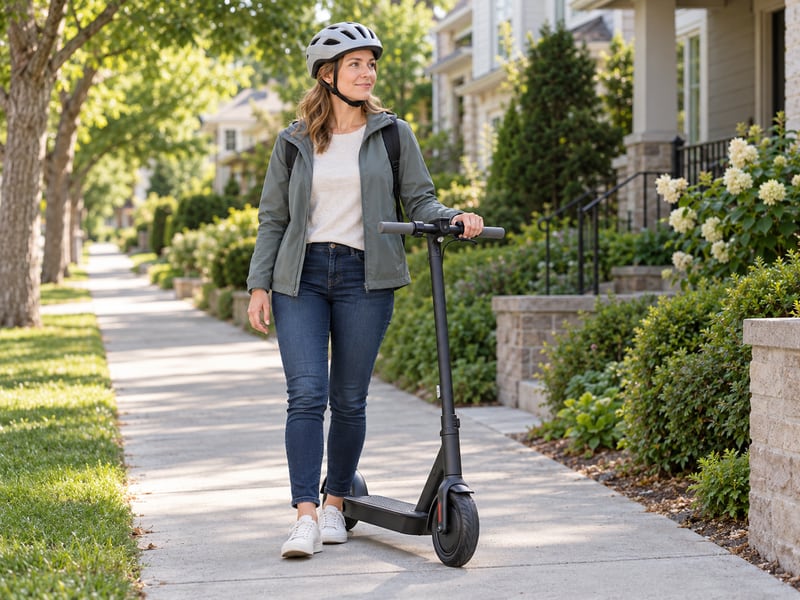
Describe your usual ride rather than searching for a universal winner. Note your route, riding pace, weather, and whether you wear glasses, then bring that information when asking a retailer or manufacturer about suitability. Our scooter riding clothing guide puts the helmet within your wider equipment choices.
- Identify the activity the helmet maker lists.
- Confirm your size through measurement and a try-on.
- Check that the complete helmet stays comfortable and secure.
| Selection question | Evidence to seek |
|---|---|
| Is it intended for this use? | Manufacturer instructions and labeling |
| Does it fit you? | In-person adjustment and fit checks |
| Will it work for your commute? | A try-on with your usual eyewear |
Keep two or three candidates that meet these checks. Comparing a short list gives you room to reject a poor fit without buying another helmet only because its appearance resembles a popular model.
2. Which helmet standards should you check?
Check the standard named on the actual helmet and confirm that its manufacturer specifies an appropriate activity. For a US bicycle helmet, look for the compliance statement for the CPSC bicycle helmet standard, 16 CFR Part 1203. Treat a marketplace badge or the word “certified” as a claim to verify against the product and its documentation.
What makes a certification claim checkable?
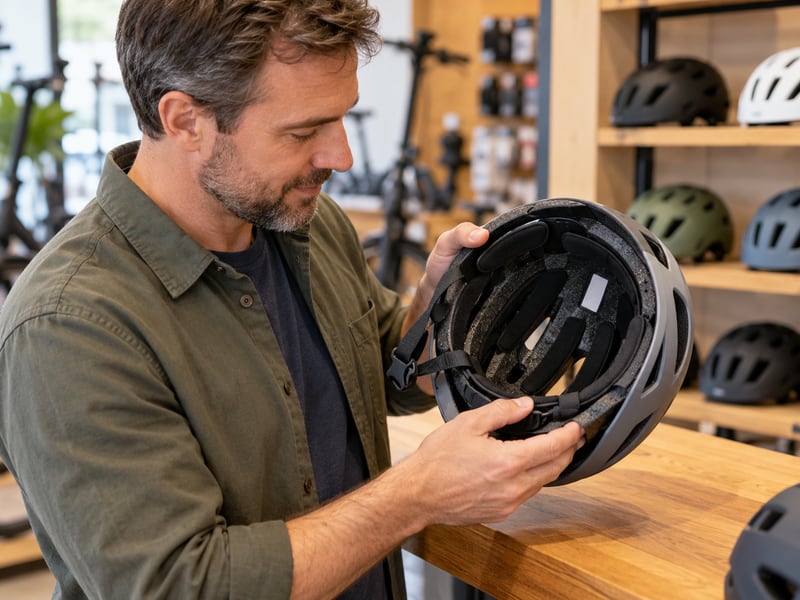
The CPSC guidance describes labels identifying the model, who made or imported it, production details, and the compliance statement. Ask the seller for clear product photographs and the manufacturer’s instructions if these details are missing from the listing. Match the documentation to the exact model and version you will receive.
- Read the activity and standard together.
- Keep the product identity and purchase record.
- Ask the manufacturer about unclear suitability claims.
| Listing detail | What to verify |
|---|---|
| Standard name | Matches the helmet’s statement |
| Product identity | Same model as the documentation |
| Seller information | A traceable source for support |
Certification describes performance under specified testing conditions. It does not promise protection in every crash, establish that every helmet fits you, or allow you to ignore the manufacturer’s restrictions on use.
3. How do you find the right size and head shape?
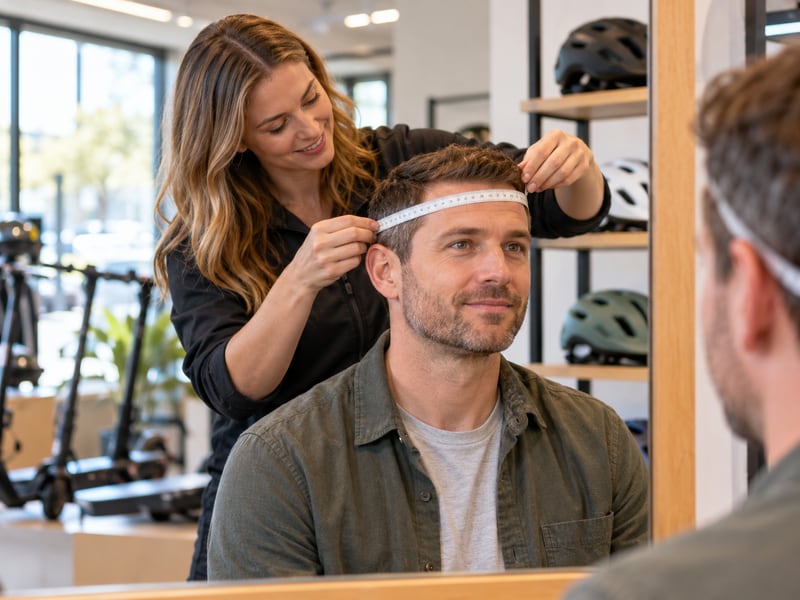
Measure your head circumference and use the size chart for the exact helmet model, then try it on. A size label from your old helmet may not match another design. The correct size should feel snug and stable without creating uncomfortable pressure at one point.
What should you notice during a try-on?
Use a flexible measuring tape around your head as the manufacturer directs, generally above the eyebrows and ears. Put on the candidate helmet with its fit system loosened, position it correctly, and make the permitted adjustments. If the shell presses your temples while leaving space elsewhere, try another model instead of tightening the dial harder.
- Compare the measurement with that model’s chart.
- Wear the helmet long enough to notice pressure points.
- Try it with your normal hairstyle and eyewear.
| Try-on result | Next step |
|---|---|
| Comfortable and stable | Continue with strap checks |
| Localized pressure | Compare another shape or size |
| Loose after adjustment | Try a different size or model |
Ask a trained retailer for help when you fall between sizes. Keep the supplied padding in place unless the manual allows changes; removing protective material or adding homemade padding is not a substitute for a properly fitting helmet.
4. How should straps and retention fit?
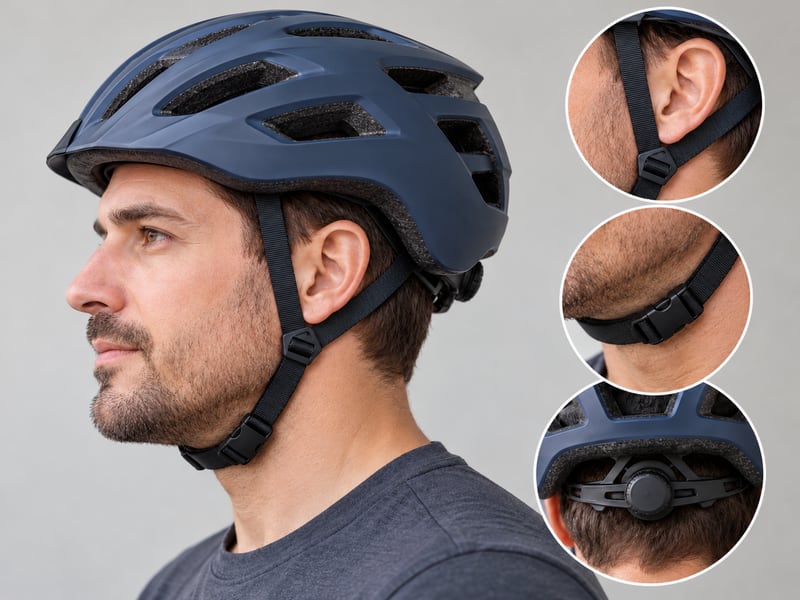
Position the helmet level, adjust its straps as instructed, and buckle it snugly before checking stability. The rear fit dial cannot replace a fastened chin strap. A helmet that rolls far backward or slides forward into your vision needs adjustment or a different fit.
How can you check the adjustment while stationary?
For a bicycle-style helmet, general fitting guidance places it low over your forehead and the side straps around your ears. Follow the exact manual for buckle position, strap slack, and the final movement check. With the helmet fastened, gently check whether it shifts out of position when you move it forward and backward.
- Adjust both sides rather than leaving one strap loose.
- Check that the buckle closes completely.
- Secure loose strap ends as the manual directs.
| Part | Check before riding |
|---|---|
| Helmet position | Level and correctly covering the forehead |
| Chin strap | Buckled and adjusted to the instructions |
| Fit system | Snug without forcing a poor shell fit |
Repeat the check after changing pads or your hairstyle. If the helmet still shifts despite correct adjustment, stop trying to compensate with tighter straps and ask for another size or model before riding.
5. Should you choose an open-face or full-face helmet?
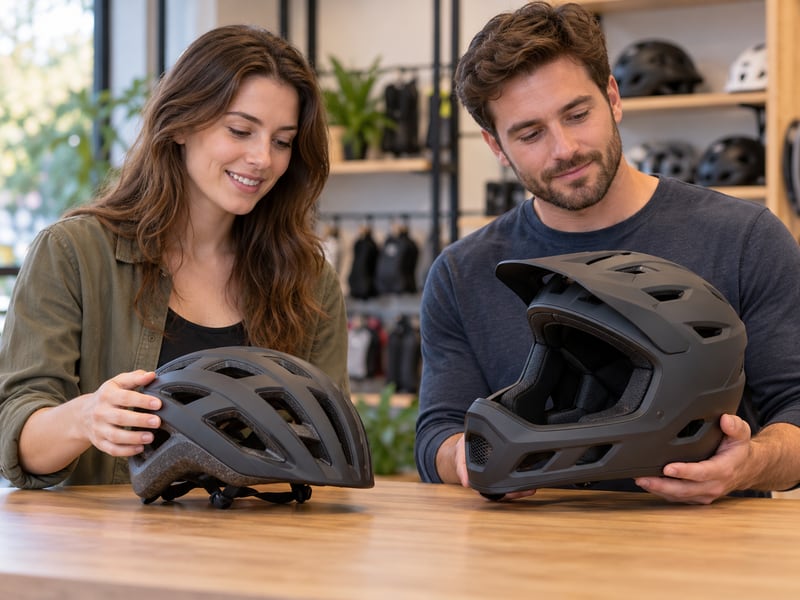
Choose the best helmet for electric scooter riding by matching coverage to your conditions and the maker’s intended use. An open-face design leaves the face exposed; a full-face design adds a structure around the chin. The full-face shape alone does not tell you which activities or standards the complete helmet addresses.
Which trade-offs should you check in person?
Try each design while looking ahead and turning your head as you would when checking your surroundings. For a full-face model, follow its instructions for cheek pads, chin-bar configuration, and fastening. Ask the manufacturer about the intended use if you ride a faster scooter or plan a more demanding route.
- Verify that any removable chin bar locks as instructed.
- Check eyewear clearance and unobstructed sightlines.
- Confirm that every required part remains installed.
| Design | Questions during a try-on |
|---|---|
| Open-face | Is coverage appropriate to the intended use? |
| Full-face | Does the complete configuration fit correctly? |
| Convertible | Which configuration does the documentation cover? |
Keep route choices part of the decision. Our city traffic riding guide covers everyday riding behavior; a different helmet does not remove the need to slow down, watch the surface, and leave room around others.
6. What makes the best helmet for electric scooter commuting?
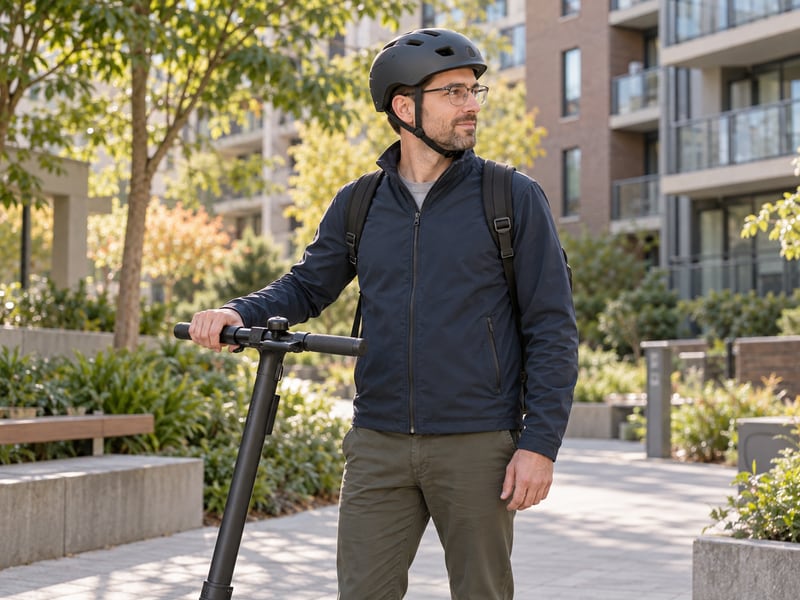
A practical commuter helmet has clear standards information, fits securely, and stays comfortable throughout your trip. Assess ventilation, weight, adjustment access, and storage alongside your route. These are personal use checks rather than proof that a lighter or more ventilated helmet offers better protection.
How should you compare comfort without guessing?
Wear each candidate indoors with the straps fastened and turn your head through normal riding positions. Check whether the buckle rubs, the rear adjustment touches your collar, or your glasses compete with the helmet for space. Try operating the closure while stationary using the gloves you expect to wear.
- Check fit through your normal range of head movement.
- Compare the manufacturer’s stated weight in your size.
- Plan storage that avoids crushing or excessive heat.
| Daily task | Practical check |
|---|---|
| Riding to work | Comfortable with collar and eyewear |
| Carrying indoors | A secure place for the helmet |
| Cleaning pads | Follow the stated removal instructions |
Use our scooter accessories guide to plan what else you carry. Keep the helmet separate from loose heavy tools, and do not suspend bags or other equipment from it while wearing it.
7. How do you check visibility and eyewear fit?
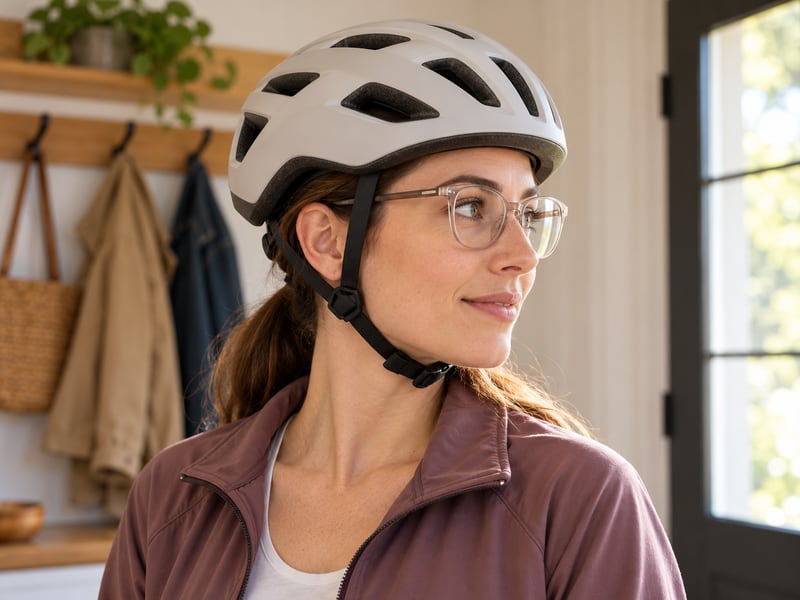
Check that you can see clearly ahead and to either side while wearing the helmet in its correct position. Your usual glasses should stay comfortable without pushing the helmet upward or changing its fit. Test the complete combination before purchasing accessories that may interfere with it.
What should you test with glasses or a visor?
Put on your regular eyewear and fasten the helmet before checking head movement. If the frame touches the shell, lifts from your nose, or presses your temples, compare another frame or helmet combination. For a visor, inspect its condition and follow the manufacturer’s instructions for use, cleaning, and replacement.
- Check the sides of the frame against helmet padding.
- Make sure the visor mechanism works as directed.
- Stop riding if visibility becomes obstructed.
| Combination | Check |
|---|---|
| Helmet and glasses | Stable fit without pressure or lifting |
| Helmet and visor | Clear view and correct operation |
| Helmet and seasonal clothing | No shift in helmet position |
Consider your return trip when choosing the setup. Our night riding guide discusses visibility beyond the helmet, including the scooter’s lighting and how you approach the route after dark.
8. Which helmet features deserve a closer look?
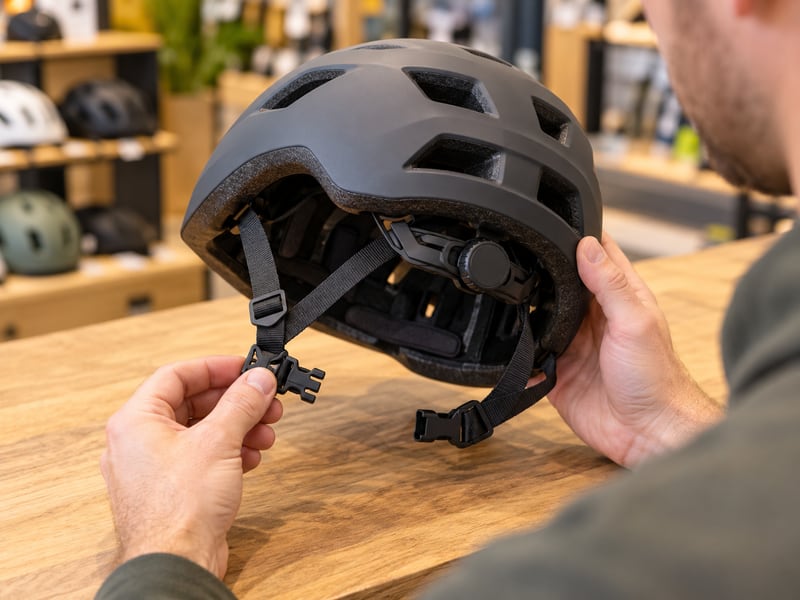
Look closely at features that affect fit, fastening, visibility, and permitted use before paying for convenience extras. A rear dial, special liner, integrated light, or magnetic buckle needs its own explanation and instructions. None of these features replaces checking the complete helmet’s stated standard and suitability.
How do you compare features without accepting hype?
Ask what the feature does, how you maintain it, and which parts can be replaced. If the seller claims an improvement in performance, look for evidence about that exact model rather than treating a technology name as a product ranking. When comparing the best helmet for electric scooter use, check how you replace a missing pad or recharge a fitted light.
- Ask for the current manual and supported spare parts.
- Confirm that any attachment is manufacturer-approved.
- Keep cameras and lights off unapproved mounting points.
| Feature | Evidence to request |
|---|---|
| Adjustment mechanism | Instructions and available replacement parts |
| Added liner technology | Model-specific explanation and evidence |
| Mounted accessory | Approval for the helmet and mounting method |
Avoid drilling, cutting, painting, or adding adhesive mounts unless the helmet maker explicitly permits the specific change. An accessory that stays attached during a shop demonstration still needs approval for use on that helmet.
9. When should you replace or clean your helmet?
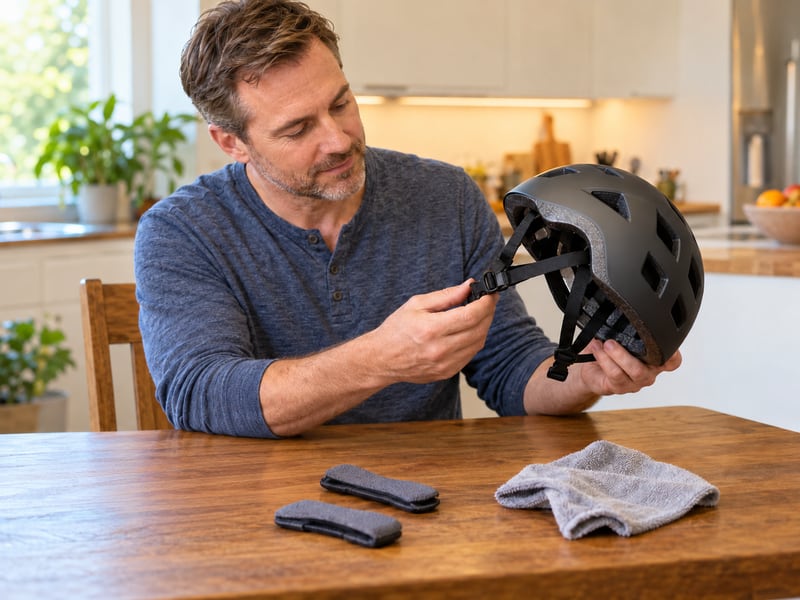
Replace a helmet after a crash according to its manufacturer’s instructions, even when damage is difficult to see. Check for wear and follow the maker’s replacement guidance during ordinary ownership. Clean the helmet only with the products and methods listed for that particular model.
Which care instructions should you keep available?
Save the manual, purchase date, and product identification so you can ask the manufacturer about damage or replacement parts. Keep the helmet away from excessive heat, and let approved washable parts dry as directed before reinstalling them. Do not borrow another product’s cleaning method because its outer shell looks similar.
- Inspect the shell, straps, buckle, and fit mechanism.
- Ask about an impact or damage you cannot evaluate.
- Replace missing pads only with supported parts.
| Condition | Ownership decision |
|---|---|
| Crash impact | Follow replacement instructions |
| Worn or damaged component | Seek manufacturer guidance before use |
| Sweat or dirt | Follow the model’s cleaning instructions |
Be cautious about used helmets whose impact history you cannot establish. A clean shell and an attractive price do not supply that history; buying from a traceable seller also gives you a clearer route for product questions and recall information.
10. How do you choose the best helmet for electric scooter use?
Compare candidates in a consistent order: riding use, stated standards, correct fit, coverage, and daily comfort. Keep only models that meet your requirements before weighing colors or optional features. Choose the model that meets those checks for your head and your ride.
What should your final buying checklist contain?
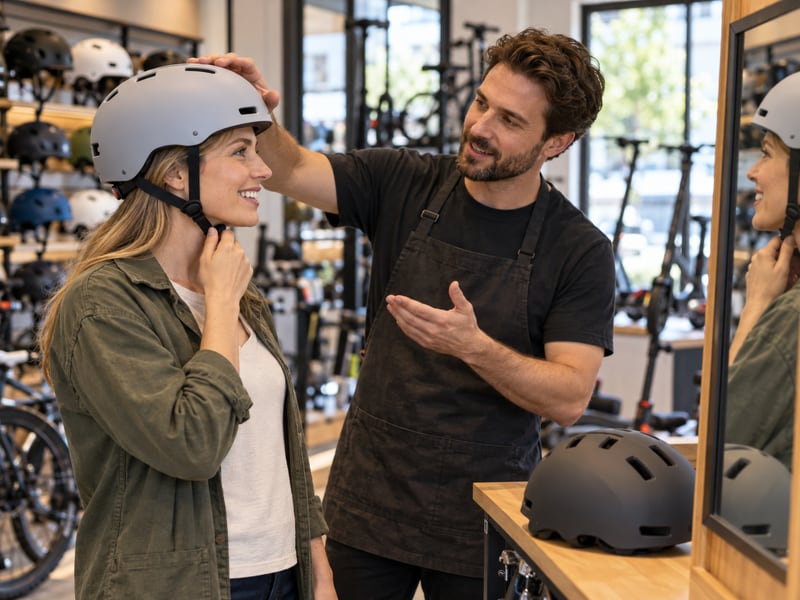
Record the exact model and size you tried, along with the seller’s return conditions for an indoor fit check. Confirm that the delivered helmet matches that model, retains its identification, and includes the required pads and instructions. If something differs, resolve it before wearing the helmet on a ride.
- Keep the receipt and manufacturer’s contact details.
- Repeat the fitting process after delivery.
- Read how to inspect and care for the helmet.
| Before payment | Before riding |
|---|---|
| Verify identity and intended use | Inspect the supplied helmet |
| Try the correct model and size | Adjust and fasten every required part |
| Check seller terms | Confirm comfort and visibility |
Build your commute around correctly fitted equipment, and contact Dynamic Scooter if you need help with your scooter’s setup before taking it onto your route.
FAQ
Q1: Can I use the helmet I already own?
Possibly. Confirm its intended use, documentation, condition, impact history, and fit. Ask the manufacturer when any of those points is unclear.
Q2: What’s the best helmet size if I am between sizes?
Use the exact model’s fitting advice and try both suitable options. Choose a different model if neither gives a secure, comfortable fit.
Q3: Can I leave the chin strap loose if the dial feels tight?
No. Adjust and fasten the retention straps as instructed; the rear dial does not replace the chin strap.
Q4: Does a full-face shape prove a helmet suits every scooter?
No. Check its intended activity, standards, complete configuration, and fit. Its appearance cannot establish suitability for every type of riding.
Q5: Can I keep using a helmet after a crash?
Follow the manufacturer’s replacement instructions. Impact damage can be hidden, so a visual check alone cannot confirm continued use is appropriate.