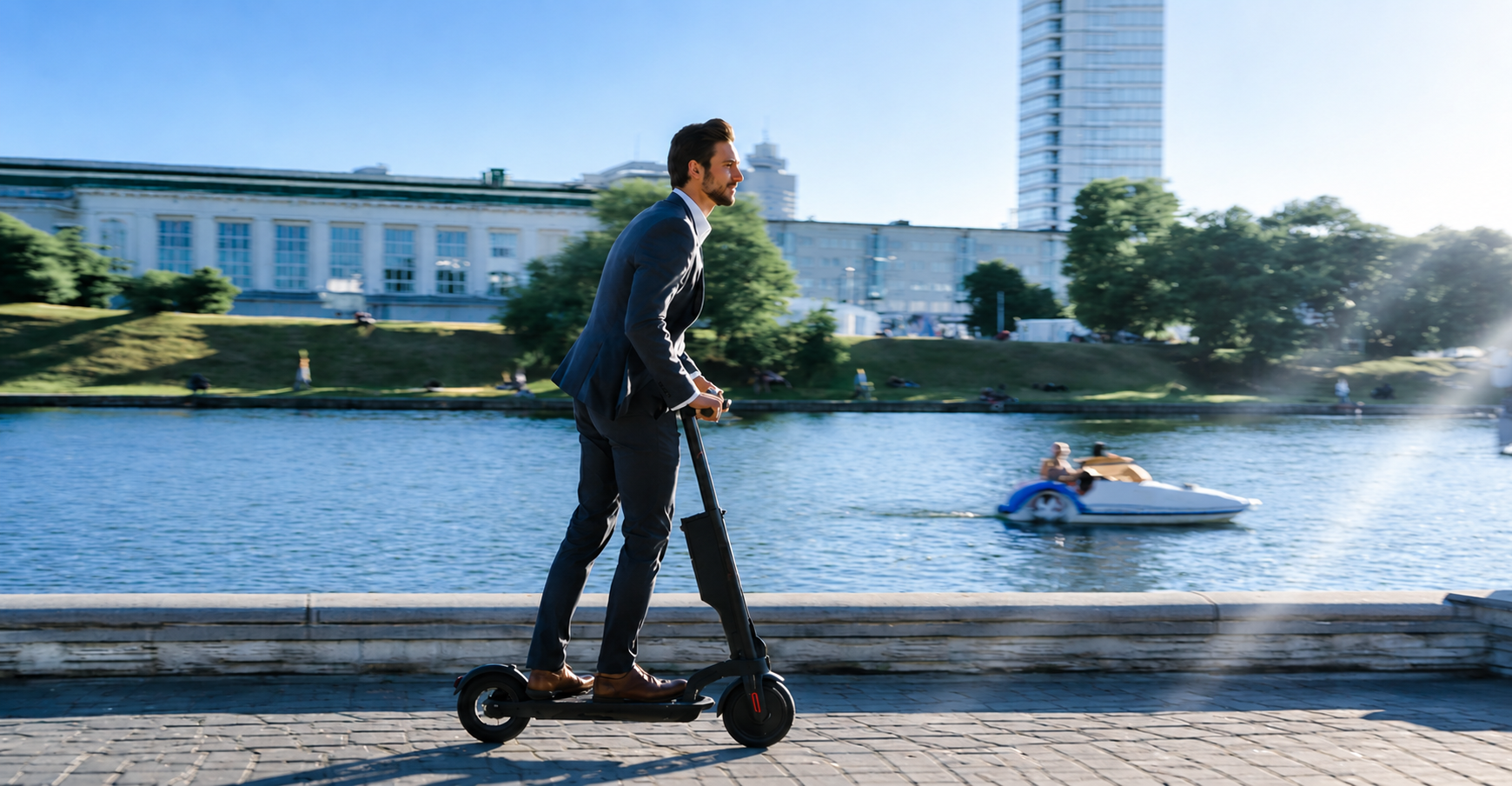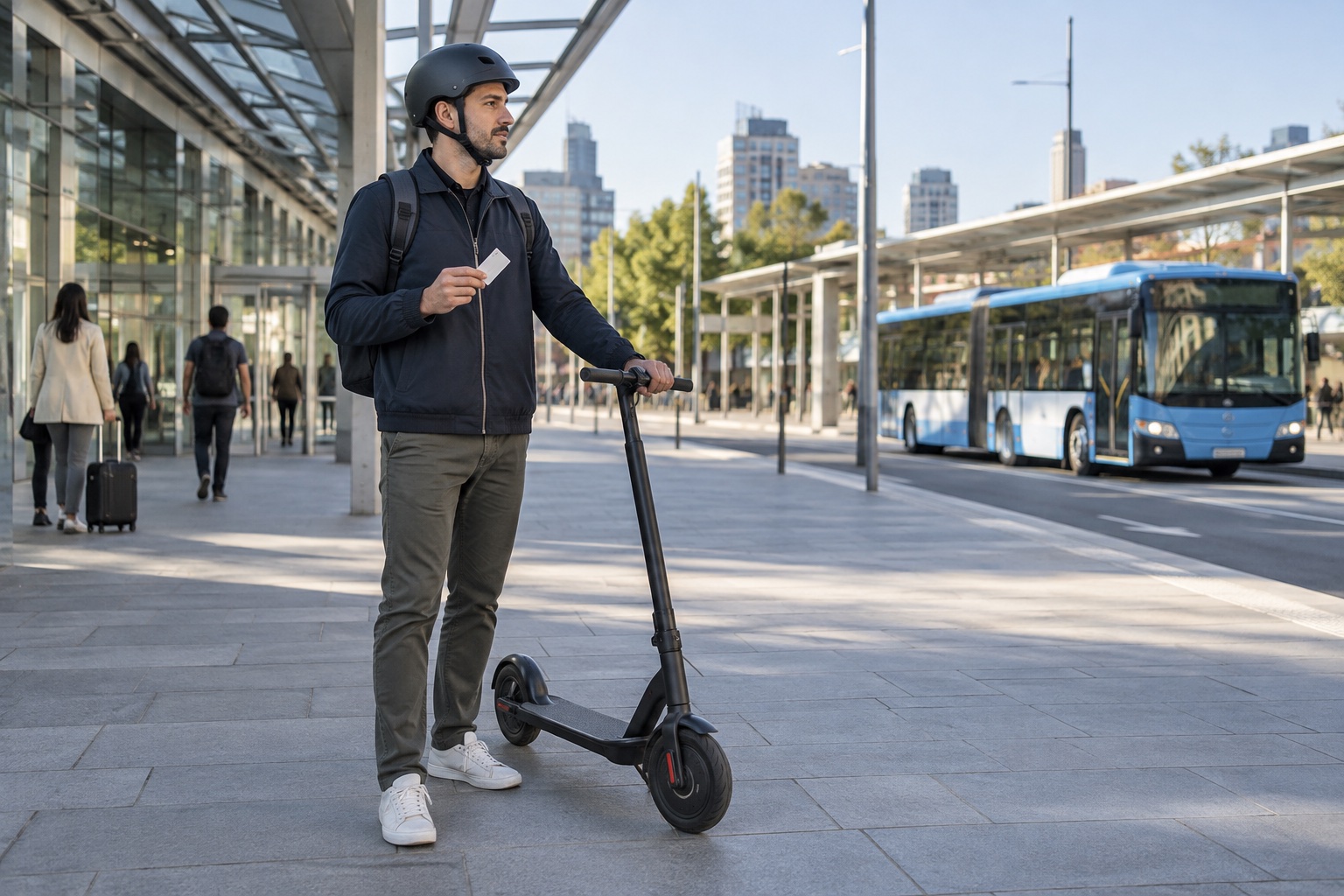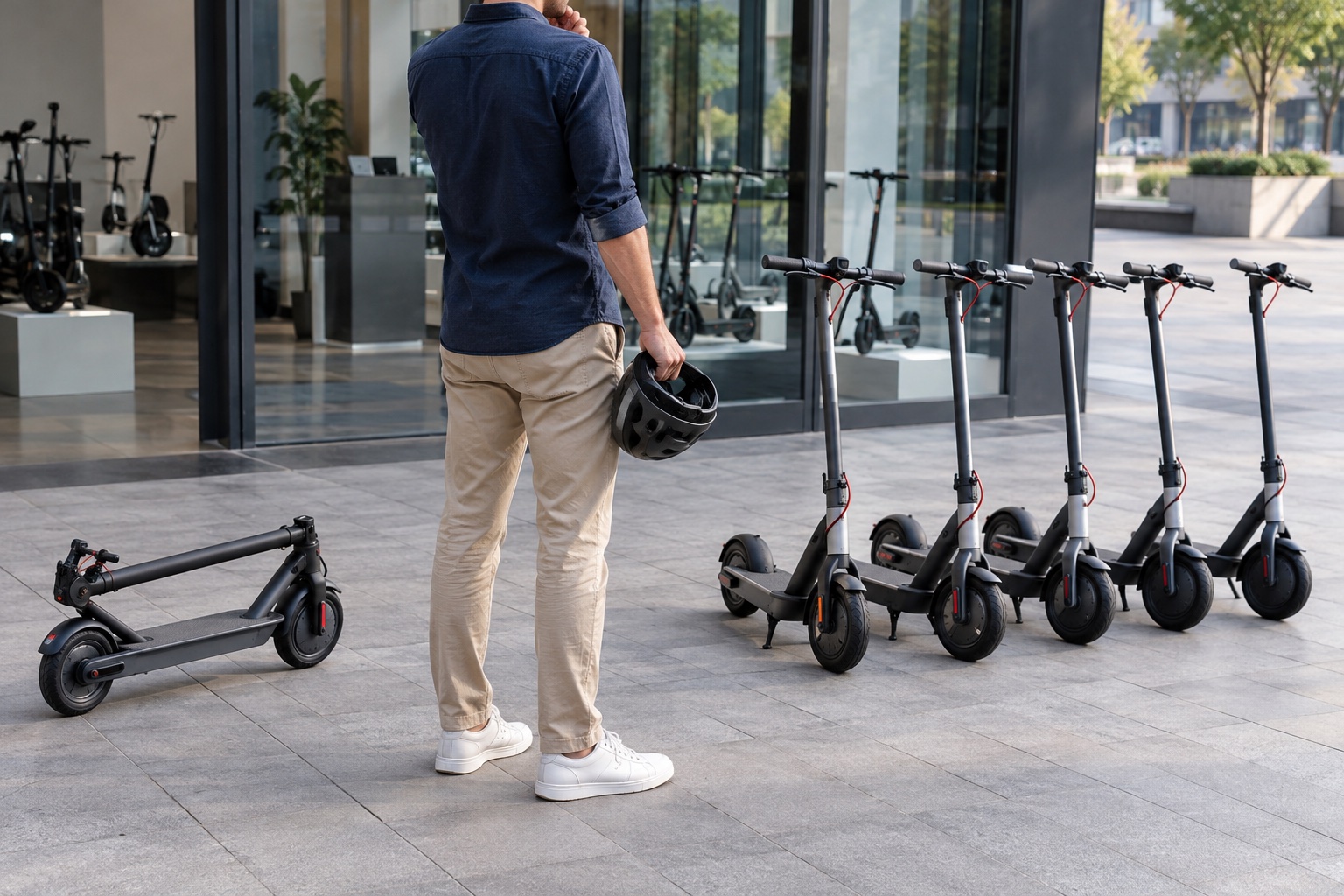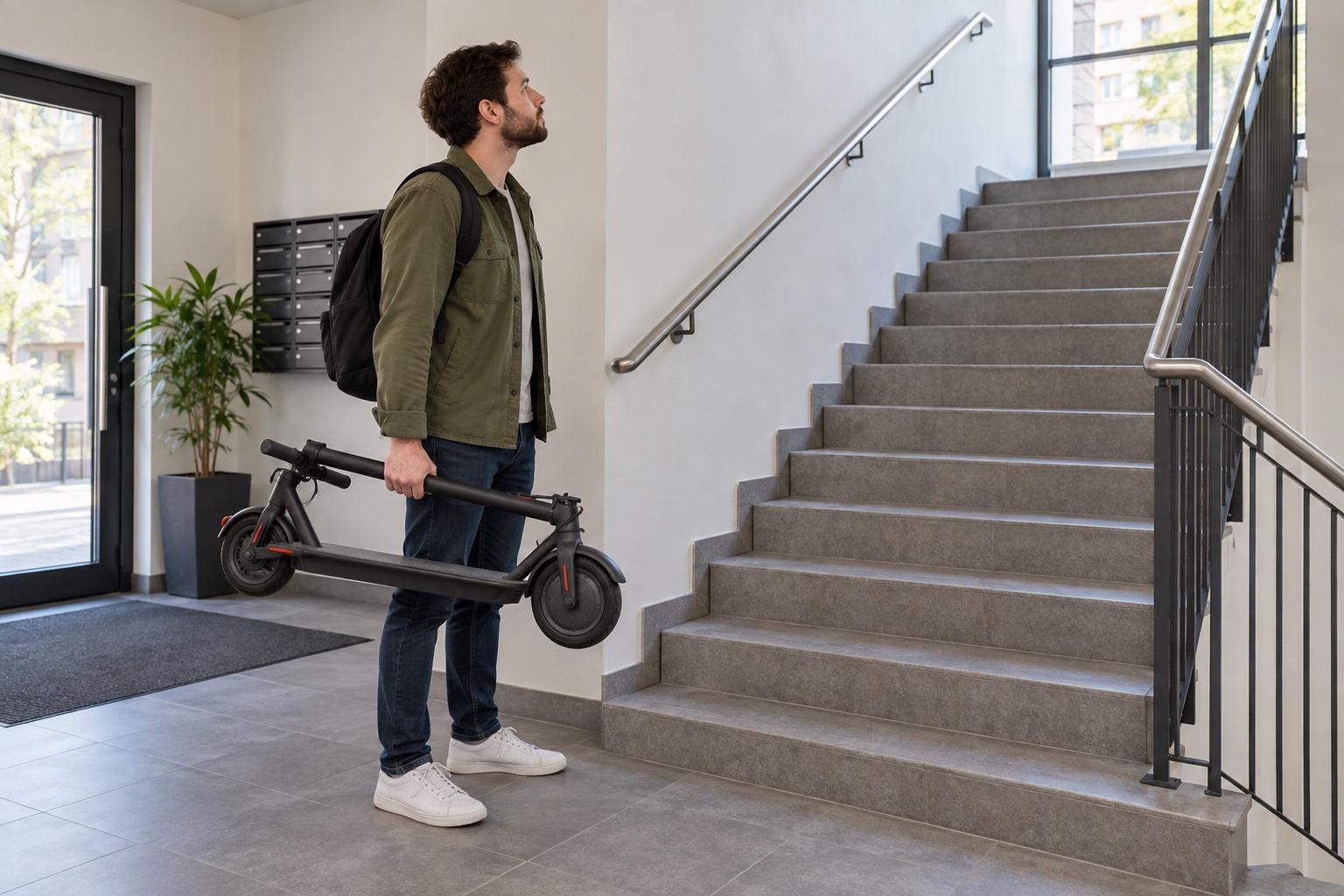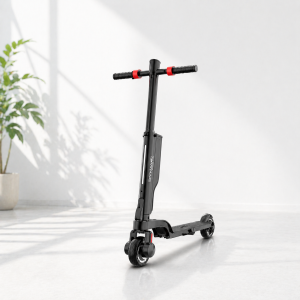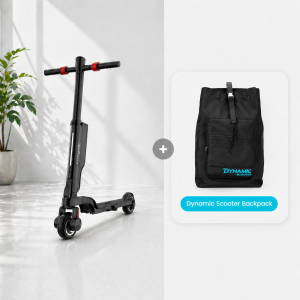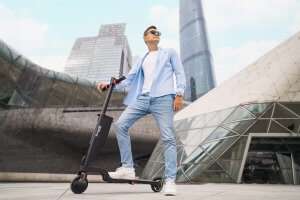

An electric scooter for tall adults should give you usable handlebar height, room for your feet, accessible controls, and a load rating that covers what you carry. Your standing height alone cannot confirm those things.
You step onto a compact scooter and reach for the grips, only to find yourself bending forward or crowding the stem with your knees. Product photos rarely reveal that problem. Before buying, compare deck-to-grip measurements and try your normal riding stance. The checks below use manufacturer riding and adjustment instructions alongside practical observations you can make while the scooter is stationary.
1. How should an electric scooter for tall adults fit?
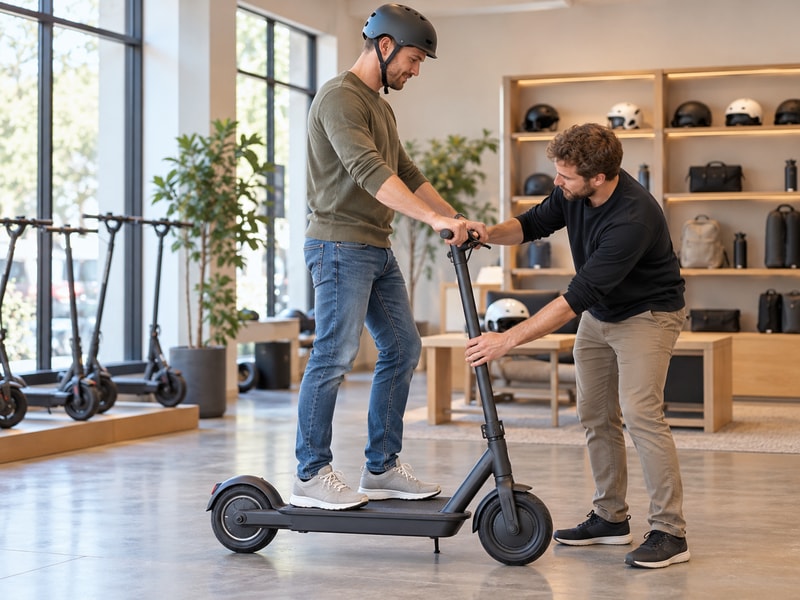
A suitable scooter lets you reach both grips and controls while standing comfortably on the deck, within the manufacturer’s rider limits. Two people of equal height can have different arm lengths, leg lengths, and shoe sizes, so a reviewer’s height offers only a starting point. Compare how each scooter positions your hands relative to your feet, then check whether you can move your knees without touching the stem. A tall handlebar on a short deck can still leave you cramped.
What should you record before comparing models?
Write down your height, usual riding shoes, riding weight with your bag, and the surfaces on your route before comparing models. Ask for usable deck length and width rather than relying on the scooter’s overall length, which includes wheels and other space you cannot stand on.
- If a seller gives a recommended rider-height range, confirm it applies to that exact model and version.
- Use these details to narrow your choices, then make fit checks on the scooter itself whenever possible.
| Fit check | Compare |
|---|---|
| Hands | Grip and control reach |
| Feet | Usable deck space |
2. How do you measure usable handlebar height?
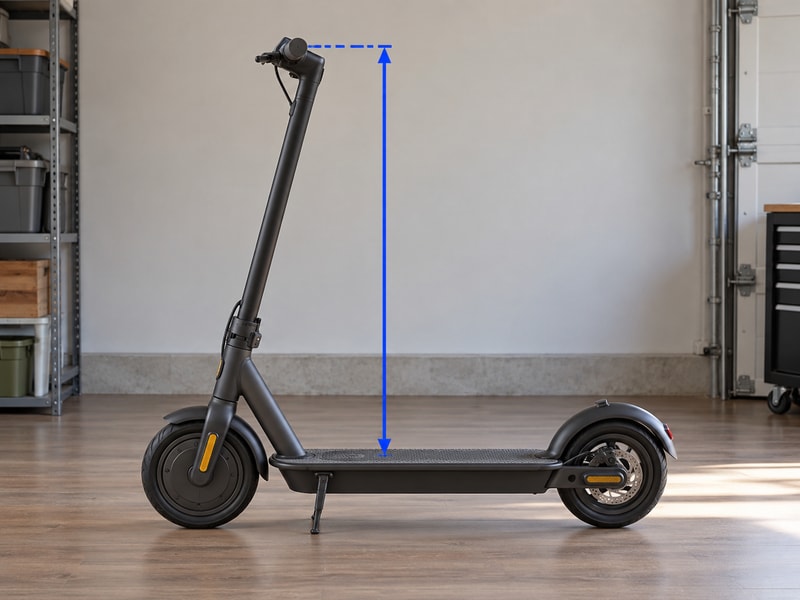
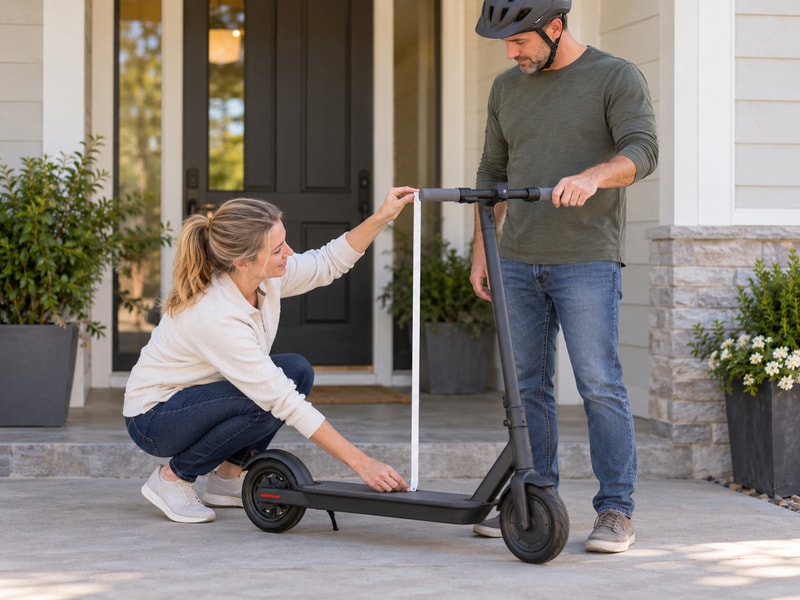
Measure vertically from the top of the standing deck to the center of the grips. Ground-to-handlebar height includes the distance beneath your feet, so it describes a different measurement and cannot be substituted directly. Keep the scooter upright on level ground, with its stem locked into an approved riding position, and use a helper if needed. Record the measurement method beside the number so you can compare scooters on the same basis.
What measurements should you ask the seller for?
For an adjustable model, request the usable deck-to-grip measurement at its lowest and highest approved settings, plus any fixed steps between them.
- A published overall height may run to the display or another component rather than the grip center, which creates another source of error.
- Ask the seller for a photograph showing where the tape begins and ends if the specification is unclear.
- Keep your notes with the model name and version; a similarly named scooter may use a different stem or deck.
| Measurement | Reference |
|---|---|
| Deck-to-grip | Deck surface to grip center |
| Ground-to-handlebar | A different reference point |
3. What should your wrists and shoulders feel like?
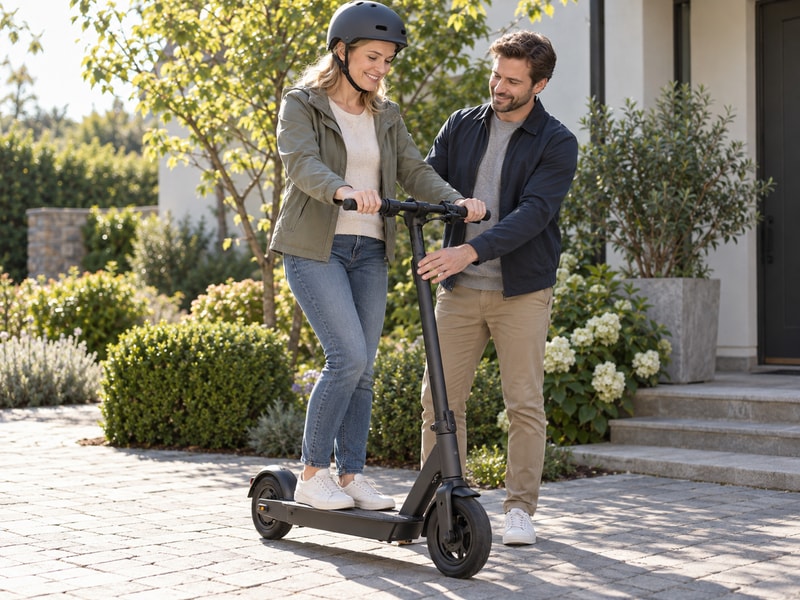
Your hands should reach the controls without a forced wrist bend or raised shoulders. With power off and the scooter supported, stand in your usual shoes and hold both grips as you would while riding. Notice whether you have to stoop, stretch forward, or pull your shoulders upward to keep contact. These observations help compare fit; they do not establish a universal ideal handlebar height or a medical benefit.
How can you check reach with your riding gear?
Operate the brake and throttle separately without changing your whole hand position, following the control layout in the model’s manual.
- Gloves can change how easily you reach a lever or thumb control, so bring the pair you expect to wear.
- A comfortable stationary hold should be followed by a permitted test ride, because starting and stopping reveal demands that standing still cannot reproduce.
- If a position feels strained, try another approved setting or another scooter rather than forcing your body to accommodate it.
| Observation | Next check |
|---|---|
| Raised shoulders or forced wrists | Try an approved setting or another model |
| Difficult control reach | Check with riding gloves |
4. How much deck space do your feet need?
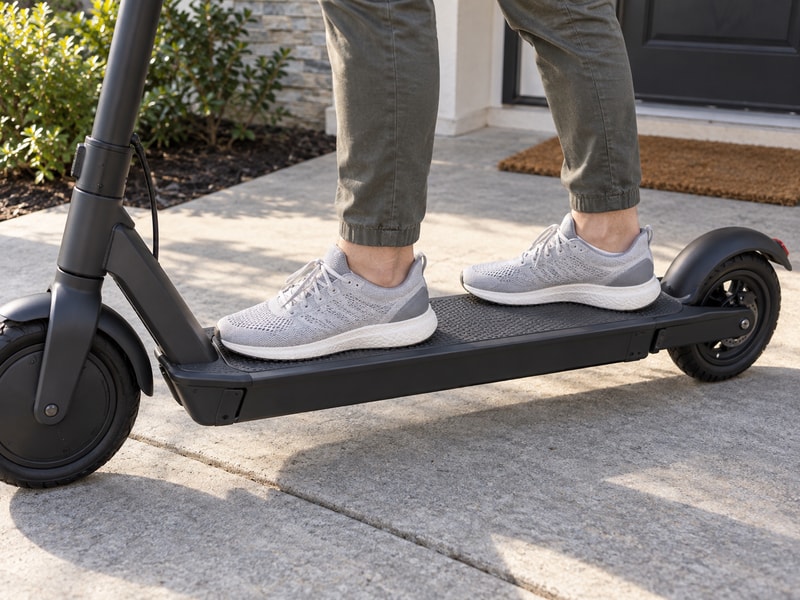
You need enough usable deck space for both feet in a stable riding stance. Check with your actual shoes, since a deck that looks generous in a photograph may feel crowded once you step aboard. Try a staggered stance with one foot ahead of the other, keeping both feet supported and clear of moving parts. You should also be able to reach any rear foot brake in the way the manual describes.
Where does usable deck space begin and end?
Measure the flat standing surface between obstructions, including any stem base, raised section, or rear fender that reduces where a shoe can sit. Published deck width alone cannot tell you whether your preferred foot placement works, and the widest point may differ from the area beneath your rear foot.
- Watch whether you repeatedly move a shoe toward an edge to make room for the other.
- If every usable position feels crowded, choose a different deck rather than treating awkward foot placement as something you must accept.
| Deck detail | Inspect |
|---|---|
| Standing area | Space between obstructions |
| Shoes | Both feet supported and clear of moving parts |
5. How do tall adults check electric scooter knee clearance?
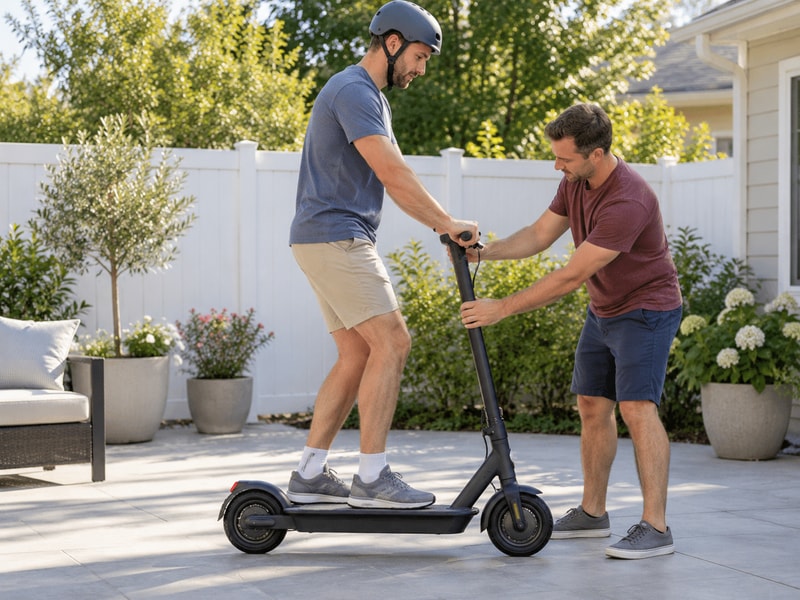
Check that your knees clear the stem and controls in a comfortable stance on an electric scooter for tall adults. While stationary with power off and the scooter supported, bend your knees gently and move between the positions you would use when starting or slowing. Notice whether a knee contacts the stem, display, or anything attached near the bars. You do not need a claimed minimum gap in inches to recognize repeated contact during this check.
What should you check while turning the bars?
Turn the handlebars slowly while keeping the scooter stable, checking for contact and whether cables tighten or catch during ordinary steering movement.
- Your height may make a compact layout feel crowded even when the bars reach a comfortable height, particularly if you have long legs.
- Keep bags and other objects off the handlebar during the check and during riding.
- Reposition only accessories that the manufacturer allows you to adjust, and reject a setup that needs you to twist your body around an obstruction.
| Clearance check | Look for |
|---|---|
| Knees | No repeated stem contact |
| Steering | No cables tightening or catching |
6. Can adjustable handlebars solve a poor fit?
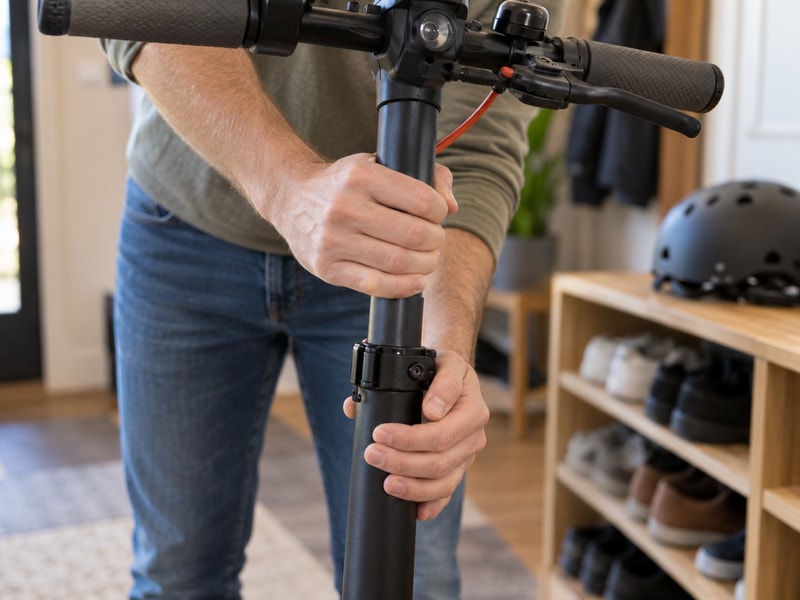
Adjustable handlebars can improve your fit only within the manufacturer’s permitted positions. Some stems use locking buttons and holes, while others use a clamp or a different system, so follow the exact model’s instructions. After adjustment, check every required lock and clamp before standing on the scooter or riding it. Never raise a stem beyond an insertion mark, bypass a stop, or assume a clamp alone replaces a required locking button.
What can adjustment change?
Adjustment changes hand height; it cannot lengthen a deck or create more knee clearance around a crowded stem. A manufacturer’s adjustment manual shows one button-and-clamp design; use the manual for your own model to confirm the approved positions and locking sequence.
- If the highest permitted setting still leaves you reaching awkwardly, choose a model with suitable geometry rather than extending the original stem yourself.
- An aftermarket riser may change cable reach, folding clearance, and loading on parts, so use one only with explicit manufacturer approval for that scooter.
- For Model B setup questions, consult Customer Care and the user manual before changing any adjustment or fastening.
| Adjustment | Boundary |
|---|---|
| Handlebar height | Approved positions only |
| Deck length | Unchanged by handlebar adjustment |
7. How should you check the rider weight limit?
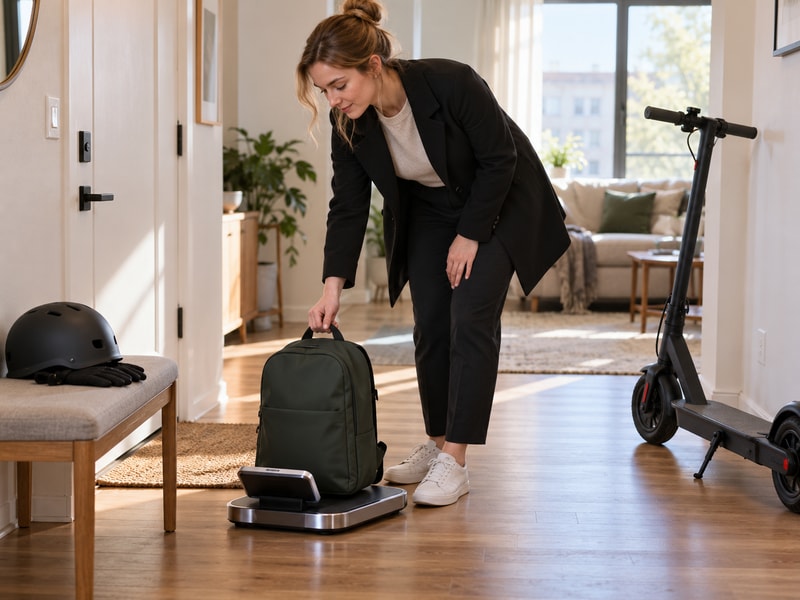
Check your full riding load against the scooter’s specified capacity, because height and weight answer separate buying questions. Include clothing, a helmet, your bag, and anything else you will carry, following the manufacturer’s definition of its load limit. A tall, light rider may need higher grips without needing a higher payload rating. A shorter, heavier rider can have enough handlebar height and still exceed the scooter’s allowed load.
How should you interpret the payload rating?
When choosing an electric scooter for tall adults, treat the stated maximum as a limit without assuming it guarantees range or hill performance. Your route, carried load, speed, weather, and other conditions can affect the trip, so check the conditions behind performance claims where they are available.
- Our guide to reading electric scooter specifications explains how range, motor, battery, and portability figures relate to buying decisions.
- If your normal load exceeds a model’s rating, remove it from your shortlist even when its standing position feels comfortable.
| Load check | Include |
|---|---|
| Riding load | Clothing, helmet, bag and carried items |
| Capacity | Exact model’s stated limit |
8. Can an electric scooter for tall adults be easy to carry?
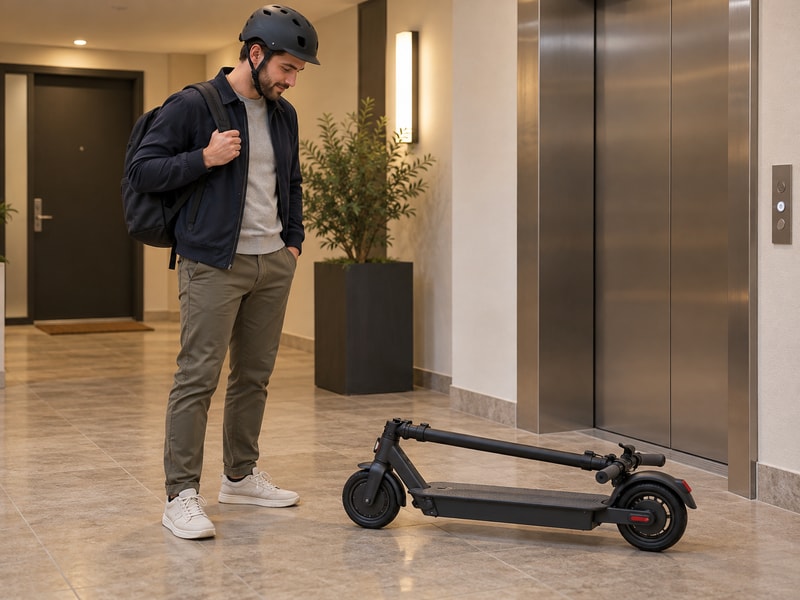
A folding scooter can be practical to carry if its weight, folded shape, and approved carrying method suit your routine. Extended bar height does not tell you how the scooter will balance when folded or where you can hold it. Check whether carrying requires lowering the stem each time, and how you will restore and lock the riding position afterward. Try that sequence before buying if a shop or demonstration allows it.
How can you test the carrying routine?
Think through your actual transfer, including a stair landing, doorway, train entrance, or the place where you set the scooter down at work.
- A manageable lift in an open showroom may feel different when you also have a bag and limited room to turn.
- Follow the manual’s carrying instructions and confirm the folded assembly is secured before lifting; our guide to carrying a scooter upstairs covers planning the route and handling the load.
- Measure your storage space against confirmed folded dimensions rather than assuming a compact photograph proves it will fit.
| Carry check | Confirm |
|---|---|
| Folded assembly | Secured as the manual directs |
| Transfer | Stairs, doorways and storage space |
9. Is Dynamic Scooter Model B suitable for tall riders?
Model B may suit you if its usable bar height, deck space, and load rating pass your checks. It has an adjustable handlebar, but the available specifications do not establish a verified deck-to-grip adjustment range or a universal tall-rider height limit. The published open height of 1070 mm describes an overall dimension and must not be treated as usable deck-to-grip height. Ask for that measurement at the approved riding settings before deciding.
Which Model B facts should you compare?
The current Model B product specifications list a maximum payload of 220 lb, a net weight of 10 kg, speed up to 15 mph, and range up to 12 miles.
- Its 5.5-inch honeycomb tires and compact design are features to weigh against your route and carrying needs, rather than proof of fit for a tall or heavy adult.
- Speed and range are advertised maxima, so plan a commute with room for real conditions.
- Confirm usable deck dimensions and grip height with support, then compare those answers with your stance and carrying checks.
| Model B figure | Meaning |
|---|---|
| 1070 mm | Overall height, not deck-to-grip height |
| 220 lb | Maximum payload |
10. What should you verify before placing an order?
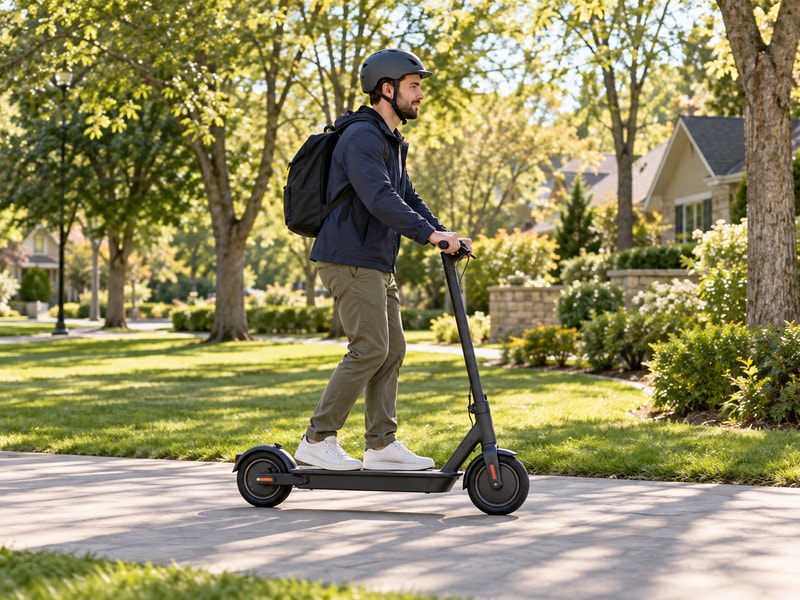
Before ordering an electric scooter for tall adults, verify its measurements, approved setup, load limit, and terms for resolving a fit problem. Keep written answers about deck-to-grip height and usable deck space, along with the exact model and version they describe. Ask whether a demonstration is available and whether riding or assembly affects return eligibility before attempting either. Read the current terms carefully instead of treating a trial-style headline as permission for an unrestricted ride and return.
How should you test the scooter before deciding?
If a test ride is permitted, wear a helmet and use a clear, level area where riding is allowed, following the manual’s starting and braking instructions. Check whether both feet remain supported and both hands can operate the controls through slow starts, turns, and stops without repeated knee contact.
- End the test if the stem moves, a lock does not hold, or the fit prevents comfortable control.
| Before ordering | Keep |
|---|---|
| Fit | Deck and grip measurements |
| Setup | Approved settings and load limit |
| Terms | Demonstration and return conditions |
For help checking Model B against your measurements, contact the Dynamic Scooter team with your height, riding load, shoe size, and the measurements you still need.
What else do tall riders ask?
Q1: Can I choose a scooter from my height alone?
No. Arm length, leg length, shoes, deck space, and the scooter’s approved rider limits also affect whether you can stand and use the controls comfortably.
Q2: What’s the best handlebar height for someone over six feet?
There is no single measurement that fits every rider over six feet. Compare deck-to-grip height and try the approved settings with your usual shoes and stance.
Q3: Can I add a handlebar extender if the scooter is too short?
Only use an extender explicitly approved by the scooter manufacturer for your model. Otherwise, select a scooter with suitable original geometry and adjustment limits.
Q4: How do I know if a deck is too small?
It feels crowded when both feet are supported, or your shoes repeatedly approach edges, moving parts, or controls. Check usable standing space with your own shoes.
Q5: Can I ride Model B if I weigh more than 220 lb?
No. Its published maximum payload is 220 lb, so choose a scooter rated for your full riding load if you exceed that limit.