
Riding an electric scooter in wet weather makes many owners worry. Water can harm your scooter’s parts. Bad water damage might lead to costly fixes. You might feel stressed when rain starts during your ride. But is all water contact bad? Many newer scooters have some water protection. This lets you handle light rain without worry.
Knowing your scooter’s water limits helps you make better choices in wet weather. Let’s look at what happens when scooters get wet, how to keep them dry, and what to do after water contact.
1. What Happens When Electric Scooters Get Wet?
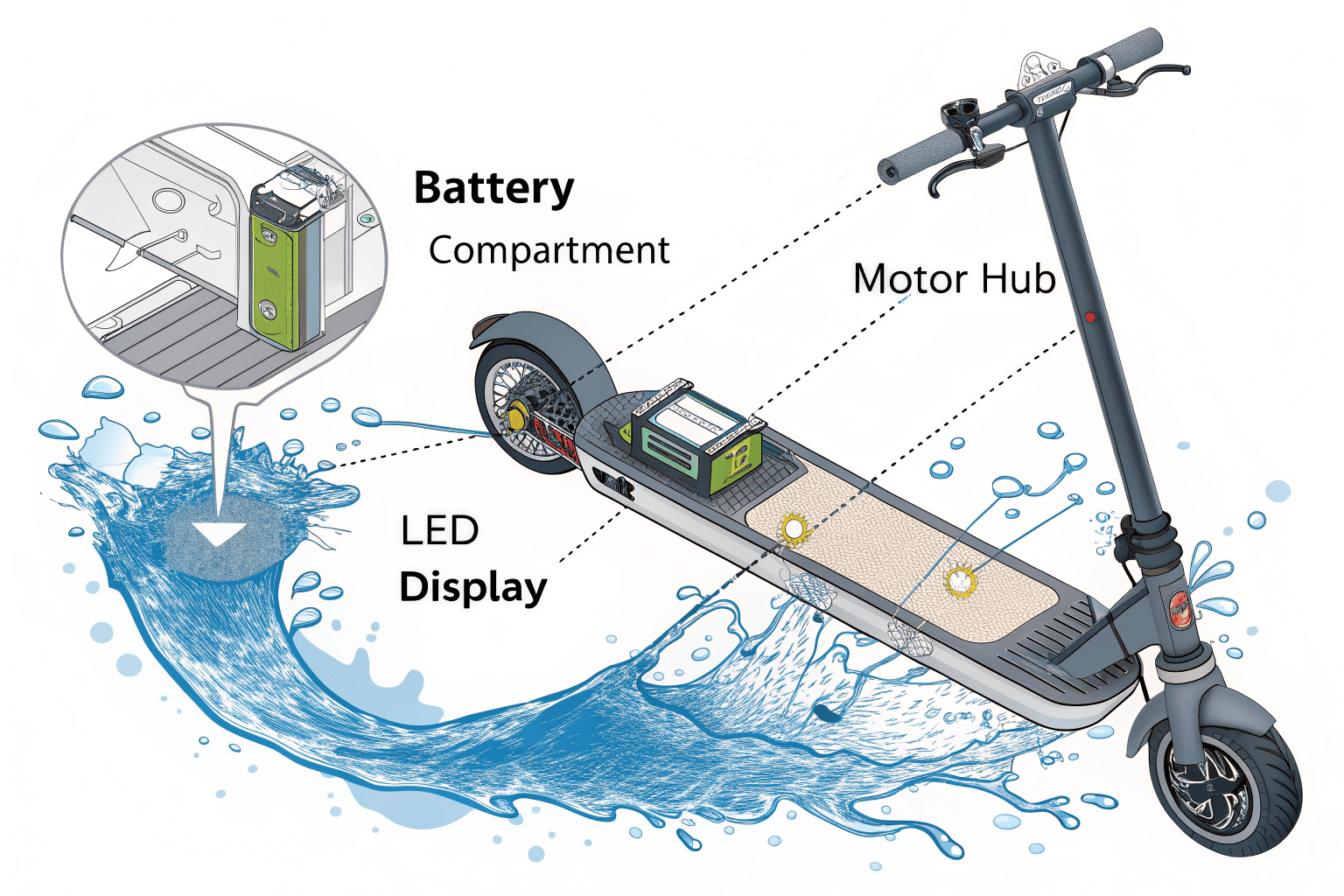
Water and scooter parts don’t mix well. The battery, control board, and wires can all suffer from water contact.
Here’s what you need to know: Water causes short circuits by connecting parts that should stay apart. This can happen right away or slowly as rust forms.
The battery case has good protection on most models. But water that gets inside can start bad chemical changes. You might not see problems right away. Range might drop or the battery might fail weeks later.
Motors can also get damaged by water. Many have some shields, but too much water hurts the parts inside.
| Part | Risk | Possible Damage |
| Battery | High | Shorts, chemical issues, less power |
| Control Board | Very High | Shorts, part failure, error codes |
| Screen | Medium | Display issues, button problems |
| Motor | Medium | Rust in bearings, wire damage |
| Wiring | High | Rust, loose contacts, random problems |
Not all water contact is the same. Light rain is less risky than deep puddles. Puddle water pushes harder into gaps that might keep out light rain.
IP ratings show how well your scooter fights water. The second number in the rating shows water defense on a 0-9 scale.
- IPX4: Safe from water splashes
- IPX5: Safe from water spray
- IPX7: Can handle brief dunking
Most scooters have IPX4 or IPX5 ratings. This means they handle light rain but not deep water or strong sprays.
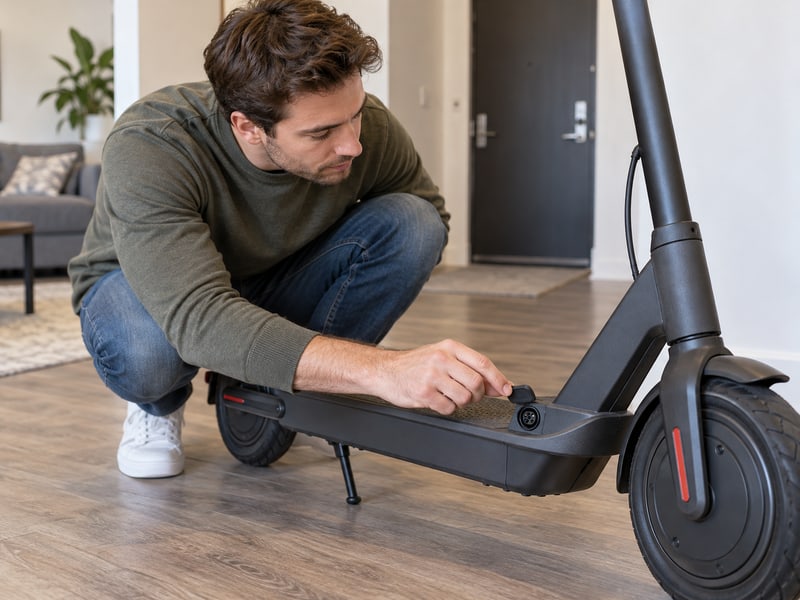
The deck where you stand often has the most gaps. Water can get in through button holes, charge ports, and seams.
Water damage can start small but grow over time. A tiny bit of water might not cause issues right away. But that same water can spread and cause rust weeks later. This slow damage is why drying your scooter fully after wet rides matters so much.
Some riders think a quick wipe-down is enough. But water can hide in spots you can’t see. It might sit under the deck or inside control boxes. This hidden water does the most harm over time.

2. How Waterproof Are Most Electric Scooters?
Knowing the gap between “waterproof” and “water-resistant” matters for scooter owners. No regular scooter is fully waterproof. They’re just water-resistant to some degree.
Water-resistant means the scooter can handle some water in certain cases. Waterproof would mean total water blocking, which no common scooter offers.
Most scooters on sale have IP ratings of IPX4 or IPX5. This means they can take light rain and small splashes but not deep water or heavy rain.
Water defense changes based on price and use type. Here’s a quick look:
| Price | Typical Rating | Real-World Water Defense |
| Budget (<$300) | IPX4 or none | Light rain only, no puddles |
| Mid-range (300−300-300−800) | IPX4-IPX5 | Some rain, tiny puddles |
| Premium ($800+) | IPX5-IPX6 | Good in rain, small puddles |
| Off-road Models | IPX5-IPX7 | Better wet weather use |
| Rental Fleet | IPX5-IPX6 | Made for all weather |
Brands differ in how they handle water defense. The most at-risk parts include:
- Charge ports with rubber covers that wear out
- Deck seams where water can pool
- Screen units and buttons
- Motor case seals
- Battery access points
Better models use good seals and coatings on circuit boards. Cheap models often use simple rubber seals that break down faster.
Even with good IP ratings, regular water contact can wear down seals. A scooter that handles rain well when new might not do so well after months of use.
Many makers test their scooters in fake rain rooms. These tests check if water gets inside during set amounts of spray. But real world rain can be much worse than test room rain. Wind can drive water into spots from odd angles. This is why IP ratings help but don’t tell the whole story.
Some makers add extra seals around key parts. They might use special glue or tape on seams. These small touches can make a big change in how well a scooter handles real rain.
3. What Water Damage Signs Should You Watch For?
Spotting water damage early helps avoid bigger issues later. Some signs show up right after water contact. Others take time to appear.
Want to know if water has hurt your scooter? Check for these signs after riding in wet weather:
- Error codes on the screen
- Odd actions like sudden speed changes
- Lights or screen that flicker
- Won’t turn on
- Strange sounds from the motor area
Water damage isn’t always clear right away. Later signs can include:
- Less range that gets worse over time
- On-off problems that come and go
- Rust around metal parts
- Foggy screen showing water inside
- Less power from the motor
| Sign | Likely Damaged Part | How Urgent |
| Won’t turn on | Battery/control board | Fix now |
| Error codes | Control board/screen | Fix soon |
| Less range | Battery | Watch it |
| Odd sounds | Motor | Fix soon |
| On-off issues | Wires/contacts | Watch it |
| Visible rust | Various | Watch it |
| Foggy screen | Display unit | Low worry |
If you think water got in, try these steps:
- Let the scooter dry fully in a warm, dry spot for 1-2 days
- Look for water or rust around openings
- Test basic tasks like power, speed, and brakes
- Watch battery life for a few charges
- Listen for odd sounds during rides
Get expert help when:
- The scooter won’t turn on after drying
- You smell burning or see damage
- The battery acts strange or gets hot
- Error codes stay after drying
- Poor function after drying
Repair shops have tools to find hidden water damage. They can check spots you can’t easily see.
Some water damage might not show clear signs at first. You might just notice your scooter feels “off” in some way. Maybe the power feels less smooth. Or the brakes grab more than before. Trust your gut if the scooter feels wrong after getting wet.
Water can also damage parts in ways you can’t see. Circuit boards might have tiny spots of rust forming. These small spots can grow over weeks until they cause big problems. This is why some water damage takes so long to show up.
4. How Can You Safely Ride in Wet Conditions?
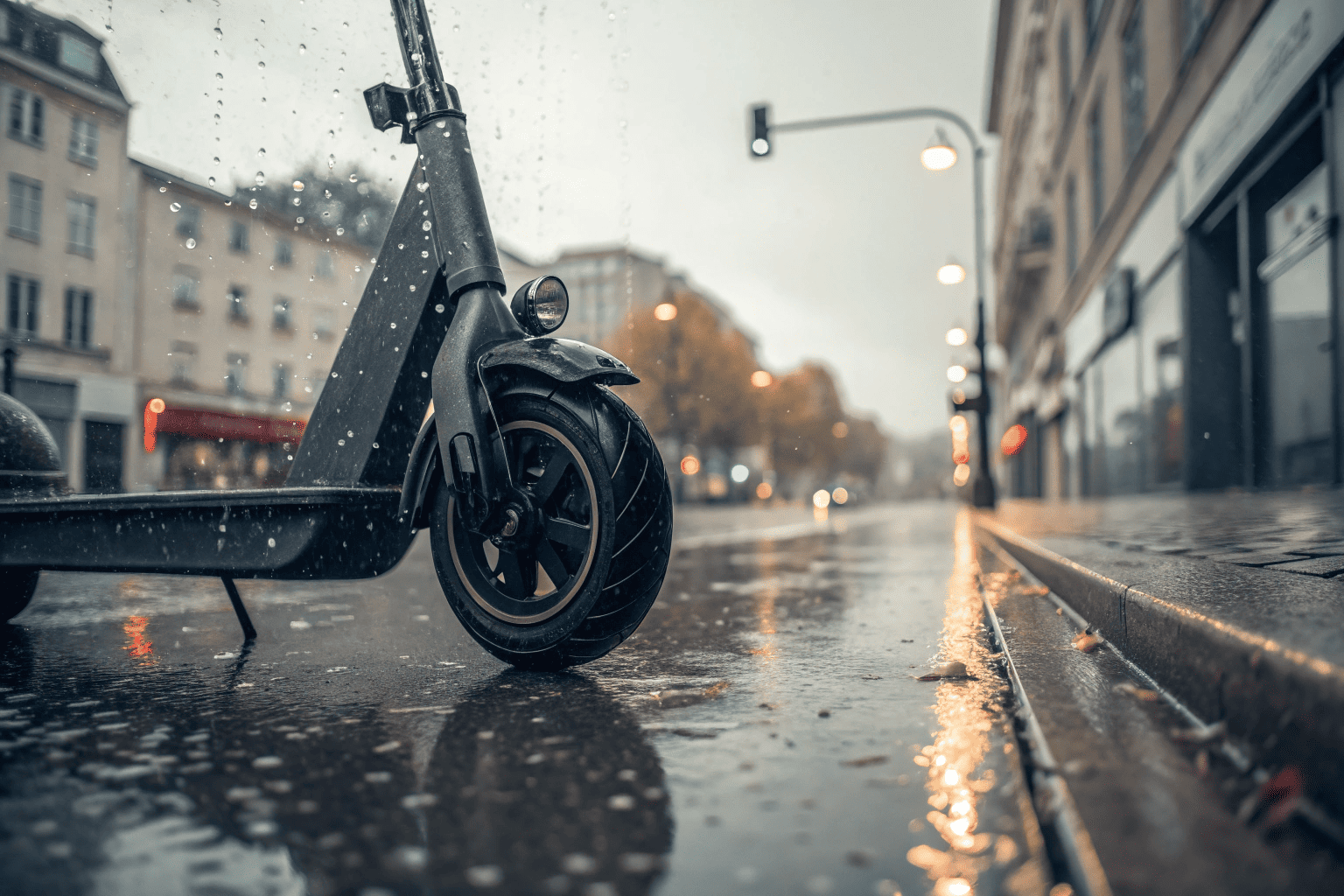
Riding a scooter in wet weather needs changes to how you ride. Safety must come first.
The truth is wet roads cut grip between tires and the ground. This affects both speed and stopping power.
When riding on wet roads:
- Cut your top speed by at least 25%
- Avoid quick turns or sudden moves
- Start braking much sooner than on dry roads
- Keep both hands on the bars for better control
- Stand more upright for better balance
Stopping takes much longer on wet roads. This chart shows the big change:
| Speed | Dry Road Stopping | Wet Road Stopping |
| 10 mph | 10-15 feet | 15-25 feet |
| 15 mph | 20-30 feet | 30-45 feet |
| 20 mph | 35-45 feet | 50-70 feet |
| 25 mph | 50-65 feet | 75-100+ feet |
Tire setup matters even more in wet weather. Try these tips:
- Lower tire pressure by 2-3 PSI for better grip
- Make sure tires have good tread (at least 2mm)
- Think about tires with rain-ready tread if you ride in wet weather often
Being seen works both ways in rain. You need to see and be seen. Wear bright clothes and use lights even in daytime rain.
Metal parts like drain covers and train tracks get very slick when wet. Cross them at right angles when you can. Don’t brake or speed up while on them.
Road paint like crosswalk lines gets slick in rain too. Treat these spots just like metal surfaces.
After wet rides, follow the drying steps in section 6 to avoid damage to your scooter.
Wet weather riding also means you need to dress right. Water-proof gear helps keep you dry and focused on safe riding. A rain jacket with a hood that fits under your helmet works well. Water-proof pants and shoes help too. Being wet and cold makes it harder to control your scooter well.
Your eyes need extra care in rain too. Rain drops on glasses or face shields make it hard to see. A hat with a brim can help keep rain off your face. Some riders use water-proof goggles or glasses with special coatings that shed water.
5. What Protective Measures Keep Your Scooter Dry?
Keeping your scooter safe from water needs both planning and the right gear. With some work, you can greatly cut the risk of water problems.
You’ll be glad to know there are many good add-on products made just for scooters:
- Silicone sprays for circuit boards (don’t use WD-40, it’s not a true water blocker)
- Neoprene covers for control boards and battery cases
- Rubber seal kits for weak spots
- Water-blocking tape for seams and gaps
- Port covers for charge ports and other holes
| Protection Type | Where to Use | How Well It Works | Cost |
| Silicone coating | Circuit boards | Very Good | $15-30 |
| Dielectric grease | Wire contacts | Good | $5-15 |
| Rubber seals | Deck seams, covers | Good | $10-25 |
| Water-block tape | Outer seams | Medium | $8-20 |
| Port covers | Charge ports | Medium | $5-15 |
| Full scooter covers | Storage | Very Good | $20-50 |
For DIY water defense, try these steps:
- Put dielectric grease on wire contacts to stop rust
- Use marine-grade silicone around deck seams
- Add extra rubber washers on screws that go through the deck
- Spray coating on circuit boards (needs taking apart and some skill)
- Make custom covers for weak spots using water-proof cloth and velcro
Several add-ons can give more defense:
- Fender add-ons to cut spray from wheels
- Deck guards that stop water from pooling where you stand
- Water-proof bags for carrying your scooter in heavy rain
- Quick rain covers for sudden showers
Good storage in wet months matters too:
- Keep your scooter inside in a dry place when you can
- Use a dehumidifier in your storage area during damp months
- Keep the scooter away from windows where rain might get in
- Try a breathable cover that stops water but lets air flow
Regular checks become even more key during wet months. Check and reseal weak spots monthly. Look for early signs of water getting in.
Some riders go the extra mile with custom mods. They might add longer fenders that wrap further around the wheels. Some add rubber flaps that hang down from the deck edges. Others build small roofs that mount to the stem and block rain from above. These custom fixes can work well but need good design to avoid new problems.
Weather apps help you plan rides around rain. Many apps now show rain radar and give alerts before storms. Planning your route with covered rest stops helps too. You can wait out short showers under awnings or in coffee shops along your path.

6. How Should You Dry Your Scooter After Exposure?
Drying your scooter right after water contact is key to stop damage. What you do right after riding in wet weather can make a big change.
The key point is quick action matters when drying your scooter. The longer water sits on parts, the higher the risk.
Steps to take right after riding in rain:
- Turn off the scooter fully
- Wipe all parts with a soft cloth that soaks up water
- Stand the scooter up in a spot with good air flow
- Take off any covers you can to let air in
- Open the charge port cover to let water out (but don’t plug it in)
Each part needs its own drying method:
| Part | How to Dry | Time Needed | Special Notes |
| Outer parts | Soft cloth | 5-10 minutes | Focus on seams and cracks |
| Deck area | Towel + fan | 1-2 hours | Focus on spots where water pools |
| Wheels | Air blast + cloth | 15-20 minutes | Spin wheels to get water out |
| Battery case | Gentle fan | 12-24 hours | Never use heat on the battery |
| Screen & buttons | Soft cloth + air | 1-2 hours | Don’t push water into buttons |
These tools help dry better:
- Soft cloths (they soak up more than paper towels)
- Canned air (for blowing water out of tight spots)
- Silica gel packs (to soak up water in closed spots)
- Small fans for aimed air flow
- Room dehumidifier
- Water-soaking products like DampRid near the scooter
How long to wait before turning on again depends on how wet it got:
- Light rain: Wait 2-4 hours
- Heavy rain or puddles: Wait 12-24 hours
- Deep water (wheels or deck): Wait at least 24-48 hours
Never use hot air like hair dryers or heat guns right on parts. The heat can harm parts and battery cells. Use room temp air flow instead.
If you must use your scooter before it’s fully dry, at least make sure the battery and control board areas are dry. These get damaged most easily.
For bad water cases, think about taking out the battery (if your model allows) and drying it on its own. This needs some skill and should only be done if you know your scooter well.
Some riders keep a “dry kit” ready for wet rides. This might include a small towel in a zip bag, some canned air, and silica gel packs. Having these items with you means you can start drying right away, even if you’re not home yet.
The way you store a wet scooter matters too. Don’t fold it up while wet if you can help it. Folding traps water in creases and joints. Stand it up so water can drain down and out. If you must fold it, wipe it very well first and open it again as soon as you can.
7. Can Warranty Cover Water Damage Issues?
Knowing what your warranty covers for water damage can save you from big repair bills. Most scooter makers have clear rules about water.
The reality is most brands don’t cover water damage in basic warranty, even for scooters with water-defense ratings.
Typical warranty rules include:
- No coverage at all for water damage
- Coverage only within the specified IP rating parameters
- Coverage only if you can prove you stayed within the rules
- Some coverage for certain parts even with water contact
The papers needed for warranty claims typically include:
- Proof of when you bought it
- Photos of the damaged scooter
- Details about how water got to it
- Proof that you used it within its rated capabilities
- Service records showing good care
| Brand | Water Damage Policy | Papers Needed | Success Chance |
| Segway-Ninebot | Covered within IP limits | Full report, photos | Medium |
| Xiaomi | Often not covered | Proof issue wasn’t from water | Low |
| Apollo | Case-by-case review | Photos, use details | Medium |
| Kaabo | Not covered except factory flaws | Tech check report | Low |
| Inokim | Some coverage with proof of proper use | Full papers | Medium-High |
Brand rules vary a lot:
- Some like Segway-Ninebot may help if you prove you stayed within IP limits
- Budget brands often deny all water claims
- Premium brands often have more flex and check each case
- Most warranties end if you made changes that hurt water defense
Insurance options for water damage include:
- Extra warranties that specifically cover water damage
- Home insurance that covers small vehicles
- Special scooter insurance with full coverage
- Credit card buyer protection (often just for 90-120 days)
When buying insurance, check:
- What weather cases they don’t cover
- Rules about storage and care
- How much you pay first compared to scooter value
- Limits on part coverage
Some makers offer paid fixes at lower rates even when warranty won’t help. These can cost less than other shops and use real brand parts.
Keep all papers about your scooter’s water defense claims. These help when making warranty claims. This includes the manual, ads, and any talks with the maker about water defense.
Taking photos of your scooter before and after wet rides can help with claims too. Date-stamped photos show the state of your scooter over time. If you need to make a claim, these photos can prove the damage wasn’t there before.
Some riders add notes to their phone or a small log book about rides in wet weather. They note the date, how wet it was, and what they did to dry the scooter after. This kind of record can help show you took good care of your scooter if you need to make a claim.
Conclusion
Water defense in scooters varies widely by model. Most handle light rain but not deep water or heavy rain. By knowing your scooter’s IP rating and taking good steps, you can lower water damage risk. Quick drying after wet rides, regular seal checks, and careful riding in wet weather will help your scooter last longer. For the best rain defense, look for at least IPX5 rating and add extra sealing to weak spots.
Dynamic Scooter offers models with IP54 water defense, making them good for light rain while keeping good function and safety. Visit our site to see water-resistant scooters that fit your travel needs and local weather.

FAQ
Q1: Can I ride my electric scooter in heavy rain?
Most scooters aren’t made for heavy rain use. Even with IPX5 or IPX6 ratings, long heavy rain can let water get past seals and harm parts. Light or medium rain for short times is often fine for scooters with good water ratings, but avoid heavy rain when you can.
Q2: Will splashing through a puddle damage my electric scooter?
Puddles bring big risk because they splash water hard into weak spots on your scooter. The depth and your speed when hitting the puddle matter a lot. Shallow puddles (less than 1 inch) at slow speeds may be okay for scooters with good water defense, but deeper puddles or hitting them fast can push water past seals and into parts, causing damage.
Q3: How do I know if water has damaged my scooter’s battery?
Signs of water in a scooter battery include: less range, won’t hold charge, gets hot when charging, error codes about the battery, rust at battery contacts, or the battery system showing wrong info. If you think water got in, stop using the battery right away and have a pro check it, as wet lithium batteries can be unsafe.
Q4: Can I use a pressure washer to clean my electric scooter?
No, never use pressure washers on scooters. The high-pressure water can force water past seals that would normally keep out rain and splashes. Instead, use a damp cloth for cleaning, and if needed, a light spray bottle with mild soap, being careful around parts, screens, and openings.
Q5: Does a higher IP rating guarantee complete waterproofing?
No IP rating means total water defense forever. Even IPX7 or IPX8 rated items have depth and time limits. Also, IP ratings are tested in labs with new products. Over time, seals age, cases can crack, and bumps may hurt water defense. A higher IP rating gives better defense, but doesn’t mean you can put your scooter in water often.