
...

May 26, 2025

How Long Does It Take to Charge an Electric Scooter? Quick Guide (2026)

No power in your scooter? Breaking down on the road wastes time and can be unsafe. Understanding how long it takes to charge an electric scooter is essential for anyone using this convenient transport mode. Electric scooters take 3-12 hours to charge. This depends on battery size and charger type. This guide explains key factors and offers tips to improve charging speed. Want to know how to charge faster without harming the battery? How to extend battery life? Keep reading for answers. 1. How Long Does an Electric Scooter Take to Charge? Most electric scooters require 3-12 hours for a full charge, depending on several factors. Let’s get straight to it. Different Brand Charging Times ● Entry-level scooters with smaller batteries typically charge in 3-5 hours, while high-performance models with larger batteries may need 8-12 hours. Dynamic Scooter’s Model B strikes a balance, charging fully in about 4-5 hours with its standard charger, making it practical for daily commuters. Main Factors Influencing Charge Time ● Battery capacity (measured in Ah or Wh) is crucial – larger capacity means longer charging time. Charger power (in Watts) directly affects speed – higher power delivers energy faster. Current battery level and health also matter – charging from empty takes longer, and older batteries charge less efficiently. Dynamic Scooter Charging Advantage ● The Model B features an advanced Battery Management System that optimizes charging, making it approximately 20% faster than comparable scooters. Here’s the real kicker: its removable battery design allows users to purchase a spare, eliminating downtime completely – use one battery while charging another. Scooter Category Battery Type Typical Capacity Standard Charge Time Notes Dynamic Scooter Model B Li-ion Medium 4-5 hours Removable battery, optimized BMS Entry-Level Commuter Li-ion Small 3-5 hours Basic features Mid-Range Commuter Li-ion Medium 5-8 hours Balanced performance High-Performance Li-ion Large 8-12+ hours Extended range Older Models Lead-Acid Medium 6-12 hours Older technology Seasonal changes also impact charging. Cold temperatures can add 1-2 hours to charging time, while the optimal range (15-25°C) ensures maximum efficiency. 2. How Does Battery Capacity Affect Charging Time? Battery capacity significantly determines charging duration. It’s a straightforward relationship, mostly. Common Electric Scooter Battery Capacities ● Entry-level scooters feature 4-6Ah batteries, mainstream commuters like Dynamic Scooter Model B typically have 5-15Ah, while high-performance models can reach 30Ah or more. Larger capacity means longer range but also longer charging time. Relationship Between Capacity and Charge Time ● The relationship is generally linear – double the capacity roughly doubles charging time with the same charger. However, most lithium-ion batteries charge faster initially (up to 80%) and then slow down for the final 20% to protect battery health. Determining Your Scooter’s Battery Capacity ● Check your user manual, specification sheet, or the battery label itself. As a rough estimate, 1Ah typically provides 3-5 miles of range, though this varies with riding conditions. Battery Capacity Charging Time (Standard) Charging Time (Fast) Estimated Range 4-6Ah 3-5 hours 1.5-3 hours 9-25 miles 7.5-10Ah 4-6 hours 2-4 hours 12-30 miles 10-15Ah 5-8 hours 2.5-5 hours 15-40 miles 15-20Ah 7-10 hours 3.5-6 hours 21-50 miles Remember that battery capacity degrades over time, affecting both charging time and range. 3. Will Charger Type Change Charging Speed? The charger type significantly impacts charging speed. This is where things get interesting. Standard vs. Fast Chargers ● Standard chargers (typically 1.5-2A output) prioritize battery longevity with slower charging. Fast chargers (3-5A or more) can reduce charging time by 40-60% but may affect long-term battery health. Dynamic Scooter provides an efficient standard charger, with faster options available for those prioritizing speed. Charging Time Differences by Wattage ● Higher wattage means faster charging. For example, doubling the charger’s wattage from 84W to 168W could potentially halve the charging time, assuming the battery can handle the increased power safely. Choosing the Right Charger ● Safety and compatibility are paramount. Always ensure the charger’s voltage matches your scooter’s battery voltage, the connector is compatible, and the current doesn’t exceed what your battery can safely handle. Stick with manufacturer-recommended chargers whenever possible. Charger Type Typical Power Charging Speed Impact on Battery Best For Standard Charger Low Slow Minimal Regular overnight charging Official Fast Medium-High Fast Moderate Occasional quick charging Third-Party Fast Very High Very Fast Potentially High Emergency use only (risky) Smart/Adjustable Variable Flexible Minimal-Moderate Optimizing charge/health For everyday charging, standard chargers are best for battery longevity. Save fast charging for when time is critical. 4. What Special Attention is Needed for the First Charge? The first charge sets the foundation for your battery’s health. Think of it as conditioning your battery. New Scooter First Charge Recommendations ● Most manufacturers recommend an extended first charge of 8-12 hours, even after the indicator shows full. This allows the Battery Management System to properly balance all cells in the battery pack, optimizing future performance. Optimal Duration for First Charge ● For lithium-ion batteries, 8-12 hours is typical; lead-acid batteries may need 12-24 hours. The key takeaway: don’t unplug when the light turns green – follow the manufacturer’s recommended duration for this critical first charge. Avoiding Common First Charge Mistakes ● Don’t use the scooter before the first full charge, don’t interrupt the charging process, always use the original charger, and ensure a suitable charging environment (moderate temperature, dry, well-ventilated). First Charge Action Recommendation Why It Matters Duration 8-12 hours (or per manual) Ensures proper cell balancing Charger Original only Guarantees compatibility and safety Environment 15-25°C, dry, ventilated Optimizes charging efficiency Interruptions None – complete cycle Allows full conditioning This small investment of time during the first charge pays dividends in battery performance and longevity. 5. How Can Electric Scooter Charging Time Be Shortened? Several strategies can reduce charging time when you’re in a hurry. Ready for the good part? Practical Fast Charging Techniques ● Using an official fast charger is the most direct method, potentially cutting charging time by 40-60%. Another approach is partial charging – since batteries charge fastest up to about 80%, stopping at this level can save 30-40% of

How Long Does It Take to Charge an Electric Scooter? Quick Guide (2026) Read More »
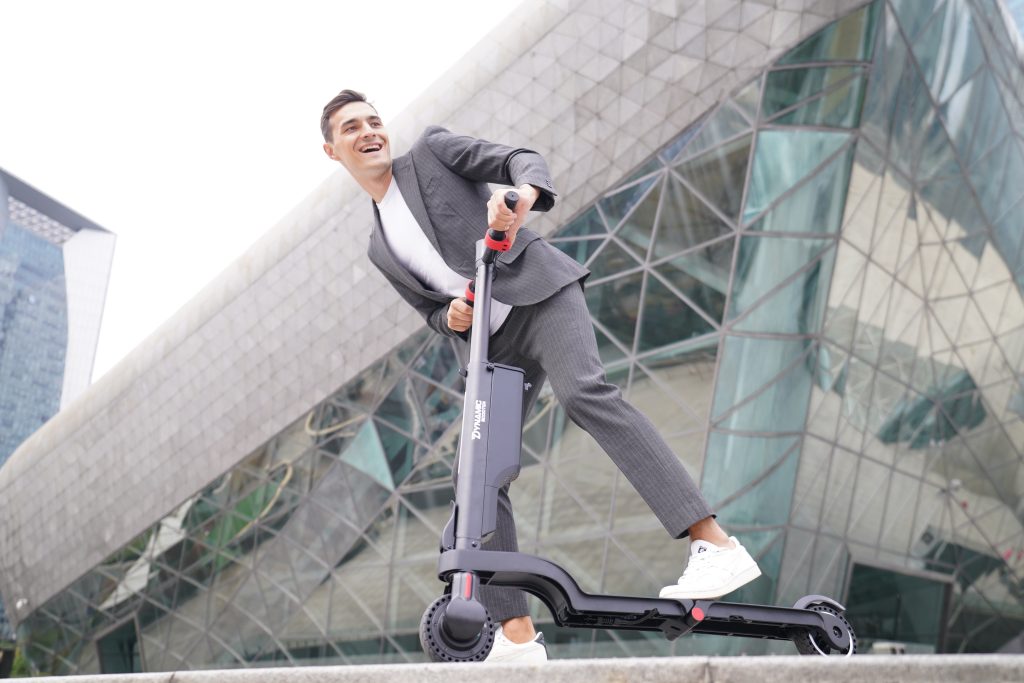
How Long Does an Electric Scooter Battery Last Per Charge?

Electric scooters have become a popular transportation option for short-distance travel. Let me break this down for you – understanding battery life helps you plan trips better and avoid getting stranded. Electric scooter batteries typically last between 5 to 40 miles per charge depending on various factors. Most commuter models average 15-25 miles under normal conditions. The actual range depends on battery capacity, rider weight, terrain type, weather conditions, and riding habits. But wait, there’s more to discover! Let’s explore exactly how these battery factors affect your daily rides. 1. What factors affect electric scooter battery range? You might be surprised by how many variables impact your electric scooter’s range. Battery performance is affected by numerous factors working together. The battery type and capacity serve as the foundation for range potential. Most electric scooters use lithium-ion batteries, measured in watt-hours (Wh). Higher capacity batteries store more energy, allowing for longer rides. Rider weight directly impacts range because heavier loads require more power. Most manufacturers test with riders weighing around 150-165 pounds. For every 20-30 pounds above this, expect a 5-10% decrease in range. Terrain dramatically affects battery consumption. Flat surfaces allow efficient energy use, while hills demand significantly more power. A 10% grade hill can reduce range by 50% compared to flat terrain. Factor Impact on Range Approximate Range Reduction Rider Weight Each 20-30 lbs over test weight 5-10% decrease Incline 10% grade hills Up to 50% decrease Speed Maximum speed vs. moderate speed 30-40% decrease Cold Weather Below 40°F/4°C 20-30% decrease Wind Strong headwind 10-15% decrease Speed significantly impacts range. Higher speeds require exponentially more power due to increased air resistance. Aggressive riding with frequent full-throttle acceleration can reduce range by 30-40%. Weather conditions play a crucial role. Cold temperatures particularly affect lithium-ion chemistry, temporarily reducing capacity. Riding in temperatures below 40°F (4°C) can decrease range by 20-30%. 2. What is the average battery runtime for different types of electric scooters? Here’s something you should know – not all electric scooters offer the same range capabilities. The market divides into three categories. Entry-level electric scooters typically offer ranges between 12-15 miles (19-24 km) per charge. These budget-friendly models usually feature smaller battery packs (250-300Wh) and take 4-5 hours to charge. Commuter electric scooters represent the mid-range segment with ranges between 15-30 miles (24-48 km). Battery capacities typically range from 350-600Wh with 5-7 hour charging times. Scooter Category Typical Range Battery Capacity Charging Time Average Price Entry-level 12-15 miles (19-24 km) 250-300Wh 4-5 hours $300-$500 Commuter 15-30 miles (24-48 km) 350-600Wh 5-7 hours $600-$1,200 Performance 30-60+ miles (48-97+ km) 700-1600Wh 8-12 hours $1,200-$3,000+ Dynamic Scooter Model B Up to 20 km (12 miles) Detachable lithium battery 3-4 hours $375.37 Performance electric scooters deliver impressive ranges between 30-60+ miles (48-97+ km). These premium models feature battery capacities exceeding 700Wh and weigh 60-100+ pounds. Dynamic Scooter Model B offers competitive range in the commuter category with up to 20 km (12 miles) per charge. Its detachable lithium battery allows convenient charging without moving the entire scooter. 3. How can you maximize your electric scooter’s battery life? Want to know the secret to getting more miles from each charge? Proper battery care and riding techniques can significantly extend your range. Adopt proper charging habits. Avoid letting your battery completely drain – lithium-ion batteries prefer partial discharge cycles. Maintain charge levels between 20% and 80% for optimal longevity. Use only the manufacturer-provided charger. Prevent complete discharge to protect your battery from damage. Lithium-ion batteries can suffer permanent capacity loss when fully depleted. Optimization Strategy Potential Range Increase Implementation Difficulty Maintain 20-80% charge 10-15% longer battery lifespan Easy Ride at moderate speeds 20-30% more range per charge Easy Proper tire inflation 5-10% more range per charge Easy Reduce unnecessary weight 5-15% more range per charge Moderate Coast whenever possible 10-20% more range per charge Easy Store your scooter at appropriate temperatures. Lithium-ion batteries prefer moderate temperatures between 50-77°F (10-25°C). Extreme heat accelerates degradation even when not in use. Adjust your riding habits. Accelerate gradually rather than applying full throttle. Maintain steady speeds instead of constantly varying pace. Keep tires properly inflated to reduce rolling resistance. 4. How long does it take to charge an electric scooter battery? You might wonder how long you’ll need to wait before riding again after depleting your battery. Charging times vary based on battery capacity and charger specifications. Different capacity batteries require different charging times. Entry-level scooters with 250-300Wh batteries typically charge in 3-5 hours. Mid-range commuter scooters with 350-600Wh batteries generally require 5-7 hours. High-performance models with 700-1600Wh packs may need 8-12 hours. Charger specifications significantly impact charging duration. Standard chargers typically output 1.5-2A, while fast chargers may deliver 3-5A or more. Battery Capacity Standard Charger (2A) Fast Charger (4A) Ultra-Fast Charger (6A) 250Wh (Small) 3-4 hours 1.5-2 hours 1-1.5 hours 500Wh (Medium) 6-7 hours 3-3.5 hours 2-2.5 hours 1000Wh (Large) 10-12 hours 5-6 hours 3.5-4 hours 1500Wh (XL) 15-18 hours 7.5-9 hours 5-6 hours Lithium-ion batteries charge in three main phases. The first phase (constant current) occurs when the battery is mostly depleted, charging relatively quickly to about 80% capacity. The second phase (constant voltage) slows down as the battery approaches full. The final phase (trickle charging) tops off the remaining capacity very slowly. First-time charging requires special attention. Many manufacturers recommend an initial charge of 8-12 hours to calibrate the battery management system. 5. How many charging cycles can an electric scooter battery last? Let’s talk about the long-term durability of your investment. Battery lifespan is measured in charging cycles. The average lifecycle of lithium-ion batteries typically ranges from 300 to 500 complete charging cycles before capacity noticeably decreases. After these cycles, batteries don’t suddenly fail but gradually lose capacity to about 70-80% of original. Several factors affect cycle life. Charging habits significantly impact lifespan – consistently charging from empty to full causes more stress than partial charging between 20% and 80%. Operating temperature plays a crucial role, with extreme heat accelerating degradation. Battery Usage Pattern

How Long Does an Electric Scooter Battery Last Per Charge? Read More »

Shopping Cart
Scroll to Top