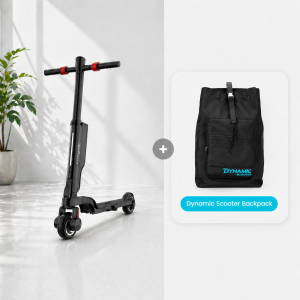

Electric scooter laws Oregon riders follow allow qualifying motor assisted scooters, subject to rider, equipment, speed and route rules. A missing bike lane can disrupt your commute. Check classification, each connection, required equipment and destination parking before buying, then match your plans with the rules applying on your travel date.
1. What qualifies under electric scooter laws Oregon riders follow?
Under electric scooter laws Oregon riders follow before HB 4007 takes effect, a qualifying electric motor assisted scooter has a foot support or seat, up to four wheels, an electric output no greater than 1,000 watts, and a maximum capability of 24 mph on level ground. Oregon’s vehicle definitions distinguish it from a moped. A retail product name alone cannot establish its classification.

Which specifications should you keep?
Here’s the exact-model check: Save the manufacturer's specification sheet before ordering, particularly when a seller offers several versions under one model name. Ask which version the quoted speed describes and whether the controller or firmware has been modified. A low-speed setting on a faster machine does not give you a reliable answer about its statutory classification; obtain documentation for that exact device.
- Record the model number and electric output.
- Keep the original speed specification and manual.
- Ask about modifications before buying used.
Include a photograph of the label in your phone's purchase folder. You can then compare the actual scooter with the information supplied by the seller without relying on a marketplace listing that may disappear.
What records help you compare the actual scooter?
| Document | What it helps you check |
|---|---|
| Model label | Exact version |
| Specification sheet | Power and capability |
| Used-sale history | Changes from original equipment |
Key Takeaway: Keep these records together, so you can compare the scooter you receive with the specification that informed your purchase.
2. Do electric scooter laws Oregon riders follow require licensing?
A rider aged 16 or older can operate a qualifying scooter without a driver’s license or permit under electric scooter laws Oregon riders follow; the scooter is exempt from registration and statutory financial-responsibility requirements. The exemptions appear in ORS 807.020, ORS 803.305, and ORS 806.020. These exemptions depend on the qualifying category described above.

What should you arrange before commuting?
Keep ownership and coverage separate: Keep ownership records even when vehicle registration is unnecessary. A receipt, serial-number photograph, and service record can help with a theft report, warranty request, or a dispute over the model you bought. Store a copy away from the scooter, since a bag attached to the handlebars may disappear with it.
Insurance coverage needs a separate check. If you want protection for damage, theft, or liability, ask your insurer about your exact scooter and intended use rather than assuming a household policy covers it.
- Describe personal commuting and any paid delivery work accurately.
- Ask about exclusions, deductibles, and liability coverage.
- Request the answer in writing before purchasing a policy.
Who can resolve your remaining questions?
| Question | Who can answer it |
|---|---|
| Does this device qualify? | Manufacturer documentation and applicable law |
| Does my policy cover it? | Your insurer |
| Do rentals have extra conditions? | The rental agreement |
Key Takeaway: Separate category eligibility from insurance coverage, so registration exemptions do not leave your personal protection questions unanswered.
3. Do electric scooter laws Oregon riders follow require helmets?
Yes. Electric scooter laws Oregon riders follow currently require approved headgear on highways and public premises, with a religious exemption, under ORS 814.534.

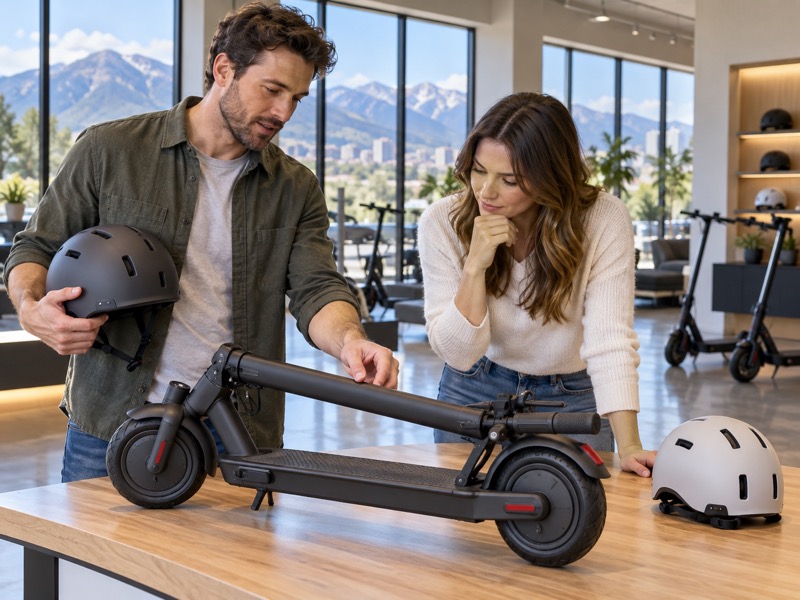
Compare helmet fit and everyday comfort. Try your helmet with the glasses or jacket you normally wear, since your commuting clothes may affect how easily you can look behind you.
How do you make the helmet easy to use?
Here’s the fit check before you leave: Choose headgear you can fit and fasten correctly every time you leave. Check the approval information and fitting instructions, then adjust it while standing still. A loose helmet that slides around when you turn your head deserves attention before you enter traffic.
- Keep the straps fastened during the ride.
- Follow the maker's replacement instructions after an impact.
- Store the helmet where you collect your keys and lights.
If you share equipment with another adult, allow time to adjust the straps again. Treat that adjustment as part of leaving the house, alongside checking that the folding latch is secured.
What belongs in your departure check?
| Item | Before departure |
|---|---|
| Helmet fit | Adjust without rushing |
| Strap | Fasten and check |
| Approval information | Confirm for your intended use |
Key Takeaway: Build fitting into your departure routine; it gives you time to correct a loose strap before entering traffic.
4. What speed do electric scooter laws Oregon riders follow allow?
Electric scooter laws Oregon commuters follow currently cap riding speed at 15 mph. Roads posted above 25 mph require bicycle-lane use unless you are crossing, under ORS 814.512 and 814.518.

Consider pace and trip length. Leave time for crossings, walking connections, parking, and putting equipment away rather than calculating the whole trip at your top permitted speed.
How should you plan a workable commute?
Check the connection beyond your top speed: Break the trip into individual road segments. Check the difficult junction, the missing lane, and the return trip, particularly if the route changes direction after work. A map's estimated travel time will not tell you whether a particular connection works for your scooter.
- Inspect where the bike lane starts and ends.
- Identify an alternative before reaching a gap.
- Check whether construction has changed the connection.
Consider a slightly longer residential route if it gives you clearer crossings and fewer difficult merges. Walk an uncertain connection while you verify its rules instead of improvising in moving traffic.
Which route details need another look?
| Route feature | Planning task |
|---|---|
| Busy road | Check lane availability |
| Lane gap | Find a usable connection |
| Return route | Review separately |
Key Takeaway: Check these segments in both directions, so your planned travel time includes a usable connection rather than just a speed estimate.
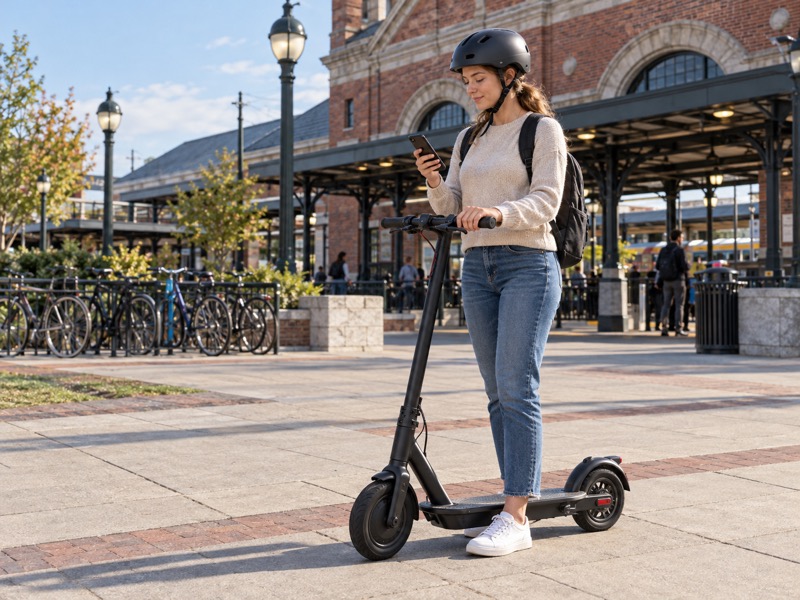
5. Do electric scooter laws Oregon riders follow allow sidewalks?
Electric scooter laws Oregon riders follow limit sidewalk use to entering or leaving adjacent property. ORS 814.524 and 814.528 generally require walking in crosswalks, with a disability exception.

Prepare for junctions and visibility changes. Follow the rules for the particular sidewalk or crossing.
What should you do when a lane ends?
Here’s the change from riding to walking: Choose a place to stop before you reach the lane's end. Dismount where you can stand clear of moving traffic, then decide how to continue. If your planned connection depends on several blocks of sidewalk riding, look for another route before your next trip.
- Leave room for people approaching from either direction.
- Keep your scooter under control while walking.
- Avoid stopping on a curb ramp to check your phone.
At the far side of the crossing, find space to position the scooter before setting off again. You should be able to look for turning vehicles without balancing the scooter in a pedestrian's path.
How can you prepare for the next crossing?
| Situation | Prepare before arrival |
|---|---|
| Bike lane ends | Choose a stopping point |
| Crosswalk connection | Allow walking time |
| Narrow corner | Keep the ramp clear |
Key Takeaway: Prepare the stopping and walking connection ahead of time, so you can continue without crowding the crossing or curb ramp.
6. What lights do electric scooter laws Oregon riders follow require?
Under limited visibility, electric scooter laws Oregon riders follow require a white light visible 300 feet ahead and to the sides, rear red reflective or lighting equipment visible 500 feet, and front white or yellow reflective or lighting equipment visible 200 feet. ORS 815.283 allows specified equipment worn by the operator when the scooter lacks lighting equipment.
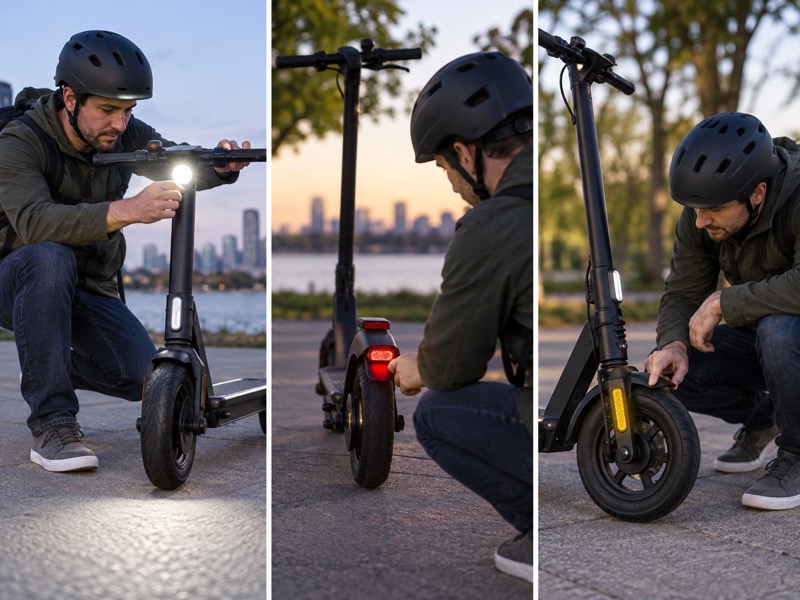
Check everyday mounting and visibility. Use your equipment manual when choosing accessories, particularly if attaching a lamp could obstruct the brake lever or folding mechanism.
How should you check your setup?
Check what other road users can see: Inspect the light mounts, reflector surfaces, cables, and charge level before a return trip that may finish in darkness. Look for luggage or clothing that covers the equipment. A bright display near your hands does not establish that other road users can see the required lights and reflectors.
- Clean dirt from the lamp lens and reflectors.
- Check that mounts stay secure when steering.
- Carry a plan for returning if a light fails.
Do the check while you still have time to correct a problem. A spare compatible lamp may help with an equipment failure, but verify the complete arrangement before relying on it.
What should your equipment check cover?
| Equipment check | Look for |
|---|---|
| Front | Clear lens and secure mount |
| Rear | Uncovered light or reflector |
| Rider's clothing | No blocked required equipment |
Key Takeaway: Use the check before darkness arrives; you then have time to fix a blocked lamp or arrange another return option.
7. How do electric scooter laws Oregon riders follow treat parking?
Electric scooter laws Oregon riders follow require nearby bicycle-lane or path use unless locally prohibited, while local authorities can impose site rules; check the city’s parking rules at your destination. For example, Lake Oswego’s current guidance addresses obstructed ramps, entrances, paths, and transit stops.
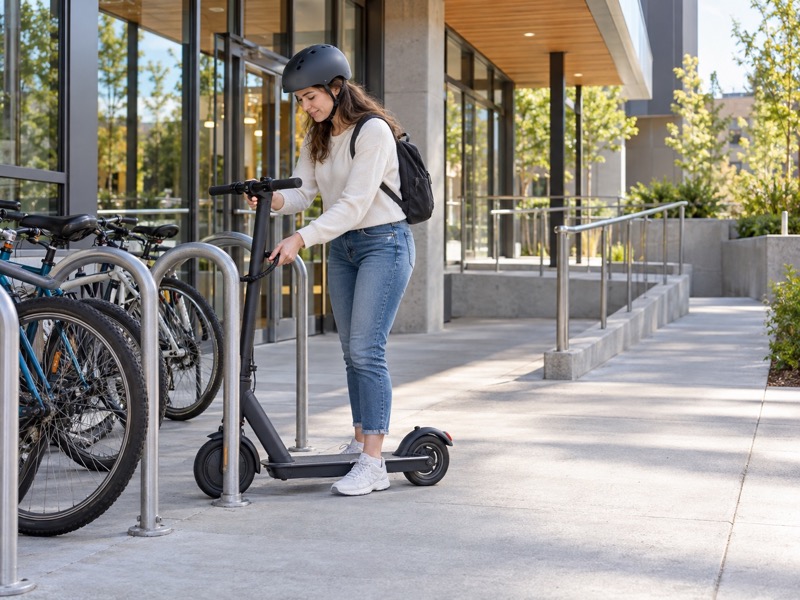
Park with the entire scooter out of the pedestrian route, including its handlebars and rear wheel. Think about how a person using a wheelchair, pushing a stroller, or leaving the building would pass.
Can you finish the trip without creating an obstruction?
Here’s the destination check before departure: Check the destination before deciding a scooter works for your commute. Ask your workplace about indoor storage and any battery policy, then look for a lawful outdoor option if indoor storage is unavailable. A suitable route can still leave you without a practical place to put the scooter.
- Keep curb ramps and door openings clear.
- Check signs at the path entrance.
- Ask whether the property permits locking to its racks.
Visit the destination once without a time deadline. You can identify the storage entrance and walking connection before arriving for work with a scooter, helmet, and bag.
Who manages each part of your destination?
| Place | Check with |
|---|---|
| City path | City or managing agency |
| Workplace | Building manager |
| Transit stop | Transit operator and posted rules |
Key Takeaway: Confirm route access and parking separately, so a workable ride does not end with an unsuitable place to leave the scooter.
8. When do electric scooter laws Oregon riders follow change?
Electric scooter laws Oregon riders follow change under HB 4007 on January 1, 2027, including eligibility from 14 years old, a 20 mph operating limit, a 20 mph category capability limit, and replacement helmet provisions. The enrolled bill’s section 33 sets that date. Those provisions do not replace the preceding riding rules before taking effect.
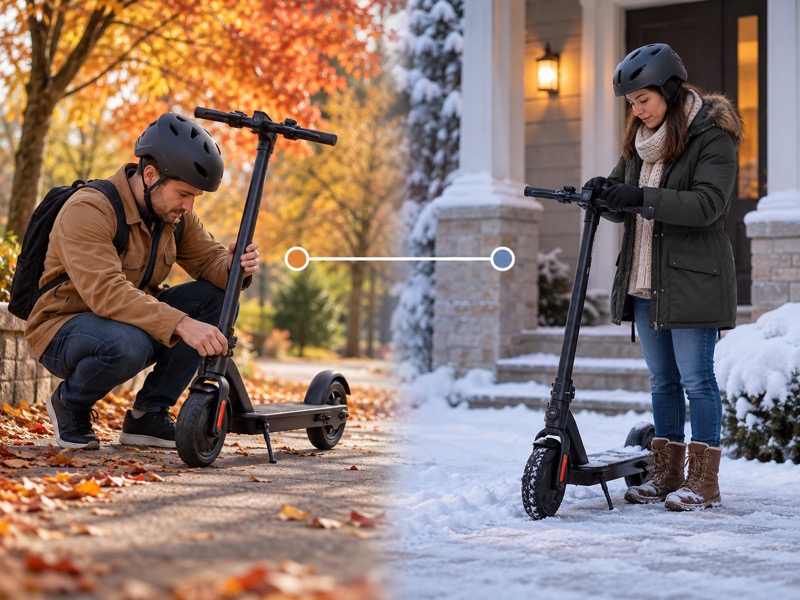
Electric scooter laws Oregon buyers read online may describe different years without making that difference clear. Check the date attached to the particular statement about speed, rider eligibility, or headgear.
What should a buyer do during the changeover?
Watch the riding date during the changeover: Keep the purchase date and the riding date separate in your planning. Buying a scooter before a change does not, by itself, answer how you may operate it afterward. Ask for written specifications if you are considering a model near a category threshold.
- Save the official law with its operative-date section.
- Recheck city guidance before a January ride.
- Ask about the device's classification if its capability exceeds the new threshold.
Avoid treating a future article headline as permission for today's trip. Plan your current commute using the rules that apply on the day you ride, then review it when the new provisions begin.
Which rules match your intended riding date?
| When you ride | Which rules to review |
|---|---|
| Before HB 4007 takes effect | Current operating provisions |
| January 2027 onward | New provisions and local rules |
| After modifying a scooter | Classification again |
Key Takeaway: Match each trip with its applicable date, so you can revisit your route and model questions when the new provisions begin.
9. Can electric scooter laws Oregon riders follow penalize parents?
Yes. Electric scooter laws Oregon families follow include ORS 814.536, which addresses responsible adults who knowingly permit unlawful scooter operation by an under-16 child.

How should an adult manage a shared scooter?
Check access before handing over the scooter: Keep control of access when the scooter is stored at home. Explain who may use it, where it may go, and what must be checked before each trip. A family member's experience with a pedal bicycle does not establish that the scooter has the same rules.
- Confirm the rider's eligibility for that date.
- Discuss the exact route before lending the scooter.
- Check the manual's rider and load restrictions.
- Review any separate campus or rental conditions.
If another adult borrows the scooter, show them the controls and folding latch while stationary. Let them adjust equipment before departure rather than trying unfamiliar controls on a busy corner.
What should you do before your next commute?
| Shared-use question | Action |
|---|---|
| Who will ride? | Check eligibility |
| Where will they go? | Review the route |
| What changed since last use? | Check equipment and settings |
Key Takeaway: Set clear rider and route arrangements before lending the scooter; this helps your household check eligibility without confusing scooter and bicycle rules.
Summary: Check classification, rider eligibility, headgear, equipment and your complete route before leaving. Separate existing requirements from changes with future effective dates. Dynamic Scooter stands for practical choices shaped around everyday riders. For help comparing portability and commuting needs, contact us with your route, storage and carrying requirements before you order.
FAQ
Electric scooter laws Oregon riders follow raise common questions about passengers, speed, headgear and route access; these answers address adult trip planning and applicable requirements. Check the device’s category before applying them.
Q1: Can I carry another adult on the deck?
No. The current scooter rules prohibit carrying a passenger. Arrange separate transport, and keep bags positioned so you retain control.
Q2: Can I ride faster because my scooter can reach 24 mph?
No. The current operating cap is 15 mph. Plan extra time for intersections and walking connections.
Q3: Can I use bicycle advice about adult helmets?
No. Apply the scooter rule. Approved headgear is currently required for scooter operators, subject to the statutory exemption.
Q4: How do I know whether a trail allows my scooter?
Use that path’s specific rules. Check the managing agency’s guidance and entrance signs. Ask about scooter access explicitly if its page only discusses bicycles.
Q5: Can you help me compare a scooter for my commute?
Yes. Send the Dynamic Scooter team your route length, carrying needs, and required specifications so you can compare practical options before ordering. Confirm your local route permissions with the relevant authority.