...

October 31, 2025

Can an Electric Scooter Go Uphill? What You Need to Know Before Riding

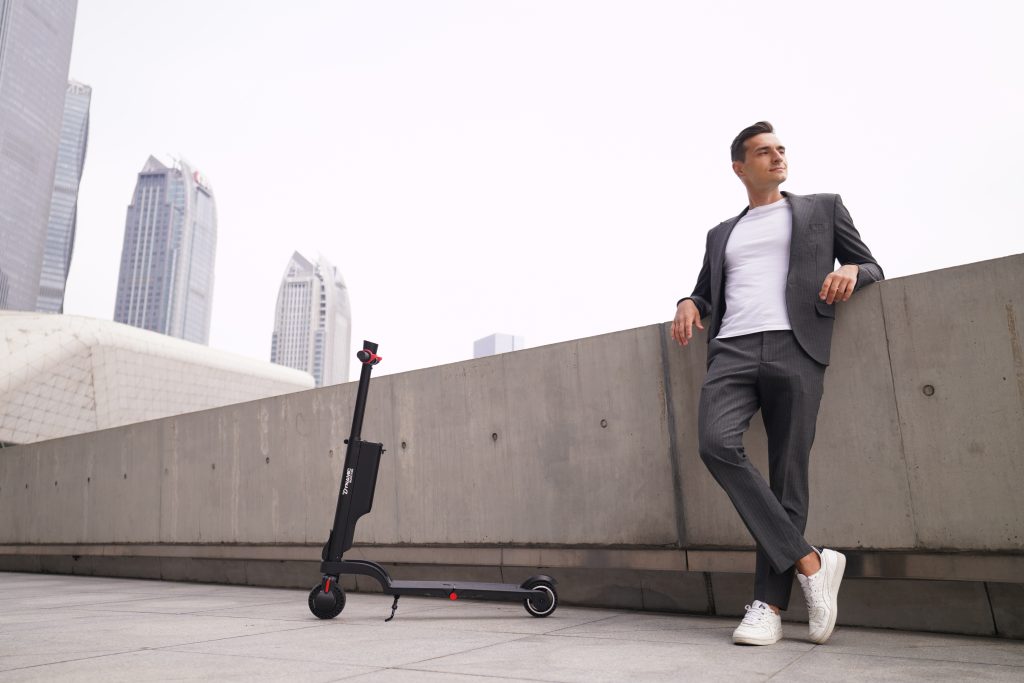
Worried that an electric scooter won’t have the power to get you up the hills on your commute? This doubt can make you hesitate, leaving you stuck in traffic and missing out on a more efficient way to travel. An underpowered scooter can turn a daily trip into a frustrating struggle. This guide will explain what makes a scooter a capable hill climber. Yes, an electric scooter can go uphill, but its ability to do so depends on several key factors. Motor power, battery voltage, rider weight, and the steepness of the incline all play a role. A scooter with at least a 500-watt motor and a high-voltage battery can typically handle most urban hills with ease. For very steep terrain, a dual-motor scooter is even better. Understanding these factors will help you choose a scooter that can conquer the hills on your route. Ready to find the right scooter for your terrain? Here’s the deal… This article breaks down everything you need to know about electric scooters and hill climbing. 1. What Determines If an Electric Scooter Can Go Uphill? An electric scooter’s ability to climb hills is not a simple yes or no question. It depends on a combination of factors that work together to provide the necessary power and torque. The most critical factor is the motor power, which is measured in watts (W). A higher wattage motor can generate more torque, which is the rotational force needed to push the scooter and its rider up an incline. A basic 250W motor might be fine for flat surfaces, but it will likely struggle on anything more than a gentle slope. The battery is the powerhouse of the scooter, and its voltage (V) and capacity (Ah) are just as key as the motor. Voltage can be thought of as the “pressure” that pushes electricity to the motor. A higher voltage system (like 48V or 52V) allows the motor to draw power more efficiently and deliver more torque for hill climbing. Battery capacity affects the scooter’s range. Climbing hills consumes a lot of energy, so a larger capacity battery will let you tackle more inclines before needing to recharge. Rider weight is another major piece of the puzzle. The scooter’s motor has to work harder to carry a heavier load, especially against gravity. Every scooter has a maximum payload capacity, and exceeding this limit will severely impact its performance, particularly on hills. Even if you are within the weight limit, a heavier rider will experience slower speeds on inclines compared to a lighter rider on the same scooter. This matters because you need to choose a scooter with enough power to handle your specific weight on the types of hills you expect to encounter. The steepness of the hill itself, known as the incline angle or gradient, is the challenge the scooter must overcome. This is often expressed in degrees or as a percentage. A 10-degree incline is roughly an 18% gradient, which is considered a moderately steep hill. Most commuter scooters can handle gradients of up to 15-20%, but for anything steeper, you will need a more powerful performance model. Factor Why It Matters for Hill Climbing Recommended Specification Motor Power (Watts) Provides the torque to push against gravity 500W or higher for regular hills Battery Voltage (V) Delivers power efficiently to the motor 48V or higher for better performance Rider Weight Affects the total load the motor must carry Choose a scooter with a high payload capacity Incline Angle The steepness of the hill to be climbed Match scooter’s gradeability to your route Here’s a table comparing motor types: Motor Type Best For Hill Performance Single 250W Flat terrain, light riders Struggles on most hills Single 500W Urban commuting, moderate hills Good for most city inclines Dual Motor (1000W+) Steep hills, performance riding Excellent, can handle very steep grades 2. How Steep of a Hill Can Electric Scooters Climb? The climbing ability of electric scooters varies greatly between models. A standard commuter electric scooter is typically designed to handle the gentle slopes found in most urban environments. These scooters can usually manage inclines with a gradient of 10-15%, which equals a 6 to 9-degree angle. This is sufficient for most city streets, parking garage ramps, and small hills. However, if your daily route includes more challenging terrain, you will need to look at more capable models. Performance-oriented electric scooters are built with hill climbing in mind. These models often feature more powerful motors, higher voltage batteries, and more robust construction. It is not uncommon for a high-end scooter to be able to tackle gradients of 25% or even 30% (around 15-17 degrees). These scooters are designed for enthusiasts and for riders in hilly cities who need that extra power to get around without any issues. When you are shopping for an electric scooter, you will see a “maximum gradient” or “climbing angle” listed in the specifications. This number represents the steepest incline the scooter is advertised to be able to climb under ideal conditions. “Ideal conditions” usually means a lightweight rider, a full battery, and a smooth, dry surface. The bottom line? Your real-world experience may be different. It is always a good idea to look for a scooter with a maximum gradient that is a bit higher than the steepest hill on your route to have a margin of safety. Scooter Type Typical Max Gradient Best Use Case Budget Commuter 10% (6 degrees) Mostly flat areas with small slopes Mid-Range Commuter 15-20% (9-11 degrees) Average city with moderate hills Performance/Dual Motor 25-40% (14-22 degrees) Hilly cities and off-road use Here’s another table for context: Gradient (%) Angle (Degrees) Description 10% ~5.7° Gentle Slope 18% ~10.2° Moderate Hill 25% ~14.0° Steep Hill 35% ~19.3° Very Steep Hill 3. What Motor Power Do You Need for Hill Climbing? Motor power is the single most key specification for an electric scooter’s hill-climbing ability. An electric scooter’s motor is rated in watts (W), and a higher wattage generally translates

Can an Electric Scooter Go Uphill? What You Need to Know Before Riding Read More »
How to Know If My Electric Scooter Is Charging? Step-by-Step Check Guide

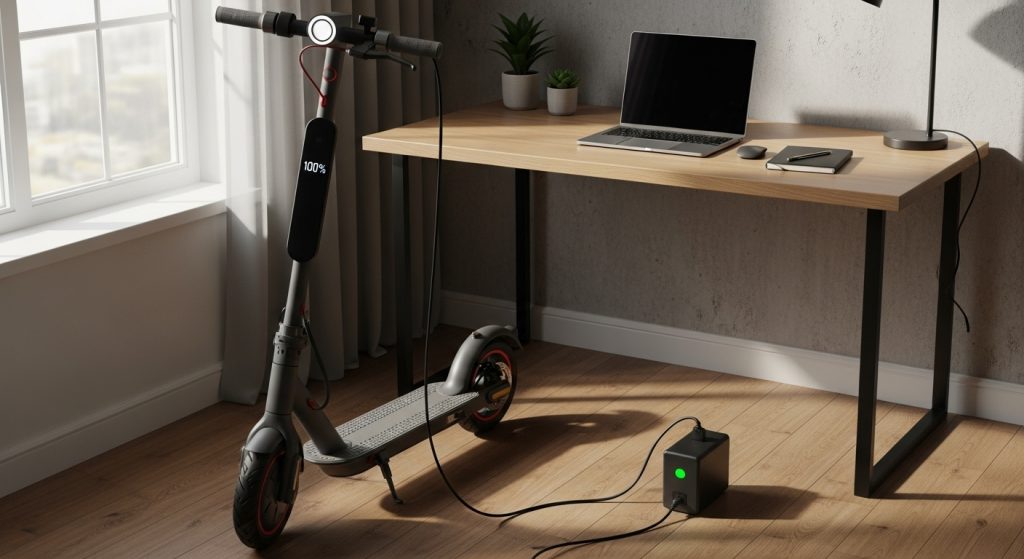
Is your scooter plugged in but you’re not sure it’s actually charging? This uncertainty can be frustrating, especially when you rely on it for your daily commute. A scooter that fails to charge means you could be left stranded, disrupting your plans and causing unnecessary stress. This guide will show you exactly how to confirm your scooter is charging correctly. To know if your electric scooter is charging, look for key visual cues. The most common sign is an indicator light on the charger, which typically turns red during charging and green when full. Your scooter’s display may also show a charging symbol or an increasing battery percentage. A working charger will feel slightly warm to the touch, but not excessively hot. If you see these signs, your scooter is charging properly. Ready to become a charging expert? Here’s the deal… This article will walk you through all the signs and steps to check. 1. What Are the Visual Signs That Your Electric Scooter Is Charging? Confirming that your electric scooter is charging is usually straightforward. Manufacturers design scooters with clear visual indicators to show the charging status. The most common and reliable sign is the LED indicator light found on the charger itself. When you plug the charger into the wall and the scooter, this light will typically turn red. This red light signifies that the charging has started and electricity is flowing to the battery. Your scooter’s own display screen provides valuable information. Most modern scooters have a digital display that will show a charging symbol, such as a lightning bolt or a battery icon filling up. You should also see the battery percentage slowly increasing over time. This provides direct feedback that the battery is accepting a charge. Some scooters might not have a screen, but they often have a series of small LED lights on the handlebars or deck that blink. Color changes are another key indicator. The charger light is usually red during charging. Once the battery is fully charged, this light will change to green. This is your signal to unplug the charger. The blinking lights on the scooter’s deck might turn solid once the charge is complete. This matters because understanding these color codes prevents overcharging and helps you know exactly when your scooter is ready to ride. Here is a breakdown of common light patterns and their meanings: Light Indicator Color/Pattern Meaning Charger LED Solid Red Currently Charging Charger LED Solid Green Fully Charged Scooter Display Blinking Battery Icon Currently Charging Scooter Display Solid Battery Icon Fully Charged 2. How Can You Tell If the Charger Is Working Properly? Sometimes, the problem isn’t the scooter but the charger itself. A faulty charger won’t deliver power to your battery, no matter how long you leave it plugged in. Check the indicator light on the charger. Most chargers have a light that turns on when it’s plugged into a working wall outlet, even before it’s connected to the scooter. If this light doesn’t come on, it could mean the charger is dead or the outlet has no power. Another reliable sign of a working charger is heat. It is perfectly normal for the charger block to become warm to the touch during charging. This heat is a byproduct of the AC to DC power conversion. However, it should only be warm, not excessively hot. If the charger is too hot to hold comfortably, or if you smell burning plastic, unplug it immediately. This indicates a problem that could be a fire hazard. Unusual sounds or smells are red flags. A functioning charger should be nearly silent. You might hear a very faint hum, but any loud buzzing, clicking, or popping sounds are signs of a malfunction. A strong electrical or burning smell is a clear warning that something is wrong. In either of these cases, you should stop using the charger and get a replacement. The bottom line? Your senses are a great tool for diagnosing charger problems. To be absolutely sure your charger is working, you can test its output with a multimeter. This tool measures electrical voltage. Set the multimeter to the DC voltage setting and touch the probes to the metal contacts on the charger’s connector. The reading should match the output voltage printed on the charger’s label. If the reading is zero or much lower than specified, the charger is faulty. Charger Symptom What It Means Action to Take No Indicator Light No power or faulty charger Test outlet, then replace charger if needed Excessive Heat Internal malfunction Unplug immediately and replace Loud Buzzing Sound Electrical fault Unplug immediately and replace Burning Smell Overheating components Unplug immediately and replace 3. What Should the Battery Display Show When Charging? Your scooter’s battery display is your main source of information about the charging. When you plug in the charger, the display should light up and show that charging has begun. The most common indicator is a battery icon that animates, blinks, or shows bars that increase. This visual feedback is a clear sign that the battery is receiving power. Alongside the icon, the display should show the battery percentage. As the scooter charges, you will see this number climb. It might not update in real-time instantly, but it should increase steadily over a few minutes. If the percentage remains stuck or decreases while plugged in, there is a problem. This could be due to a faulty charger, a bad connection, or an issue with the battery itself. Some more advanced scooters provide an estimated time remaining until the battery is full. This is a helpful feature that lets you know how long you need to wait before you can ride again. This estimate is calculated by the scooter’s Battery Management System (BMS) based on the battery’s current level and the charging rate. Keep in mind that this is just an estimate. The best part? It helps you plan your day around your charging schedule. Once the battery reaches 100%, the display

How to Know If My Electric Scooter Is Charging? Step-by-Step Check Guide Read More »

What is the best electric mountain bike? Expert Reviews & Buyer’s Guide

Choosing the wrong e-MTB can lead to frustration and wasted money. You might end up with a bike that lacks the power for steep climbs or a battery that dies halfway through your ride. This guide will help you find the perfect electric mountain bike for your needs. The best electric mountain bike combines a powerful motor, a long-lasting battery, a durable frame, and reliable components. Key features to look for include a mid-drive motor for balanced power, a battery with at least 500Wh for extended range, full suspension for trail comfort, and hydraulic disc brakes for safe stopping. Models like the Dynamic Scooter Electric Mountain Bike Q5 offer a 650W motor, a 48V 13Ah removable battery, and all-terrain tires, providing a versatile and high-performance riding experience for both commuting and off-road adventures. But how do you know which features are right for you? Let’s break it down. 1. What defines an electric mountain bike? An electric mountain bike, or e-MTB, is a bicycle with an electric motor. The motor helps you pedal. Unlike a motorcycle, it does not replace your effort. It just adds to it. This makes steep hills easier. You can ride longer and keep up with faster riders. Every e-MTB has three main parts: a motor, a battery, and a strong frame. These parts work together. They give you the power to ride trails that were too hard before. Traditional mountain bikes rely solely on the rider’s power. An e-MTB gives you extra power. Here’s the deal… this assistance is what makes them so appealing. It opens up a new world of possibilities for riders of all skill levels. You can choose between two main types of assistance: pedal-assist systems (PAS) and throttles. PAS provides power only when you are pedaling. The motor senses your effort and adds power. This feels natural. A throttle lets you turn on the motor on demand. You do not need to pedal. Most modern electric mountain bike focus on PAS. This gives a more natural riding feel. It also helps with battery life. PAS systems often have multiple levels. You can pick how much help you want. This lets you save battery on easy sections. You can use more power on hard climbs. Feature Electric Mountain Bike (e-MTB) Traditional Mountain Bike Propulsion Rider power + Electric motor assist Rider power only Best For Hills, long distances, mixed skill groups Fitness, technical skill building Weight Heavier due to motor and battery Lighter and more nimble 2. How do you choose the right motor and battery? Picking the right motor and battery is your biggest choice. The motor is the heart of the bike. It gives you power for tough climbs and speed. There are two main types: hub motors and mid-drive motors. Hub motors sit in the wheel’s hub. Mid-drive motors sit at the bike’s crank. Most riders prefer mid-drive motors for e-MTBs. They offer better balance and a more natural feel. Motor power is measured in watts (W). Torque is measured in newton-meters (Nm). For trail riding, look for at least 500W and 60Nm of torque. The battery is your fuel tank. It decides how far you can ride on one charge. Battery capacity is measured in watt-hours (Wh). You get Wh by multiplying volts (V) by amp-hours (Ah). A bigger Wh number means a longer range. A 48V 13Ah battery, like on the Dynamic Scooter Q5, offers about 624Wh. This gives you a long range. The bottom line? You should also think about battery type. A removable battery is easy to charge off the bike. An integrated battery looks sleeker. Motor & Battery Feature Recommendation for Trail Riding Why It Matters Motor Type Mid-Drive Better balance and power transfer Motor Power 650W or higher Sufficient power for steep climbs Battery Capacity 600Wh or higher Longer range for extended rides Battery Style Removable Easier charging and security 3. What are the different types of e-MTBs? Electric mountain bikes come in several varieties. Each is designed for different terrain and riding styles. The most common types are hardtail, full-suspension, and fat tire e-MTBs. A hardtail e-MTB has suspension in the front fork. The rear is rigid. This makes it efficient for climbing. It is a good choice for smoother trails and cross-country riding. Hardtails are often more affordable. They also need less maintenance than full-suspension models. The rigid rear means fewer moving parts. This cuts down on service needs. Hardtails are also lighter. This helps with climbing and speed on flat ground. Full-suspension e-MTBs feature both front and rear suspension. This design gives superior comfort and control on rough terrain. It absorbs bumps. It keeps the wheels on the ground. If you plan to tackle rocky descents and hard trails, a full-suspension bike is the way to go. The rear suspension lets the bike move with the terrain. This gives better traction. It also reduces fatigue on long rides. You can ride harder and longer. Now, you might be wondering… what about fat tire bikes? Fat tire e-MTBs have oversized tires. They offer excellent traction on soft surfaces. Think sand, snow, and mud. They give a stable, comfortable ride. But they can be heavier. They are also slower on hardpacked trails. The wide tires create more drag. But on soft ground, they shine. They float over surfaces that would bog down regular tires. e-MTB Type Best Use Case Key Advantage Hardtail Cross-country, smoother trails Efficient and lower maintenance Full-Suspension Technical trails, rough terrain Maximum comfort and control Fat Tire Sand, snow, soft surfaces Excellent traction and stability 4. How does suspension affect an e-MTB? Suspension is a key feature. It separates a good e-MTB from a basic e-bike. Its job is to absorb impacts from rocks, roots, and bumps. This gives you a smoother ride and better control. Front suspension is in the fork. It is the most basic type. It keeps the front wheel on the ground. This helps steering and braking on uneven ground. For casual riding on

What is the best electric mountain bike? Expert Reviews & Buyer’s Guide Read More »

How Fast Are Electric Mountain Bikes? Real Speeds Explained (2026)

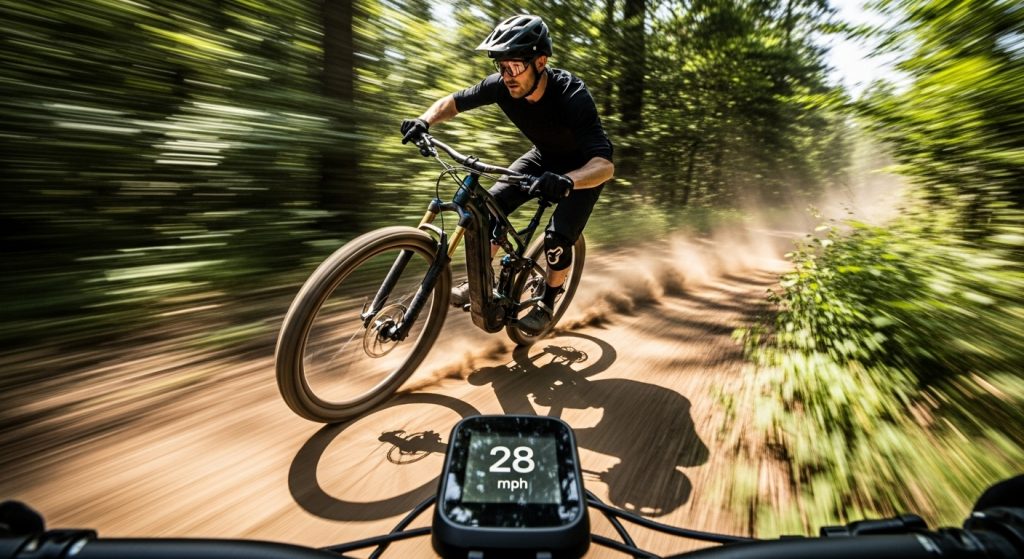
Tired of getting dropped on climbs while your friends fly past? You miss out on epic trails because the uphill grind takes too long. Electric mountain bikes change the game with motor power that keeps you moving fast. Electric mountain bikes typically reach speeds of 20-28 mph depending on their class and motor power. Class 1 and 2 models are limited to 20 mph, while Class 3 bikes can hit 28 mph with pedal assist. Actual speed depends on motor wattage, battery voltage, terrain, rider weight, and local regulations. Most e-MTBs use 250W to 1000W motors that provide strong assistance on climbs and flat trails. Want to know exactly how fast you can go? Keep reading. 1. What Determines the Top Speed of an Electric Mountain Bike? The top speed of an electric mountain bike depends on several key factors. Motor wattage is the most important. A more powerful motor can push you faster. Most electric mountain bikes use motors between 250W and 1000W. Higher wattage means more speed and better climbing power. Battery voltage also plays a big role. A 48V system, like the one found on the Dynamic Scooter Electric Mountain Bike Q5, delivers more power than a 36V battery. This extra voltage helps the motor reach higher speeds. Here’s why it matters: voltage and wattage work together to give you the speed you need on the trail. Legal speed limits are another factor. Most countries have laws that cap e-bike speeds. In the US, most e-MTBs are limited to 20 or 28 mph. In Europe, the limit is usually 15.5 mph for pedal-assist bikes. These limits are built into the bike’s controller. Terrain and riding conditions affect your actual speed. Steep climbs slow you down, even with a powerful motor. Rough trails with rocks and roots also reduce speed. Wind resistance becomes a factor at higher speeds. Flat, smooth trails let you reach top speed more easily. Factor Impact on Speed Motor Wattage Higher wattage = faster top speed Battery Voltage Higher voltage = more power delivery Legal Limits Caps maximum assisted speed Terrain Steep or rough trails reduce speed Your riding style and weight also matter. A heavier rider needs more power to reach the same speed. Pedaling hard with the motor gives you more speed than using throttle alone. The bike’s gearing and tire size also affect how fast you can go. Speed Range Typical Scenario Motor Assist 0-10 mph Technical trails, tight turns Low to medium 10-20 mph General trail riding Medium to high 20-28 mph Flat terrain, open trails Maximum assist 2. What Are the Legal Speed Limits for E-MTBs? E-bikes are grouped into three main classes in the US. Class 1 e-bikes have pedal assist only and are limited to 20 mph. Class 2 e-bikes have a throttle and are also limited to 20 mph. Class 3 e-bikes have pedal assist up to 28 mph and no throttle. The best part? Class 1 e-bikes have the most trail access. Many parks and trails that ban Class 2 and 3 e-bikes still allow Class 1 models. This makes them popular for mountain biking. Class 3 bikes are often restricted to roads and bike paths. State laws can vary. Some states have their own rules about where you can ride each class. California, Colorado, and Utah have clear e-bike laws. Other states are still working on regulations. Always check local rules before you ride. In Europe, the rules are different. Most countries follow EU regulations. E-bikes are limited to 250W motors and 15.5 mph (25 km/h) with pedal assist. Bikes that go faster are classified as mopeds and need registration and insurance. Region Speed Limit Motor Limit US Class 1 & 2 20 mph 750W typical US Class 3 28 mph 750W typical European Union 15.5 mph 250W max Trail access rules are important. Many mountain bike trails now allow Class 1 e-bikes. Some trails ban all e-bikes. Others allow e-bikes only on certain days. Land managers are still figuring out the best policies. Respect posted signs and local regulations to keep trails open for everyone. 3. How Fast Can Different E-MTB Motors Go? A 250W motor is common in Europe. These motors are limited to 15.5 mph by law. They provide good assistance on climbs but feel less powerful on flat ground. They are efficient and give you long battery life. Now, you might be wondering if 250W is enough for serious trails. For most riders, it works well on moderate terrain. A 500W motor is popular in the US. It can reach 20 mph with pedal assist. This motor size gives you strong climbing power and good speed on flat trails. It is a good balance between power and battery life. Many mid-range e-MTBs use 500W motors. A 750W motor is a powerful option, often the legal maximum in many US states for Class 3 bikes. For example, the Dynamic Scooter Electric Mountain Bike Q5 uses a high-speed 650W brushless motor that peaks at 1000W, allowing it to reach speeds up to 30 mph and handle steep climbs with ease. It gives you plenty of power for technical trails. Battery drain is higher, but the performance is worth it for aggressive riding. A 1000W motor is very powerful. Some brands offer these for off-road use only. They can reach 30-35 mph on flat ground. These motors are often limited to 28 mph for legal reasons. They excel on extreme terrain and long climbs. Battery life is shorter due to high power draw. Motor Power Typical Top Speed Best Use 250W 15.5 mph EU trails, efficiency 500W 20 mph General trail riding 750W 28 mph Aggressive riding, climbs 1000W 30+ mph Extreme terrain, off-road Peak power is different from sustained power. A motor might have a peak rating of 1000W but run at 750W most of the time. Peak power helps with short bursts on steep climbs. Sustained power is what you get during normal riding. Both numbers matter for understanding real-world

How Fast Are Electric Mountain Bikes? Real Speeds Explained (2026) Read More »

Shopping Cart
Scroll to Top