
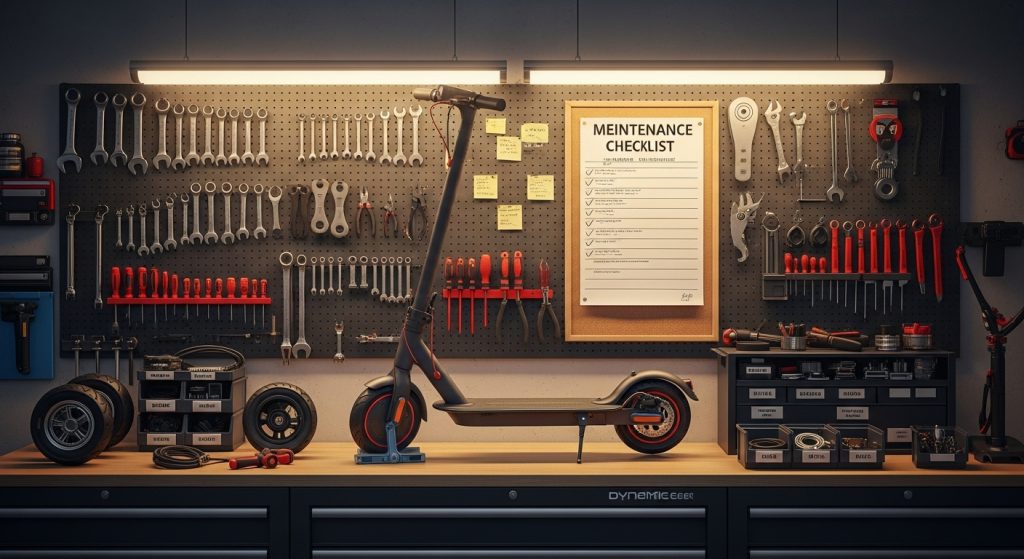
Electric Scooter Maintenance Checklist: Weekly, Monthly & Seasonal Guide
An electric scooter is a fantastic investment for modern commuting. It’s fun, efficient, and eco-friendly. But like any vehicle, it needs regular care to stay in top shape. Neglecting maintenance can lead to poor performance, costly repairs, and even safety hazards. A little bit of attention goes a long way in keeping your ride smooth and reliable. Don’t wait for a breakdown to start thinking about upkeep. Following a simple maintenance checklist is the best way to protect your electric scooter and make sure it lasts for years. From weekly checks to seasonal adjustments, routine care keeps your scooter safe, reliable, and performing at its best. The Dynamic Scooter Model B is designed for easy maintenance, making it a great choice for riders who value longevity and hassle-free ownership. Ready to become a scooter maintenance pro? Here’s your complete guide. 1. Why Is Regular Maintenance Critical for Your Electric Scooter? Regular maintenance for your electric scooter is not just a suggestion; it’s a necessity for safe and reliable operation. The most significant benefit is safety. Routine checks of your brakes, tires, and lights can prevent accidents caused by equipment failure. Imagine your brakes failing on a steep hill or your lights going out at night. These are dangerous situations that regular upkeep can help you avoid. Think about it… a few minutes of your time can save you from a serious injury. Beyond safety, consistent maintenance extends the lifespan of your electric scooter. Components like the battery, motor, and tires wear out over time. By keeping them clean, lubricated, and properly adjusted, you can slow down the aging process. This means you get to enjoy your scooter for more years and miles, maximizing your investment. A well-cared-for scooter holds its value better if you decide to sell it later. Preventing costly repairs is another major advantage. Small issues, like a loose bolt or a low tire, can turn into big problems if ignored. A loose bolt can cause other parts to vibrate and break. A flat tire can damage the wheel rim. By catching and fixing these minor problems early, you avoid expensive and time-consuming repairs down the road. Regular maintenance is an investment that pays for itself. A well-maintained electric scooter simply performs better. You’ll experience a smoother ride, more responsive acceleration, and a longer battery range. When all components are working in harmony, your scooter operates at peak efficiency. This makes every ride more enjoyable and dependable. Don’t let neglect ruin your commuting experience. Maintenance Benefit Why It Matters Enhanced Safety Prevents accidents from equipment failure. Longer Lifespan Maximizes your investment and scooter’s value. Cost Prevention Avoids expensive repairs from small issues. Better Performance Delivers a smooth, efficient, and reliable ride. 2. What Should You Check Weekly on Your Electric Scooter? Your weekly check-up is a quick but critical routine that keeps your electric scooter ready for the road. First on the list is tire pressure. For scooters with pneumatic (air-filled) tires, proper inflation is key. Low pressure can reduce your range, make handling sluggish, and increase the risk of a flat. Use a pressure gauge to check that the PSI matches the recommendation on the tire sidewall. You see… this simple step can dramatically improve your ride quality. Next, give your brakes a thorough test. Squeeze the brake levers to make sure they feel firm and responsive. They shouldn’t feel spongy or pull all the way to the handlebar. Roll the scooter and apply the brakes to confirm they bring you to a quick, smooth stop. If you have disc brakes, visually inspect the pads for wear. If they look thin, it’s time for a replacement. Your brakes are your most critical safety feature. Don’t forget to check your lights. Turn on your front headlight, rear taillight, and any other lights to make sure they are all working. This is critical if you ride at night or in low-light conditions. A functioning set of lights makes you visible to others, which is key for avoiding accidents. Clean the lenses to get maximum brightness. Lastly, take a look at your battery charge level. While you should charge your battery after most rides, it’s good practice to check the level before you head out. This prevents you from getting stranded with a dead battery. Most electric scooter models have a display that shows the current charge, so a quick glance is all it takes. This habit keeps you from running out of power on your journey. Weekly Check What to Look For Tire Pressure Correct PSI, no signs of damage. Brake Function Firm levers, smooth stopping power. Light Operation All lights working and lenses clean. Battery Level Sufficient charge for your planned trip. 3. What Monthly Maintenance Does Your Scooter Need? Once a month, it’s time to give your electric scooter a more in-depth inspection. Start with a deep clean. Use a damp cloth to wipe down the frame, deck, and wheels. A clean scooter not only looks better but also makes it easier to spot potential issues like cracks or loose parts. Avoid using a pressure washer, as it can force water into sensitive electrical components. The result? You’ll have a scooter that looks great and is easier to inspect. Next, go over every bolt and screw on your scooter. The vibrations from riding can cause them to loosen over time. Use an Allen key or screwdriver to check that everything is snug. Pay special attention to the handlebars, folding mechanism, and wheels. A loose bolt can lead to a catastrophic failure, so this is a critical safety check. Don’t over-tighten, as this can strip the threads. If your electric scooter has a chain or belt drive, now is the time to inspect it. Check the tension to make sure it’s not too loose or too tight. Look for signs of wear, such as cracks or missing teeth. If you have a chain, lubricate it with a product designed for bicycles. This keeps it running smoothly and […]
Electric Scooter Maintenance Checklist: Weekly, Monthly & Seasonal Guide Read More »