
Utah’s “motor assisted scooter” category includes qualifying electric scooters with motors up to 2,000 watts and a maximum capability of 20 mph. Utah electric scooter laws also set a lower riding limit and separate rules for helmets, sidewalks, and younger riders. Match your model and route to the current statutes before buying.
1. Which scooters qualify under Utah electric scooter laws?
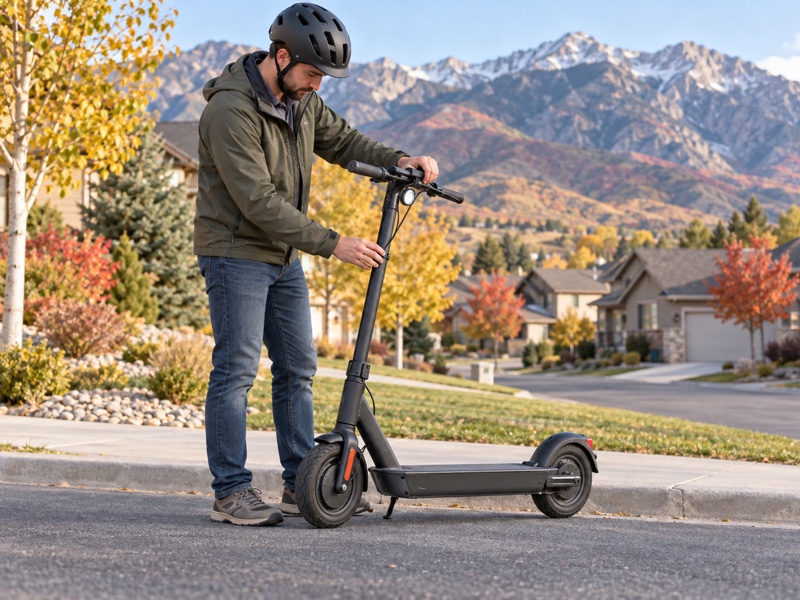
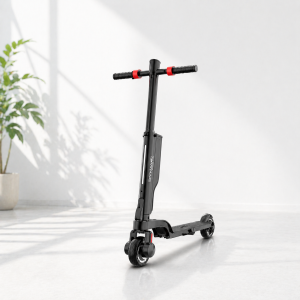
A qualifying motor assisted scooter needs at least two ground-contact wheels, working brakes, handlebars, human-power capability, and an electric motor no greater than 2,000 watts. It can have a standing deck or a suitable seat. Its maximum speed on level pavement is 20 mph under Utah’s current definition.
That definition does not impose a 100-pound weight ceiling or a particular wheel diameter. A product listing copied from another state’s guide may give limits that do not belong to Utah’s scooter category. Compare the manufacturer’s specifications with Utah’s requirements individually.
| Feature | Qualifying scooter requirement |
|---|---|
| Wheels | At least two touching the ground |
| Electric motor | No greater than 2,000 watts |
| Maximum capability | 20 mph on level pavement |
| Controls and support | Handlebars; standing deck or suitable seat |
Ask for written specifications if an advertisement gives several top speeds without explaining them. A faster machine does not establish eligibility because its rider promises to stay below 20 mph. Check its legal category before putting down a deposit.
Our guide to reading electric scooter specifications explains how motor output, speed, rider load, and battery capacity describe different parts of a buying decision.
2. How fast can you ride an electric scooter in Utah?
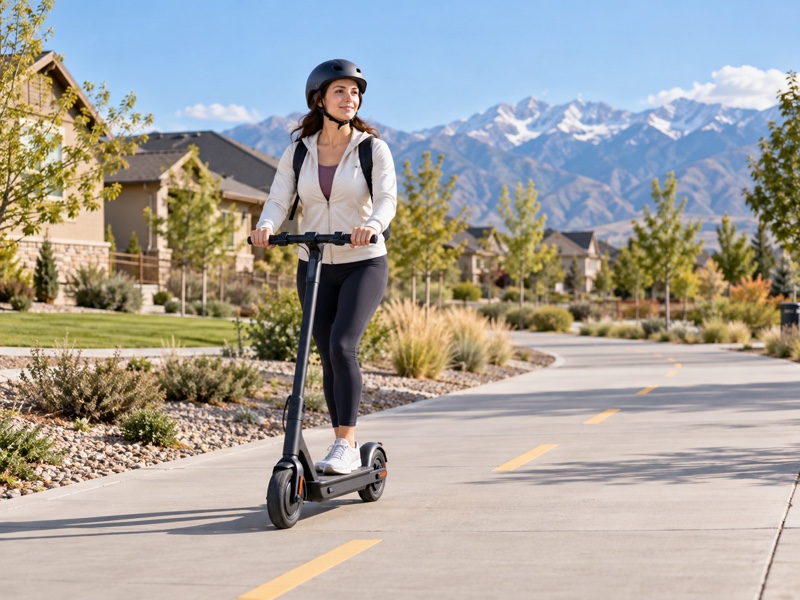
Utah’s operative scooter statute limits riding to 15 mph, with local sidewalk rules also relevant. The 20 mph figure belongs to the device definition. Read the riding restriction in Section 41-6a-1115 before using an advertised top speed as your permitted cruising speed.
Some government summaries combine those figures or describe 20 mph as an operating limit. The statute’s wording gives you the firmer basis for planning a ride. A sales page promising a faster trip cannot change it.
| Number | What it describes |
|---|---|
| 2,000 watts | Motor ceiling in the scooter definition |
| 20 mph | Maximum capability in that definition |
| 15 mph | Statutory scooter riding limit |
| Lower practical pace | Appropriate around hazards or other users |
Allow for crossings, slow sections, parking, and walking when estimating travel time. Dividing distance by a scooter’s top speed will understate a commute with several intersections. Try your planned route with enough spare time that a delay will not push you into rushing.
Use a speed display you can read briefly without losing track of traffic. If your scooter lets you select a lower assistance level, treat that as a riding aid. Confirm legal classification from the machine’s documented capabilities before relying on any selectable mode.
3. Which Utah scooter rules apply now and change in 2027?
Currently, children under eight cannot operate a scooter with its motor running on public property, highways, paths, or sidewalks. The new supervision-or-certificate rule for riders ages eight through 15 begins May 5, 2027. Utah publishes the May 2027 version of Section 1115 with its effective-date banner.
Draper’s May 2026 explanation also separates the Utah electric scooter laws in force now from the upcoming requirement. Check the effective date when reading a summary aimed at parents. A future rule can appear next to one already in force.
| Date or rider group | Applicable distinction |
|---|---|
| October 2026; under eight | Motor-on public use prohibited |
| May 5, 2027; ages eight–15 | Highway use requires qualifying supervision or certificate |
| May 5, 2027; ages 16 and older | May operate on a highway without supervision |
| Rental customer | Operator eligibility may be stricter |
For an adult buying a scooter for personal commuting, these dates help separate your obligations from rules directed at younger riders. If several household members will use the same machine, agree who may use it and where it will be stored.
Check the rules again before a younger family member begins riding. A purchase made during 2026 may still be in use after the May 2027 requirements take effect.
4. When do Utah scooter riders have to wear a helmet?
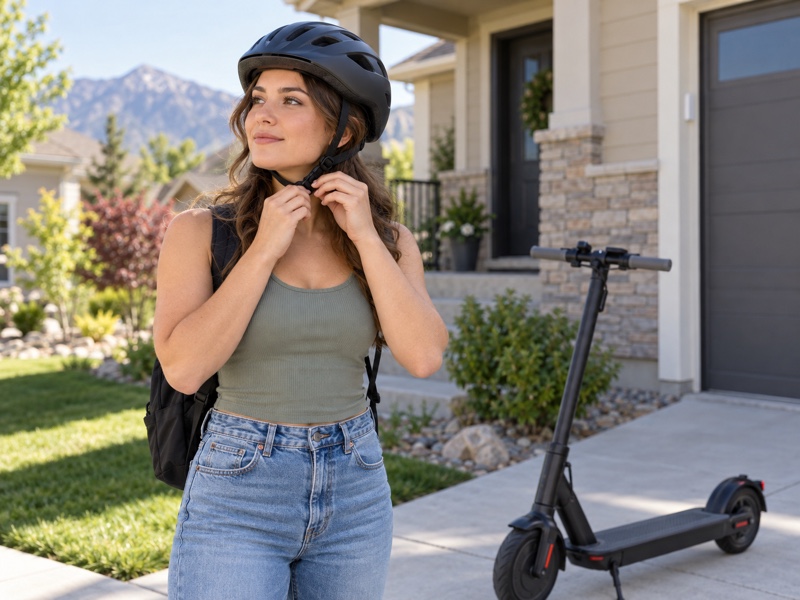
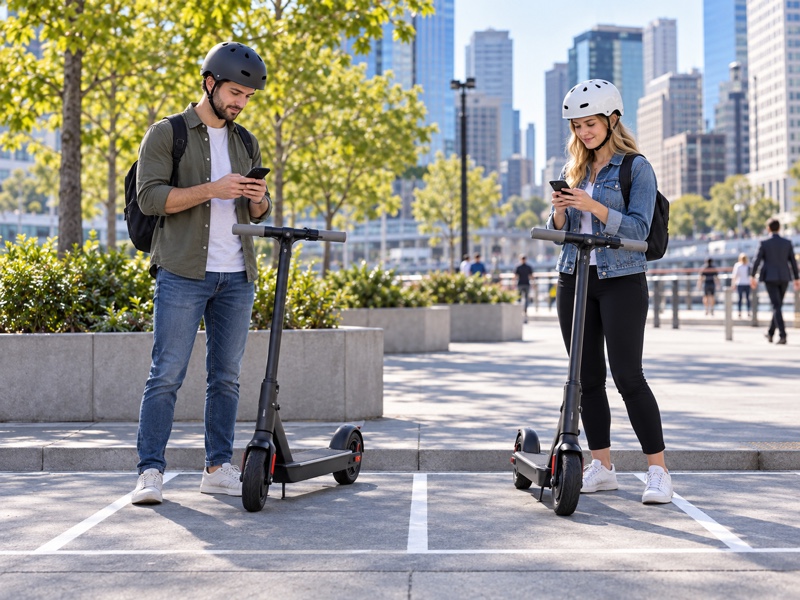
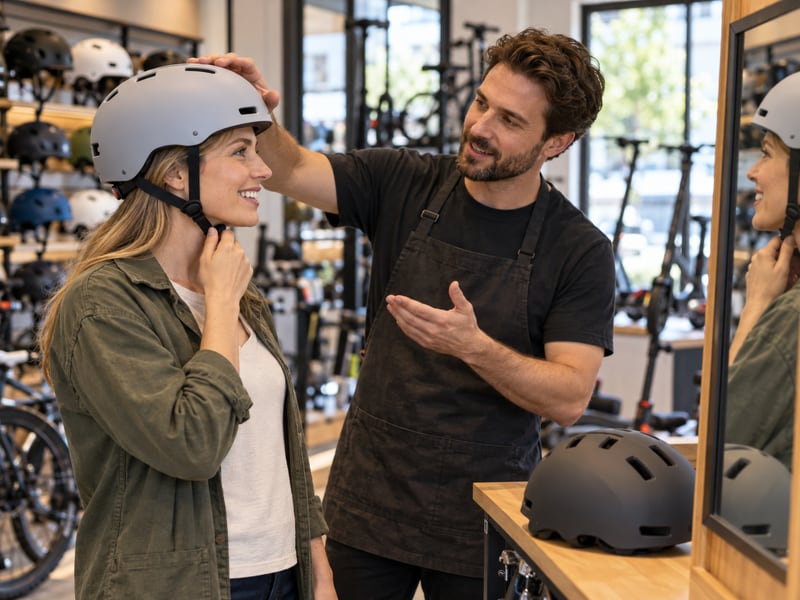
Since May 6, 2026, riders younger than 21 must wear qualifying protective headgear when operating or riding a motor assisted scooter on a highway. Section 41-6a-1505 also contains an exception for scooters rented from a business or corporate entity.
The statute adopts bicycle helmet standards for motor assisted scooters. Its rental exception does not answer what your rental agreement requires. Read those terms before paying, and bring a helmet that fits rather than counting on finding one nearby.
| Situation | Rule or practical action |
|---|---|
| Privately owned scooter; rider under 21 | Highway helmet requirement applies |
| Business-rented scooter | Statutory exception; check rental conditions |
| Rider 21 or older | Choose a suitable helmet for the ride |
| Unsure about a route’s status | Check the applicable road and local rules |
“Highway” has a broader statutory meaning than a fast road outside town. Avoid assuming that an ordinary city street falls outside this rule.
Measure your head and follow the helmet manufacturer’s fit instructions. Recheck the strap after adjusting sunglasses or headwear. The electric scooter helmet guide can help you compare fit and intended use before placing an order.
5. Do Utah electric scooter laws require a license?
A qualifying motor assisted scooter requires no Utah driver license or motorcycle endorsement. The Driver License Division expressly confirms that position. The Motor Vehicle Act excludes these scooters from its motor-vehicle definition, and Section 41-12a-301 expressly exempts them from compulsory owner or operator security.
Those provisions support the usual no-state-registration and no-compulsory-insurance treatment for qualifying scooters. Keep the category condition attached to the answer. A high-powered device outside the definition needs a separate review.
| Item | Qualifying motor assisted scooter |
|---|---|
| Driver license | Not required |
| Motorcycle endorsement | Not required |
| Motor-vehicle registration | Scooter excluded from the category |
| Compulsory owner/operator security | Express exemption |
Optional insurance remains a separate purchase question. Ask your insurer about theft, accidental damage, and liability using the scooter’s actual model and specifications. A policy’s exclusions can differ from traffic-law classifications.
Keep your receipt, serial number, and photographs somewhere you can access if the scooter disappears. Include a lock, helmet, replacement consumables, and storage arrangements when comparing the cost of owning one with occasional rental use. An exemption from registration does not remove those practical expenses.
6. Where can Utah scooter riders use sidewalks and trails?
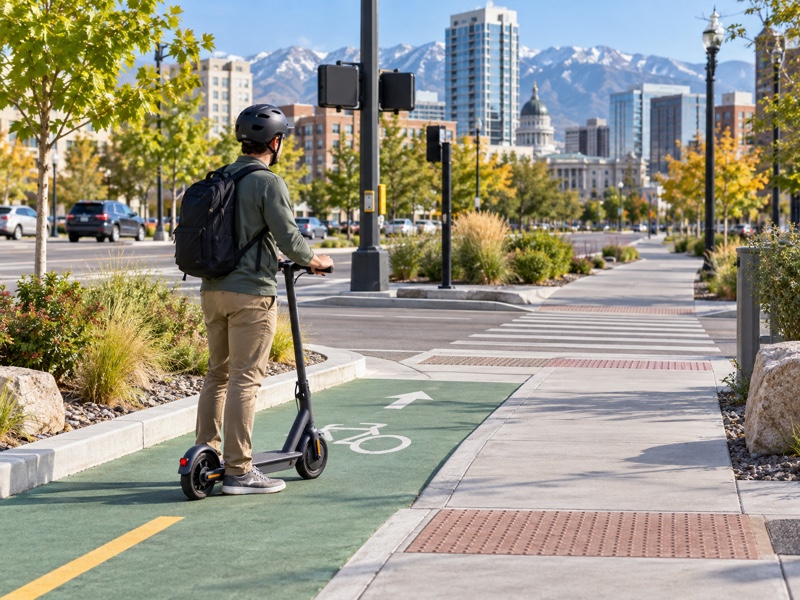
Sidewalk scooter use needs local authorization, and a city, county, or town may regulate scooter operation and sidewalk speed. Read Section 41-6a-1702 with the local-authority provisions in Section 1115.1. Do not assume every Utah sidewalk or paved trail permits riding.
Utah’s bicycle-lane definition includes motor assisted scooter traffic. Specific facility restrictions still need checking. Salt Lake City, for example, says downtown sidewalk riding is prohibited.
| Facility | Check before departure |
|---|---|
| Bicycle lane | Route continuity and applicable restrictions |
| Sidewalk | Local authorization and operating conditions |
| Park or trail | Managing authority’s scooter access rules |
| Posted bicycle-prohibited area | Scooter prohibition under current state law |
A route can cross municipal or park boundaries without an obvious change in pavement. Check each connecting segment rather than treating an uninterrupted path as one jurisdiction. Save the relevant access page alongside your route.
If your destination requires a sidewalk approach, identify where you can stop and walk the scooter. Plan a permitted alternative for construction closures or a blocked lane. A route chosen before departure is easier to follow than one improvised beside moving traffic.
7. How should you approach turns and crosswalks?
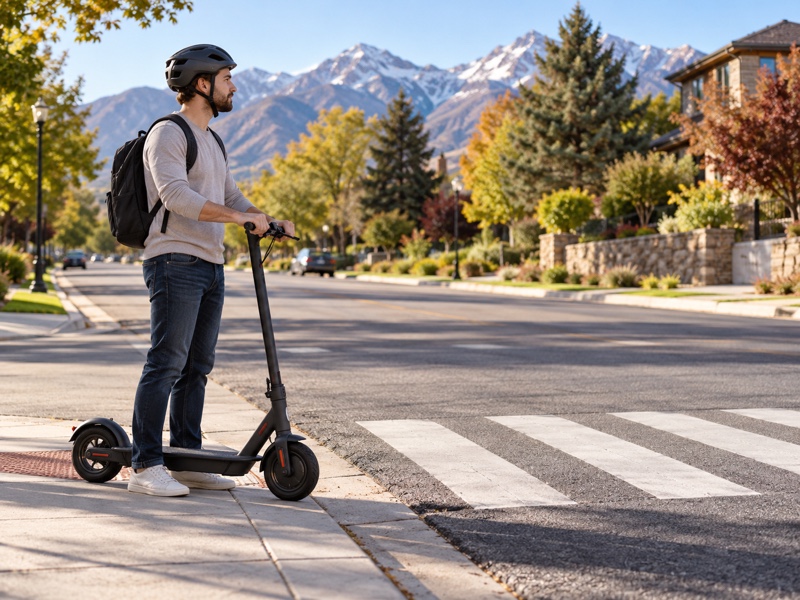
Utah electric scooter laws allow scooters to cross a roadway in a crosswalk, provided riders avoid negligent collisions and keep speed reasonable for the conditions. Applicable bicycle rules also govern roadway positioning and turning. The current Part 11 provisions describe these requirements.
Permission to use a crosswalk does not make every crossing comfortable or safe at riding speed. You can stop and dismount where that gives you a clearer view and a more manageable crossing. Keep space available for pedestrians waiting beside you.
| Route feature | Preparation |
|---|---|
| Driveway | Watch for turning or reversing vehicles |
| Busy crosswalk | Slow early; choose a controlled approach |
| Left turn | Review the junction and applicable turning rules |
| Parked vehicles | Leave room for doors and restricted sightlines |
Before commuting, visit the junctions that require the most judgment. Look for blocked views, long crossings, turning traffic, and awkward lane changes. A slightly longer route with easier crossings may suit you better than the shortest route suggested by an app.
Our city-traffic riding guide covers predictable movement and visibility. Practice braking and stopping in a permitted low-traffic area before adding a work bag or groceries. Extra items can change how comfortably you balance and reach the controls.
8. What equipment do Utah electric scooter laws require?
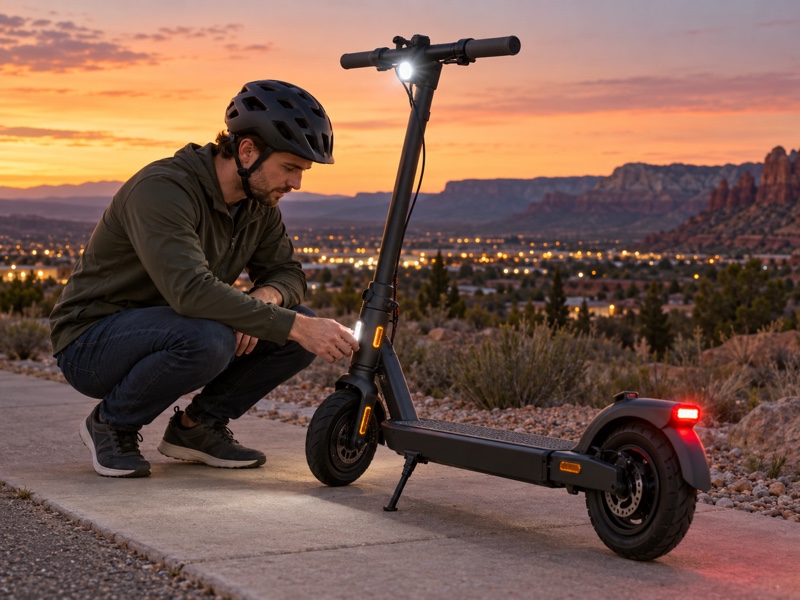
Utah applies bicycle equipment provisions to qualifying scooters, including nighttime lighting and braking requirements. The state cycling brochure explains the bicycle standards, which remain reproduced in the current code. The exemption from motorcycle equipment rules does not remove all scooter lighting obligations.
The requirements include forward white lighting, a red rear reflector or lamp, and side visibility meeting the specified 500-foot conditions. Bicycle brakes must stop the device within 25 feet from 10 mph on dry, level, clean pavement.
| Equipment | Inspection before a ride |
|---|---|
| Front lighting | White lamp; secure and unobstructed |
| Rear visibility | Suitable red reflector or lamp |
| Side visibility | Required reflective material or lighting |
| Braking | Working equipment meeting applicable stopping rules |
Look at your scooter from the front, rear, and sides after fitting any accessories. A bag or long jacket can cover a lamp. Check whether folding the scooter moves a light, loosens its bracket, or changes its aim.
Use the manufacturer’s maintenance instructions when inspecting brakes and tires. If braking feels uneven, stop using the scooter until you understand the fault. Our brake adjustment guide covers checks that may help you describe a problem to a repair shop.
9. Where can you park, and how do rental rules differ?
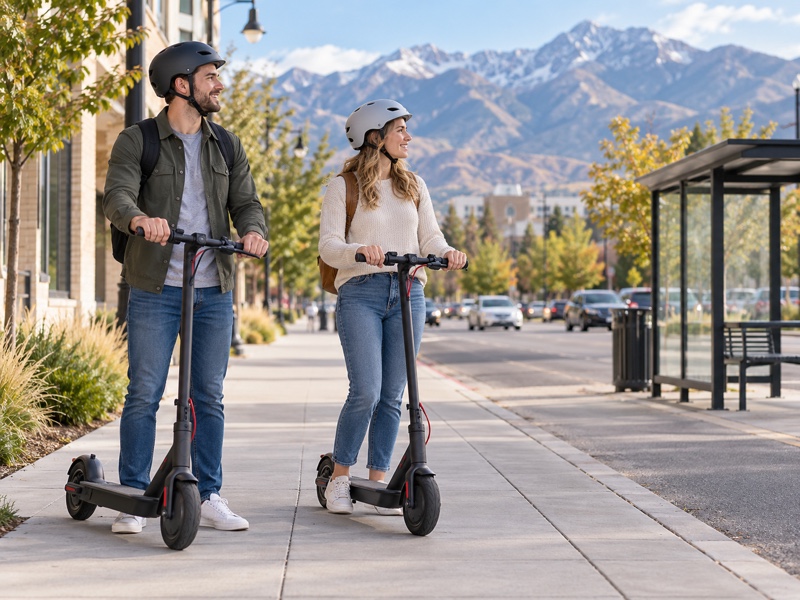
Keep pedestrian routes and vehicle access clear, then check the city’s scooter parking instructions. Applicable bicycle parking provisions prohibit obstruction. Salt Lake City’s shared-mobility guidance gives more specific instructions for shared scooters, including restrictions near transit stops and GREENbike stations.
Those shared-device instructions should stay attached to their local context. A private scooter owner visiting another city needs that city’s rules and the destination’s storage policy. Do not copy a rental app’s parking suggestion into a general statewide rule.
| Parking situation | Practical check |
|---|---|
| Sidewalk area | Preserve pedestrian and accessible movement |
| Transit stop | Follow local restrictions and keep boarding space clear |
| Workplace | Confirm permitted storage before commuting |
| Shared rental | Check the allowed parking area and end the trip correctly |
Ask an apartment or workplace manager whether scooters can enter the building and where charging is allowed. Measure the storage area before choosing a heavy model that you cannot comfortably carry upstairs.
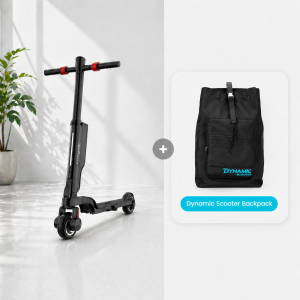
For a shortlist, visit Dynamic Scooter and ask for documented motor output, maximum capability, and equipment details against your Utah route requirements. Confirm classification before ordering, then compare fit, carrying weight, range, and access to replacement parts.
10. What else should Utah electric scooter riders check?
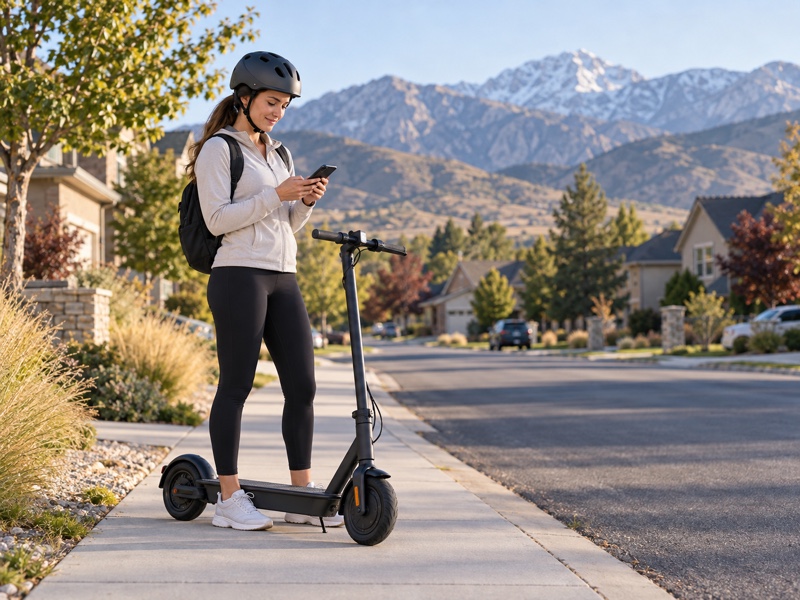
Check the scooter’s category, the effective date of any new rule, and the authority responsible for your route. These questions prevent several common buying and planning errors.
| Question | What controls the answer |
|---|---|
| Faster scooter | Documented capability and legal classification |
| Age 18–20 | Current highway helmet rule |
| Rental helmet | Statutory exception plus rental agreement |
| Sidewalk access | Local authorization |
| Youth certificate | May 5, 2027 effective date |
Q1: Can a faster scooter qualify in a 20 mph mode?
A selectable mode alone does not establish that its maximum capability fits Utah’s scooter definition. Get written specifications and check the category before planning public-road use.
Q2: Must an 18-year-old adult wear a helmet?
Yes, the current highway rule covers riders younger than 21, including adults ages 18 through 20. The business-rental scooter exception and rental conditions need separate checking.
Q3: Does the rental exception mean helmets are discouraged?
No. It describes the statute’s scope. You can choose to wear a suitable helmet, and the operator’s agreement may impose its own helmet conditions.
Q4: Can I ride anywhere bicycles are allowed?
Check scooter-specific restrictions and local authorization, particularly for sidewalks and trails. Utah applies many bicycle provisions while retaining separate scooter requirements.
Q5: Do young riders need the new certificate in 2026?
The new ages-eight-through-15 highway supervision-or-certificate rule takes effect May 5, 2027. Before that date, follow the current age restriction and any applicable local or rental conditions. Recheck the requirements before a younger household member begins riding.