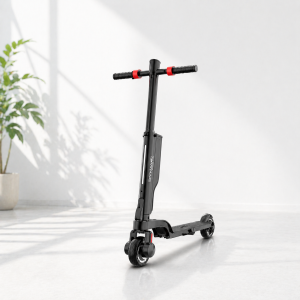

An electric scooter can suit a longer permitted route when it saves enough time to justify the equipment and storage, while walking can suit a short trip with little preparation. Your electric scooter vs walking decision depends on the whole trip. A fast moving pace may lose its advantage when you add stairs, crossings, and parking. Compare those details with your budget and activity goals before choosing either option.
| Your priority | Check before choosing |
|---|---|
| Arriving sooner | Complete door-to-door time |
| More walking activity | Time and effort you can sustain |
| Less equipment | What you must carry and store |
1. Which option fits your daily commute?
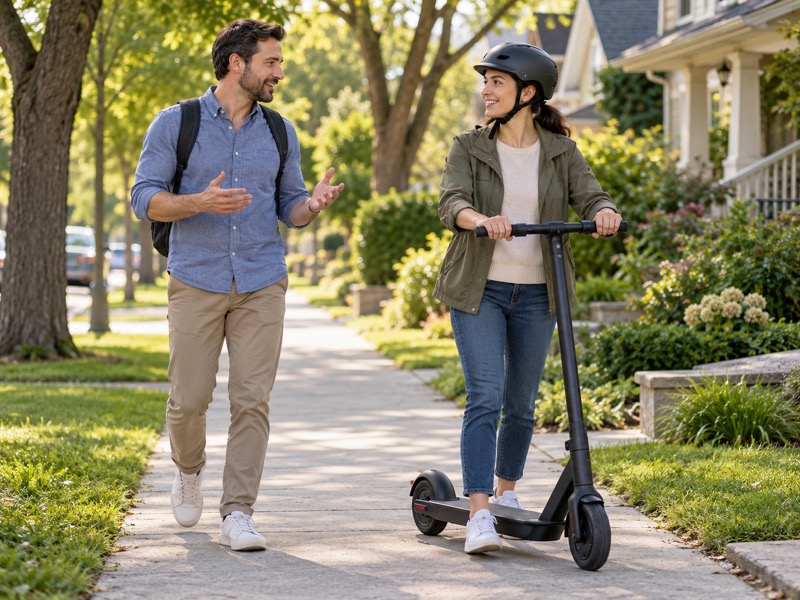
Choose the option that fits your actual route, arrival deadline, carrying needs, and physical comfort. A scooter may help on a longer connection, but you still need permission to ride along the route and somewhere suitable to leave it. Walking avoids scooter storage and charging tasks, though the available walking route may also have difficult surfaces or crossings.
What should you compare before buying anything?
Write down one specific trip, such as your apartment door to the entrance you use at work. Include any elevator, steps, crossing, and building access procedure. Check the return trip separately if you leave after dark or use a different entrance in the evening.
- Mark any section you would need to walk.
- Ask where a scooter may be stored.
- Note the bag or equipment you normally carry.
Try the walking route at a comfortable pace and record your own time. For the scooter option, check the permitted route and storage arrangement before deciding which device might work; a route map’s estimate cannot answer those permission questions.
| Trip detail | Record |
|---|---|
| Start and finish | Actual entrances |
| Connections | Crossings, stairs, and walking sections |
| Destination | Storage or parking arrangement |
2. How does electric scooter vs walking time compare?

A scooter saves time only when its moving-time advantage exceeds the extra preparation and arrival tasks. Use distance divided by your assumed moving speed, then add stops, carrying, and parking. Measure each option later if you can try it legally and safely; the calculation below uses invented planning assumptions, not test results.
How does a two-mile example work?
Assume both routes are two miles. At an assumed walking pace of 3 mph, moving time is 40 minutes; at an assumed scooter pace of 10 mph, it is 12 minutes. Add an assumed six minutes for scooter preparation and arrival tasks, giving 18 minutes and a calculated difference of 22 minutes.
| Illustrative two-mile trip | Minutes |
|---|---|
| Walking at assumed 3 mph | 40 |
| Scooter at assumed 10 mph, plus six minutes | 18 |
| Calculated difference | 22 |
Those speeds are neither measured averages nor statements of a lawful speed for your route. Our 15 mph scooter commuting guide can help you think about pace, but use your complete trip to evaluate a purchase.
- Replace both moving speeds with realistic personal assumptions.
- Add crossing delays to both options.
- Include every scooter-only walking connection.
3. When can walking take about the same time?

Walking can take about the same time when the distance is short and collecting, carrying, or securing a scooter takes several minutes. Compare the trip from the moment you start preparing to the moment you are ready at the destination. A scooter’s maximum speed leaves much of that time uncounted.
This example gives you a way to question a purchase, rather than a universal distance cutoff. Your building could make the scooter easier to use, or its storage entrance could lengthen the trip.
What happens on a half-mile trip?
Use another illustration with assumed speeds of 3 mph walking and 10 mph riding. Walking takes ten moving minutes, while the scooter takes three. If collecting equipment, moving the scooter through the building, and putting it away total an assumed seven minutes, both options take ten minutes.
| Illustrative half-mile trip | Minutes |
|---|---|
| Walking at assumed 3 mph | 10 |
| Scooter moving time at assumed 10 mph | 3 |
| Scooter tasks assumed at seven minutes | 7 |
- Time your own departure routine.
- Check the storage entrance you must use.
- Count waiting for lifts or access doors.
Use the routine you would follow on an ordinary workday. Leaving equipment unsecured to make an example faster would give you a poor comparison.
4. What does the whole route require?
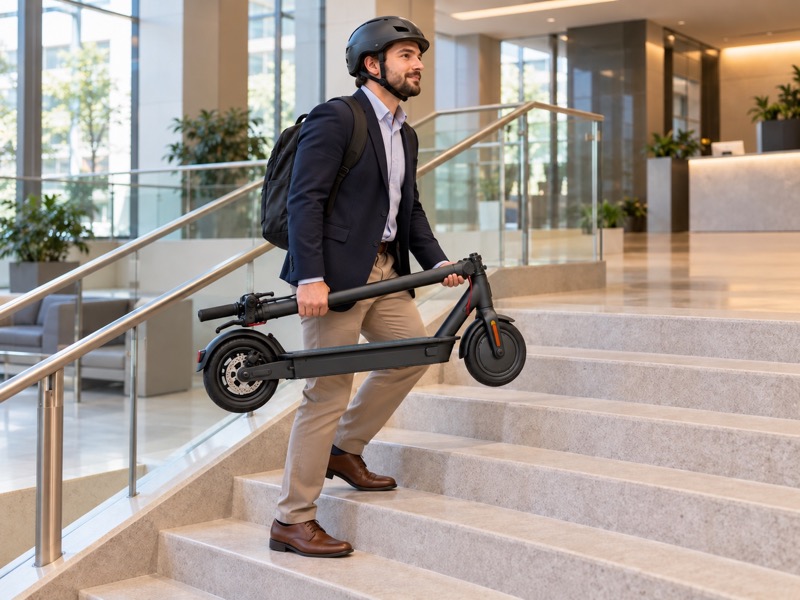
Your electric scooter vs walking comparison needs to cover permitted riding space, walking connections, carrying, and parking, including any different streets or entrances. Check both routes on their own terms. A scooter route’s extra distance can remove an apparent advantage calculated from the shorter walking route.
Can you handle the scooter at every connection?
Check whether you can lift and carry the particular scooter through the spaces you would use. Try its folded dimensions against the storage area, stairwell, or doorway before ordering. The scooter stair-carrying guide can help you plan the handling task, alongside the manufacturer’s instructions.
- Identify stairs before buying a heavier model.
- Check property and transit rules for carried scooters.
- Keep entrances and curb ramps unobstructed.
- Locate a lawful parking option near your destination.
Ask the building manager about storage while you still have alternatives. If a scooter must stay outside, consider how you will secure it and collect it afterward; if it may go indoors, check any battery or access conditions attached to that permission.
| Connection | Question to settle |
|---|---|
| Stairs | Can you carry this model comfortably? |
| Transit | Does the operator permit it? |
| Building | Which entrance and storage area may you use? |
5. What matters for electric scooter vs walking safety?
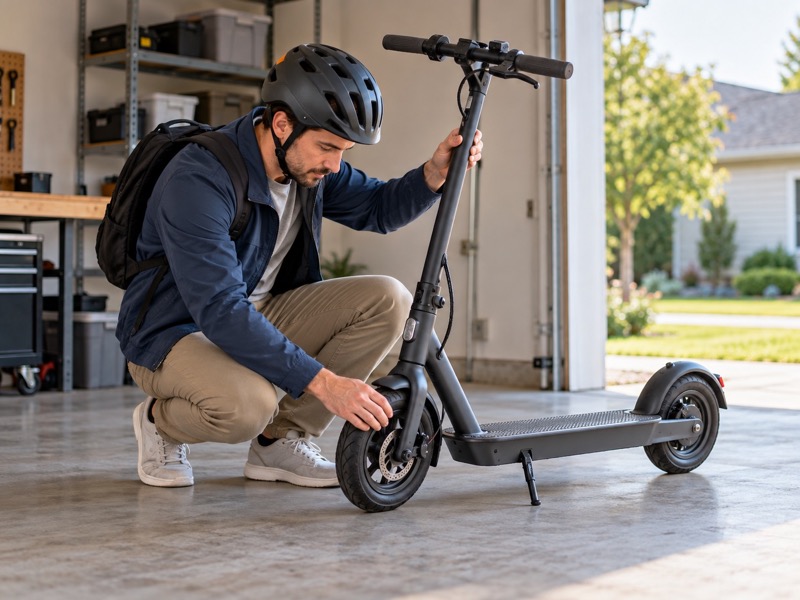
Compare the hazards on the specific routes instead of calling either option universally safer. For a scooter, CPSC’s safety alert recommends a helmet, damage checks, familiar braking, and both hands on the handlebars. It also warns that small obstacles and uneven surfaces can stop a scooter suddenly.
Your own route review should consider crossings, visibility, surface changes, and the people around you. A quiet route can still have a hidden driveway or a poorly lit connection.
What can you check before committing?
Inspect the scooter before a ride and resolve a brake, steering, tire, or folding-latch concern before using it. Choose a permitted clear area to become familiar with its controls, then decide whether your intended commute is within your ability.
- Check where turning vehicles cross your route.
- Plan where you can stop clear of other people.
- Keep your phone put away while riding.
- Carry bags in a way the manufacturer permits.
The electric scooter helmet guide can help with fit and everyday use. Wearing equipment does not remove the need to slow down, inspect the route, or wait at a difficult crossing.
| Route feature | Review for either option |
|---|---|
| Junction | Visibility and turning traffic |
| Surface | Gaps, debris, and changes in level |
| Evening trip | Lighting and a workable alternative |
6. How do electric scooter trips and walking fit activity goals?

Do not count ordinary powered scooter riding as an automatic replacement for brisk walking activity. CDC guidance for adults recommends at least 150 minutes of moderate-intensity activity weekly, plus muscle-strengthening activity on two days. It lists brisk walking as one way to accumulate aerobic activity, including in shorter chunks.
How can you keep transport and activity goals separate?
If you replace a regular walk with scooter travel, decide where walking or other activity will fit into your week. You might keep a walk on a day without a deadline or use the saved commute time for an activity you prefer. Avoid assuming that the time spent standing on a powered deck provides the same activity.
| Goal | Planning question |
|---|---|
| Shorter commute | How much complete trip time changes? |
| Walking activity | When will you walk at a suitable effort? |
| Weekly routine | Where do strengthening activities fit? |
The CDC’s intensity guidance describes a moderate-intensity talk-test effort as being able to talk but not sing. Effort varies between people, so a single pace figure cannot describe everybody’s experience.
- Keep a separate record of activity and travel time.
- Choose a routine you can repeat.
- Adjust the plan to your own abilities and circumstances.
7. How do weather and comfort affect the choice?

Weather and comfort can change which option works on a particular day. Check your scooter’s manual for permitted conditions and equipment care, then consider the walking route’s exposure, surface, and distance. Neither a scooter’s water-resistance label nor a short walking route answers every bad-weather question.
What should your backup plan cover?
Decide what you would do before leaving home if the route becomes unsuitable. You may need another transport option, a different departure time, or a place to wait. Include the return trip, since a dry morning does not settle the conditions you may face later.
- Check the device manual before riding in wet conditions.
- Choose clothing you can carry and store at work.
- Consider how you would return with an unusable scooter.
- Avoid planning a trip around your best-weather estimate alone.
Also think about the equipment you handle throughout the day. A helmet, lock, rain layer, laptop, and folded scooter can create a different carrying task from a light walking bag. Try that combination in a permitted setting before making it part of a regular commute.
| Possible problem | Plan in advance |
|---|---|
| Unsuitable conditions | Alternative departure or transport |
| Wet clothing | Storage and a change if needed |
| Scooter problem | How you and the device get home |
8. What does each option cost you?

Compare electric scooter vs walking costs using the equipment, maintenance, storage, and replacement expenses you expect. Walking may use footwear or clothing you already own, but those items can still wear out. A scooter also needs more than its purchase price in a realistic budget.
The renting-versus-buying comparison can help you identify the commitments attached to ownership. Keep rental charges separate from privately owned scooter costs.
How can you compare costs without invented market prices?
Use a worksheet with your own quotes and receipts. For illustration only, assume a scooter and initial equipment cost $600 and you allocate that expense across 300 one-way trips: the purchase allocation is $2 per trip. This hypothetical figure excludes maintenance, charging, finance costs, replacements, and any resale value; it is not a current price or ownership-cost estimate.
| Budget item | Enter your own amount |
|---|---|
| Initial scooter and equipment | Confirmed purchase quotes |
| Ongoing costs | Maintenance, charging, and storage |
| Walking costs | Footwear and clothing you need |
- Compare the same number of trips.
- Get model-specific replacement-part prices.
- Keep uncertain future costs visible.
If a quote excludes labor or delivery, add those before comparing alternatives.
9. How can an e-scooter vs walking trial guide your choice?

You can choose walking for some trips and a scooter for others, provided each route and storage arrangement works. Use your electric scooter vs walking comparison to build a weekly plan instead of requiring one option to solve every trip. A short errand, a time-sensitive commute, and an evening return may lead to different choices.
What should a useful trial record include?
Record the same start and finish points for each attempt. Include the preparation time, permitted route, delays, and how you handled your belongings. If you cannot legally and safely try a scooter before buying, keep that part of the comparison labeled as an estimate.
- Note the complete time rather than peak speed.
- Record any difficult crossing or carrying task.
- Check whether you arrived with a storage problem.
- Review what happens if the trip runs late.
Compare the record after several ordinary trips if you have the opportunity. One unusually quiet or hurried trip can give you a misleading buying expectation. Use the record to identify a manageable route, a suitable carrying weight, and a backup you could realistically use.
| Trip type | Decide from |
|---|---|
| Short errand | Preparation and parking overhead |
| Work commute | Deadline and complete route |
| Mixed journey | Connections, permissions, and carrying |
FAQs
Q1: Can I assume a scooter is faster for every trip?
No. Short distances and preparation, walking connections, or parking can remove the moving-time advantage. Compare the full trip.
Q2: What’s the best option for getting more walking activity?
Walking can support that goal when the route and effort suit you. Powered riding should not automatically replace the activity you intended to get from a walk.
Q3: How do I know whether my scooter route is permitted?
Check the relevant local authority, path manager, property owner, or transit operator. Advice about walking access does not establish scooter permission.
Q4: Can I use the example costs as a buying budget?
No. They are labeled arithmetic illustrations. Replace them with actual prices, expected use, and model-specific service information.
Q5: Can you help me compare a scooter for my commute?
Yes. Send the Dynamic Scooter team your route distance, carrying needs, and available storage so you can compare relevant specifications. Confirm route permissions and try your walking alternative before ordering.