
Riding an electric scooter is a great way to get around. It’s convenient, eco-friendly, and fun. But it comes with responsibilities. One of the most critical is making sure your electric scooter is properly lit, especially at night. The laws around electric scooter lighting can be confusing. They vary from place to place. Understanding them is key. Riding without the proper lights can be dangerous and can also lead to a hefty fine. Don’t get caught in the dark.
Understanding and following electric scooter lighting laws is crucial for your safety and to avoid legal trouble. These laws, which typically require a white front light and a red rear light, exist to make you visible to others and prevent accidents. The Dynamic Scooter Model B comes equipped with bright, compliant lighting, making it a safe and legal choice for riders.
Ready to light up your ride the right way? Here’s what you need to know.
1. Why Do Electric Scooter Lighting Laws Exist?
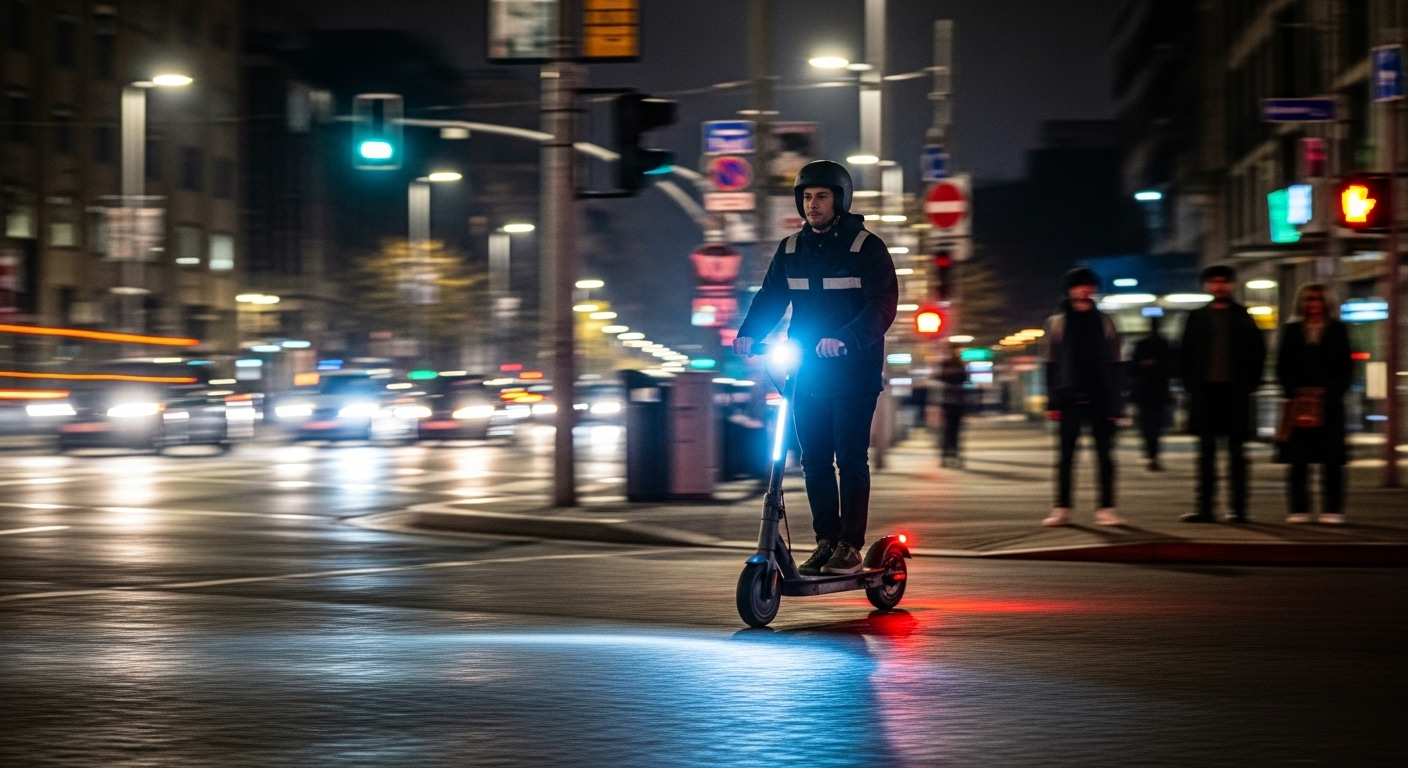
Electric scooter lighting laws are not just about red tape. They are about saving lives. They protect you and others on the road. The primary reason for these laws is public safety. Electric scooters are small and quiet. This can make them difficult for drivers to see. This is especially true at night. Proper lighting makes you visible, which is one of the best ways to prevent an accident. Here’s why it matters… a driver who can see you is a driver who is less likely to hit you.
These laws also create a clear legal framework for electric scooter riders. They establish a minimum standard for safety equipment. This helps make sure that all riders are taking basic precautions. This not only protects the rider but also pedestrians and other road users. When everyone follows the same rules, the roads become safer for everyone.
Enforcement of these laws is also a key part of the equation. Police officers regularly check for lighting violations. The threat of a fine can be a powerful motivator for riders to comply with the law. While no one likes getting a ticket, the goal of enforcement is to encourage safe behavior and reduce the number of scooter-related accidents.
Ultimately, these laws are in place to protect you. By understanding and following them, you are doing your part to make every ride a safe one.
| Reason for Lighting Laws | Why It Matters |
| Public Safety | Prevents accidents and saves lives. |
| Visibility | Makes you visible to drivers and others. |
| Legal Framework | Creates clear rules for all riders. |
| Enforcement | Encourages compliance and safe behavior. |
2. What Are the Federal Lighting Requirements?
In the United States, there is no single federal law that specifically governs electric scooter lighting. This can be confusing for riders. Instead, the regulation of electric scooters is largely left up to the states and individual cities. However, the Consumer Product Safety Commission (CPSC) does have some guidelines that apply to all “low-speed electric personal assistive mobility devices,” which includes electric scooters.
These CPSC guidelines are primarily focused on the manufacturing and initial sale of scooters. They recommend that all scooters be sold with a lighting system that includes a white front light and a red rear light. They also recommend that scooters have side reflectors. But here’s the thing… these are just recommendations, not a legal requirement for riders.
This means that while most scooters are sold with lights, it is up to the rider to make sure they are using them in compliance with local laws. The federal government has taken a hands-off approach, allowing local jurisdictions to create laws that best fit their own unique traffic and safety conditions.
So, while there is no overarching federal law to follow, it is still a good idea to choose a scooter that meets the CPSC’s recommendations. This will give you a good starting point for complying with the laws in your area.
| Federal Guideline (CPSC) | Recommendation |
| Front Light | White light, visible from a distance. |
| Rear Light | Red light, visible from a distance. |
| Side Reflectors | Amber or red, on both sides. |
3. How Do State Laws Differ Across the US?
This is where things can get a bit complicated when it comes to electric scooter lighting laws. Because there is no federal law, each state has the authority to create its own laws regarding electric scooter lighting. This leads to variation. And to make things even more confusing, many cities have their own local ordinances that may be stricter than the state law.
However, there are some common themes that you will find in most state laws. The vast majority of states require a white front light and a red rear light for riding at night. The required visibility distance for these lights can vary, but it is typically between 200 and 500 feet. Now, you might be wondering… what about during the day?
Most states do not require lights during the day, but some are starting to. California, for example, requires a white front light to be used at all times, day or night. Other states may require lights during the day if visibility is poor, such as in fog or heavy rain.
It is crucial to check the specific laws in your state and city before you ride. A quick search on your state’s DMV website or your city’s government website should provide the information you need. Don’t assume that the laws are the same everywhere.
| State Example | Front Light Requirement | Rear Light Requirement |
| California | White, required at all times. | Red, required at night. |
| New York | White, required at night. | Red, required at night. |
| Florida | White, required at night. | Red, required at night. |
4. What Lighting Equipment Is Legally Required?
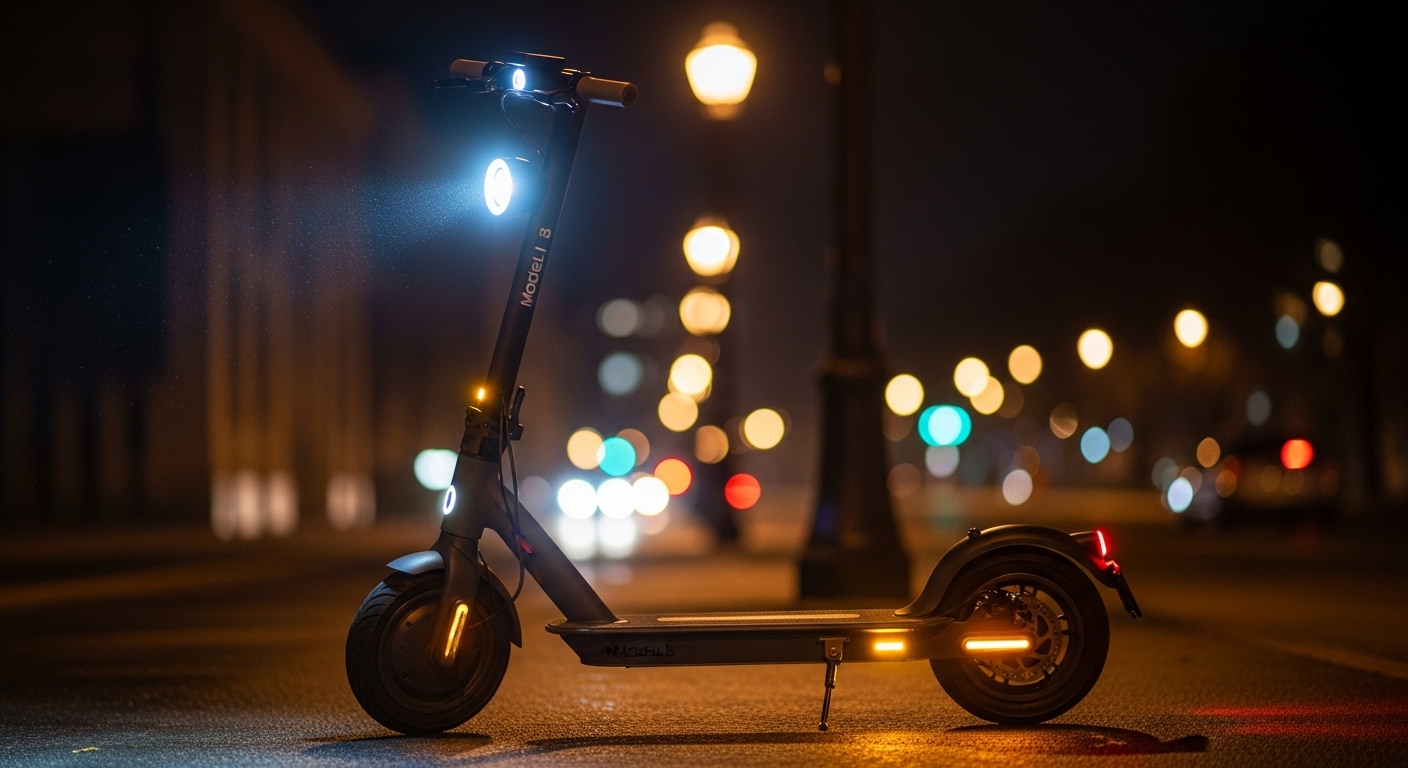
While the specifics can vary, the basic lighting equipment required by most electric scooter laws is fairly consistent. You will almost always need a white front light and a red rear light on your electric scooter. The front light should be bright enough to illuminate the path ahead of you and make you visible to oncoming traffic. The rear light should be bright enough to be seen by traffic approaching from behind.
Many laws also specify a minimum visibility distance for these lights. This is the distance from which the light must be visible. A common requirement is 500 feet for the front light and 300 feet for the rear light. Let me explain… this is to make sure that drivers have enough time to see you and react.
In addition to active lights, many laws also require passive reflectors. You may be required to have a red reflector on the rear of your scooter and amber or red reflectors on the sides. These reflectors provide an extra layer of visibility, especially from the side.
When choosing lights for your electric scooter, look for ones that are specifically designed for bicycles or scooters. These are built to withstand vibration and weather. These lights will be designed to be durable, weather-resistant, and easy to mount. Make sure the lights you choose meet the brightness and visibility requirements of your local laws.
| Lighting Equipment | Common Requirement |
| Front Headlight | White, visible from 500 feet. |
| Rear Taillight | Red, visible from 300 feet. |
| Side Reflectors | Amber or red, on both sides. |
5. When Must You Use Lights on Your Scooter?
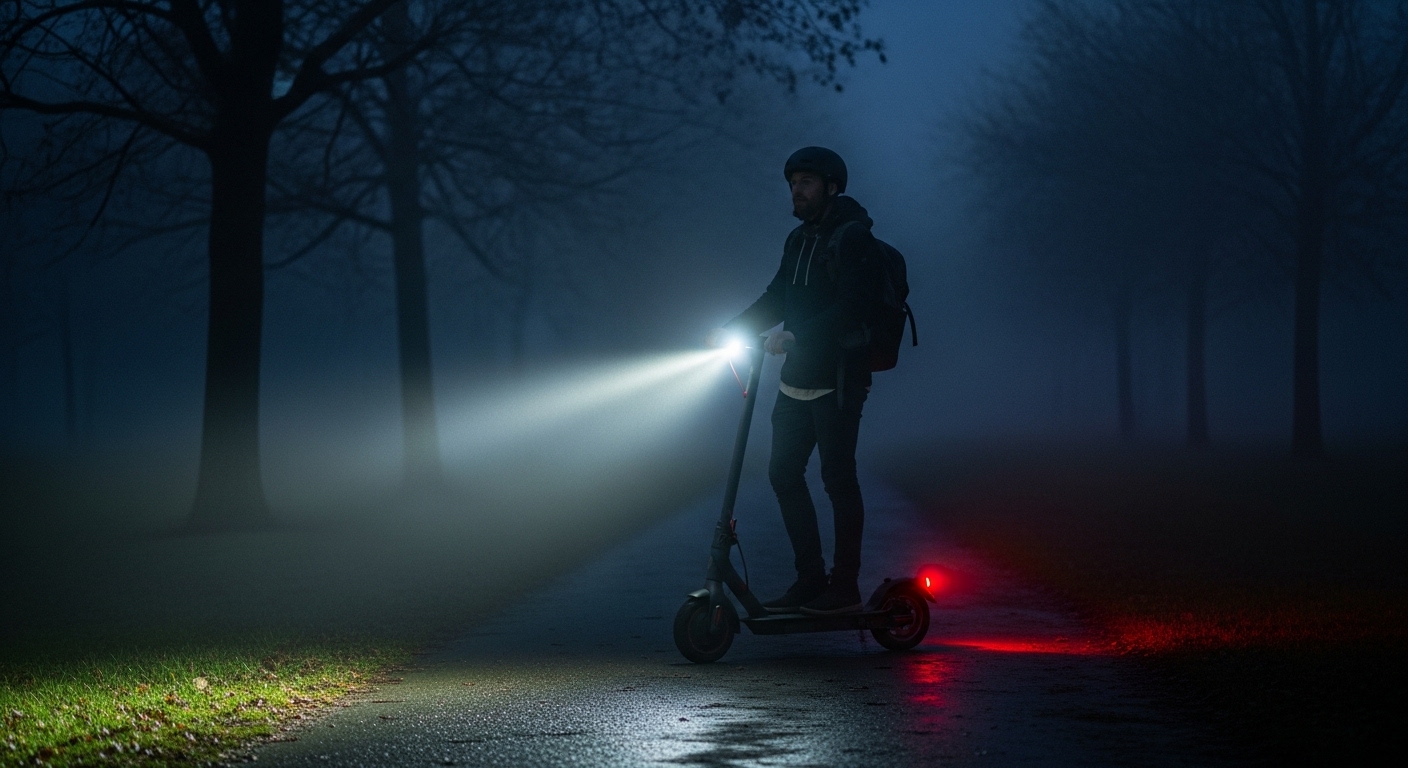
The most common rule is that you must use your lights from sunset to sunrise. This is the time when you are least visible to others, so it is the most critical time to have your lights on. Some laws may specify a more precise time, such as 30 minutes after sunset to 30 minutes before sunrise.
However, it is a good idea to use your lights on your electric scooter anytime visibility is poor. This is true regardless of the time of day. This includes during fog, heavy rain, or snow. Here’s the deal… if you are having trouble seeing, you can bet that others are having trouble seeing you. Turning on your lights is a simple way to increase your visibility and your safety.
As mentioned earlier, some states, like California, require a front light to be used at all times, even during the day. This is known as a daytime running light law. The idea is that a light makes you more visible even in broad daylight. While this is not yet a common requirement, it is a trend that we may see more of in the future.
When in doubt, it is always better to err on the side of caution and turn your lights on. It doesn’t hurt to be more visible, and it could save your life.
| Time/Condition | Light Usage |
| Sunset to Sunrise | Required in most places. |
| Poor Visibility (Fog, Rain) | Highly recommended, may be required. |
| Daytime | Required in some states (e.g., California). |
6. What Are the Penalties for Non-Compliance?
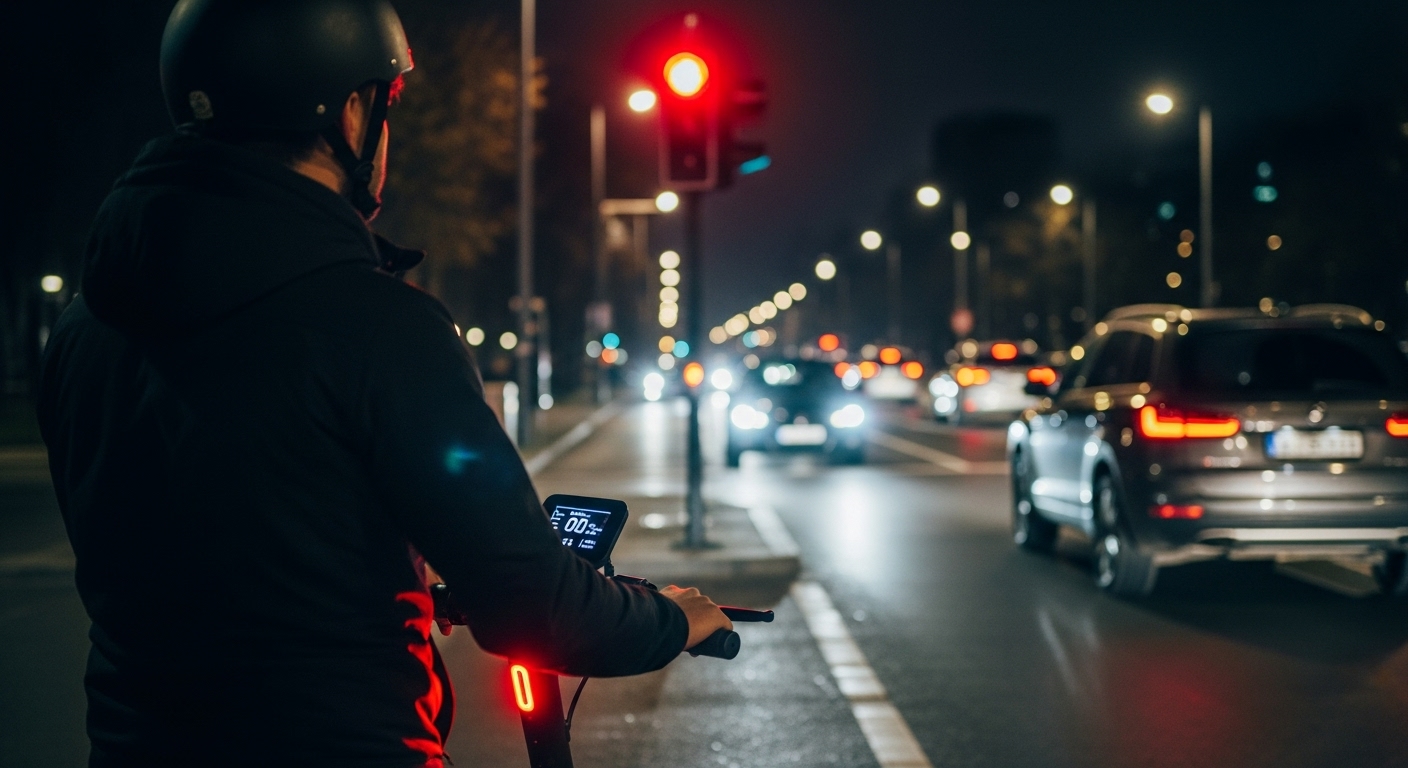
Riding an electric scooter without the proper lights is not just a safety risk. It can also be an expensive mistake. The penalties for non-compliance can vary widely, but you can generally expect to receive a fine. The amount of the fine can range from a small “fix-it” ticket of around $25 to a more substantial fine of $200 or more.
In some cases, the police may also have the authority to impound your scooter until you can show that you have installed the proper lights. This can be a major inconvenience and can add to the overall cost of the violation. What does this mean for you? You could be left without a ride and have to pay to get your electric scooter back.
If you are a repeat offender, you can expect the penalties to be more severe. You may face higher fines and a greater likelihood of having your scooter impounded. In some jurisdictions, you could even have your scooter-riding privileges suspended.
It is also worth noting that if you are involved in an accident while riding without lights, it could have serious insurance implications. The other party’s insurance company could argue that you were at fault for the accident because you were not visible. This could leave you liable for damages.
| Penalty | Common Consequence |
| Fine | $25 – $200 or more. |
| Impoundment | Your scooter may be taken until it is compliant. |
| Repeat Offenses | Higher fines, possible suspension of riding privileges. |
7. How Can You Stay Compliant with Lighting Laws?
Staying compliant with electric scooter lighting laws is not difficult. It does require a little bit of effort. But it’s worth it for your safety. The first step is to choose a scooter that comes with a good set of lights. The Dynamic Scooter Model B, for example, comes with a bright, integrated headlight and taillight that meet the requirements of most jurisdictions.
If your scooter does not have built-in lights, or if the lights are not bright enough, you will need to purchase aftermarket lights. There are many great options available, from small, battery-powered lights to more powerful, rechargeable systems. Make sure the lights you choose are bright enough to meet your local requirements. The best part? A good set of lights is a relatively inexpensive investment in your safety.
Once you have your lights on your electric scooter, it is critical to maintain them. Regular maintenance keeps them working properly. Regularly check to make sure they are working properly. Keep them clean, as dirt and grime can reduce their brightness. If you have battery-powered lights, make sure you always have a fresh set of batteries on hand.
Take the time to learn the specific electric scooter lighting laws in your area. Knowledge is power. A few minutes of research can save you from a ticket. It could also save your life. Ride safe, and ride bright.
| Compliance Step | Action to Take |
| Choose Compliant Gear | Buy a scooter with good lights, or purchase bright aftermarket lights. |
| Regular Maintenance | Check your lights before every ride, keep them clean. |
| Know the Law | Research the specific lighting laws in your city and state. |
Conclusion
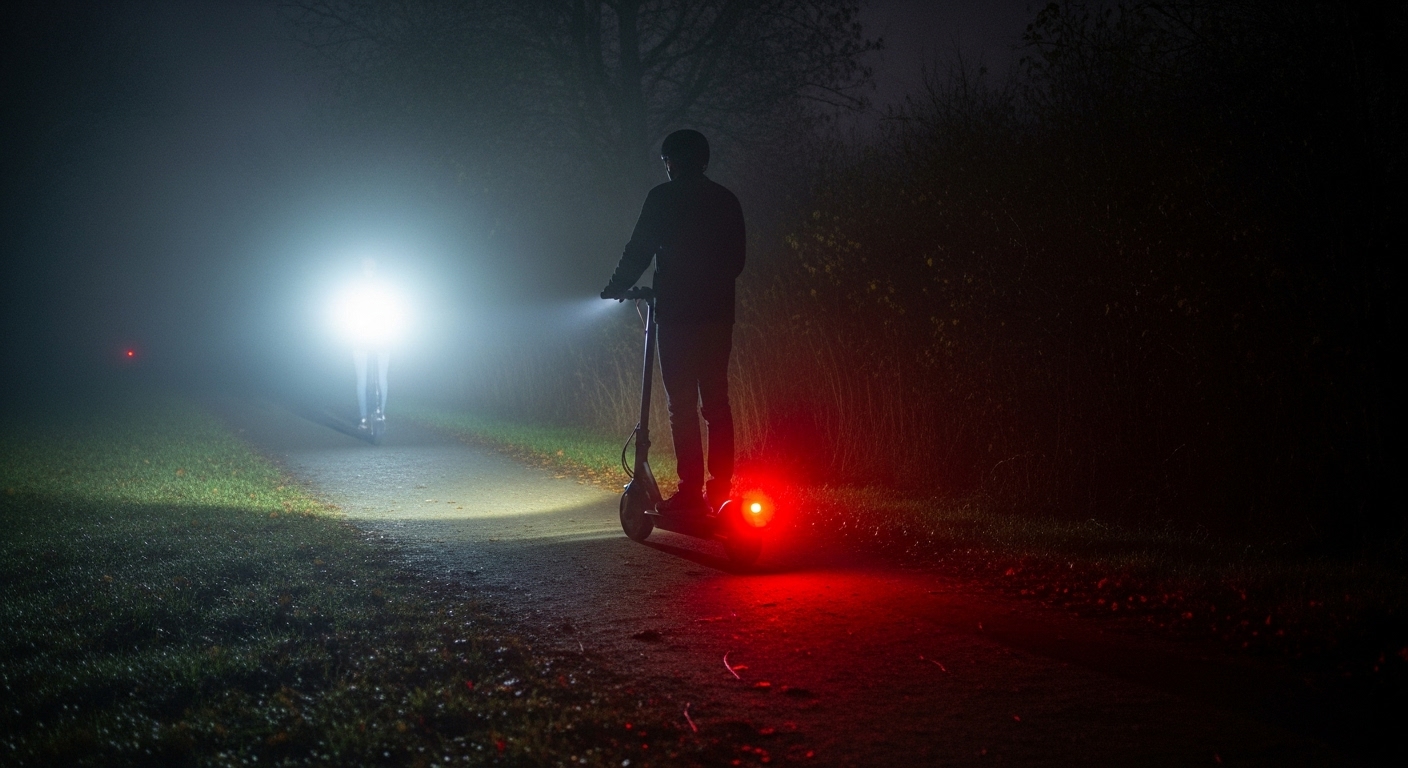
Navigating the world of electric scooter lighting laws can seem daunting. But it doesn’t have to be. The rules are there to help you. The core principle is simple: be visible. By making sure your electric scooter is equipped with a bright white front light and a red rear light, you are taking a massive step towards a safer ride. You’re also following the law. These laws are in place not to inconvenience you, but to protect you and those you share the road with.
Taking the time to understand and follow them is a sign of a responsible rider. For a scooter that takes the guesswork out of compliance, consider the Dynamic Scooter Model B. Its powerful, built-in lighting system keeps you seen and safe, day or night.
FAQ
Q1: Do all electric scooters need lights?
Most jurisdictions require lights for night riding. Some areas mandate lights at all times. Check your local laws for specific requirements. Built-in lights or aftermarket additions both work if they meet standards.
Q2: What color lights are legal on electric scooters?
Front lights must be white or yellow. Rear lights must be red. Side reflectors are typically amber. Using other colors may violate laws and confuse other road users.
Q3: Can I get a ticket for riding without lights?
Yes. Riding without required lights can result in fines ranging from $25 to $200. Officers may also impound your scooter. Repeat violations lead to higher penalties.
Q4: Do I need lights during the day?
Most laws only require lights from sunset to sunrise. Some areas mandate daytime running lights. Poor visibility conditions like fog may also require lights regardless of time.
Q5: Are reflectors enough, or do I need active lights?
Reflectors alone are usually not sufficient. Most laws require active front and rear lights for night riding. Reflectors supplement lights but don’t replace them.