

...

November 20, 2025

Can Electric Mountain Bikes Climb Hills? What to Expect on Steep Trails

Are you tired of grinding up steep hills, only to be exhausted at the top? Those tough climbs can ruin a great ride and keep you from the best views. An electric mountain bike gives you the power to conquer any incline with ease. Yes, electric mountain bikes are exceptional at climbing hills. Their motors provide powerful assistance that multiplies your pedaling effort, making steep and technical ascents feel much easier. Key factors like motor torque, gearing, battery power, and rider technique all work together to turn daunting mountains into manageable climbs. So, what’s the secret to their climbing power? Let’s get into the details. 1. How Does an E-MTB Motor Make Climbing Easier? An e-MTB’s motor is the key to its climbing ability. It amplifies the power you put into the pedals, making every stroke more effective uphill. The secret ingredient is torque. Torque is the rotational force the motor produces. Here’s why it matters… higher torque gives more power to turn the wheel, overcoming gravity on steep inclines. It provides that extra push to get you over the crest. This power is delivered through a pedal-assist system (PAS). Sensors detect when you are pedaling and how much force you apply. The motor adds corresponding assistance. You control this by selecting different assist levels. A low level provides a gentle boost, while a high level delivers maximum climbing power. The motor’s power is measured in watts (W). Higher wattage means the bike can maintain higher speed while climbing. A 650W motor provides significant power, making tough climbs feel manageable. Motor Metric What It Means for Climbing Ideal for Hills Torque (Nm) The rotational force that gets you moving. High (60Nm+) Power (Watts) The rate of energy use; affects climbing speed. High (500W+) Assist Levels Adjustable support to match the terrain. 3-5 Levels This combination of torque, power, and control is what makes an e-MTB a climbing machine. It turns a grueling uphill battle into a fun and achievable part of the ride. 2. What Type of Motor Is Best for Steep Hills? Not all e-MTB motors are created equal when it comes to climbing. The type and placement of the motor have a huge impact on performance. The two main types are mid-drive motors and hub motors. For steep hills, a mid-drive motor is the clear winner. These motors sit in the bike’s center, near the pedals. The best part? This design lets the motor use the bike’s gears. The motor operates at its most efficient RPM range, providing maximum torque even at low speeds. Hub motors sit in the rear or front wheel hub. They are simpler and more affordable. While effective on moderate hills, they are less efficient on steep climbs. They operate independently of the bike’s gears, so they can struggle to provide enough torque at low speeds. Power ratings also play a role. A higher power motor, like the 650W motor on the Dynamic Scooter Electric Mountain Bike Q5, delivers more sustained power. Some motors have a peak power rating, like 1000W, providing an extra burst when needed. Motor Type Location Climbing Advantage Best For Mid-Drive Center of bike Uses bike’s gears for high torque Steep, technical trails Hub Motor Wheel hub Simple and affordable Moderate hills, road use When choosing an e-MTB for climbing, a mid-drive motor is the way to go. It provides the power, efficiency, and natural feel you need to conquer the toughest hills. 3. How Important Is Gearing for Uphill E-MTB Riding? Gearing is just as important on an e-MTB as on a traditional bike. The motor provides power, but gears help you use it effectively. A good drivetrain and proper shifting are essential for efficient climbing. The motor and gears work together. The motor provides raw power, while gears multiply that force. But here’s the thing… shifting to a lower gear on a climb lets both you and the motor work less hard. It lets the motor spin at a higher, more efficient RPM, preventing overheating and conserving battery life. A quality drivetrain with a wide gear range, like a Shimano 9-speed system, is ideal for climbing. It gives you options to find the perfect gear for any gradient, maintaining a smooth pedaling speed, known as cadence. Finding the right cadence is key. Avoid pedaling too slowly in a hard gear (“mashing”) or spinning too fast in an easy gear. A comfortable cadence of around 70-90 RPM is a good target. Gearing Component Role in Climbing What to Look For Rear Cassette Provides a range of gears for different inclines. Wide range (e.g., 11-42T) Shifter Allows you to change gears quickly and easily. Reliable and precise (e.g., Shimano) Derailleur Moves the chain between gears. Durable and responsive By using your gears wisely, you can make the most of your e-MTB’s motor. It will make your climbs smoother, more efficient, and more enjoyable. 4. What Impact Does Battery Life Have on Climbing? The battery is your e-MTB’s fuel tank. When climbing, it plays a huge role. Steep climbs demand a lot of power, which drains the battery faster. Battery capacity is critical. It is measured in Amp-hours (Ah) or Watt-hours (Wh). A higher capacity battery holds more energy, translating to longer range and more climbing power. For long, hilly routes, a larger battery is a must. Now, you might be wondering… how much does climbing affect the battery? Using a high assist level on a steep climb can use two to three times more power than riding on flat ground. This is why it is important to manage your assist levels and conserve power when you can. Voltage is another important factor. A higher voltage system, like the 48V system on the Dynamic Scooter Q5, delivers power more efficiently. This helps the motor run cooler and provide more consistent power during long climbs. Battery Spec Impact on Climbing Ideal for Hills Capacity (Wh) Determines how long you can climb. 500Wh or higher Voltage (V) Affects power delivery efficiency. 48V

Can Electric Mountain Bikes Climb Hills? What to Expect on Steep Trails Read More »
Electric Scooter Motors Explained: Everything You Need to Know

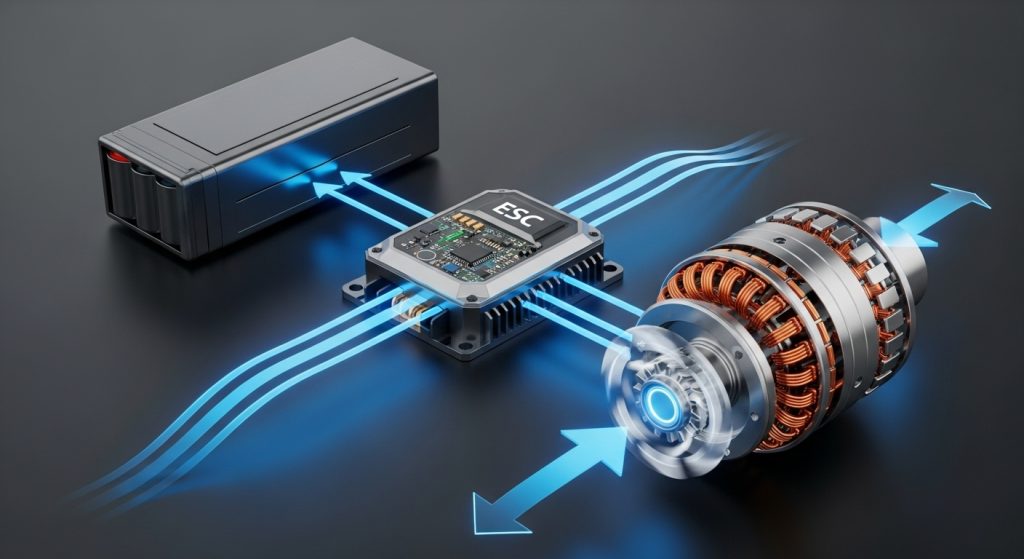
The motor is the heart of your electric scooter. It turns battery energy into forward motion. It defines your scooter’s speed, acceleration, and hill-climbing ability. Understanding how your motor works helps you choose the right scooter. It also helps you keep it in top condition. From wattage to motor types, the details can seem complex. But grasping the basics is easier than you think. It empowers you to make smarter decisions. Electric scooter motors convert battery power into motion. Most use brushless DC hub motors built into the wheel. They range from 250W to 1000W+. Higher wattage means more speed and hill-climbing power. The motor works with an electronic speed controller (ESC) that manages power from the battery. This controls your acceleration and top speed. Ready to dive into the world of electric scooter motors? Here’s everything you need to know. 1. What Is an Electric Scooter Motor and How Does It Work? An electric scooter motor converts electrical energy from the battery into mechanical energy. This energy turns the wheels. The conversion happens through electromagnetism. The motor has a stationary part (the stator) and a rotating part (the rotor). When electricity flows through coils in the stator, it creates a magnetic field. This field interacts with magnets on the rotor. The rotor spins. Think about it… this simple principle propels you forward. The electronic speed controller (ESC) is the brain. It draws power from the battery. It delivers power to the motor in a controlled way. When you press the throttle, the ESC sends more power to the motor. This makes it spin faster. The ESC manages speed, acceleration, and performance. Without it, the motor would be off or running at full power all the time. The motor’s role in electric scooter performance is huge. It influences your top speed. It affects how quickly you accelerate from a stop. It determines your ability to climb hills. A more powerful motor handles heavier loads. It tackles steeper inclines without slowing down. It’s the difference between a scooter that struggles on a slope and one that conquers hills with ease. Most electric scooters use hub motors. These are integrated directly into the wheel. This design is compact and efficient. It requires very little maintenance. The motor sits inside the hub of the front or rear wheel. Sometimes it’s in both wheels. This direct-drive system eliminates chains or belts. The result is a quieter and more reliable ride. It’s an elegant solution that has become the industry standard. Motor Component Function Stator The stationary part with wire coils. Rotor The rotating part with magnets. Controller (ESC) Manages power flow from battery to motor. 2. What Are the Different Types of Electric Scooter Motors? Electric scooter motors come in several types. The most common distinction is between hub motors and chain-drive motors. Hub motors are located inside the wheel hub. They are quiet and efficient. They require almost no maintenance. Chain-drive motors are mounted to the scooter’s frame. They connect to the wheel via a chain and sprocket. This is similar to a bicycle. Here’s the deal… chain-drive systems are noisier. They require more maintenance. But they can offer higher torque. Another key difference is between brushed and brushless DC motors. Brushed motors are an older technology. They use physical contacts (brushes) to deliver power to the rotor. These brushes wear out over time. They need to be replaced. Brushless DC (BLDC) motors use an electronic controller instead of brushes. This makes them more reliable and efficient. They last longer. Almost all modern electric scooters use a BLDC motor. Many scooters come with a single motor. It’s usually in the rear wheel. This is sufficient for most commuting and general use. High-performance scooters often feature a dual motor setup. They have one motor in each wheel. Dual motors provide more power. They offer better acceleration and superior hill-climbing ability. They also offer all-wheel drive. This improves traction on slippery surfaces. The final distinction is between geared and direct-drive hub motors. Direct-drive motors have the rotor spinning at the same speed as the wheel. They are simple and reliable but can sometimes feel less powerful at low speeds. Geared hub motors use an internal set of planetary gears to increase torque. This gives them better acceleration and hill-climbing power, but the gears add complexity and can be slightly noisier. Motor Type Pros Cons Hub Motor Quiet, low maintenance, efficient. Can be harder to service. Chain-Drive High torque, easy to change gear ratios. Noisy, requires maintenance. Dual Motors High power, great on hills, better traction. More expensive, heavier. 3. How Much Motor Power Do You Really Need? Motor power is measured in watts (W). It’s one of the key specs to consider. The wattage tells you how much power the motor can handle. A higher wattage means more speed. It also means better hill-climbing ability. For casual city riding on flat terrain, a 250W to 350W motor works well. The bottom line is… this power level gets you around town comfortably. If your commute includes hills, look for a motor with at least 500W of power. Want a bit more zip? Look for 500W or more. A 500W motor improves acceleration. It tackles moderate inclines without losing much speed. For heavier riders or very hilly areas, a 750W motor is better. A dual motor setup is even better. Understand the relationship between power, speed, and torque. Power determines your top speed. Torque determines your acceleration and hill-climbing ability. A motor can be designed for high speed with lower torque. Or it can have high torque with lower speed. Most scooter motors aim for a balance. Dual motors excel at providing both high speed and high torque. Many regions have legal limits on electric scooter motor power. In some areas, motors over 750W classify the scooter as a moped. This requires a license and registration. Always check your local laws before purchasing a high-powered electric scooter. This saves you from fines and legal headaches. Rider

Electric Scooter Motors Explained: Everything You Need to Know Read More »

Shopping Cart
Scroll to Top