
Are you tired of grinding up steep hills, only to be exhausted at the top? Those tough climbs can ruin a great ride and keep you from the best views. An electric mountain bike gives you the power to conquer any incline with ease.
Yes, electric mountain bikes are exceptional at climbing hills. Their motors provide powerful assistance that multiplies your pedaling effort, making steep and technical ascents feel much easier. Key factors like motor torque, gearing, battery power, and rider technique all work together to turn daunting mountains into manageable climbs.
So, what’s the secret to their climbing power? Let’s get into the details.
1. How Does an E-MTB Motor Make Climbing Easier?
An e-MTB’s motor is the key to its climbing ability. It amplifies the power you put into the pedals, making every stroke more effective uphill.
The secret ingredient is torque. Torque is the rotational force the motor produces. Here’s why it matters… higher torque gives more power to turn the wheel, overcoming gravity on steep inclines. It provides that extra push to get you over the crest.
This power is delivered through a pedal-assist system (PAS). Sensors detect when you are pedaling and how much force you apply. The motor adds corresponding assistance. You control this by selecting different assist levels. A low level provides a gentle boost, while a high level delivers maximum climbing power.
The motor’s power is measured in watts (W). Higher wattage means the bike can maintain higher speed while climbing. A 650W motor provides significant power, making tough climbs feel manageable.
| Motor Metric | What It Means for Climbing | Ideal for Hills |
| Torque (Nm) | The rotational force that gets you moving. | High (60Nm+) |
| Power (Watts) | The rate of energy use; affects climbing speed. | High (500W+) |
| Assist Levels | Adjustable support to match the terrain. | 3-5 Levels |
This combination of torque, power, and control is what makes an e-MTB a climbing machine. It turns a grueling uphill battle into a fun and achievable part of the ride.
2. What Type of Motor Is Best for Steep Hills?
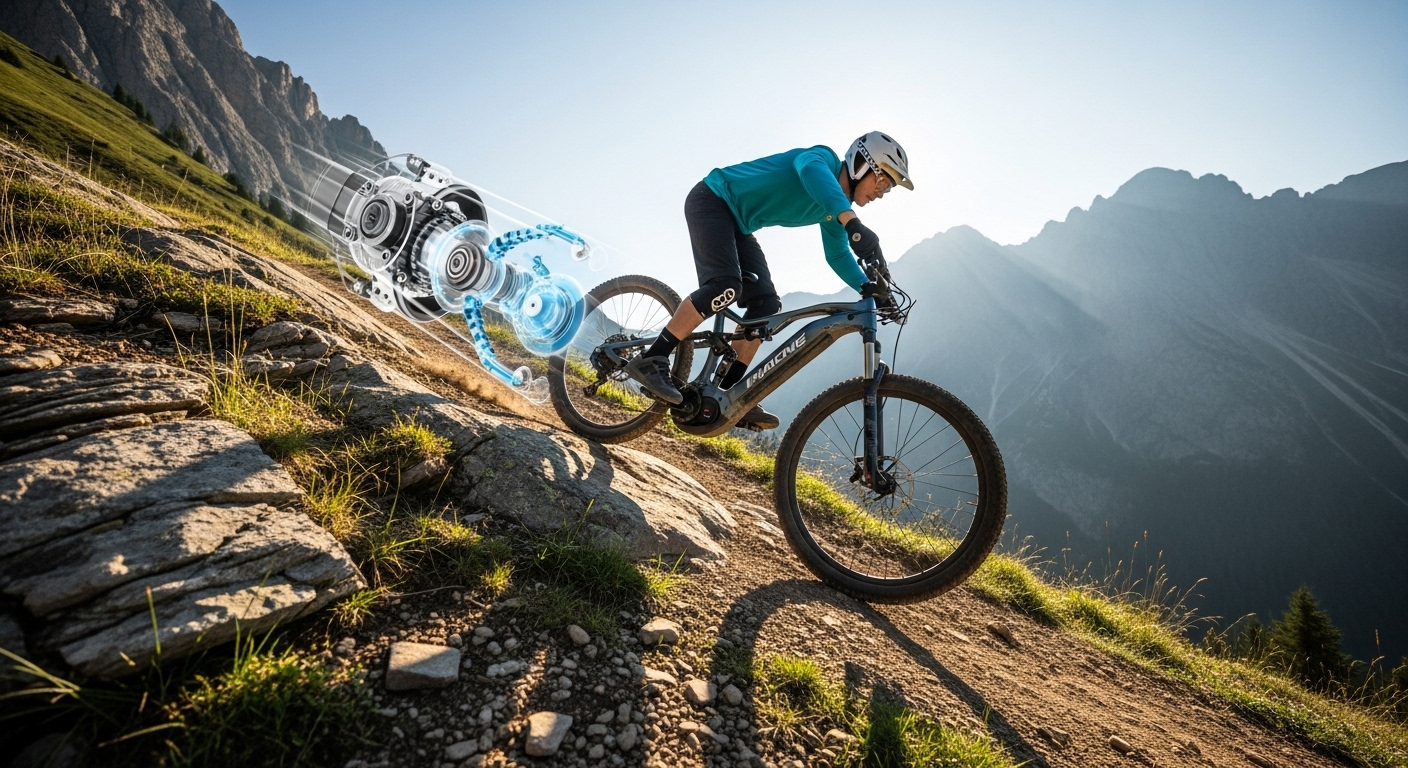
Not all e-MTB motors are created equal when it comes to climbing. The type and placement of the motor have a huge impact on performance. The two main types are mid-drive motors and hub motors.
For steep hills, a mid-drive motor is the clear winner. These motors sit in the bike’s center, near the pedals. The best part? This design lets the motor use the bike’s gears. The motor operates at its most efficient RPM range, providing maximum torque even at low speeds.
Hub motors sit in the rear or front wheel hub. They are simpler and more affordable. While effective on moderate hills, they are less efficient on steep climbs. They operate independently of the bike’s gears, so they can struggle to provide enough torque at low speeds.
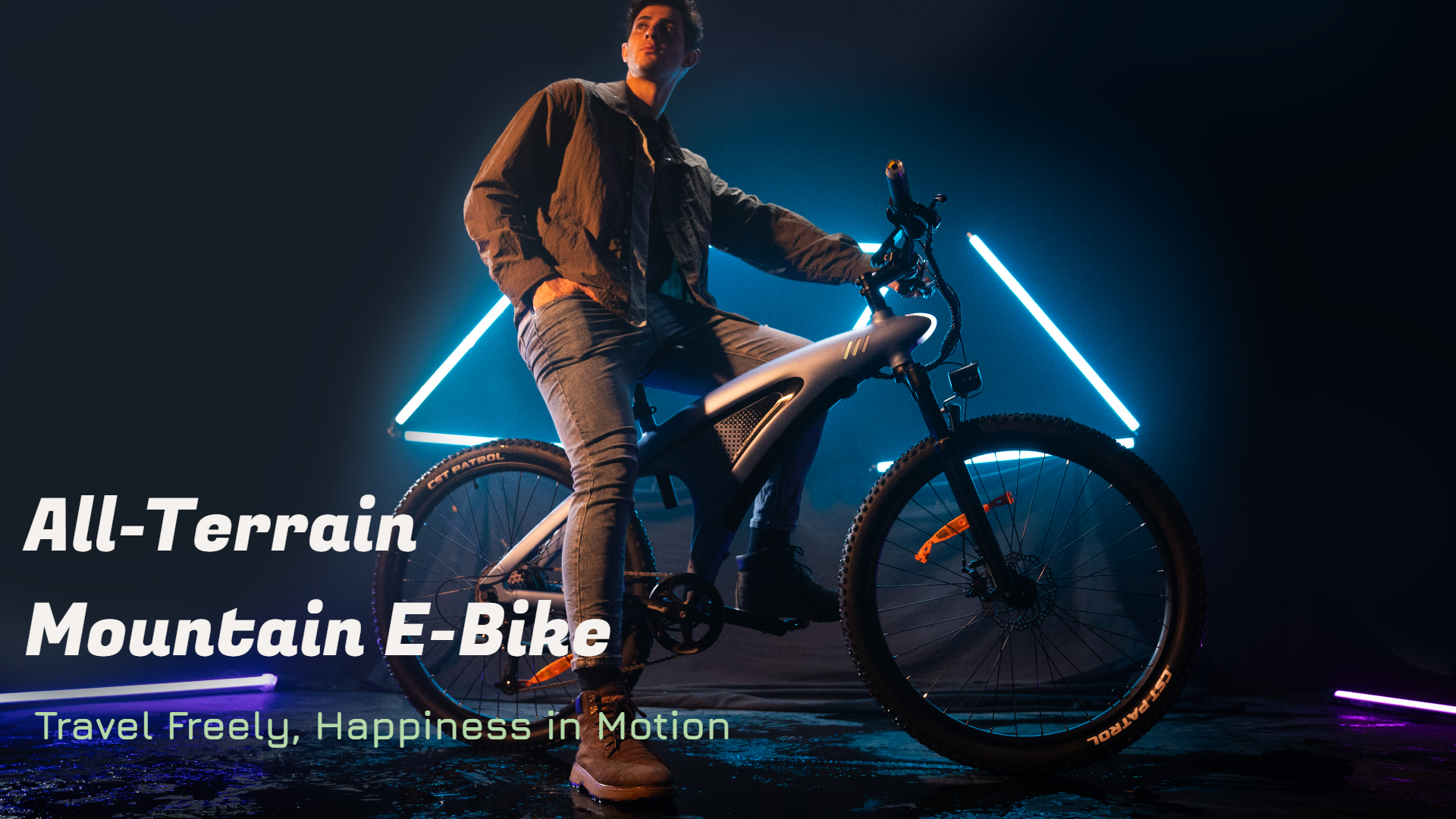
Power ratings also play a role. A higher power motor, like the 650W motor on the Dynamic Scooter Electric Mountain Bike Q5, delivers more sustained power. Some motors have a peak power rating, like 1000W, providing an extra burst when needed.
| Motor Type | Location | Climbing Advantage | Best For |
| Mid-Drive | Center of bike | Uses bike’s gears for high torque | Steep, technical trails |
| Hub Motor | Wheel hub | Simple and affordable | Moderate hills, road use |
When choosing an e-MTB for climbing, a mid-drive motor is the way to go. It provides the power, efficiency, and natural feel you need to conquer the toughest hills.
3. How Important Is Gearing for Uphill E-MTB Riding?
Gearing is just as important on an e-MTB as on a traditional bike. The motor provides power, but gears help you use it effectively. A good drivetrain and proper shifting are essential for efficient climbing.
The motor and gears work together. The motor provides raw power, while gears multiply that force. But here’s the thing… shifting to a lower gear on a climb lets both you and the motor work less hard. It lets the motor spin at a higher, more efficient RPM, preventing overheating and conserving battery life.
A quality drivetrain with a wide gear range, like a Shimano 9-speed system, is ideal for climbing. It gives you options to find the perfect gear for any gradient, maintaining a smooth pedaling speed, known as cadence.
Finding the right cadence is key. Avoid pedaling too slowly in a hard gear (“mashing”) or spinning too fast in an easy gear. A comfortable cadence of around 70-90 RPM is a good target.
| Gearing Component | Role in Climbing | What to Look For |
| Rear Cassette | Provides a range of gears for different inclines. | Wide range (e.g., 11-42T) |
| Shifter | Allows you to change gears quickly and easily. | Reliable and precise (e.g., Shimano) |
| Derailleur | Moves the chain between gears. | Durable and responsive |
By using your gears wisely, you can make the most of your e-MTB’s motor. It will make your climbs smoother, more efficient, and more enjoyable.
4. What Impact Does Battery Life Have on Climbing?
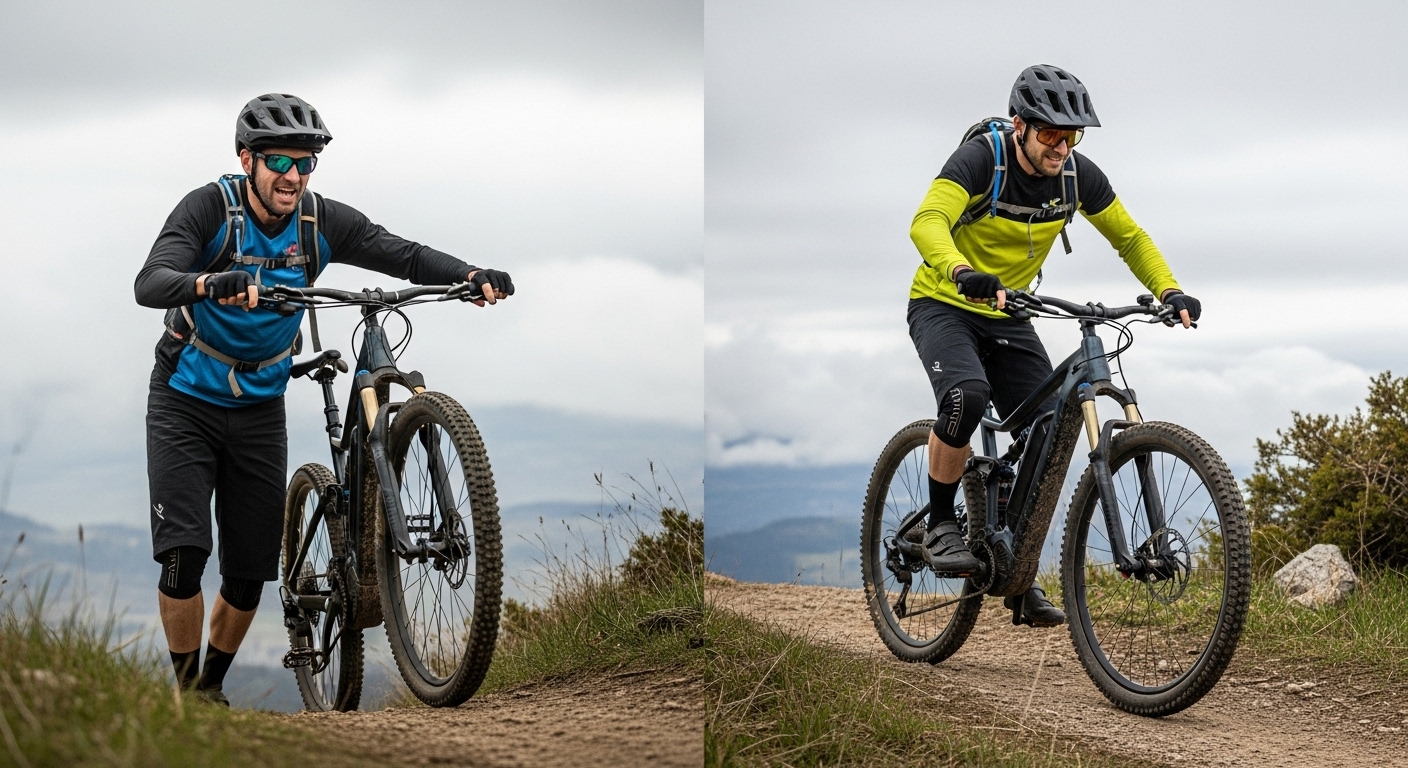
The battery is your e-MTB’s fuel tank. When climbing, it plays a huge role. Steep climbs demand a lot of power, which drains the battery faster.
Battery capacity is critical. It is measured in Amp-hours (Ah) or Watt-hours (Wh). A higher capacity battery holds more energy, translating to longer range and more climbing power. For long, hilly routes, a larger battery is a must.
Now, you might be wondering… how much does climbing affect the battery? Using a high assist level on a steep climb can use two to three times more power than riding on flat ground. This is why it is important to manage your assist levels and conserve power when you can.
Voltage is another important factor. A higher voltage system, like the 48V system on the Dynamic Scooter Q5, delivers power more efficiently. This helps the motor run cooler and provide more consistent power during long climbs.
| Battery Spec | Impact on Climbing | Ideal for Hills |
| Capacity (Wh) | Determines how long you can climb. | 500Wh or higher |
| Voltage (V) | Affects power delivery efficiency. | 48V for strong performance |
| Removability | Allows for easy charging and battery swaps. | Removable for convenience |
To ensure enough power for climbs, start with a fully charged battery. For very long rides with lots of climbing, consider a bike with a removable battery. This lets you carry a spare for extra range.
5. How Do Tires and Suspension Affect Uphill Traction?
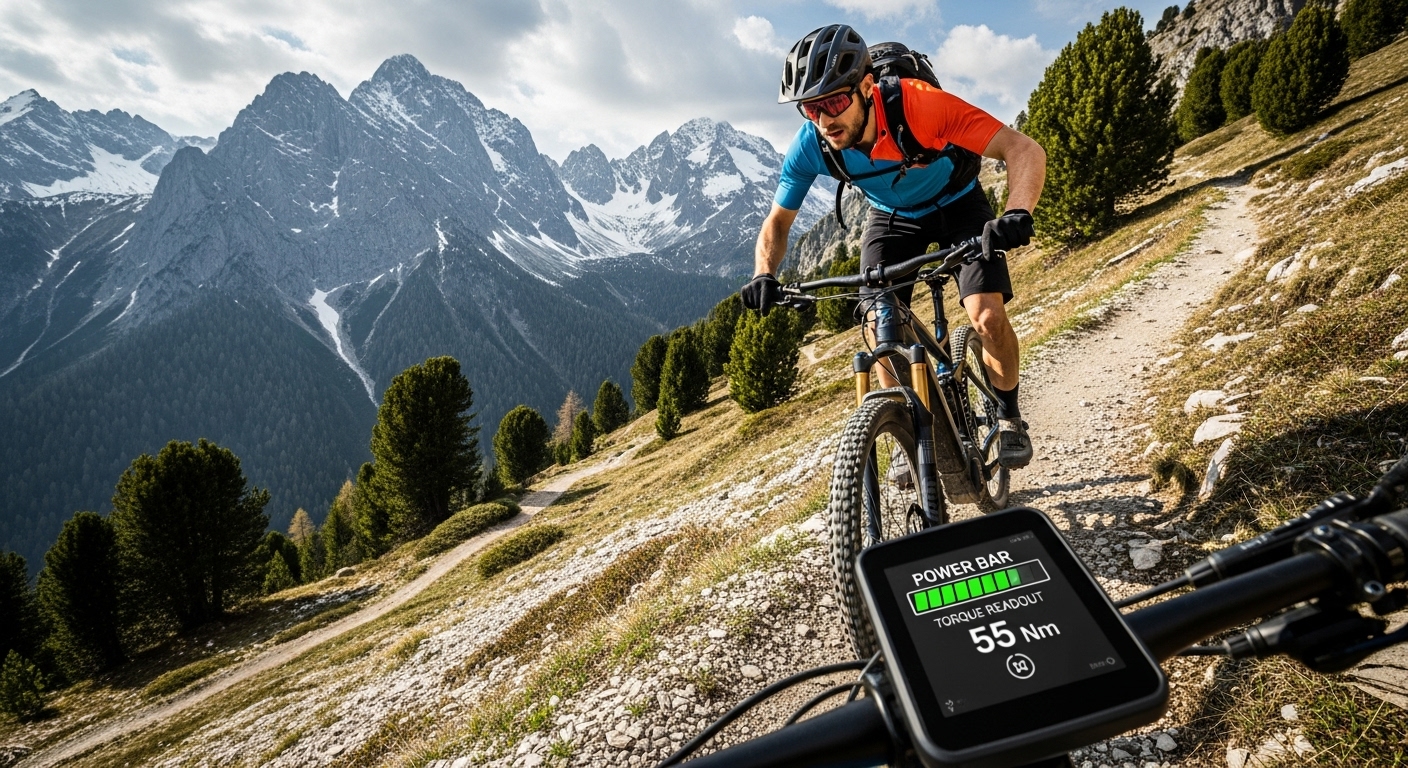
Power is useless without traction. Getting up a steep, loose hill requires tire grip. Your bike’s tires and suspension are key for maintaining traction while climbing.
The right tires make a huge difference. Wider tires with aggressive tread, like the 27.5-inch all-terrain tires on the Dynamic Scooter Q5, provide a larger contact patch. This gives more grip on loose surfaces like dirt, gravel, and rocks.
Let me explain… tire pressure is also critical. Lowering tire pressure slightly helps the tire conform to the ground, increasing grip. However, going too low can lead to tire damage or a squirmy feel.
Suspension also plays a vital role. A full-suspension e-MTB keeps both wheels in contact with the ground, even on bumpy terrain. This constant contact lets you keep putting power down without spinning out.
| Component | Role in Uphill Traction | What to Look For |
| Tires | Provide grip on the trail surface. | Wide, knobby, all-terrain tread |
| Tire Pressure | Affects the size of the contact patch. | Lower for more grip (within limits) |
| Suspension | Keeps wheels in contact with the ground. | Full suspension for technical climbs |
By optimizing your tires, tire pressure, and suspension, you can maximize your traction. This will allow you to confidently tackle even the steepest and most technical climbs.
6. What Are the Best Techniques for Climbing on an E-MTB?
Your e-MTB provides the power, but your technique determines how effectively you use it. Proper body positioning and a smooth pedal stroke make a huge difference when climbing.
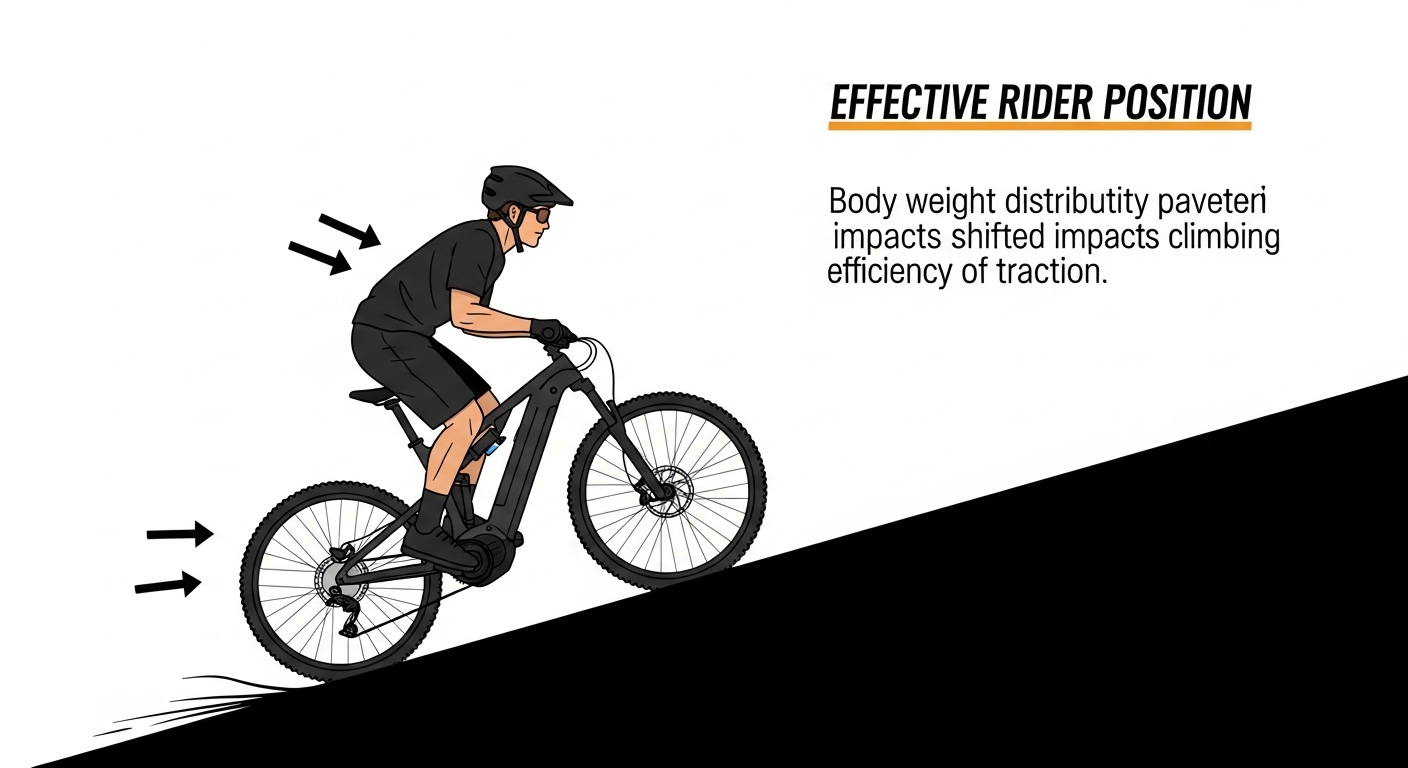
Body position is key. When the trail gets steep, shift your weight forward. This is important because… it keeps the front wheel on the ground and prevents it from lifting or wandering. Do this by sliding forward on your saddle and lowering your chest.
A smooth, steady pedal stroke is more effective than mashing. Try to spin in circles rather than just pushing down. This provides consistent power flow to the rear wheel, maintaining traction. It also puts less strain on the motor and drivetrain.
Choosing the right assist level is a balancing act. You want enough power without spinning the rear tire. It is best to anticipate a climb and shift into a lower gear and higher assist level before starting up.
| Technique | Why It Helps | How to Do It |
| Forward Body Position | Keeps the front wheel down. | Slide forward on the saddle, lower your chest. |
| Smooth Pedal Stroke | Maintains traction and efficiency. | Spin in circles, maintain a steady cadence. |
| Smart Assist Level Use | Balances power and traction. | Use higher assist for steep sections, lower for less steep. |
Practicing these techniques will make you a much better climber. You will tackle steeper, more technical trails with confidence. It is a great way to get the most out of your e-MTB’s climbing capabilities.
7. How Steep of a Hill Can an Electric Mountain Bike Handle?
Electric mountain bikes are incredibly capable climbers, but they have limits. The maximum steepness depends on the bike’s power, trail conditions, and rider skill.
Hill steepness is often measured as a gradient percentage or in degrees. A 100% grade is equivalent to a 45-degree angle. Here’s the deal… many high-quality e-MTBs, like the Dynamic Scooter Q5, are rated to handle gradients of up to 25 degrees. This is roughly a 46.6% grade, which is an extremely steep hill that would be very difficult to even walk up.
In the real world, traction is often the limiting factor. On loose or wet surfaces, your rear tire may spin out before reaching the motor’s power limit. This is where rider skill and proper weight distribution become important.
The bike’s motor power and torque are also key. A powerful mid-drive motor can generate the force needed for very steep inclines. A less powerful hub motor might struggle.
| Gradient | Steepness | E-MTB Performance |
| 5-10% | Moderate | Easy to climb with low to medium assist. |
| 10-20% | Steep | Requires medium to high assist and good technique. |
| 20%+ | Very Steep | Demands maximum power, excellent traction, and skilled riding. |
While there is no single answer to how steep an e-MTB can climb, they can handle much steeper hills than a traditional mountain bike. They open up a whole new world of terrain previously out of reach for many riders.
8. How Does Rider Weight Influence Climbing Performance?
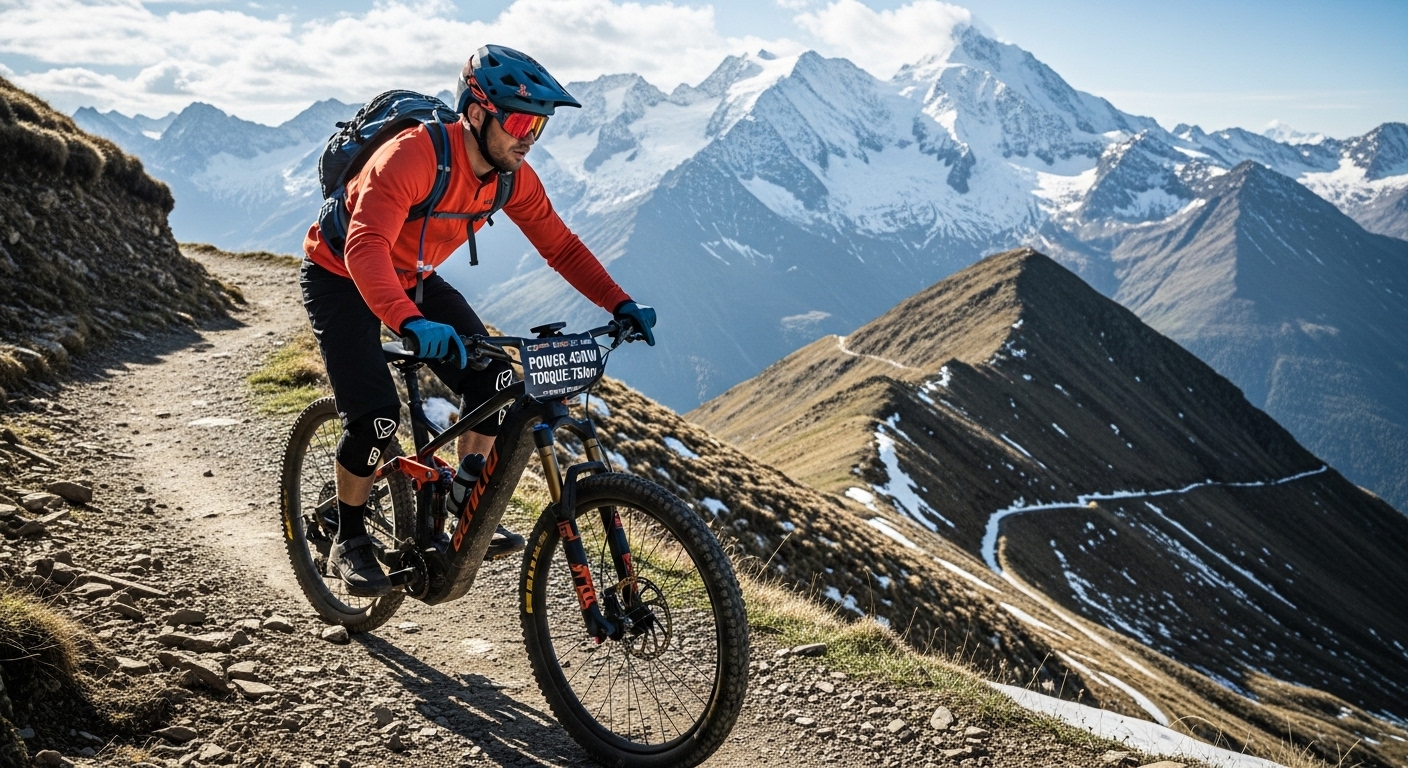
Rider weight is a significant factor in how an e-MTB performs on hills. It affects climbing ability and battery range. Understanding this helps you get the most out of your bike.
The concept of power-to-weight ratio is key here. This is the ratio of the motor’s power to the total weight it has to move (the bike plus the rider). Want to know the secret? A lighter rider will have a better power-to-weight ratio, which means the bike will feel more powerful and accelerate faster up a hill.
A heavier rider requires more motor power to maintain the same speed on a climb. They may need a higher assist level more often. A powerful motor can handle the extra load, but it will impact battery life.
The extra weight of a heavier rider increases gravity’s force pulling the bike down. The motor works harder, leading to increased battery consumption. A heavier rider typically gets less range per charge, especially on hilly routes.
| Rider Weight | Power-to-Weight Ratio | Impact on Battery Range | Recommended Action |
| Lighter | Higher | Less impact | Can use lower assist levels. |
| Heavier | Lower | Greater impact | May need higher assist levels and a larger battery. |
No matter your weight, an e-MTB makes climbing easier. Heavier riders need to be more mindful of battery usage and may benefit from a more powerful motor and larger battery.
9. Can You Still Get a Good Workout When Climbing on an E-MTB?
Absolutely. One of the biggest myths about e-bikes is that they are “cheating.” When climbing, an e-MTB can actually help you get a better and more consistent workout than a traditional bike.
The electric assist lets you tackle hills you might otherwise avoid. You spend more time riding and less time walking. The bottom line? You get more total exercise because you ride longer and cover more ground.
You are still in complete control of your workout intensity. By choosing a lower assist level, you can make your climb as challenging as you want. You can use the motor to keep your heart rate in the ideal zone for cardiovascular fitness, without spiking it into the red on the steepest sections.
This ability to manage your effort is a huge benefit. It lets you do longer, sustained climbs without getting exhausted. This is a great way to build endurance and improve fitness.
| Assist Level | Rider Effort | Heart Rate Zone | Workout Benefit |
| Low (Eco) | High | 70-80% Max | Builds endurance and strength. |
| Medium (Trail) | Moderate | 60-70% Max | Great for long, sustained climbs. |
| High (Boost) | Low | 50-60% Max | Helps you get over the steepest sections. |
An e-MTB is a fantastic fitness tool. It makes climbing more fun and accessible, encouraging you to do it more often. It is a great way to challenge yourself and reach fitness goals.
10. What Maintenance Is Crucial for a Good Climbing E-MTB?
To keep your e-MTB climbing at its best, regular maintenance is key. The extra forces in climbing stress certain components. Good care ensures your bike is always ready for the next big hill.
The drivetrain is one of the most important areas to focus on. A clean, well-lubricated chain, cassette, and derailleur shift smoothly under load. What does this mean for you? It prevents the chain from skipping or breaking when putting down power on steep climbs. Regularly cleaning and lubing your drivetrain makes a huge difference.
Your brakes are also critical. What goes up must come down, so you need confidence your brakes work perfectly. Regularly check brake pads for wear and make sure hydraulic brakes feel firm and responsive.
Battery care is also essential for maintaining peak climbing power. Avoid storing your battery in extreme temperatures. Try to keep it charged between 20% and 80% for long-term health. A healthy battery will deliver more consistent power and a longer lifespan.
| Maintenance Task | Why It’s Important for Climbing | Recommended Frequency |
| Drivetrain Cleaning | Ensures smooth shifting under load. | Every few rides |
| Brake Inspection | Guarantees safe and controlled descents. | Before every ride |
| Battery Care | Maintains peak power and extends lifespan. | Ongoing |
By staying on top of these simple maintenance tasks, you keep your e-MTB in prime condition. This gives you confidence to tackle any climb, knowing your bike is up to the challenge.
Conclusion
Electric mountain bikes are more than capable of climbing hills; they excel at it. We have seen how motor torque, mid-drive systems, proper gearing, and good technique all come together to make this possible. An e-MTB turns daunting climbs into fun challenges, opening up new terrain and helping you get a better workout. The real benefit is the confidence to ride anywhere, knowing no hill is too steep.
Ready to experience this climbing power for yourself? The team at Dynamic Scooter can help you find the perfect e-MTB, like our powerful Q5 model, to conquer any hill. Contact us today and take your ride to new heights.
FAQ
Q1: Will using the highest assist level on hills drain my battery fast?
Yes, using the highest assist level (Boost or Turbo) consumes the most power and will drain your battery significantly faster than lower assist levels. It is best reserved for the steepest sections of a climb.
Q2: Is a mid-drive motor always better than a hub motor for climbing?
For steep, technical mountain trails, a mid-drive motor is generally superior. It uses the bike’s gears for better torque and efficiency. Hub motors can be effective on moderate hills but may struggle on very steep or loose terrain.
Q3: How steep of a hill can a bike like the Dynamic Scooter Q5 climb?
A powerful e-MTB like the Dynamic Scooter Q5, with its 650W motor (peaking at 1000W), is rated to handle gradients up to 25 degrees, which is a very steep incline.
Q4: What happens if my battery dies while I’m climbing a hill?
If the battery dies, the motor will stop providing assistance, and you will have to rely entirely on your own pedal power. Since e-bikes are heavier than traditional bikes, continuing the climb will be very difficult.
Q5: Do I still need to use my gears when climbing on an e-MTB?
Yes. Using your gears correctly is just as important on an e-MTB. Shifting to a lower gear on a climb allows the motor to operate more efficiently, prevents it from overheating, and makes for a smoother ride.