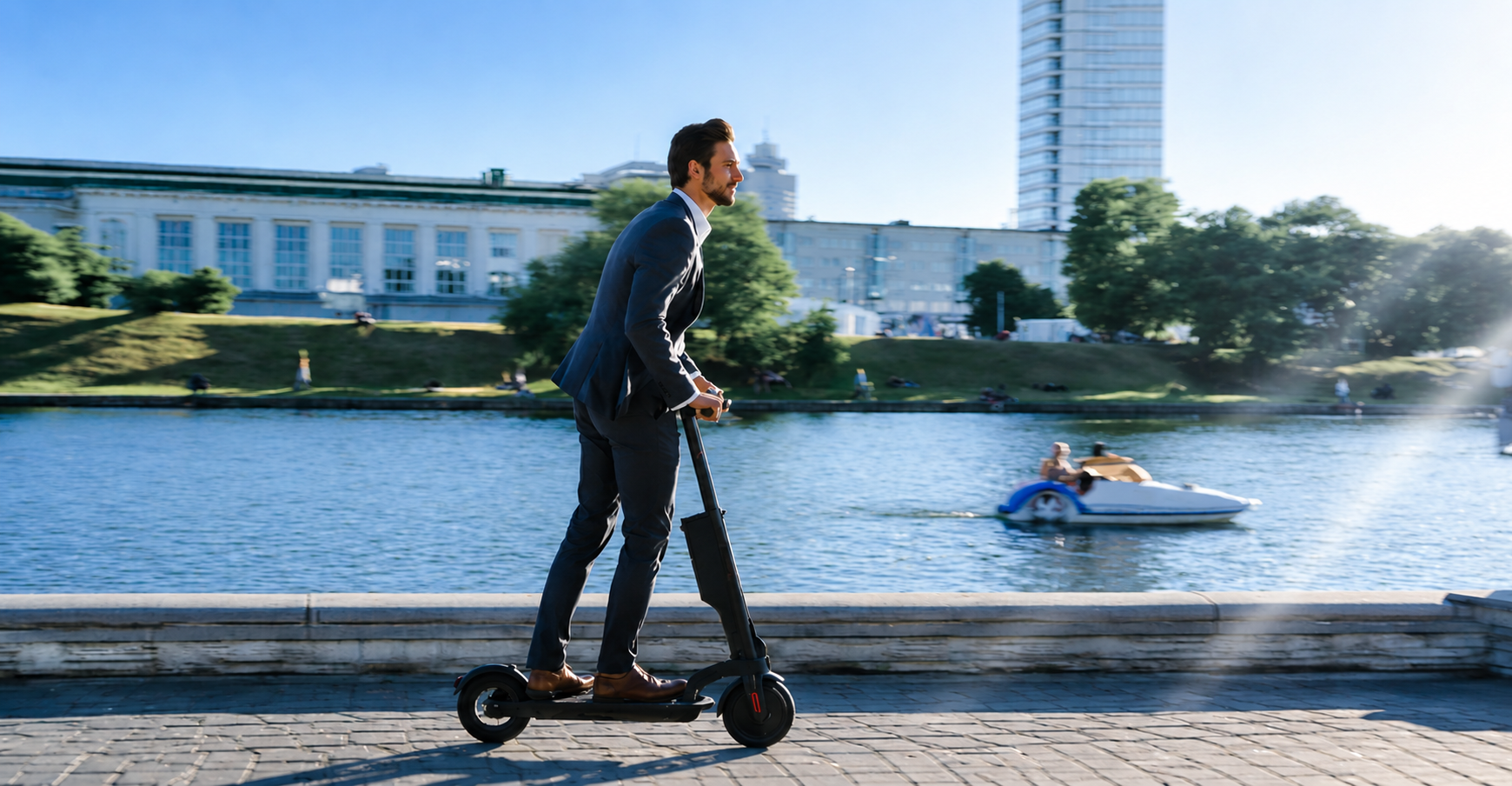

You are halfway through your commute when your electric scooter’s battery indicator hits zero. The motor cuts out, and you are left standing on the sidewalk wondering what to do next. Can you just kick it home like a regular scooter? This is a common question for anyone who owns or is considering buying an electric scooter. The short answer is yes, most electric scooters can be pushed or kicked manually, but the experience is often far from ideal. Unlike a lightweight kick scooter, an electric scooter carries the extra weight of a motor and battery, and the motor itself can create significant resistance.
This guide will explore exactly what happens when you try to use your electric scooter without power, what factors make it easier or harder, and how to prepare for those moments when your battery unexpectedly dies.
Yes, you can use most electric scooters manually by kicking them like a traditional scooter. However, the experience varies greatly depending on the scooter’s weight, motor type, and whether it has a freewheel function. Lightweight models like the Dynamic Scooter Model B, weighing just 10kg, are much easier to push than heavier alternatives. The motor may create some drag, but it will not damage the scooter.
Ready to learn more? Here’s the full breakdown…
1. What Happens When You Manually Push an Electric Scooter?
When you push an electric scooter without using the motor, you are essentially turning it into a very heavy kick scooter. The first thing you will notice is the weight. A typical electric scooter weighs between 10kg and 25kg, compared to just 3-5kg for a standard kick scooter. This extra mass requires significantly more effort to get moving and to maintain momentum. The key factor here is that you are fighting against inertia every time you push off the ground.
The second thing you will notice is the motor. Most electric scooters use hub motors, which are built directly into one of the wheels. When the motor is not powered, it can still create a phenomenon called motor drag. This is because the magnets inside the motor create resistance as the wheel turns. The amount of drag varies significantly between different motor designs. Some scooters feel almost free-rolling, while others feel like you are pushing through mud.
The type of motor matters a great deal. Geared hub motors often have a clutch mechanism that allows the wheel to spin more freely when the motor is not engaged. Gearless, or direct-drive, hub motors tend to have more noticeable drag because the magnets are always in contact with the stator. If your scooter feels very heavy to push, it is likely because it has a direct-drive motor without a good freewheel mechanism.
| Motor Type | Freewheel Capability | Typical Drag Level | Manual Use Suitability |
| Geared Hub Motor | Often has clutch | Low to Medium | Good |
| Gearless Hub Motor | Rarely has clutch | Medium to High | Fair |
| Chain/Belt Drive | Motor is separate | Low | Good |

2. Can Kicking an Electric Scooter Damage the Motor or Battery?
This is one of the most common concerns among electric scooter owners. The good news is that, in the vast majority of cases, manually pushing your electric scooter will not cause any damage to the motor or the battery. The motor is designed to spin, and pushing the scooter simply spins the motor in reverse of its normal operation. Here’s the truth: the components are robust enough to handle this without issue.
However, there is a nuance related to regenerative braking. Some electric scooters have a feature that captures energy when you brake or coast downhill and feeds it back into the battery. If your scooter has active regenerative braking, pushing it manually might engage this system. This is not harmful to the battery; in fact, it is doing exactly what it was designed to do. The only downside is that it creates additional resistance, making the scooter harder to push.
The components that might experience slightly more wear from manual use are the wheel bearings. These are the small metal balls that allow the wheel to spin smoothly on its axle. Pushing a heavy scooter puts stress on these bearings, but this is normal wear and tear that would happen during regular use anyway. High-quality scooters use sealed bearings that are designed to last for thousands of miles.
| Component | Risk of Damage from Manual Use | Notes |
| Hub Motor | Very Low | Designed to spin; no damage from pushing. |
| Battery | None | Not affected by manual pushing. |
| Wheel Bearings | Low (Normal Wear) | Standard wear; use quality bearings. |
| Controller | None | Not engaged when scooter is off. |

3. How Does a Scooter’s Freewheel Feature Work?
The freewheel is a critical component that determines how easy your electric scooter is to push manually. A freewheel, also known as a clutch, is a mechanism that allows the wheel to spin independently of the motor when the motor is not providing power. Think of it like the freewheel on a bicycle: you can coast without pedaling because the chain is not forcing the pedals to turn. This is the secret to a smooth manual pushing experience.
In electric scooters with geared hub motors, the freewheel is often built into the motor assembly. When you are not accelerating, the clutch disengages, allowing the wheel to roll freely. This is why some scooters feel almost like a regular kick scooter when the power is off. The motor is effectively disconnected from the wheel’s rotation.
Gearless hub motors, on the other hand, typically do not have a freewheel. The rotor (the spinning part of the motor) is directly connected to the wheel. This means that every time the wheel turns, the magnets inside the motor pass over the coils, generating a small amount of resistance. This is the drag you feel. Some manufacturers are now designing gearless motors with improved magnetic configurations to reduce this drag, but it is still a factor to consider when choosing a scooter.
| Feature | Geared Hub Motor | Gearless Hub Motor |
| Freewheel | Often included (clutch mechanism) | Rarely included |
| Rolling Resistance | Lower when motor is off | Higher due to magnetic drag |
| Complexity | More moving parts | Simpler, fewer parts |
| Maintenance | Clutch may wear over time | Generally maintenance-free |

4. Is It Practical to Use an Electric Scooter Without Power?
Let’s be realistic: using an electric scooter manually is a backup plan, not a primary mode of operation. The practicality depends heavily on the specific scooter and the distance you need to travel. For a short distance of a few hundred meters, pushing a lightweight scooter like the Dynamic Scooter Model B (10kg) is perfectly manageable. But here’s the catch: for anything longer, it quickly becomes tiring and inefficient.
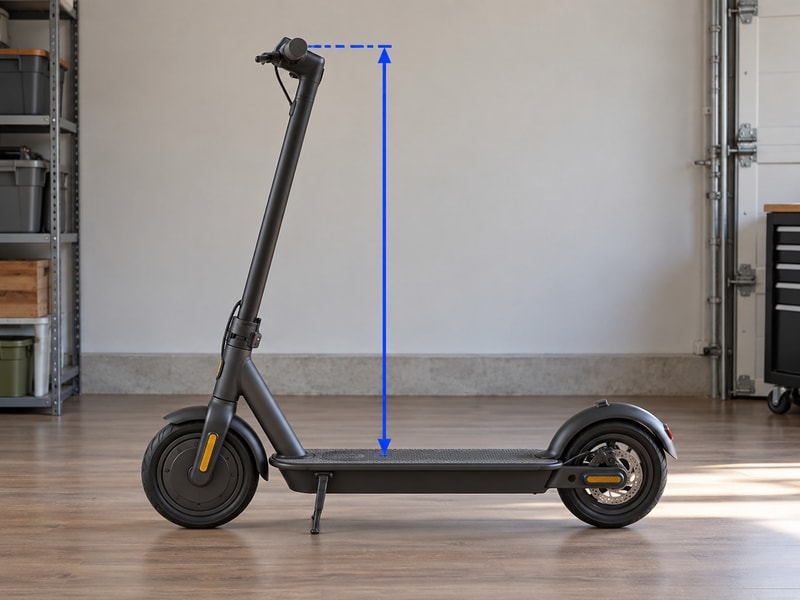
The ergonomics of an electric scooter are not optimized for kicking. The deck is often higher off the ground than a traditional kick scooter to accommodate the battery. This means you have to bend your standing leg more with each kick, which is more fatiguing. The handlebars may also be at a different height than what is ideal for a kicking posture.
The weight is the biggest obstacle. A 20kg scooter requires a lot of energy to accelerate and maintain speed. You will find yourself working much harder than you would on a 4kg kick scooter. If your battery dies regularly, it might be a sign that you need a scooter with a longer range, or you should plan your routes more carefully to include charging opportunities.
| Scenario | Practicality of Manual Use | Recommendation |
| Short Distance (<500m) | High | Push it; it’s the easiest option. |
| Medium Distance (0.5-2km) | Medium | Consider folding and carrying part-way. |
| Long Distance (>2km) | Low | Use public transport or find a charging spot. |
| Uphill | Very Low | Avoid; fold and carry or call for a ride. |

5. What Scooter Features Make Manual Use Easier?
If you anticipate needing to push your scooter manually from time to time, certain features will make your life much easier. The most important factor is weight. A scooter under 12kg is significantly easier to push than one over 18kg. Every kilogram you save translates to less effort when the motor is not helping.
Wheel size and tire type also play a role. Larger wheels roll over bumps and cracks more easily, maintaining momentum better. Pneumatic (air-filled) tires generally have lower rolling resistance than solid tires, although they require more maintenance. The quality of the wheel bearings is another factor; cheap bearings create friction, while high-quality sealed bearings spin freely for longer.
A low deck height makes the kicking motion more natural and less tiring. If the deck is too high, you have to lift your kicking leg higher with each push, which is exhausting over distance. Finally, a good folding mechanism is useful not for pushing, but for the alternative: if pushing is too hard, you can fold the scooter and carry it or take it on public transport.
| Feature | Impact on Manual Use | What to Look For |
| Weight | Lighter is much easier to push. | Under 12kg is ideal. |
| Wheel Size | Larger wheels roll more smoothly. | 8 inches or larger. |
| Tire Type | Pneumatic tires have lower rolling resistance. | Air-filled tires preferred. |
| Deck Height | Lower deck is more comfortable for kicking. | As low as possible. |
| Bearings | Quality bearings reduce friction. | Sealed, high-quality bearings. |

6. How Does Regenerative Braking Affect Manual Pushing?
Regenerative braking is a feature found on many electric scooters that captures kinetic energy when you slow down and converts it back into electrical energy to recharge the battery. It is a clever way to extend your range, especially if you ride in hilly areas or frequently stop and start. However, there is a trade-off: this system can make your scooter harder to push manually.
When regenerative braking is active, the motor acts as a generator. As the wheel spins, it forces the motor to generate electricity, which is then fed back into the battery. This process creates resistance, which is felt as drag. If you try to push your scooter with the regenerative braking system engaged, you will feel like you are pushing against a constant brake.
Some scooters allow you to adjust the level of regenerative braking or turn it off entirely through the scooter’s app or display settings. If you know you might need to push your scooter, it is worth checking if this option is available. Turning off regen will make the scooter roll more freely. Keep in mind that this also means you will lose the energy-saving benefits of the feature during normal riding.
| Regen Setting | Effect on Manual Pushing | Effect on Range |
| High | Significant drag; hard to push. | Maximum energy recovery. |
| Low | Moderate drag; manageable. | Some energy recovery. |
| Off | Minimal drag; easy to push. | No energy recovery. |
7. What Are the Alternatives When Your Battery Dies?
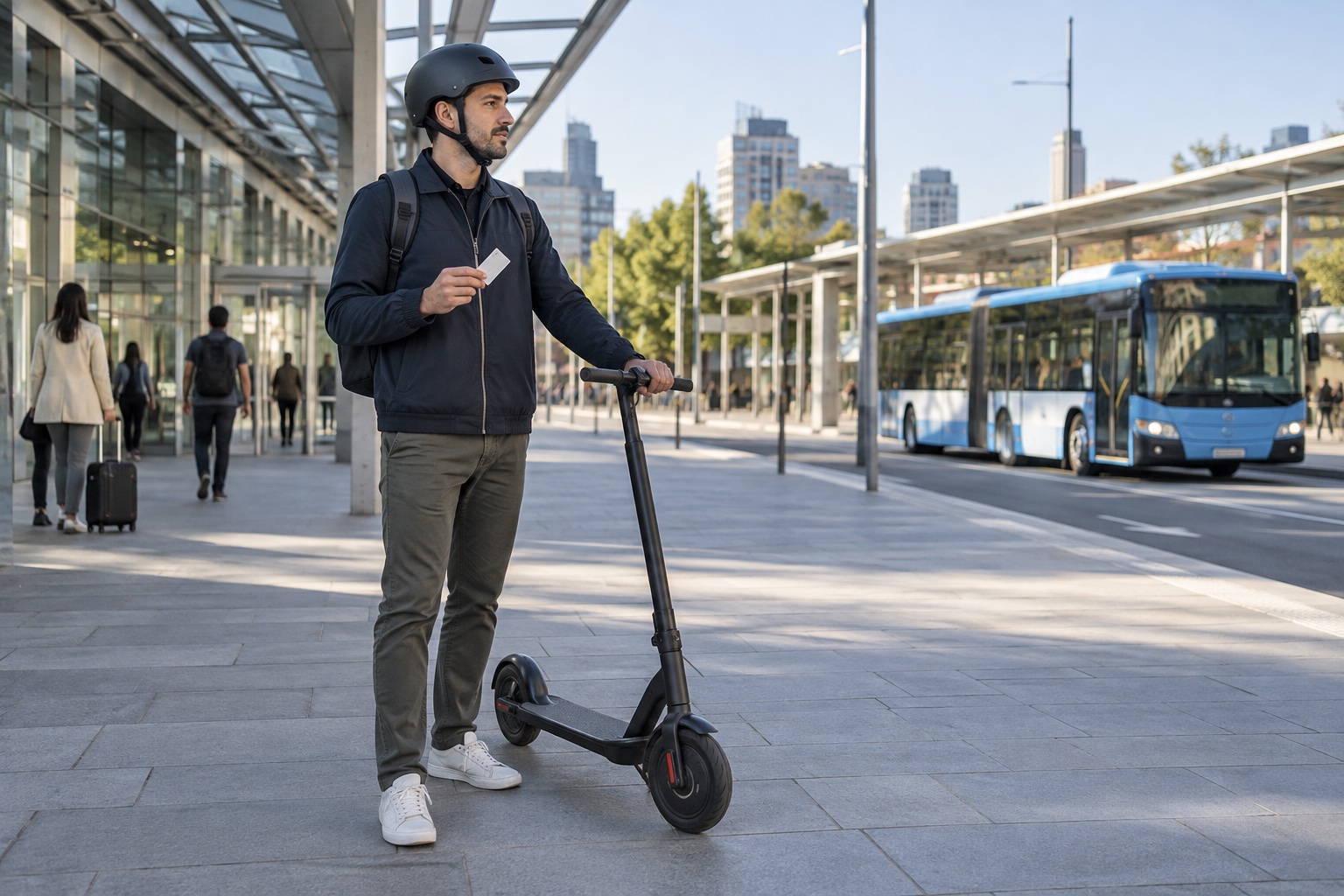
If pushing your electric scooter feels like too much work, you have several other options. The most obvious is to fold it up and carry it. This is where a lightweight, compact scooter truly shines. The Dynamic Scooter Model B, for example, folds quickly and weighs only 10kg, making it easy to carry onto a bus or subway. This is often the best solution for getting home when your battery is dead.
Public transportation is your friend in these situations. Most buses, subways, and trains allow folded scooters on board, though you should check local regulations. If you are in a city, you might also be able to find a public charging spot. Many cafes, libraries, and co-working spaces have outlets where you can plug in for a quick top-up while you grab a coffee.
For the future, consider a scooter with a swappable battery. This allows you to carry a spare, fully charged battery with you. When one dies, you simply swap it out and continue on your way. This is a more expensive solution, but it provides peace of mind for longer commutes. The best strategy, of course, is to plan your trips carefully and charge your scooter regularly to avoid running out of power in the first place.
| Alternative | Pros | Cons |
| Fold and Carry | Quick, no waiting. | Tiring if scooter is heavy. |
| Public Transport | Covers long distances easily. | May have restrictions; costs money. |
| Find a Charging Spot | Can fully recharge. | Takes time; not always available. |
| Swappable Battery | Instant power restoration. | Requires carrying a spare; extra cost. |

Conclusion
In conclusion, yes, electric scooters can be used manually, but the experience is highly dependent on the scooter’s design. Factors like weight, motor type, freewheel capability, and regenerative braking all play a role in how easy or difficult it is to push your scooter when the battery dies. For short distances, pushing is a viable option, especially with a lightweight model. For longer distances, folding and carrying or using public transport is often more practical. The best approach is to choose a scooter that is designed with these scenarios in mind.
A lightweight, well-engineered scooter like the Dynamic Scooter Model B offers the best of both worlds: efficient electric power for your daily commute and manageable manual use when you need it. Visit Dynamic Scooter today to find a scooter that fits your lifestyle.
FAQ
Q1: Is it bad to push my electric scooter manually?
No, it is not bad for the scooter. Pushing it manually will not damage the motor or battery. The motor is designed to spin, and the battery is not affected by the wheel’s movement. The only consideration is that it requires more physical effort than a regular kick scooter.
Q2: Why is my electric scooter so hard to push?
The difficulty is usually due to motor drag. Gearless hub motors, in particular, create resistance because the magnets inside the motor generate drag as the wheel spins. Regenerative braking can also add to the resistance. Check if your scooter has a setting to reduce or disable regen.
Q3: Can I turn my electric scooter into a regular kick scooter?
You cannot convert it, but you can use it as one in a pinch. The main differences are weight and deck height. An electric scooter is much heavier and often has a higher deck, making it less efficient and more tiring to kick than a purpose-built kick scooter.
Q4: Does pushing an electric scooter charge the battery?
Only if your scooter has regenerative braking. When you push the scooter, the motor acts as a generator and can feed a small amount of energy back into the battery. However, the amount of charge generated this way is minimal and not a practical way to recharge.
Q5: What is the best electric scooter to use manually if needed?
Look for a lightweight scooter with a geared hub motor or a good freewheel mechanism. The Dynamic Scooter Model B is an excellent choice at just 10kg. Its lightweight frame and efficient design make it one of the easiest electric scooters to push when nece