
Choosing your first electric mountain bike can be a thrilling but daunting task. With so many options for motors, batteries, and suspension systems, it’s easy to feel overwhelmed. Making the wrong choice could leave you with a bike that doesn’t suit your riding style or can’t handle the trails you want to explore. This guide will walk you through everything you need to know, ensuring you select an e-MTB that will deliver countless hours of adventure.
To choose the right electric mountain bike, first assess your riding style and budget. Prioritize a powerful mid-drive motor (at least 650W) and a high-capacity battery (500Wh or more). A full-suspension aluminum frame offers the best balance of performance and value. Finally, ensure the bike has quality components like hydraulic disc brakes and a reliable drivetrain, and is backed by a strong warranty.
Let’s break down the key factors to consider step-by-step.
1. How Do You Determine Your Riding Style and Needs?
Before you start comparing specs, the first step is to think about yourself as a rider. Your personal needs and the type of trails you plan to ride will dictate which bike is right for you. Being honest about your riding style will help you narrow down your options and avoid paying for features you don’t need.
Are you a weekend warrior looking for recreational rides on local trails, or are you a competitive rider seeking maximum performance? Here’s a thought… a recreational rider might prioritize comfort and range, while a competitive rider will focus on weight and suspension performance. The terrain you ride on also matters. Smooth, flowing trails require a different bike than steep, technical, rocky terrain.
Consider how often and how far you plan to ride. If you’re planning long, all-day adventures, battery range will be a top priority. If you’re sticking to shorter loops, you might be able to save money with a smaller battery. Your fitness level also plays a role. An e-MTB can help you ride farther and faster, but you should still choose a bike that complements your physical capabilities.
Finally, establish a realistic budget. Quality electric mountain bikes are a significant investment, but there are great options at different price points. Determine what you’re willing to spend, but also consider the long-term value. A slightly more expensive bike with better components and a stronger warranty can often be a smarter investment.
| Rider Profile | Key Priorities | Recommended Bike Type |
| Recreational Rider | Comfort, Range, Value | Trail E-MTB (120-140mm travel) |
| Competitive Racer | Performance, Low Weight | Enduro/Race E-MTB (150-170mm travel) |
| Commuter/Fitness | Reliability, Versatility | All-Mountain E-MTB or Hardtail |
2. What Motor Specifications Should You Prioritize?
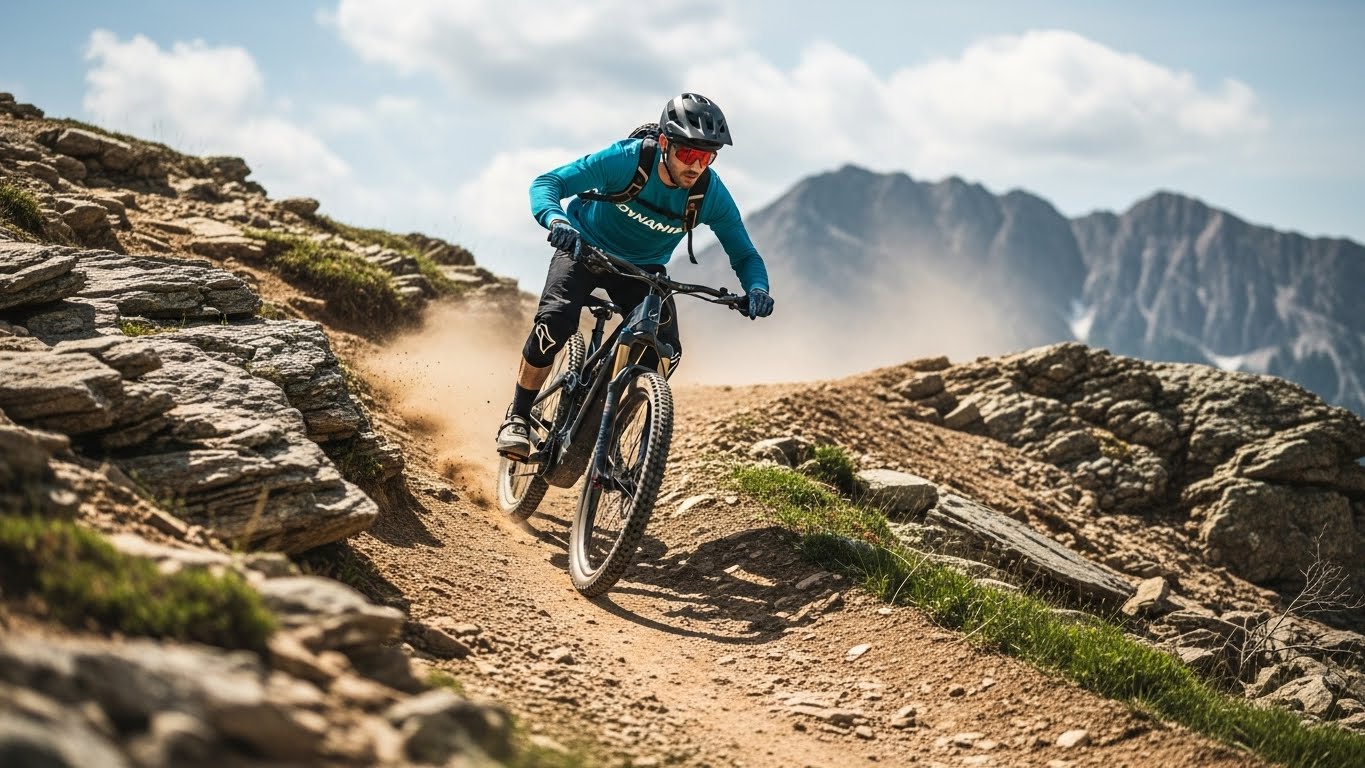
The motor is the powerhouse of your e-MTB, so it’s essential to choose one that can handle your demands. Motor performance is defined by power (watts) and torque (Newton-meters). For challenging trails and steep climbs, you need a motor that delivers ample power smoothly and reliably.
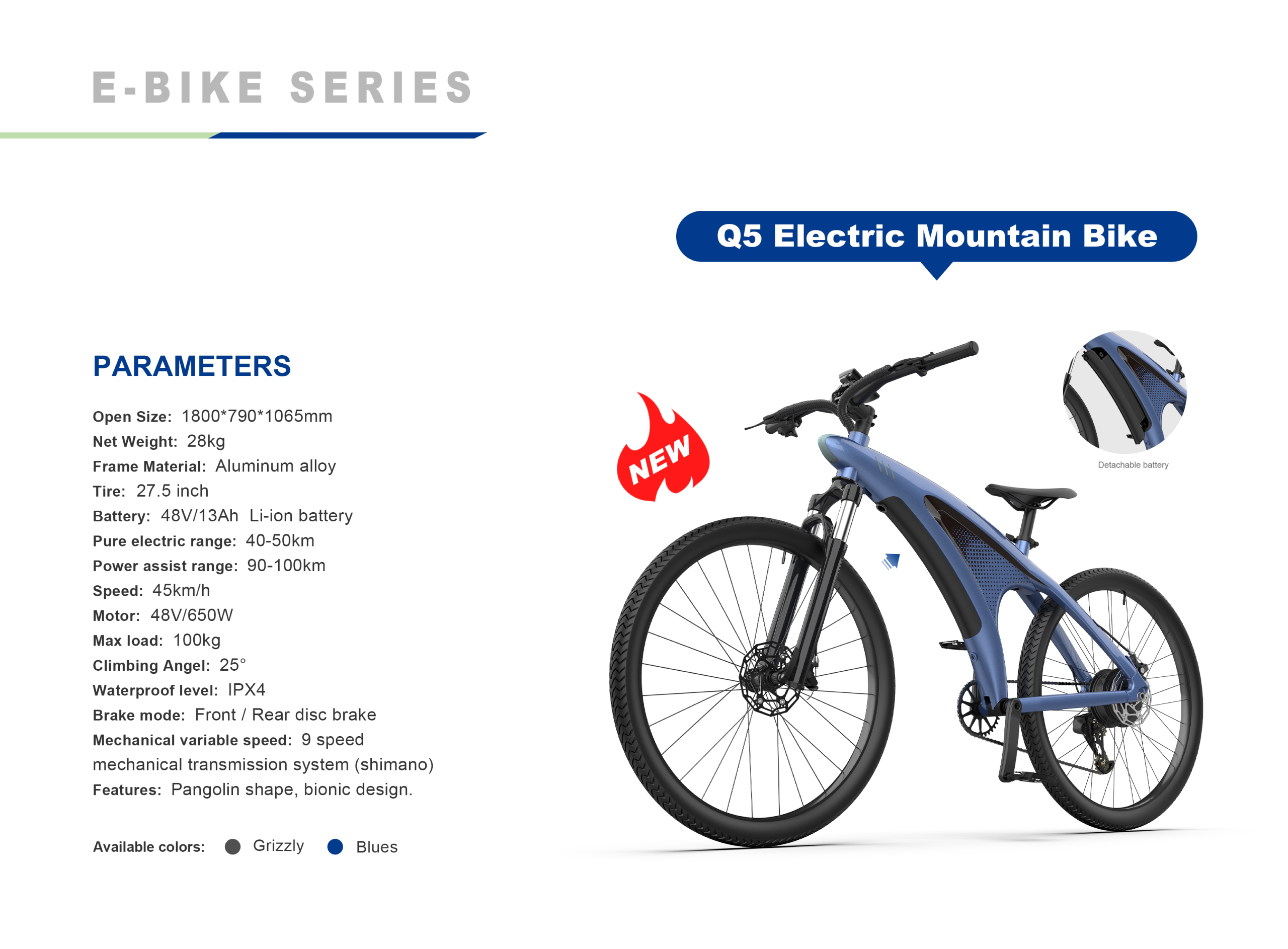
Look for a motor with at least 500W of continuous power and 80 Nm of torque. The key is this… this level of power will get you up most climbs without struggling. For riders who want top-tier performance, a motor like the one in the Dynamic Bike Electric Mountain Bike Q5, which provides 650W of power (peaking at 1000W), is an excellent choice. It offers the grunt needed to conquer even the steepest terrain.
Mid-drive motors are the standard for high-performance e-MTBs. Located at the bike’s crankset, they offer a low center of gravity and a natural pedaling feel. They also allow you to take advantage of the bike’s gears, which improves efficiency and climbing ability. Hub-drive motors, located in the wheel, are less common on quality mountain bikes as they can negatively affect suspension performance and handling.
Motor reliability is crucial. Stick with reputable brands like Bosch, Shimano, Brose, or Yamaha. These companies have years of experience and a proven track record. A reliable motor means less time in the shop and more time on the trail. Also, consider the noise level; modern mid-drive motors are impressively quiet, allowing you to enjoy the sounds of nature.
| Motor Type | Pros | Cons |
| Mid-Drive | Natural feel, efficient, good balance | More expensive |
| Hub-Drive (Rear) | Less expensive, simple design | Can affect handling, less efficient on climbs |
| Hub-Drive (Front) | Good for flat terrain | Not suitable for mountain biking |
3. How Do You Choose the Right Battery Configuration?
Your e-MTB’s battery is its fuel tank. The capacity of the battery, measured in watt-hours (Wh), directly determines your potential range. Choosing the right battery setup is a balance between range, weight, and convenience. Don’t let range anxiety cut your rides short.
For most riders, a battery with a capacity of 500Wh to 700Wh is the sweet spot. This provides enough power for several hours of trail riding. The important thing to remember is… that real-world range depends on many factors, including your weight, the terrain, and the level of assistance you use. A bike like the Dynamic Bike Q5, with its 600Wh battery, offers a pedal-assist range of up to 100 km, which is more than enough for epic all-day rides.
Consider the convenience of a removable battery. While integrated batteries offer a sleek look, they can be impractical if you don’t have an outlet where you store your bike. A removable battery, like the one on the Q5, can be easily unlocked and taken inside for charging. This is a major advantage for apartment dwellers or anyone who wants the flexibility to charge their battery anywhere.
Battery lifespan and warranty are also key considerations. A quality battery should last for 500-1,000 charge cycles. Look for a battery management system (BMS) that protects against overcharging and ensures longevity. A good warranty (at least 2 years) provides peace of mind. The Dynamic Bike Q5 comes with a 3-year warranty, showcasing the brand’s confidence in its battery technology.
| Battery Capacity | Estimated Range (PAS) | Best For |
| < 500Wh | 30-60 km | Shorter, less demanding rides |
| 500-700Wh | 50-100 km | Most trail riders, all-day adventures |
| > 700Wh | 100+ km | Long-distance touring, enduro racing |
4. Which Frame and Suspension Setup Is Best?
The frame and suspension are the foundation of your bike’s handling and comfort. The right combination will inspire confidence and allow you to tackle rougher terrain than you ever thought possible. For an e-MTB, which is heavier than a non-electric bike, a robust frame and quality suspension are paramount.
Aluminum and carbon fiber are the two most common frame materials. Aluminum is a reliable and cost-effective choice, offering excellent durability. Carbon fiber is lighter and can be engineered for a more compliant ride, but it comes at a higher cost. Here’s a pro tip… a well-designed aluminum frame, like the bionic “pangolin” frame on the Dynamic Bike Q5, can provide a fantastic ride quality that rivals more expensive carbon options.
For most mountain biking, a full-suspension setup is highly recommended. It uses both a front suspension fork and a rear shock to absorb impacts, providing a smoother ride and better traction. A hardtail (front suspension only) can be a good budget option for smoother trails, but a full-suspension bike is far more capable and comfortable on technical terrain.
Suspension travel—the amount the suspension can compress—should match your riding style. For general trail riding, 120-140mm is sufficient. For more aggressive all-mountain or enduro riding, look for 150-170mm. Quality suspension from brands like Fox or RockShox is adjustable, allowing you to fine-tune it to your weight and preferences.
| Suspension Type | Ideal Terrain | Main Advantage |
| Hardtail | Smooth trails, dirt roads | Efficient, lower cost, less maintenance |
| Full-Suspension (120-140mm) | General trail riding, cross-country | Balanced comfort and efficiency |
| Full-Suspension (150-170mm) | Technical, steep, aggressive trails | Maximum control and impact absorption |
5. What Components and Features Are Essential?
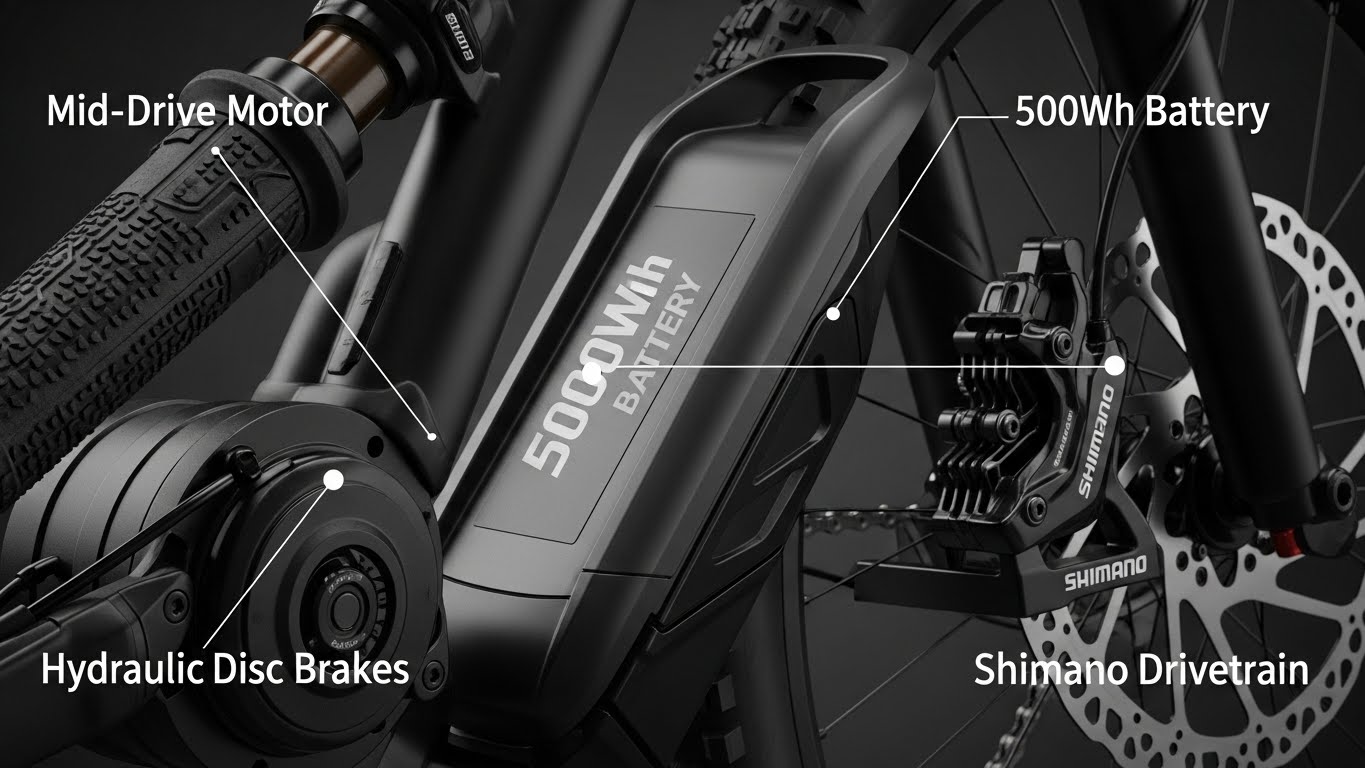
While the motor and frame are critical, the smaller components—the drivetrain, brakes, and tires—are what you interact with on every ride. High-quality components will improve your bike’s performance, reliability, and safety. On an e-MTB, these parts are subjected to greater forces, so choosing durable, e-bike-specific components is a smart move.
Your drivetrain determines your gear range. A modern 1x (one-by) drivetrain with a wide-range cassette (e.g., 10-51t) is the standard. This setup is simple, reliable, and provides all the gears you need for steep climbs and fast descents. The key is… a reliable drivetrain, like the Shimano 9-speed on the Dynamic Bike Q5, ensures crisp, consistent shifting when you need it most.
Powerful brakes are a crucial safety feature. Hydraulic disc brakes are a must-have on any e-MTB. They offer significantly more power and better modulation than mechanical brakes. Look for large brake rotors (180mm or 200mm), as they provide better heat dissipation and more stopping power for the heavier weight of an e-bike.
Don’t overlook the tires. They are your only connection to the trail. Look for wide tires (2.4-2.6 inches) with an aggressive tread pattern for good traction. A tubeless setup is highly recommended to prevent flats and improve grip. The Dynamic Bike Q5 features 27.5-inch all-terrain tires with a puncture-resistant layer, providing durability and confidence on rough trails.
| Component | Recommended Spec | Why It’s Essential |
| Brakes | Hydraulic Disc (180mm+ rotors) | Superior stopping power for safety |
| Drivetrain | 1x system with wide-range cassette | Simplicity, reliability, and climbing gears |
| Tires | 2.4″+ width, aggressive tread, tubeless-ready | Maximum traction and flat prevention |
6. How Do You Evaluate Brands and Models?
With so many brands on the market, choosing one can be overwhelming. Evaluating brands based on their reputation, warranty, and customer support can help you make a confident decision. A good brand stands behind its products and provides the support you need to keep your bike running smoothly.
Start by researching reputable manufacturers. Brands like Trek, Specialized, and Giant have a long history in the bike industry. However, direct-to-consumer brands like Dynamic Bike are offering incredible value. The secret is… they cut out the middleman, allowing them to offer high-performance bikes with quality components at a lower price. The Dynamic Bike Q5, for example, offers features found on bikes costing thousands more.
Warranty is a strong indicator of a brand’s confidence in its products. Look for a warranty that covers the frame for at least five years and the motor and battery for at least two years. The Dynamic Bike Q5 comes with an impressive 3-year warranty with free parts shipping, which is a testament to its build quality and durability.
Read reviews from both professional publications and actual customers. Professional reviews can give you detailed insights into a bike’s performance, while customer reviews can provide real-world feedback on reliability and the ownership experience. Look for consistent themes in the reviews to get an accurate picture of a bike’s strengths and weaknesses.
| Evaluation Criteria | What to Look For | Red Flags |
| Reputation | Positive reviews, industry presence | Lack of reviews, history of issues |
| Warranty | 2+ years on motor/battery, 5+ on frame | Short warranty period, no support |
| Customer Support | Responsive, helpful service | Unresponsive, poor communication |
7. What Should You Test Before Buying?
Reading reviews and comparing specs is important, but nothing beats a test ride. Riding a bike is the only way to truly know if it’s the right fit for you. A test ride allows you to assess the bike’s comfort, handling, and power delivery in a real-world setting. Make the most of your test ride by being systematic in your evaluation.
First, focus on fit and comfort. The most important thing is… that the bike feels right. Can you comfortably reach the handlebars? Is the saddle height correct? The bike should feel like an extension of your body. If the shop allows, try to ride the bike on varied terrain, including a small hill, to see how it feels when climbing and descending.
Pay close attention to the motor’s performance. How does the power engage? Is it smooth and intuitive, or does it feel jerky? Test the different assist levels to see how they affect the ride. A good motor should provide a seamless boost that feels natural and easy to control. Also, listen for any unusual noises from the motor or other components.
Test the bike’s handling. How does it feel in corners? Is it stable at speed? Does it feel nimble and responsive, or sluggish and heavy? A well-designed e-MTB should feel balanced and confidence-inspiring. Finally, test the brakes to ensure they provide strong, predictable stopping power. After your ride, ask about the after-sales service and support offered by the shop or brand.
| Test Ride Checklist | What to Evaluate | Desired Outcome |
| Fit & Comfort | Saddle height, reach, overall feel | Feels like an extension of your body |
| Motor Performance | Smoothness, power, noise | Quiet, intuitive, and powerful assist |
| Handling & Stability | Cornering, descending, climbing | Balanced, stable, and confidence-inspiring |

Conclusion
Choosing the right electric mountain bike is a process of matching your personal needs with the right technology. By determining your riding style, prioritizing a powerful motor and a high-capacity battery, and selecting a bike with a quality frame and components, you can make a confident choice. Remember to evaluate brands based on their reputation and warranty, and always take a test ride before you buy. This thoughtful approach will ensure you end up with a bike that you love to ride.
If you’re looking for a bike that excels in all these areas at an unbeatable value, check out the Electric Mountain Bike Q5 at dynamicbike.com. With its professional-grade components and a 3-year warranty, it’s ready for any adventure.
FAQ
Q1: What is the most important factor when choosing an electric mountain bike?
The motor and battery combination is crucial. Look for at least 650W motor power and 500Wh+ battery capacity for serious trail riding. This ensures you have enough power and range for your adventures.
Q2: How much should I spend on an electric mountain bike?
Quality e-MTBs start around $1,400-$2,000. The Dynamic Bike Q5 at $1,399 offers excellent value with professional-grade components. Avoid bikes under $1,000 as they often compromise on critical components.
Q3: Is full suspension necessary for an electric mountain bike?
For serious trail riding, yes. Full suspension provides better control and comfort on rough terrain. The added weight of e-MTBs makes suspension even more important for maintaining traction and control.
Q4: Can I use an electric mountain bike for commuting?
Absolutely. E-MTBs are versatile and work great for commuting. Their robust build, powerful motors, and long range make them ideal for daily transportation as well as weekend trail adventures.
Q5: How long does an electric mountain bike battery last?
Most quality batteries last 3-5 years or 500-1,000 charge cycles. The Dynamic Bike Q5’s battery includes smart management systems to maximize lifespan. Proper care and storage extend battery life significantly.