
As winter blankets the city in white, many electric scooter riders wonder if their trusty transport can handle the snow. The image of gliding through a winter wonderland is tempting, but the reality is often a slippery, dangerous mess. A standard scooter can instantly lose traction on snow or ice, turning a fun ride into a painful fall. The cold also wages a silent war on your battery, slashing its range and leaving you stranded. This can lead to a damaged scooter and a serious safety risk.
Riding a standard electric scooter in the snow is not recommended and is generally unsafe. Only specialized or properly modified scooters with features like snow tires, high water resistance, and powerful motors can navigate snowy conditions with a degree of safety, and even then, it requires extreme caution.
So, what does it take to make a scooter snow-worthy? Here’s the deal… it’s a combination of the right hardware, gear, and knowledge. This article will explore the challenges of winter riding, what features to look for in a snow-capable scooter, and the essential safety precautions you must take.
1. Why is riding an electric scooter in snow so dangerous?
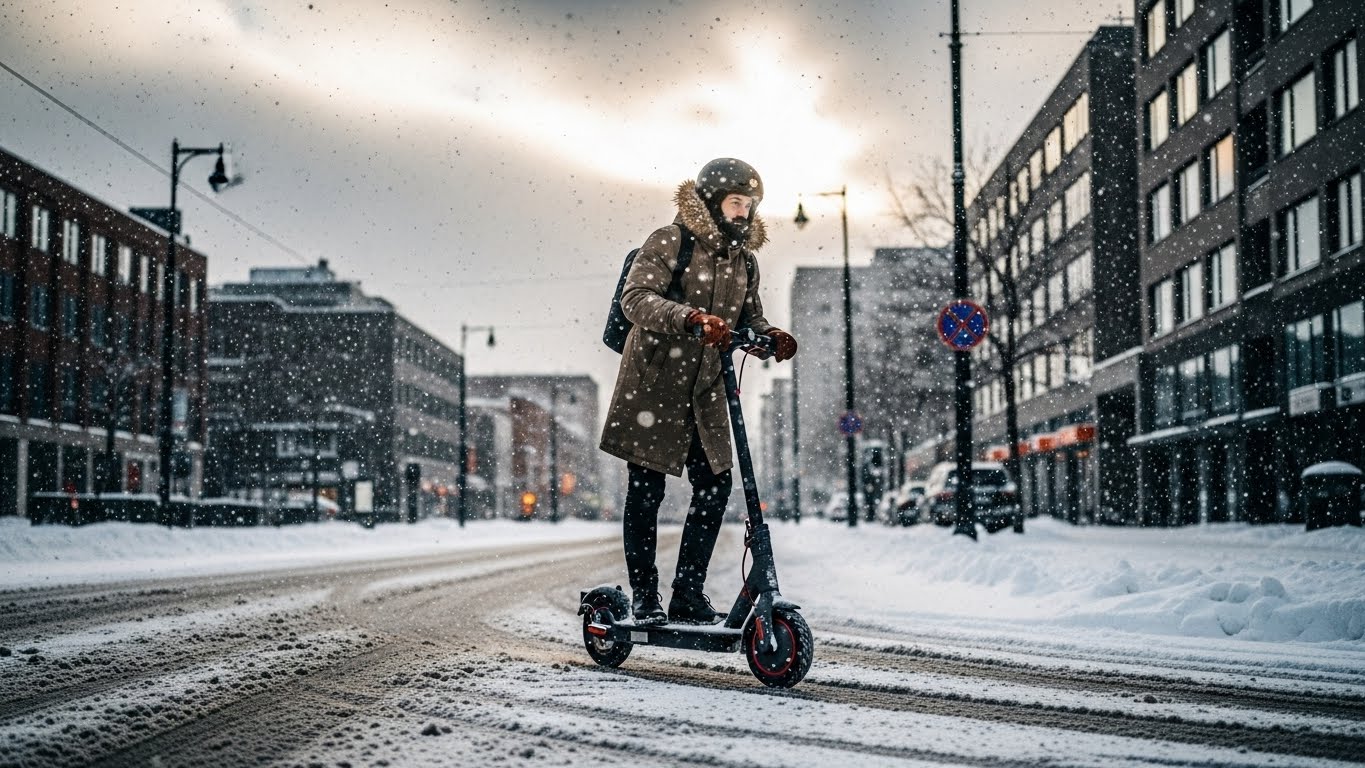
Riding an electric scooter in snow is fraught with dangers. The single greatest risk is the catastrophic loss of traction. Snow, and especially the ice that often hides beneath it, offers a fraction of the grip of dry pavement. The small, narrow tires of a typical scooter are not designed for these conditions. They can’t channel away slush or bite into the slippery surface, leading to wheels that slide out with no warning, particularly when turning or braking.
Braking effectiveness is also severely compromised. You need to know this… your stopping distance can easily double or triple in the snow. A sudden need to stop can result in a locked wheel and an uncontrollable skid. Furthermore, the snow can be a treacherous veil, hiding dangerous obstacles like potholes, curbs, or patches of black ice. Hitting one of these unseen hazards can cause an immediate crash.
Visibility is another major concern. Falling snow can drastically reduce how far you can see, and it also makes you less visible to cars, which are also struggling with the poor conditions. The combination of slippery surfaces, hidden dangers, and low visibility creates a perfect storm for a serious accident.
| Hazard | Why It’s Dangerous in Snow | Primary Risk |
| Loss of Traction | Snow and ice provide minimal grip for standard scooter tires. | Sudden falls from wheels slipping out during turns or acceleration. |
| Reduced Braking | Stopping distances are significantly increased on slippery surfaces. | Inability to stop in time, leading to collisions or skids. |
| Hidden Obstacles | Snow can conceal potholes, ice, and other road hazards. | Abrupt stops or loss of control, causing the rider to be thrown. |
2. How does cold weather affect your scooter’s battery?
The cold is a silent enemy to your electric scooter’s battery. Lithium-ion batteries operate through chemical reactions, and these reactions slow down dramatically as the temperature drops. This has a direct and very noticeable impact on your scooter’s performance, primarily its range. This is important because… you can expect your scooter’s maximum range to be cut by 30% to 50%, or even more, in freezing temperatures.
This phenomenon is a safety issue. A scooter you rely on for a 15-mile trip in the summer might die after just 7 or 8 miles in the winter, leaving you stranded. The cold also causes “voltage sag,” meaning the battery’s voltage drops more significantly under load. This can trick the scooter’s battery management system (BMS) into thinking the battery is empty, causing it to shut off suddenly.
Perhaps the most critical danger is charging a frozen battery. If you bring a scooter in from the freezing cold and immediately plug it in, you can cause permanent and irreparable damage to the battery cells through a process called lithium plating. You must always allow the battery to warm up to room temperature for several hours before charging.
| Temperature Range | Expected Range Reduction | Key Risk |
| 10°C to 25°C (50°F to 77°F) | 0% (Optimal Range) | N/A |
| 0°C to 10°C (32°F to 50°F) | 10% – 30% | Noticeable range loss; plan for shorter trips. |
| Below 0°C (32°F) | 30% – 50%+ | Severe range loss; risk of sudden power cutoff. |
3. What scooter features are essential for winter riding?
If you are determined to ride in the winter, you cannot use a standard summer commuter scooter. You need a machine equipped to handle the harsh conditions. The most critical feature is the tires. You absolutely need pneumatic (air-filled) tires, as they offer more compliance and grip than solid tires. Ideally, these should be specialized winter or studded tires.
Water resistance is another non-negotiable feature. The bottom line? Snow, slush, and road salt are incredibly corrosive and damaging to electronics. You need a scooter with a high Ingress Protection (IP) rating, such as IPX5 or higher. This ensures that the battery compartment and controller are sealed against moisture that can cause short circuits and long-term corrosion.
Power and control are also key. A powerful motor, or ideally a dual-motor setup, provides the necessary torque to push through heavy slush. High-quality hydraulic disc brakes are also far superior to mechanical or drum brakes in wet and cold conditions, offering more reliable stopping power. Finally, a good suspension system will help the tires maintain contact with the uneven, frozen ground.
| Feature | Minimum Requirement for Snow | Why It’s Essential |
| Tires | Pneumatic (Air-Filled) Winter or Studded Tires | Provides necessary grip on snow and ice; solid tires are dangerously slick. |
| IP Rating | IPX5 or Higher | Protects battery and electronics from water, slush, and corrosive salt. |
| Brakes | Hydraulic Disc Brakes | Offers the most reliable and powerful braking performance in wet/cold conditions. |
4. Are there special tires for riding electric scooters in snow?
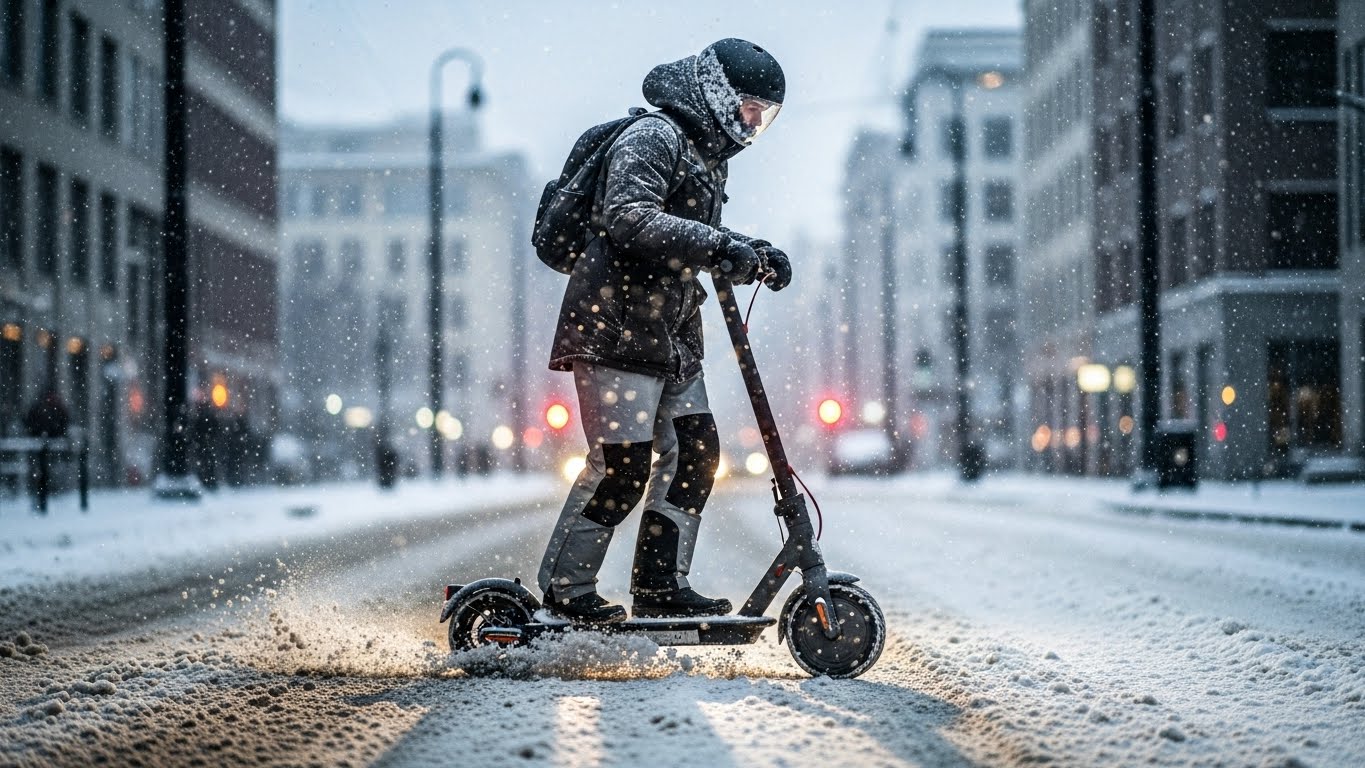
Yes, and they can be the difference between a controllable ride and an instant crash. Standard scooter tires are completely inadequate for snow. For winter riding, you need to invest in specialized tires. There are two main categories: winter tires and studded tires.
Winter tires are made from a softer rubber compound that stays flexible in cold temperatures, allowing for better grip. They also feature a deep, aggressive tread pattern with many small slits, called sipes. Let me explain… these sipes and channels are designed to bite into the snow and channel away slush and water from the contact patch, similar to how car snow tires work.
For the most extreme conditions, especially where ice is a concern, studded tires are the ultimate solution. These are winter tires that have small metal studs embedded in the tread. These studs act like tiny claws, digging into ice and hard-packed snow to provide a level of grip that is impossible with rubber alone. While they can be noisy on dry pavement, they are an essential piece of safety equipment for anyone who must ride on icy roads.
| Tire Type | Best Use Case | Pros | Cons |
| Standard (Summer) | Dry Pavement | Quiet, efficient | No grip in snow or on ice. |
| Winter (Non-Studded) | Light snow, slush, cold pavement | Good grip in snow, better in cold | Less effective on pure ice. |
| Studded | Ice, hard-packed snow | Excellent grip on ice | Noisy, wears fast on pavement. |
5. How does snow and ice impact braking and handling?
Snow and ice fundamentally change the physics of scooter handling and braking. The most critical concept to understand is the massive increase in your stopping distance. On a dry road, you might stop in 10-15 feet from a moderate speed. On snow or ice, that distance can stretch to 30, 40, or even 50 feet. You must adjust your riding style accordingly, leaving a huge following distance and anticipating stops far in advance.
But here’s the thing… how you brake is just as important as when you brake. Grabbing a handful of brake will instantly lock up a wheel in the snow, causing an uncontrollable skid. You need to apply brake pressure gently and progressively. It’s often best to rely more on the rear brake, as a locked rear wheel is easier to control than a locked front wheel, which will cause a complete loss of steering.
Handling also requires a much gentler touch. All of your inputs—steering, leaning, accelerating—must be smooth and deliberate. Abrupt movements will break the limited traction you have. You need to keep your body relaxed and your knees bent, using your body as additional suspension. Look far ahead and choose your line carefully.
| Braking Technique | Description | Why It’s Important in Snow |
| Progressive Application | Squeeze the brake levers slowly and gently, gradually increasing pressure. | Prevents the wheels from locking up and causing a skid. |
| Rear Brake Priority | Use the rear brake for most of your gentle slowing. | A skidding rear wheel is more manageable than a skidding front wheel. |
| Anticipatory Braking | Begin braking much earlier than you would in the dry. | Accounts for the dramatically increased stopping distances. |
6. What is the importance of an IP rating for winter riding?
A scooter’s IP (Ingress Protection) rating is one of the most critical specifications for winter riding. This rating tells you how well the scooter’s electrical components are sealed against the elements. The second digit, which rates liquid protection, is the most important for winter.
The takeaway is this… winter is a scooter’s worst enemy. It’s not just the snow, but the slush and corrosive road salt that gets kicked up by the wheels. If this salty spray penetrates the deck and reaches the electronics, it can cause short circuits and permanent corrosion.
A typical commuter scooter might have an IP54 rating. The “4” signifies it can handle splashes. For winter, however, you should look for a rating of at least IPX5, which protects against low-pressure jets of water. An IPX6 rating is even better, as it protects against powerful jets. This level of sealing is necessary to withstand the constant spray of slush and salt.
| Liquid IP Rating | Level of Protection | Suitability for Snow/Slush |
| IPX4 | Protection against splashing water. | Not Recommended. Insufficient for slush and road spray. |
| IPX5 | Protection against low-pressure water jets. | Minimum Recommended. Offers decent protection for careful riding. |
| IPX6 | Protection against powerful water jets. | Excellent. Provides strong protection against heavy slush and salt spray. |
7. What clothing and safety gear should you wear for winter scooting?
Your gear is just as important as your scooter’s hardware. Your primary goals are to stay warm, dry, and visible. This starts with layering: a moisture-wicking base layer, an insulating mid-layer like fleece, and a waterproof and windproof outer shell. This traps heat more effectively and allows you to adjust to changing conditions.
Your extremities are the most vulnerable to the cold. Want to know the secret? Invest in high-quality, insulated, and waterproof gloves and boots. Cold hands can’t operate the brakes and throttle effectively. A balaclava or neck gaiter is essential for protecting your face and neck from windburn.
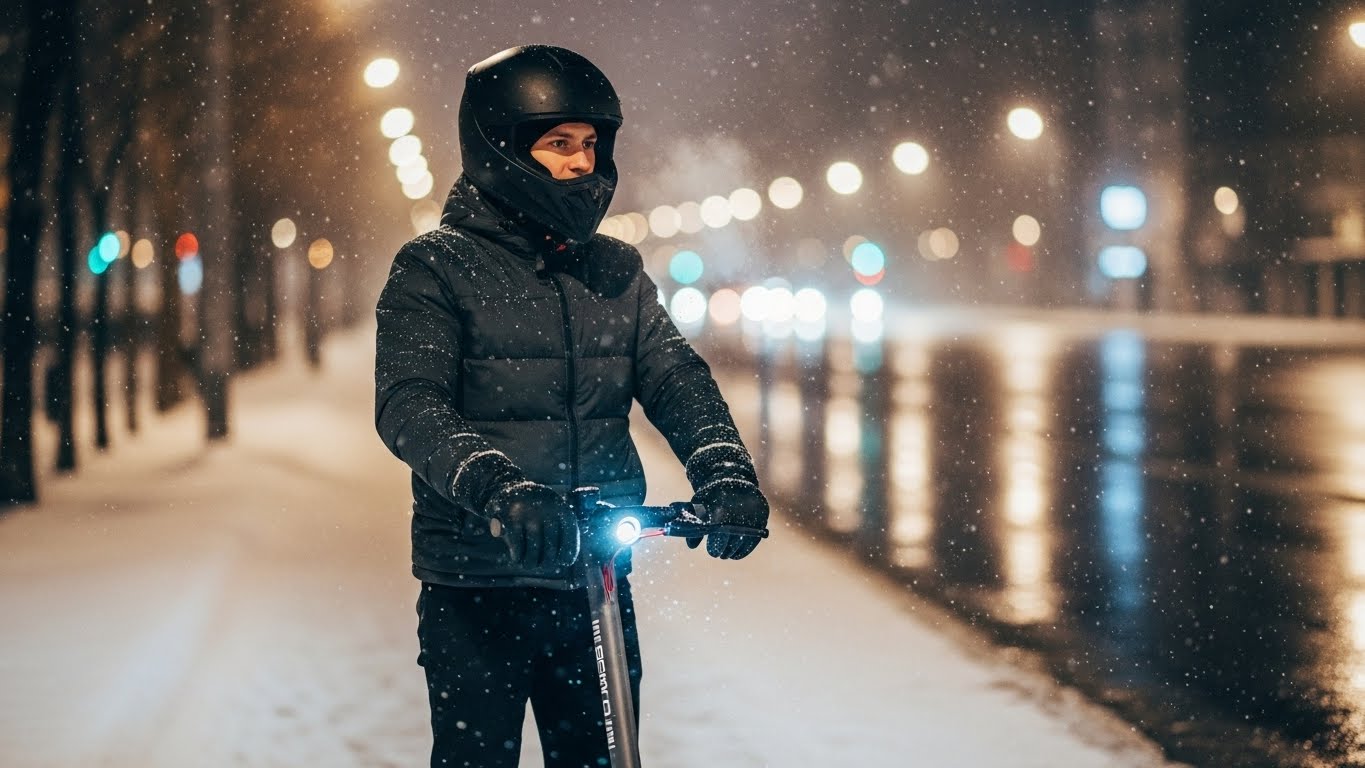
Visibility is life. In the gray, dim light of winter, you need to make yourself as conspicuous as possible. Wear brightly colored or reflective outerwear. A full-face helmet is highly recommended over a standard bike helmet, as it protects your face from the cold wind and impacts. Look for one with a good anti-fog visor or use an anti-fog spray. Add extra lights and reflectors to your scooter and your person.
| Gear Category | Essential Item | Key Feature for Winter |
| Head | Full-Face Helmet | Wind protection and anti-fog visor. |
| Body | Layered System with Waterproof Shell | Traps heat, blocks wind and moisture. |
| Hands | Insulated, Waterproof Gloves | Keeps hands warm and functional for operating controls. |

8. How should you prepare your scooter for a ride in the snow?
A thorough pre-ride check is mandatory before heading out into the snow. Start with your tires. If you have winter tires, ensure they are installed correctly. Check the tire pressure. Cold air is denser, so your tire pressure will drop in the winter. You may need to run a slightly lower pressure than in the summer for better grip, but don’t go below the manufacturer’s minimum.
Next, check your brakes. Pay close attention to this… squeeze the levers to ensure they feel firm and responsive. Spin the wheels to make sure the brake pads aren’t rubbing. If you have mechanical brakes, the cables can sometimes freeze if water gets inside the housing. Test your lights—all of them. Your headlight, taillight, and brake light are crucial for visibility.
Before your first winter ride, it’s a good idea to apply a corrosion inhibitor spray, like ACF-50, to the metal parts of your scooter, especially around the suspension and brake calipers. This creates a barrier against corrosive road salt. Finally, make sure your battery is fully charged and was stored indoors at room temperature.
| Pre-Ride Check | Action to Take | Reason |
| Tire Pressure | Check and adjust pressure. May need to be slightly lower for snow. | Ensures optimal contact patch and grip. |
| Brakes | Squeeze levers, spin wheels, check for free movement. | Critical for safety; brakes can freeze or become misaligned. |
| Lights | Test headlight, taillight, and brake light. | Essential for being seen in low-visibility winter conditions. |
9. What maintenance is required after riding in snow and slush?
The work isn’t over when your ride ends. The post-ride maintenance is arguably more important for the longevity of your scooter. The single most important thing you can do is to clean your scooter immediately after riding in snow or slush. Don’t let it sit overnight. The road salt and grime are incredibly corrosive.
Use a bucket of warm water and a soft cloth to wipe down the entire scooter. This is critical because… you need to get the salt off everything: the frame, the wheels, the brakes, the suspension, and the underside of the deck. Use a low-pressure water source; never use a high-pressure washer, as it can force water past the IP seals.
After washing, dry the scooter thoroughly with a clean cloth. Pay special attention to the brake discs. Once dry, lubricate the moving parts, like the suspension pivots and brake levers. Most importantly, if your battery is removable, take it inside to store it at room temperature. If not, bring the whole scooter inside if possible. This post-ride ritual will save you from costly repairs.
| Post-Ride Task | Action | Why It’s Crucial |
| Immediate Cleaning | Wipe down the entire scooter with warm water and a soft cloth. | Removes corrosive road salt and moisture. |
| Thorough Drying | Dry the scooter completely with a clean towel. | Prevents rust and corrosion from forming. |
| Battery Storage | Bring the battery (or whole scooter) indoors to a temperate location. | Protects the battery from cold damage. |
10. Are there legal restrictions for riding e-scooters in winter?
Navigating the legal landscape of winter scooter riding can be as tricky as navigating an icy street. The laws governing electric scooters vary dramatically by city and state, and winter conditions can add another layer of complexity. Many cities that have micro-mobility programs either shut them down entirely during the winter or have specific rules about when and where you can ride.
You need to look for this… your local municipal website or department of transportation page. They will have the most up-to-date information on winter riding bylaws. A common issue is the state of bike lanes. If a city does not clear its bike lanes of snow, are you legally allowed to ride in the car lane? The answer varies and is often unclear.
Furthermore, liability is a major concern. If you choose to ride in unsafe conditions and cause an accident, you could be held liable for damages. Ride-sharing companies like Lime and Bird have their own policies, often using their app to disable scooters in areas with bad weather. For private owners, the responsibility falls squarely on you to know the laws and ride with an abundance of caution.
| Legal Consideration | Where to Find Information | Potential Consequence |
| Local Bylaws | City or municipal government website (DOT page). | Fines or confiscation of your scooter. |
| Bike Lane Access | Local cycling advocacy groups or city bylaws. | Forced to ride in unsafe conditions or break the law. |
| Liability | Consult a legal professional or your insurance provider. | Financial responsibility for damages or injuries in an accident. |
Conclusion
The allure of a silent, snowy ride is powerful, but the dangers of winter scooting are real and unforgiving. For the vast majority of standard electric scooters, the answer to “Can it drive in snow?” is a firm no. The risks of traction loss, battery failure, and electronic damage are simply too high. However, for the dedicated winter warrior with a specialized, snow-prepped machine, it is possible. This requires a significant investment in the right scooter—one with pneumatic winter tires, a high IP rating, and powerful brakes—and an even greater investment in the right safety gear and maintenance habits.
Always check your local laws, and never underestimate the power of ice and cold. If you’re looking for a scooter that can truly stand up to the elements, explore the rugged, all-weather models from Dynamic Scooter.
FAQ
Q1: Can I use my standard commuter scooter in just a little bit of snow?
It is strongly discouraged. Even a light dusting of snow can hide patches of ice and dramatically reduce your tire’s grip. Standard solid or street-tread tires are not safe for any amount of snow.
Q2: Will riding in the snow void my scooter’s warranty?
Almost certainly, yes. Most manufacturers’ warranties explicitly exclude damage caused by water ingress or by using the scooter in conditions for which it was not designed, including snow and freezing temperatures.
Q3: How much range will I realistically lose in freezing temperatures?
Be prepared for a significant drop. A conservative estimate is a 30-50% reduction in range once the temperature is near or below freezing (0°C / 32°F). A scooter that gets 20 miles in the summer might only get 10-14 miles in the winter.
Q4: Is it safe to charge a scooter battery right after coming in from the cold?
No, this is extremely dangerous for the battery. You must let the battery pack warm up to room temperature for at least 3-4 hours before plugging it in. Charging a frozen lithium-ion battery can cause permanent damage.
Q5: Are off-road scooters automatically good for snow?
Not necessarily. While off-road scooters have the necessary power and suspension, they still need the right tires. Many come with knobby dirt tires that are not ideal for snow. For true winter performance, you would still need to equip them with proper winter or studded tires.