
You choose the best e-scooter with a seat by prioritizing high motor torque for inclines, verifying battery energy density for your daily range, and ensuring the frame supports ergonomic weight distribution.
Standing for a forty-minute commute on a standard kick scooter often results in significant lower back pain and joint strain. Most riders ignore that these micro-vibrations from uneven pavement can lead to chronic fatigue and increased risk of losing balance during sudden stops. Transitioning to a purpose-built electric scooter with a seat provides the motorcycle-grade stability and cushioned support needed to transform your daily travel into a relaxing experience.
Why choose an electric scooter with a seat?
Investing in an electric scooter with a seat fundamentally changes how you perceive your commute by lowering your center of gravity. This design shift offers superior balance during high-speed travel compared to traditional standing models. You will notice that the vehicle feels more planted on the road, especially when navigating around tight corners or through busy intersections.
Lower Center of Gravity
A seated position places your weight closer to the deck, which significantly enhances your stability at speed. This prevents the “twitchy” feeling often associated with small-wheeled stand-up scooters. You can lean into turns with more confidence and enjoy a smoother ride over cracks.
- Better cornering stability
- Reduced wobbling at high speeds
- Easier mounting and dismounting
- Improved weight distribution over the rear motor
Reduced Rider Fatigue
Long-distance commuting demands a lot from your core muscles and legs when you are standing upright. A seat allows you to rest your weight, preventing the muscle cramps that often occur after twenty minutes of riding. You arrive at your destination feeling refreshed rather than physically exhausted from the journey.
- Eliminates leg and knee strain
- Supports the lumbar spine during travel
- Ideal for riders with mobility considerations
- Perfect for long-distance urban exploration
Legal Classifications
In many regions, adding a seat changes the legal status of your vehicle to a moped or motor-driven cycle. You must verify if your local laws require registration or specific safety equipment for these models. Knowing these rules ensures you stay on the right side of the law while enjoying your ride.
- May require a moped license in the EU
- Often restricted from sidewalks in the US
- Might require mandatory insurance coverage
- Lighting requirements are often stricter
| Feature | Seated Scooter | Standing Scooter |
|---|---|---|
| Stability | High | Moderate |
| Comfort | Exceptional | Low |
| Weight | Heavier | Portable |
| Center of Gravity | Low | High |
This comparison highlights how the seated design prioritizes rider comfort and structural stability over raw portability.
Key Takeaway: Choosing a seated model is a strategic move for commuters who value long-term health and stability over the ability to carry the scooter up multiple flights of stairs.

What specs define an electric scooter with a seat?
To find a reliable electric scooter with a seat, you must look beyond flashy top speeds and focus on motor torque. High torque is essential for maintaining speed when you are seated and climbing steep urban inclines. Without at least 45 Nm of torque, your scooter may struggle to carry your full weight up even moderate hills.
Torque vs Peak Wattage
Manufacturers often highlight peak wattage, but torque is what actually moves you from a complete stop. You should look for a motor that delivers consistent power across the entire acceleration curve. This ensures that your seated experience remains punchy and responsive in traffic.
- Minimum 45 Nm for hilly terrain
- Hub motors provide quieter operation
- Brushless designs offer better longevity
- Consistent power delivery prevents stalling
Battery Energy Density
Energy density determines how much range you can squeeze out of a battery pack that fits under your seat. You want a battery with high Wh/kg to ensure your scooter remains as light as possible while offering long range. Premium cells like NMC 811 provide the best balance of weight and endurance for daily users.
- Prioritize Wh over raw Ah ratings
- Look for smart BMS cell balancing
- Thermal management prevents overheating
- Faster charging cycles improve daily utility
Braking Redundancy
Since seated scooters often carry more total weight, they require significantly more stopping power than light stand-up models. You should never settle for just one brake or rely solely on electronic regenerative systems. Dual hydraulic disc brakes are the gold standard for safety in emergency stopping situations.
- Hydraulic discs offer better modulation
- Regenerative braking saves battery life
- Dual systems provide a safety backup
- Larger rotors dissipate heat more effectively
| Component | Minimum Requirement | Professional Recommendation |
|---|---|---|
| Motor Torque | 45 Nm | 65 Nm or higher |
| Battery Tech | Lithium-Ion (Standard) | NMC 811 with Thermal Sinks |
| Brakes | Mechanical Disc | Dual Hydraulic Discs |
| IP Rating | IP54 | IP65/IP67 |
Engineering specs dictate whether your scooter will handle the rigors of daily use or fail under the pressure of constant hill climbing.
Key Takeaway: High torque and hydraulic braking are non-negotiable features for any adult rider looking for a safe and capable seated scooter for city streets.
Is an electric scooter with a seat truly comfortable?
True comfort in an electric scooter with a seat comes from a combination of high-quality foam and adjustable geometry. If the seat is too narrow or the handlebars are fixed, you will quickly develop posture issues. You need a design that can be tailored to your specific height and arm length to prevent strain.
Dual-Density Foam Seats
A quality seat uses a firm base layer to prevent bottoming out and a soft top layer for initial comfort. This dual-density approach protects your sciatic nerve from compression during long rides over rough pavement. You should check for a seat width of at least 28 cm to ensure adequate pelvic support.
- Prevents sacral pressure points
- Reduces road vibration transfer
- Durable outer material resists rain
- Contoured shapes improve rider grip
Ergonomic Stem Height
Handlebar height must be adjustable to ensure your arms are at a natural, slightly bent angle while seated. Reaching too far down or up can cause wrist fatigue and reduce your ability to steer accurately. A telescoping stem allows you to find the “sweet spot” that fits your torso length perfectly.
- Prevents shoulder and neck tension
- Improves control during sharp turns
- Accommodates riders of various heights
- Telescoping locks must be heavy-duty
Vibration Damping
Comfort is not just about the seat; it is about how the entire chassis handles road imperfections like cobblestones. Integrated suspension systems with progressive damping are essential for isolating your spine from harsh impacts. You should look for at least 60 mm of travel in the rear suspension.
- Absorbs 5–15 Hz road frequencies
- Silicone-gel grips reduce hand numbness
- Pneumatic tires provide extra cushioning
- Rubber-isolated mounts protect electronics
| Comfort Metric | Basic Level | Premium Level |
|---|---|---|
| Seat Foam | Single-density sponge | Dual-density ergonomic foam |
| Handlebar Adjust | Fixed height | Telescoping + reach adjust |
| Suspension | Front spring only | Full dual-suspension (Hydraulic) |
| Tire Type | Solid rubber | 10-inch+ Air-filled rubber |
Ergonomic adjustments are the difference between a scooter you love to ride and one that collects dust in the garage after a month.
Key Takeaway: Prioritize a model with a wide, dual-density seat and adjustable handlebars to ensure your long-term physical comfort and safety.
Is your electric scooter with a seat legal to ride?
The legality of an electric scooter with a seat is often more complex than standard standing versions due to power output. Many cities classify seated scooters with high-wattage motors as mopeds, which changes your insurance and licensing requirements. You must research your specific municipal code before taking your new ride onto public streets.
EU EN 17128 Standards
In Europe, scooters that exceed 25 km/h with a seat typically fall under the L1e-A moped category. This means you will likely need a license, insurance, and a registered license plate to ride legally. Ignoring these regulations can lead to heavy fines or the impounding of your vehicle.
- Speed cap usually set at 25 km/h
- Type-approval certificates are mandatory
- Third-party liability insurance required
- Helmet use is almost always mandatory
US State Regulations
In the United States, rules vary wildly from state to state regarding what qualifies as a “motorized bicycle” versus a “scooter.” Some states permit seated scooters in bike lanes, while others restrict them strictly to the road. You should check with your local DMV to see if your model requires a Class M endorsement.
- Classification depends on top speed
- Motor power limits vary (e.g., 750W)
- Sidewalk riding is generally banned
- Age restrictions apply for high-speed models
Municipal Ordinances
Even if your state allows seated scooters, your specific city might have more restrictive ordinances in place for downtown areas. Some tourist-heavy cities have banned all motorized scooters from certain parks or waterfront paths. Always look for local signage and stay updated on transit police announcements.
- Geofencing may limit top speeds
- Parking restrictions are often strict
- Specific lanes might be prohibited
- Nighttime riding requires extra lighting
| Region | Classification | License Needed? | Insurance? |
|---|---|---|---|
| UK/EU | L1e-A Moped | Yes (usually) | Mandatory |
| USA (CA) | Motor-driven Cycle | Yes (over 30mph) | Mandatory |
| USA (NY) | Electric Scooter | No (if <20mph) | Optional |
| Australia | Personal Mobility | Varies by state | Varies |
Legal compliance is your responsibility, and failing to verify your local rules can result in unexpected legal costs and penalties.
Key Takeaway: Check your local municipal laws regarding moped classifications before purchasing, as seated designs often trigger different regulatory requirements.
How does an electric scooter with a seat age?
Understanding how an electric scooter with a seat ages is vital for calculating its true cost of ownership over several years. Batteries and mechanical linkages are the first components to show signs of wear after several hundred cycles. You will find that regular maintenance significantly extends the lifespan of these high-performance machines.
Real-World Battery Fade
All lithium batteries lose capacity over time, usually dropping to about 80% after 500 to 800 full charge cycles. You can mitigate this by avoiding extreme temperatures and keeping your battery between 20% and 80% whenever possible. Cheap batteries without cell balancing will fade much faster than premium alternatives.
- Capacity drops after 12–18 months
- Cold weather reduces temporary range
- Fast charging increases heat stress
- Replacement packs can be expensive
Mechanical Wear Patterns
The folding hinges and seat mounts on a seated scooter take a lot of stress from the constant shifting of your weight. You might notice slight play or “creaking” in the stem after a few months of heavy use. Tightening bolts and lubricating moving parts every few weeks will keep the ride feeling tight and safe.
- Hinge pins may require replacement
- Brake pads wear faster on hills
- Bearings need cleaning after rain
- Seat upholstery can crack in UV light
Long-Term Maintenance
Maintaining a seated scooter is more akin to maintaining a small motorcycle than a simple kick scooter. You will need to flush hydraulic brake fluid and check tire pressure at least once a week to ensure efficiency. Neglecting these tasks leads to reduced range and potentially dangerous mechanical failures.
- Weekly tire pressure checks (PSI)
- Monthly bolt and screw inspection
- Annual hydraulic fluid flushing
- Quarterly battery health diagnostics
| Component | Life Expectancy | Signs of Wear |
|---|---|---|
| Battery Pack | 2–4 Years | Reduced range/Longer charging |
| Brake Pads | 500–1,000 Miles | Squealing/Reduced power |
| Tires | 1,500 Miles | Bald treads/Frequent flats |
| Motor | 5,000+ Miles | Unusual noise/Power loss |
Durability is built into the frame, but longevity is earned through consistent maintenance and careful riding habits.
Key Takeaway: Expect to perform more frequent maintenance on a seated model than a stand-up version to ensure the extra mechanical components remain safe.
How to vet an electric scooter with a seat?
When vetting an electric scooter with a seat, you should start by examining the frame rigidity and welding quality. A weak frame will flex under your weight, which compromises your handling and can lead to structural failure over time. You want to see heavy-duty aluminum alloys like 6061-T6 used in the main construction.
Frame Rigidity Tests
You can check for frame quality by applying pressure to the deck and handlebars while the scooter is stationary. There should be zero “give” or bending in the main down-tube or the seat post assembly. High-quality scooters use reinforced mounting points that are integrated directly into the chassis.
- No visible gaps in weld beads
- Thick metal gauges in high-stress areas
- Stable folding mechanism without play
- Weight capacity should exceed 120kg
IP Waterproof Ratings
An IP rating tells you exactly how much dust and water your scooter can handle before the electronics fail. You should demand a rating of at least IP65 if you plan on riding in anything more than a light drizzle. Scooters with only IP54 ratings often suffer from internal corrosion within six months of wet-weather use.
- IP65 resists low-pressure water jets
- IP67 allows for temporary immersion
- Avoid scooters with no listed IP rating
- Port covers must seal tightly
Lighting Certification
Safe riding at night requires more than just a weak decorative LED strip on the front of the scooter. You need a certified headlight that throws at least 100 lux and a functional rear brake light that flashes during deceleration. This ensures you are visible to car drivers from at least 150 meters away.
- High-lumen beam for road visibility
- Rear brake lights are essential
- Side reflectors improve intersection safety
- Integrated turn signals are a major plus
| Vetting Criteria | Pass (Good) | Fail (Bad) |
|---|---|---|
| Frame Material | 6061 Aluminum Alloy | Stamped Steel |
| Waterproofing | IP65 or IP67 | “Water-resistant” (No IP) |
| Light Output | >100 Lux Beam | Dim LED marker |
| Seat Mount | Welded or bolted bracket | Plastic clamp |
Vetting the hardware before you buy saves you from the frustration of dealing with cheap components that break after a few weeks.
Key Takeaway: Look for independent lab-verified IP ratings and rigid aluminum frames to ensure your scooter survives the urban environment.
How to service an electric scooter with a seat?
Learning to service your electric scooter with a seat will save you hundreds of dollars in shop fees every year. Most basic tasks, like adjusting mechanical brakes or lubricating the seat post, can be done with a simple set of hex keys. You should set a recurring monthly schedule to ensure no part of the system is neglected.
Brake Fluid Management
If your scooter has hydraulic brakes, you must learn how to check the fluid levels and bleed the lines if the lever feels “spongy.” Air bubbles in the lines can drastically reduce your stopping power, which is a major safety risk at high speeds. You should perform a full fluid flush every twelve months using the manufacturer’s recommended grade.
- Check for leaks at the calipers
- Use specific mineral or DOT oil
- Keep pads clean of oil and grease
- Adjust lever reach for comfort
Tire Pressure Impact
Under-inflated tires are the number one cause of reduced range and sluggish performance in seated electric scooters. Low pressure increases rolling resistance and makes the motor work significantly harder to maintain your speed. You should check your PSI once a week and keep it within the range printed on the tire sidewall.
- Prevents pinch flats on potholes
- Maximizes battery range per charge
- Improves cornering grip and safety
- Essential for high-load seated riders
Battery Cell Balancing
Modern smart chargers handle most of the work, but you should occasionally leave your scooter plugged in for an hour after it hits 100%. This allows the internal Battery Management System (BMS) to balance the voltage between individual cells in the pack. This simple habit can add months of life to your battery.
- Improves overall pack health
- Ensures consistent power delivery
- Prevents premature module failure
- Should be done once a month
| Service Task | Frequency | Skill Level |
|---|---|---|
| Tire Pressure | Weekly | Beginner |
| Brake Pad Check | Monthly | Beginner |
| Bolt Tightening | Monthly | Intermediate |
| Hydraulic Flush | Annually | Advanced |
Consistent servicing ensures that your vehicle remains as responsive and safe as the day you first unboxed it.
Key Takeaway: Weekly tire pressure checks and monthly bolt inspections are the most effective ways to prevent mechanical breakdowns.
Is an electric scooter with a seat safer for adults?
For adult riders, an electric scooter with a seat offers significant safety advantages by reducing the risk of being thrown over the handlebars. When you are seated, your center of mass is lower and further back, which prevents the “endo” effect during emergency stops. This stability is especially critical when navigating over road debris or uneven manhole covers.
Emergency Stop Distance
Research shows that seated riders can apply more braking force without losing control of the vehicle compared to standing riders. Because your weight is already settled, the scooter does not dive forward as aggressively when you pull the brake levers. This results in shorter stopping distances and better control on wet or slippery surfaces.
- Lower risk of forward ejection
- Better control on wet pavement
- Improved balance during skids
- Allows for more aggressive braking
Stability on Inclines
Climbing hills on a stand-up scooter can feel unstable, as you have to lean forward significantly to maintain balance. On a seated model, the seat supports your weight, allowing you to focus entirely on steering and throttle control. This makes navigating complex intersections on a hill much safer and less stressful.
- Prevents rearward tipping on hills
- Easier to maintain a steady line
- Reduces arm pump on long climbs
- Better traction on the drive wheel
Nighttime Visibility
Seated scooters often have a larger profile, which makes it easier for motorists to recognize you as a vehicle rather than a pedestrian. Most seated models also come with more robust lighting systems integrated directly into the chassis. This ensures that you stay visible from all angles, even in low-light rainy conditions.
- Larger reflective surface area
- Higher-powered integrated lights
- Better visibility to car mirrors
- Brake lights are more obvious
| Safety Aspect | Seated Benefit | Standing Risk |
|---|---|---|
| Emergency Braking | High stability/Short stop | High pitch/Risk of ejection |
| Uneven Terrain | Better impact absorption | Risk of losing footing |
| Rider Fatigue | Low (Better focus) | High (Reduced reaction time) |
| Visibility | Large profile | Thin profile (Easily missed) |
A seated design provides a more predictable and stable platform that compensates for road hazards much better than standing alternatives.
Key Takeaway: Adults should choose seated scooters for their superior weight distribution, which prevents the most common types of scooter accidents.
How to pick an electric scooter with a seat?
To pick an electric scooter with a seat that fits your life, you must first calculate your daily round-trip mileage. Many riders make the mistake of buying a scooter with exactly the range they need, only to find that battery fade leaves them short after a few months. You should always aim for a battery capacity that offers 30% more range than your longest planned trip.
Compact Commuter Models
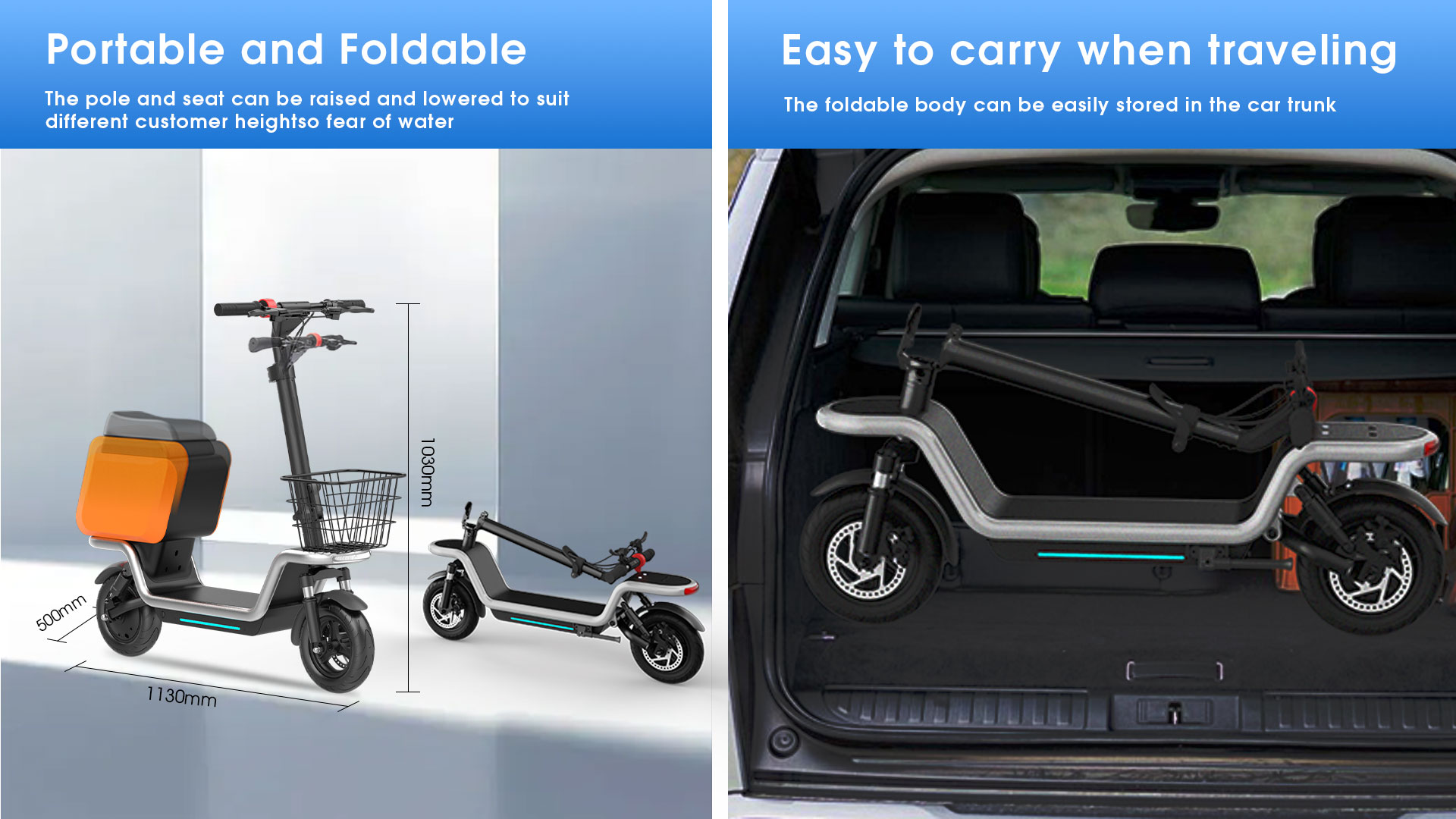
If you need to combine your scooter ride with public transit, look for lightweight, foldable models with removable seats. These designs offer the comfort of a seated ride while still being manageable on a train or in an office corner. However, these compact models usually have smaller batteries and lower top speeds.
- Easier to lift and carry
- Removable seats add flexibility
- Smaller wheels for tight turns
- Typically lower price point
High-Performance Options
For those who plan to use their scooter as a primary vehicle, high-performance models with dual motors are the best choice. these machines offer the speed and power to keep up with city traffic and climb any hill with ease. You should expect a larger frame and significantly more weight with these robust options.
- Dual motors for maximum power
- Larger 10-inch or 11-inch tires
- Long-range battery packs (50+ miles)
- Advanced hydraulic suspension
Payload Considerations
You must check the maximum weight capacity of the scooter, especially if you plan on carrying a backpack or groceries. Most standard scooters support up to 100kg, but heavy-duty seated models can handle up to 150kg. Overloading a scooter reduces its range, stresses the motor, and can compromise the braking system.
- Account for gear and backpacks
- Heavy-duty frames last longer
- Suspension must be adjustable
- Check tire load ratings carefully
| Rider Type | Ideal Range | Ideal Motor | Key Priority |
|---|---|---|---|
| Casual Commuter | 15–20 Miles | 250W–500W | Portability |
| Daily Power User | 30–50 Miles | 1000W+ | Reliability |
| Delivery Driver | 60+ Miles | Dual Motor | Range/Battery Swap |
| Hilly Terrain Rider | 25 Miles | High Torque 60V+ | Hill Climbing |
Selecting the right category of scooter ensures you don’t overpay for power you don’t need or under-equip yourself for your daily route.
Key Takeaway: Always over-spec your range and payload requirements by at least 25% to account for battery aging and varying road conditions.
Where to buy an electric scooter with a seat?
Finding a reputable seller for your electric scooter with a seat is just as important as the specs themselves. You should look for companies that provide local support and have a transparent warranty policy for the motor and battery. Buying from a fly-by-night brand often means you will have no access to replacement parts when you eventually need a repair.
Pre-Order Benefits
Many premium scooter brands offer significant discounts for pre-ordering new models before they hit general retail. This is an excellent way to get the latest technology and higher-quality components at a lower price point. Just ensure the company has a track record of meeting their delivery windows and providing updates.
- Significant cost savings (20% or more)
- Get the latest battery tech first
- Often includes free accessories
- Early access to new safety features
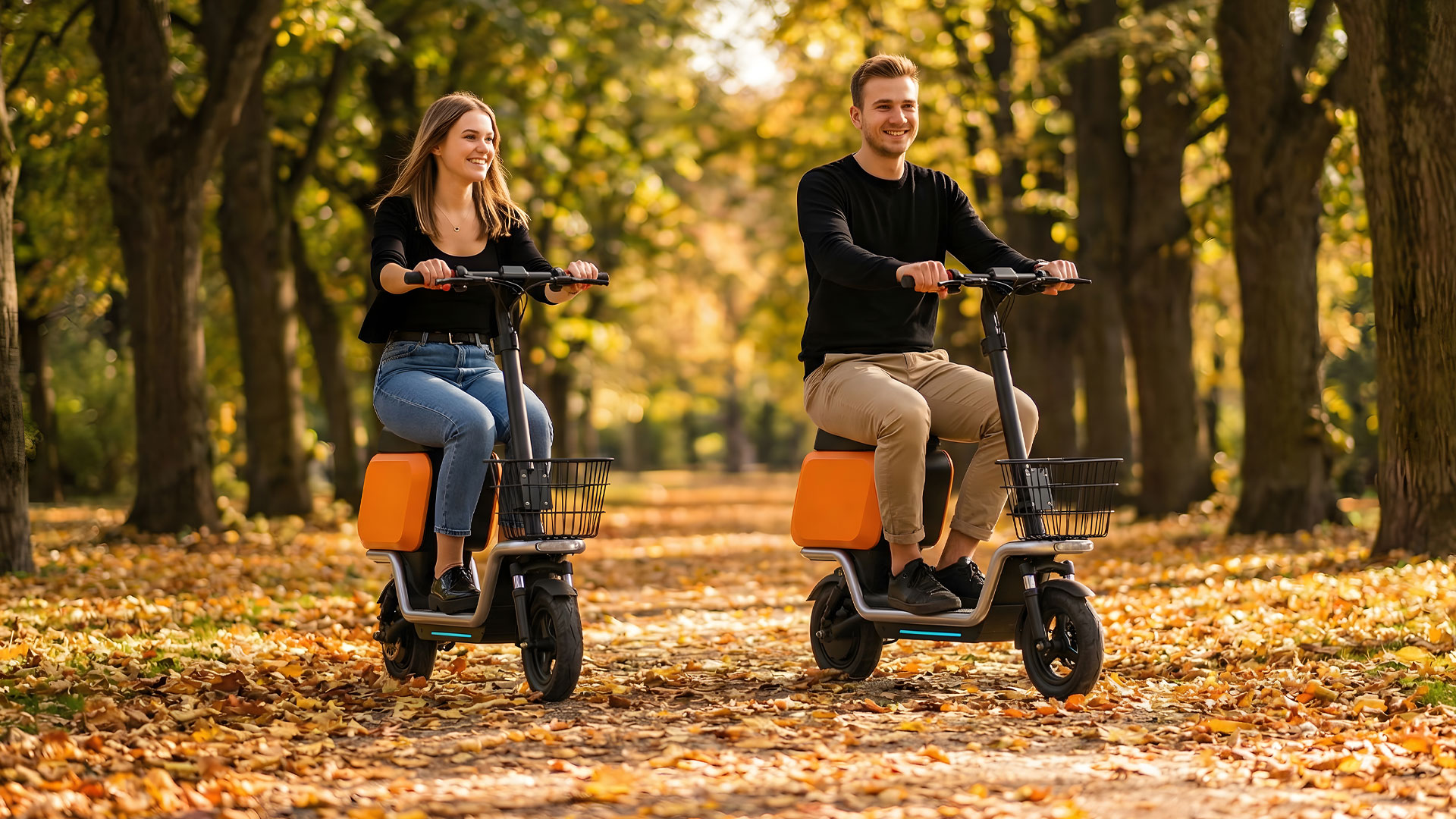
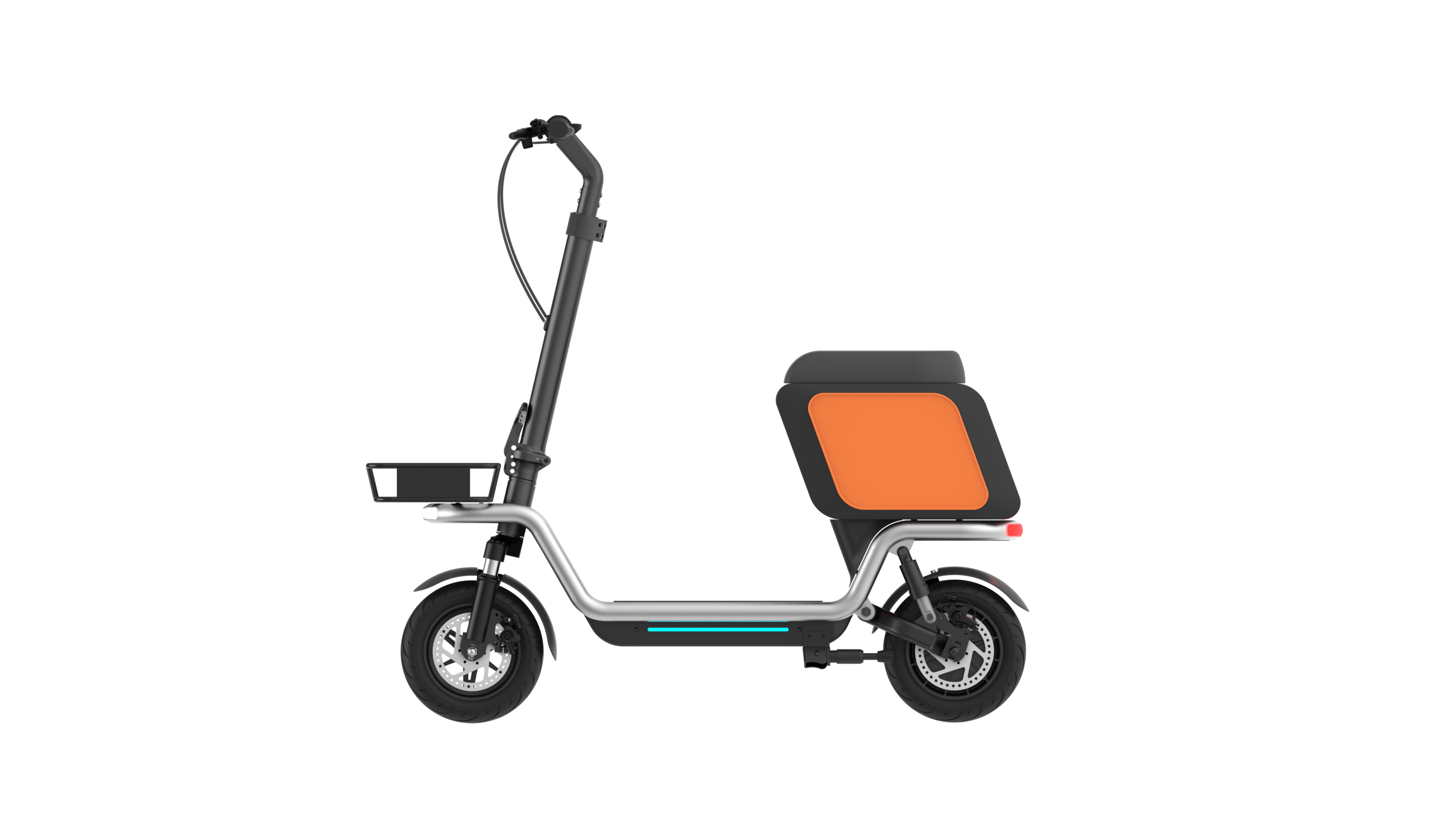
Pre-order the Dynamic Scooter Model S20 now and get 20% off. Electric scooter with seat, front basket, 30–40km range, and smooth daily rides.
Warranty Expectations
A solid warranty is a sign that the manufacturer trusts their engineering and build quality. You should expect at least a one-year comprehensive warranty that covers the battery, motor, and controller against defects. Be wary of sellers who only offer a 30-day “dead on arrival” policy, as these models often have hidden issues.
- Minimum 12-month motor coverage
- 6-month minimum on battery cells
- Clear process for shipping repairs
- Access to local certified technicians
Local Support Access
Before you buy, check if there are any local bike or scooter shops that are willing to service the brand you are interested in. Having a professional who can bleed your brakes or swap a tire locally is worth its weight in gold. If you buy a rare model with proprietary parts, you may be forced to ship it across the country for simple fixes.
- Essential for hydraulic maintenance
- Easier to source replacement tires
- Fast turnaround for safety checks
- Builds community with other riders
| Purchase Source | Pros | Cons |
|---|---|---|
| Direct Manufacturer | Best price/Latest tech | Long shipping times |
| Local Specialist | Hands-on support/Service | Higher retail price |
| Big Box Retail | Easy returns | Low-quality components |
| Pre-Order Sales | Huge savings | Waiting period |
Your choice of seller determines the level of support you will receive throughout the multi-year life of your vehicle.
Key Takeaway: Purchase from a brand that offers a clear one-year warranty and has a verifiable history of providing replacement parts to customers.
Frequently Asked Questions
Can I add a seat to a standing e-scooter?
No, you should only use integrated designs for maximum safety. Most standing scooter frames are not reinforced to handle the specific stress of a seated load, and aftermarket seat clamps can fail under heavy braking.
Are seated e-scooters allowed on bike lanes?
It varies by municipal ordinance, but generally, yes. If your scooter is capped at 25 km/h, most cities treat it like a bicycle, though high-speed “moped” versions are usually restricted to the road.
How do I know if I need a license for my seated scooter?
It depends on your local classification of the motor wattage and top speed. In many US states, anything over 750W or 20mph requires a driver’s license, while the EU requires M-class licenses for L1e-A models.
How often should I flush my hydraulic brakes?
Once every twelve months is the standard recommendation. Over time, hydraulic fluid absorbs moisture from the air, which can cause the brakes to fail or feel spongy when you need them most.
What is the best IP rating for riding in the rain?
IP65 or higher is necessary for consistent wet-weather commuting. This rating ensures the internal motor and battery components are sealed against low-pressure water jets from all directions.
Ride Smarter, Not Faster
Choosing the right vehicle is about more than just speed; it is about finding a machine that fits your lifestyle and protects your physical health. At Dynamic Scooter, we believe that urban mobility should be as comfortable as it is efficient. We are dedicated to providing engineered solutions that prioritize rider stability, legal compliance, and long-term durability.
If you are ready to upgrade your commute or have questions about which model is right for your city’s laws, please contact us today to speak with a mobility expert.