


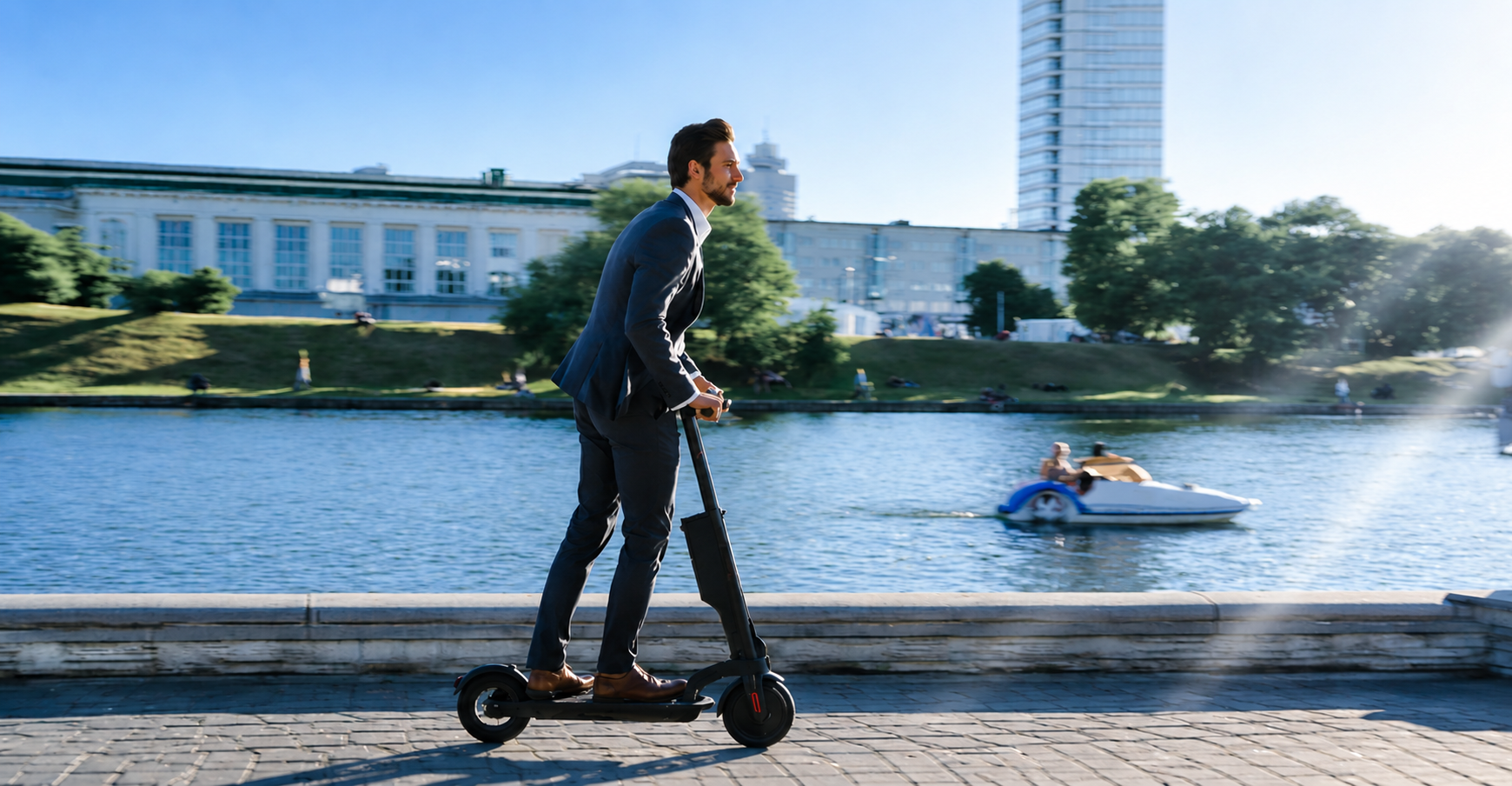
The best body alignment for reducing body strain while operating an electric scooter is a dynamic, slightly bent-knee stance with a neutral spine, relaxed shoulders, and a staggered foot placement over the deck. You arrive at your destination with throbbing wrists, a tight lower back, or aching knees, turning a fun commute into a painful chore.
If you ignore these early warning signs of joint discomfort, you risk developing chronic repetitive strain injuries like carpal tunnel or tendonitis that could sideline your active lifestyle. Fortunately, simple physical adjustments can immediately transform your body into a natural shock absorber. By refining your scooter riding posture on your daily rides, you will protect your joints, elevate your riding stability, and unlock a deeply comfortable journey.
Why does scooter riding posture cause back pain?

A hunched spine and rigid leg alignment are the primary culprits behind severe back pain during a ride. When you maintain an improper scooter riding posture, your lower spine is forced to absorb the constant vibrational energy from uneven pavement. This stress is magnified if your posture lacks active core engagement.
Why is a hunched spine dangerous?
Hunching over your handlebars places immense pressure on your lumbar spinal discs. When you round your back, your spinal muscles must work twice as hard to stabilize your head and shoulders. Here is the thing: this muscle overwork quickly leads to painful spasms and tension.
Your breathing also becomes shallow when your chest is compressed from a slouching stance.
- Shallow breathing limits oxygen flow to your muscles.
- Slouching deactivates your natural core support system.
To prevent this, you should keep your shoulders rolled back and down.
How do road vibrations travel up?
Without active muscular dampening, road shocks travel directly up your steering column and deck. This continuous micro-impact acts like a hammer on your vertebrae, wearing down your spinal cushions over time. Think about it: a rigid body cannot dissipate energy safely.
This vibration is particularly brutal if your scooter has small solid tires.
- Solid tires transfer maximum shock compared to pneumatic ones.
- Stiff arms lock the shock into your neck.
By flexing your limbs, you intercept these vibrations before they reach your head.
How does core stability protect you?
An active core acts as an internal weightlifting belt that unloads pressure from your lumbar region. By bracing your abdomen slightly, you create a protective cylinder around your spine. But wait, there is more: a strong core improves your balance.
Engaging your core keeps your pelvis in a neutral tilt.
- Neutral pelvic alignment reduces lower back pinching.
- It allows your legs to bend freely.
Keep your abs lightly engaged throughout your journey.
Key Takeaway: Engaging your core and keeping your shoulders relaxed prevents harmful road vibrations from compressing your spinal discs, keeping you pain-free.
| Alignment Type | Muscle Strain Level | Shock Absorption | Back Pain Risk |
|---|---|---|---|
| Hunched & Stiff | High | Minimal (Skeletal) | High |
| Neutral & Core-Engaged | Low | High (Muscular) | Low |
Focusing on a neutral spinal alignment immediately reduces muscular fatigue across your entire lower back.
What is ideal scooter riding posture for safety?

The ideal stance for safe riding requires a relaxed, athletic posture that allows your limbs to react dynamically to changes on the road. By establishing a balanced scooter riding posture before pulling the throttle, you ensure that your body is prepped for safe braking and acceleration. This foundation relies on active muscle engagement and aligned joints.
What is the ready athletic stance?
The athletic stance is the gold standard for any action sport, including electric riding. You stand with your feet spaced apart, knees slightly flexed, and hips hinged back. Here is the thing: this stance keeps your center of mass low and stable.
This flexible position gives you the leverage needed to steer effortlessly.
- Bend your knees to lower your center of gravity.
- Keep your elbows pointing slightly outward.
It allows you to react to sudden pavement gaps without losing balance.
How do you distribute your weight?
Distributing your weight evenly between both wheels keeps your scooter tracking straight and prevents front-wheel slide. Leaning too far forward makes the steering twitchy and dangerous. Think about it: a balanced deck means a balanced ride.
Ideally, you want to split your weight evenly over the deck.
- Maintain a 50/50 weight balance during normal cruising.
- Keep your chest centered over the middle of the deck.
This distribution provides maximum tire traction on wet city asphalt.
Key Takeaway: Maintaining an athletic ready stance with balanced weight ensures you have complete control over your steering and stability during sudden maneuvers.
| Weight Split | Steering Feel | Traction Control | Safety Rating |
|---|---|---|---|
| Front-Heavy | Twitchy / Heavy | Poor Rear Grip | Low |
| Balanced (50/50) | Stable / Smooth | Excellent | High |
Splitting your weight evenly keeps the machine stable and responsive to quick steering inputs.
How does scooter riding posture protect joints?

A proper body alignment protects your joints by shifting road-related stress from your delicate bones to your large, powerful muscles. Adopting a protective scooter riding posture prevents your knees, hips, and ankles from bearing the brunt of rough pavement. This muscular buffer is essential for preventing repetitive strain injuries.
Why do bones need muscular protection?
When you stand stiff, your bones collide during every bump, wearing down your precious cartilage. Your muscles are designed to expand and contract to absorb these heavy vertical forces. But wait, there is more: muscles heal quickly, while cartilage does not.
Engaging your leg muscles unloads the pressure from your knees.
- Active quads shield your kneecaps from road friction.
- Strong calves support your ankle stability.
Let your muscles do the heavy lifting during your commute.
How do you prevent joint locking?
Joint locking is a dangerous habit that occurs when riders feel tired or unstable on the deck. Locking your joints acts as an invitation for chronic inflammation and ligament damage. Here is the thing: keeping your joints unlocked is your best defense.
To break this habit, focus on keeping your limbs soft and springy.
- Keep a continuous micro-bend in your elbows and knees.
- Shift your hips back slightly to maintain flexibility.
This adjustment keeps your body relaxed and reactive.
Key Takeaway: Keeping your limbs slightly flexed converts your muscles into natural shock absorbers, sparing your joint cartilage from premature wear.
| Stance State | Joint Pressure | Muscular Workload | Long-Term Health Impact |
|---|---|---|---|
| Locked Limbs | Extremely High | Very Low | Cartilage degradation |
| Flexed Limbs | Minimal | Moderate (Healthy) | Joint preservation |
Maintaining a continuous flex in your legs prevents vertical road shocks from battering your bone structures.
How can scooter riding posture reduce hand strain?

Relaxing your fingers and straightening your wrists immediately relieves the numbness and cramping that can plague long commutes. When you refine your scooter riding posture to keep your upper body weight off the handlebars, you eliminate the need for a tight, fatiguing grip. This change keeps blood flowing freely to your fingertips.
Why is the death grip dangerous?
Squeezing your grips too tightly is a natural reaction to bumps, but it blocks blood circulation in your palms. This lack of blood flow leads to tingling, numbness, and rapid muscle exhaustion. Think about it: a relaxed grip gives you better brake control.
A loose, secure grip is far safer than a tense squeeze.
- Rest your palms lightly on the handlebar grips.
- Keep two fingers hovering over the brake levers.
This configuration allows for instant braking without exhausting your forearms.
How do you keep wrists straight?
Keeping a straight line from your forearm to your knuckles protects your carpal tunnel from painful pinching. Bending your wrists upward or downward under load strains the delicate tendons in your wrist. But wait, there is more: straight wrists offer superior steering control.
Your wrists should rest in a neutral, relaxed position.
- Adjust your brake lever angles downward to meet your hands.
- Never lean your body weight directly down onto your hands.
This ensures optimal nerve pathway protection.
Key Takeaway: Straight wrists and a relaxed, two-finger brake hover protect your hands from repetitive strain while keeping you ready for emergency stops.
| Wrist Alignment | Nerve Strain Risk | Hand Fatigue Speed | Steering Accuracy |
|---|---|---|---|
| Bent / Loaded | High | Very Fast | Poor |
| Straight / Unloaded | Minimal | Very Slow | High |
Keeping your wrists aligned prevents the hand numbness that often ruins long urban commutes.
Which scooter riding posture is safest for feet?

A staggered foot stance is the safest and most stable way to position your lower body on the deck. Using a staggered stance within your scooter riding posture provides an expansive physical base that easily resists forward and backward forces. Standing with parallel feet, by contrast, severely compromises your balance.
Why is parallel standing risky?
Standing with both feet side-by-side makes you incredibly unstable during sudden braking or rapid acceleration. Without a front-to-back brace, your body is thrown forward or backward, forcing you to pull on the handlebars. Here is the thing: handlebars are not designed to support your falling weight.
Parallel feet also prevent you from bending your knees effectively over bumps.
- It stiffens your lower pelvic movement.
- It increases your risk of falling off.
Always avoid the side-by-side stance for your own safety.
How do you master the staggered stance?
To set up a staggered stance, place your non-dominant foot near the front of the deck and your dominant foot near the rear. This configuration distributes your weight evenly and allows you to shift your center of gravity instantly. Think about it: it is the same stance used in surfing.
This foot placement lets you brace against acceleration and braking.
- Press into your rear foot when accelerating to stay stable.
- Push into your front foot when braking to distribute force.
Keep your feet angled slightly outward for maximum comfort.
Key Takeaway: A staggered foot placement gives you an unshakeable physical foundation, keeping you safe and balanced during sudden starts and stops.
| Stance Configuration | Acceleration Stability | Braking Stability | Cornering Control |
|---|---|---|---|
| Parallel (Side-by-side) | Low | Low | Poor |
| Staggered (Front-to-back) | High | High | Excellent |
Transitioning to a staggered stance immediately stops you from leaning heavily on the steering stem.
Why bend knees in your scooter riding posture?

Bending your knees dynamically acts as your body’s built-in suspension, keeping your ride smooth and your lower back protected. When you integrate a light knee bend into your scooter riding posture, you allow your leg muscles to actively absorb the physical jolts of the road. This micro-bend keeps your skeletal structure safe from harsh, vertical impacts.
How do knees act as shocks?
Your knee joints are surrounded by powerful muscle groups designed to compress and expand under load. When you ride over a pothole with slightly bent knees, your quad and hamstring muscles absorb the impact force. But wait, there is more: this prevents the shock from reaching your brain.
Flexing your knees also lowers your physical center of gravity.
- Lower gravity makes cornering feel much safer.
- It keeps your tires pressed firmly into the asphalt.
Aim for a constant 10-to-15-degree bend in your knees.
What happens if you ride stiff-legged?
Riding with perfectly straight legs is highly dangerous and extremely uncomfortable. Every crack in the concrete sends a jarring shock straight up your legs into your pelvis and spine. Here is the thing: stiff riding is the fastest way to get knee pain.
A stiff-legged posture also ruins your balance on rough surfaces.
- It makes you highly vulnerable to side-to-side wobble.
- It prevents your hips from moving naturally.
Always keep your joints soft and springy while cruising.
Key Takeaway: Keeping a slight bend in your knees protects your spine and joints from road vibration, turning your legs into active shock absorbers.
| Knee Flexion Angle | Vibration Dampening | Balance Stability | Muscle Fatigue |
|---|---|---|---|
| 0 Degrees (Stiff) | Very Low | Low | Low |
| 10-15 Degrees (Flexed) | High | High | Moderate (Healthy) |
Active knee flexion is the single most important habit for maintaining stability on uneven city streets.
How to adapt your scooter riding posture for hills?

Riding on steep inclines and declines requires you to shift your body weight to counter gravity and maintain maximum tire traction. Modifying your scooter riding posture during hill climbs and descents keeps your wheels firmly planted and prevents motor strain. This physical shift ensures you remain in complete control.
How do you tackle steep climbs?
When climbing a hill, lean your upper body slightly forward to keep weight on the front wheel. This prevents the front tire from lifting off the ground under motor power. Think about it: keeping weight on the drive wheel maximizes climbing efficiency.
You should pull slightly on the bars while pushing with your legs.
- Shift your hips forward over the center of the deck.
- Bend your elbows and keep them close to your body.
This posture helps your motor climb smoothly without losing speed.
How do you descend hills safely?
Descending a steep hill requires you to shift your hips backward and downward to resist forward inertia. This posture keeps your rear tire anchored during heavy braking. But wait, there is more: shifting back prevents you from tipping forward.
Keep your knees deeply bent as you go down an incline.
- Press your heels firmly into the rear of the deck.
- Apply the brakes smoothly and progressively.
This technique keeps your descent stable and controlled.
Key Takeaway: Leaning forward on climbs and shifting your hips back on descents balances gravitational forces, ensuring your tires maintain maximum grip.
| Slope Type | Body Weight Shift | Key Leg Action | Handlebar Grip |
|---|---|---|---|
| Steep Climb | Lean Forward | Push into front deck | Firm pull |
| Steep Descent | Shift Backward | Deep knee flex | Relaxed, stable hold |
Using your body weight to counter slope changes preserves traction and stops the scooter from sliding.
What setup fixes your scooter riding posture?
Customizing your handlebar height, tire pressure, and lever angles is the fastest way to achieve a comfortable, natural stance. If your machine is not configured to match your height, maintaining a healthy scooter riding posture becomes physically impossible. Simple physical tweaks to your controls can instantly eliminate neck and shoulder strain.
What is the perfect handlebar height?
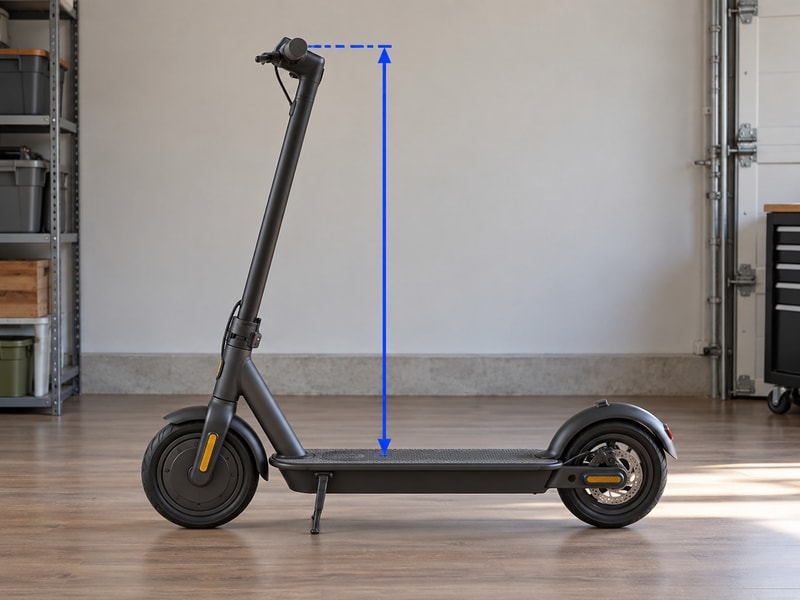
Your handlebars should rest at your natural waist or hip level when standing on the deck. If your bars are set too low, you will slouch forward and strain your lower back. Here is the thing: handlebars that are too high will strain your shoulders.
A proper handlebar height allows your arms to bend comfortably.
- Your elbows should form a relaxed 90-degree angle.
- Your shoulders should remain relaxed and down.
Check if your scooter has an adjustable stem to make this fix.
How do brake lever angles help?
Your brake levers should be angled downward so your wrists remain perfectly straight when reaching for them. Flat levers force your wrists to bend upward, pinching nerves and causing rapid fatigue. Think about it: a natural reach speeds up your emergency stopping time.
Angling your levers downward forms a continuous straight line from elbow to fingertip.
- Loosen the lever mount and rotate it down 30 to 45 degrees.
- Ensure you can reach the lever without twisting your wrist.
This simple adjustment makes daily braking completely effortless.
Key Takeaway: Setting your handlebars at hip level and angling your brake levers downward keeps your upper body aligned and free from joint strain.
| Component Setup | Incorrect Alignment Issue | Correct Configuration | Physical Relief |
|---|---|---|---|
| Handlebar Stem | Slouching / Raised shoulders | Hip/waist level alignment | Back and shoulder relaxation |
| Brake Levers | Bent, pinched wrists | Downward rotation (30-45°) | Carpal tunnel pressure relief |
Taking five minutes to adjust your controls permanently removes joint pain from your daily commute.
How does weight impact scooter riding posture?

Where you distribute your physical weight over the deck directly affects your tires’ contact patches and your steering stability. Understanding how your body weight interacts with your scooter riding posture prevents the scooter from feeling twitchy or sliding out during turns. Keeping your weight low and centered is the key to stability.
Why keep your center of gravity low?
A high center of gravity makes you top-heavy and highly vulnerable to tipping over bumps or during sudden stops. By bending your knees and hinging your hips, you lower your weight closer to the deck. But wait, there is more: a lower center of gravity improves tire traction.
Keeping your weight low makes the scooter feel incredibly stable.
- It dampens the steering wobble at higher speeds.
- It allows you to lean confidently into corners.
Keep your torso compact and active for maximum safety.
How do you balance weight in turns?
To turn safely, lean your entire body in unison with the steering column rather than just twisting the handlebars. Leaning only your upper body can cause your tires to slip sideways on slick pavement. Here is the thing: turning is a full-body movement.
Your hips should guide the direction of your turn.
- Press into the deck with your feet to hold your line.
- Maintain a light grip on the bars to allow self-centering.
This technique keeps your cornering predictable and smooth.
Key Takeaway: Keeping your weight low and leaning your entire body into turns keeps your tires glued to the road and prevents steering instability.
| Rider Weight Center | Speed Stability | Cornering Traction | Risk of Tipping |
|---|---|---|---|
| High & Rigid | Poor (Twitchy) | Low | High |
| Low & Centered | Excellent (Stable) | High | Minimal |
Lowering your center of gravity stabilizes the chassis, giving you confidence on any city surface.
Ride Pain-Free and Commute Smarter
You no longer have to accept joint soreness, aching knees, or a stiff back as the inevitable price of active commuting. By optimizing your physical alignment, adopting an athletic staggered stance, and setting up your controls ergonomically, you can transform your body into a highly efficient shock absorber. This comprehensive guide has given you the exact tools to protect your spine, relax your wrists, and enjoy every single mile of your journey.
At Dynamic Scooter, we believe micromobility should be liberating, not painful. Our flagship Dynamic Scooter Model B electric scooter is meticulously engineered with ultra-portable, commuter-focused geometry that naturally supports an ergonomic stance, letting you glide over city bumps with absolute ease. If you are ready to revolutionize your daily travel, contact us today to find the ultimate companion for your pain-free, comfortable ride.
Move effortlessly, live comfortably, and conquer your city with Dynamic Scooter.
Frequently Asked Questions
Can I ride an electric scooter if I have chronic lower back pain?
Yes, you can absolutely ride an electric scooter comfortably by adopting a staggered athletic stance and keeping your knees slightly bent. This posture transforms your legs into active springs, capturing the harsh road vibrations before they compress your spinal discs. Additionally, engaging your abdominal muscles creates a protective cylinder around your lumbar spine, drastically reducing muscle fatigue.
What’s the best footwear to use for maintaining a proper scooter riding posture?
The best footwear is flat, supportive athletic shoes with cushioned soles. High heels, flip-flops, or stiff boots prevent you from flexing your ankles and knees naturally over pavement bumps. Flat sneakers allow you to keep your heels planted firmly on the deck, ensuring optimal weight distribution and traction.
How do I know if my handlebar height is set too low?
Your handlebar height is too low if you find yourself slouching forward or bending at the waist to grip the bars. This hunched alignment places extreme physical stress on your neck, shoulders, and lumbar spine. Ideally, the grips should level perfectly with your waist or hip line when standing upright.
Can I swap my front and back feet while the scooter is moving?
No, you should never attempt to swap your feet while the electric scooter is in motion. Doing so momentarily compromises your balance and traction, greatly increasing your risk of a sudden fall. Always bring your scooter to a safe, complete stop before adjusting or swapping your foot placement.
How do I know if I am gripping the handlebars too tightly?
You are gripping too tightly if your fingers feel numb, your knuckles turn white, or your forearms begin to cramp. This tense grip blocks healthy blood circulation and transfers high-frequency pavement vibrations directly into your hand nerves. Focus on holding the grips with a relaxed, secure grasp, hovering your braking fingers lightly.


1 thought on “Best Scooter Riding Posture for Reducing Body Strain”
Pingback: Electric Scooter vs Public Transit: Which Commute Wins?