
...

January 22, 2026

Can Electric Scooters Be Used Manually? How They Move Without Power

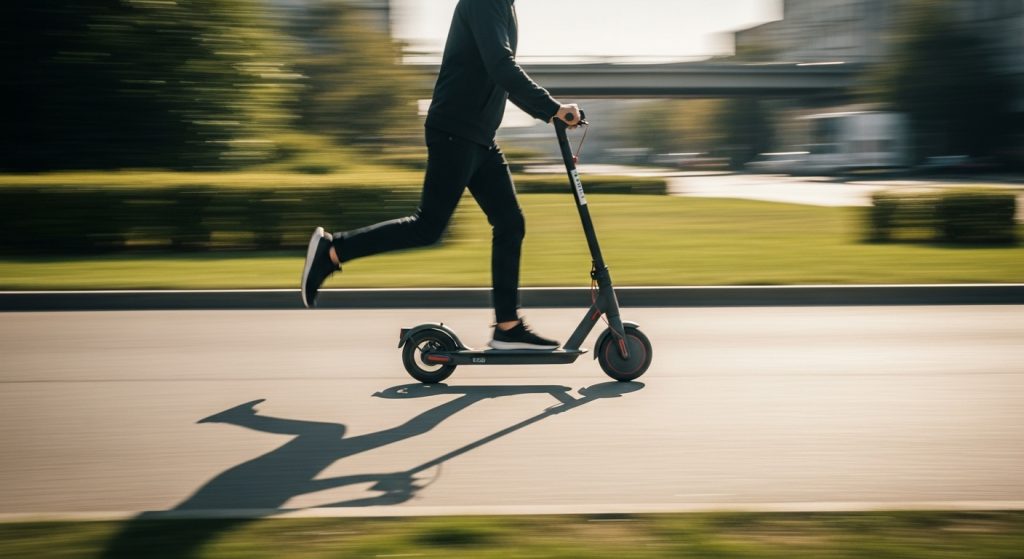
You are halfway through your commute when your electric scooter’s battery indicator hits zero. The motor cuts out, and you are left standing on the sidewalk wondering what to do next. Can you just kick it home like a regular scooter? This is a common question for anyone who owns or is considering buying an electric scooter. The short answer is yes, most electric scooters can be pushed or kicked manually, but the experience is often far from ideal. Unlike a lightweight kick scooter, an electric scooter carries the extra weight of a motor and battery, and the motor itself can create significant resistance. This guide will explore exactly what happens when you try to use your electric scooter without power, what factors make it easier or harder, and how to prepare for those moments when your battery unexpectedly dies. Yes, you can use most electric scooters manually by kicking them like a traditional scooter. However, the experience varies greatly depending on the scooter’s weight, motor type, and whether it has a freewheel function. Lightweight models like the Dynamic Scooter Model B, weighing just 10kg, are much easier to push than heavier alternatives. The motor may create some drag, but it will not damage the scooter. Ready to learn more? Here’s the full breakdown… 1. What Happens When You Manually Push an Electric Scooter? When you push an electric scooter without using the motor, you are essentially turning it into a very heavy kick scooter. The first thing you will notice is the weight. A typical electric scooter weighs between 10kg and 25kg, compared to just 3-5kg for a standard kick scooter. This extra mass requires significantly more effort to get moving and to maintain momentum. The key factor here is that you are fighting against inertia every time you push off the ground. The second thing you will notice is the motor. Most electric scooters use hub motors, which are built directly into one of the wheels. When the motor is not powered, it can still create a phenomenon called motor drag. This is because the magnets inside the motor create resistance as the wheel turns. The amount of drag varies significantly between different motor designs. Some scooters feel almost free-rolling, while others feel like you are pushing through mud. The type of motor matters a great deal. Geared hub motors often have a clutch mechanism that allows the wheel to spin more freely when the motor is not engaged. Gearless, or direct-drive, hub motors tend to have more noticeable drag because the magnets are always in contact with the stator. If your scooter feels very heavy to push, it is likely because it has a direct-drive motor without a good freewheel mechanism. Motor Type Freewheel Capability Typical Drag Level Manual Use Suitability Geared Hub Motor Often has clutch Low to Medium Good Gearless Hub Motor Rarely has clutch Medium to High Fair Chain/Belt Drive Motor is separate Low Good 2. Can Kicking an Electric Scooter Damage the Motor or Battery? This is one of the most common concerns among electric scooter owners. The good news is that, in the vast majority of cases, manually pushing your electric scooter will not cause any damage to the motor or the battery. The motor is designed to spin, and pushing the scooter simply spins the motor in reverse of its normal operation. Here’s the truth: the components are robust enough to handle this without issue. However, there is a nuance related to regenerative braking. Some electric scooters have a feature that captures energy when you brake or coast downhill and feeds it back into the battery. If your scooter has active regenerative braking, pushing it manually might engage this system. This is not harmful to the battery; in fact, it is doing exactly what it was designed to do. The only downside is that it creates additional resistance, making the scooter harder to push. The components that might experience slightly more wear from manual use are the wheel bearings. These are the small metal balls that allow the wheel to spin smoothly on its axle. Pushing a heavy scooter puts stress on these bearings, but this is normal wear and tear that would happen during regular use anyway. High-quality scooters use sealed bearings that are designed to last for thousands of miles. Component Risk of Damage from Manual Use Notes Hub Motor Very Low Designed to spin; no damage from pushing. Battery None Not affected by manual pushing. Wheel Bearings Low (Normal Wear) Standard wear; use quality bearings. Controller None Not engaged when scooter is off. 3. How Does a Scooter’s Freewheel Feature Work? The freewheel is a critical component that determines how easy your electric scooter is to push manually. A freewheel, also known as a clutch, is a mechanism that allows the wheel to spin independently of the motor when the motor is not providing power. Think of it like the freewheel on a bicycle: you can coast without pedaling because the chain is not forcing the pedals to turn. This is the secret to a smooth manual pushing experience. In electric scooters with geared hub motors, the freewheel is often built into the motor assembly. When you are not accelerating, the clutch disengages, allowing the wheel to roll freely. This is why some scooters feel almost like a regular kick scooter when the power is off. The motor is effectively disconnected from the wheel’s rotation. Gearless hub motors, on the other hand, typically do not have a freewheel. The rotor (the spinning part of the motor) is directly connected to the wheel. This means that every time the wheel turns, the magnets inside the motor pass over the coils, generating a small amount of resistance. This is the drag you feel. Some manufacturers are now designing gearless motors with improved magnetic configurations to reduce this drag, but it is still a factor to consider when choosing a scooter. Feature Geared Hub Motor Gearless Hub Motor Freewheel Often

Can Electric Scooters Be Used Manually? How They Move Without Power Read More »
Do Electric Scooters Have Gears or Not? The Simple Answer Explained

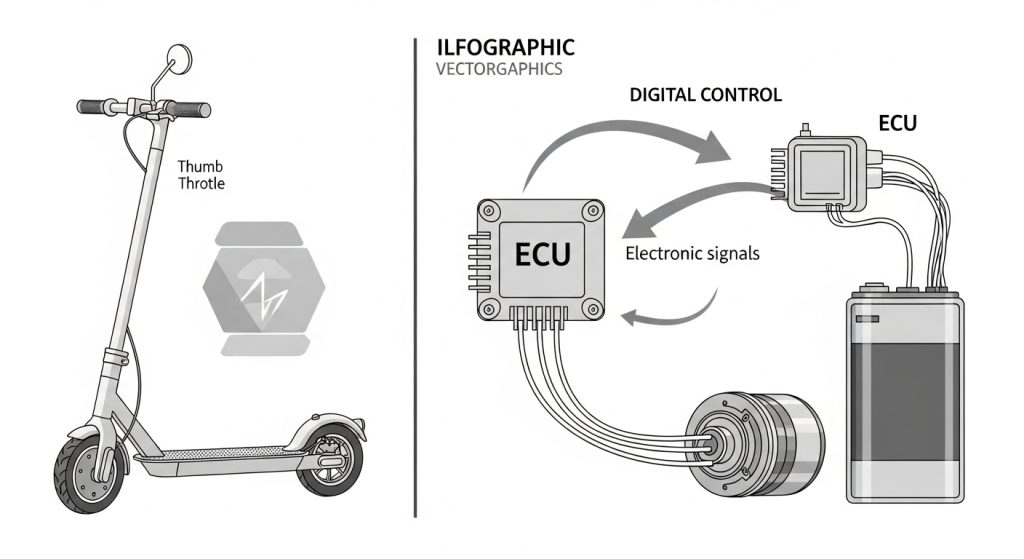
Many riders wonder whether electric scooters have gears like bicycles. The answer is more complex than a simple yes or no. Most electric scooters don’t have traditional mechanical gears. Instead, they use electronic speed control systems. Understanding how scooters manage speed helps you choose the right model. This guide explains scooter transmission systems in detail. Electric scooters typically don’t have mechanical gears. Instead, they use electronic motor controllers to manage speed. Dynamic Scooter models feature direct-drive motors with smooth electronic speed control. This system is simpler and more reliable than traditional gears. Electronic control provides consistent performance. No gears mean less maintenance and better reliability. Ready to understand scooter transmissions? Here’s the deal… 1. Do Electric Scooters Have Traditional Gears? Most electric scooters don’t have traditional mechanical gears. Understanding this fundamental difference helps you appreciate scooter design. Traditional bicycles have mechanical gears. Gears change the mechanical advantage. They allow riders to maintain efficiency across different speeds. Bicycles need gears because human power varies. Pedaling at different cadences requires different gear ratios. This is important because mechanical gears solve a specific human-powered problem. Electric scooters don’t need mechanical gears. Electric motors provide consistent power across all speeds. Motors can deliver maximum torque instantly. There’s no need to shift gears. Electronic controllers manage speed automatically. The motor adjusts power delivery electronically. No mechanical shifting is required. Direct-drive motors are standard on scooters. Direct-drive means the motor connects directly to the wheel. No gearbox sits between the motor and wheel. Power transfers directly from motor to wheel. This design is simple and reliable. Direct-drive is the most common scooter configuration. Hub motors are the typical choice. Hub motors sit inside the wheel hub. They’re compact and efficient. Hub motors integrate seamlessly with the wheel. This design saves space and weight. Hub motors are ideal for scooters. Some scooters have geared hub motors. Geared motors use internal gears. These gears reduce motor speed while increasing torque. Geared motors are less common on scooters. They’re heavier than direct-drive motors. Most scooters use direct-drive instead. The Dynamic Scooter uses a direct-drive motor. This provides reliable, consistent performance. No gears mean fewer moving parts. Fewer parts mean better reliability. Direct-drive is the superior choice for scooters. Motor Type Gears Present Complexity Reliability Direct-Drive No Low High Geared Hub Yes Medium Medium Mid-Drive Sometimes High Medium Belt Drive Sometimes High Low Chain Drive Sometimes High Low 2. How Do Scooters Control Speed Without Gears? Electronic speed control replaces mechanical gears. Understanding this system helps you appreciate scooter technology. Electronic controllers manage motor speed. Controllers receive input from the throttle. They adjust power delivery to the motor. Power adjustment happens electronically. This is instantaneous and smooth. No mechanical shifting is needed. Throttle input controls acceleration. Riders twist or press the throttle. This sends a signal to the controller. The controller increases motor power. Acceleration is smooth and progressive. Here’s why it matters… Electronic control provides better acceleration than mechanical gears. Variable speed control is continuous. Scooters don’t have discrete speed steps. Speed changes smoothly and continuously. Riders can achieve any speed up to the maximum. This is more flexible than gear ratios. Motor controllers use pulse-width modulation. PWM adjusts power by turning the motor on and off rapidly. The frequency is so fast that riders don’t notice. The motor appears to run at variable power. PWM is efficient and smooth. Regenerative braking captures energy. When riders brake, the motor reverses. The motor becomes a generator. Kinetic energy converts back to electrical energy. This energy charges the battery. Regenerative braking extends range significantly. Torque is constant across speeds. Unlike bicycles, scooter motors deliver maximum torque instantly. This provides excellent acceleration. Riders feel responsive performance. Constant torque is a key advantage of electric motors. Control Method Smoothness Efficiency Complexity PWM Control Excellent High Medium Throttle Input Excellent High Low Continuous Speed Excellent High Low Regen Braking Good High Medium Motor Torque Excellent High Low 3. What Are the Advantages of Gearless Scooters? Gearless design offers significant benefits. Understanding these advantages helps you appreciate scooter engineering. Simplicity is the primary advantage. Fewer moving parts mean simpler design. Simpler design means lower manufacturing costs. Lower costs mean more affordable scooters. Simplicity also improves reliability. This is important because simple systems fail less often. Maintenance is minimal on gearless scooters. No gears to adjust or replace. No chain to lubricate. No derailleurs to repair. Maintenance is straightforward and inexpensive. Most riders can perform basic maintenance themselves. Reliability is excellent on gearless scooters. Fewer moving parts mean fewer failure points. Gearless systems rarely break down. Electronic controllers are very reliable. Gearless scooters last longer than geared alternatives. Weight is lower on gearless scooters. Direct-drive motors are lightweight. No gearbox adds extra weight. Lighter scooters are easier to carry. Lighter weight improves performance. Weight savings matter for portability. Efficiency is high on gearless scooters. Direct-drive systems have minimal energy loss. No gearbox friction reduces efficiency. Electronic control is very efficient. High efficiency means longer range. Efficiency translates to better value. Silent operation is a benefit of gearless scooters. No gears means no gear noise. Electronic motors are nearly silent. Quiet operation is pleasant for riders. Noise reduction improves the riding experience. Advantage Impact Level Benefit Simplicity High Lower cost, better design Low Maintenance High Less work, lower costs Reliability Critical Fewer breakdowns Light Weight Medium Better portability High Efficiency High Longer range Silent Operation Medium Pleasant riding 4. What Are the Disadvantages of Gearless Scooters? Gearless design has some limitations. Understanding these helps you make informed decisions. Limited torque at high speeds is a disadvantage. Direct-drive motors have fixed gear ratios. At high speeds, torque decreases. Hill climbing becomes difficult at high speeds. This is a trade-off of direct-drive design. Here’s why it matters… Torque limitations affect performance on hills. Motor size must be larger for power. Direct-drive motors need more power to achieve performance. Larger motors are heavier. Larger motors consume more battery. This increases scooter weight and cost. Motor size is a practical

Do Electric Scooters Have Gears or Not? The Simple Answer Explained Read More »

Shopping Cart
Scroll to Top