...

January 27, 2026

Can You Doordash on an Electric Scooter? Rules, Earnings & Setup Tips

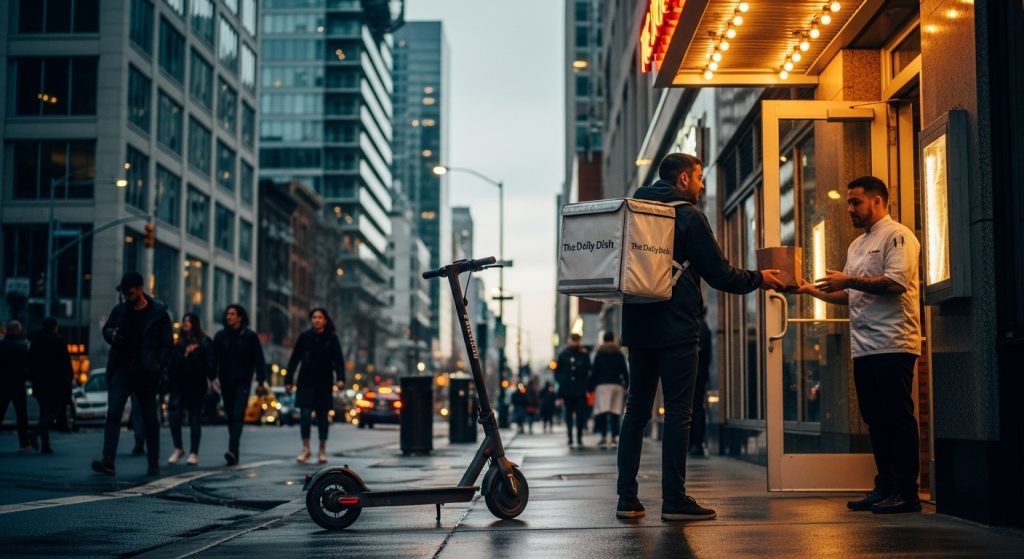
Many delivery drivers wonder whether electric scooters work for food delivery services like DoorDash. The answer is yes, but with important considerations. Electric scooters offer unique advantages for delivery work. They’re fast, affordable, and environmentally friendly. However, they also present specific challenges. Limited cargo capacity is a significant limitation. Weather exposure affects both rider and food. Battery range restrictions limit delivery zones. Understanding these factors helps you succeed. This guide explores scooter delivery comprehensively. You’ll learn how to use scooters for DoorDash effectively. You’ll discover earning potential and realistic income. You’ll understand the challenges and how to overcome them. By the end, you’ll know if scooter delivery suits you. Yes, you can deliver with an electric scooter on DoorDash. Dynamic Scooter Model B provide reliable performance for delivery work. Lightweight design enables easy navigation. Responsive acceleration improves delivery speed. Quality construction ensures durability under demanding conditions. Scooter delivery is viable with proper planning. Ready to start scooter delivery? Here’s the deal… 1. Can DoorDash Accept Electric Scooters as Vehicles? DoorDash officially accepts electric scooters as delivery vehicles. Understanding the requirements helps you qualify. DoorDash is flexible about vehicle types. This flexibility enables diverse delivery options. Scooters are increasingly popular for delivery. Many drivers successfully use scooters. Scooter delivery is legitimate and viable. DoorDash allows multiple vehicle types. Scooters qualify as acceptable delivery vehicles. Bicycles are also permitted. Motorcycles work for delivery. Cars are most common. DoorDash doesn’t discriminate by vehicle type. This is important because flexibility enables more delivery options. Vehicle diversity improves platform efficiency. Different vehicles suit different situations. Flexibility attracts more drivers. More drivers mean better service. Vehicle flexibility is a strength. Vehicle requirements are minimal. You need a working vehicle. The vehicle must be reliable. Insurance may be required in some areas. Safety equipment is recommended. DoorDash doesn’t require specific vehicle models. Any functional scooter works for delivery. Requirements are straightforward and achievable. Minimal barriers enable easy entry. Accessibility attracts new drivers. New drivers expand the platform. Simple requirements benefit everyone. Age restrictions apply to drivers. You must be at least 18 years old. Valid identification is required. Background checks are standard. Approval takes several days. Once approved, you can start immediately. Age requirements ensure maturity. Identification verifies eligibility. Standard procedures protect customers. Approval process is thorough. Thorough vetting maintains quality. Quality standards protect reputation. Insurance requirements vary by location. Some areas require liability insurance. Others don’t mandate coverage. Check local regulations carefully. Insurance protects you financially. Coverage is worth the investment. Insurance varies by jurisdiction. Some areas are strict. Others are lenient. Checking regulations is essential. Protection is important. Investment in insurance is wise. Background checks are thorough. Criminal history may disqualify you. Traffic violations might affect approval. Most drivers pass without issues. Honesty is important in applications. Truthful information ensures smooth approval. Checks protect customer safety. Thorough vetting prevents problems. Most people qualify easily. Honesty ensures approval. Truthfulness builds trust. Trust is valuable. Account setup is straightforward. Download the DoorDash app. Complete your profile. Provide required documentation. Wait for approval. Start accepting orders. Setup takes minimal time. App is user-friendly. Profile creation is simple. Documentation is standard. Approval is quick. Starting is easy. Minimal time investment required. Requirement Details Importance Vehicle Type Any working scooter High Age 18 years or older Critical Insurance Required in some areas Medium Background Check Standard procedure Critical Documentation ID and proof of address Critical Account Setup Download app and register High 2. What Are the Advantages of Scooter Delivery? Electric scooters offer significant benefits for delivery work. Understanding these advantages helps you appreciate the opportunity. Scooters have many practical benefits. These benefits improve profitability. Understanding advantages builds confidence. Confidence improves performance. Performance increases earnings. Speed is a major advantage. Scooters navigate traffic easily. Traffic avoidance saves time. Saved time means more deliveries. More deliveries increase earnings. Speed improves efficiency significantly. Here’s why it matters… Faster deliveries mean higher hourly earnings. Quick navigation improves delivery times. Better times increase customer satisfaction. Satisfaction improves ratings. Ratings attract more orders. Cost efficiency is excellent. Scooters are cheap to operate. Minimal fuel costs apply. Electricity is inexpensive. Maintenance is affordable. Operating costs are very low. Low costs mean higher profits. Cheap operation maximizes profit margins. Low expenses enable profitability. Profitability sustains the business. Sustainability enables long-term success. Success builds financial security. Parking is simple and easy. Scooters fit anywhere. Parking fees don’t apply. No parking hassles exist. Easy parking saves time. Parking simplicity improves efficiency. Compact size enables easy parking. Free parking saves money. Time savings increase efficiency. Efficiency improves earnings. Money savings improve profitability. Environmental benefits are significant. Scooters produce zero emissions. Eco-friendly delivery appeals to customers. Sustainability improves brand image. Environmental responsibility matters. Green delivery is increasingly popular. Zero emissions help the environment. Eco-friendly appeals to conscious consumers. Customer appeal improves ratings. Better ratings increase orders. Environmental benefits matter. Physical activity is built-in. Delivery work provides exercise. Exercise improves health. Health benefits are valuable. Physical activity reduces stress. Active work is healthier than sedentary work. Built-in exercise improves fitness. Fitness improves overall health. Health benefits are long-term. Long-term benefits compound. Compounding benefits improve quality of life. Flexibility is excellent. Set your own schedule. Work whenever you want. No fixed hours required. Flexibility enables work-life balance. Schedule control is valuable. Schedule control enables flexibility. Flexibility improves life quality. Life quality improves satisfaction. Satisfaction improves motivation. Motivation improves performance. Advantage Benefit Impact Level Speed Faster deliveries High Cost Lower operating expenses High Parking Easy and free Medium Environment Zero emissions Medium Exercise Built-in physical activity Medium Flexibility Set your own schedule High 3. What Challenges Do Scooter Delivery Drivers Face? Scooter delivery presents specific challenges. Understanding these difficulties helps you prepare. Challenges are real but manageable. Preparation helps overcome obstacles. Overcoming obstacles builds success. Success requires understanding challenges. Challenge awareness is important. Cargo capacity is limited. Scooters carry less than cars. Large orders are problematic. Multiple trips may be necessary. Limited capacity reduces earnings. Capacity constraints are significant. Limited space restricts order

Can You Doordash on an Electric Scooter? Rules, Earnings & Setup Tips Read More »
Electric Scooter Throttle: A Complete Guide 2026

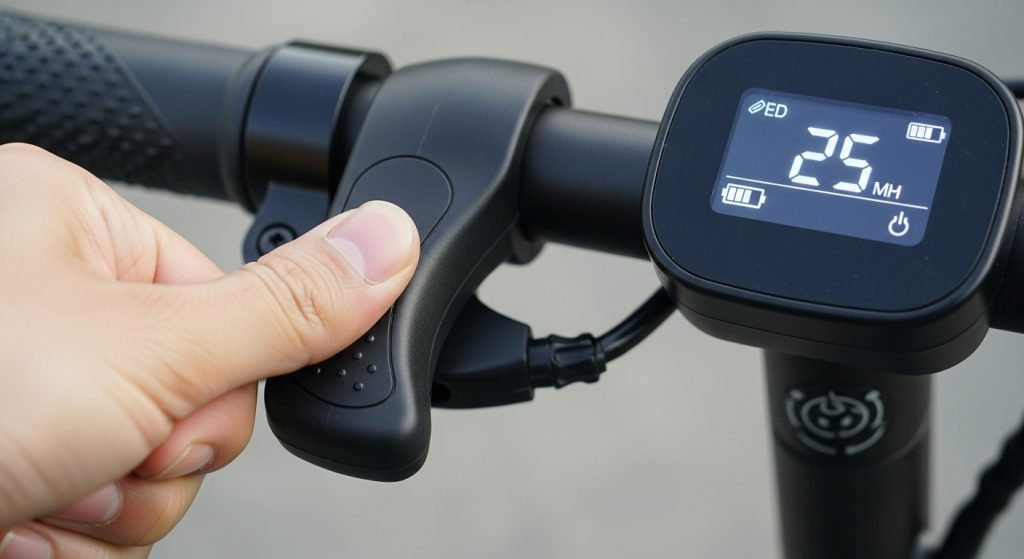
Understanding electric scooter throttles is essential for safe and effective riding. The throttle controls your scooter’s acceleration and speed. Different throttle types offer different riding experiences. Proper throttle technique improves safety and control. Mastering throttle operation enhances your riding skills. This comprehensive guide explores throttle systems in detail. You’ll learn how different throttles work and function. You’ll discover throttle types and their characteristics. Electric scooter throttles come in two main types: twist throttles and thumb throttles. Dynamic Scooter Model B feature responsive, intuitive throttle systems. Smooth acceleration control improves safety. Precise throttle response enhances riding experience. Understanding throttle operation is fundamental to scooter mastery. Ready to master throttle control? Here’s the deal… 1. What Are the Main Types of Throttles? Electric scooters use two primary throttle types. Understanding these differences helps you choose the right scooter. Throttle type significantly affects riding experience. Different types suit different riders. Personal preference matters when choosing. Throttle selection is important for satisfaction. Twist throttles resemble motorcycle throttles. Riders twist the handlebar grip to accelerate. Twist throttles provide intuitive control. Many riders prefer twist throttles. Twist throttles are common on quality scooters. This is important because throttle type affects riding experience. Twist throttles feel natural to motorcycle riders. Intuitive control improves confidence. Confidence improves safety. Twist throttles are preferred by experienced riders. Thumb throttles use a button or lever. Riders press with their thumb to accelerate. Thumb throttles are compact and simple. Some riders prefer thumb throttles. Thumb throttles are common on budget scooters. Thumb throttles offer different ergonomics than twist throttles. Thumb throttles are easier to operate for some riders. Compact design saves space. Simple operation reduces learning curve. Simplicity improves accessibility. Budget scooters often use thumb throttles. Twist throttles require wrist rotation. Wrist rotation can cause fatigue on long rides. Twist throttles provide smooth, progressive acceleration. Smooth acceleration improves control. Progressive acceleration is safer. Twist throttles are preferred by experienced riders. Extended wrist rotation can be tiring. Fatigue affects control negatively. However, smooth acceleration prevents accidents. Progressive control is essential for safety. Experienced riders accept fatigue for better control. Thumb throttles require thumb pressure. Thumb pressure is less fatiguing than wrist rotation. Thumb throttles provide on-off acceleration. On-off acceleration is less smooth. Less smooth acceleration is less safe. Thumb throttles are simpler but less refined. Thumb pressure is minimal and easy. Fatigue is rarely an issue. However, on-off control is jerky. Jerky acceleration reduces safety. Simplicity comes at the cost of refinement. Hybrid throttles combine both systems. Some scooters offer switchable throttles. Switchable throttles provide flexibility. Flexibility allows rider preference. Hybrid systems are rare and expensive. Most scooters use one throttle type. Hybrid systems offer best of both worlds. Riders can choose based on situation. Flexibility improves satisfaction. However, complexity increases cost. Most riders prefer single systems. Electronic throttles use digital sensors. Digital sensors provide precise control. Electronic throttles enable advanced features. Advanced features improve performance. Electronic throttles are becoming standard. Electronic systems are more reliable than mechanical systems. Digital sensors are extremely accurate. Precision improves control significantly. Advanced features enable customization. Customization improves satisfaction. Electronic systems are increasingly common. Reliability improves with electronic systems. Throttle Type Mechanism Fatigue Level Control Quality Twist Throttle Wrist rotation Medium Excellent Thumb Throttle Thumb pressure Low Good Hybrid Throttle Both systems Low Excellent Electronic Digital sensors Low Excellent Mechanical Direct connection Medium Good Proportional Variable response Low Excellent 2. How Do Throttle Systems Work Technically? Understanding throttle mechanics helps you appreciate scooter engineering. Technical knowledge improves troubleshooting ability. Technical understanding enables better maintenance. Better maintenance improves reliability. Reliability is essential for safety. Throttle input sends signals to controllers. Controllers receive throttle information. Controllers adjust motor power accordingly. Power adjustment happens instantly. Instant adjustment provides responsive control. Here’s why it matters… Responsive control improves safety significantly. Instant response prevents accidents. Quick adjustment maintains control. Control is essential for safety. Potentiometers measure throttle position. Potentiometers are variable resistors. Resistor values change with throttle position. Changing values create proportional signals. Proportional signals enable smooth acceleration. Smooth acceleration is safer than jerky acceleration. Precise measurement ensures accuracy. Accuracy improves control. Smooth acceleration prevents accidents. Proportional response is ideal. Potentiometers are reliable sensors. Hall sensors detect throttle movement. Hall sensors use magnetic fields. Magnetic fields change with throttle position. Changing fields create digital signals. Digital signals enable precise control. Precise control improves riding experience. Hall sensors are very accurate. Accuracy improves safety. Digital signals are reliable. Reliability improves confidence. Hall sensors are increasingly common. PWM controllers regulate motor power. PWM stands for pulse-width modulation. Modulation adjusts power delivery. Power delivery is smooth and responsive. Smooth delivery improves control. Responsive delivery improves safety. PWM is highly efficient. Efficiency improves range. Smooth power prevents jerking. Responsive power improves handling. PWM is the industry standard. Acceleration curves shape throttle response. Curves determine how quickly power increases. Aggressive curves provide rapid acceleration. Gentle curves provide smooth acceleration. Smooth curves are safer for beginners. Aggressive curves suit experienced riders. Customizable curves improve satisfaction. Different curves suit different situations. Programmable curves are valuable. Flexibility improves experience. Curve customization is increasingly available. Throttle calibration ensures accuracy. Calibration aligns throttle position with motor power. Proper calibration provides consistent response. Consistent response improves control. Improper calibration creates safety issues. Calibration is essential for safety. Regular calibration maintains accuracy. Accuracy improves reliability. Consistent response prevents surprises. Surprises cause accidents. Calibration should be checked regularly. Technical Component Function Importance Potentiometer Measure throttle position High Hall Sensor Detect throttle movement High PWM Controller Regulate motor power Critical Acceleration Curve Shape throttle response High Calibration Ensure accuracy Critical Signal Processing Convert signals to power Critical 3. What Throttle Techniques Improve Safety? Proper throttle technique prevents accidents and improves control. Mastering technique takes practice and patience. Smooth acceleration prevents loss of control. Gradual throttle increase maintains balance. Balance is essential for safety. Sudden acceleration causes instability. Instability leads to accidents. Smooth acceleration is fundamental safety technique. Progressive throttle use improves stability. Progressive means gradual and measured. Gradual throttle increases maintain traction. Traction prevents slipping.

Electric Scooter Throttle: A Complete Guide 2026 Read More »

Can You Mod Electric Scooters? What’s Possible, Legal & Worth It

Electric scooter modifications are increasingly popular among enthusiasts. Many riders want to customize their scooters for better performance or appearance. The question of whether you can modify scooters has a nuanced answer. Some modifications are safe and beneficial. Others are dangerous and void warranties. Understanding which modifications work helps you enhance your scooter responsibly. This guide explores scooter customization options in detail. Electric scooters can be modified in many ways, but some modifications are risky. Dynamic Scooter models support safe, practical upgrades. Battery upgrades and tire changes are popular modifications. Performance modifications require technical knowledge. Safety modifications improve reliability. Always prioritize safety over performance gains. Ready to explore scooter modifications? Here’s the deal… 1. Can You Legally Modify Electric Scooters? Scooter modification legality varies by location. Understanding local regulations helps you stay compliant. Different jurisdictions have different rules. Some cities embrace modifications. Others prohibit them strictly. Federal regulations don’t address modifications. State and local laws control modification legality. Researching your local laws is essential. Local regulations differ significantly. Some areas allow modifications freely. Other areas restrict certain modifications. Speed modifications are often regulated. Power modifications may be prohibited. Lighting modifications are usually allowed. This is important because legal violations can result in fines. Fines can be substantial. Repeated violations increase penalties. Legal consequences are serious. Understanding local laws prevents problems. Warranty implications are serious. Modifications often void manufacturer warranties. Warranty coverage disappears after modifications. Repair costs become your responsibility. Warranty voiding is a significant consequence. Manufacturers reserve the right to deny coverage. Warranty voiding happens immediately upon modification. No grace period exists. Warranty coverage doesn’t return if you reverse modifications. Repair costs can be expensive. Component replacements cost hundreds of dollars. Warranty loss is permanent and irreversible. Insurance coverage may be affected. Modified scooters might not be insured. Insurance companies may deny claims. Coverage gaps create financial risk. Insurance verification is essential. Check with your insurance provider first. Many insurance policies exclude modified vehicles. Modifications void coverage automatically. Accidents involving modified scooters might not be covered. Medical bills become your responsibility. Property damage becomes your liability. Insurance gaps create serious financial exposure. Safety standards exist for scooters. Modifications might violate safety standards. UL 2272 certification requires specific standards. Modified scooters might not meet standards. Safety compliance is important. Modifications should maintain safety standards. UL 2272 sets specific requirements. Modifications that exceed these requirements violate standards. Non-compliant scooters are unsafe. Safety standards exist to protect riders. Violating standards creates safety risks. Compliance is essential for rider protection. Manufacturer recommendations matter. Manufacturers specify approved modifications. Approved modifications are safe. Unapproved modifications are risky. Following manufacturer guidance is wise. Manufacturer recommendations protect you. Manufacturers test approved modifications. They ensure safety and compatibility. Unapproved modifications haven’t been tested. Untested modifications are unpredictable. Safety testing is essential. Manufacturer approval provides confidence. Professional installation is recommended. Professional technicians have expertise. They understand safety requirements. They perform modifications correctly. Professional installation ensures quality. DIY modifications carry higher risks. Professionals have specialized knowledge. They use proper tools and techniques. They understand component compatibility. They perform quality assurance checks. DIY mistakes are common and expensive. Professional installation prevents problems. Legal Aspect Consideration Risk Level Local Laws Regulations vary by area High Warranty Modifications void warranty High Insurance Coverage may be denied High Safety Standards Must maintain compliance High Manufacturer Follow recommendations Medium Installation Professional vs. DIY High 2. What Performance Modifications Are Possible? Several performance modifications are technically feasible. Understanding these options helps you make informed choices. Modifications range from simple to complex. Some are safe and practical. Others are risky and impractical. Each modification has trade-offs. Understanding these trade-offs helps you decide wisely. Battery upgrades increase range. Higher capacity batteries store more energy. More energy means longer range. Battery upgrades require compatible chargers. Upgraded batteries may be heavier. Battery upgrades are popular modifications. Here’s why it matters… Extended range improves commuting capability. Longer range enables longer trips. Range anxiety decreases. Commuting becomes more practical. Battery upgrades are among the safest modifications. Compatible batteries maintain safety. Proper chargers are essential. Battery upgrades are popular for good reason. Motor upgrades increase power. More powerful motors provide better acceleration. Better acceleration improves performance. Powerful motors consume more battery. Powerful motors generate more heat. Motor upgrades are complex modifications. Powerful motors require stronger controllers. Stronger controllers are expensive. Powerful motors generate excessive heat. Heat management becomes critical. Motor upgrades stress components. Component failure becomes likely. Motor upgrades are risky modifications. Controller modifications change performance characteristics. Advanced controllers offer more features. Custom controllers enable fine-tuning. Controller modifications require technical knowledge. Incorrect modifications damage components. Controller changes are risky. Controllers are complex electronic devices. Improper modifications cause failures. Failed controllers are expensive to replace. Controller damage can be permanent. Technical expertise is essential. Controller modifications should be avoided by most riders. Tire upgrades improve traction. Better tires provide superior grip. Superior grip improves control. Quality tires enhance safety. Tire upgrades are simple and safe. Tire modifications are recommended. Better tires improve handling significantly. Grip improves in all conditions. Control becomes more responsive. Safety improves noticeably. Tire upgrades are among the safest modifications. Installation is straightforward. Tire modifications are highly recommended. Suspension upgrades improve comfort. Better suspension absorbs impacts. Improved comfort reduces fatigue. Suspension upgrades are expensive. Suspension changes affect handling. Suspension modifications are complex. Better suspension reduces vibration. Vibration reduction improves comfort. Fatigue decreases on long rides. Comfort improvements are noticeable. Suspension upgrades are expensive modifications. Installation is complex and technical. Professional installation is recommended. Gearing modifications change speed characteristics. Gearing changes affect acceleration and top speed. Higher gearing increases top speed. Lower gearing improves acceleration. Gearing modifications are technical. Incorrect gearing damages components. Gearing changes affect motor performance. Improper gearing causes overheating. Overheating damages motors permanently. Motor replacement is expensive. Gearing modifications should be avoided. Technical expertise is essential. Most riders should avoid gearing changes. Modification Type Complexity Cost Safety Battery Upgrade Medium High Medium Motor Upgrade High Very High Low Controller Mod Very High High Low Tire Upgrade Low Medium High

Can You Mod Electric Scooters? What’s Possible, Legal & Worth It Read More »

Do You Need a CBT for an Electric Scooter? Rules Explained Clearly

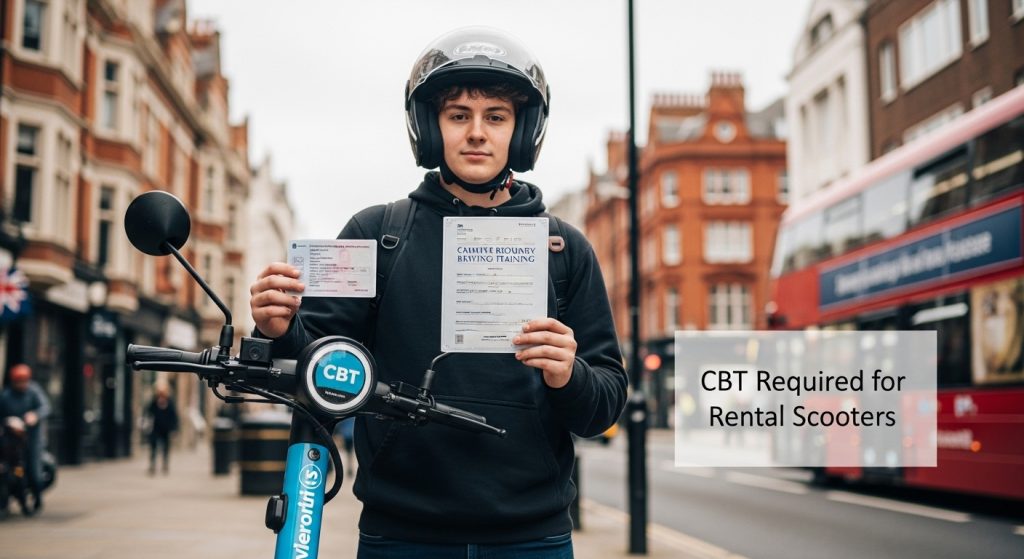
Navigating the legal landscape for electric scooters in the UK can be confusing. Many potential riders wonder if they need Compulsory Basic Training (CBT), the same training required for mopeds and some motorcycles. The short answer is complex, as it depends entirely on whether you are riding a private electric scooter or a rental electric scooter from a government-approved trial scheme. Private electric scooters are currently not legal for use on public roads, so the question of CBT is moot. However, for the legal rental trials, specific rules apply that every rider must understand to avoid fines, penalty points, or even having their vehicle seized. This guide will clarify the legal distinctions, explain the role of CBT, and outline what you need to know to ride legally and safely in the UK. Currently, you do not need CBT for a private electric scooter because they are not legal on public roads. For the UK’s rental electric scooter trials, you need a valid driving license with a ‘q’ or ‘AM’ entitlement, which is included with a provisional license that has completed CBT. Dynamic Scooter encourages all riders to seek professional training to ensure they can handle their scooter safely, regardless of legal requirements. Ready to understand the rules? Here’s the breakdown… 1. What Is Compulsory Basic Training (CBT)? Compulsory Basic Training, or CBT, is a foundational course designed to ensure that new riders of mopeds and motorcycles have the essential skills and knowledge to ride safely on public roads. It is not a test that you pass or fail; rather, it is a course of training you complete to a satisfactory standard. The training is divided into five distinct elements, covering everything from the basics of how a vehicle works to practical on-road riding sessions with a qualified instructor. The key takeaway is that CBT is a legal prerequisite for riding certain two-wheeled vehicles, but its application to electric scooters is nuanced and often misunderstood. The course begins with an introduction and eyesight check, followed by practical on-site training where you learn to handle the machine. After that, you’ll have more on-site riding practice, covering maneuvers like figure-of-eights and emergency stops. The fourth element is a classroom-based session covering road safety and theory. Finally, the fifth element requires you to spend at least two hours riding on public roads with your instructor, who will be in radio contact with you. Once your instructor is satisfied that you can ride safely and independently, they will issue you a DL196 certificate, which is your proof of completing CBT. This certificate is valid for two years. If you do not pass your full motorcycle or moped test within that time, you will need to retake the CBT course to continue riding legally. It is crucial to understand that a CBT certificate is not a full license. It comes with certain restrictions, such as not being able to carry passengers and, for motorcycle riders, not being able to ride on motorways. The rules are designed to give new riders experience in a controlled manner before they move on to more powerful machines or unrestricted riding. CBT Element Description Purpose A Introduction and Eyesight Check Ensure basic fitness to ride and explain the course. B Practical On-Site Training Familiarize the rider with the vehicle’s controls. C Practical On-Site Riding Develop basic riding skills in a safe environment. D Practical On-Road Training (Theory) Prepare the rider for on-road hazards and rules. E Practical On-Road Riding (Min. 2 hours) Assess the rider’s ability to interact with traffic. 2. Are Private Electric Scooters Legal in the UK? This is the most critical point of confusion for many people. As of 2026, it is illegal to use a privately owned electric scooter on public roads, pavements, cycle lanes, or any other public-access spaces in the UK. The only place you can legally ride your own electric scooter is on private land with the landowner’s explicit permission. This is because electric scooters are classified as Personal Light Electric Vehicles (PLEVs), and they fall into a legal grey area that makes them unsuitable for public road use under current law. To be used on public roads, all vehicles must comply with specific legal requirements, including having visible rear red lights, number plates, and signaling ability. Standard electric scooters lack these features. More importantly, the law requires all motor vehicles to have insurance and for the rider to have a valid driving license and pay vehicle tax. Since there is no legal mechanism to register, tax, or insure a private electric scooter for public road use, they are effectively banned from them. This is a crucial point because many people buy electric scooters without realizing they cannot legally use them for their daily commute. The consequences of breaking this law can be severe. If you are caught riding a private electric scooter in a public place, the police have the authority to issue you a fine. You can also receive penalty points on your driving license (or future license). In many cases, the police will also seize the electric scooter, and you may not be able to get it back. This strict enforcement is in place due to safety concerns and the lack of a proper regulatory framework for these popular vehicles. Legal Requirement for Public Roads Does a Private Electric scooter Comply? Consequence of Non-Compliance Valid Insurance No (Not possible to obtain) Fine, Penalty Points, Seizure Driving License Not applicable (but required) Fine, Penalty Points Vehicle Tax (VED) No (Not possible to register) Fine Type Approval / Construction No Seizure 3. What Are the Rules for UK Rental E-Scooter Trials? To explore the potential of electric scooters as a green transportation solution, the UK government has sanctioned rental trial schemes in various towns and cities. These trials operate under a different legal framework that temporarily legalizes the use of specific, approved rental electric scooters on public roads within the trial’s geographic boundaries. For these rental electric scooters, you do not need

Do You Need a CBT for an Electric Scooter? Rules Explained Clearly Read More »

Shopping Cart
Scroll to Top