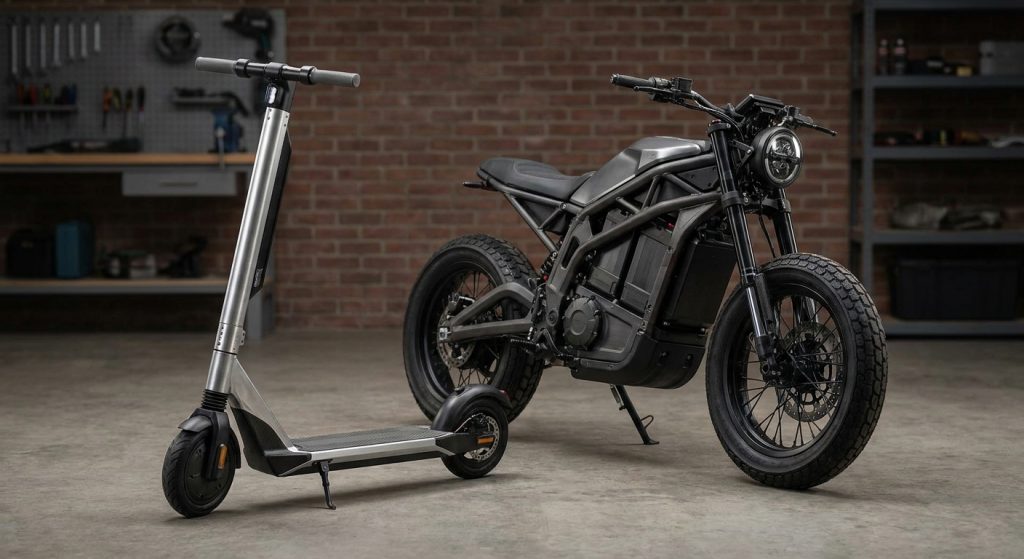

Electric Scooter vs. EV Car: 2026 Ultimate Comparison Guide
An electric scooter is significantly greener than an EV car when comparing their overall lifecycle emissions, energy efficiency, and resource demands for daily urban commutes. Imagine sitting in bumper-to-bumper traffic every single morning, breathing in toxic exhaust fumes from the massive idling SUVs surrounding you, while gas prices spike to record highs. You want to make a sustainable change, but traditional transportation options are draining your energy, your time, and your bank account. It is deeply frustrating to watch your daily commute eat away at your day and the planet, leaving you feeling entirely helpless in the fight against climate change. Fortunately, comparing electric scooters and EV cars reveals a revolutionary path to clean, stress-free micro-mobility that lets you immediately slash your carbon footprint. Why compare electric scooters and EV cars? Commuters compare electric scooters and EV cars because both represent the absolute vanguard of clean, fossil-fuel-free personal transportation. Evaluating how these two options perform in real-world scenarios helps you make a smarter decision for your daily travel. Understanding the Evolution of Green Commutes Have you noticed how urban transportation is shifting rapidly toward clean electric power? You want to escape the environmental and financial toll of traditional combustion engines. By choosing electric drivetrains, you directly eliminate tailpipe emissions from your daily routine. Think about it:The future of transportation must be sustainable if we want to protect our cities. Scaling down your ride to match your actual needs is the easiest way to maximize energy conservation. Micro-Mobility vs. Full-Scale Electric Vehicles An electric scooter is optimized for short-distance solo trips, whereas an electric car is built for heavy, multi-passenger transit. You can save immense energy by scaling down your vehicle to match your actual payload needs. Why drag two tons of metal down the street just to carry yourself and a laptop? Here is the real kicker:Modern electric vehicles are packed with advanced technology, but their sheer physical mass requires enormous energy to move. Selecting a lightweight scooter allows you to achieve maximum mobility with virtually zero resource waste. Metric Electric Scooter EV Car Resource Demand Extremely low raw material usage Very high raw material usage Best Trip Range Short-distance solo (1 – 10 miles) Long-distance passenger (20+ miles) This comparative breakdown illustrates how aligning vehicle size with your travel needs maximizes structural resource efficiency. Key Takeaway: You can dramatically lower your initial ecological deficit by selecting a compact vehicle tailored strictly to your daily solo mileage. How do electric scooters and EV cars use power? Electric scooters use power far more efficiently than EV cars because they suffer from none of the massive weight penalties associated with heavy passenger vehicles. Analyzing how electric scooters and EV cars draw energy reveals a massive structural gap in power efficiency. Comparing Energy Consumption Metrics (Wh/mi) Energy consumption is measured in watt-hours per mile, which clearly reveals the stark efficiency gap between these modes. You will find that electric cars consume roughly 250 to 350 watt-hours per mile. In contrast, a high-quality electric scooter requires only 15 to 25 watt-hours per mile to operate. But wait, there’s more.This twelve-fold difference means you can travel much further on the exact same amount of clean electrical energy. It ensures your household electrical consumption remains practically unchanged even with daily use. Why Vehicle Weight Dictates Efficiency A heavy battery pack and massive metal chassis require immense kinetic energy just to roll down the asphalt. You can eliminate this structural waste by opting for a lightweight commuter scooter that weighs under 50 pounds. This choice ensures every watt goes directly toward your forward motion. Think about it:An electric scooter weighs less than 1% of a standard electric car, meaning it wastes no energy moving dead weight. By avoiding the transport of excess vehicle mass, you maximize the utility of every single charge. Efficiency Factor Electric Scooter EV Car Energy per Mile 15 – 25 Wh 250 – 350 Wh Weight Ratio ~1% of car weight 100x heavier than scooter This comparison reveals how minor lifestyle changes can lead to monumental carbon savings. Key Takeaway: Operating a lightweight scooter allows you to achieve maximum travel range while minimizing your draw from the electrical grid. Which pollutes less: electric scooters and EV cars? An electric scooter pollutes far less than an EV car when evaluating overall lifecycle greenhouse gas emissions and environmental degradation. Comparing electric scooters and EV cars demonstrates that micro-mobility has an exceptionally small ecological footprint. Direct Emissions vs. Lifecycle Carbon Debt While neither vehicle features a tailpipe to spew carbon, their true ecological impact lies in manufacturing and charging emissions. You must consider how much carbon was released to build and power your chosen ride. A lightweight scooter has a tiny fraction of the manufacturing carbon debt compared to a multi-ton electric car. Here is the real kicker:Evaluating the complete life cycle of your ride reveals the true environmental cost of your daily travels. Choosing a resource-light vehicle ensures you start your green journey with a minimal environmental deficit. Comparing Carbon Footprints Per Mile Traveled When calculating emissions per mile based on the average electrical grid, scooters emerge as the ultimate climate champion. You will generate only a small sliver of the carbon dioxide that a full-sized electric vehicle demands. Over years of commuting, this savings prevents thousands of pounds of greenhouse gases from entering the atmosphere. But wait, there’s more.A scooter averages roughly 10 grams of CO2 per mile, whereas an EV car averages closer to 110 grams. Making the switch means you actively protect global air quality with every single ride. Emission Source Electric Scooter EV Car Grams CO2 / Mile ~10g ~110g Annual Carbon Debt Minimal (under 0.1 tons) Moderate (over 1.5 tons) This comparative analysis underscores how easily you can scale down your personal carbon output. Key Takeaway: You can achieve an immediate 90% reduction in your daily commuting carbon footprint by switching to a lightweight scooter. What is the battery impact of electric scooters and EV cars? The battery impact […]
Electric Scooter vs. EV Car: 2026 Ultimate Comparison Guide Read More »